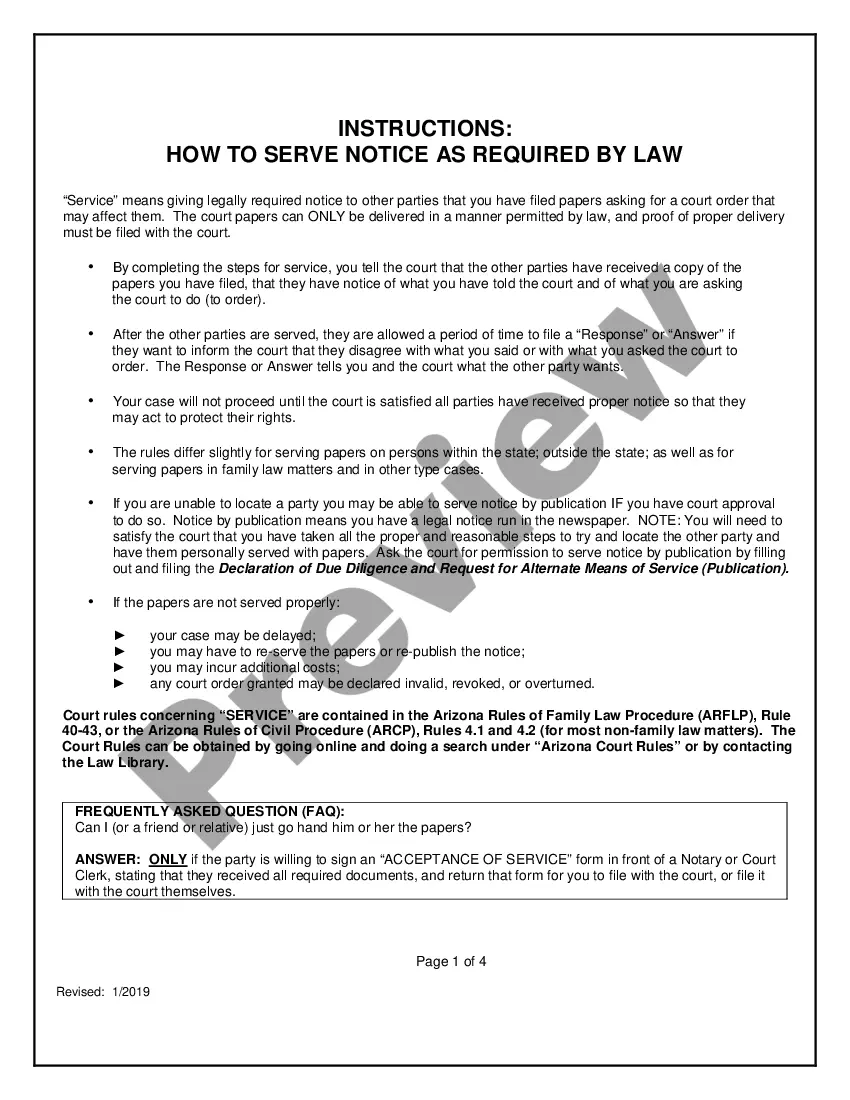
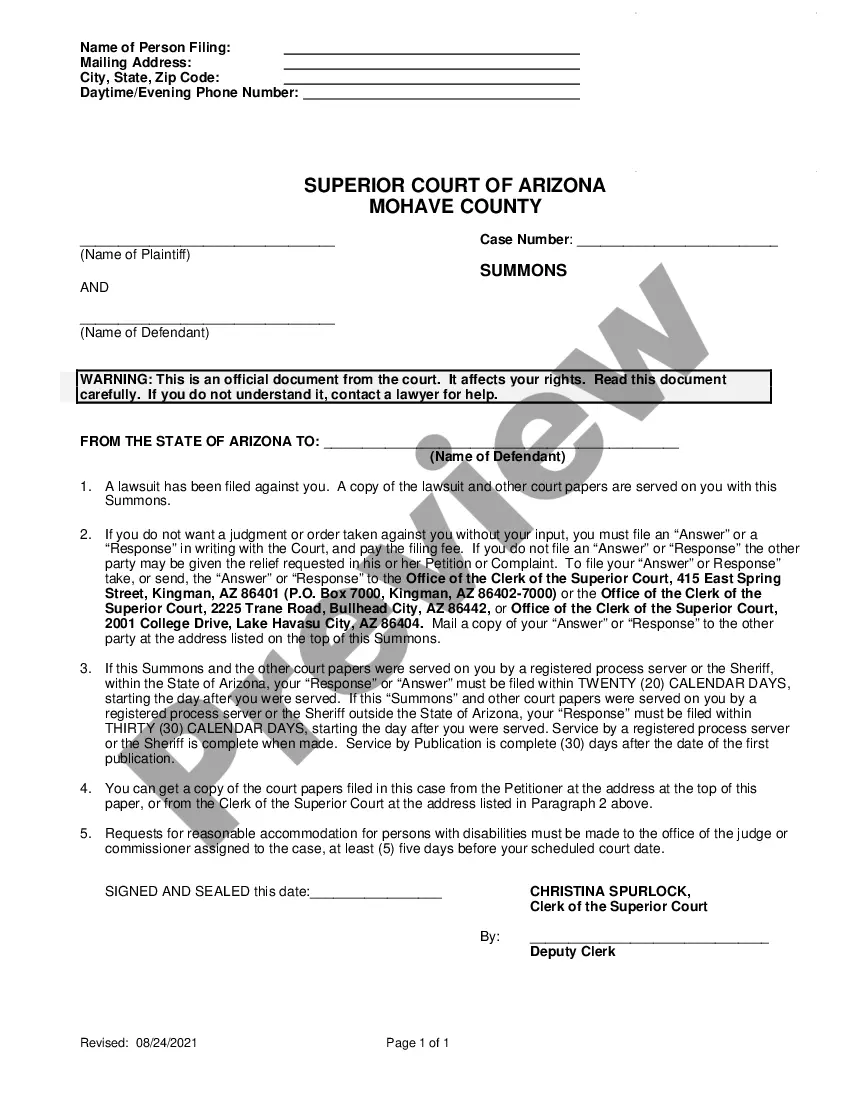
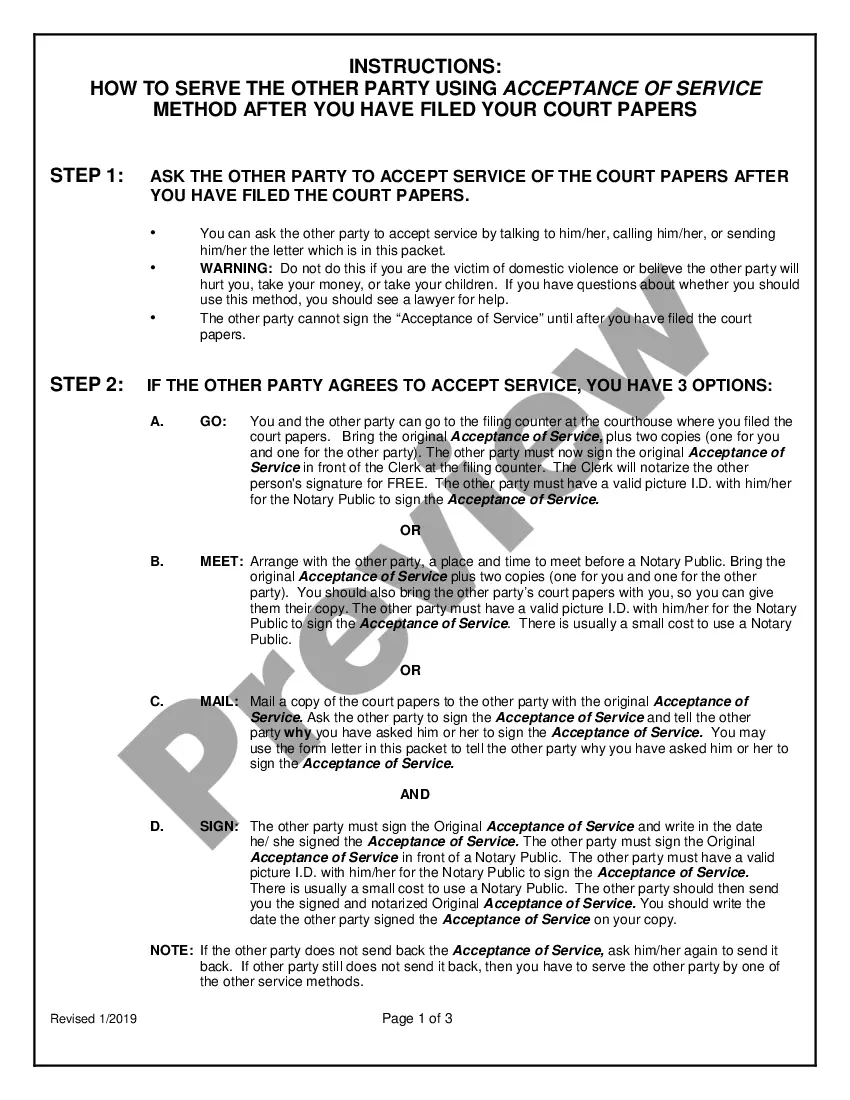
Mississippi Notice of Service of First Request for Interrogatories and Request for Production of Documents
Understanding this form
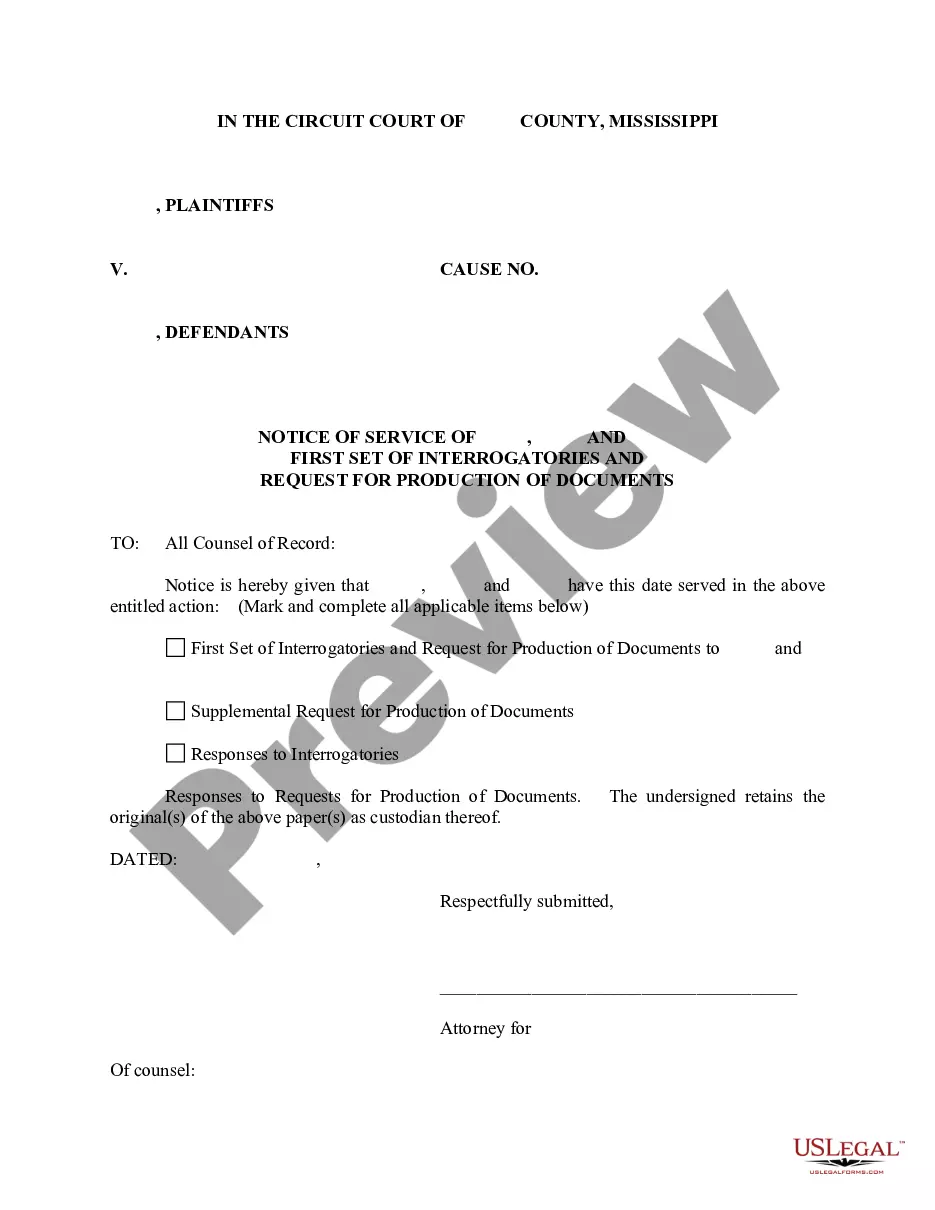
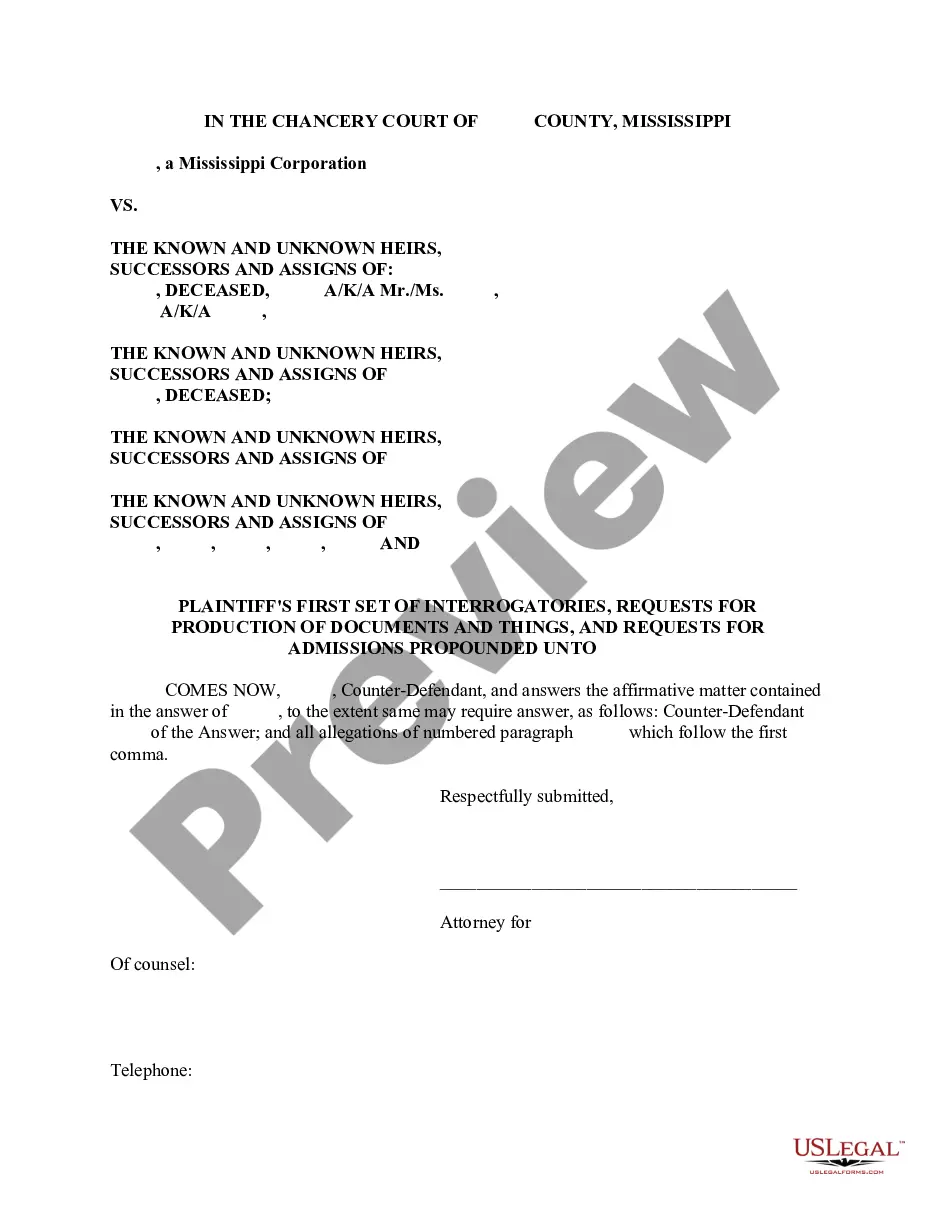
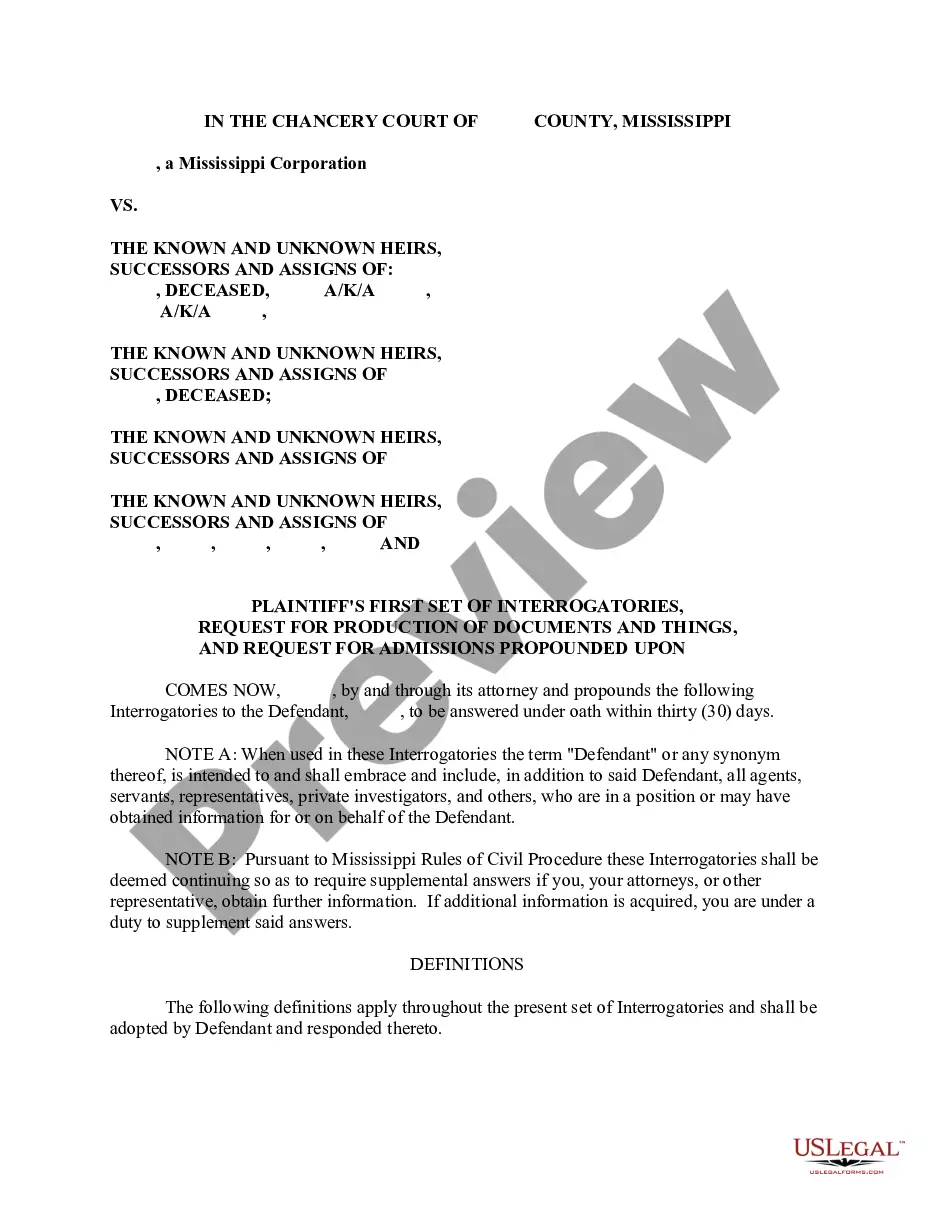
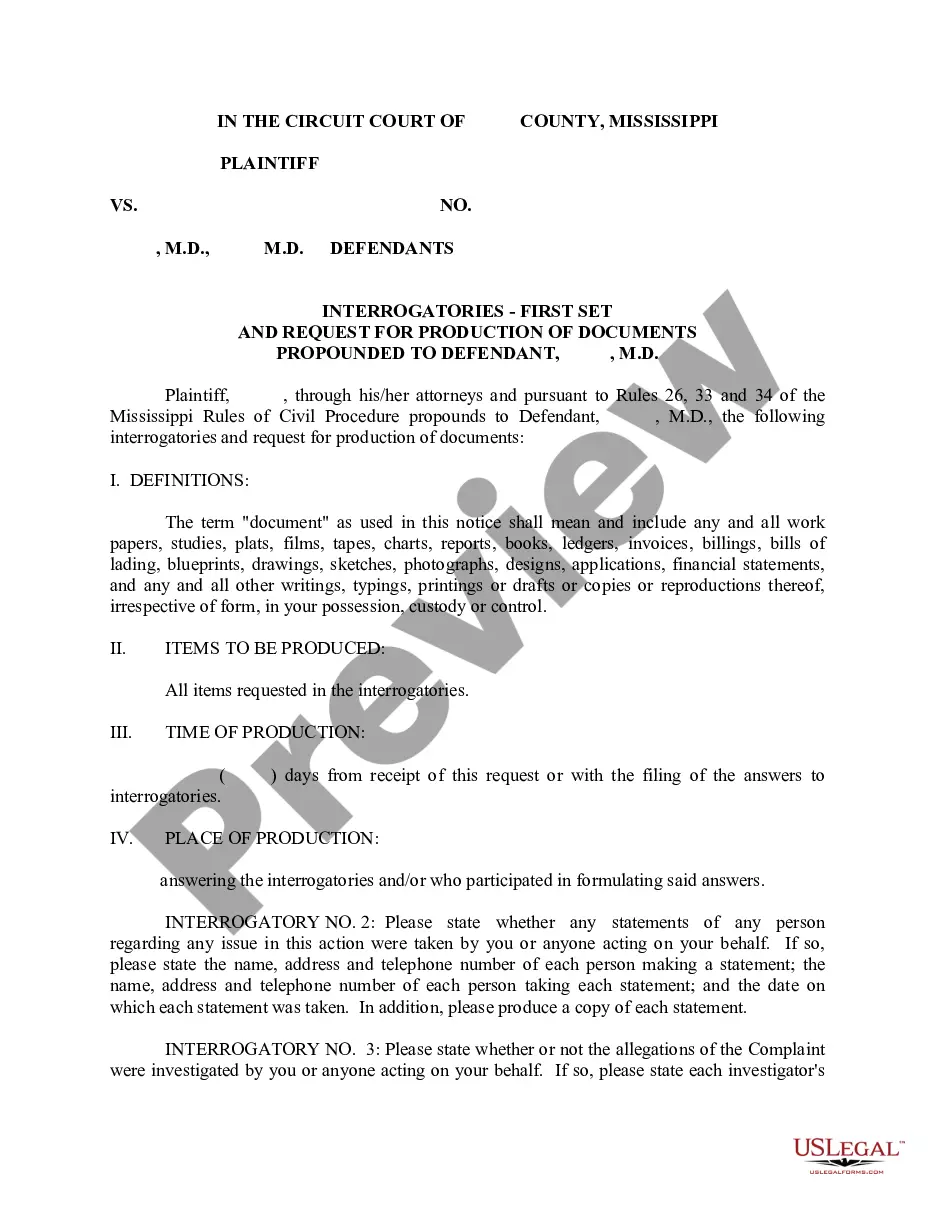
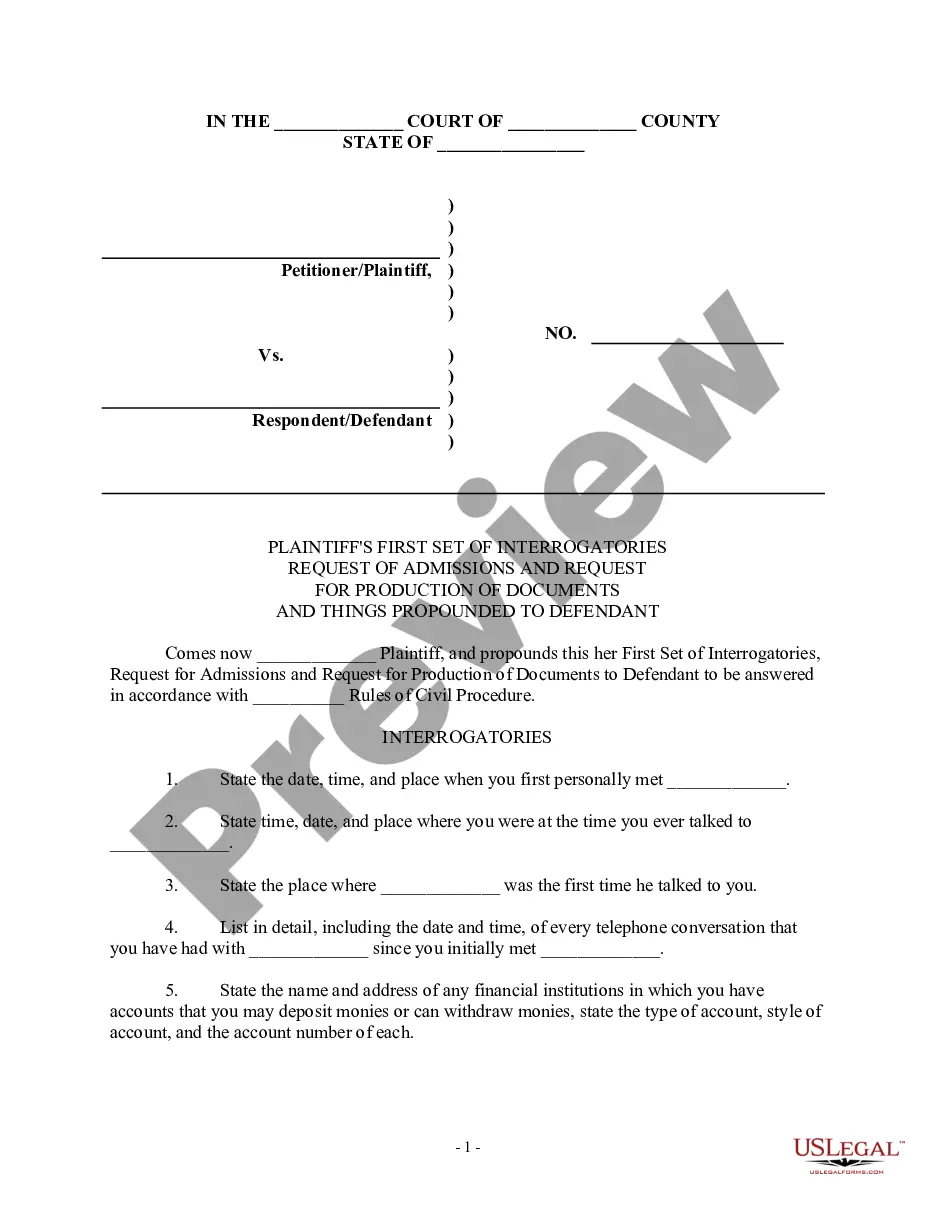
The Notice of Service of First Request for Interrogatories and Request for Production of Documents is a legal form used during the discovery process in a lawsuit. This form allows one party to send written questions and requests for documents to another party, helping gather crucial information relevant to the case. It is essential for clarifying claims and defenses, and it differs from other discovery forms by specifically focusing on interrogatories and document production.
Key components of this form
- Identification of the parties involved in the lawsuit.
- Clear articulation of each interrogatory question being asked.
- Specific requests for production of relevant documents.
- Details regarding the timeline for responses.
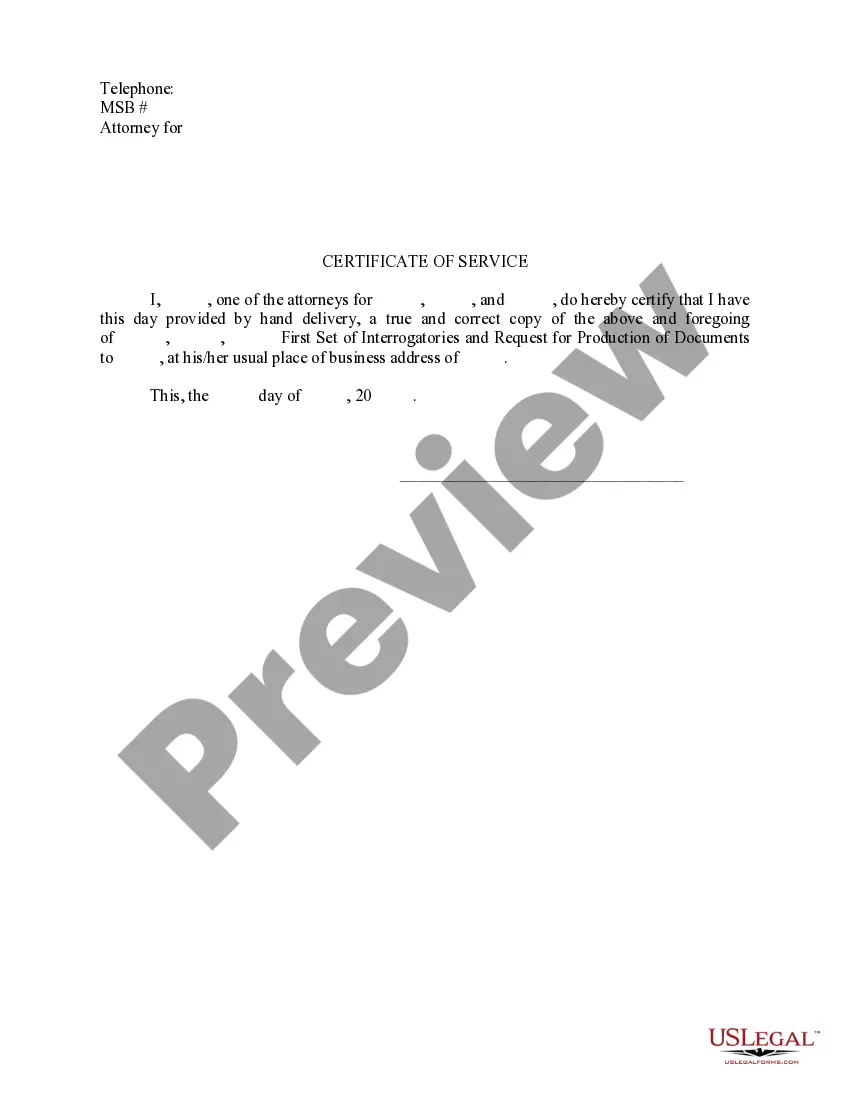
- Signatures and dates to confirm the service of the document.
When this form is needed
This form is used when a party in a lawsuit needs to formally request information from another party to build their case. It is particularly useful in cases where detailed facts or documents are required for evidence. Common scenarios include personal injury lawsuits, contract disputes, or any civil litigations where obtaining specific answers and documents from another party is necessary for the trial preparations.
Who this form is for
This form is intended for:
- Attorneys representing clients in a lawsuit.
- Parties involved in civil litigation seeking information from other parties.
- Individuals who are self-represented and require assistance in the discovery phase of their case.
Instructions for completing this form
- Identify the parties involved by entering their names and contact information.
- Specify the interrogatories by clearly writing down each question to be answered.
- List the documents you are requesting from the other party.
- Determine the timeline for when responses must be provided.
- Have the form signed and dated to confirm the service of the document.
Does this form need to be notarized?
Notarization is generally not required for this form. However, certain states or situations might demand it. You can complete notarization online through US Legal Forms, powered by Notarize, using a verified video call available anytime.
Get your form ready online
Our built-in tools help you complete, sign, share, and store your documents in one place.
Make edits, fill in missing information, and update formatting in US Legal Forms—just like you would in MS Word.
Download a copy, print it, send it by email, or mail it via USPS—whatever works best for your next step.
Sign and collect signatures with our SignNow integration. Send to multiple recipients, set reminders, and more. Go Premium to unlock E-Sign.
If this form requires notarization, complete it online through a secure video call—no need to meet a notary in person or wait for an appointment.
We protect your documents and personal data by following strict security and privacy standards.

Make edits, fill in missing information, and update formatting in US Legal Forms—just like you would in MS Word.

Download a copy, print it, send it by email, or mail it via USPS—whatever works best for your next step.

Sign and collect signatures with our SignNow integration. Send to multiple recipients, set reminders, and more. Go Premium to unlock E-Sign.

If this form requires notarization, complete it online through a secure video call—no need to meet a notary in person or wait for an appointment.

We protect your documents and personal data by following strict security and privacy standards.
Mistakes to watch out for
- Failing to clearly articulate the interrogatories, leading to confusion.
- Not specifying a reasonable time frame for responses.
- Forgetting to include the appropriate identification details for all parties.
Why use this form online
- Convenience of downloading and editing the form to suit your needs.
- Access to forms drafted by licensed attorneys ensures legal compliance.
- Instant access, allowing you to start your discovery process without delay.
Legal use & context
- Interrogatories and requests for document production are foundational to the discovery process.
- Responses to these requests can impact the outcome of a case significantly.
- Failure to comply with the requests can result in legal penalties or sanctions.
Main things to remember
- The form is crucial in obtaining necessary information for legal cases.
- It requires careful drafting to avoid misunderstandings and legal issues.
- Always check your local legal requirements when using or modifying this form.
Looking for another form?
Form popularity
FAQ
Interrogatories, which are written questions about things that are relevant or important to the case. (NRCP 33; JCRCP 33) Requests for production of documents or things, which are written requests that demand the other side provide particular documents or items.
The purpose of interrogatories is to learn a great deal of general information about a party in a lawsuit. For example, the defendant in a personal injury lawsuit about a car accident might send you interrogatories asking you to disclose things like: Where you live. Where you work.
In certain cases, you might be able to write a letter to the other side and request the documents that you need. However, in more formal cases, you will likely have to draft more formal discovery demands. There are usually forms available for this in local law libraries, from the court clerk's office, or online.
Interrogatories, which are written questions about things that are relevant or important to the case. (NRCP 33; JCRCP 33) Requests for production of documents or things, which are written requests that demand the other side provide particular documents or items.
A request for production is a legal request for documents, electronically stored information, or other tangible items made in the course of litigation.The responding party is required to furnish copies of any documents that are responsive to the request, except for those that are legally privileged.
The issues discussed above in connection with interrogatories are also the issues which you need to cover in your requests for production. However, because requests for production do not yield a written answer, you can ask both for specific documents and for general categories of documents.
So, can you refuse to answer interrogatories? The answer is, no, you may not. You must answer a Rule 33 interrogatory within 30 days of being served with it. That answer must either permit inspection of the requested information or object to the production of the information for a specific reason.
What Is a Request for Production of Documents? A request for production is a discovery device used to gain access to documents, electronic data, and physical items held by an opposing party in a legal matter. The aim is to gain insight into any relevant evidence that the opposing party holds.