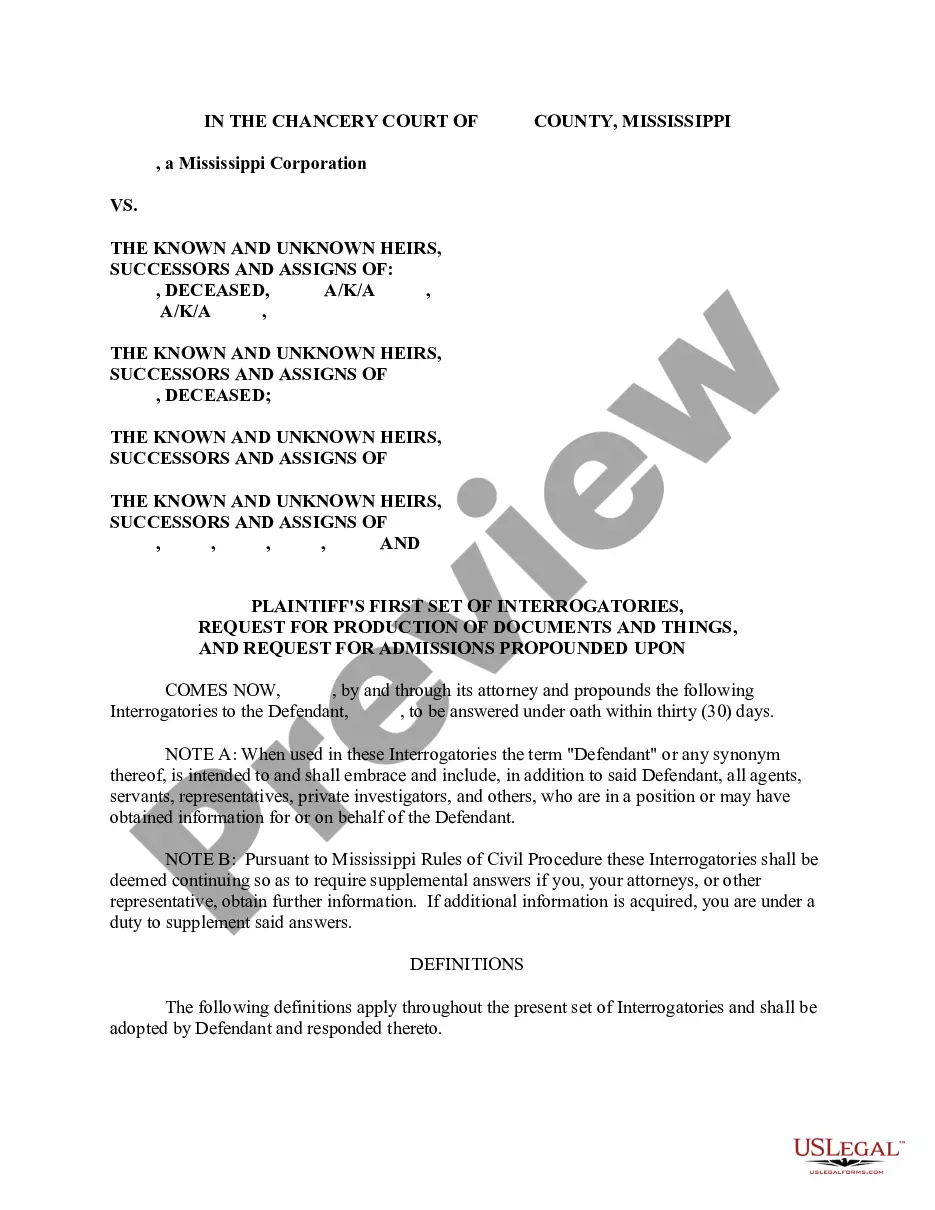
Mississippi Plaintiff's First Set of Interrogatories, Request for Production of Documents and Things, and Request for Admissions
What this document covers
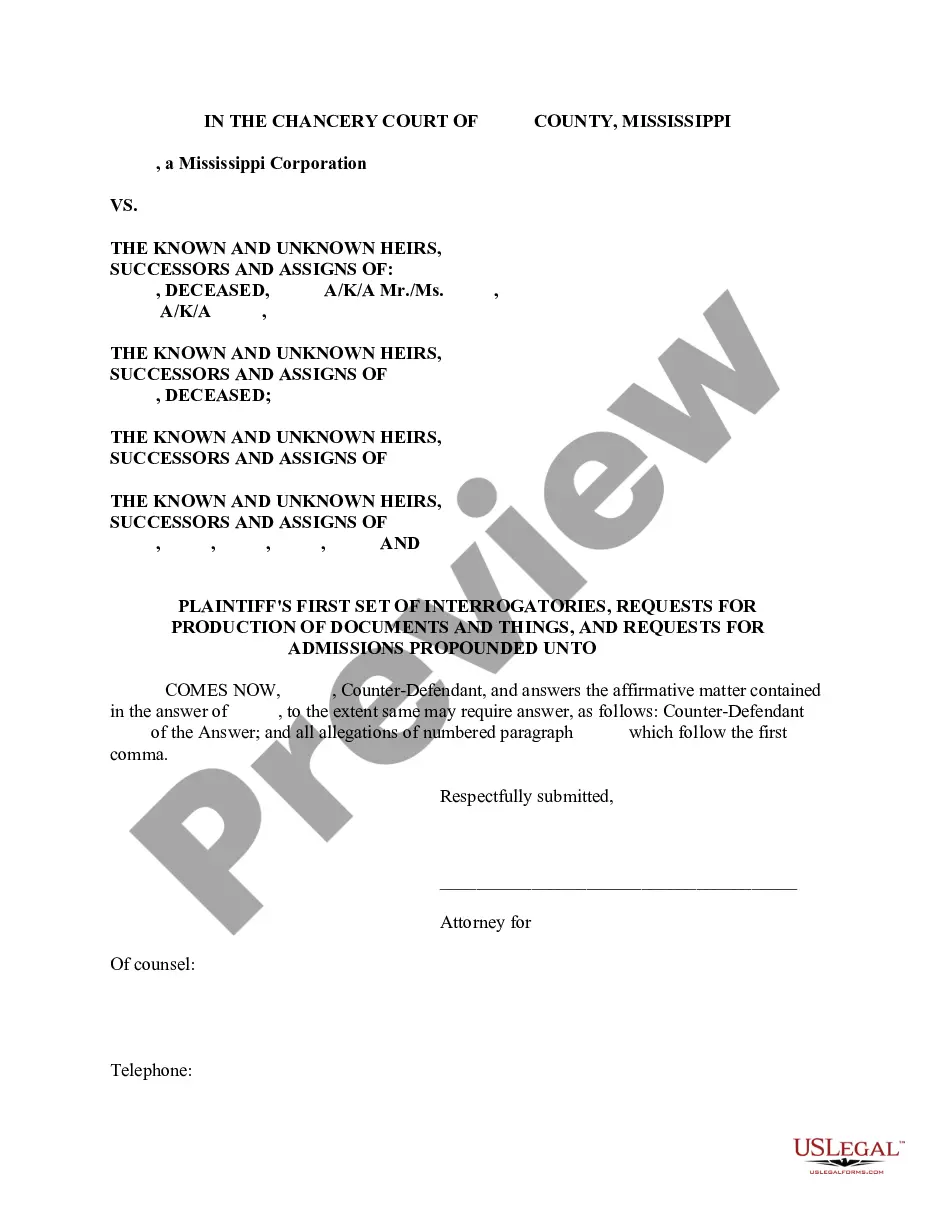
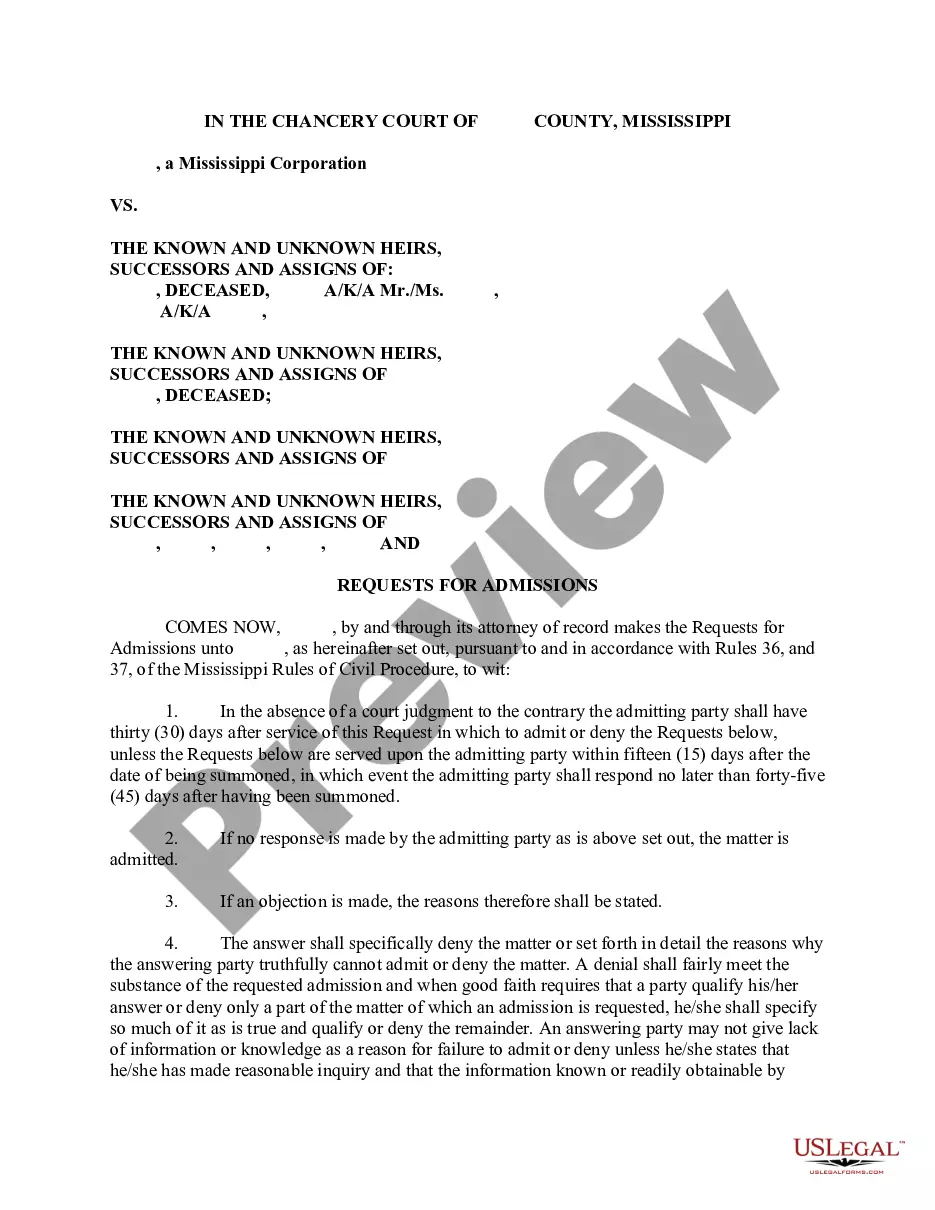
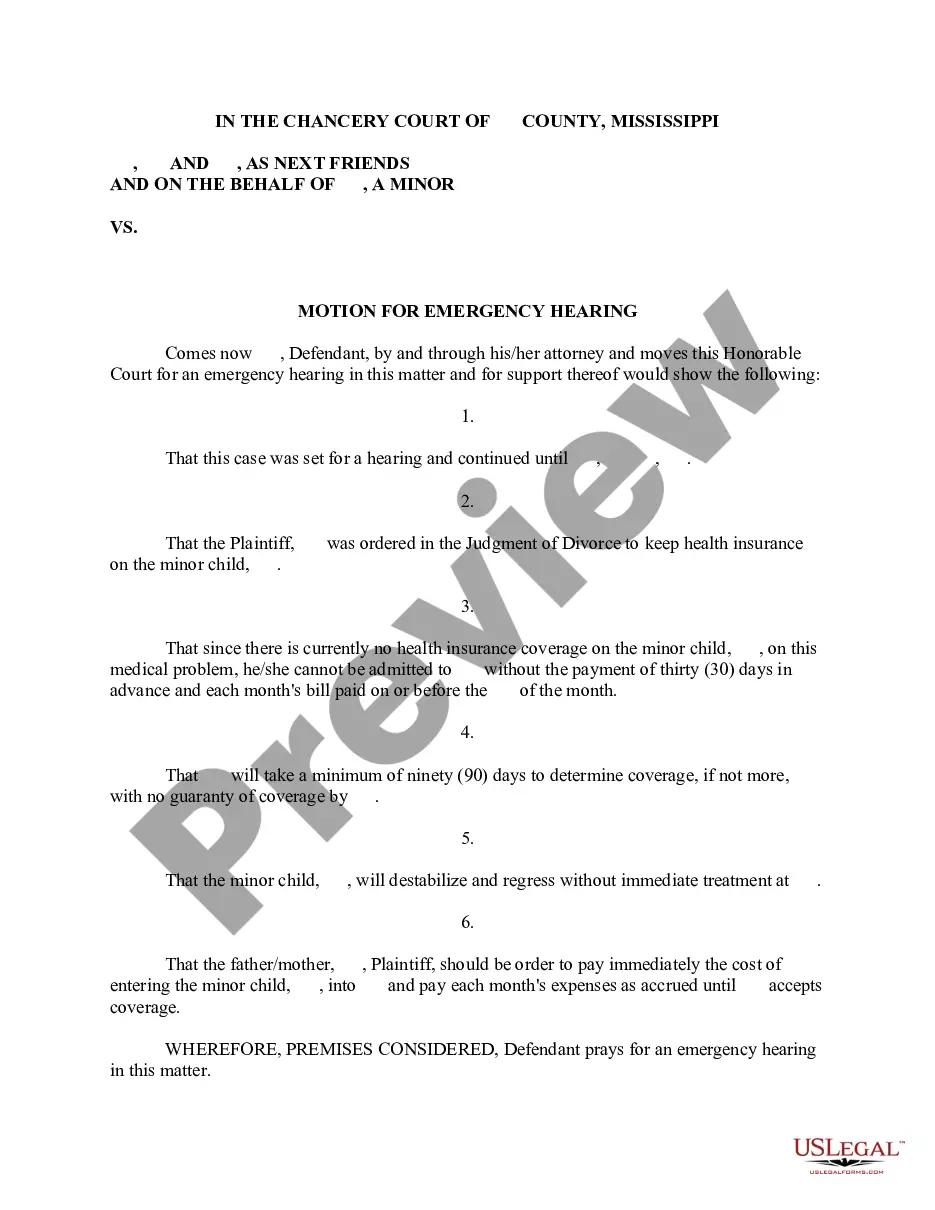
The Plaintiff's First Set of Interrogatories, Request for Production of Documents and Things, and Request for Admissions is a legal document used in civil litigation in Mississippi. This form allows the plaintiff to request specific information and documents from the defendant to build a stronger case. Unlike standard interrogatories, this form integrates multiple requests, making it a comprehensive tool for gathering essential evidence early in the legal process.
Main sections of this form
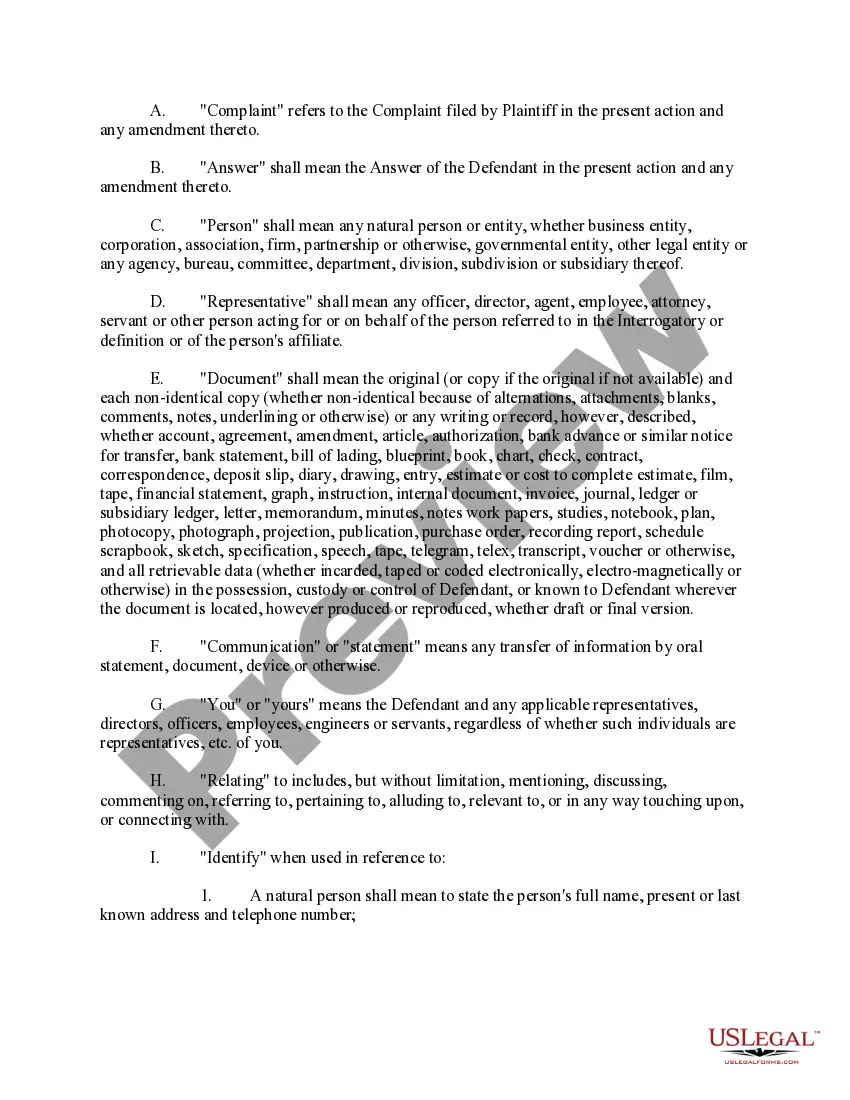
- Definitions: Key terms used throughout the document, such as "Complaint," "Document," and "Person."
- Continuing obligation: The requirement for parties to update their responses if new information is obtained.
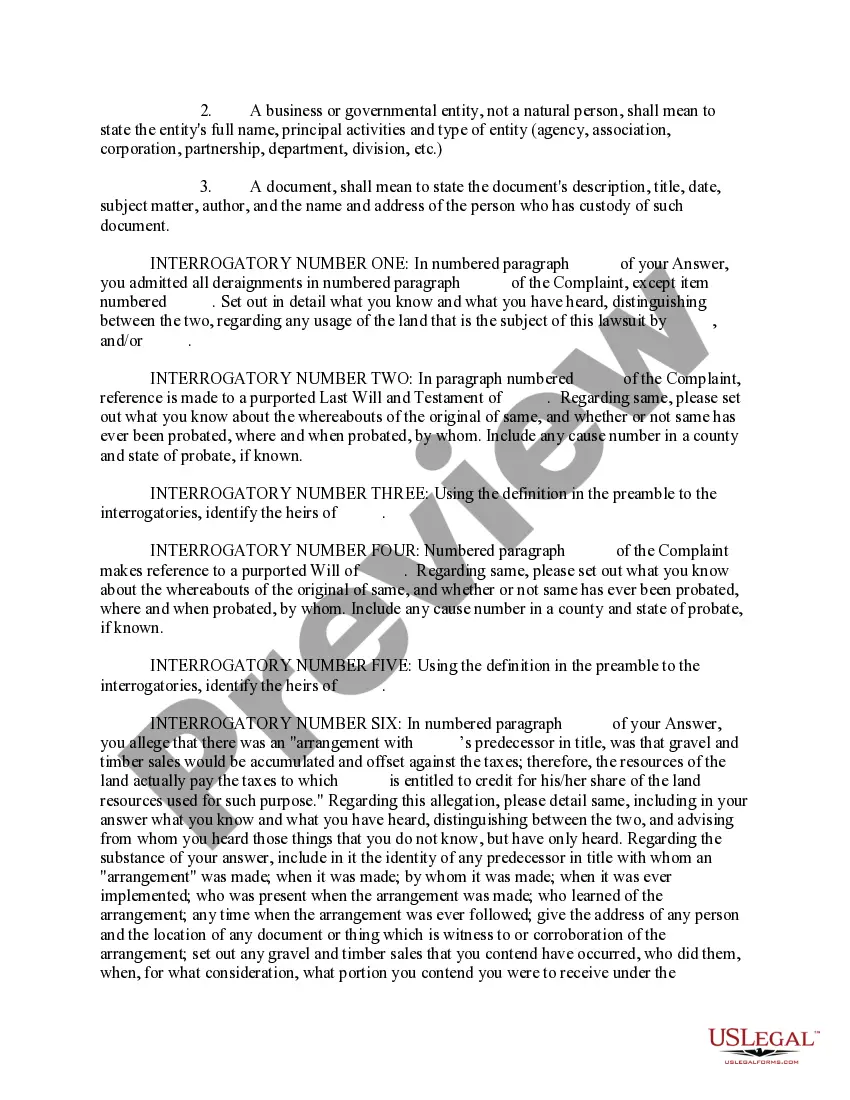
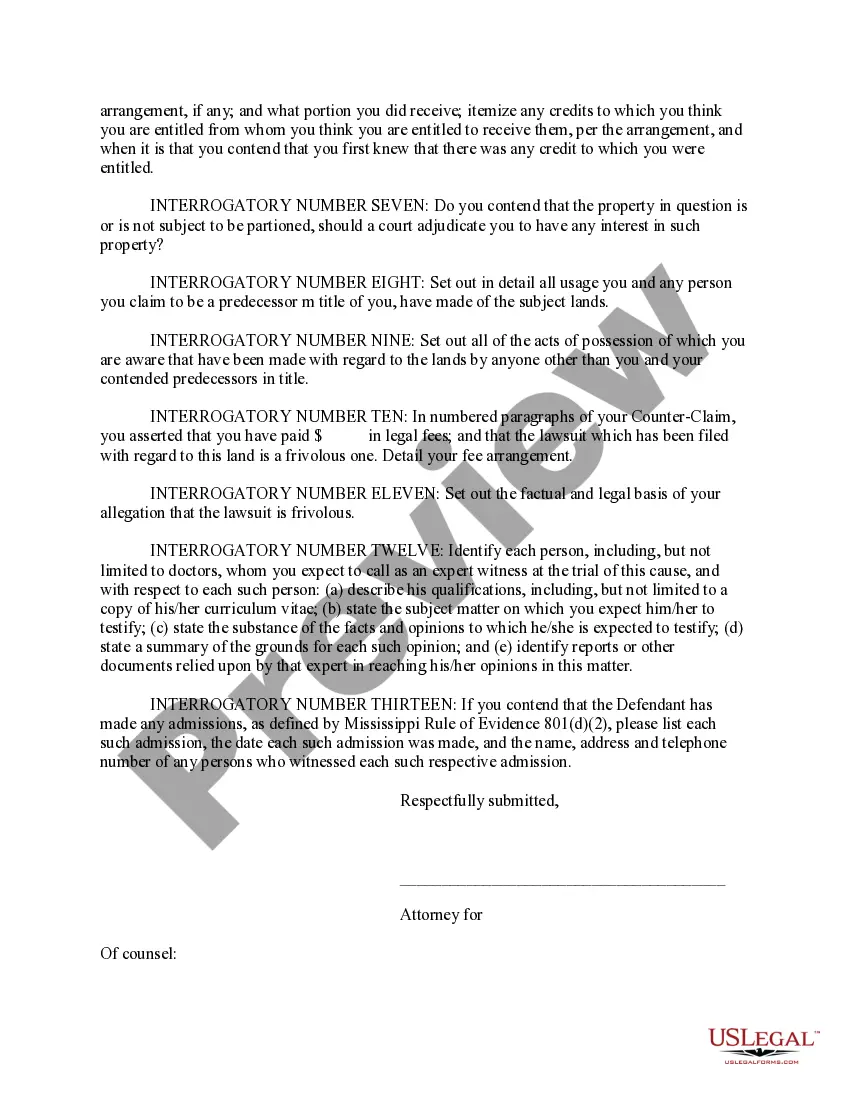
- Interrogatories: Questions that the defendant must answer, providing insight into their claims and defenses.
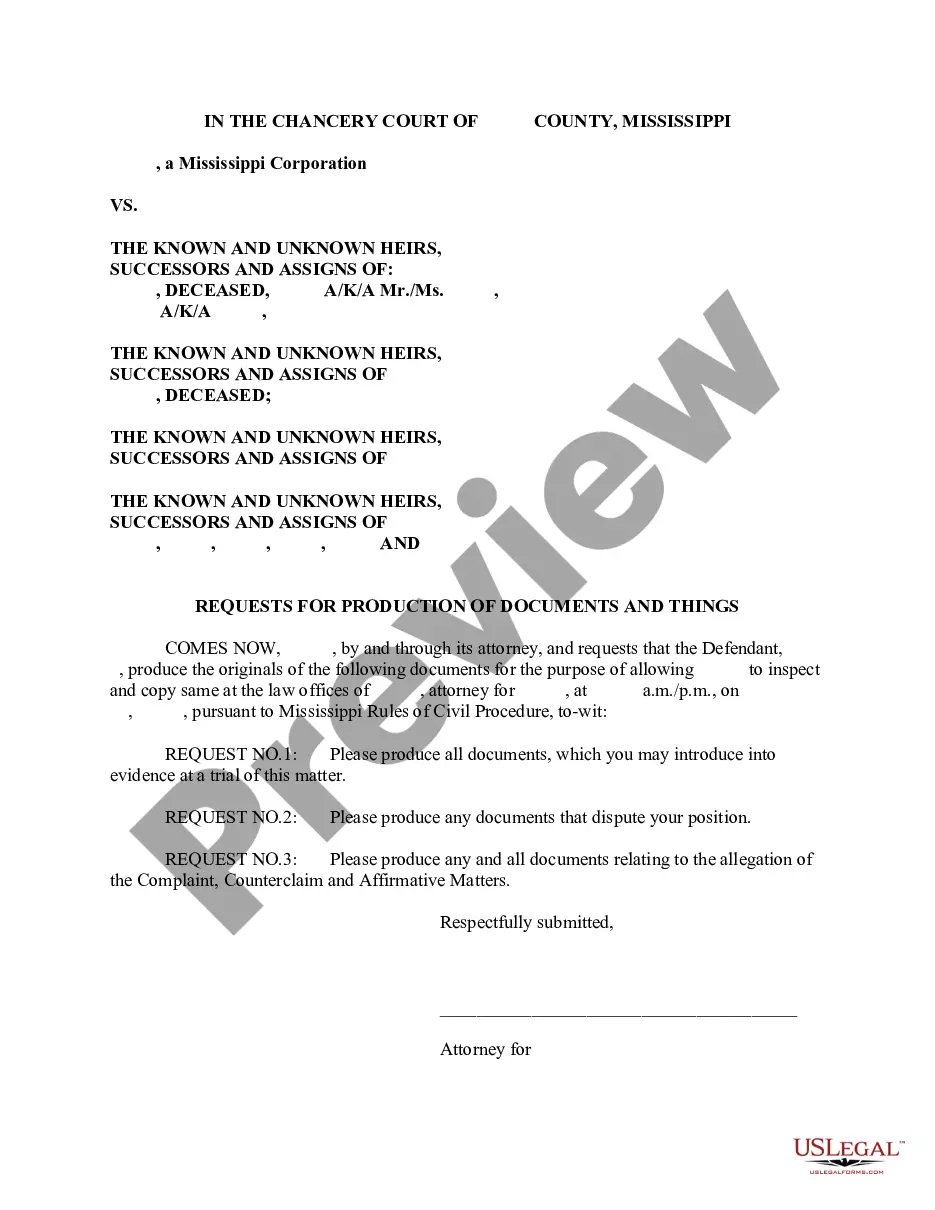
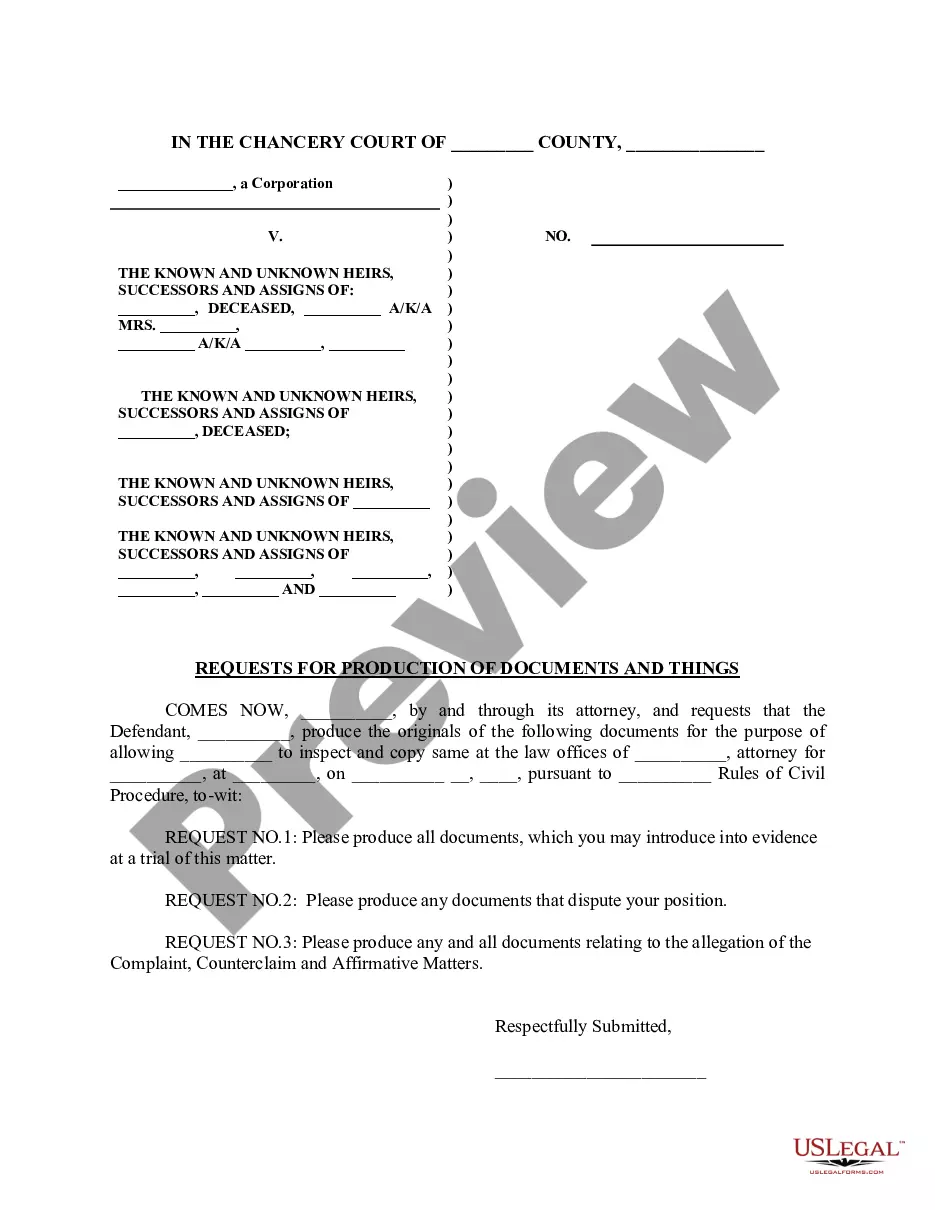
- Requests for production: Demands for specific documents and evidence to be provided to the plaintiff.
- Requests for admission: Statements that the defendant must admit or deny to simplify the issues for trial.
Common use cases
This form should be used during the discovery phase of civil litigation when a plaintiff needs to gather information from the defendant. It is particularly relevant when you require detailed answers regarding the defendant's position, evidence they possess, or the basis of their claims and defenses. Utilizing this form helps clarify the issues and can expedite the litigation process.
Who needs this form
- Individuals or entities acting as plaintiffs in civil litigation.
- Legal representatives or attorneys representing plaintiffs in disputes.
- Any party needing to collect information from a defendant to support their case.
How to prepare this document
- Identify the parties: Clearly state the names and contact information for both the plaintiff and the defendant.
- Provide definitions: Insert specific definitions as required by the document to clarify terminology.
- Answer each interrogatory: Ensure that the defendant provides thorough and accurate answers to each question.
- Specify document requests: Clearly outline what documents you want the defendant to produce.
- Review requests for admissions: Include statements for the defendant to admit or deny to streamline the trial process.
Notarization guidance
In most cases, this form does not require notarization. However, some jurisdictions or signing circumstances might. US Legal Forms offers online notarization powered by Notarize, accessible 24/7 for a quick, remote process.
Get your form ready online
Our built-in tools help you complete, sign, share, and store your documents in one place.
Make edits, fill in missing information, and update formatting in US Legal Forms—just like you would in MS Word.
Download a copy, print it, send it by email, or mail it via USPS—whatever works best for your next step.
Sign and collect signatures with our SignNow integration. Send to multiple recipients, set reminders, and more. Go Premium to unlock E-Sign.
If this form requires notarization, complete it online through a secure video call—no need to meet a notary in person or wait for an appointment.
We protect your documents and personal data by following strict security and privacy standards.

Make edits, fill in missing information, and update formatting in US Legal Forms—just like you would in MS Word.

Download a copy, print it, send it by email, or mail it via USPS—whatever works best for your next step.

Sign and collect signatures with our SignNow integration. Send to multiple recipients, set reminders, and more. Go Premium to unlock E-Sign.

If this form requires notarization, complete it online through a secure video call—no need to meet a notary in person or wait for an appointment.

We protect your documents and personal data by following strict security and privacy standards.
Mistakes to watch out for
- Failing to provide definitions, which can lead to misunderstandings in responses.
- Not clearly stating the requests, making it difficult for the defendant to comply.
- Overlooking the need to update responses as new information emerges.
- Submitting excessive or irrelevant inquiries that may lead to objections from the defendant.
Benefits of completing this form online
- Convenient access: Download and complete the form from anywhere, at any time.
- Editability: Easily customize the form to fit your specific case requirements.
- Time-saving: Instant access to professionally drafted templates saves time compared to creating forms from scratch.
- Reliability: The forms are prepared by licensed attorneys, ensuring compliance with legal standards.
Looking for another form?
Form popularity
FAQ
A request for production is a discovery device used to gain access to documents, electronic data, and physical items held by an opposing party in a legal matter. The aim is to gain insight into any relevant evidence that the opposing party holds.
What Is a Request for Production of Documents? A request for production is a discovery device used to gain access to documents, electronic data, and physical items held by an opposing party in a legal matter. The aim is to gain insight into any relevant evidence that the opposing party holds.
Interrogatories Interrogatories are written questions that are sent by one party to another. Generally speaking, the party who receives these questions has 30 days to answer them.If the other party fails to respond on time, within 30 days, then the questions are deemed admitted.
In law, interrogatories (also known as requests for further information) are a formal set of written questions propounded by one litigant and required to be answered by an adversary in order to clarify matters of fact and help to determine in advance what facts will be presented at any trial in the case.
Interrogatories are written questions that one party to a lawsuit sends to another, and the responding party submits written answers under oath. If a lawsuit is filed in a personal injury case, chances are interrogatories will come into play.
The purpose of interrogatories is to learn a great deal of general information about a party in a lawsuit. For example, the defendant in a personal injury lawsuit about a car accident might send you interrogatories asking you to disclose things like: Where you live.
You must answer each interrogatory separately and fully in writing under oath, unless you object to it. You must explain why you object. You must sign your answers and objections.
So, can you refuse to answer interrogatories? The answer is, no, you may not. You must answer a Rule 33 interrogatory within 30 days of being served with it. That answer must either permit inspection of the requested information or object to the production of the information for a specific reason.
Interrogatories, which are written questions about things that are relevant or important to the case. (NRCP 33; JCRCP 33) Requests for production of documents or things, which are written requests that demand the other side provide particular documents or items.