Mississippi Interrogatories - First Set and Request for Production of Documents to Defendant
About this form
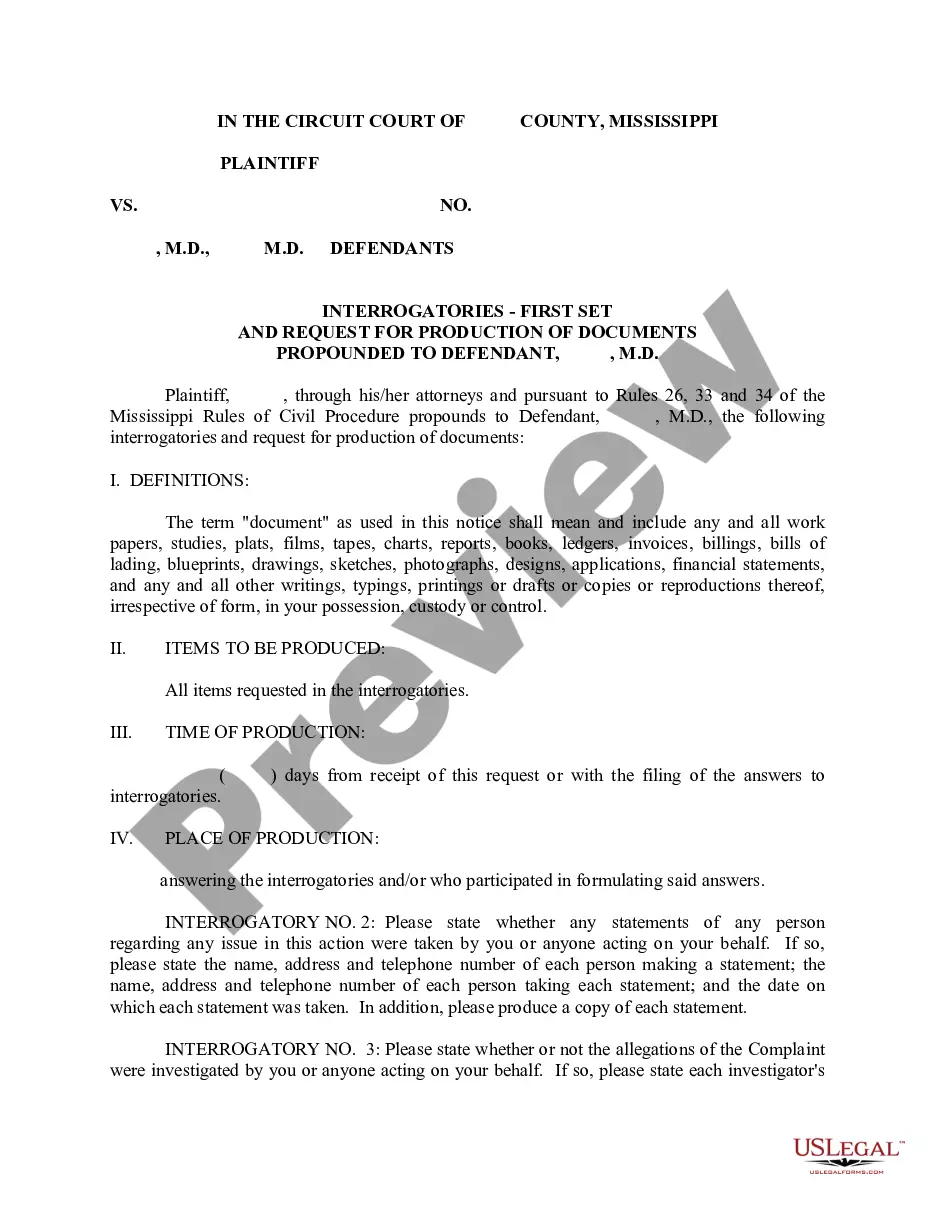
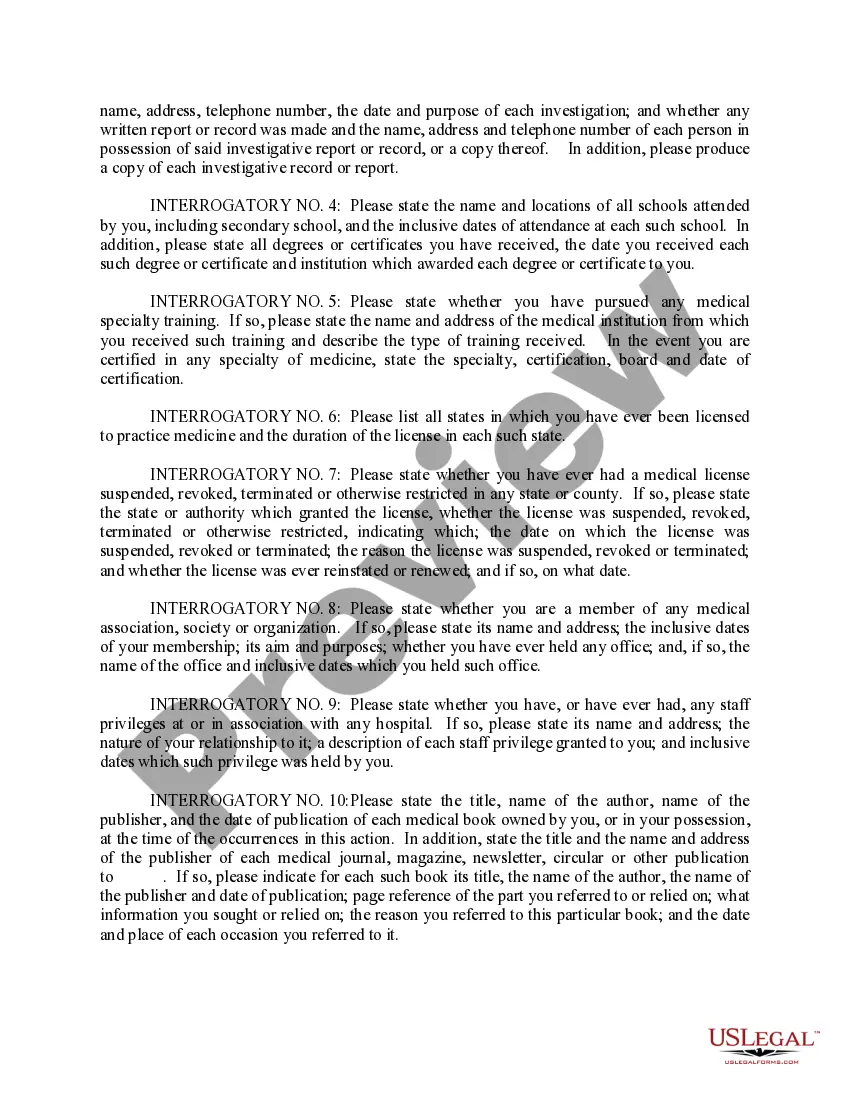
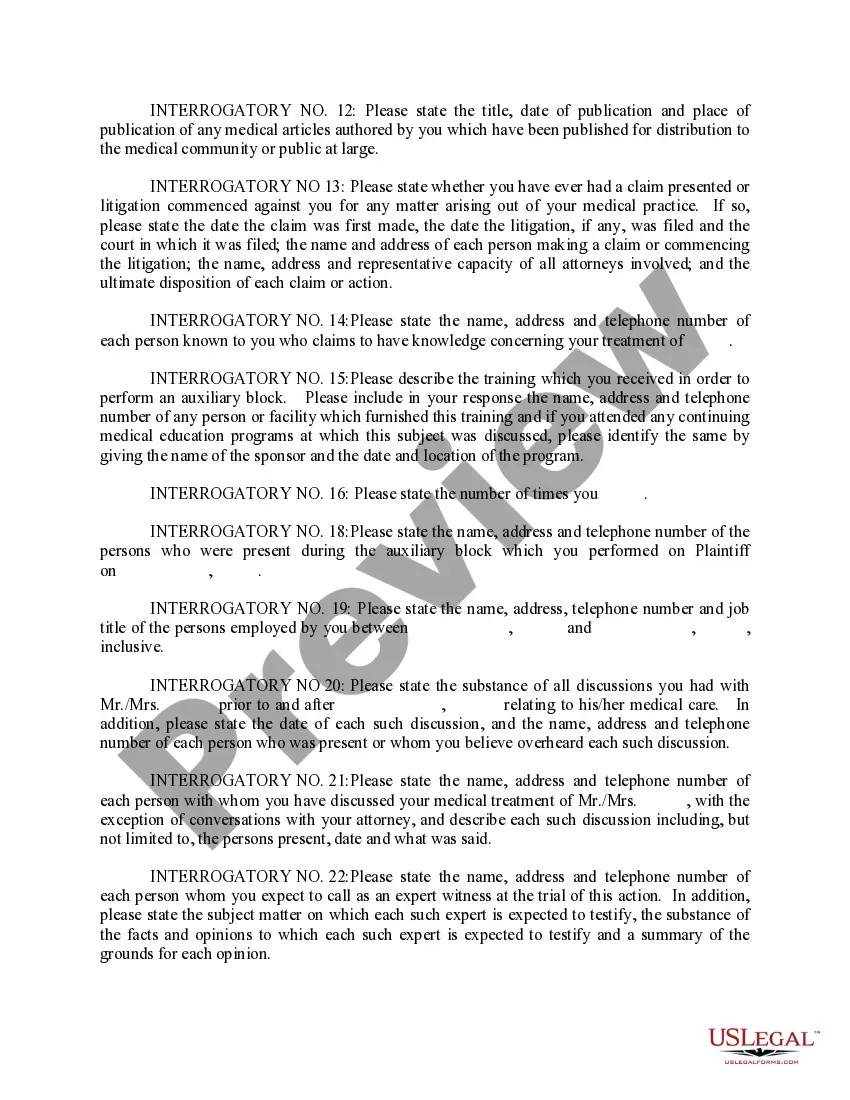
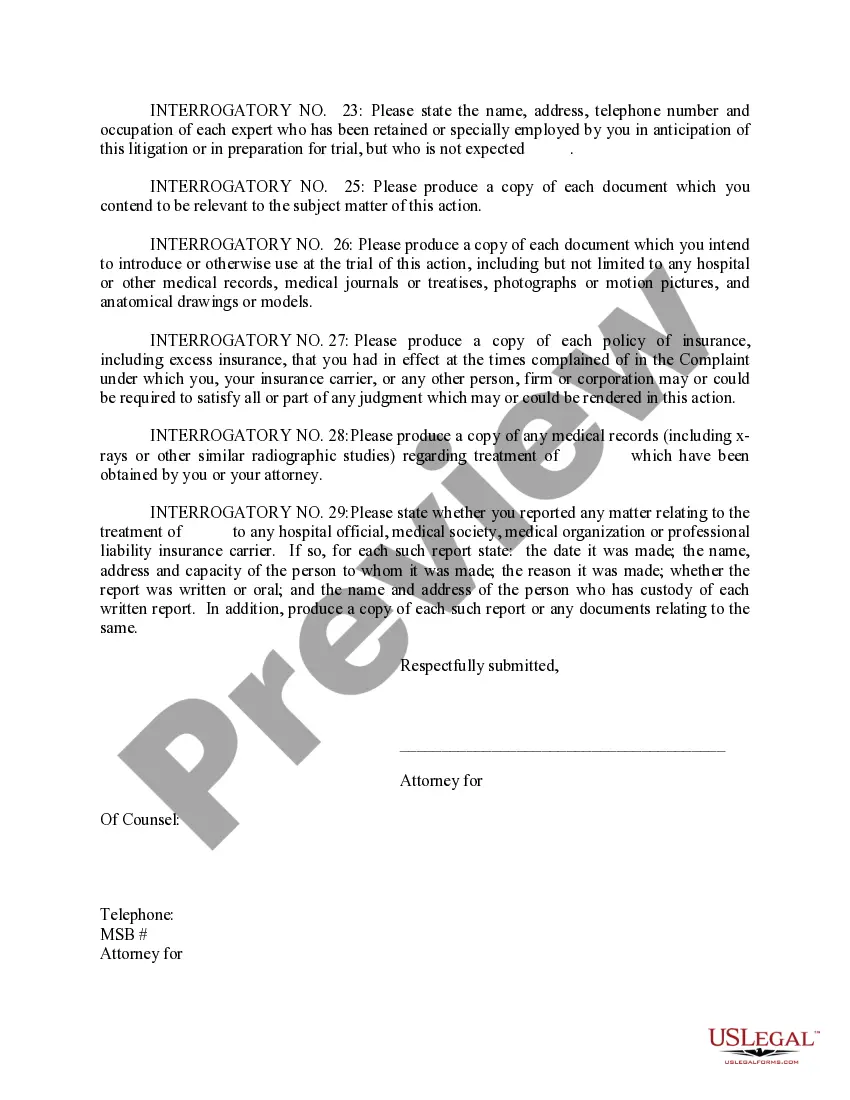
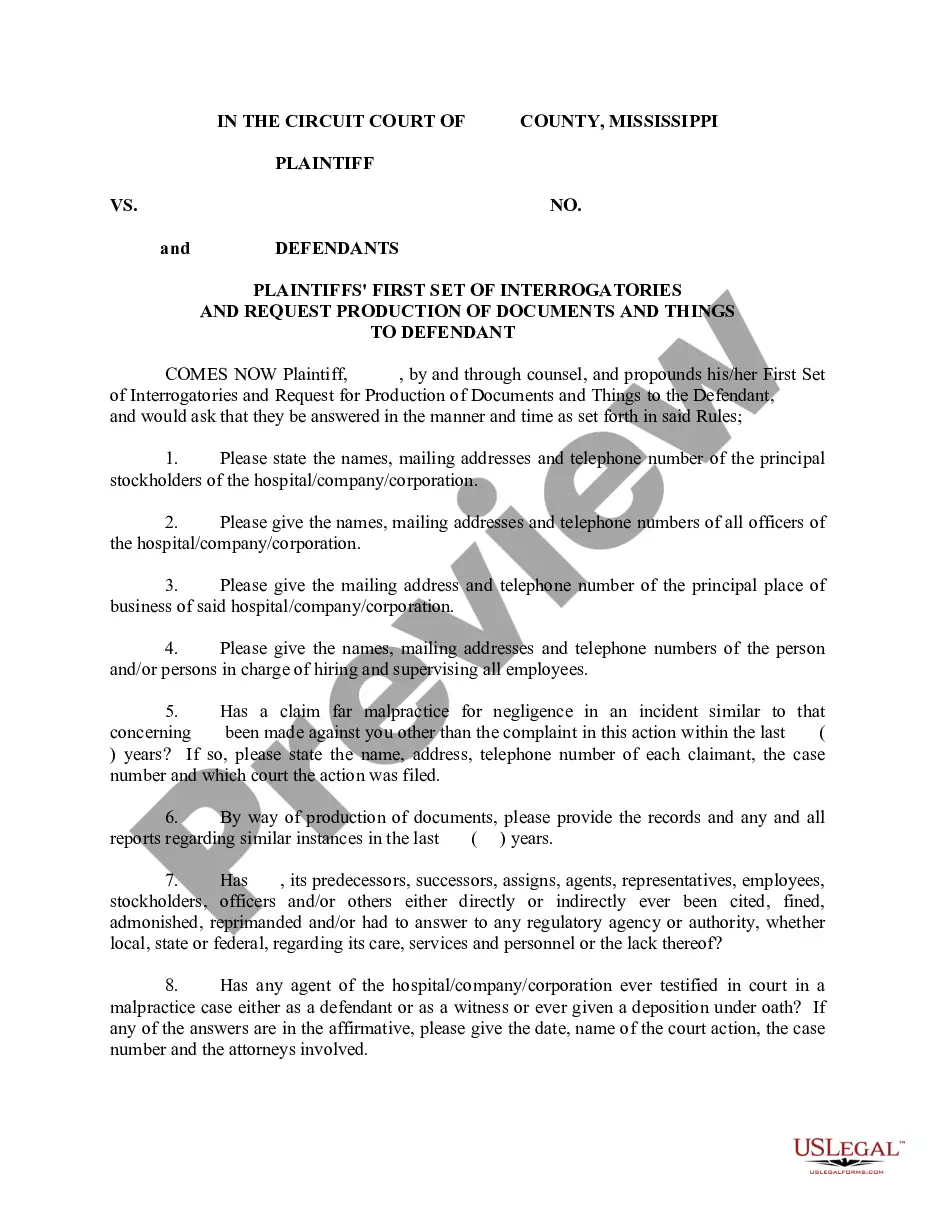
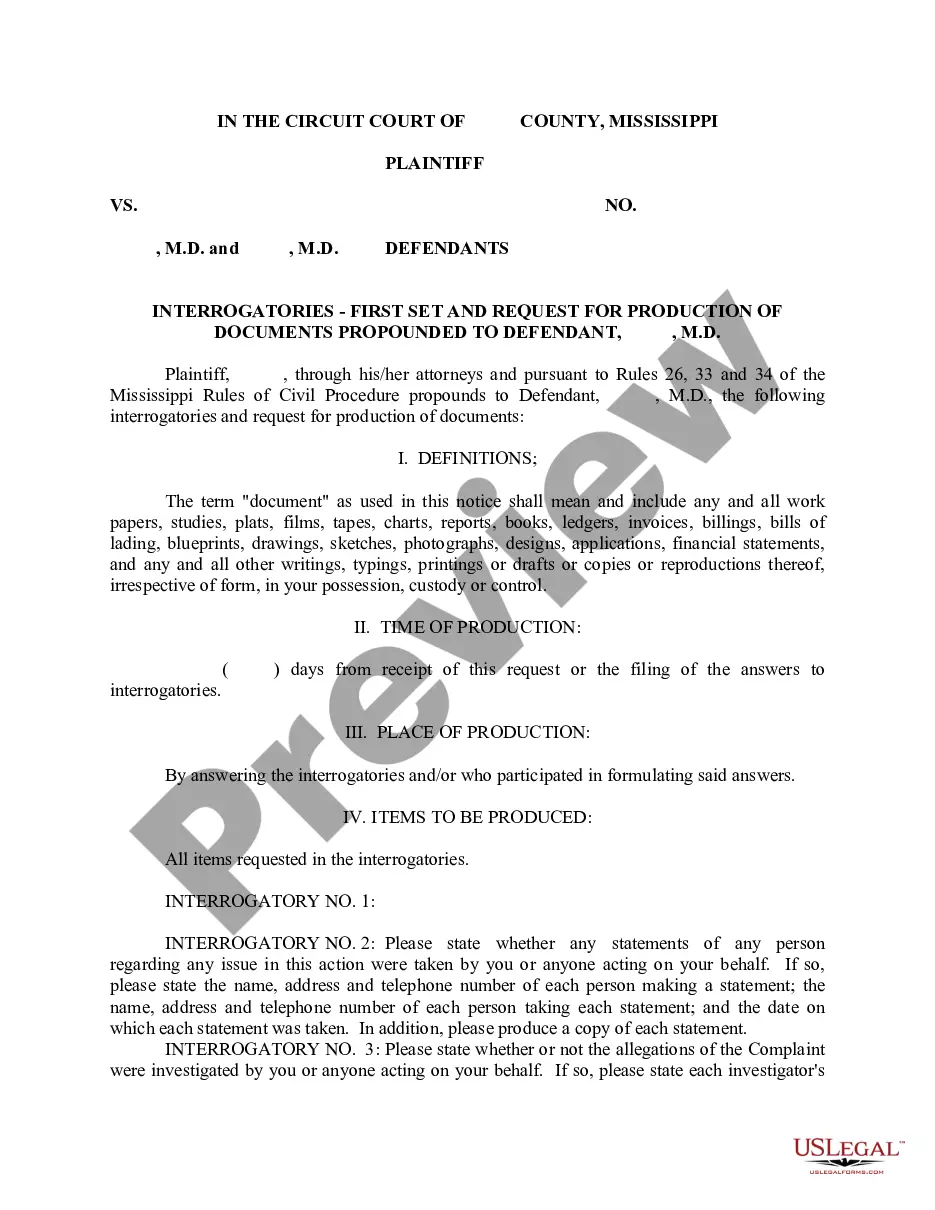
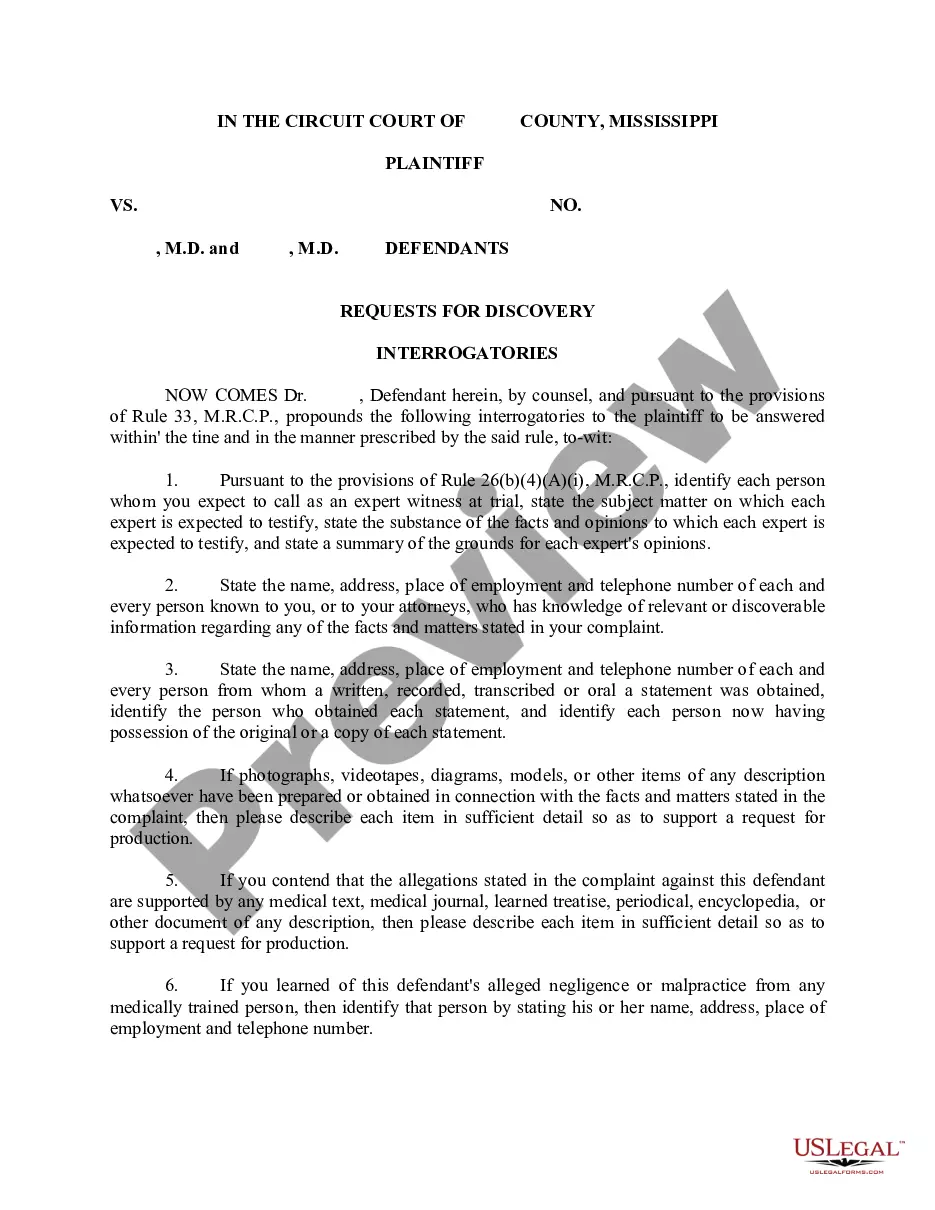
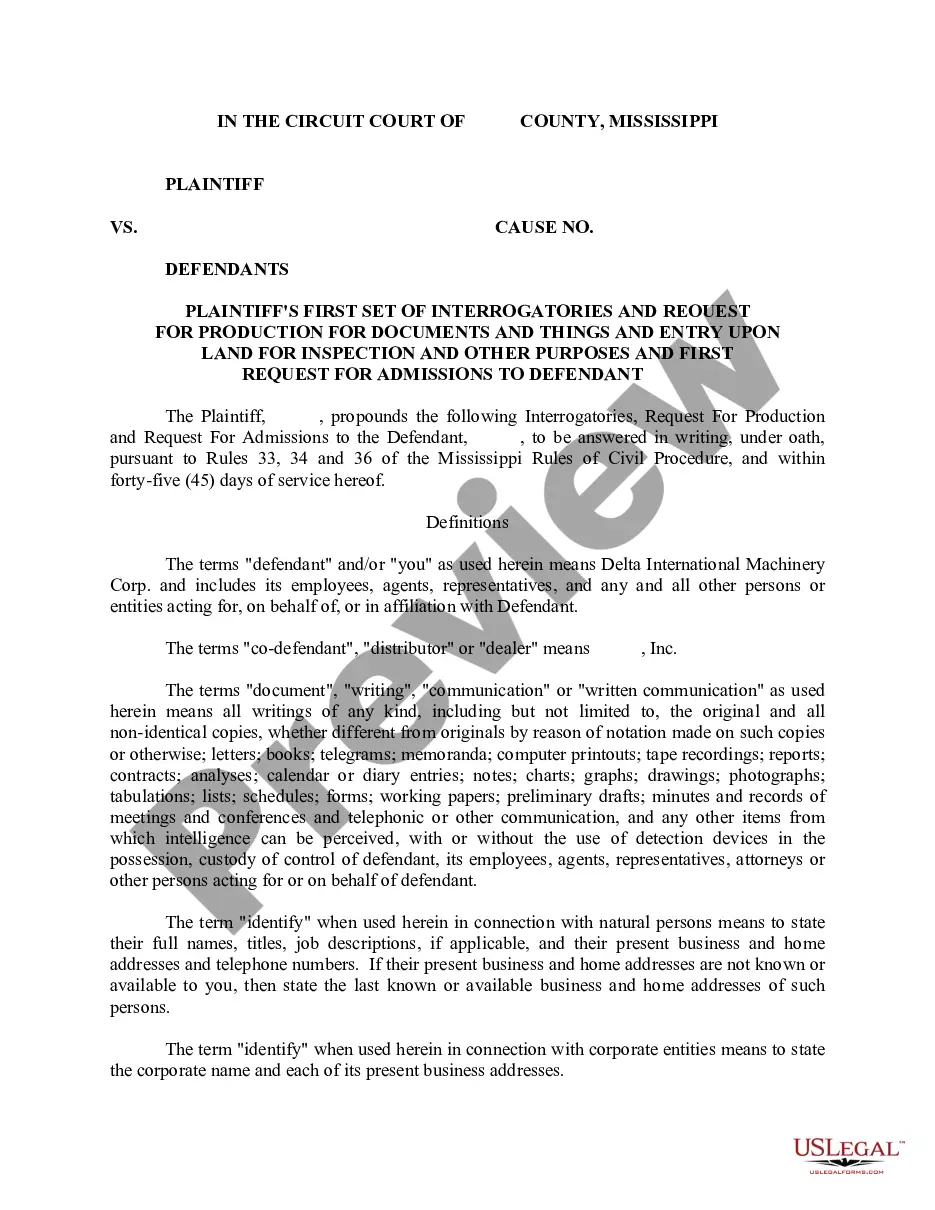
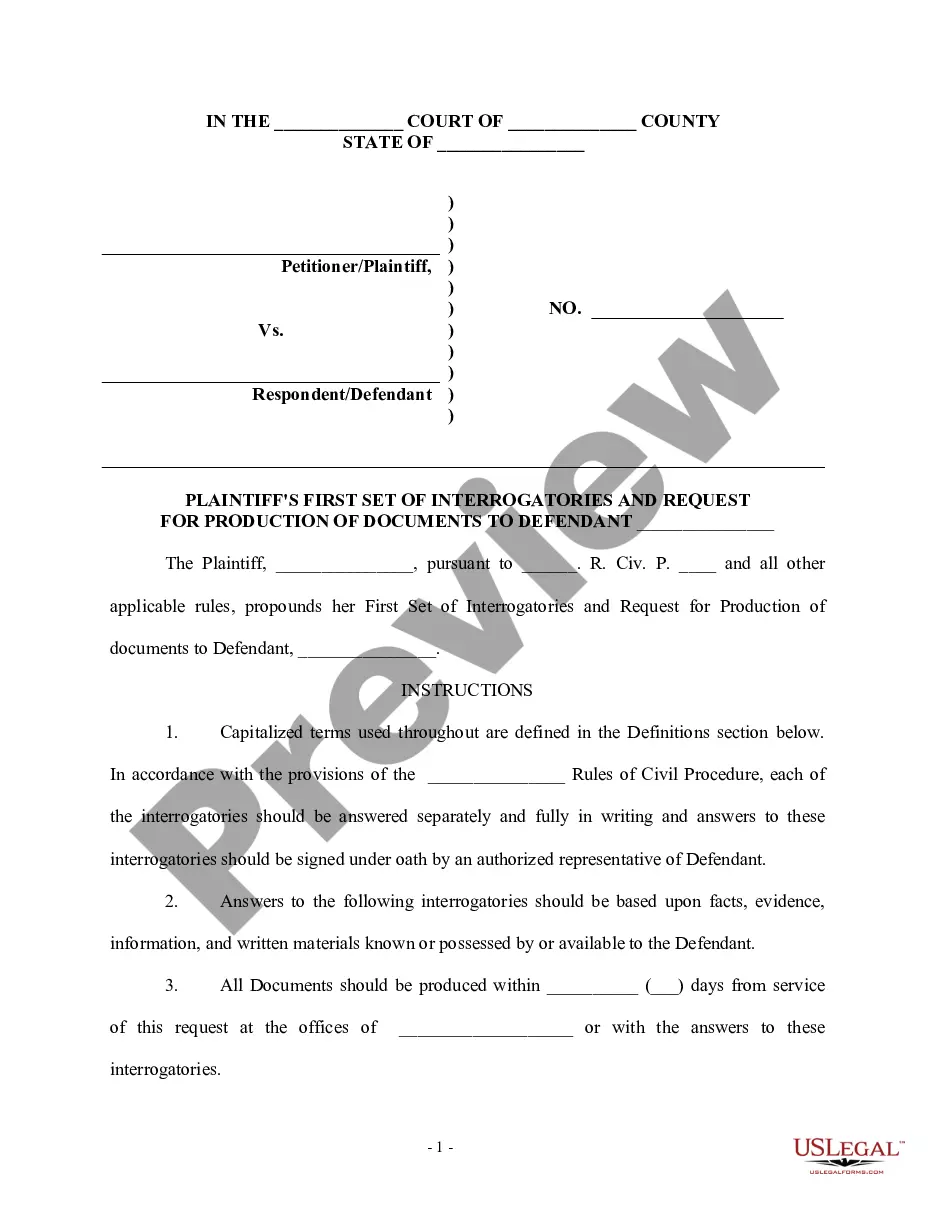
The Interrogatories - First Set and Request for Production of Documents to Defendant is a legal document used in the discovery phase of a lawsuit. This form entails a series of written questions directed to the defendant, aiming to gather information relevant to the case. Unlike other forms, this document not only includes interrogatories but also requests the production of pertinent documents, making it a comprehensive tool for evidence collection. This form can be modified to fit the specific facts and circumstances of your case.
What’s included in this form
- Definitions and instructions for completing the form.
- A series of interrogatories that seek detailed information about the defendant's allegations, investigations, and medical background.
- Requests for the production of specific documents related to the case.
- Sections for identifying the parties involved and the context of the lawsuit.
Situations where this form applies
This form is essential when you are involved in litigation and need to collect information from the defendant to build your case. It is particularly useful in medical malpractice cases, personal injury lawsuits, or any legal scenario where gathering evidence from another party is necessary. Utilizing this form can facilitate a clearer understanding of the opposing party's claims and defenses.
Who this form is for
- Parties involved in a lawsuit seeking to gather information from the defendant.
- Attorneys representing clients in civil litigation.
- Individuals preparing for trial and needing to strengthen their case with documented evidence.
Steps to complete this form
- Identify the parties involved in the lawsuit.
- Read the instructions carefully to understand the purpose of each interrogatory.
- Respond to each interrogatory with clear and concise answers.
- Gather and attach any relevant documents requested along with your answers.
- Review the completed form for accuracy before submission.
Does this form need to be notarized?
In most cases, this form does not require notarization. However, some jurisdictions or signing circumstances might. US Legal Forms offers online notarization powered by Notarize, accessible 24/7 for a quick, remote process.
Get your form ready online
Our built-in tools help you complete, sign, share, and store your documents in one place.
Make edits, fill in missing information, and update formatting in US Legal Forms—just like you would in MS Word.
Download a copy, print it, send it by email, or mail it via USPS—whatever works best for your next step.
Sign and collect signatures with our SignNow integration. Send to multiple recipients, set reminders, and more. Go Premium to unlock E-Sign.
If this form requires notarization, complete it online through a secure video call—no need to meet a notary in person or wait for an appointment.
We protect your documents and personal data by following strict security and privacy standards.

Make edits, fill in missing information, and update formatting in US Legal Forms—just like you would in MS Word.

Download a copy, print it, send it by email, or mail it via USPS—whatever works best for your next step.

Sign and collect signatures with our SignNow integration. Send to multiple recipients, set reminders, and more. Go Premium to unlock E-Sign.

If this form requires notarization, complete it online through a secure video call—no need to meet a notary in person or wait for an appointment.

We protect your documents and personal data by following strict security and privacy standards.
Typical mistakes to avoid
- Providing incomplete or vague answers to interrogatories.
- Failing to gather and submit requested documents.
- Not adhering to deadlines for submitting the form.
- Overlooking the need to modify the form for case-specific details.
Benefits of completing this form online
- Convenient access to a professionally drafted legal document from anywhere.
- Editable text allows you to tailor the form to your specific case needs.
- Reliable format ensures compliance with legal standards.
Legal use & context
This form is a recognized part of the discovery process in litigation. Its use helps facilitate transparency and the gathering of evidence, which is essential for fair trial proceedings. Failing to utilize this form effectively may disadvantage a party, making it crucial for proper legal strategy.
Looking for another form?
Form popularity
FAQ
In certain cases, you might be able to write a letter to the other side and request the documents that you need. However, in more formal cases, you will likely have to draft more formal discovery demands. There are usually forms available for this in local law libraries, from the court clerk's office, or online.
You must answer each interrogatory separately and fully in writing under oath, unless you object to it. You must explain why you object. You must sign your answers and objections.
A request for production is a legal request for documents, electronically stored information, or other tangible items made in the course of litigation.The responding party is required to furnish copies of any documents that are responsive to the request, except for those that are legally privileged.
Interrogatories, which are written questions about things that are relevant or important to the case. (NRCP 33; JCRCP 33) Requests for production of documents or things, which are written requests that demand the other side provide particular documents or items.
The purpose of interrogatories is to learn a great deal of general information about a party in a lawsuit. For example, the defendant in a personal injury lawsuit about a car accident might send you interrogatories asking you to disclose things like: Where you live. Where you work.
The issues discussed above in connection with interrogatories are also the issues which you need to cover in your requests for production. However, because requests for production do not yield a written answer, you can ask both for specific documents and for general categories of documents.
Interrogatories, which are written questions about things that are relevant or important to the case. (NRCP 33; JCRCP 33) Requests for production of documents or things, which are written requests that demand the other side provide particular documents or items.
What Is a Request for Production of Documents? A request for production is a discovery device used to gain access to documents, electronic data, and physical items held by an opposing party in a legal matter. The aim is to gain insight into any relevant evidence that the opposing party holds.