Mississippi Interrogatories and Request for Products to Defendant
What this document covers
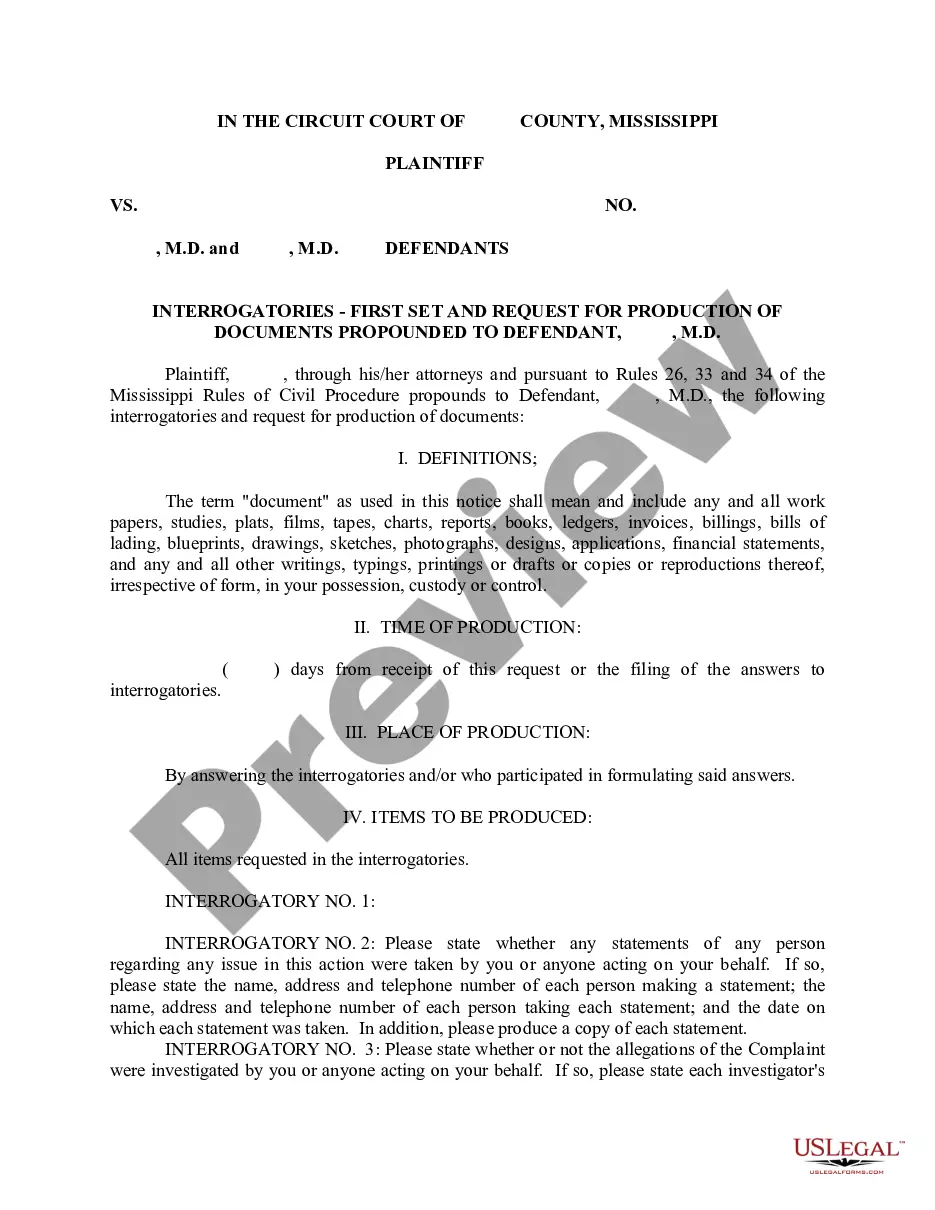
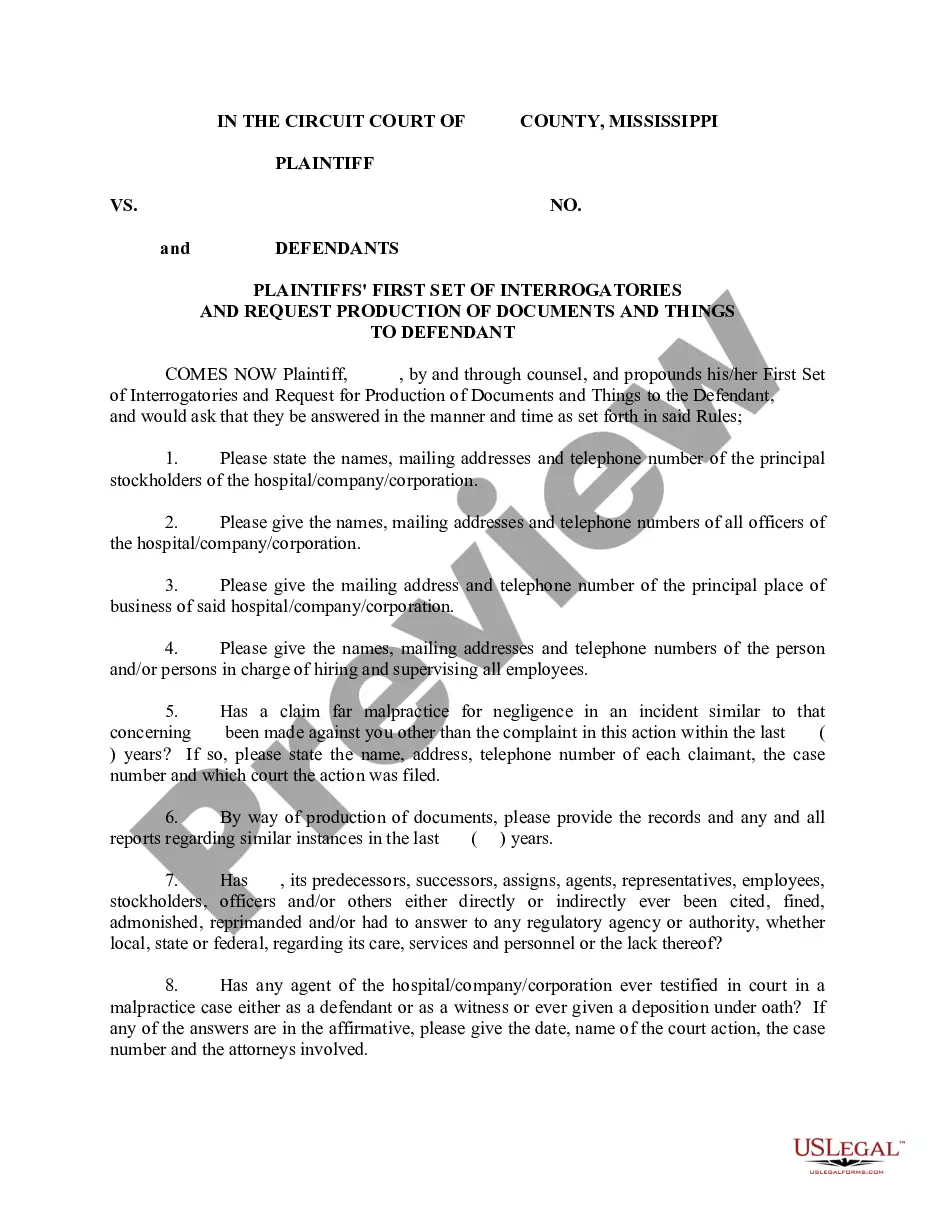
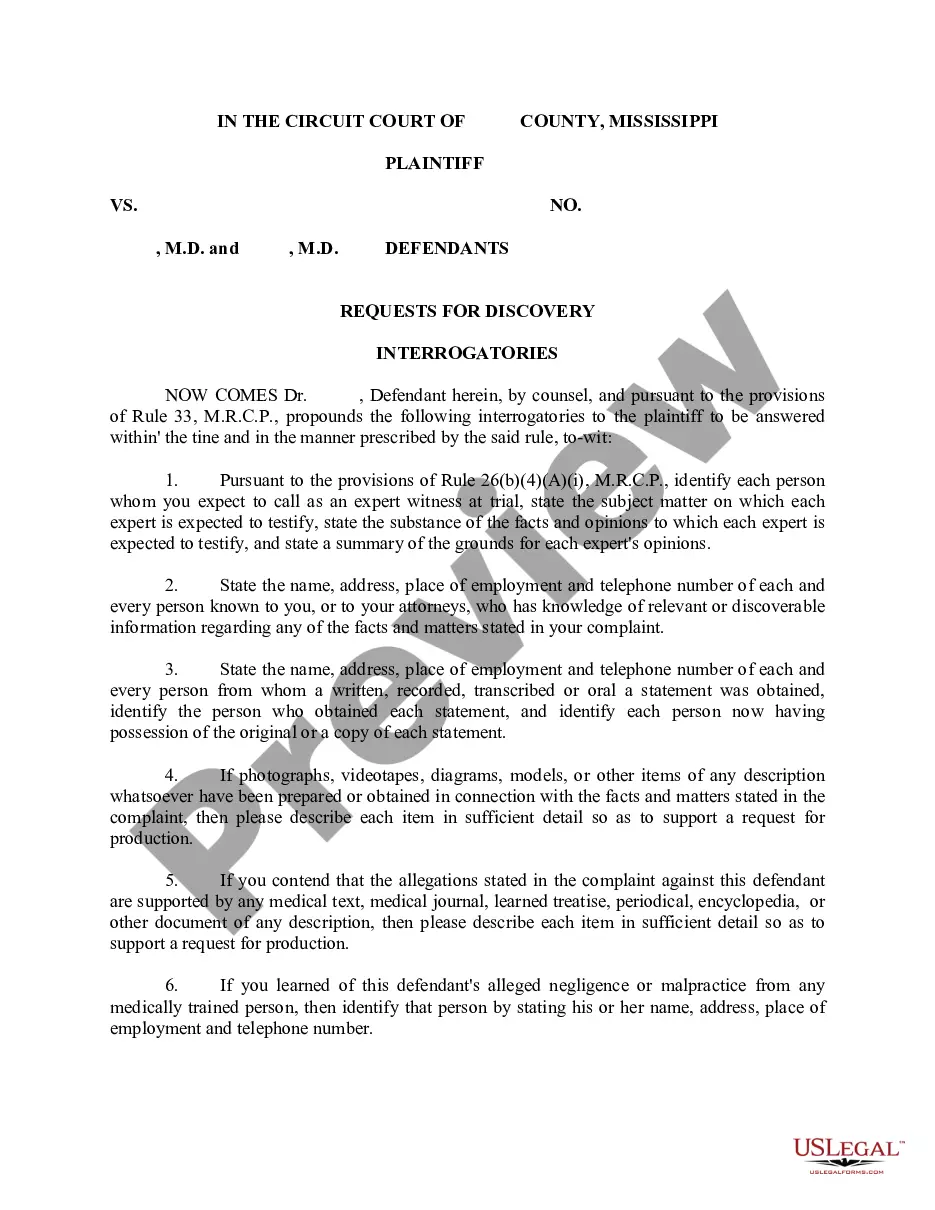
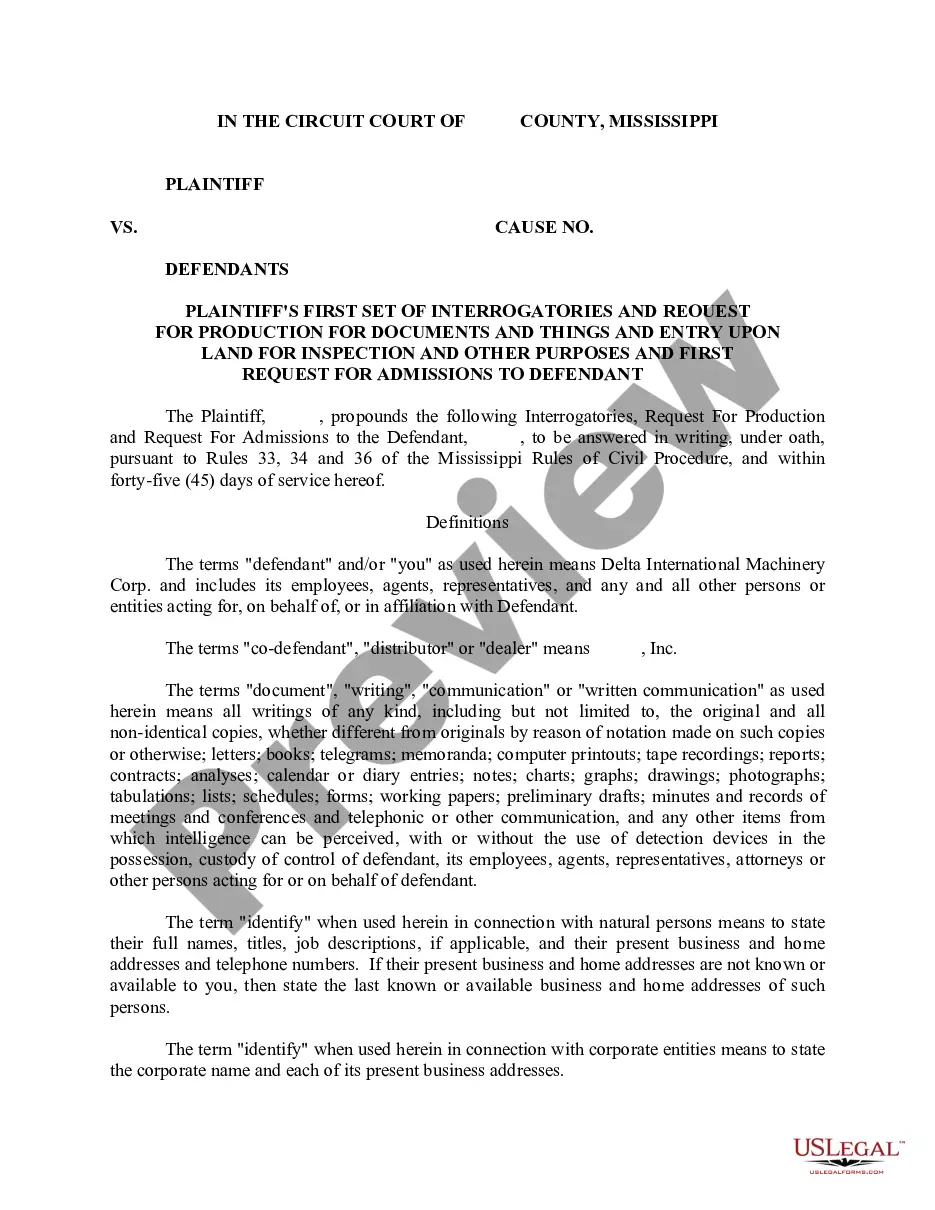
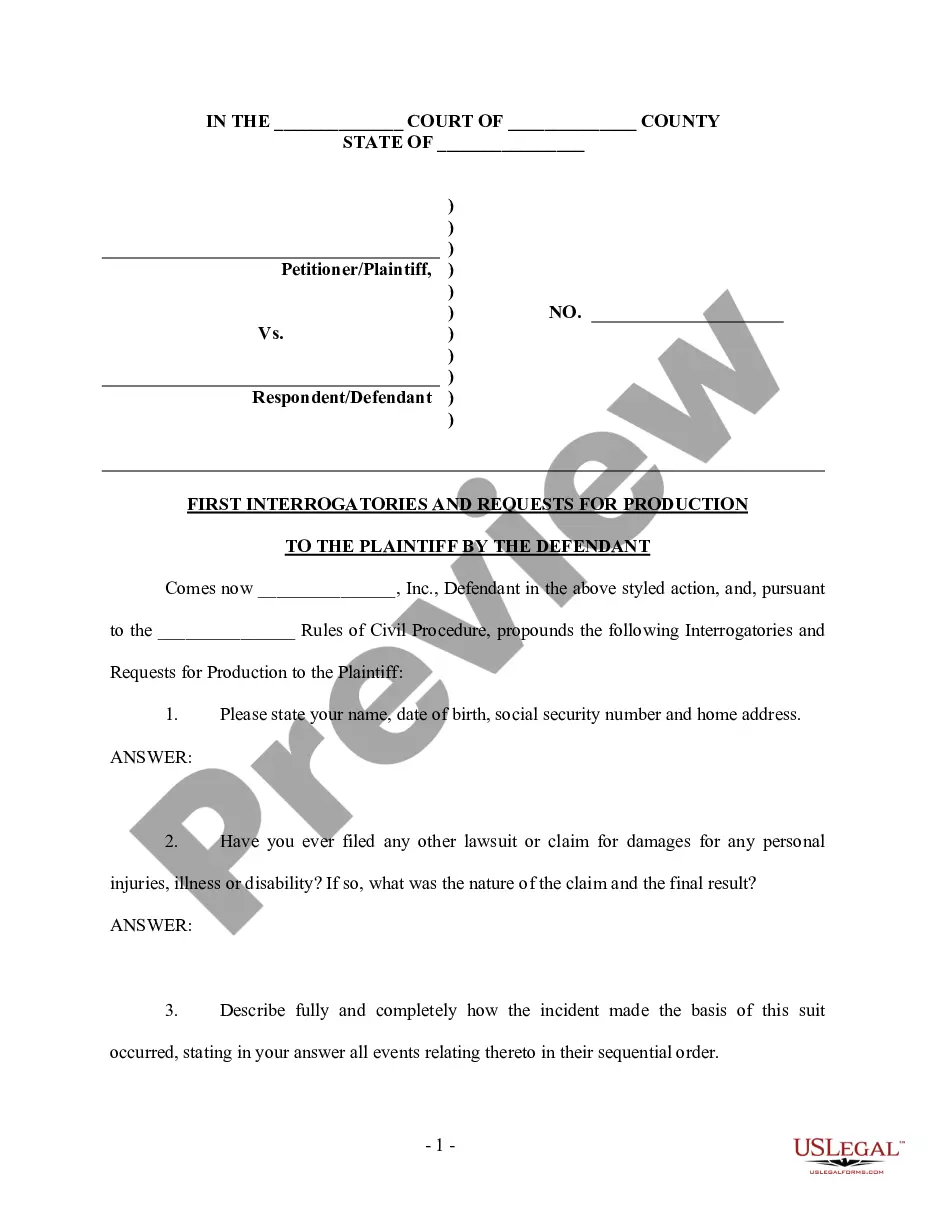
The Interrogatories and Request for Products to Defendant form is a critical document used in the discovery phase of a lawsuit. It consists of written questions directed to the opposing party, aiming to gather pertinent information and evidence. This form helps clarify the facts surrounding the case and is distinct from other discovery tools, such as depositions, by focusing specifically on written responses. Since every case is unique, users may need to tailor the form to their specific circumstances.
Main sections of this form
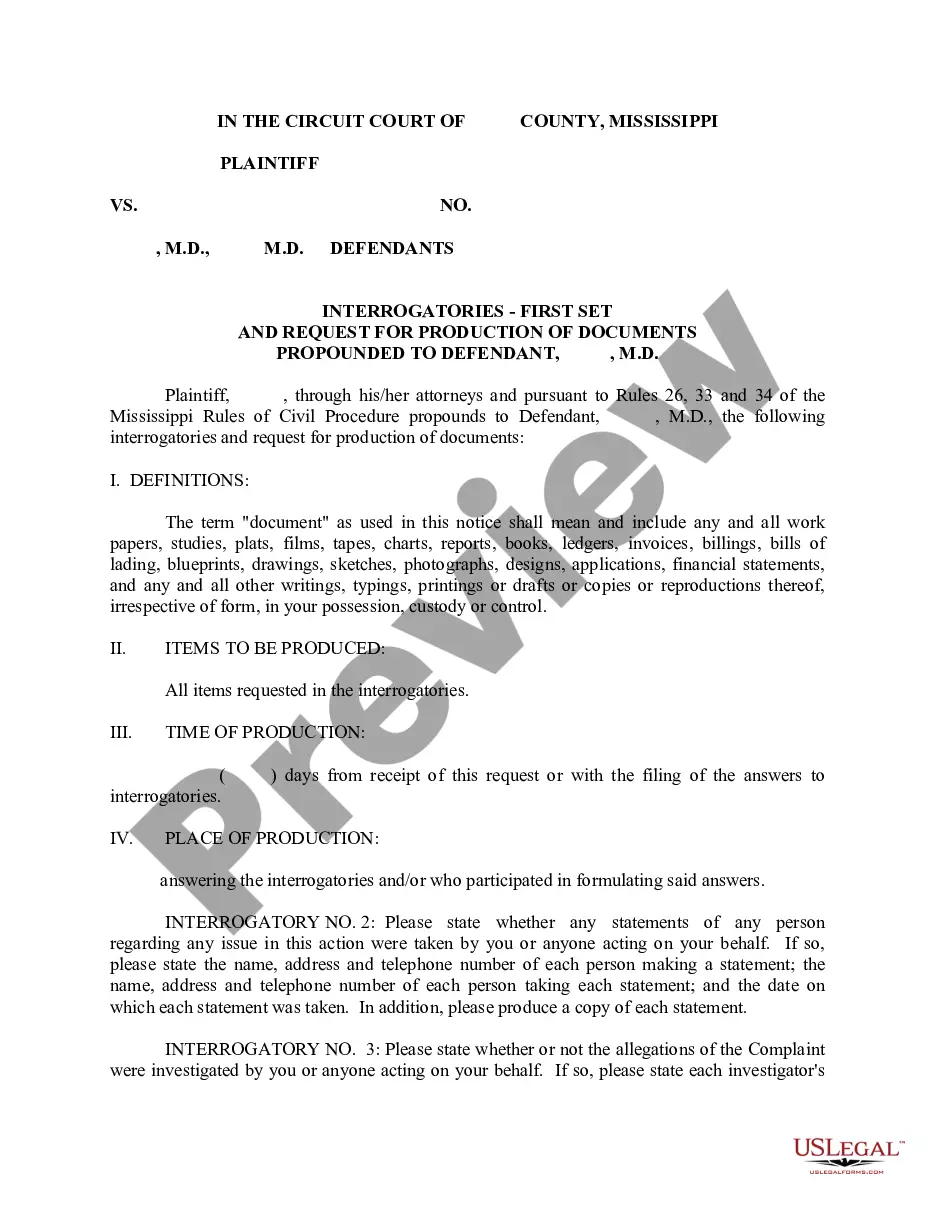
- Section on time of production for requesting information.
- Interrogatory questions about the investigation of allegations in the complaint.
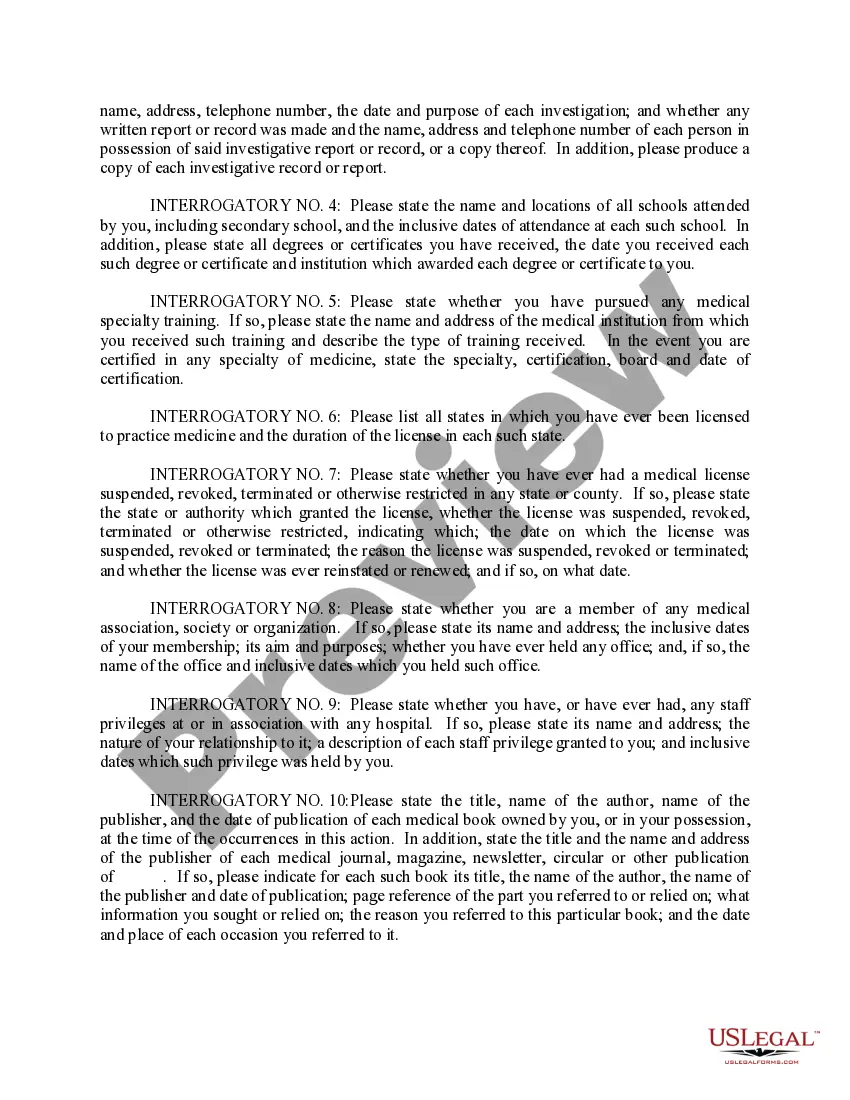
- Disclosure of educational history and any degrees or certifications attained.
- Information regarding medical specialty training and licensure.
- Questions about medical associations and any staff privileges at hospitals.
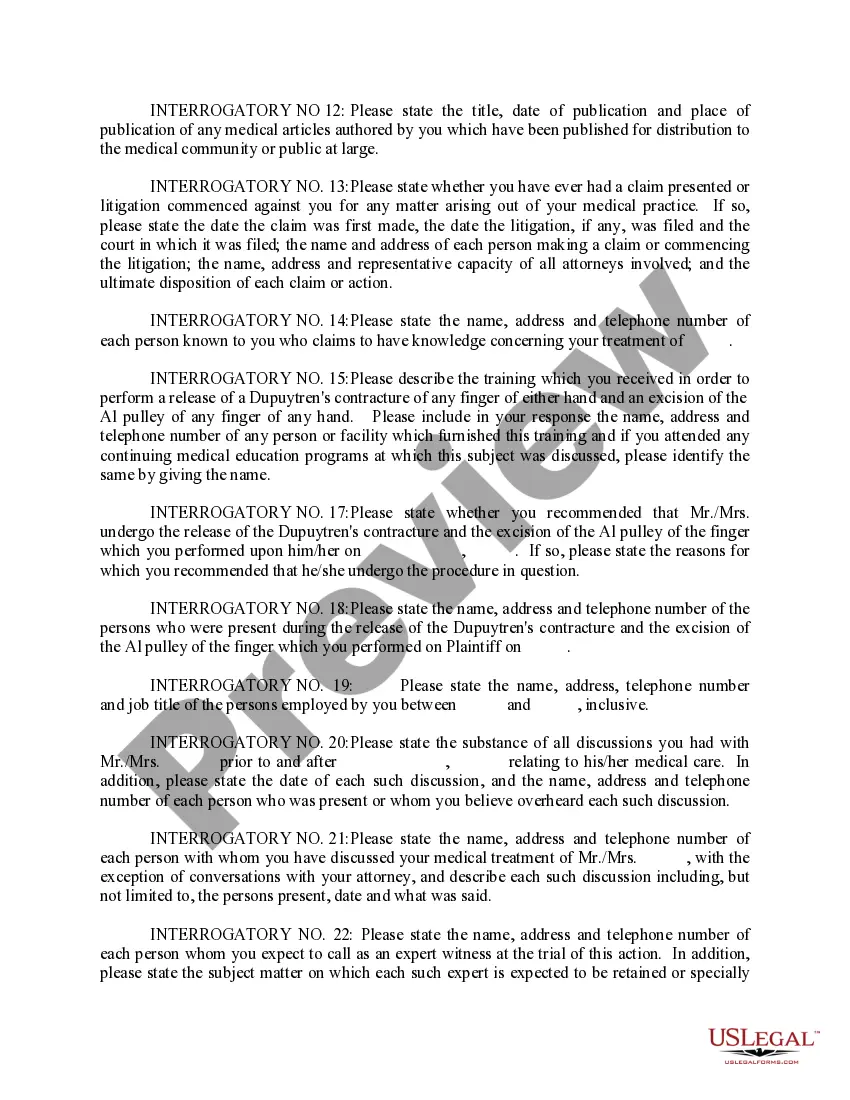
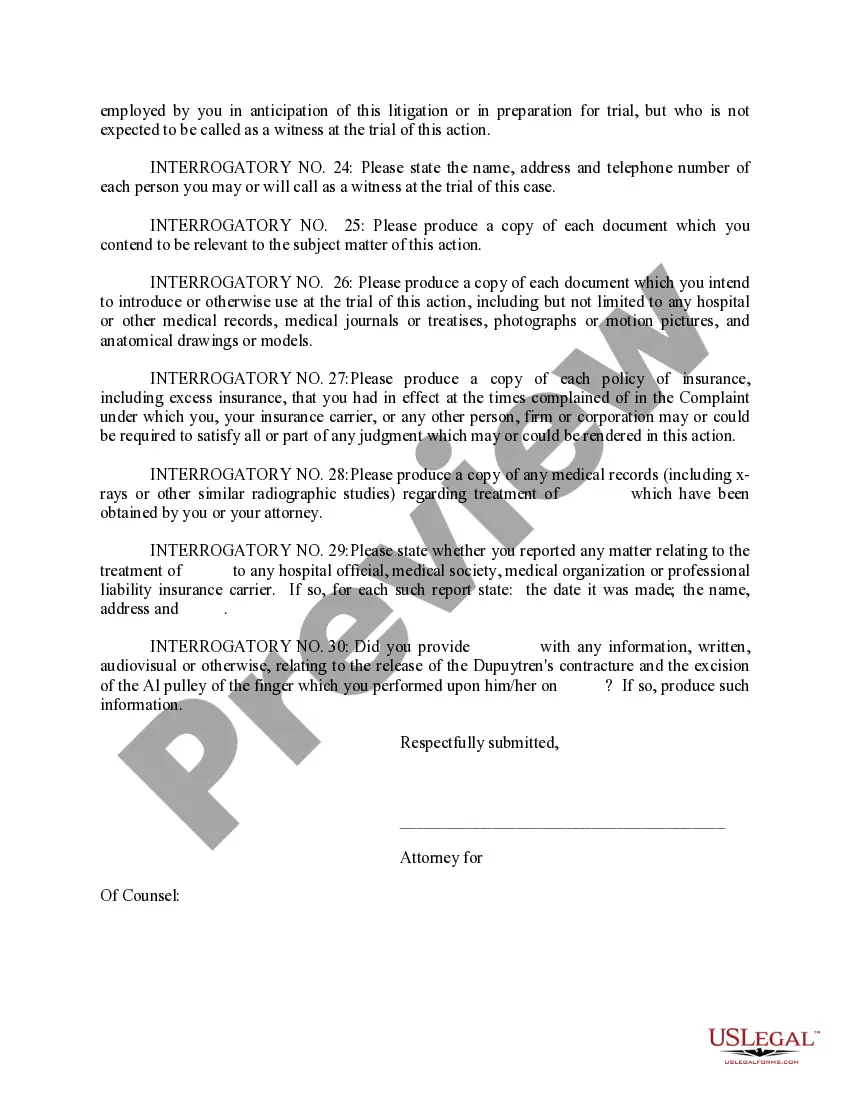
- Request for documents relevant to the trial, including insurance policies.

When to use this document
This form is used in civil litigation when one party wishes to obtain information from the other party as part of the discovery process. It is particularly useful when there are complex issues related to medical qualifications, experiences, or when the party requires clarification on specific allegations made in the complaint. You should use this form when preparing for trial and seeking evidence that may support your case.
Who can use this document
This form is intended for:
- Individuals involved in civil litigation who need to gather information from the opposing party.
- Legal representatives preparing for a case that involves medical professionals.
- Defendants who require a structured way to respond to discovery requests.
Instructions for completing this form
- Identify the parties involved in the lawsuit, including yourself and the defendant.
- Fill in the specific interrogatory questions, ensuring they align with the issues in your case.
- Sign and date the form to confirm its accuracy and completeness.
- Submit the form to the opposing party as part of the discovery process.
- Keep a copy for your records and follow up if responses are not received within the stipulated time.
Does this form need to be notarized?
Notarization is not commonly needed for this form. However, certain documents or local rules may make it necessary. Our notarization service, powered by Notarize, allows you to finalize it securely online anytime, day or night.
Get your form ready online
Our built-in tools help you complete, sign, share, and store your documents in one place.
Make edits, fill in missing information, and update formatting in US Legal Forms—just like you would in MS Word.
Download a copy, print it, send it by email, or mail it via USPS—whatever works best for your next step.
Sign and collect signatures with our SignNow integration. Send to multiple recipients, set reminders, and more. Go Premium to unlock E-Sign.
If this form requires notarization, complete it online through a secure video call—no need to meet a notary in person or wait for an appointment.
We protect your documents and personal data by following strict security and privacy standards.

Make edits, fill in missing information, and update formatting in US Legal Forms—just like you would in MS Word.

Download a copy, print it, send it by email, or mail it via USPS—whatever works best for your next step.

Sign and collect signatures with our SignNow integration. Send to multiple recipients, set reminders, and more. Go Premium to unlock E-Sign.

If this form requires notarization, complete it online through a secure video call—no need to meet a notary in person or wait for an appointment.

We protect your documents and personal data by following strict security and privacy standards.
Avoid these common issues
- Failing to tailor the interrogatories to the specific facts of the case.
- Not providing sufficient time for the opposing party to respond to the questions.
- Omitting key questions that could lead to critical information.
- Not keeping a complete and accurate record of all submissions and responses.
Why complete this form online
- Convenience of downloading and customizing the form from anywhere.
- Editability allows users to tailor questions to their specific case needs.
- Reliability from forms drafted by licensed attorneys, ensuring legal adequacy.
Legal use & context
- This form is legally recognized as part of the discovery process in litigation.
- Responses to interrogatories must be truthful and complete, as they are considered legal testimony.
- Failure to respond adequately to interrogatories can lead to sanctions or unfavorable judgments.
Summary of main points
- The Interrogatories and Request for Products to Defendant form is essential for gathering information in legal disputes.
- It is important to customize the form for your particular case to ensure relevancy.
- Understanding the process and requirements can help avoid common mistakes during completion.
Looking for another form?

Form popularity
FAQ
In law, interrogatories (also known as requests for further information) are a formal set of written questions propounded by one litigant and required to be answered by an adversary in order to clarify matters of fact and help to determine in advance what facts will be presented at any trial in the case.
Have a strategy. Adjust the scope of your requests to the questions at issue. Send clear requests. Always consider how your client would be prepared to respond to similar requests. Make your objections clear and specific.
So, can you refuse to answer interrogatories? The answer is, no, you may not. You must answer a Rule 33 interrogatory within 30 days of being served with it. That answer must either permit inspection of the requested information or object to the production of the information for a specific reason.
Requests for Admissions involves one party asking the opposing to admit, deny, or prove the validity of certain facts or documents. This portion of the discovery saves time during the trial and allows the party to trust the facts or documents in question.
Interrogatories Interrogatories are written questions that are sent by one party to another. Generally speaking, the party who receives these questions has 30 days to answer them.If the other party fails to respond on time, within 30 days, then the questions are deemed admitted.
Your answers to the interrogatories should usually be short, clear, and direct and should answer only the question that is being asked. This is not the time to set out your entire case or defense to the other side. Take the time to make sure your answers are correct and truthful.
Interrogatories are written questions that one party to a lawsuit sends to another, and the responding party submits written answers under oath. If a lawsuit is filed in a personal injury case, chances are interrogatories will come into play.
The purpose of interrogatories is to learn a great deal of general information about a party in a lawsuit. For example, the defendant in a personal injury lawsuit about a car accident might send you interrogatories asking you to disclose things like: Where you live.
You must answer each interrogatory separately and fully in writing under oath, unless you object to it. You must explain why you object. You must sign your answers and objections.