5.41 ELEMENTS OF CLAIM: CONSTRUCTIVE DISCHARGE
About this form
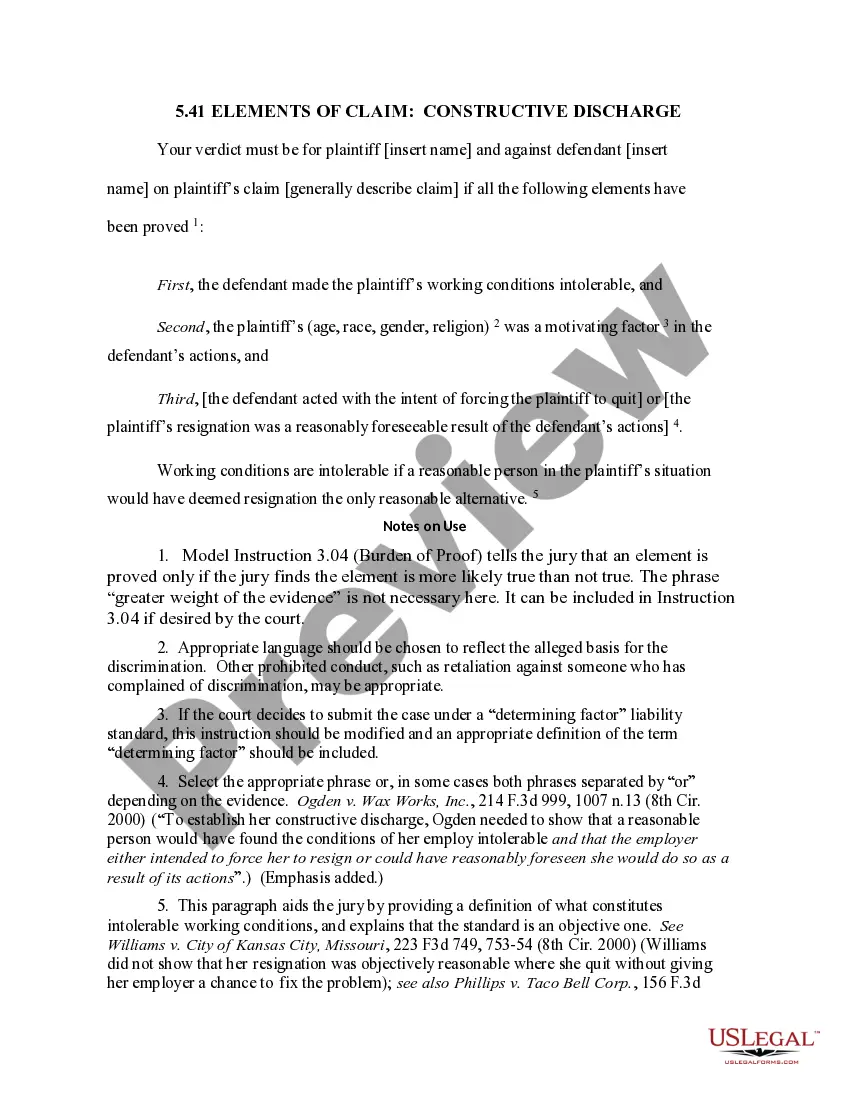
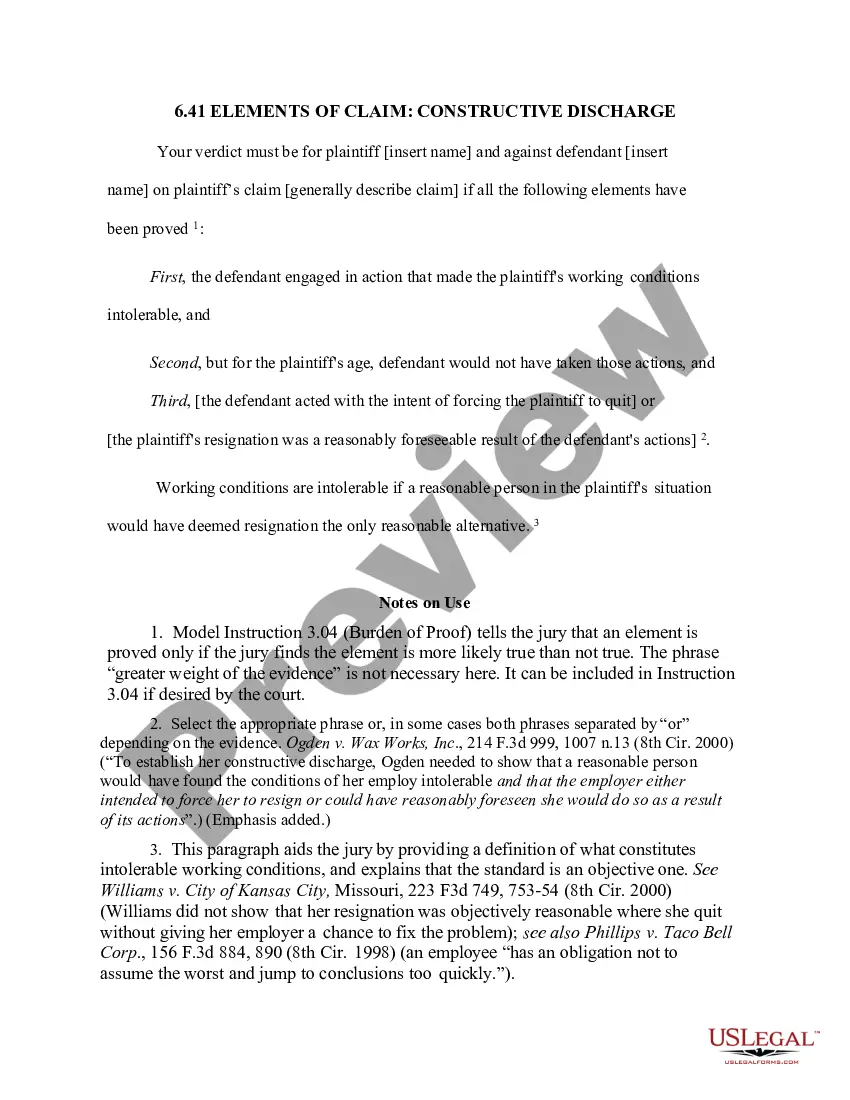
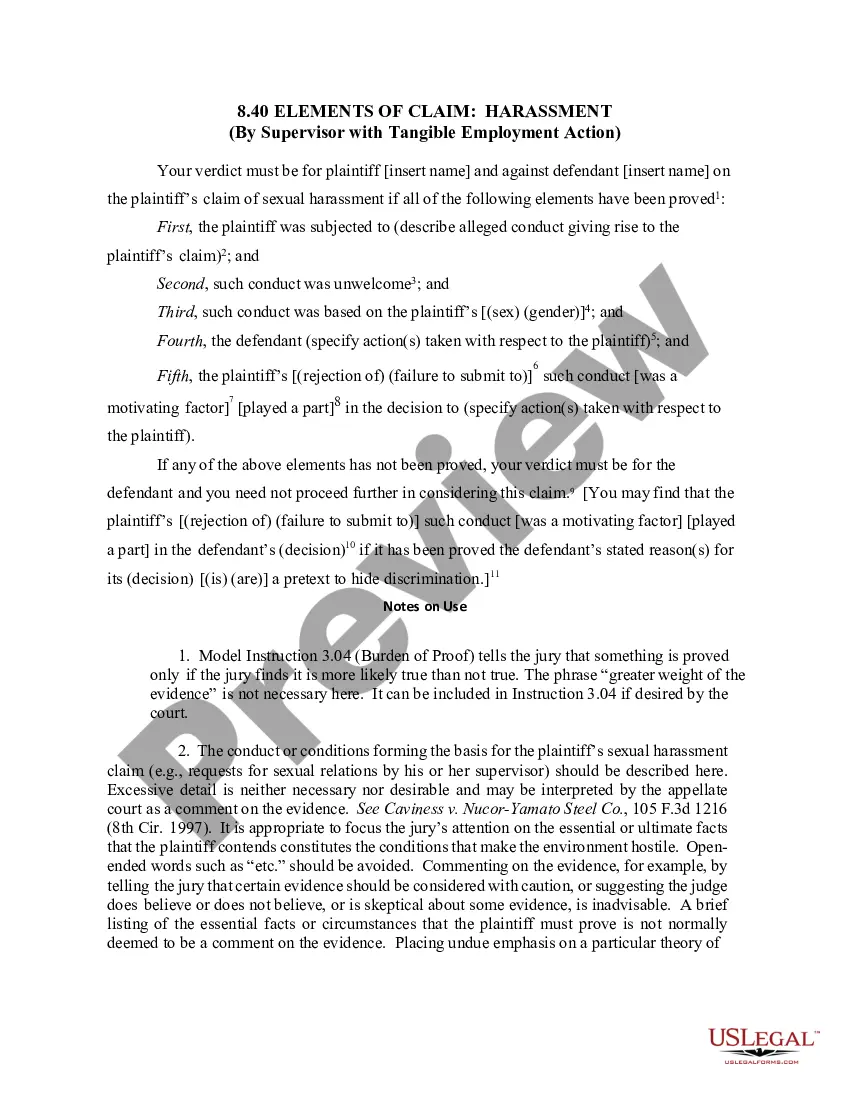
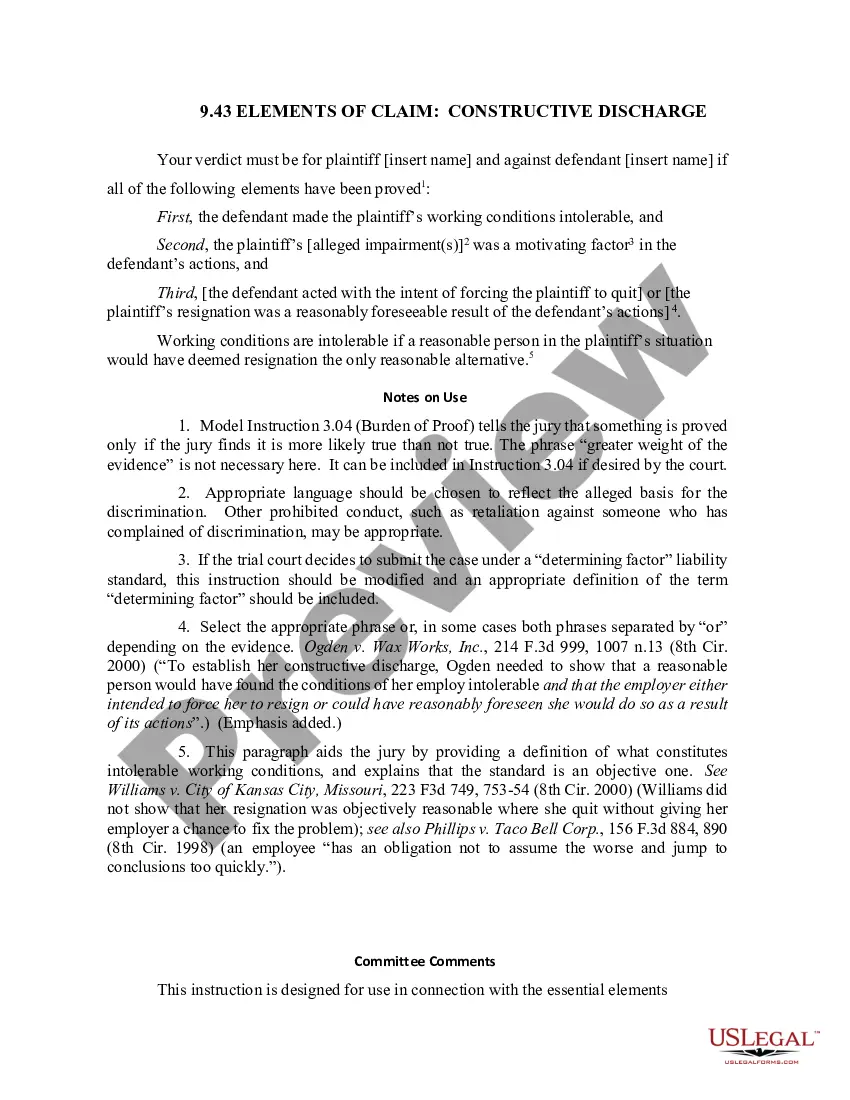
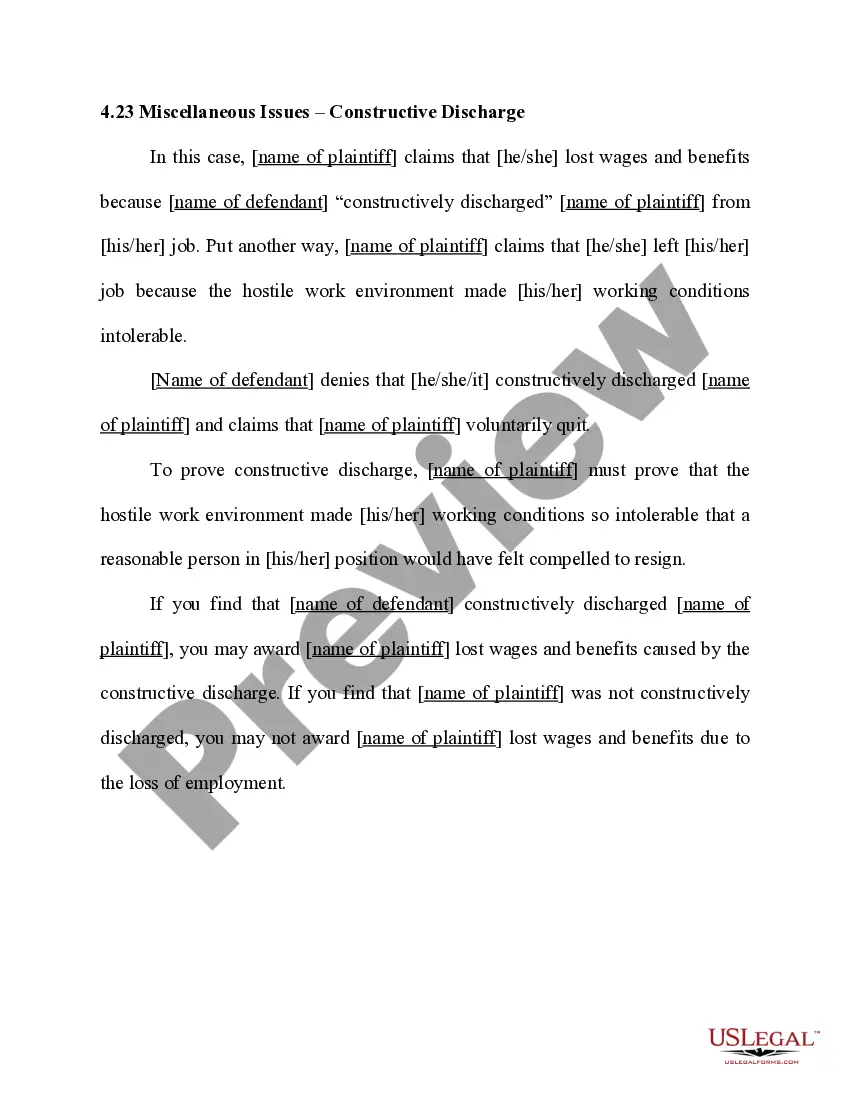
The 5.41 Elements of Claim: Constructive Discharge form is a legal document used in cases where an employee claims that their resignation was a result of intolerable working conditions caused by their employer. This claim often involves allegations of discrimination based on factors such as age, race, gender, or religion. Unlike resignation under normal circumstances, a constructive discharge claim requires proof that an employer intentionally made conditions unbearable, forcing the employee to leave. This form is essential for individuals seeking to establish grounds for legal action based on constructive discharge.
Main sections of this form
- A clear statement of the plaintiff's claim against the defendant.
- An outline of the intolerable working conditions experienced by the plaintiff.
- Identification of a motivating factor, such as age, race, gender, or religion, in the employer's actions.
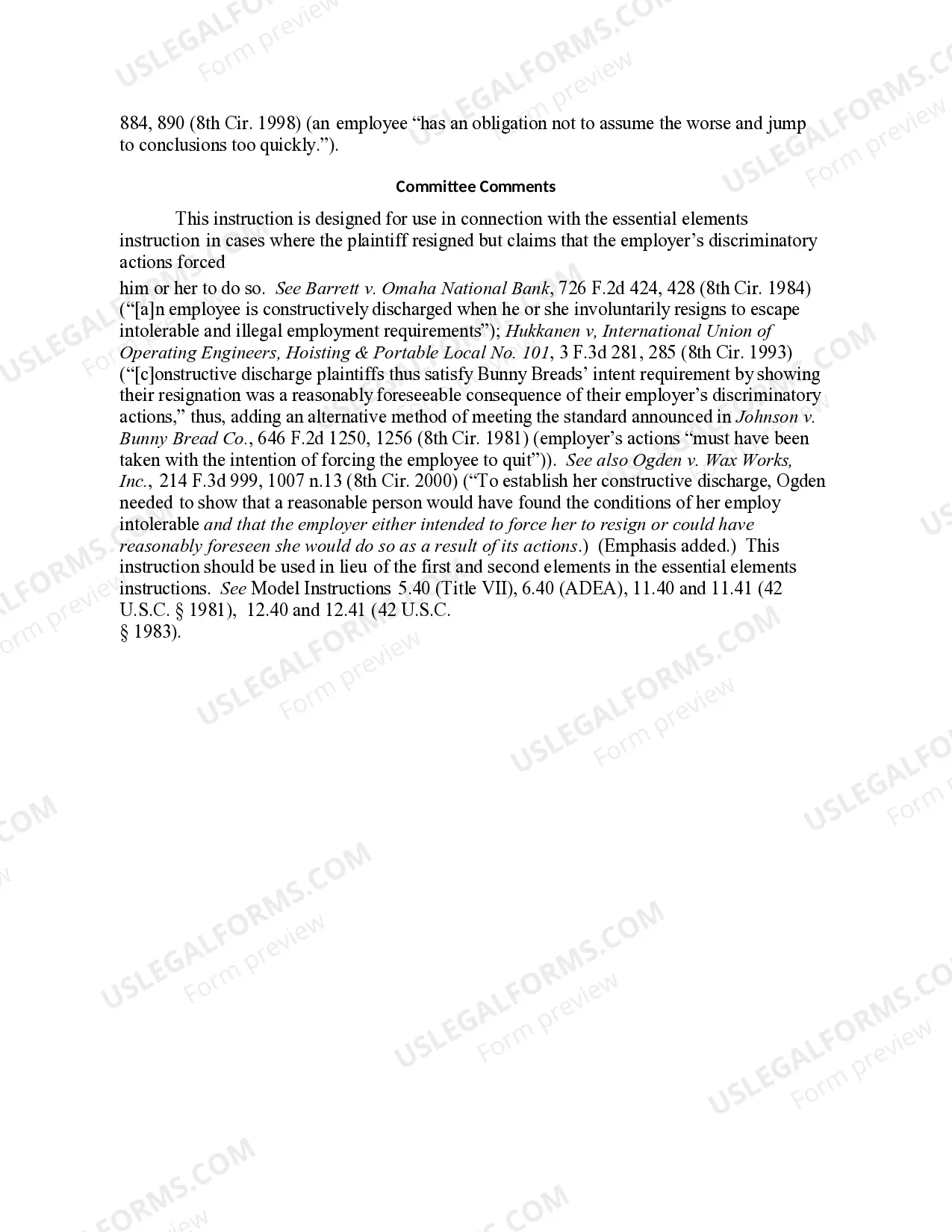
- Evidence that the employer intended to compel the plaintiff to resign or that resignation was a reasonably foreseeable consequence of their actions.
- A definition of what constitutes intolerable working conditions based on reasonable person standards.
Situations where this form applies
This form should be used when an employee resigns and believes they were constructively discharged due to intolerable working conditions. Scenarios include situations where an employee faces ongoing harassment, discrimination, or retaliation that affects their ability to perform their job effectively. It is also relevant when an employer takes actions that, while not directly terminating employment, create a hostile work environment that forces an employee to leave.
Who can use this document
- Employees who have resigned due to intolerable work conditions.
- Those claiming discrimination based on age, race, gender, religion, or other protected categories.
- Individuals seeking to take legal action against their employer for constructive discharge.
Completing this form step by step
- Identify the parties involved: plaintiff (employee) and defendant (employer).
- Clearly describe the claim, including the nature of the intolerable working conditions.
- Specify the motivating factor(s) for the claim, such as age, race, gender, or religion.
- Document the evidence showing the employer's intention or foreseeability regarding resignation.
- Review the completed form for accuracy and consistency before submission.
Does this form need to be notarized?
This form usually doesn’t need to be notarized. However, local laws or specific transactions may require it. Our online notarization service, powered by Notarize, lets you complete it remotely through a secure video session, available 24/7.
Get your form ready online
Our built-in tools help you complete, sign, share, and store your documents in one place.
Make edits, fill in missing information, and update formatting in US Legal Forms—just like you would in MS Word.
Download a copy, print it, send it by email, or mail it via USPS—whatever works best for your next step.
Sign and collect signatures with our SignNow integration. Send to multiple recipients, set reminders, and more. Go Premium to unlock E-Sign.
If this form requires notarization, complete it online through a secure video call—no need to meet a notary in person or wait for an appointment.
We protect your documents and personal data by following strict security and privacy standards.

Make edits, fill in missing information, and update formatting in US Legal Forms—just like you would in MS Word.

Download a copy, print it, send it by email, or mail it via USPS—whatever works best for your next step.

Sign and collect signatures with our SignNow integration. Send to multiple recipients, set reminders, and more. Go Premium to unlock E-Sign.

If this form requires notarization, complete it online through a secure video call—no need to meet a notary in person or wait for an appointment.

We protect your documents and personal data by following strict security and privacy standards.
Common mistakes to avoid
- Failing to clearly establish intolerable working conditions.
- Omitting crucial details about the motivating factors behind the employer's actions.
- Not providing sufficient evidence to support the claim of constructive discharge.
- Misidentifying the parties involved in the claim.
Benefits of using this form online
- Convenience of accessing the form from anywhere at any time.
- Ability to edit and customize the form as needed for individual cases.
- Access to reliable templates drafted by licensed attorneys, ensuring legal accuracy.
Legal use & context
- This form assists in establishing the legal basis for constructive discharge claims.
- It helps articulate discrimination claims that are actionable under relevant employment laws.
- The form guides users in aligning their claims with legal standards required for successful litigation.
Main things to remember
- Constructive discharge claims arise when an employee resigns due to intolerable working conditions.
- Proof of a motivating discriminatory factor is critical for the success of such claims.
- Careful documentation and completion of the form are essential for legal validity and effectiveness.
Looking for another form?

Form popularity
FAQ
The employee will have to show that they were mistreated by the employer; that the employer was aware of this mistreatment; that the employer failed to remedy the hostile nature of the workplace; that they resigned because of this hostile environment; and that the reasonable person in the employees circumstances would
California Constructive Discharge Examples The mere existence of a legal violation in the workplace.An isolated instance of employment discrimination.A poor performance rating accompanied by a demotion and reduction in pay.Changing an instructor's schedule from full-time to part-time.
The standard for proving a constructive discharge is to show that the environment in the workplace was so intolerable that any reasonable person employed in the plaintiff's position would have been compelled to quit.
Constructive discharge occurs when an employee quits their job in response to working conditions that are so poor that no reasonable person would stay. Like other ?constructive? variants, constructive discharge functions in the eyes of the law as if the employee was terminated.
Elements of a Constructive Discharge Claim Their working environment was so unusually adverse that a reasonable employee in their position would have felt compelled to resign, and. The employer either intended to force such resignation or had actual knowledge of the intolerable working conditions.
The standard for determining whether constructive discharge has occurred is whether or not a. a reasonable person in the employee's position would feel compelled to quit.
A constructive discharge arises when an employer causes an employee's work conditions to be so difficult or unpleasant that a reasonable employee in a similar position would feel compelled to resign. The employer's actions must have been taken with the intention of forcing the employee to quit.