Miscellaneous Issues - Constructive Discharge
About this form
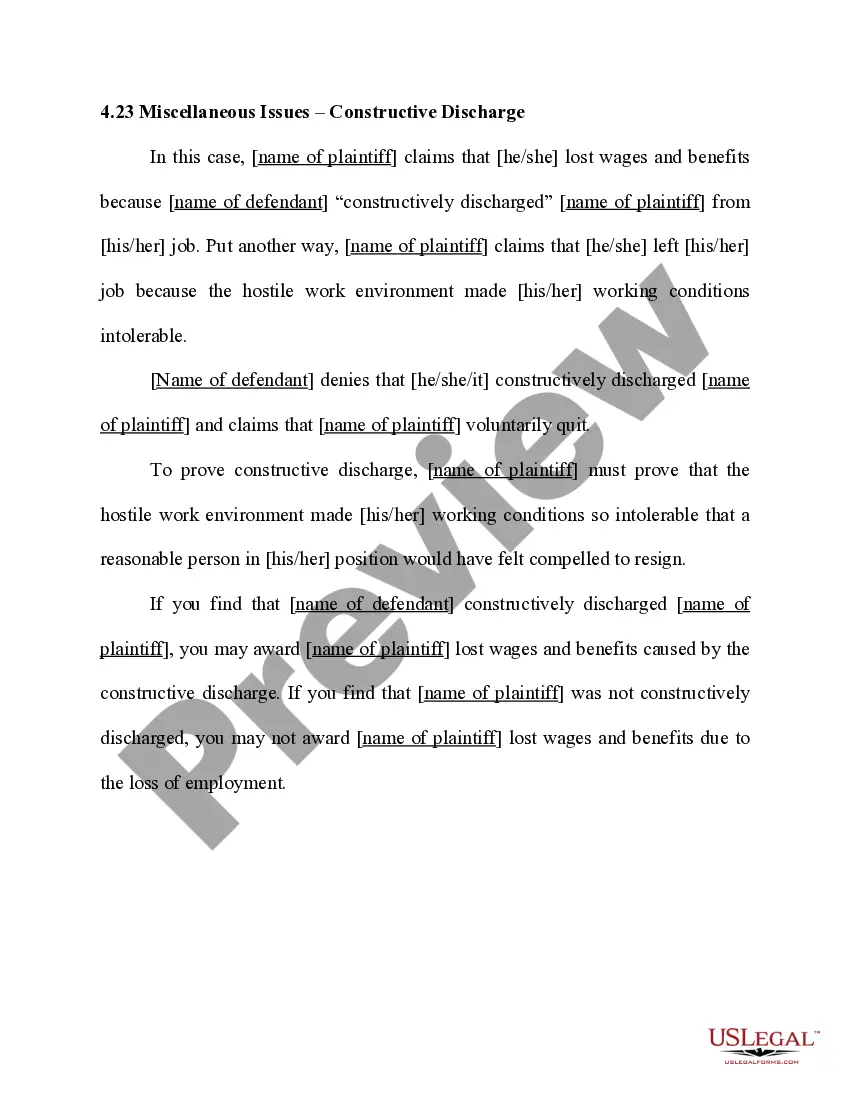
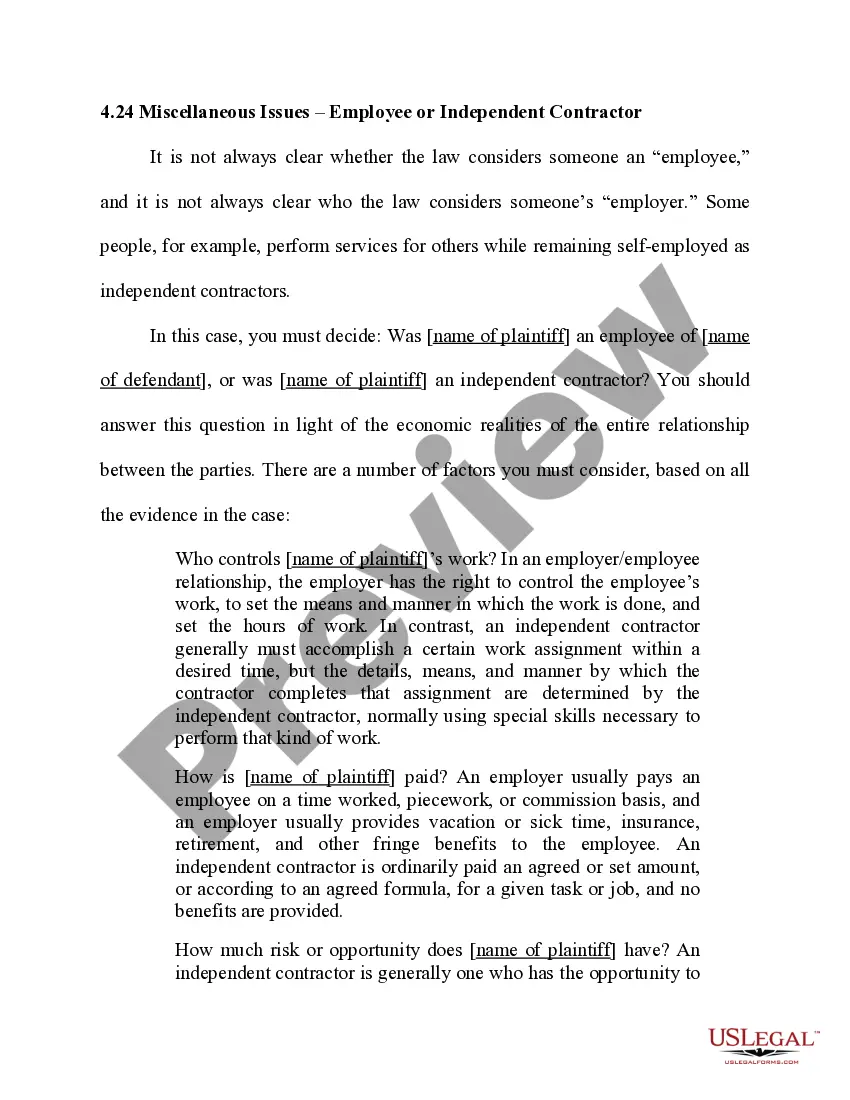
The Miscellaneous Issues - Constructive Discharge form is a legal template used in employment law cases. It helps claimants seek compensation for lost wages and benefits after being constructively discharged from their jobs. This form outlines the plaintiff's claim that a hostile work environment made their working conditions intolerable, forcing them to resign. Unlike other employment termination forms, this one specifically addresses the nuances of constructive discharge and the criteria needed to establish a valid claim.
Key components of this form
- Description of the plaintiff's claim regarding constructive discharge.
- Denial of the claim by the defendant, asserting that the plaintiff voluntarily quit.
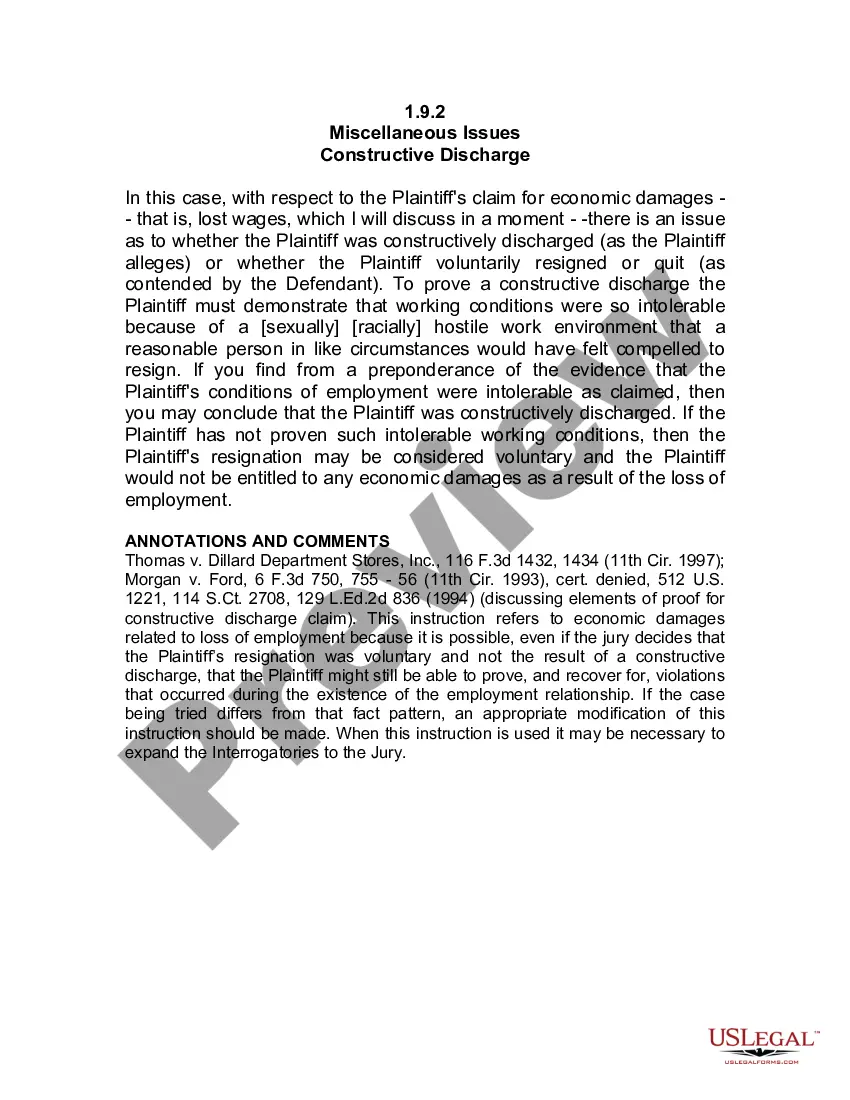
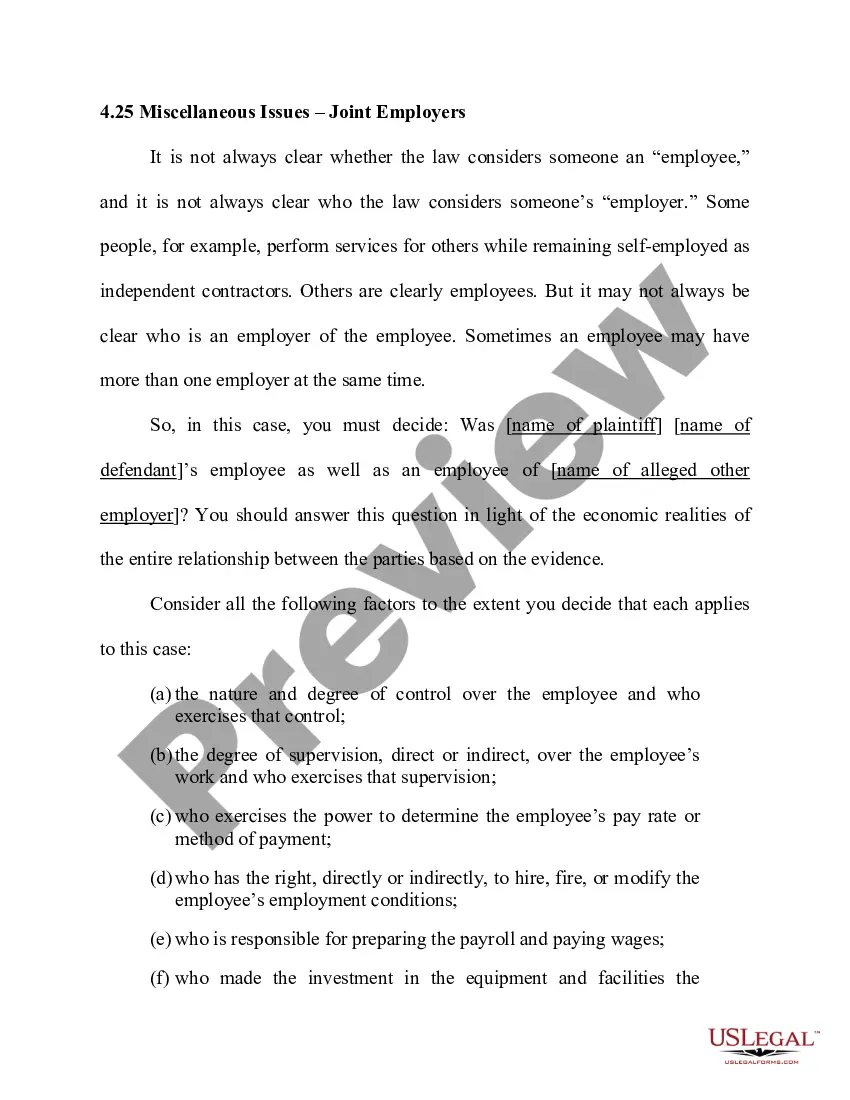
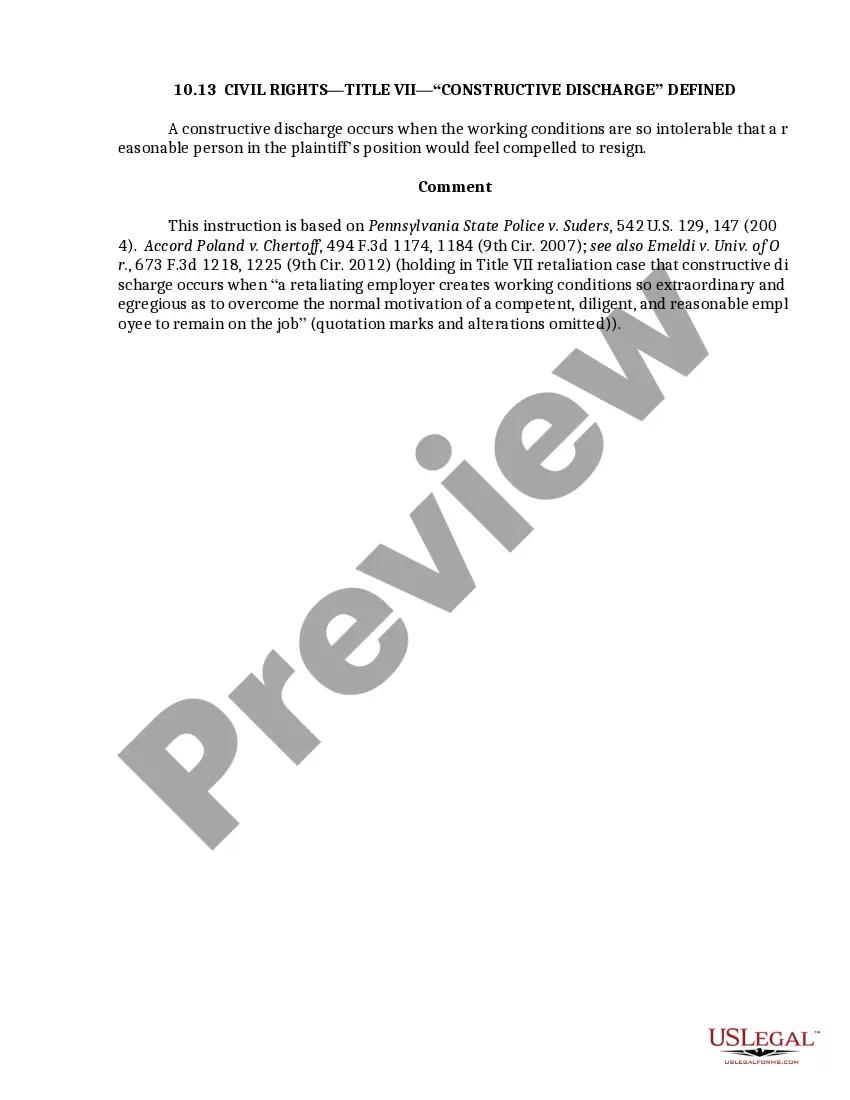
- Criteria for proving constructive discharge, including the definition of intolerable working conditions.
- Information about potential awards for lost wages and benefits if constructive discharge is established.
When this form is needed
This form is necessary when an employee believes they have been forced to resign due to unbearable working conditions created by their employer. It is commonly used in cases where an employee is seeking compensation for lost wages and benefits after leaving a job under such circumstances. If you feel that your work environment has become hostile or intolerable and you resigned as a result, this form may be crucial in presenting your case.
Who can use this document
- Employees who believe they have been constructively discharged.
- Individuals pursuing claims for lost wages and benefits after resigning due to a hostile work environment.
- Legal representatives assisting clients in employment-related disputes.
How to prepare this document
- Identify the parties involved, including the plaintiff and defendant.
- Clearly articulate the claim of constructive discharge and the reasons for it.
- Provide specific details regarding the working conditions that led to the resignation.
- Specify the losses incurred, such as lost wages and benefits.
- Review the completed form for accuracy before submission.
Notarization guidance
In most cases, this form does not require notarization. However, some jurisdictions or signing circumstances might. US Legal Forms offers online notarization powered by Notarize, accessible 24/7 for a quick, remote process.
Get your form ready online
Our built-in tools help you complete, sign, share, and store your documents in one place.
Make edits, fill in missing information, and update formatting in US Legal Forms—just like you would in MS Word.
Download a copy, print it, send it by email, or mail it via USPS—whatever works best for your next step.
Sign and collect signatures with our SignNow integration. Send to multiple recipients, set reminders, and more. Go Premium to unlock E-Sign.
If this form requires notarization, complete it online through a secure video call—no need to meet a notary in person or wait for an appointment.
We protect your documents and personal data by following strict security and privacy standards.

Make edits, fill in missing information, and update formatting in US Legal Forms—just like you would in MS Word.

Download a copy, print it, send it by email, or mail it via USPS—whatever works best for your next step.

Sign and collect signatures with our SignNow integration. Send to multiple recipients, set reminders, and more. Go Premium to unlock E-Sign.

If this form requires notarization, complete it online through a secure video call—no need to meet a notary in person or wait for an appointment.

We protect your documents and personal data by following strict security and privacy standards.
Typical mistakes to avoid
- Failing to provide adequate details about the working conditions that led to resignation.
- Not clearly distinguishing between voluntary resignation and constructive discharge.
- Neglecting to specify the economic damages incurred.
Benefits of using this form online
- Convenient access to the form from anywhere at any time.
- Easy to edit and customize to fit personal circumstances.
- Ensures reliability with templates drafted by licensed attorneys.
Looking for another form?
Form popularity
FAQ
Courts weigh the following factors to determine constructive discharge: (1) demotion; (2) reduction in salary; (3) reduction in job responsibility; (4) reassignment to menial or degrading work; (5) reassignment to work under a younger supervisor; (6) badgering harassment, or humiliation by the employer calculated to
California Constructive Discharge Examples The mere existence of a legal violation in the workplace.An isolated instance of employment discrimination.A poor performance rating accompanied by a demotion and reduction in pay.Changing an instructor's schedule from full-time to part-time.
Elements of a Constructive Discharge Claim Their working environment was so unusually adverse that a reasonable employee in their position would have felt compelled to resign, and. The employer either intended to force such resignation or had actual knowledge of the intolerable working conditions.
The standard for proving a constructive discharge is to show that the environment in the workplace was so intolerable that any reasonable person employed in the plaintiff's position would have been compelled to quit.
In general, the term "constructive discharge" is when a worker's resignation or retirement may be found not to be voluntary because the employer has created a hostile or intolerable work environment or has applied other forms of pressure or coercion which forced the employee to quit or resign.
There are two ways to prove a constructive discharge: (1) either the employee was given an ultimatum to resign or get fired , or (2), the employee was in working conditions so terrible that any reasonable person would feel compelled to resign.
Yes, it is usually hard to prove constructive discharge. The burden of proof lies with the employee and they have to present specific facts that prove the employer created a hostile work environment that led to or would lead to them resigning.
Proving constructive discharge You will likely have to show that your work environment was so intolerable that any reasonable individual would have resigned, given the circumstances.