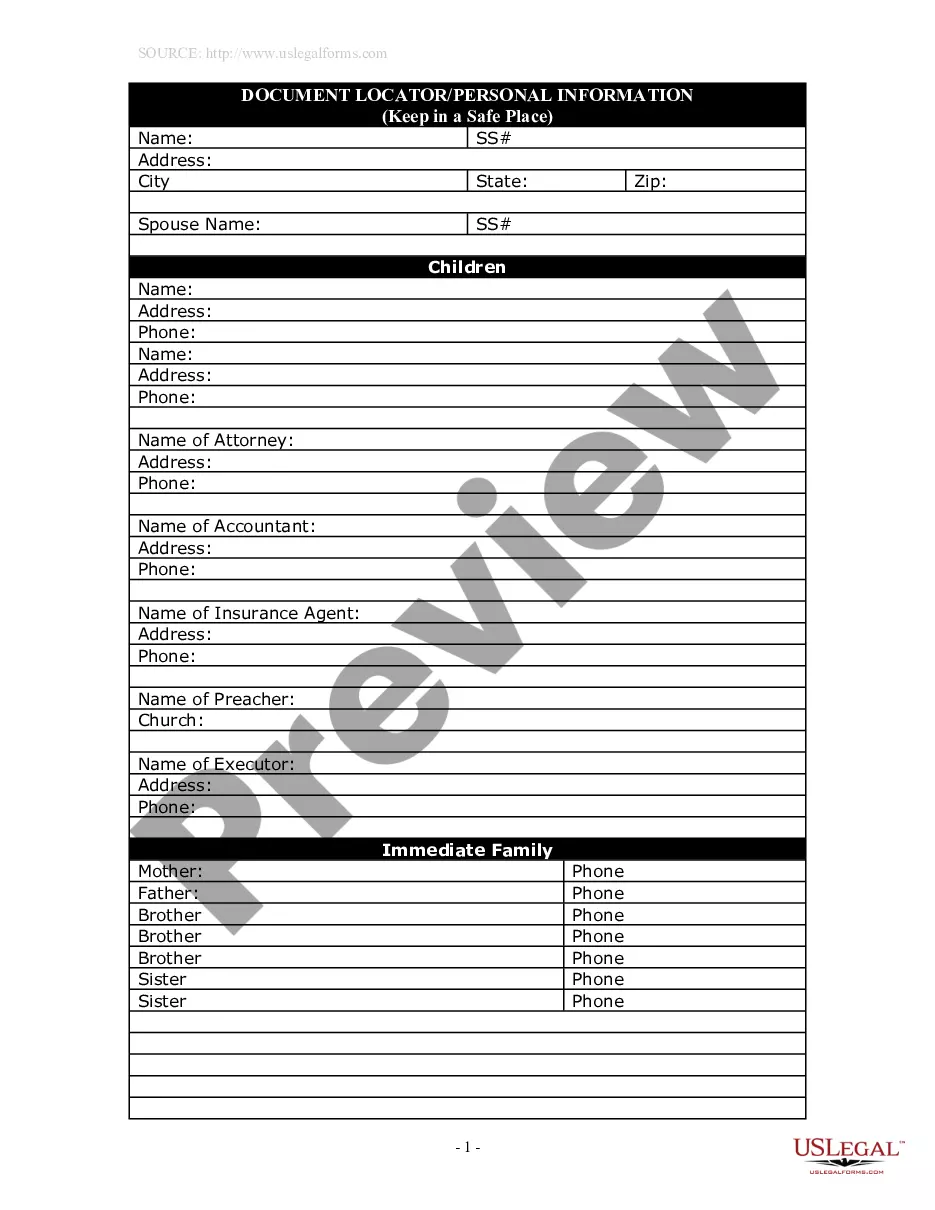
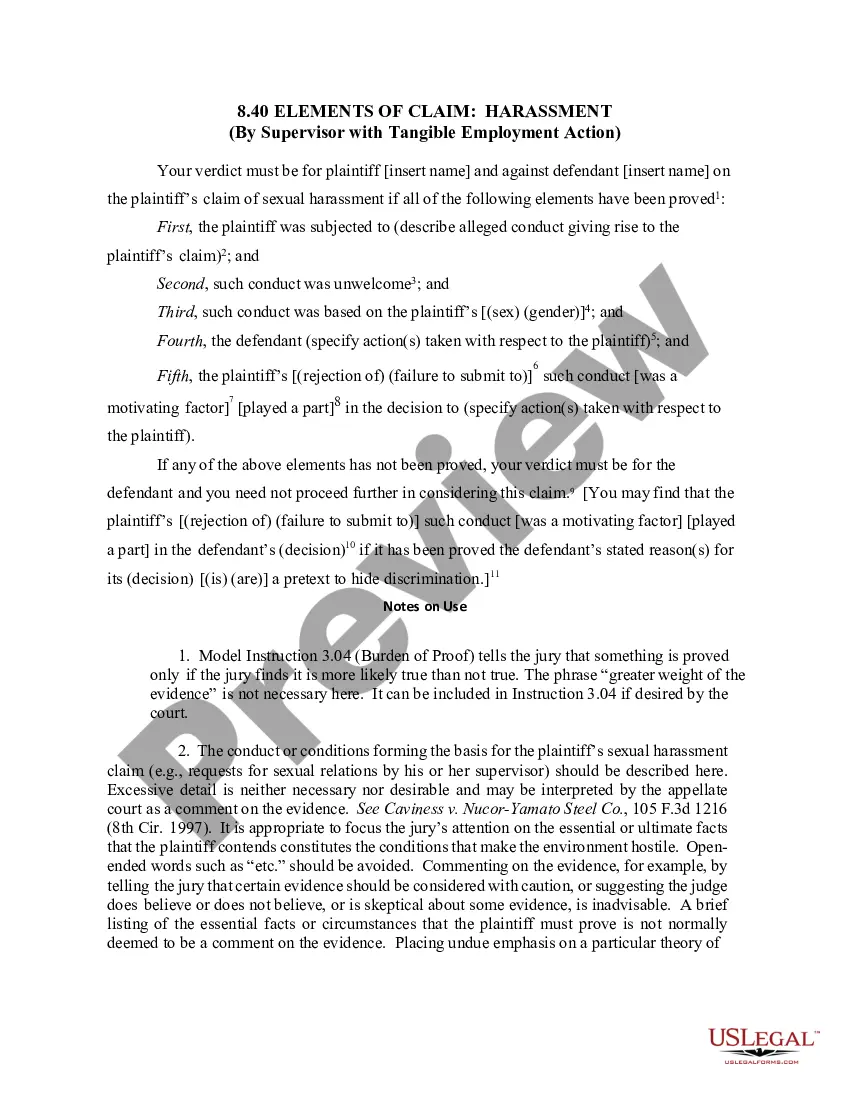
8.40 ELEMENTS OF CLAIM: HARASSMENT (By Supervisor With Tangible Employment Action)
What is this form?
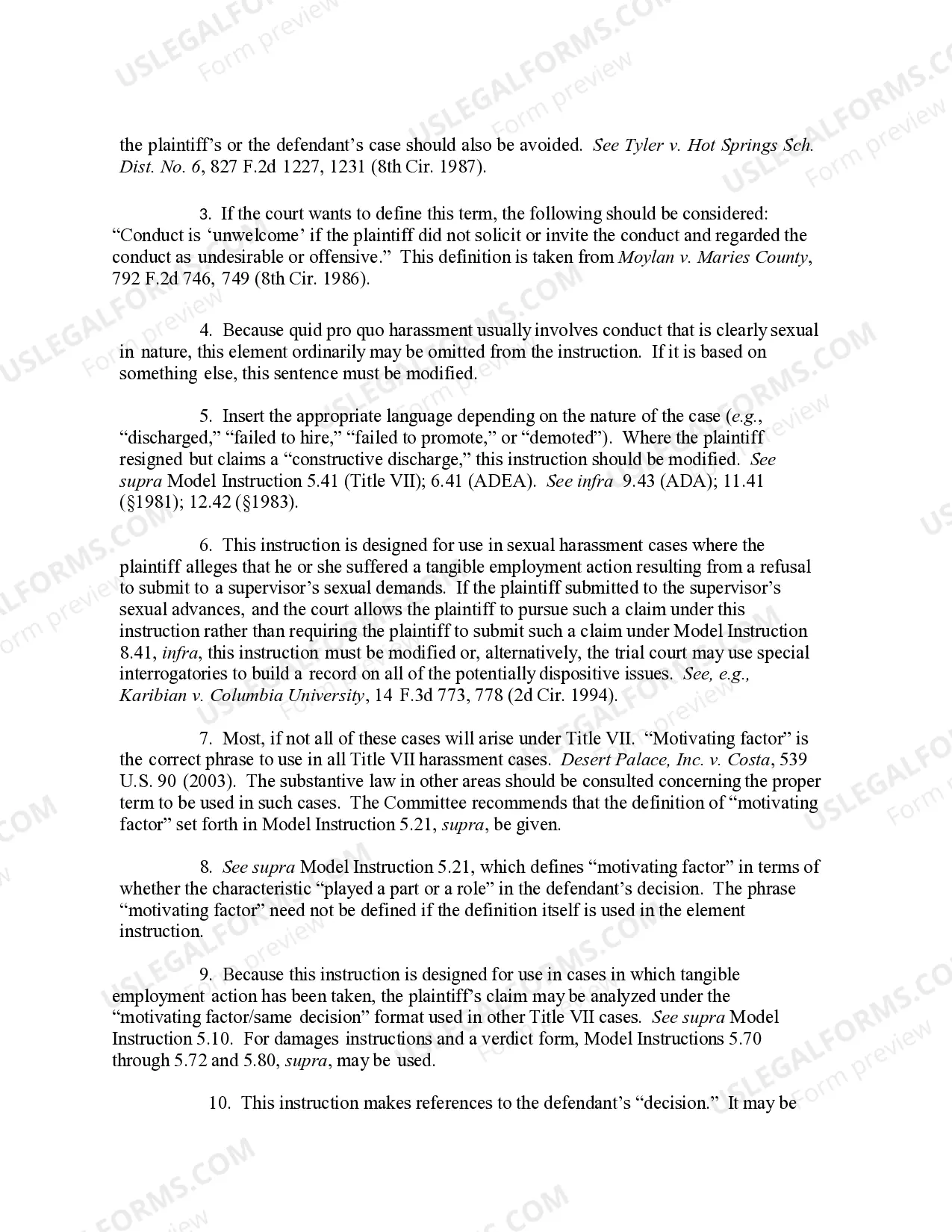
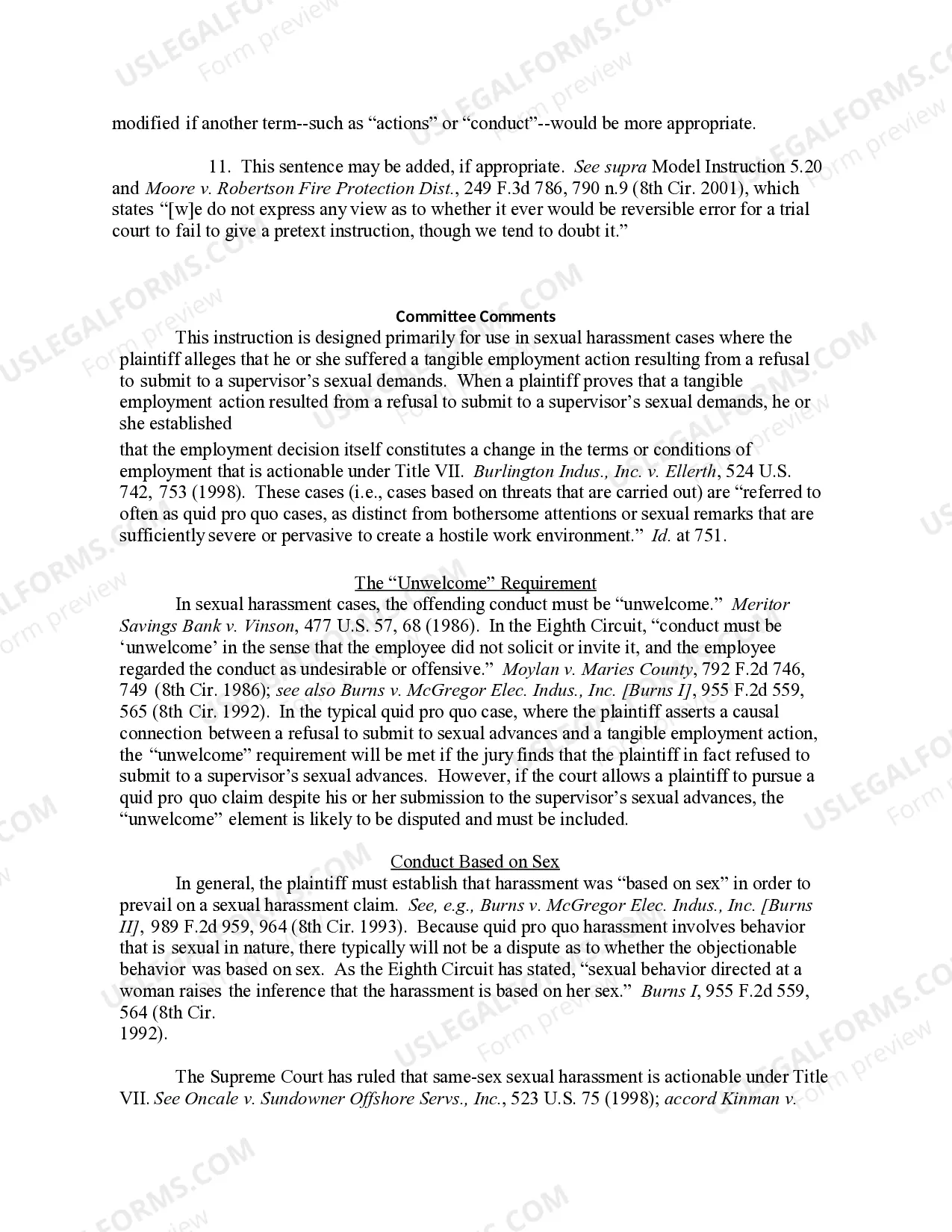
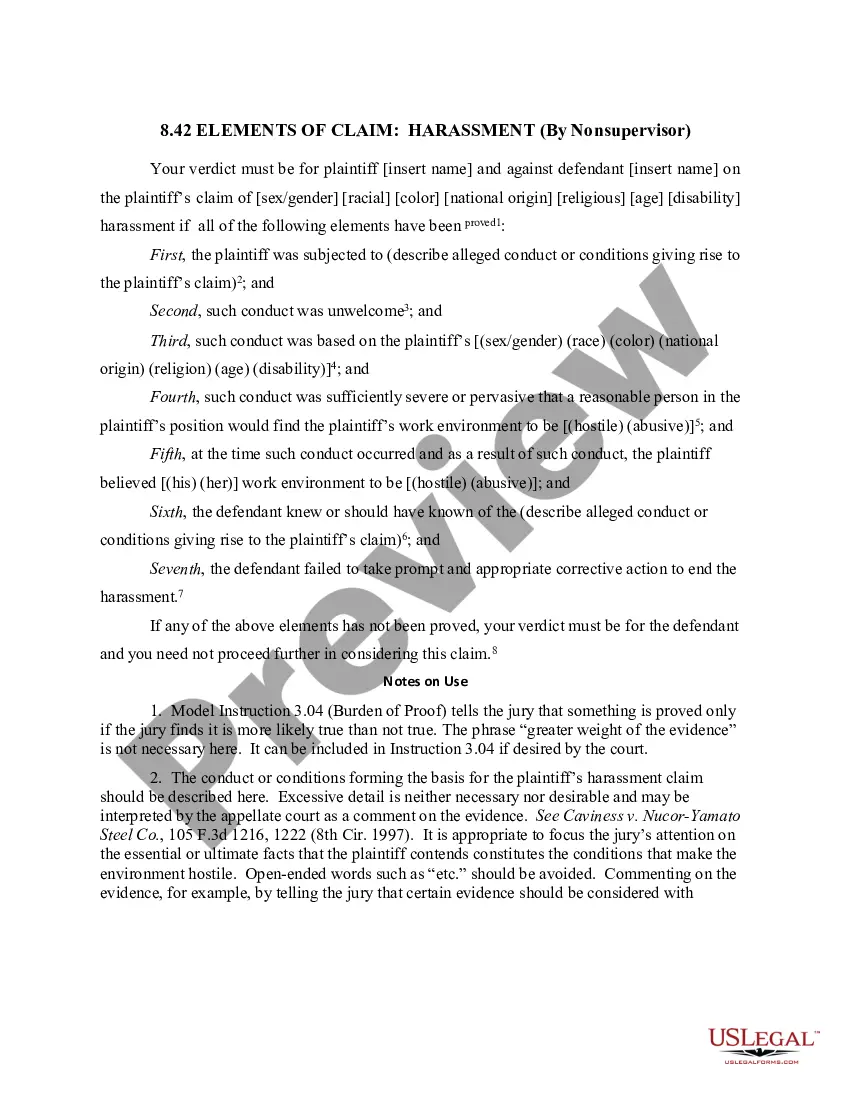
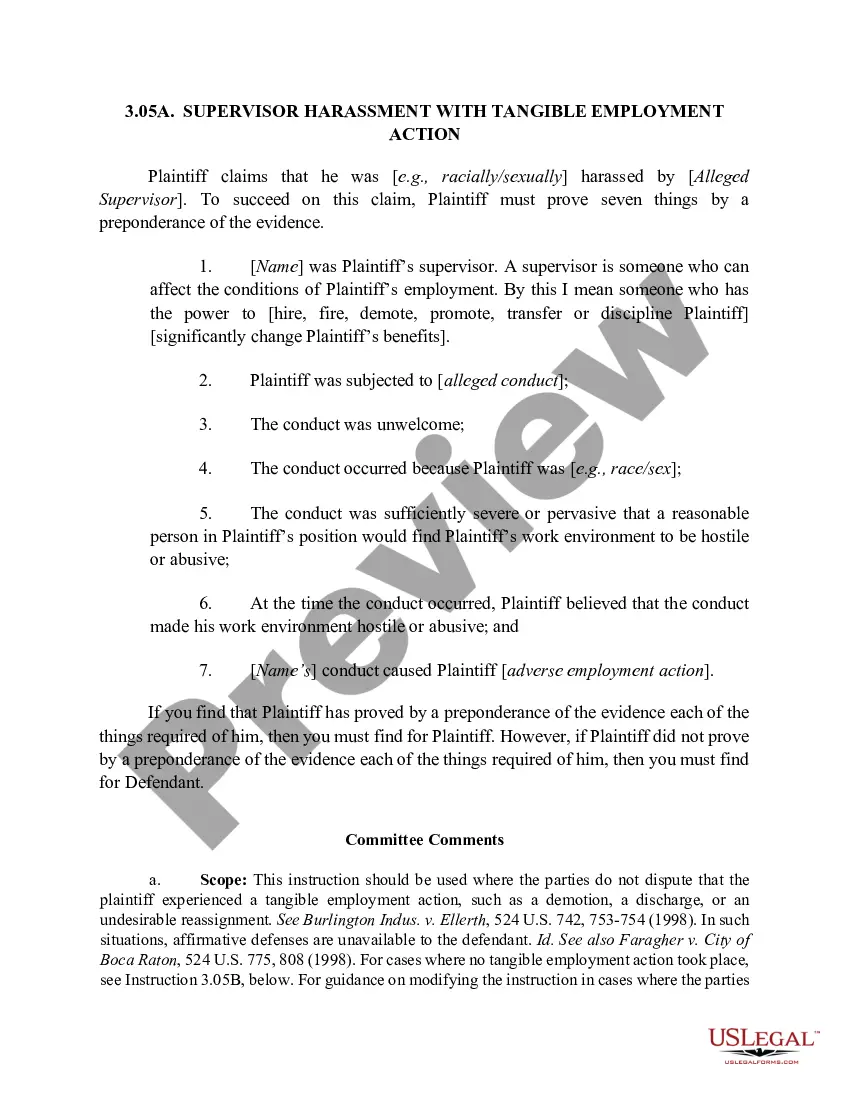
The 8.40 Elements of Claim: Harassment form serves as a legal guideline for presenting a sexual harassment case involving a supervisor and tangible employment action. This form outlines the essential elements needed to establish a claim of harassment and distinguishes itself from other legal forms related to workplace misconduct by focusing specifically on situations where there is direct adverse action based on the harassment. It is crucial for plaintiffs looking to prove their claims in court under Title VII of the Civil Rights Act.
Key parts of this document
- Definition of the unwelcome conduct that serves as the basis for the harassment claim.
- Establishment that the harassment was based on the plaintiff's sex or gender.
- Details of the defendant's actions regarding the plaintiff.
- Connection between the plaintiff's rejection of the conduct and the resultant employment action taken.
- Clarification of the burden of proof necessary to find in favor of the plaintiff.
Common use cases
This form should be used when an employee believes they have experienced sexual harassment at the hands of a supervisor, which directly resulted in tangible employment actions, such as demotion, discharge, or failure to promote. It is applicable in cases where the harassment is alleged to be based on sex and must be proven through establishing the necessary elements of the claim.
Who can use this document
- Employees who have been subjected to sexual harassment by their supervisors.
- Individuals seeking to file a claim under Title VII of the Civil Rights Act.
- Legal representatives assisting clients with discrimination cases.
Completing this form step by step
- Identify and provide the names of the plaintiff and defendant involved in the case.
- Describe the specific conduct that constitutes the harassment claim.
- Establish that the conduct was unwelcome and not solicited by the plaintiff.
- Detail any tangible employment actions taken against the plaintiff, specifying the nature of these actions.
- Connect the plaintiff's rejection of the unwelcome conduct to the actions taken by the defendant.
Does this form need to be notarized?
Notarization is not commonly needed for this form. However, certain documents or local rules may make it necessary. Our notarization service, powered by Notarize, allows you to finalize it securely online anytime, day or night.
Get your form ready online
Our built-in tools help you complete, sign, share, and store your documents in one place.
Make edits, fill in missing information, and update formatting in US Legal Forms—just like you would in MS Word.
Download a copy, print it, send it by email, or mail it via USPS—whatever works best for your next step.
Sign and collect signatures with our SignNow integration. Send to multiple recipients, set reminders, and more. Go Premium to unlock E-Sign.
If this form requires notarization, complete it online through a secure video call—no need to meet a notary in person or wait for an appointment.
We protect your documents and personal data by following strict security and privacy standards.

Make edits, fill in missing information, and update formatting in US Legal Forms—just like you would in MS Word.

Download a copy, print it, send it by email, or mail it via USPS—whatever works best for your next step.

Sign and collect signatures with our SignNow integration. Send to multiple recipients, set reminders, and more. Go Premium to unlock E-Sign.

If this form requires notarization, complete it online through a secure video call—no need to meet a notary in person or wait for an appointment.

We protect your documents and personal data by following strict security and privacy standards.
Mistakes to watch out for
- Failing to clearly articulate the unwelcome conduct that constitutes the harassment.
- Not establishing the connection between the harassment and the tangible employment action.
- Overlooking the importance of the burden of proof in the claim.
Advantages of online completion
- Immediate access to legal guidance tailored for harassment claims.
- Easily downloadable and editable format for personal needs.
- Reliability from forms drafted by licensed attorneys, ensuring legal validity.
Legal use & context
- This form is designed to meet the legal standards set forth under Title VII of the Civil Rights Act regarding workplace harassment.
- It emphasizes the need for proof of both harassment and a tangible employment action for a successful claim.
- Users should be aware that legal rulings can vary based on jurisdiction and specific circumstances of the case.
Looking for another form?

Form popularity
FAQ
A prima facie case of national origin discrimination is comprised of the following four elements: (1) the employee is a member of a protected class, (2) that he is qualified for the relevant position, (3) that there was an adverse employment action, and (4) that some evidence of record supports the inference of
It has four elements: Unwelcome; Sexual conduct or conduct directed at a protected category; Offensive to the recipient and to a ?reasonable person;? and, Conduct that is severe or pervasive (repeated).
To establish a prima facie case of discrimination based on disparate treatment a plaintiff must show that he (1) is a member of a protected class, (2) suffered an adverse employment action, (3) met his employer's legitimate expectations at the time of the adverse employment action, and (4) was treated differently from
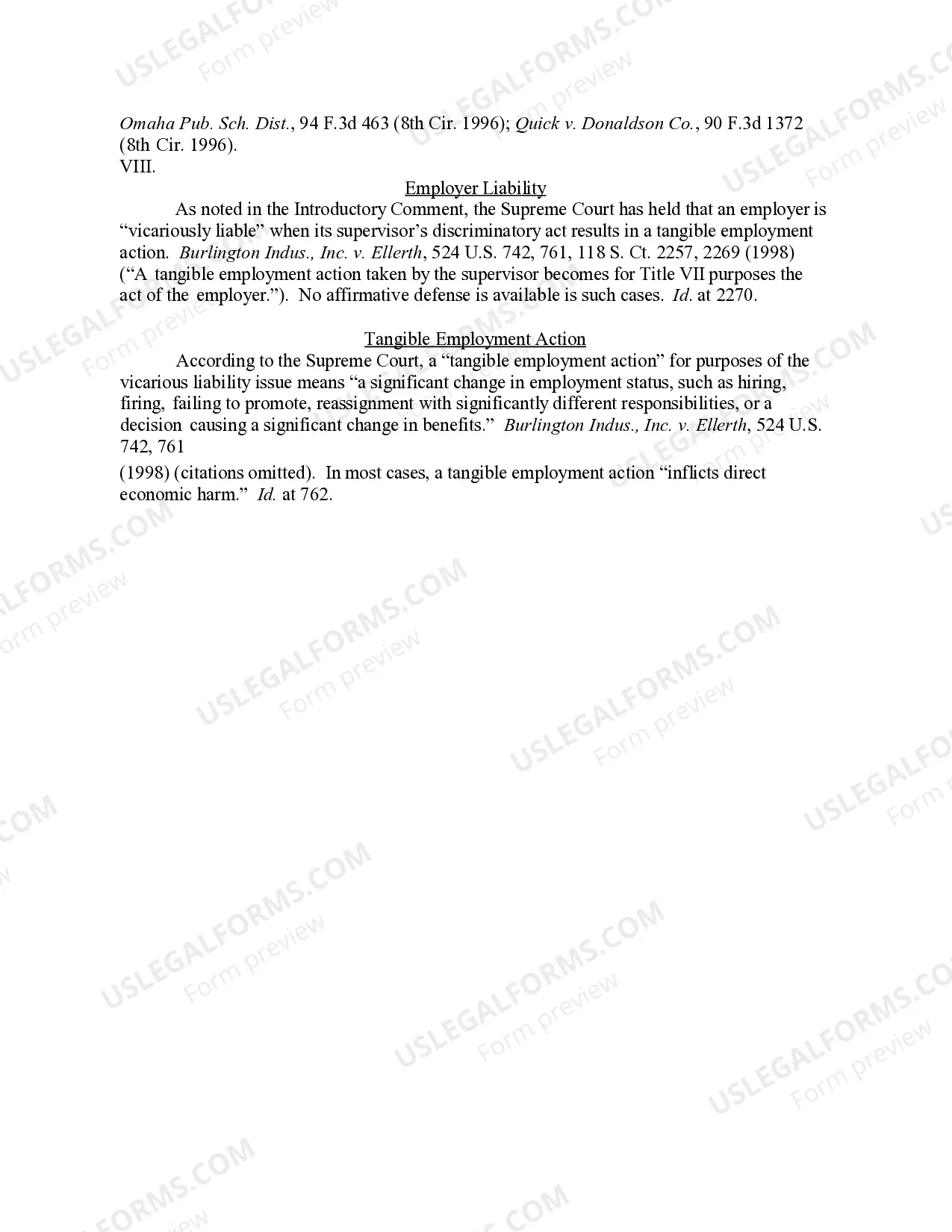
? A "tangible employment action" means a significant change in employment status. Examples include hiring, firing, promotion, demotion, undesirable reassignment, a decision causing a significant change in benefits, compensation decisions, and work assignment.
There are 4 main types of discrimination under the Equality Act: Direct discrimination. Indirect discrimination. Harassment. Victimisation.
National origin discrimination can involve treating applicants for employment or employees of DOL unfavorably because of their actual or perceived place of birth, country of origin, ancestry, native language, accent, or because they are perceived as looking or sounding "foreign."
The laws enforced by EEOC protect you from employment discrimination when it involves: Unfair treatment because of your race, color, religion, sex (including pregnancy, gender identity, and sexual orientation), national origin, disability, age (age 40 or older), or genetic information.
A tangible employment action occurs when a superior obtains sexual favors from an employee by conditioning continued employment on participation in unwelcome acts.