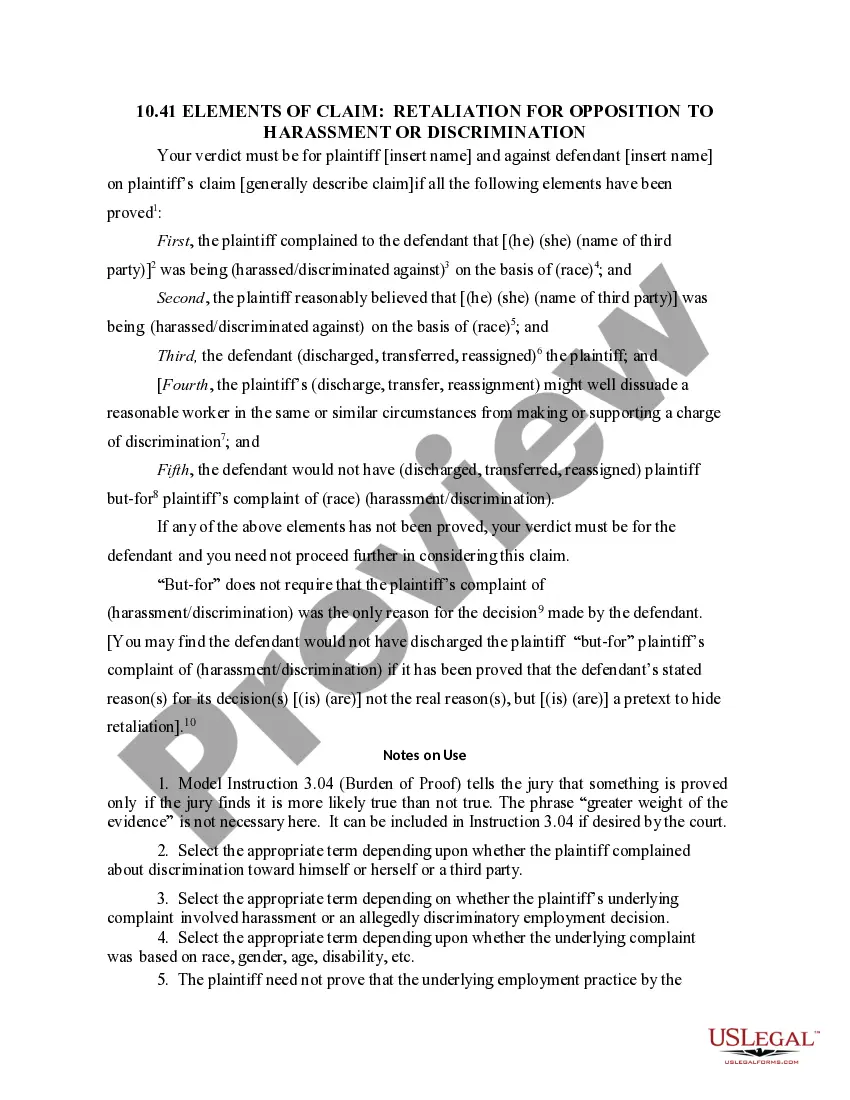
10.41 ELEMENTS OF CLAIM: RETALIATION FOR OPPOSITION TO HARASSMENT OR DISCRIMINATION
What is this form?
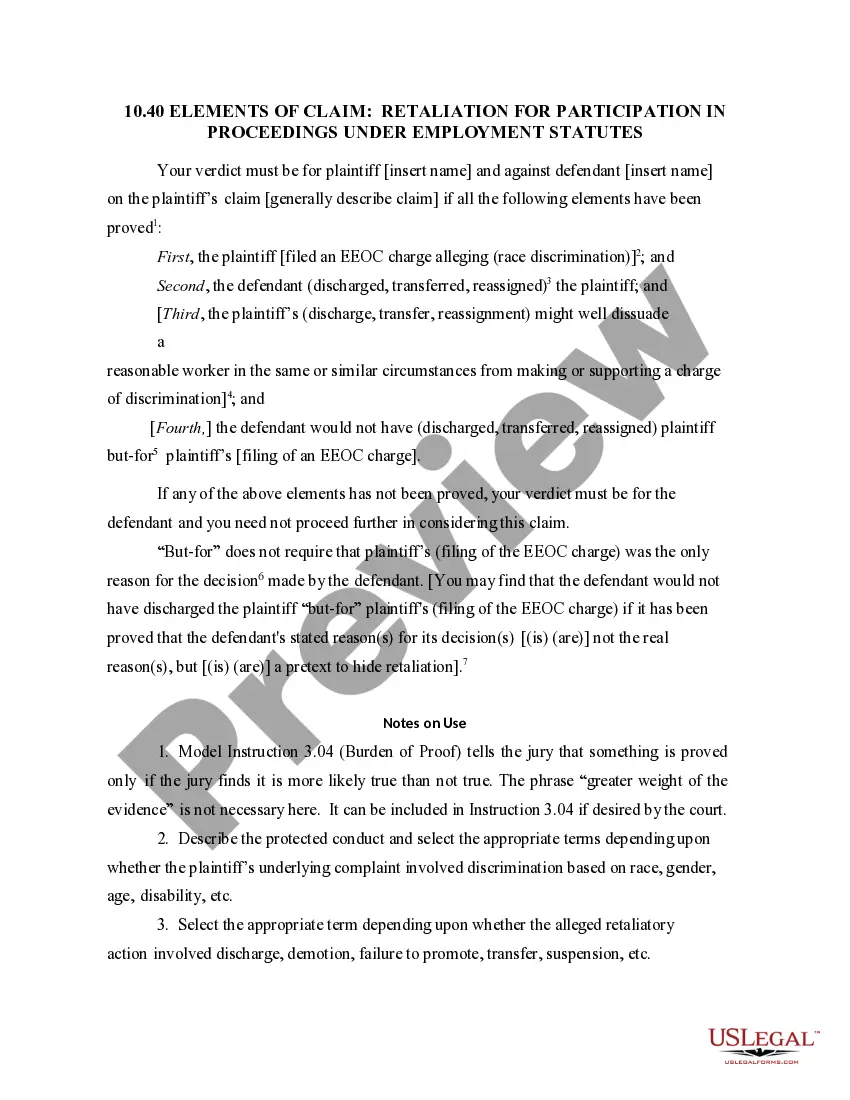
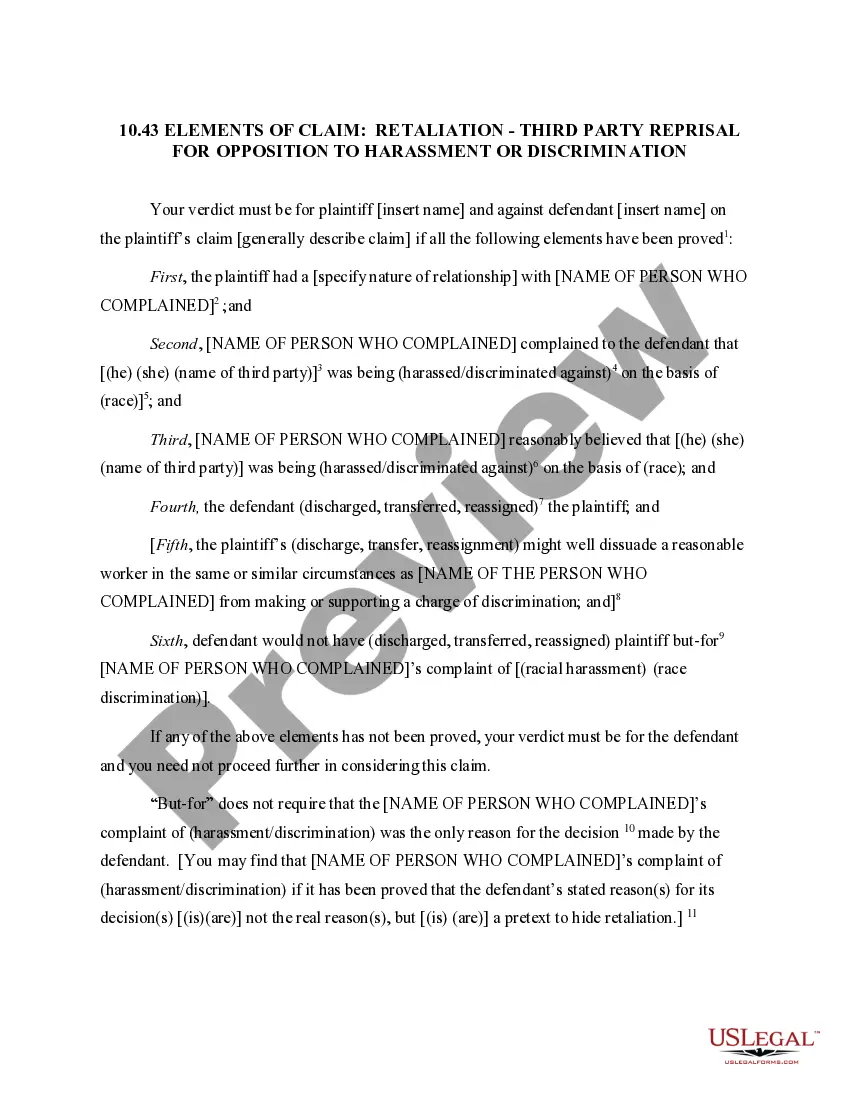
The 10.41 Elements of Claim: Retaliation for Opposition to Harassment or Discrimination form is a legal document used to assert a claim of retaliation in an employment setting. This form is essential for employees who have opposed workplace discrimination or harassment and have faced adverse actions as a result. It differs from other legal forms related to discrimination by specifically targeting retaliation claims rather than the underlying harassment or discrimination itself.
Key components of this form
- Identification of the plaintiff and defendant
- Description of the harassment or discrimination opposed
- Details of the adverse employment action taken against the plaintiff
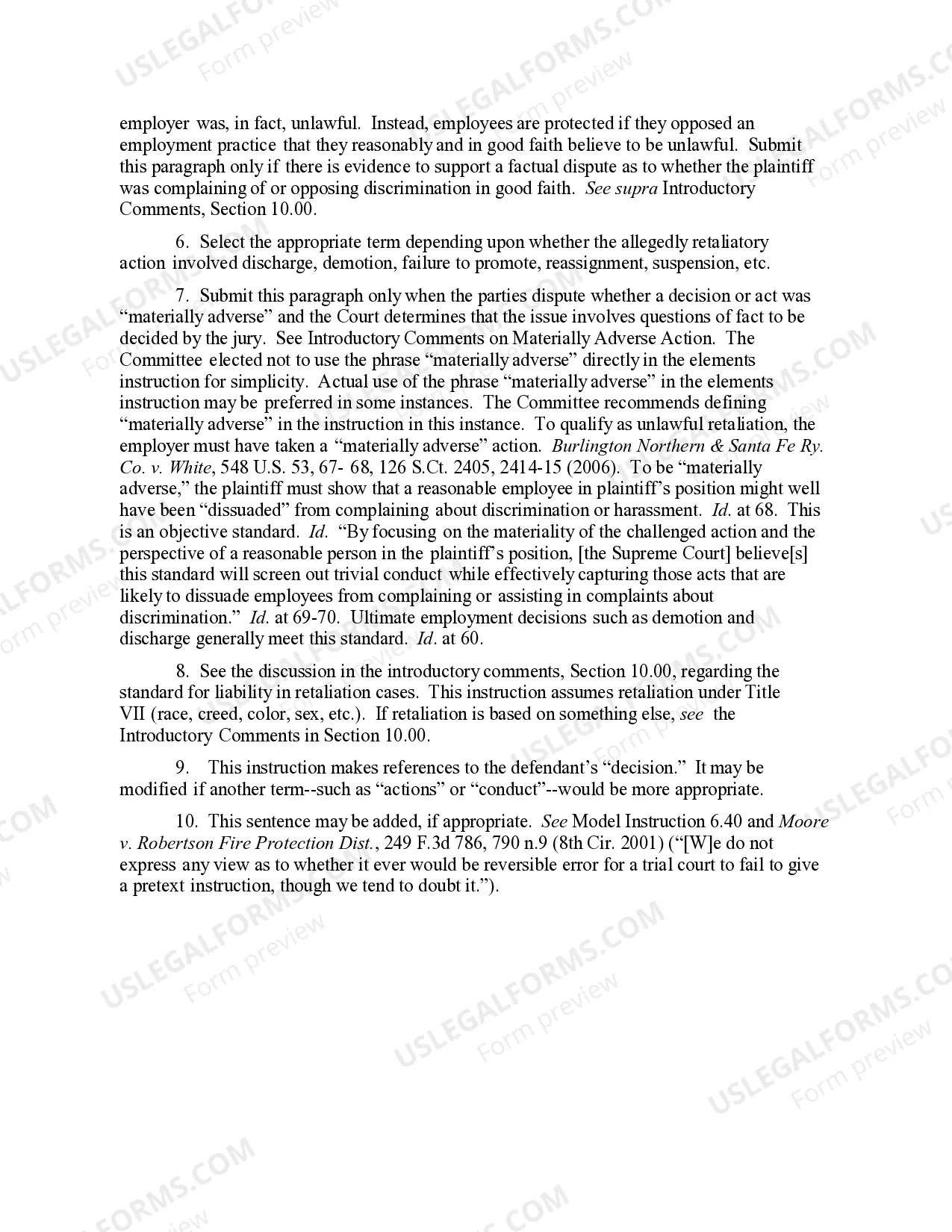
- Evidence supporting that the adverse action could dissuade a reasonable worker from making a complaint
- Proof that the adverse action was taken "but-for" the plaintiff's opposition to discrimination
When this form is needed
This form is needed when an employee has reported harassment or discrimination in their workplace and subsequently experiences unfavorable treatment from their employer. Such situations may include wrongful termination, demotion, or other forms of retaliation. Using this form helps the employee seek legal redress for their grievances.
Who this form is for
- Employees who have faced retaliation after reporting harassment or discrimination
- Individuals who believe they have been unfairly treated due to their complaints against workplace misconduct
- Workers planning to file a claim for adverse employment action due to opposition to discrimination
Completing this form step by step
- Identify the plaintiff and defendant by entering their names at the beginning of the form.
- Clearly describe the specific harassment or discrimination that was opposed.
- Specify the adverse employment action taken, such as discharge or demotion.
- Provide evidence that shows the action could dissuade a reasonable employee from reporting discrimination.
- Establish that the adverse action would not have occurred "but-for" the plaintiff's complaint.
Notarization guidance
Notarization is generally not required for this form. However, certain states or situations might demand it. You can complete notarization online through US Legal Forms, powered by Notarize, using a verified video call available anytime.
Get your form ready online
Our built-in tools help you complete, sign, share, and store your documents in one place.
Make edits, fill in missing information, and update formatting in US Legal Forms—just like you would in MS Word.
Download a copy, print it, send it by email, or mail it via USPS—whatever works best for your next step.
Sign and collect signatures with our SignNow integration. Send to multiple recipients, set reminders, and more. Go Premium to unlock E-Sign.
If this form requires notarization, complete it online through a secure video call—no need to meet a notary in person or wait for an appointment.
We protect your documents and personal data by following strict security and privacy standards.

Make edits, fill in missing information, and update formatting in US Legal Forms—just like you would in MS Word.

Download a copy, print it, send it by email, or mail it via USPS—whatever works best for your next step.

Sign and collect signatures with our SignNow integration. Send to multiple recipients, set reminders, and more. Go Premium to unlock E-Sign.

If this form requires notarization, complete it online through a secure video call—no need to meet a notary in person or wait for an appointment.

We protect your documents and personal data by following strict security and privacy standards.
Typical mistakes to avoid
- Failing to provide sufficient detail in describing the harassment or discrimination.
- Not clearly establishing the connection between the complaint and the adverse action.
- Using vague language that may weaken the claim.
Why use this form online
- Convenience of accessing the form from anywhere at any time.
- Editable format allows for easy customization to specific cases.
- Reliability, with forms drafted by licensed attorneys ensuring legal compliance.
Legal use & context
- This form is used under federal laws prohibiting retaliation for opposing discrimination.
- Understanding "but-for" causation is crucial for establishing a strong claim.
- Retaliatory actions must be materially adverse to qualify for legal action.
Looking for another form?
Form popularity
FAQ
Retaliation includes intimidation, verbal or physical threats, coercion, or discrimination. When evidence of retaliatory behavior exists, appropriate disciplinary action will be taken.
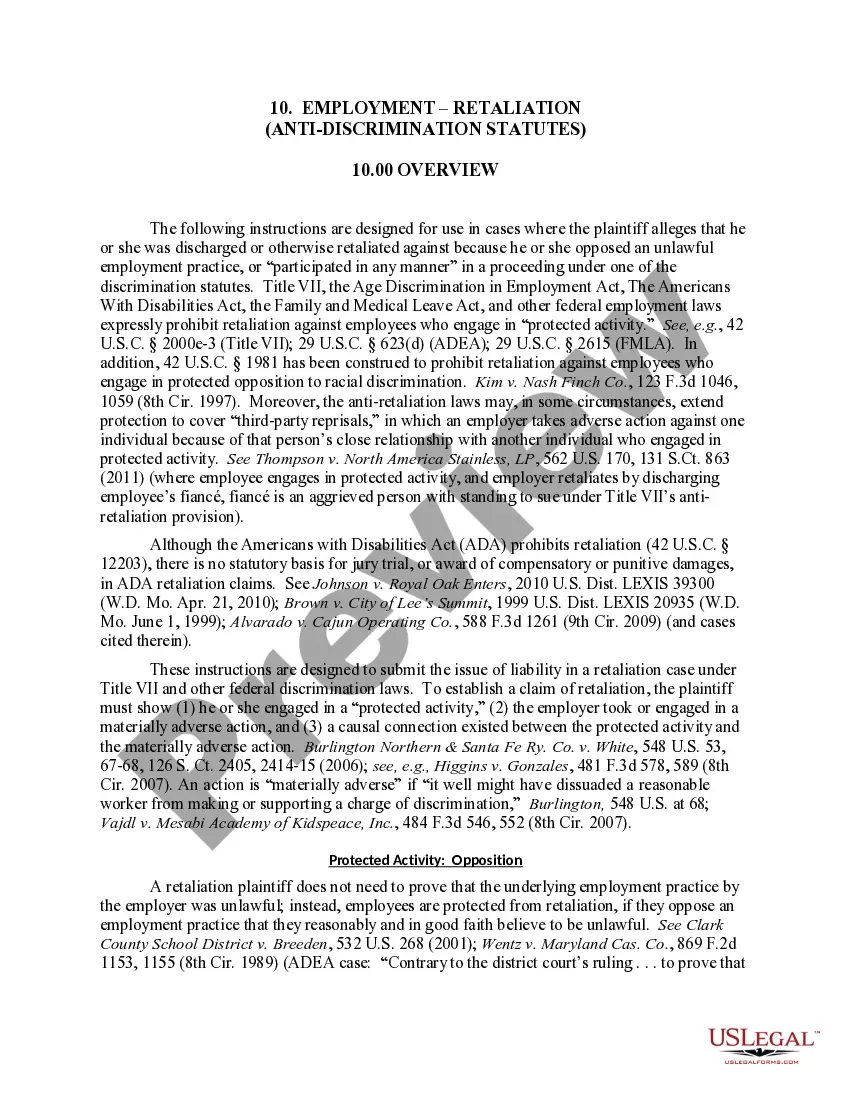
Per federal case law and regulatory agency guidance, there are three essential elements in a claim of retaliation: Protected activity. Adverse action. Causal connection.
Under the opposition clause, it is unlawful for an employer to discriminate against an employee because the employee has ?opposed? any practice made unlawful by Title VII. The term ?oppose? is undefined by the statute, and thus carries its ordinary meaning.
Per federal case law and regulatory agency guidance, there are three essential elements in a claim of retaliation: Protected activity. Adverse action. Causal connection.
Retaliation. Retaliatory acts, which may include giving students failing grades, preventing students from participating in school activities, and threatening expulsion against any individual who exercises his or her rights under Title IX, are considered to be discrimination and are unlawful.
Applying Jackson, courts have recognized the following elements to support a claim for Title IX retaliation: (1) a person engaged in protected activity, (2) the school took a materially adverse action against that person, and (3) that there was a ?but-for? causal connection between the protected actively and the
Title IX, like Title VI, recognizes three general types of prohibited discrimination: (1) disparate treatment, (2) disparate impact, and (3) retaliation. Any effective and meaningful administrative enforcement program under Title IX must be prepared to address all three.
In order to assert a prima facie claim of retaliation under the FLSA, a plaintiff must prove: (1) that he or she engaged in an activity protected by the FLSA; (2) that he or she suffered adverse action by the employer subsequent to or contemporaneous with such protected activity; and (3) a causal connection existed