10.00 Employment Retaliation Overview
Overview of this form
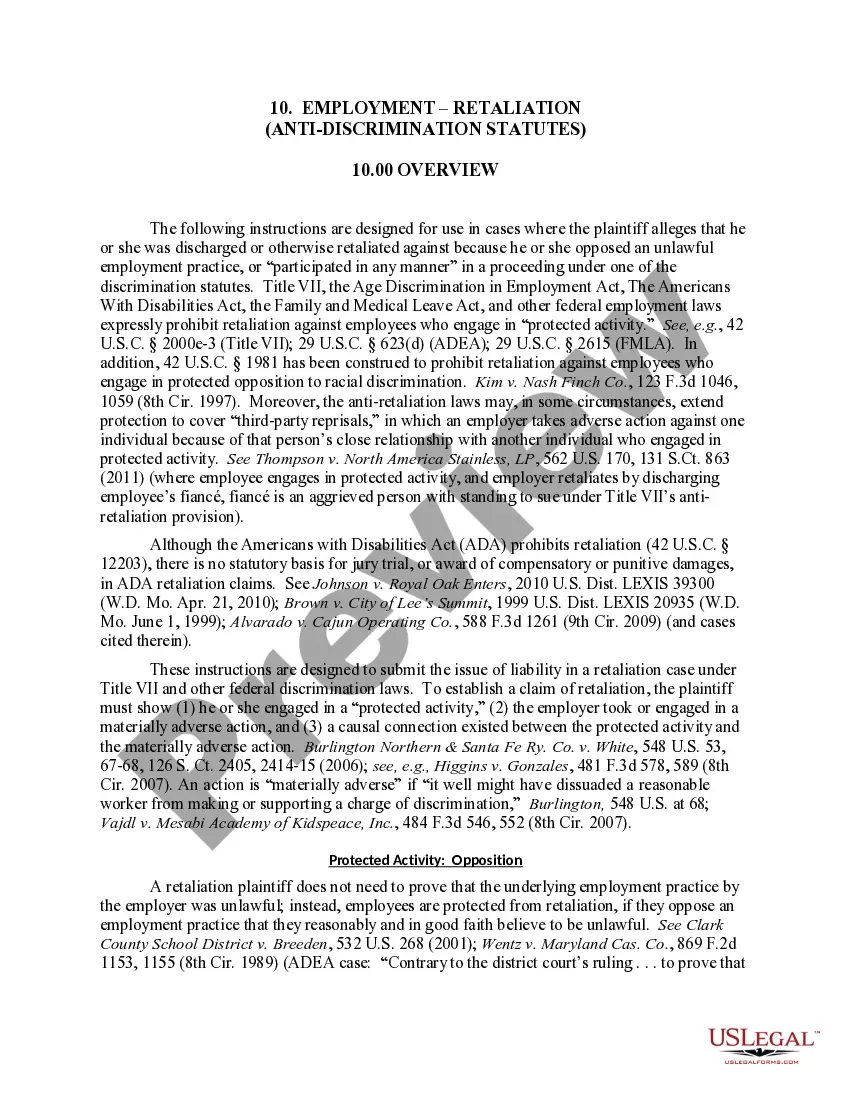
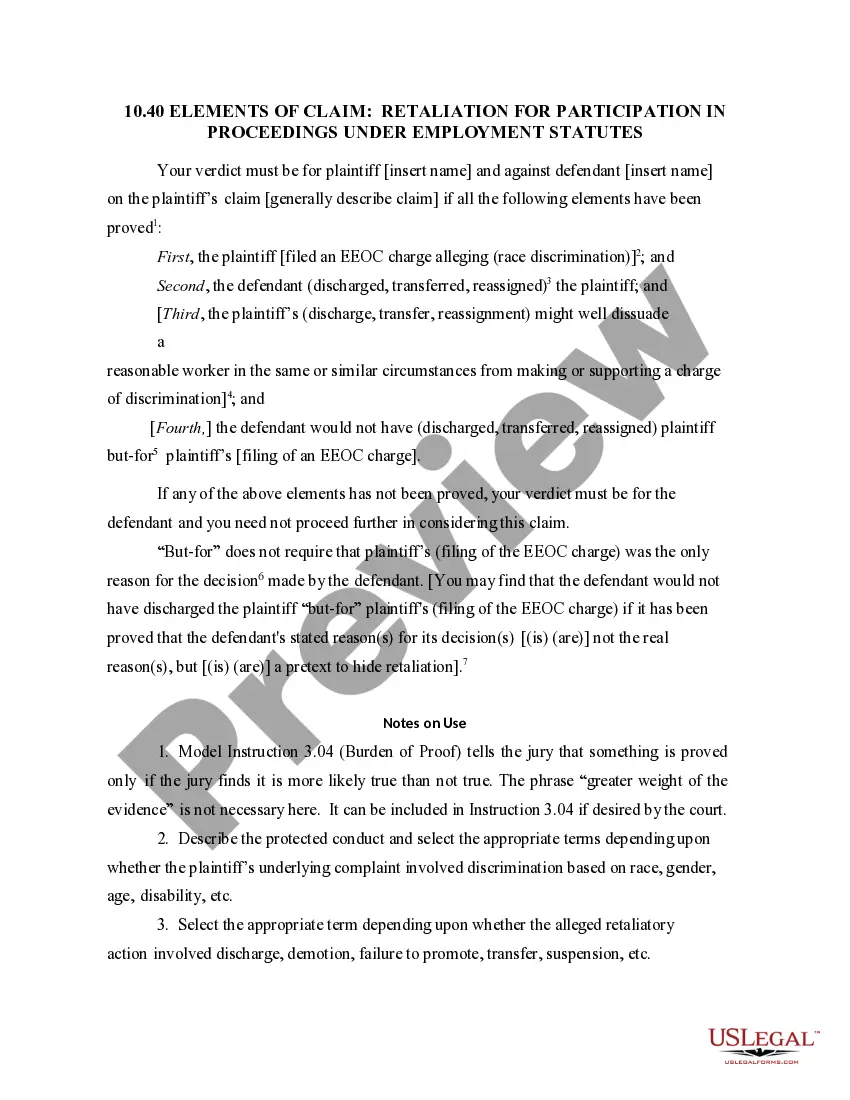
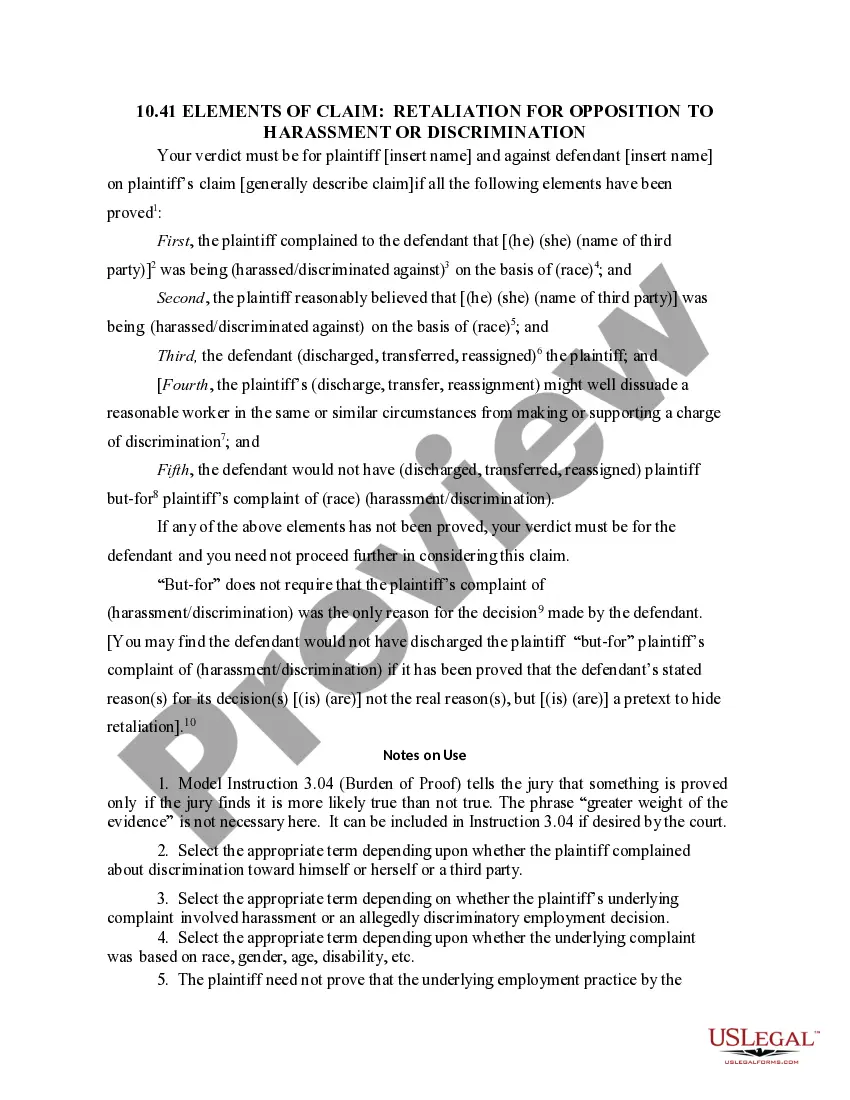
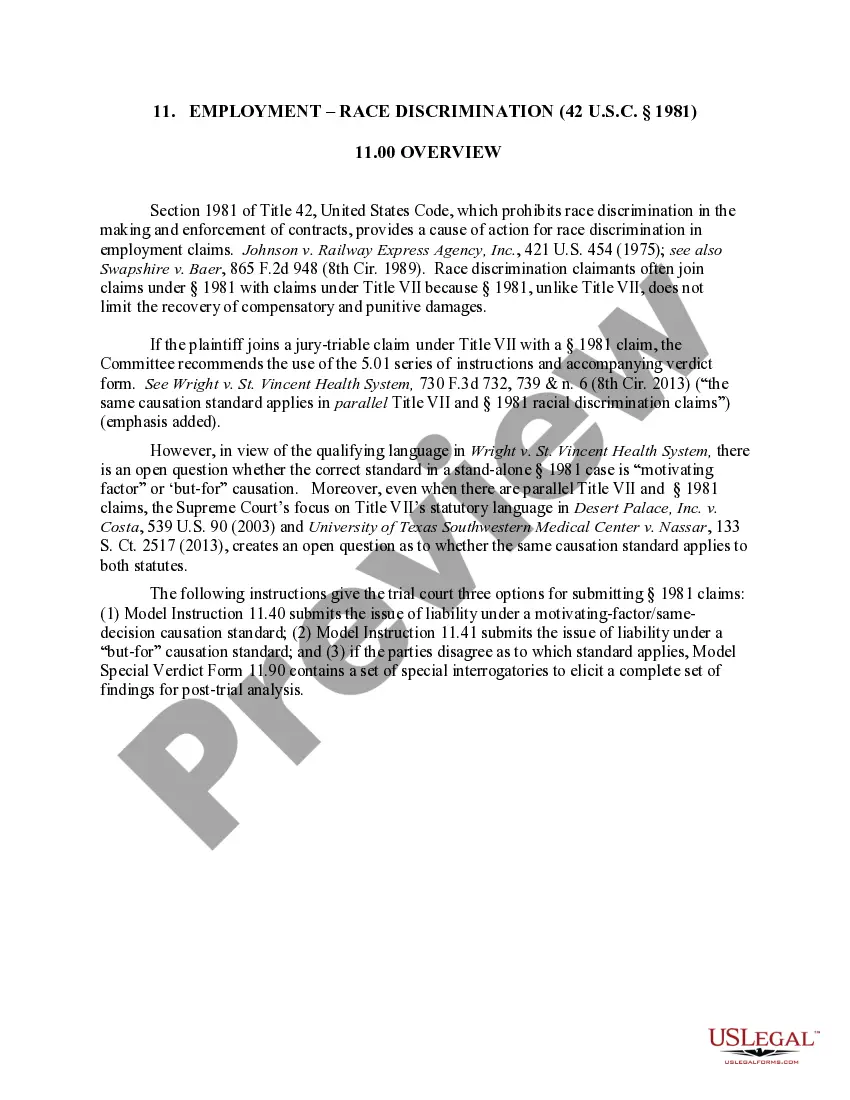
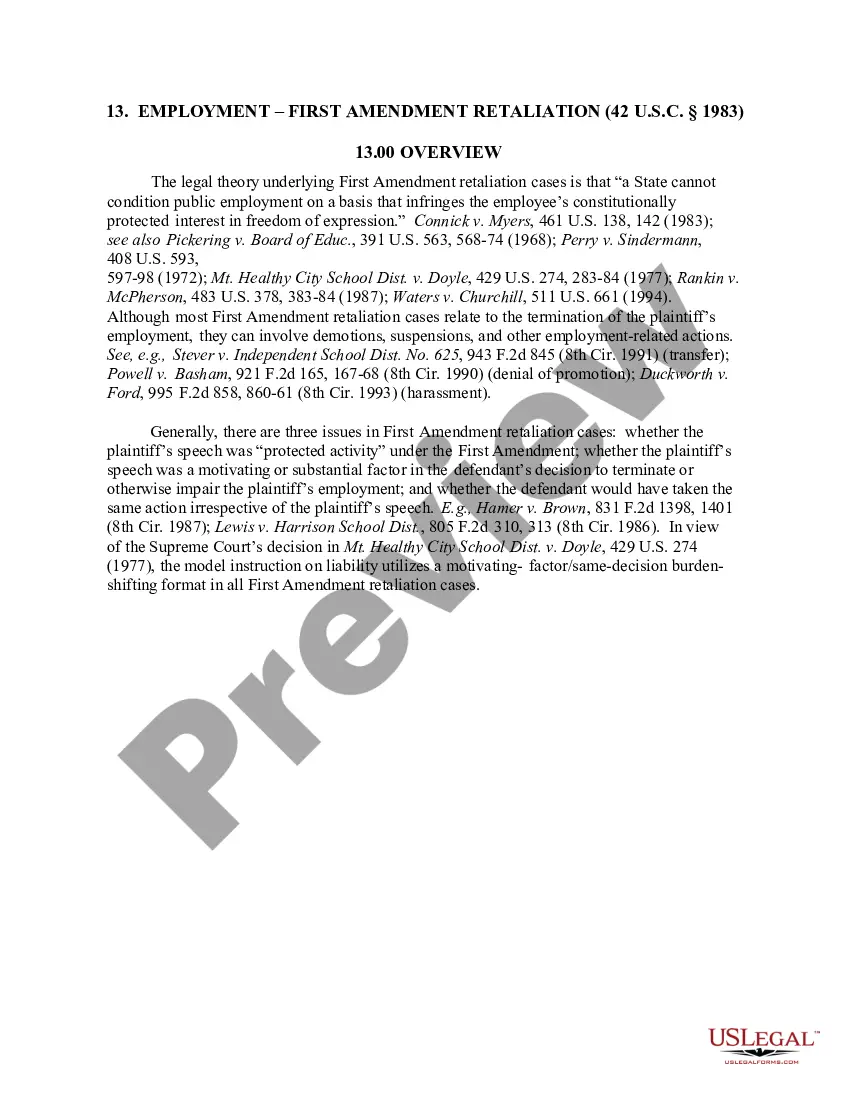
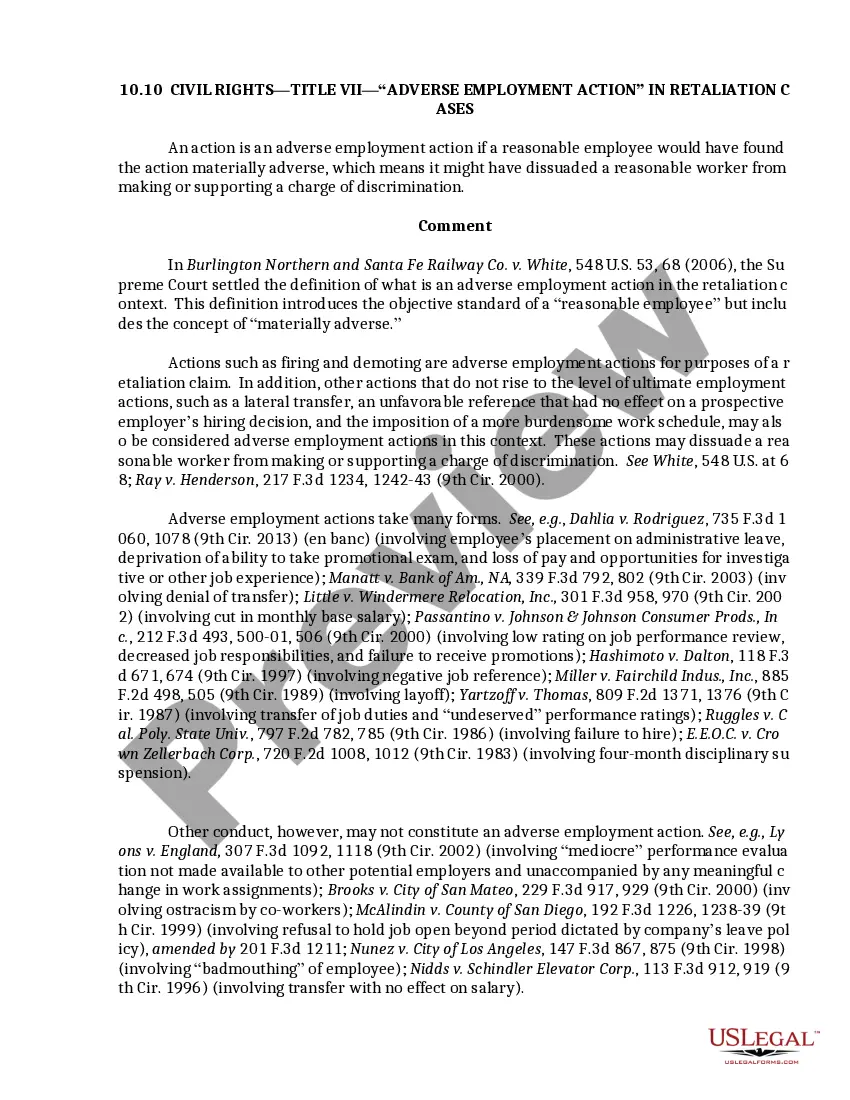
The Employment Retaliation Overview form provides essential guidance for individuals who believe they have faced retaliation in the workplace due to opposing illegal employment practices or participating in related proceedings. This form helps clarify the legal standards surrounding employment retaliation under various anti-discrimination statutes, distinguishing it from other employment-related forms by focusing specifically on retaliation claims. It is designed to inform employees of their rights and the legal ramifications of retaliatory actions by employers.
What’s included in this form
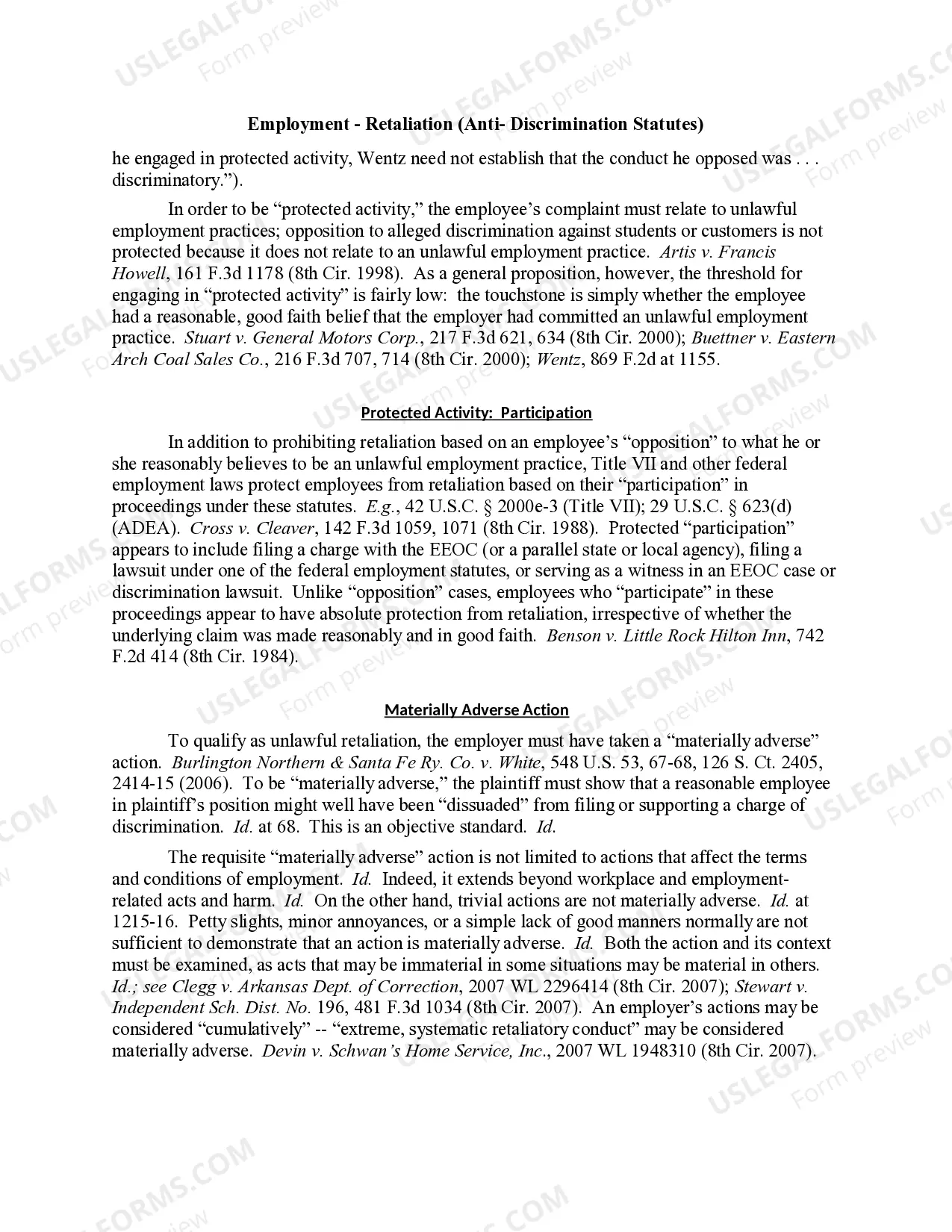
- Definitions of protected activities, including opposition and participation in discrimination proceedings.
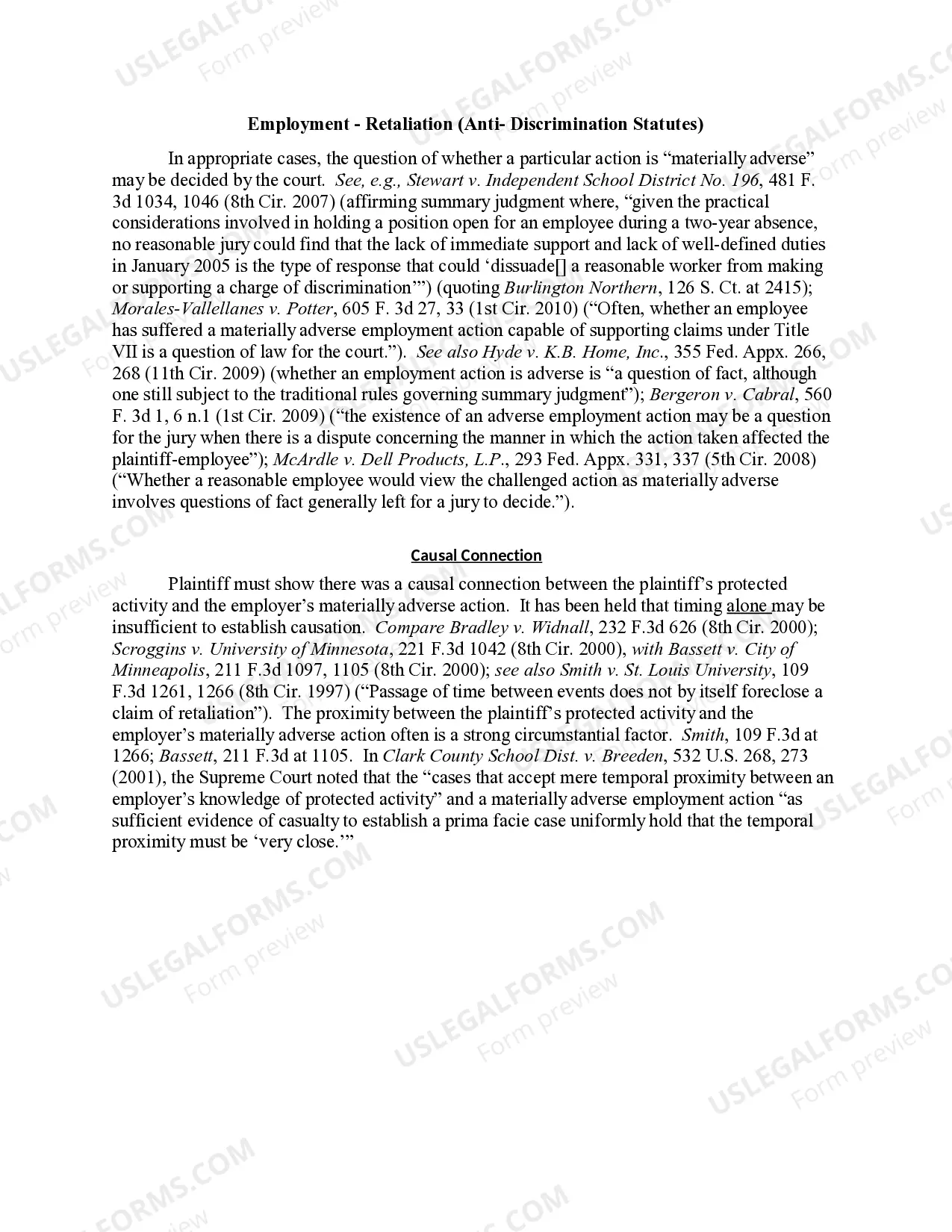
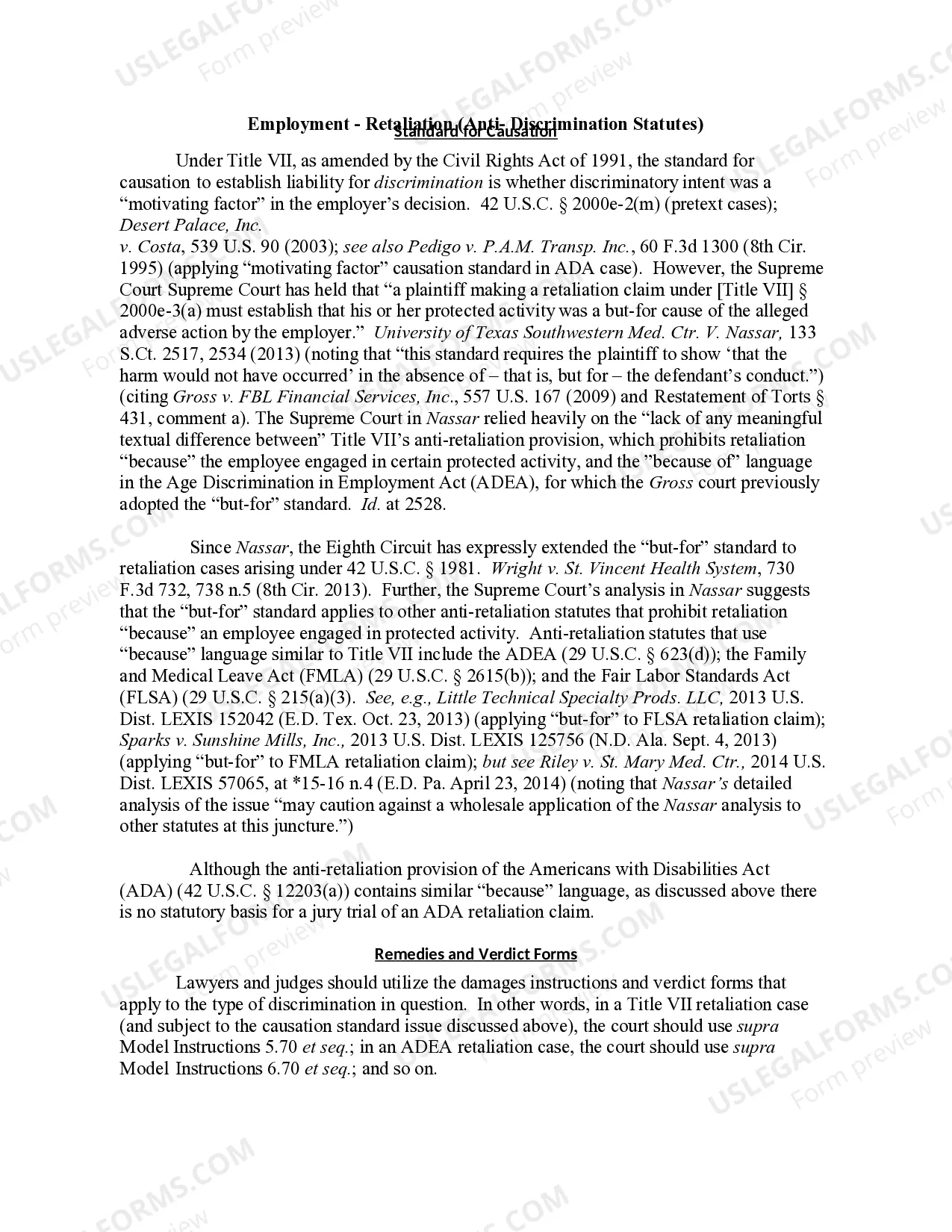
- Criteria for proving retaliation, including the need for a causal connection between actions.
- Explanation of what constitutes a materially adverse action.
- Instructions on the application of relevant laws and precedents.
- Guidance on remedies available for retaliation claims.

When to use this form
This form is applicable in scenarios where employees suspect they have been retaliated against for engaging in protected activities, such as reporting discrimination or participating in investigations. Common situations include being denied a promotion, facing disciplinary action after filing a complaint, or being demoted following involvement in a discrimination lawsuit. Utilizing this form can help clarify the steps to take in such situations and outline potential legal remedies.
Intended users of this form
- Employees who believe they have faced retaliation from their employer.
- Individuals involved in workplace discrimination cases.
- Legal professionals seeking to represent clients in retaliation claims.
- Human resources personnel needing to understand retaliation laws.
Instructions for completing this form
- Identify the parties involved, including the employee and employer.
- Document the specific protected activity that occurred.
- Detail the materially adverse action taken by the employer.
- Establish the causal connection between the protected activity and the adverse action.
- Provide any supporting evidence or documentation relevant to the claim.
Is notarization required?
Notarization is generally not required for this form. However, certain states or situations might demand it. You can complete notarization online through US Legal Forms, powered by Notarize, using a verified video call available anytime.
Get your form ready online
Our built-in tools help you complete, sign, share, and store your documents in one place.
Make edits, fill in missing information, and update formatting in US Legal Forms—just like you would in MS Word.
Download a copy, print it, send it by email, or mail it via USPS—whatever works best for your next step.
Sign and collect signatures with our SignNow integration. Send to multiple recipients, set reminders, and more. Go Premium to unlock E-Sign.
If this form requires notarization, complete it online through a secure video call—no need to meet a notary in person or wait for an appointment.
We protect your documents and personal data by following strict security and privacy standards.

Make edits, fill in missing information, and update formatting in US Legal Forms—just like you would in MS Word.

Download a copy, print it, send it by email, or mail it via USPS—whatever works best for your next step.

Sign and collect signatures with our SignNow integration. Send to multiple recipients, set reminders, and more. Go Premium to unlock E-Sign.

If this form requires notarization, complete it online through a secure video call—no need to meet a notary in person or wait for an appointment.

We protect your documents and personal data by following strict security and privacy standards.
Avoid these common issues
- Failing to clearly define the protected activity involved.
- Not adequately explaining the materially adverse action taken.
- Neglecting to establish a clear timeline showing the causal connection.
- Overlooking the significance of witness statements or other evidence.
Advantages of online completion
- Easy access to a comprehensive overview of employment retaliation laws.
- Editability allows for customization to fit specific situations.
- Downloadable format enables users to keep a personal record of their claim.
- Reliable information drafted by licensed attorneys for accuracy.
- Time-efficient, enabling quick understanding and submission of claims.
Legal use & context
- This form is compliant with federal laws prohibiting retaliation, including Title VII and the Americans with Disabilities Act.
- It is crucial for initiating claims and can serve as a foundation for legal actions against employers.
- Understanding this formâs context aids in developing a strong case demonstrating unlawful retaliation.
Looking for another form?
Form popularity
FAQ
Retaliation in the Workplace: What to Look Out for After You File a Complaint You're Excluded or Left Out.You're Reassigned to a Different Shift or Department.You're Passed Over for a Promotion or Raise.Your Pay or Hours are Cut.You Encounter More Harassment or Bullying.You're Fired from Your Job.
When you file a job discrimination complaint with the EEOC or otherwise participate in an EEOC investigation or lawsuit, you are protected against retaliation regardless of the validity or reasonableness of the original allegation of discrimination.
For example, depending on the facts, it could be retaliation if an employer acts because of the employee's EEO activity to: reprimand the employee or give a performance evaluation that is lower than it should be; transfer the employee to a less desirable position; engage in verbal or physical abuse;
In order to assert a prima facie claim of retaliation under the FLSA, a plaintiff must prove: (1) that he or she engaged in an activity protected by the FLSA; (2) that he or she suffered adverse action by the employer subsequent to or contemporaneous with such protected activity; and (3) a causal connection existed
Retaliatory actions are not limited to formal personnel actions such as termination, demotion, non-promotion, or non-selection. Retaliatory actions are broadly defined to harassing behavior, significant changes to job duties or working conditions, and even threats to take personnel actions.
Some examples of retaliation would be a termination or failure to hire, a demotion, a decrease in pay, a decrease in the number of hours that you've worked. The cause will be obvious things such as a reprimand, a warning or lowering of your evaluation scores.
Per federal case law and regulatory agency guidance, there are three essential elements in a claim of retaliation: Protected activity. Adverse action. Causal connection.