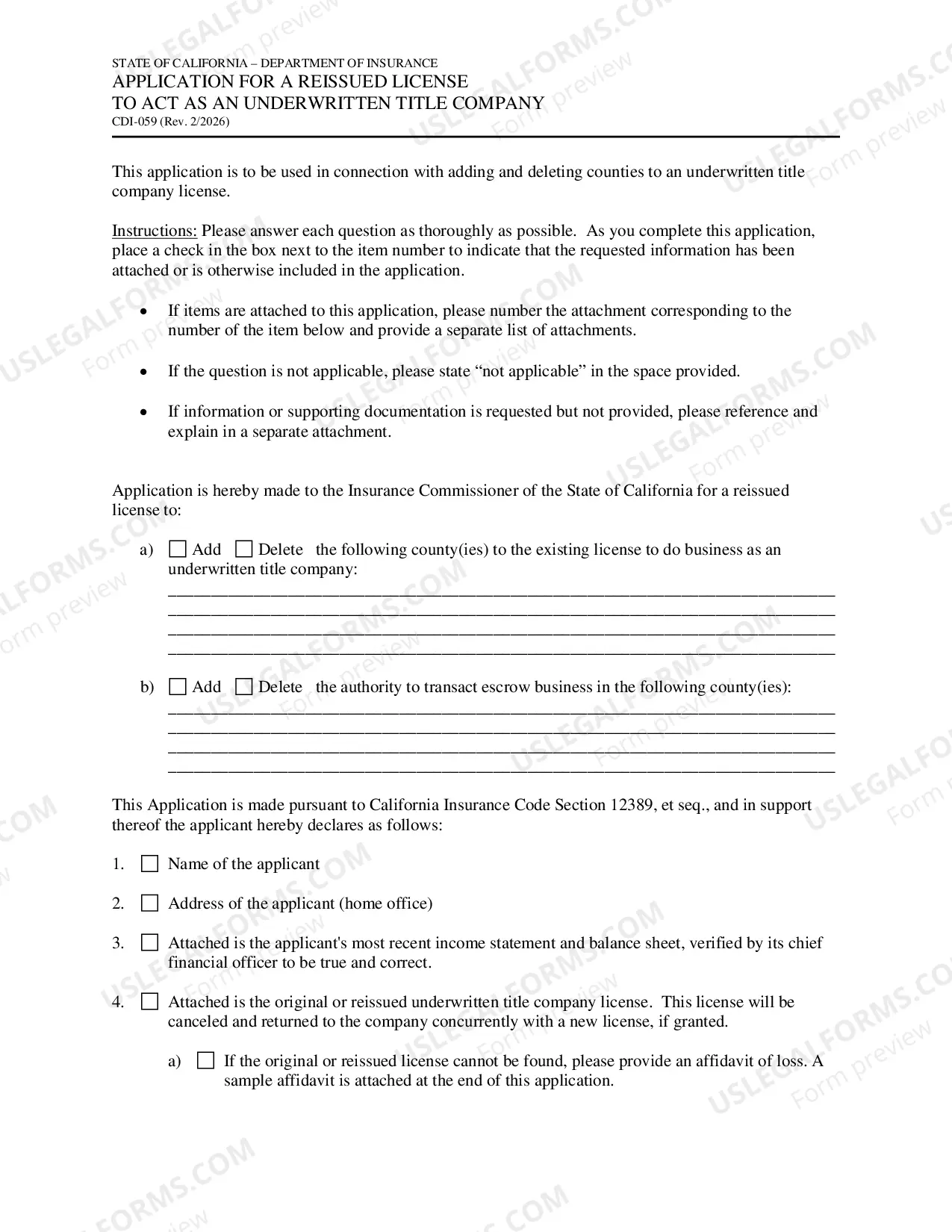
Alabama Affidavit of Petitioners
What this document covers
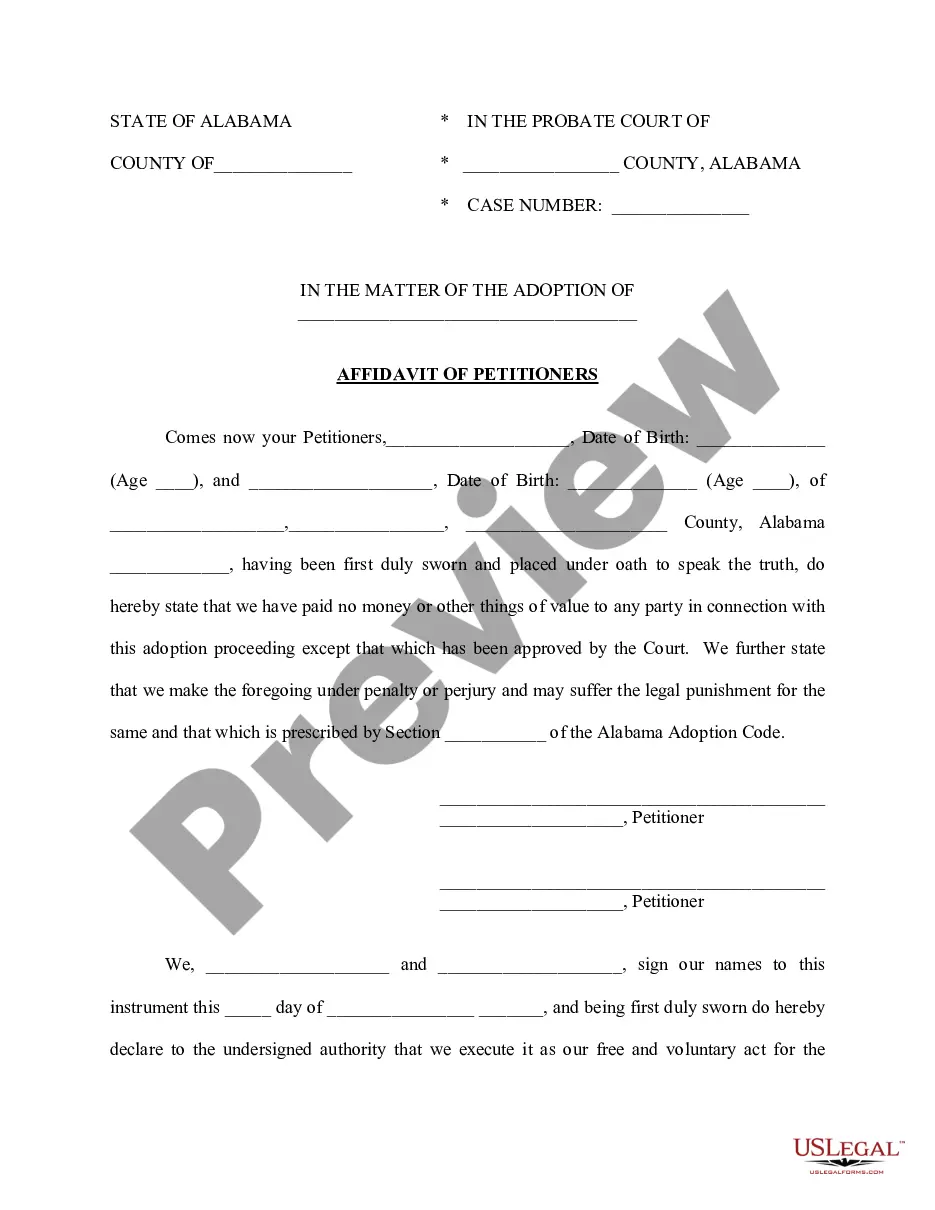
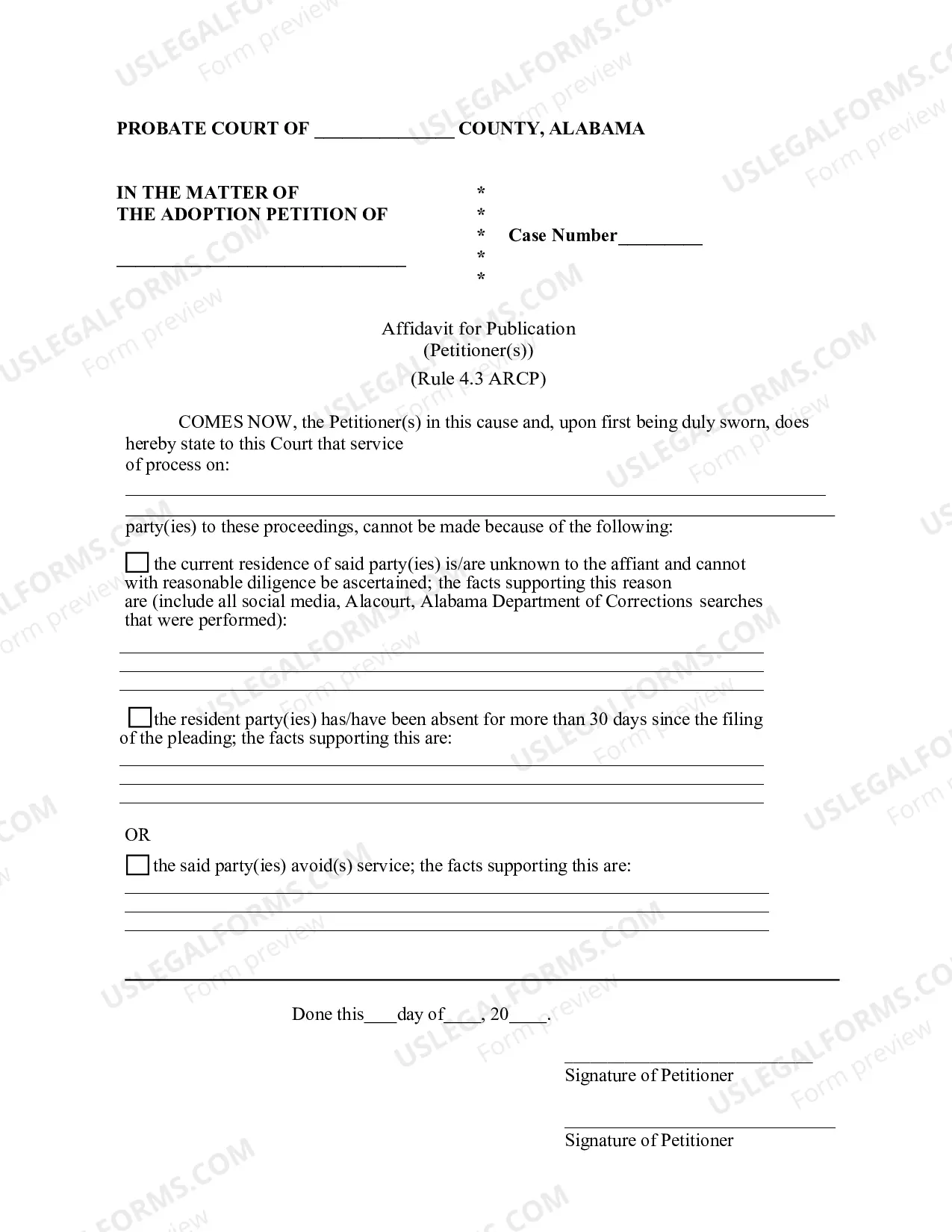
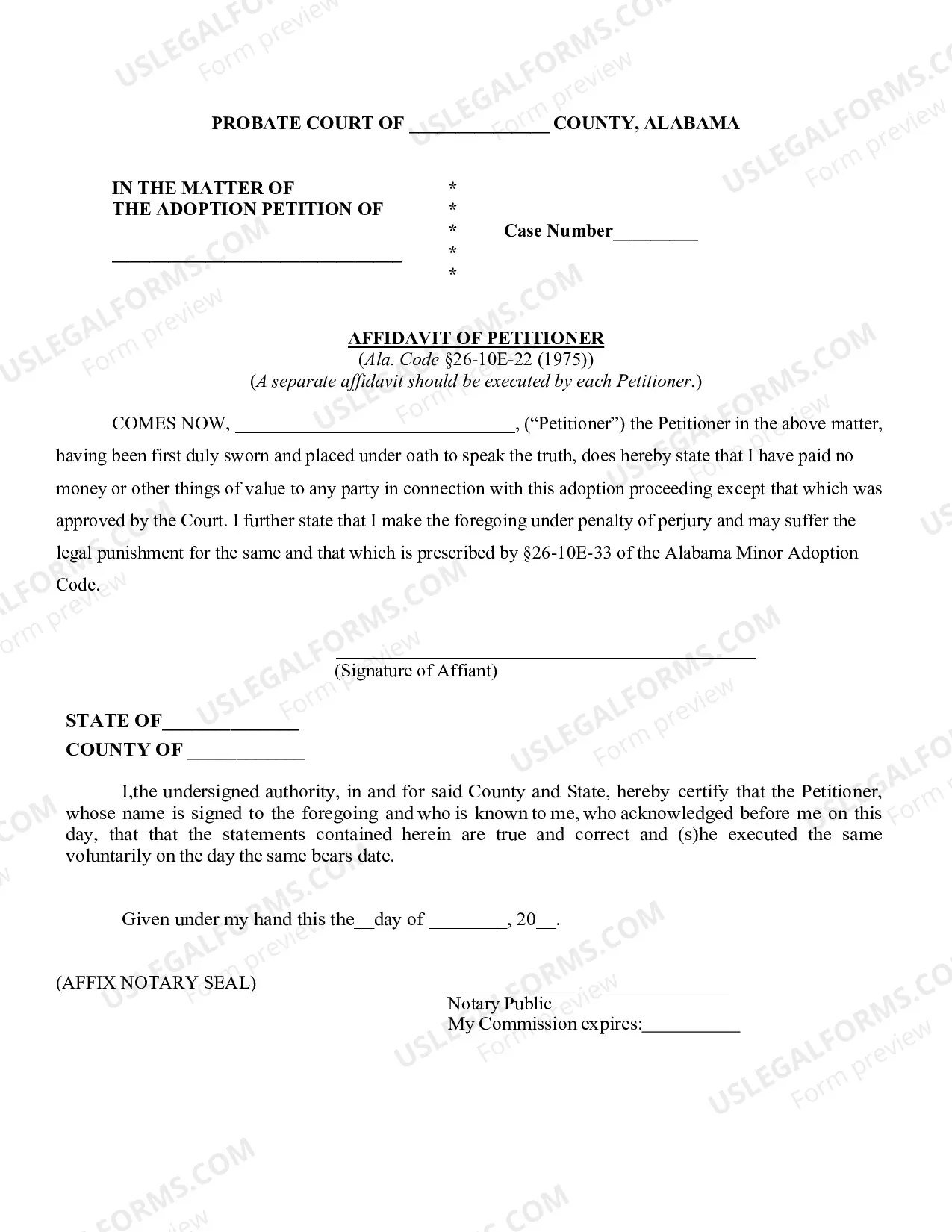
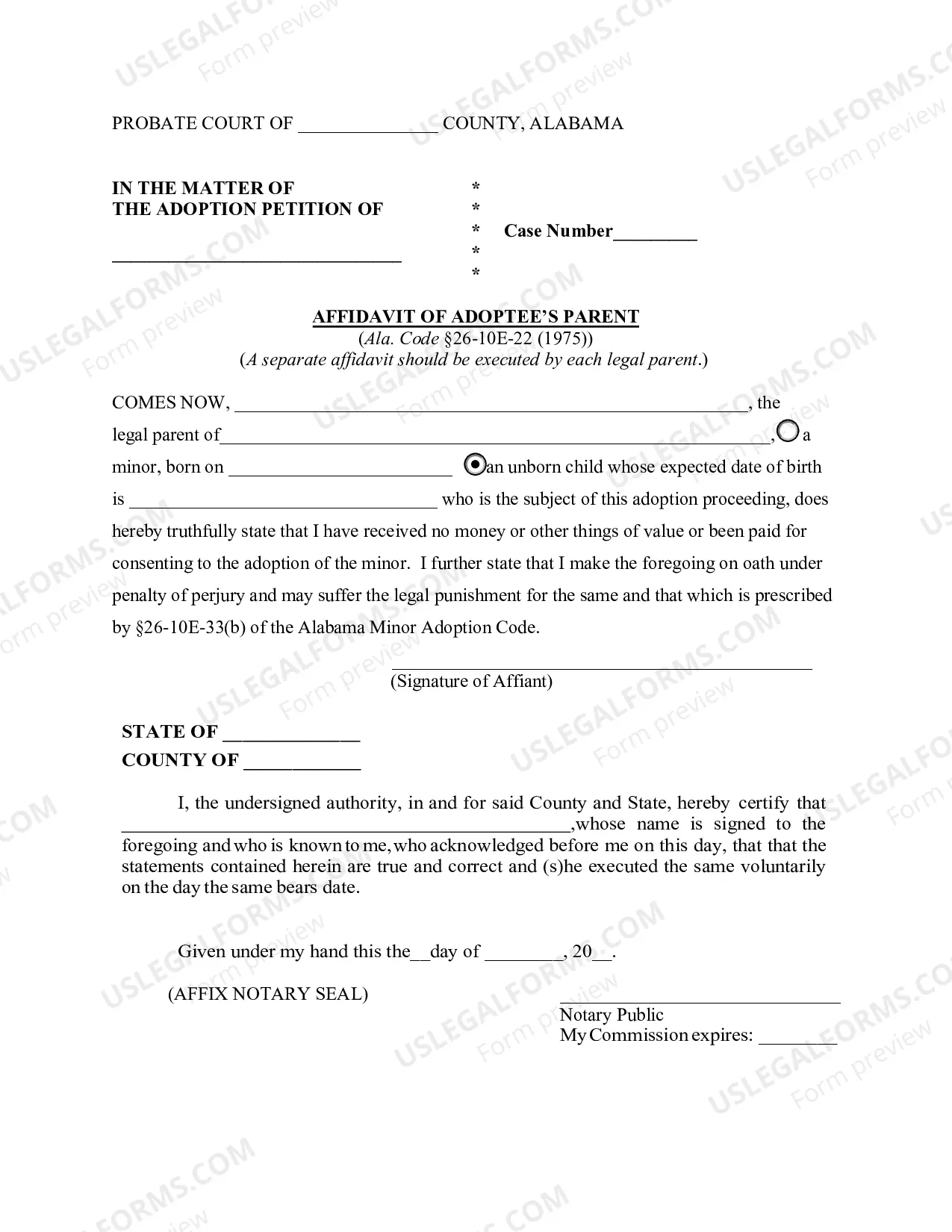
The Affidavit of Petitioners is a sworn statement made by adoption petitioners in Alabama. This legal document verifies that no payments or items of value have been exchanged in relation to the adoption procedure, except those authorized by the court. It ensures transparency and compliance with legal requirements during the adoption process, making it a critical part of adoption proceedings.
Form components explained
- Petitioners' names and personal information, including date of birth and age.
- Statement affirming that they have not paid any money or things of value, except as approved by the court.
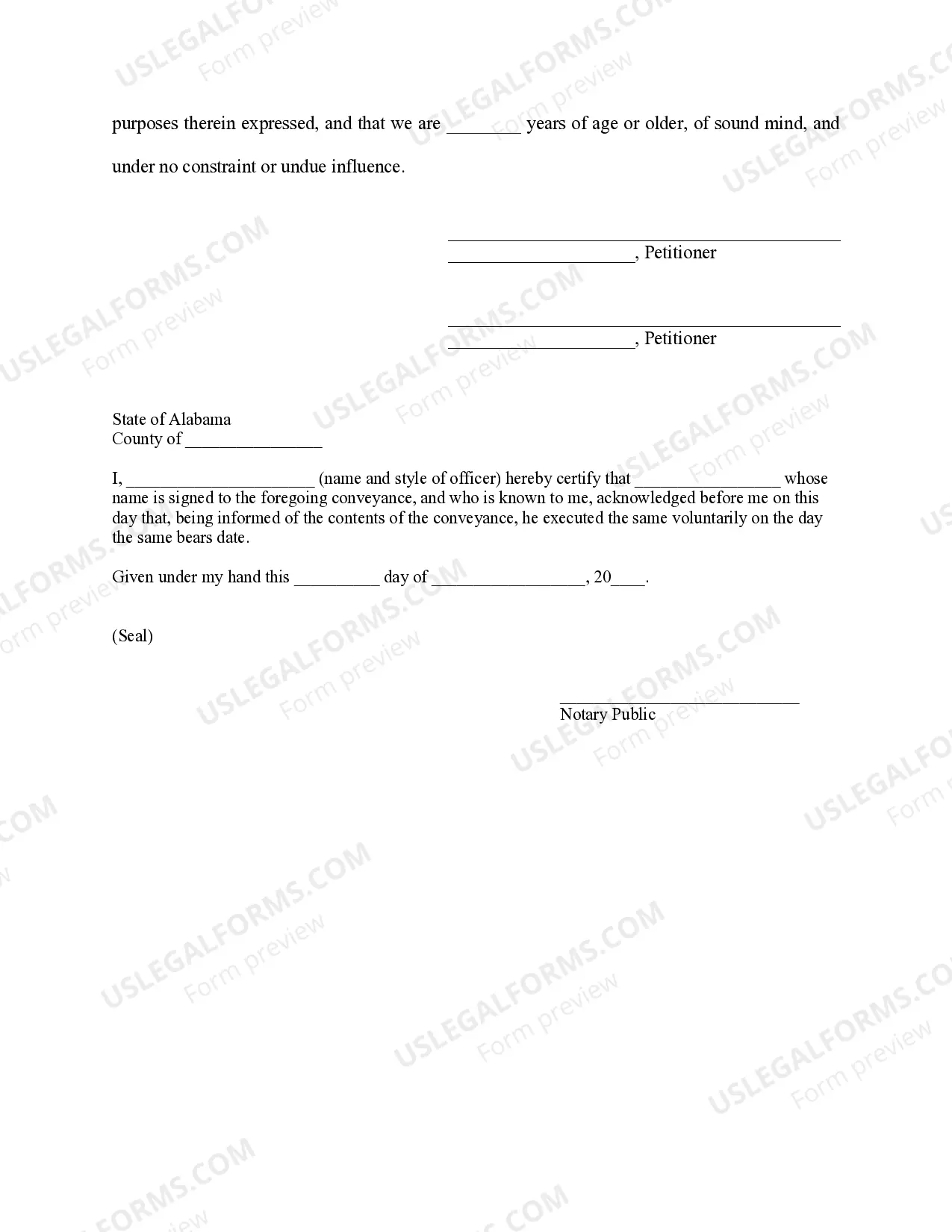
- Section for signatures of the petitioners acknowledging their statement.
- Notary acknowledgment to validate the affidavit.
When to use this document
This form should be used during the adoption process in Alabama when petitioners are required to confirm that all financial transactions related to the adoption comply with legal standards. It is a necessary document for court proceedings to demonstrate that there is no unwarranted financial influence in the adoption.
Who can use this document
This form is intended for:
- Individuals or couples acting as petitioners in an adoption case.
- Anyone involved in parental rights transfers or seeking adoption of a child.
- Legal guardians or representatives of petitioners who need to submit the affidavit.
Completing this form step by step
- Enter the names, dates of birth, and ages of the petitioners at the top of the affidavit.
- Clearly state that no unauthorized payments have been made related to the adoption.
- Both petitioners must sign and date the document, confirming their understanding and agreement.
- Have the affidavit notarized to validate the signatures and affirm the accuracy of the statement.
Does this form need to be notarized?
Yes, this form must be notarized to be legally valid. Having it notarized ensures that the statement made by the petitioners is confirmed as true and accurate by a notary public. US Legal Forms offers integrated online notarization services, available around the clock, ensuring a secure and convenient process without the need for travel.
Get your form ready online
Our built-in tools help you complete, sign, share, and store your documents in one place.
Make edits, fill in missing information, and update formatting in US Legal Forms—just like you would in MS Word.
Download a copy, print it, send it by email, or mail it via USPS—whatever works best for your next step.
Sign and collect signatures with our SignNow integration. Send to multiple recipients, set reminders, and more. Go Premium to unlock E-Sign.
If this form requires notarization, complete it online through a secure video call—no need to meet a notary in person or wait for an appointment.
We protect your documents and personal data by following strict security and privacy standards.

Make edits, fill in missing information, and update formatting in US Legal Forms—just like you would in MS Word.

Download a copy, print it, send it by email, or mail it via USPS—whatever works best for your next step.

Sign and collect signatures with our SignNow integration. Send to multiple recipients, set reminders, and more. Go Premium to unlock E-Sign.

If this form requires notarization, complete it online through a secure video call—no need to meet a notary in person or wait for an appointment.

We protect your documents and personal data by following strict security and privacy standards.
Mistakes to watch out for
- Failing to include all petitioners' names and personal details.
- Not getting the form notarized, which is essential for legal validity.
- Leaving out the critical statement regarding financial transactions.
- Incorrectly filling in the case number or court details.
Benefits of completing this form online
- Convenience of downloading and printing the form from home.
- Editability allows petitioners to fill in information accurately before printing.
- Access to professionally drafted templates by licensed attorneys ensures compliance with legal standards.
Looking for another form?
Form popularity
FAQ
An affidavit is a voluntary, sworn statement made under oath, used as verification for various purposes.Once signed, the document is legally binding and the person signing is subject to being charged with perjury if the affidavit contains false information.
An affidavit is used for the purpose of proving in court that a claim is true, and is typically used in conjunction with witness statements and other corroborating evidence. Through an affidavit, an individual swears that the information contained within is true to the best of their knowledge.
An affidavit is a written statement. It considers having a format under oath. It's only valid when it is on a voluntary basis and without coercion. When you sign an affidavit, you say that the evidence is accurate and that you are aware of the details in the affidavit personally.
Title the affidavit. First, you'll need to title your affidavit. Craft a statement of identity. The very next section of your affidavit is what's known as a statement of identity. Write a statement of truth. State the facts. Reiterate your statement of truth. Sign and notarize.
In a nutshell, an affidavit is a sworn statement that is in writing. Affidavits are usually used in a court or in negotiations. They are common in family law cases and bankruptcy cases. They are also used in civil and criminal cases, though not as often as family or bankruptcy law cases.
Affidavits are mainly used in Court proceedings. They are a written alternative to a person attending Court to give oral evidence in the witness box. Affidavits can be used to evidence, or prove, a number of things. For example, they are often used for people to tell their 'story' to the Court.
An affidavit, by itself, is inadmissible. One cannot cross examine a piece of paper. It is hearsay without the person who signed it present in court and ready to testify about it as well as authenticate it if necessary. So, an affidavit by itself does not stand up in a court of law.
Although affidavits are considered legal documents, anyone can draft one. As long as it is signed, witnessed, and notarized correctly, it will be valid. That means that you do not have to use a lawyer to create an affidavit.