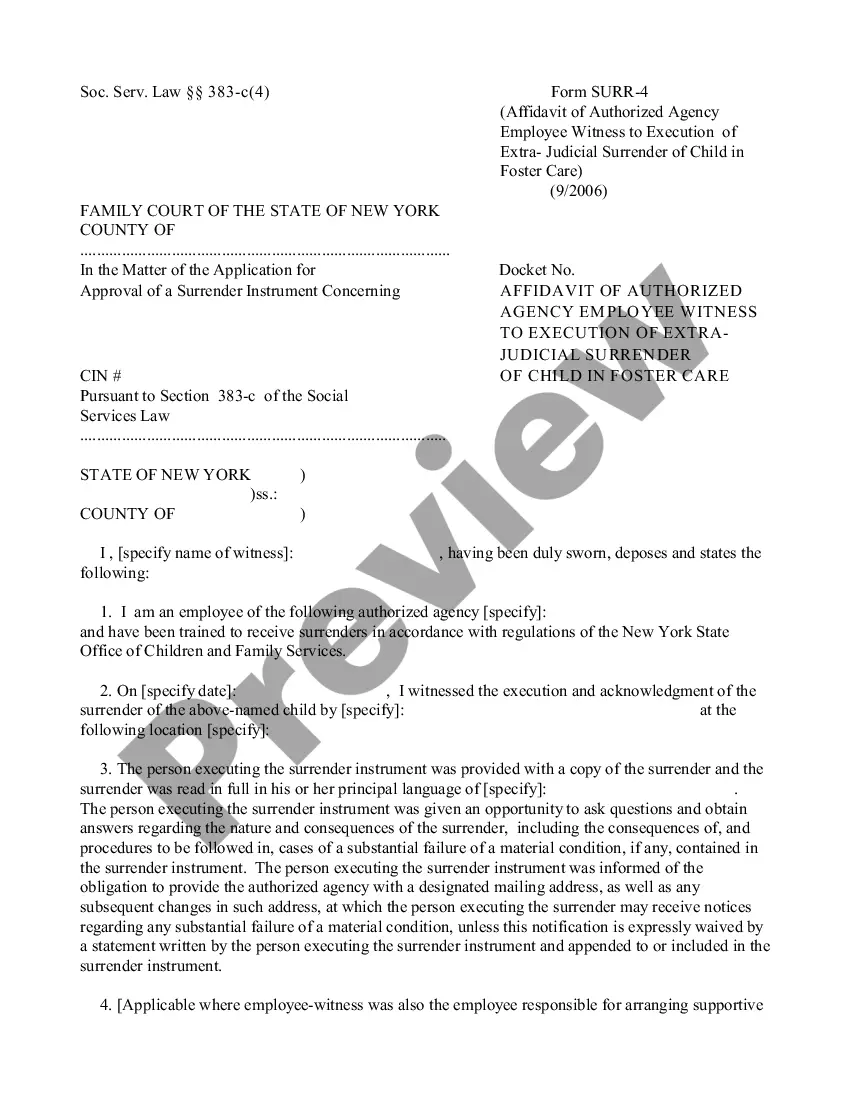
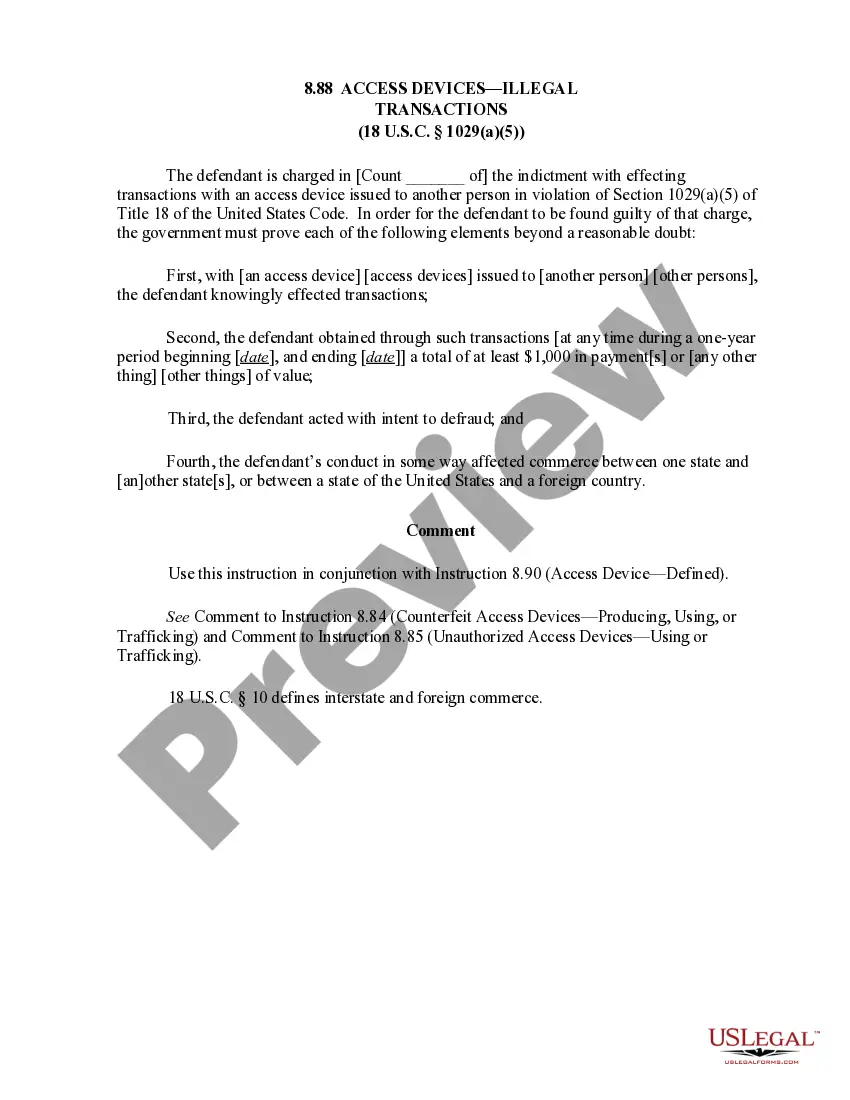
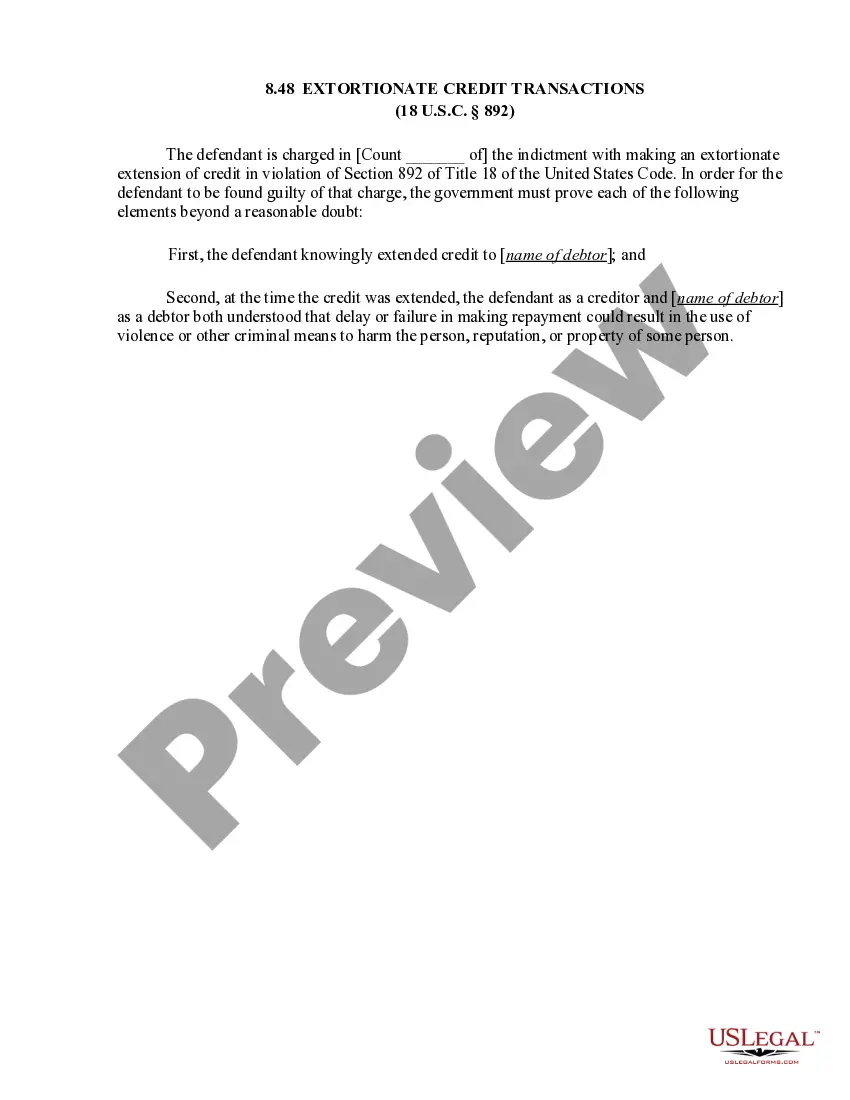
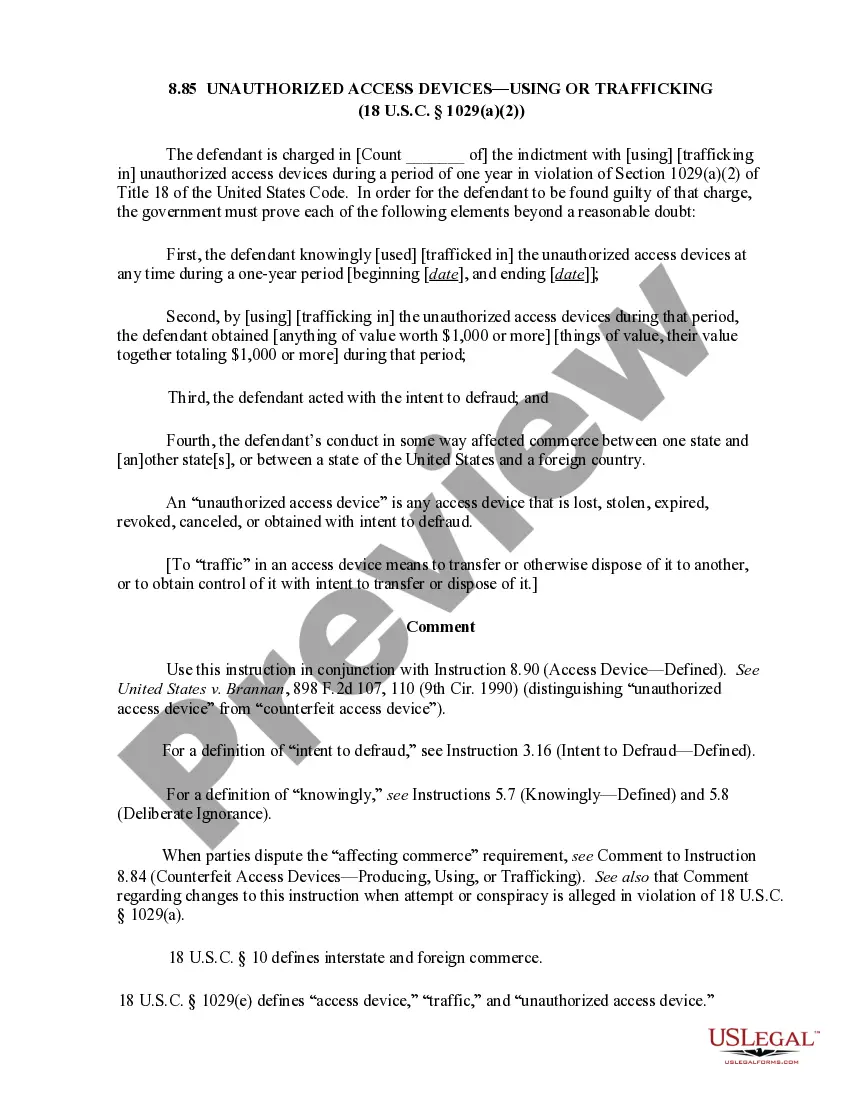
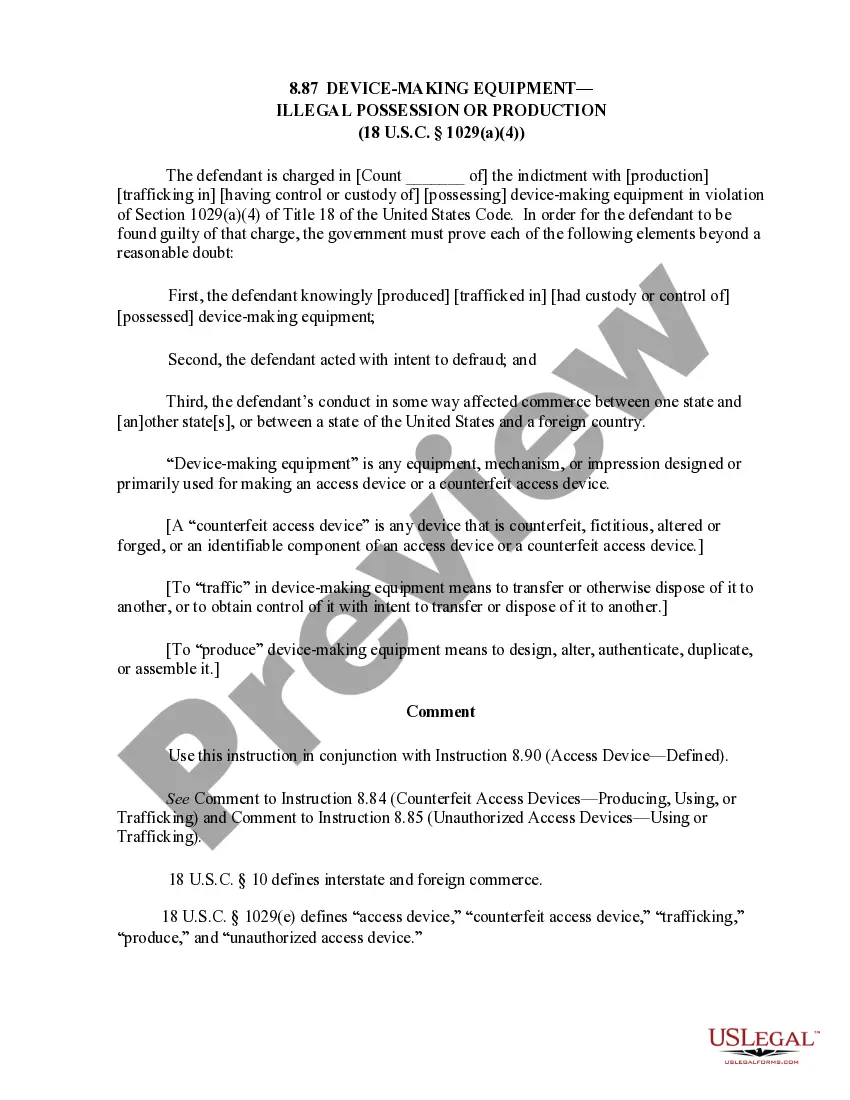
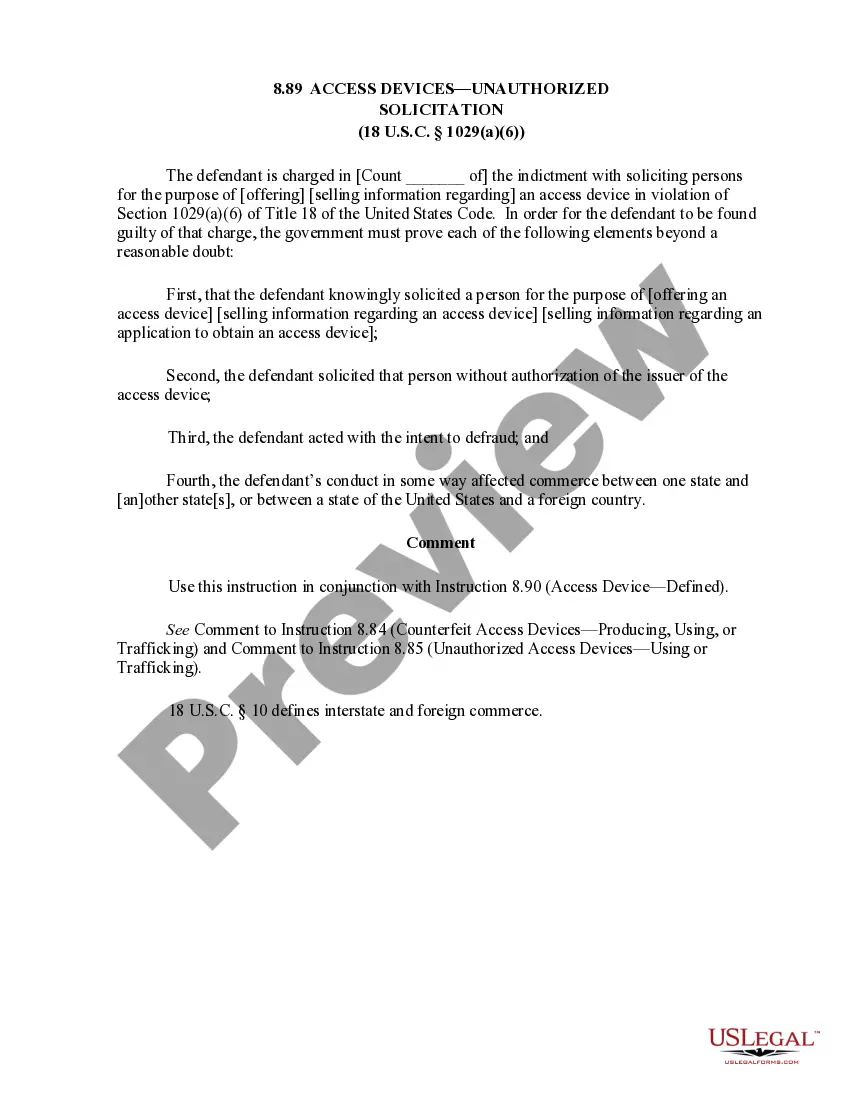
8.88 Access Devices-Illegal Transactions (18 U.S.C. Sec. 1029(a)(5))
Does this document require notarization?
This form usually doesn’t need to be notarized. However, local laws or specific transactions may require it. Our online notarization service, powered by Notarize, lets you complete it remotely through a secure video session, available 24/7.
Get your form ready online
Our built-in tools help you complete, sign, share, and store your documents in one place.
Make edits, fill in missing information, and update formatting in US Legal Forms—just like you would in MS Word.
Download a copy, print it, send it by email, or mail it via USPS—whatever works best for your next step.
Sign and collect signatures with our SignNow integration. Send to multiple recipients, set reminders, and more. Go Premium to unlock E-Sign.
If this form requires notarization, complete it online through a secure video call—no need to meet a notary in person or wait for an appointment.
We protect your documents and personal data by following strict security and privacy standards.

Make edits, fill in missing information, and update formatting in US Legal Forms—just like you would in MS Word.

Download a copy, print it, send it by email, or mail it via USPS—whatever works best for your next step.

Sign and collect signatures with our SignNow integration. Send to multiple recipients, set reminders, and more. Go Premium to unlock E-Sign.

If this form requires notarization, complete it online through a secure video call—no need to meet a notary in person or wait for an appointment.

We protect your documents and personal data by following strict security and privacy standards.
Looking for another form?

Form popularity
FAQ
Unauthorized access is when a person gains entry to a computer network, system, application software, data, or other resources without permission. Any access to an information system or network that violates the owner or operator's stated security policy is considered unauthorized access.
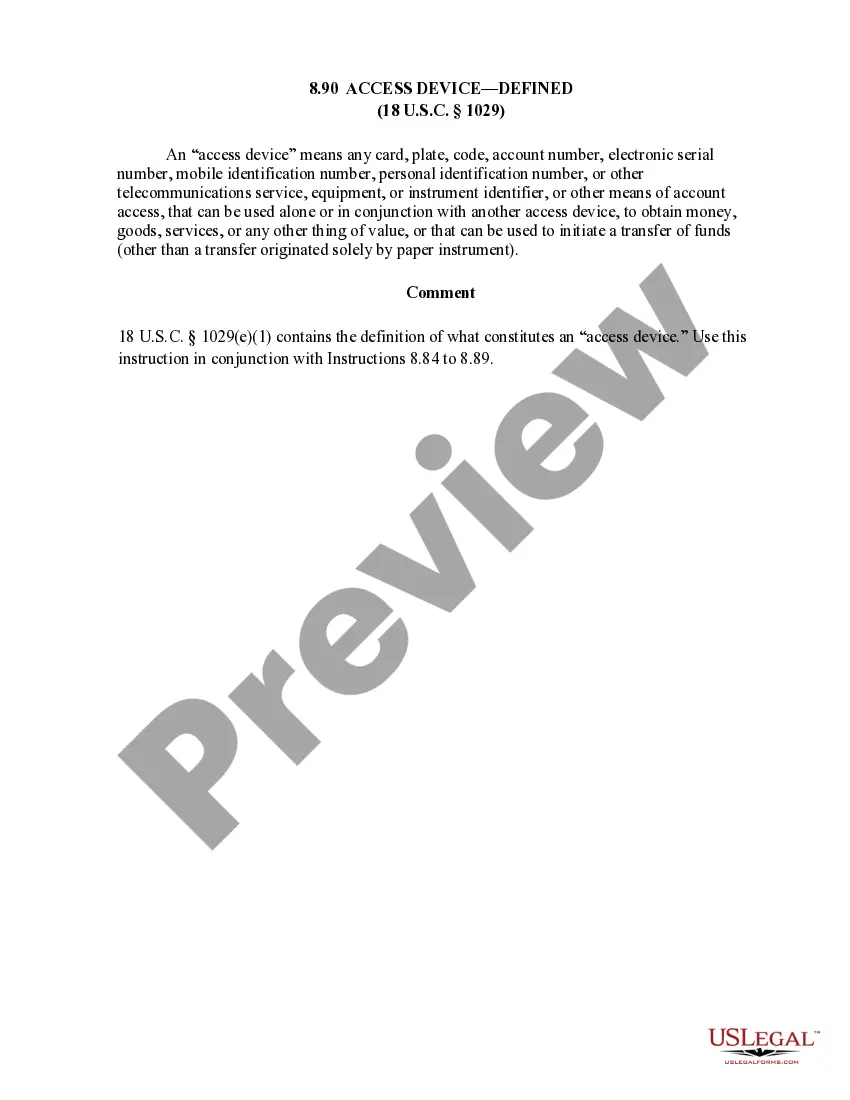
(1) the term ?access device? means any card, plate, code, account number, electronic serial number, mobile identification number, personal identification number, or other telecommunications service, equipment, or instrument identifier, or other means of account access that can be used, alone or in conjunction with
1029. Fraudulent Presentment and Related Unauthorized Credit Card Transactions Made by Access Device?18 U.S.C.
The term "unauthorized access device" includes any access device or credit card that is lost, stolen, expired, revoked, canceled or obtained with intent to defraud.
Access Device means any electronic device you use to access your account and view electronic documents. This includes, but is not limited to: a traditional computer such as a desktop or laptop computer; or a mobile device such as a tablet computer or a smartphone.
A conviction for a first time offense can result in a fine of up to $25,000, and a prison term of up to ten or fifteen years, or both, as well as forfeiture of any equipment used to perpetrate the crime depending on the type of fraud which is broken down by sub-sections.
"Unauthorized access device" is defined at 18 U.S.C. § 1029(e)(3) as "any access device that is lost, stolen, expired, revoked, canceled, or obtained with intent to defraud." See United States v. Gugino, 860 F.
If you are convicted of federal credit card fraud, you face up 10 15 years in federal prison. If you are convicted of violating 18 U.S.C. 1029 for acts 1, 2, 3, 6, 7, or 10, listed above, you face a sentence of up to 10 years in federal prison, a fine of up to $250,000, or both prison and fine.