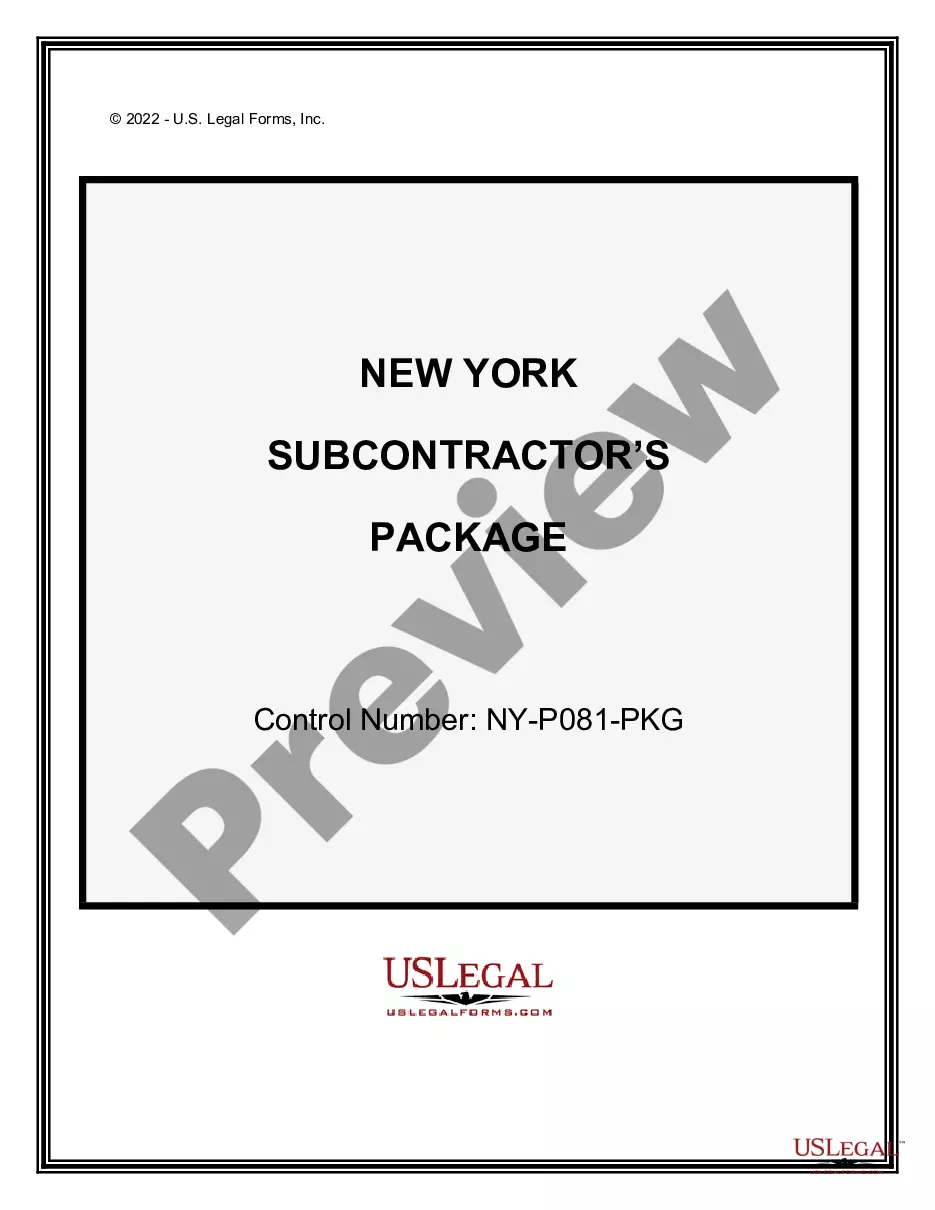
New York Subcontractors Package
What is this form package?
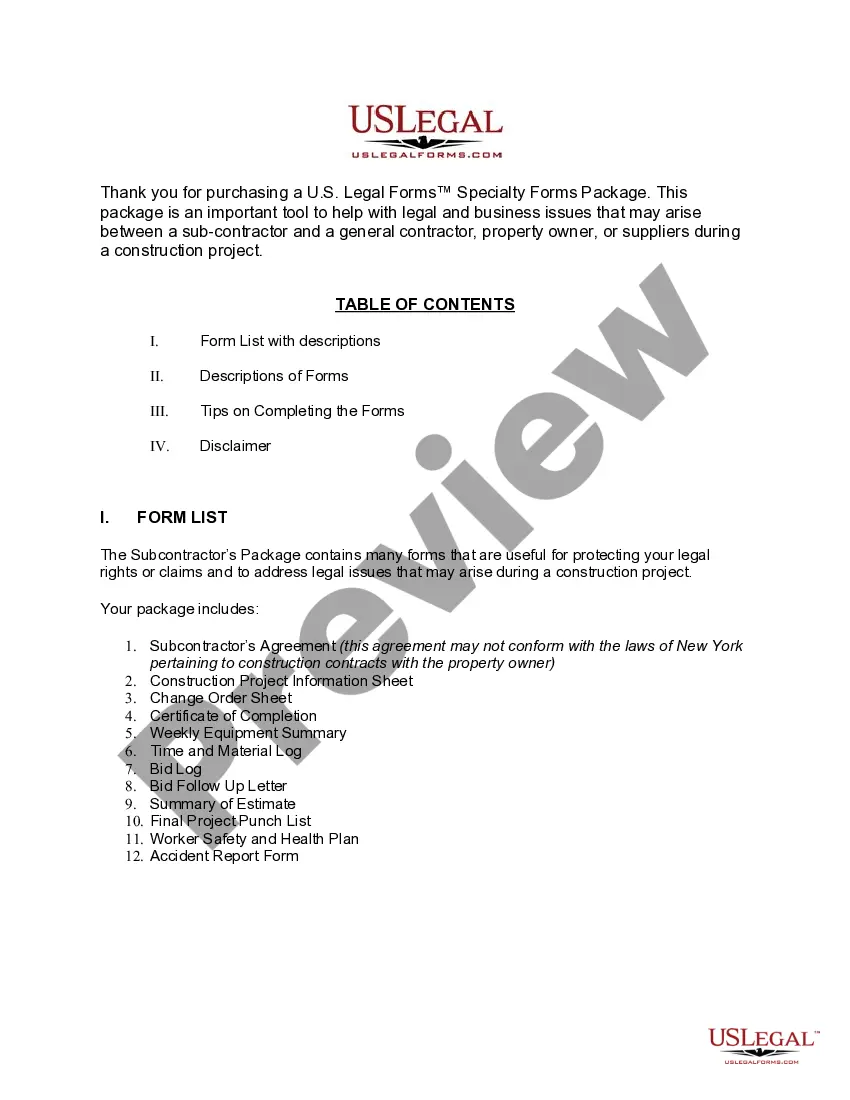
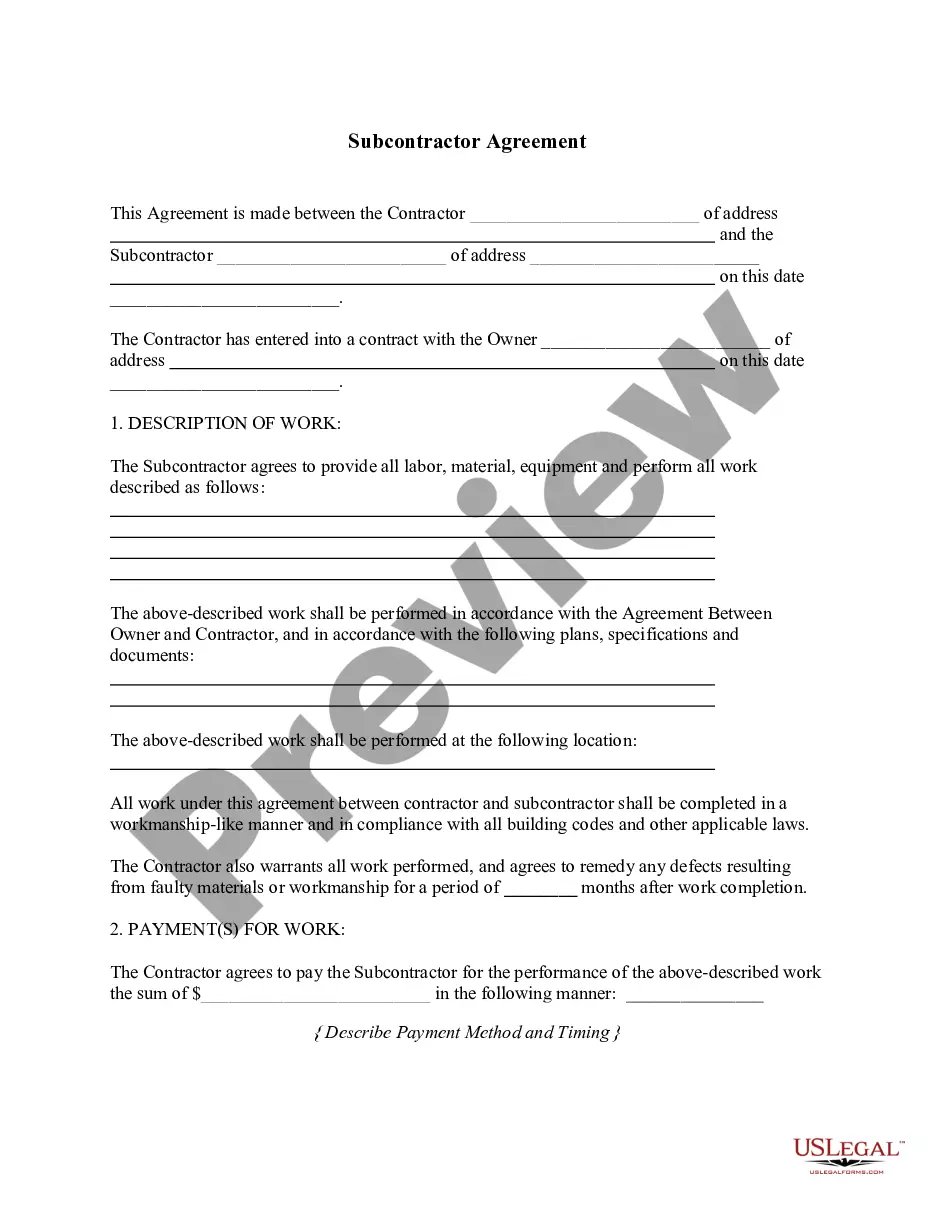
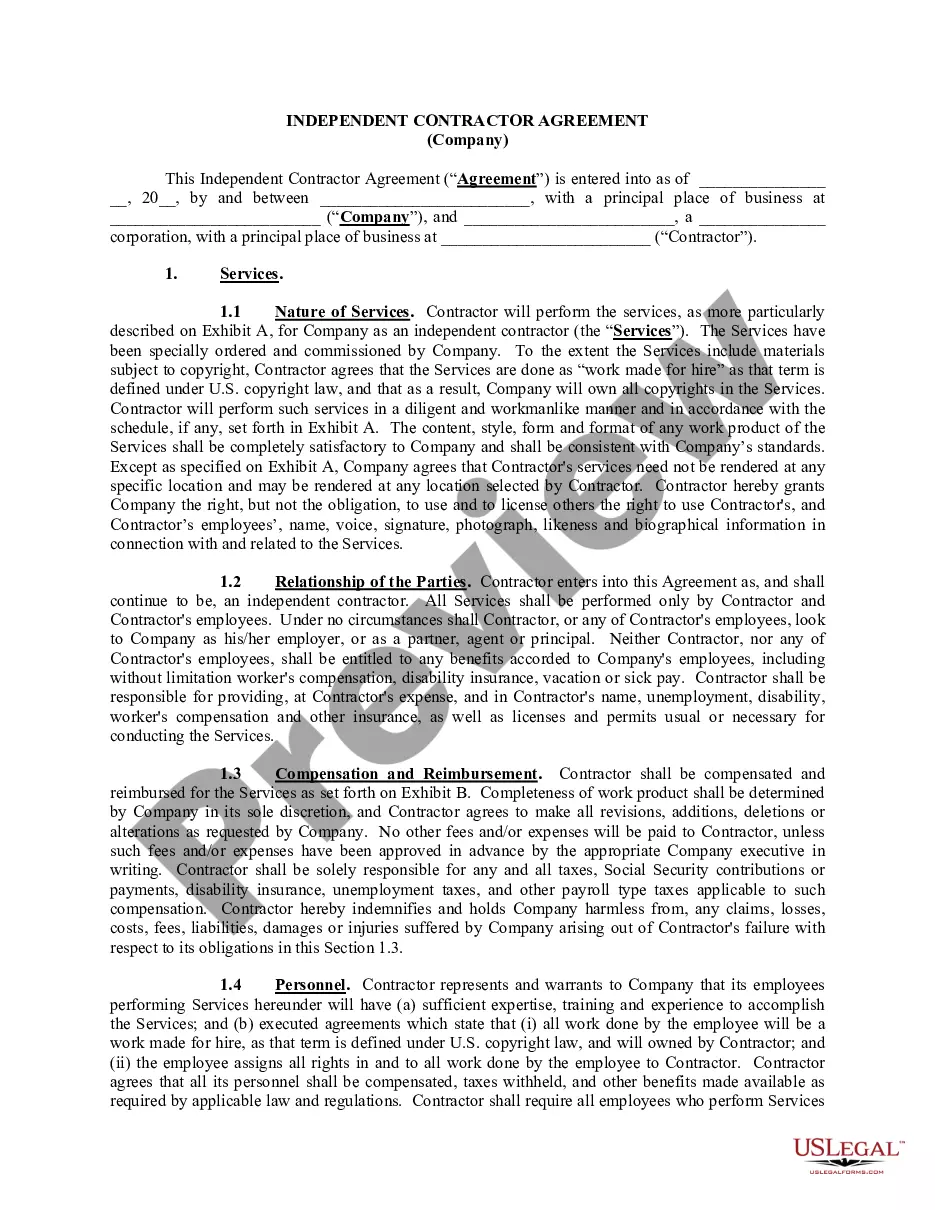
The New York Subcontractors Package is a comprehensive set of legal documents designed specifically for subcontractors managing construction projects in New York. This package includes essential forms to help subcontractors protect their legal rights and streamline project management. It features a subcontractor's agreement that complies with New York state law, ensuring that all documents meet the necessary legal standards for construction agreements.
What’s included in this form package
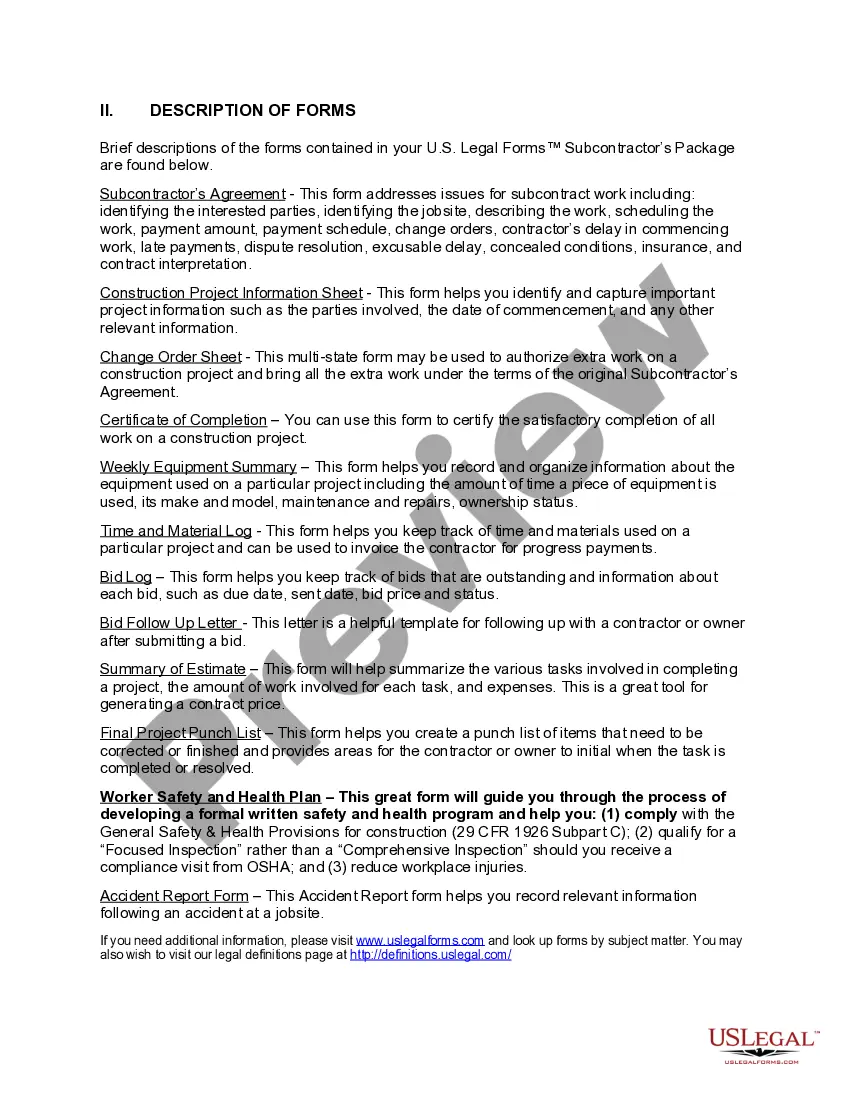
- Subcontractor's Agreement
- Contractor's Weekly Equipment Summary
- Contractor's Time and Materials Log
- Contractor's Bid Log
- Contractor's Bid Follow Up Letter
- Contractor's Summary of an Estimate
- Contractor's Final Punch List
- Construction Accident Report
- Construction Safety and Health Plan
- Change Order for Construction or Repairs by Contractor
- Certification of Completion by Contractor
- Construction Project Information Sheet
Common use cases
This form package is beneficial in various scenarios, including:
- Starting a new subcontracting project in New York.
- Documenting project details and agreements with contractors.
- Managing changes or additions to a project through change orders.
- Ensuring worker safety and health regulations are met.
- Dealing with accidents or incidents on the job site.
Who should use this form package
- Independent subcontractors working in the construction industry.
- Construction project managers overseeing subcontracted work.
- Small construction firms looking to streamline their documentation process.
- Contractors seeking to stay compliant with New York construction laws.
Steps to complete these forms
- Review the included forms to understand their purpose and requirements.
- Identify the parties involved in the project, including names and addresses.
- Enter dates, project details, and relevant information on the forms.
- Ensure all forms are signed and dated where required.
- Keep a copy of completed forms for your records and future reference.
Do forms in this package need to be notarized?
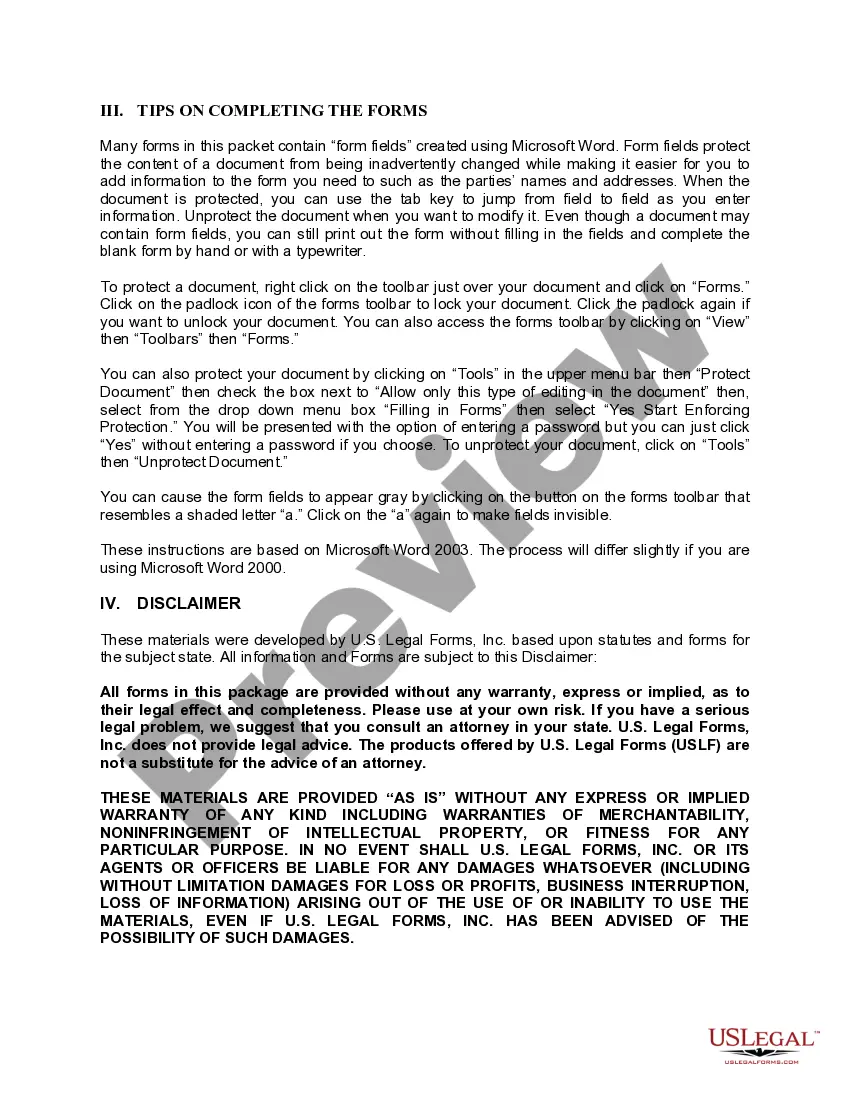
Notarization is not commonly needed for forms in this package. However, if your state’s laws require it, our notarization service, powered by Notarize, allows you to finalize documents online 24/7 without in-person visits.
Get your form ready online
Our built-in tools help you complete, sign, share, and store your documents in one place.
Make edits, fill in missing information, and update formatting in US Legal Forms—just like you would in MS Word.
Download a copy, print it, send it by email, or mail it via USPS—whatever works best for your next step.
Sign and collect signatures with our SignNow integration. Send to multiple recipients, set reminders, and more. Go Premium to unlock E-Sign.
If this form requires notarization, complete it online through a secure video call—no need to meet a notary in person or wait for an appointment.
We protect your documents and personal data by following strict security and privacy standards.

Make edits, fill in missing information, and update formatting in US Legal Forms—just like you would in MS Word.

Download a copy, print it, send it by email, or mail it via USPS—whatever works best for your next step.

Sign and collect signatures with our SignNow integration. Send to multiple recipients, set reminders, and more. Go Premium to unlock E-Sign.

If this form requires notarization, complete it online through a secure video call—no need to meet a notary in person or wait for an appointment.

We protect your documents and personal data by following strict security and privacy standards.
Mistakes to watch out for
- Failing to sign the necessary documents, which can invalidate the agreement.
- Leaving blank fields that could lead to ambiguity in project terms.
- Neglecting to update the change order form when adjustments are made.
- Using outdated versions of the forms instead of the latest package.
Advantages of online completion
- Convenient access to essential forms anytime and anywhere.
- Easy-to-edit documents that allow for quick updates according to project needs.
- Reliability from licensed attorneys who draft the forms to ensure legal compliance.
Legal use & context
- Forms in this package provide a legal framework for subcontracting work in New York.
- They can help enforce rights and clarify obligations between subcontractors and contractors.
- Utilizing state-compliant forms promotes transparency and can prevent disputes.
Looking for another form?
Form popularity
FAQ
The standard hold-back amount is about twice the value of the punch list items. How much retainage? Retainage is typically in the 5% to 10% range, although some contractors will negotiate for a fixed fee or limit.
Clients withhold retention against main contractors and main contractors withhold payment against sub-contractors. Retentions typically take the form of a percentage on the contract value. The rate can vary wildly but is typically around 5%.
Retainage is the withholding of a portion of the funds that are due to a contractor or subcontractor until the construction project is finished. It is meant to serve as a financial incentive and an assurance that the contractor will complete the project in a satisfactory manner.
A rule of thumb for independent contractors is that the vendor should be allowed to mark up your pay rate by about 15 percent when billing the client. This allows the vendor a respectable profit without making the bill rate outrageous.
All subcontractors must file and pay taxes including state, local and federal income and self-employment taxes on their own. The general contractor must file IRS Form 1099-MISC if the subcontractor earns over $600.
A rule of thumb for independent contractors is that the vendor should be allowed to mark up your pay rate by about 15 percent when billing the client. This allows the vendor a respectable profit without making the bill rate outrageous.
Retention must be released to the contractor 30 days after the acceptance of the portion of the project on which the funds were retained. Contractors may not retain more than 5 percent from subcontractors and shall release retention to subcontractors within 30 days of the completion of the subcontract.
Licensing. Scope of Work and Payment. Timing. Defense and Indemnification.
The payment bond is backed by a surety company, and protects the owner and subcontractors. If a general contractor refuses to pay his subcontractors, they can make a claim against the payment bond. The surety company will pay out the subcontractors for at least part of their money and take the contractor to court.