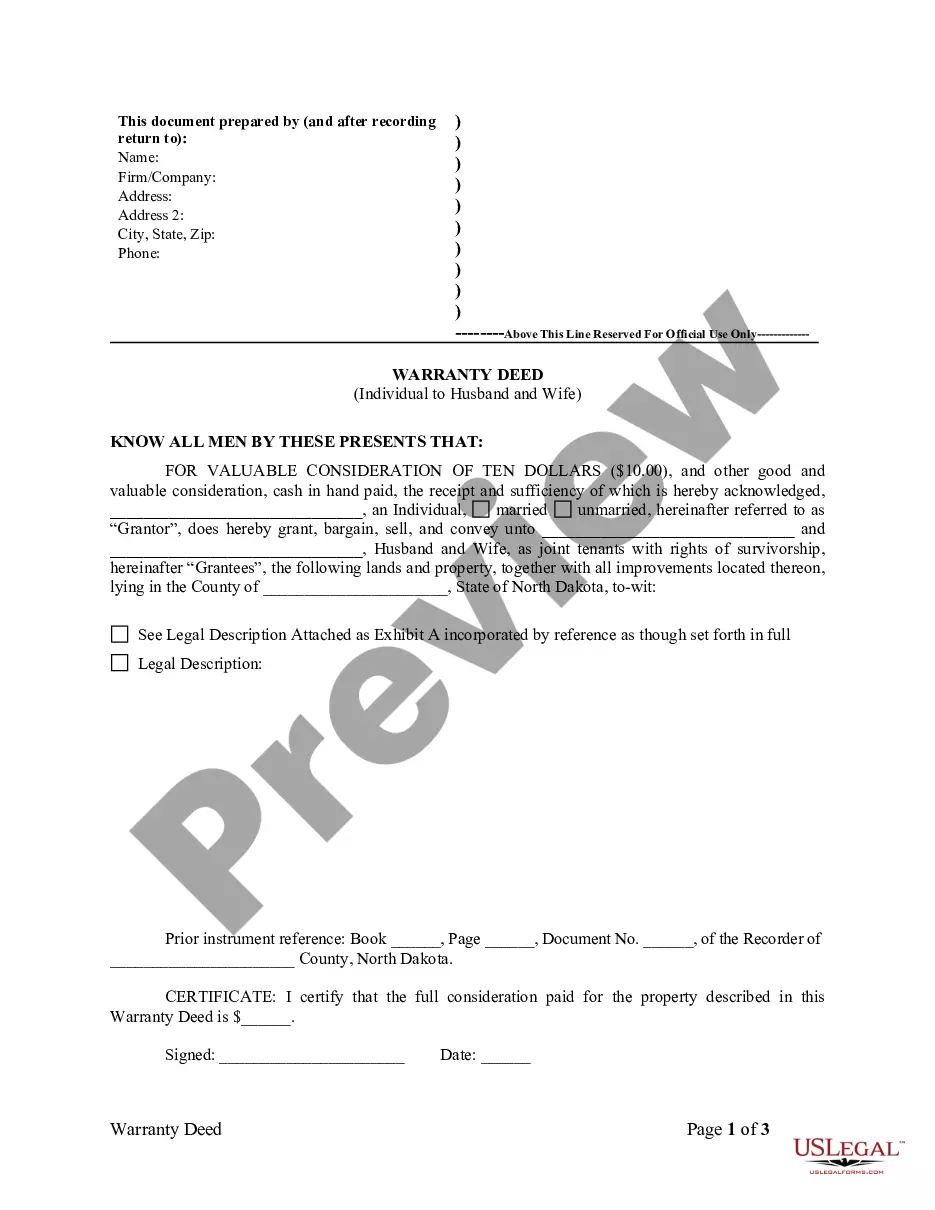
Nebraska Release of Easement
About this form
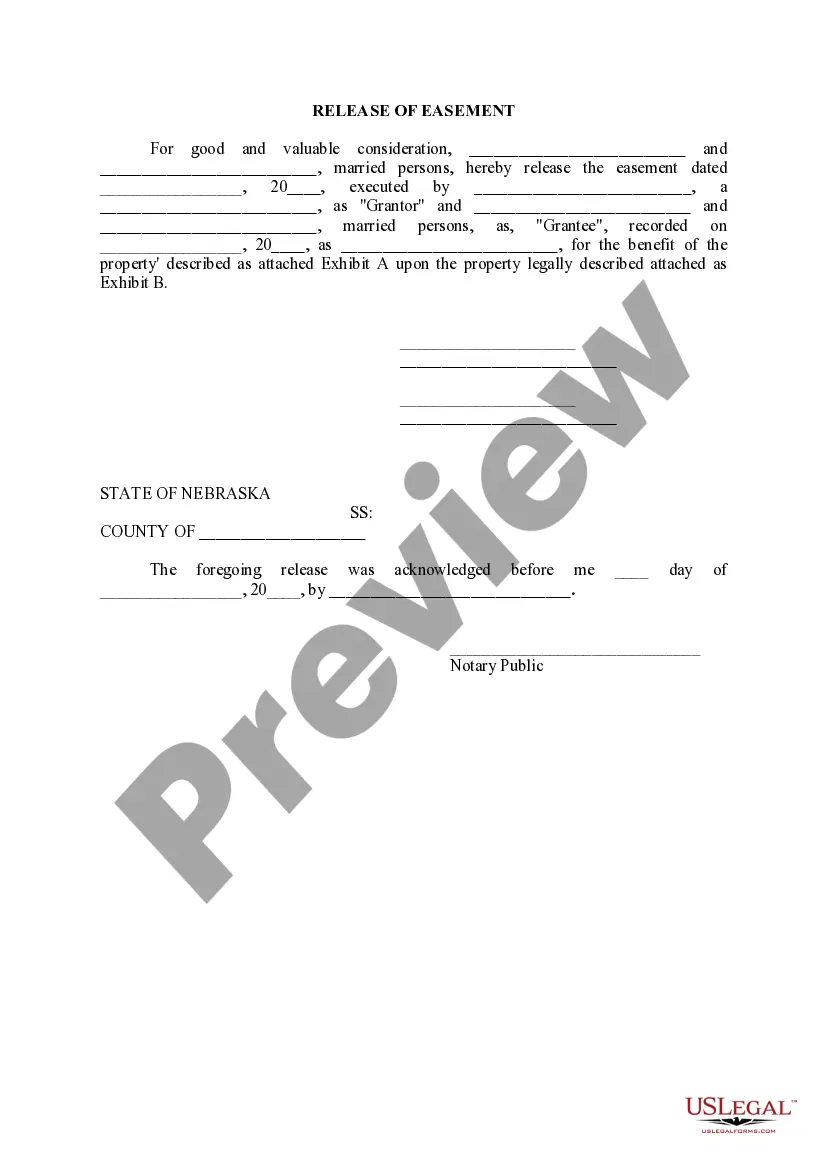
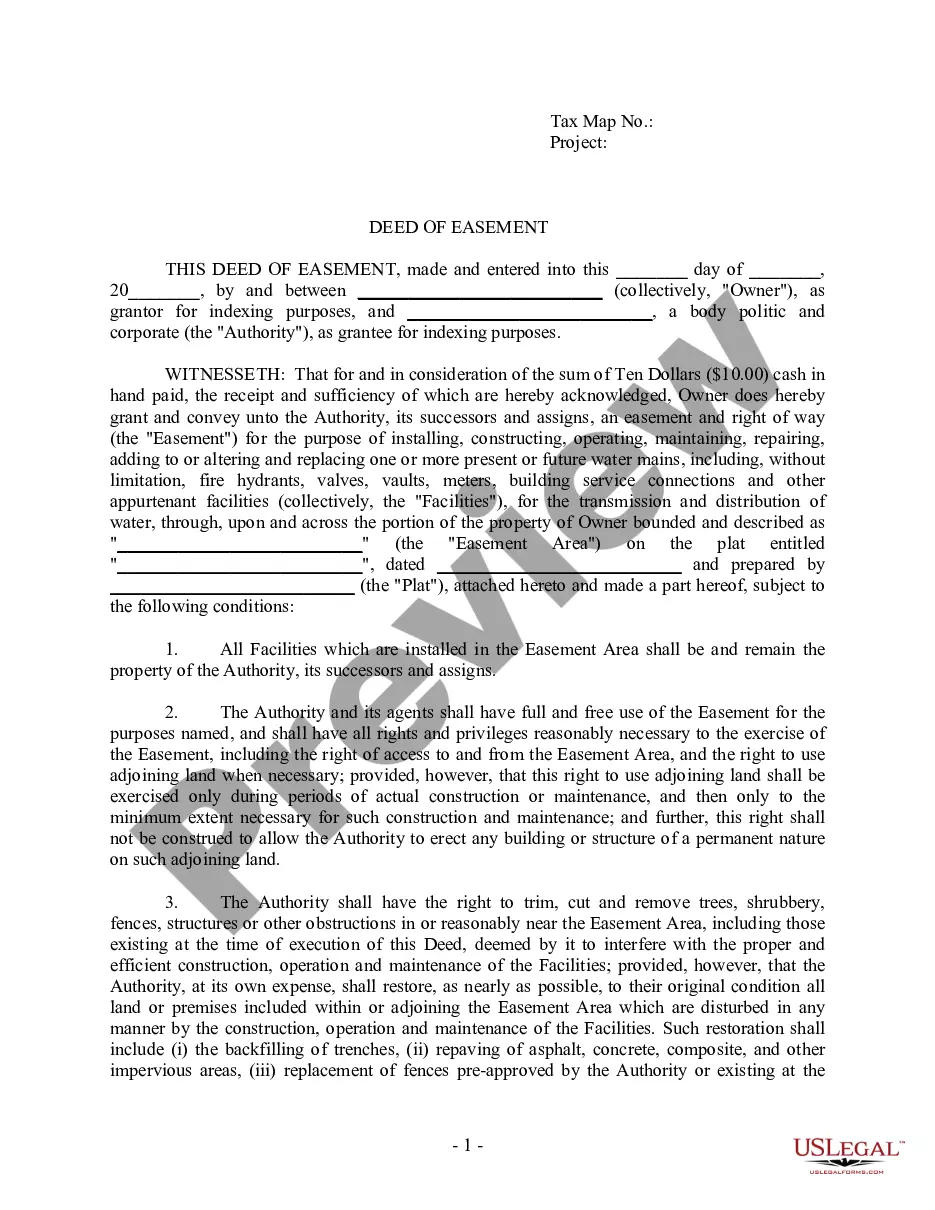
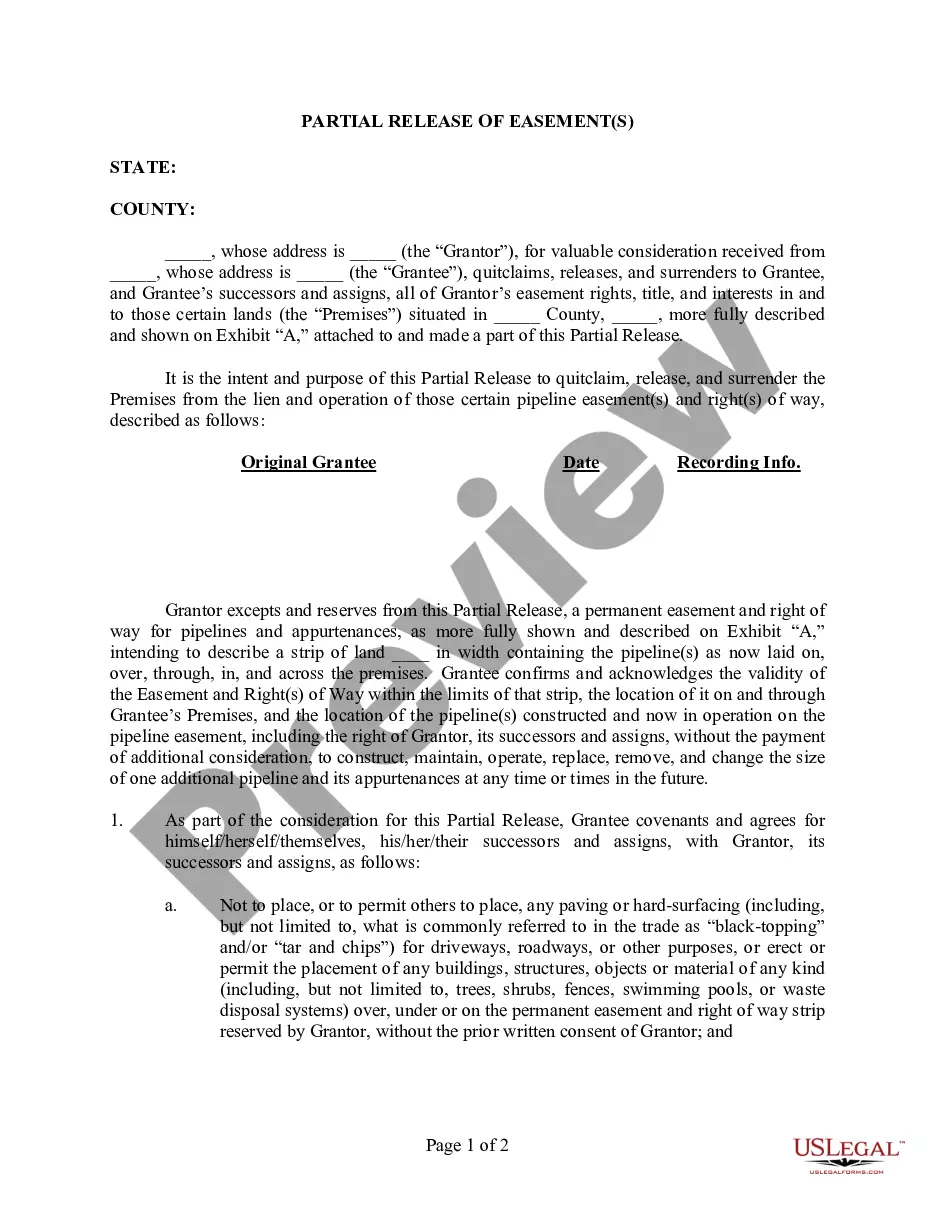
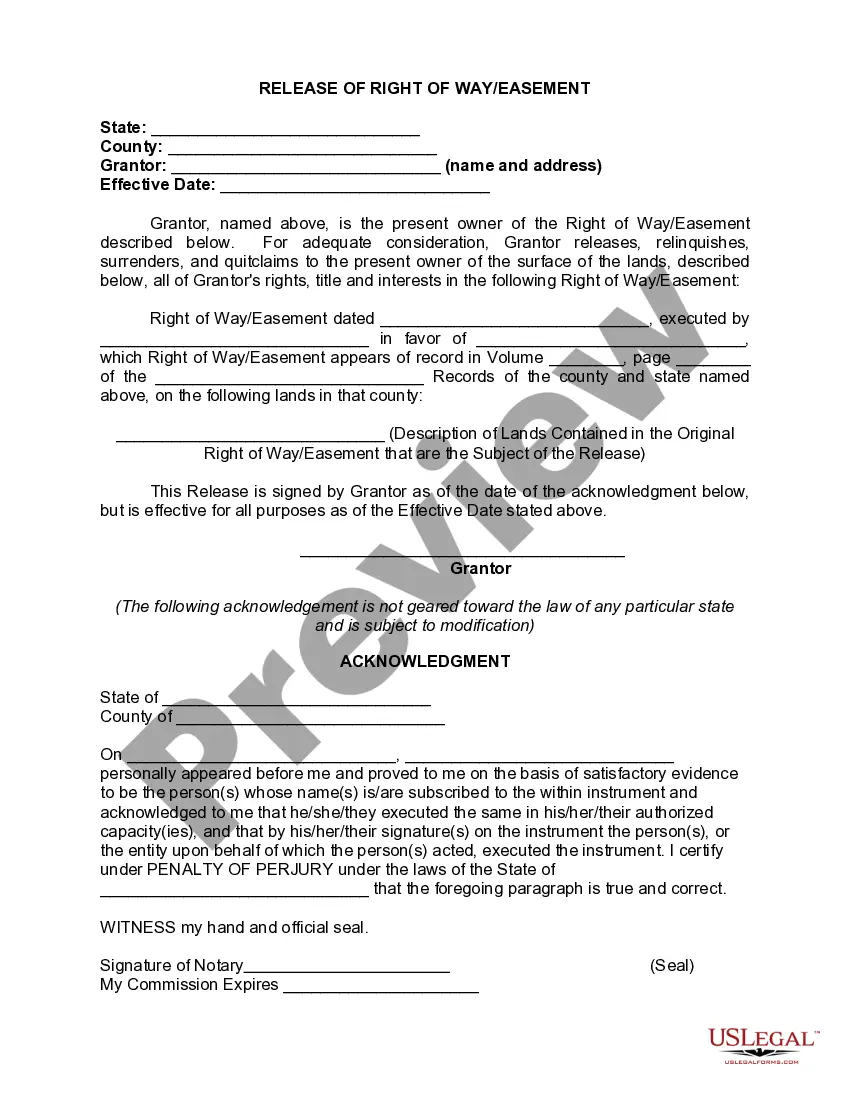
The Release of Easement is a legal document used to formally terminate an existing easement. This release serves as a surrender of rights or interests in an easement, which can be held by the owner of the dominant estate or by the holder of an easement in gross. Unlike other easement-related forms, this document focuses specifically on the cancellation of easement rights, ensuring clear termination and preventing future disputes regarding the easement.
What’s included in this form
- Names of the parties involved, including the Grantor and Grantee.
- Date of the original easement being released.
- Legal descriptions of the properties involved, typically provided in attached exhibits.
- Signatures of the parties releasing the easement.
- Notary acknowledgment for authenticity and legal verification.
Situations where this form applies
This form is essential when the owner of an easement wishes to relinquish their rights. Situations may include when the dominant estate no longer requires access or when both parties agree to terminate the easement for any reason. Utilizing this form helps clarify property boundaries and easement rights, thereby avoiding potential legal issues in the future.
Who this form is for
- Property owners looking to terminate an easement on their land.
- Individuals or entities that hold easement rights and wish to release those rights.
- Real estate professionals assisting clients with property transactions involving easements.
How to prepare this document
- Identify the parties: Clearly list the names of the Grantor and Grantee.
- Specify the easement: Enter the date of the original easement and details of the Grantor and Grantee.
- Describe the properties: Include the legal descriptions of the dominant and servient estates as Exhibits A and B.
- Gather signatures: Ensure all parties sign the document in the designated spaces.
- Obtain notarization: Have the document notarized to validate the release.
Notarization requirements for this form
Yes, this form must be notarized to be legally valid. Notarization helps confirm the identities of the signatories and ensures that the document is executed properly. US Legal Forms offers integrated online notarization, allowing you to complete this process easily and securely via video call.
Get your form ready online
Our built-in tools help you complete, sign, share, and store your documents in one place.
Make edits, fill in missing information, and update formatting in US Legal Forms—just like you would in MS Word.
Download a copy, print it, send it by email, or mail it via USPS—whatever works best for your next step.
Sign and collect signatures with our SignNow integration. Send to multiple recipients, set reminders, and more. Go Premium to unlock E-Sign.
If this form requires notarization, complete it online through a secure video call—no need to meet a notary in person or wait for an appointment.
We protect your documents and personal data by following strict security and privacy standards.

Make edits, fill in missing information, and update formatting in US Legal Forms—just like you would in MS Word.

Download a copy, print it, send it by email, or mail it via USPS—whatever works best for your next step.

Sign and collect signatures with our SignNow integration. Send to multiple recipients, set reminders, and more. Go Premium to unlock E-Sign.

If this form requires notarization, complete it online through a secure video call—no need to meet a notary in person or wait for an appointment.

We protect your documents and personal data by following strict security and privacy standards.
Avoid these common issues
- Failing to include all necessary legal descriptions of the properties.
- Not obtaining signatures from all relevant parties.
- Neglecting to have the form notarized if required by local law.
- Incorrectly filling out the date or terms of the original easement.
Advantages of online completion
- Convenience: Easily download and complete the form at your own pace.
- Editability: Customize the form to fit your specific needs without starting from scratch.
- Reliability: Use a form drafted by licensed attorneys to ensure compliance with legal standards.
Looking for another form?

Form popularity
FAQ
Easements generally survive conveyances and can only be terminated by completion, destruction, or expiration. So, having an easement on a property may have a permanent outcome on the property with rights of the home owner. But not all easements are bad.
Benefits the owner of adjacent land. The easement is thus appurtenant to the holder's land. The benefited land is called the dominant tenementThe land that benefits from an easement., and the burdened landthat is, the land subject to the easementis called the servient tenement.
You can terminate an easement by release. A release is a surrender of a right or interest, such as an easement. Only the person holding the right can release it, such as the owner of the dominant estate in an easement appurtenant or the holder of an easement in gross.
There are eight ways to terminate an easement: abandonment, merger, end of necessity, demolition, recording act, condemnation, adverse possession, and release.
An easement can be terminated by estopple if the easement holder shows an intent to abandon and the owner of the servient tenement spends money in reasonable reliance on the easement holders representations.
Courts generally assume easements are created to last forever unless otherwise indicated in the document creating the easement. Despite this, an individual granting an easement should avoid any potential problems by expressly providing that the easement is permanent.
An easement gives someone a right to trespass on part of someone else's property for a specific purpose. They are commonly granted to utility companies, but may also be given for other reasons, such as when a neighbor has to cross another property to reach their own.
An easement gives a person the legal right to go through another person's land, as long as the usage is consistent with the specified easement restrictions. Although an easement grants a possessory interest in the land for a specific purpose, the landowner retains the title to the property.
An easement is a "nonpossessory" property interest that allows the holder of the easement to have a right of way or use property that they do not own or possess. An easement doesn't allow the easement holder to occupy the land or to exclude others from the land unless they interfere with the easement holder's use.