Sample Letter to Attorney Opposite regarding Delay of Answer pending Party Negotiation
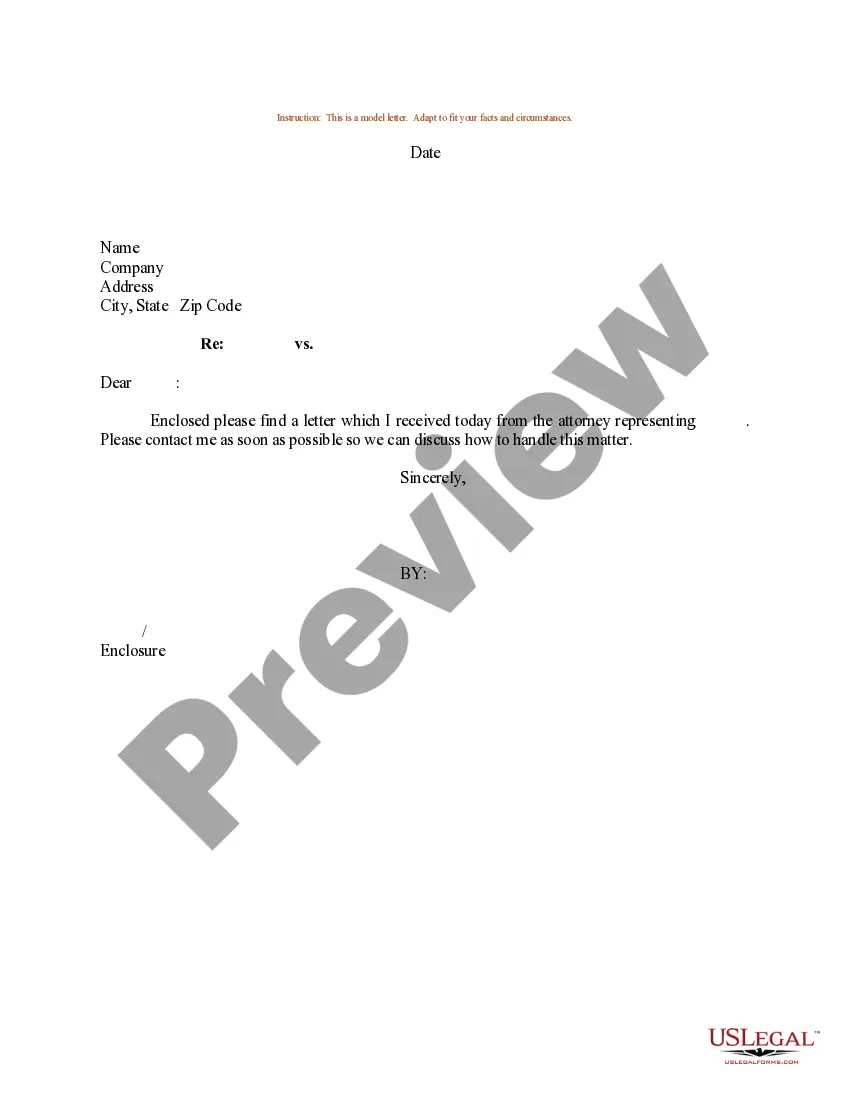
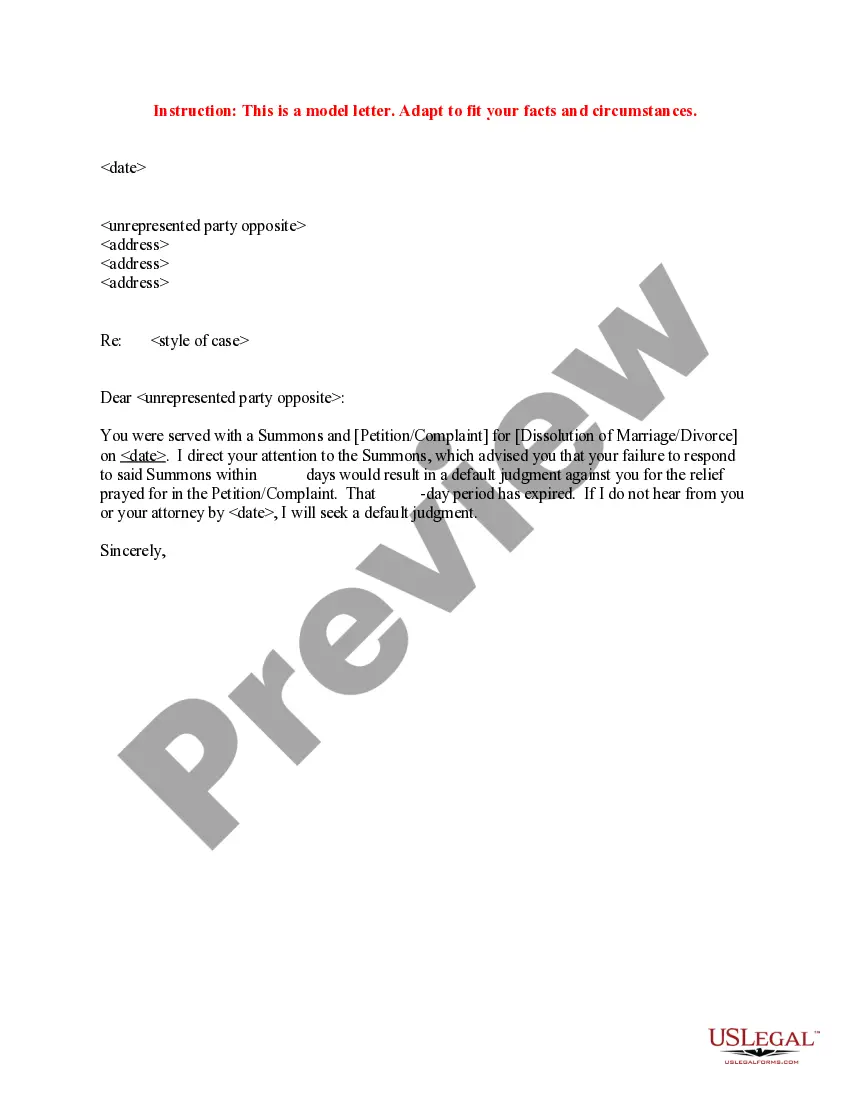
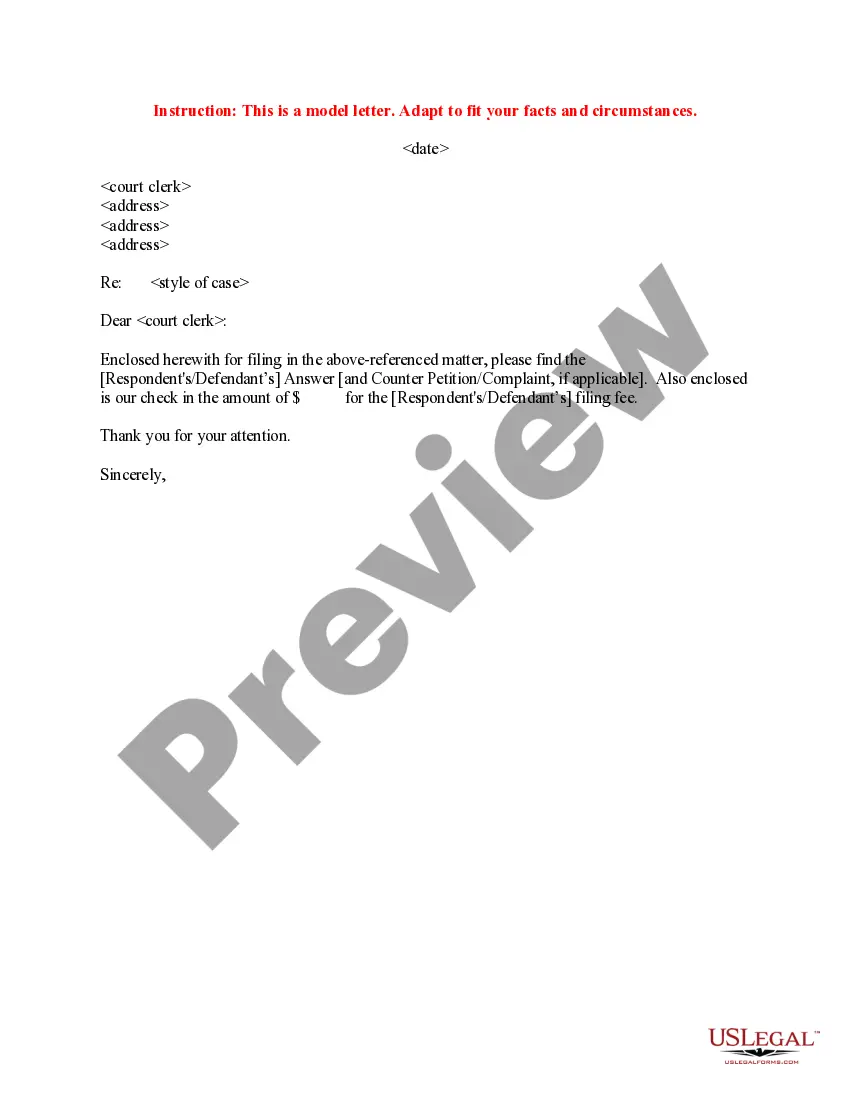
What this document covers
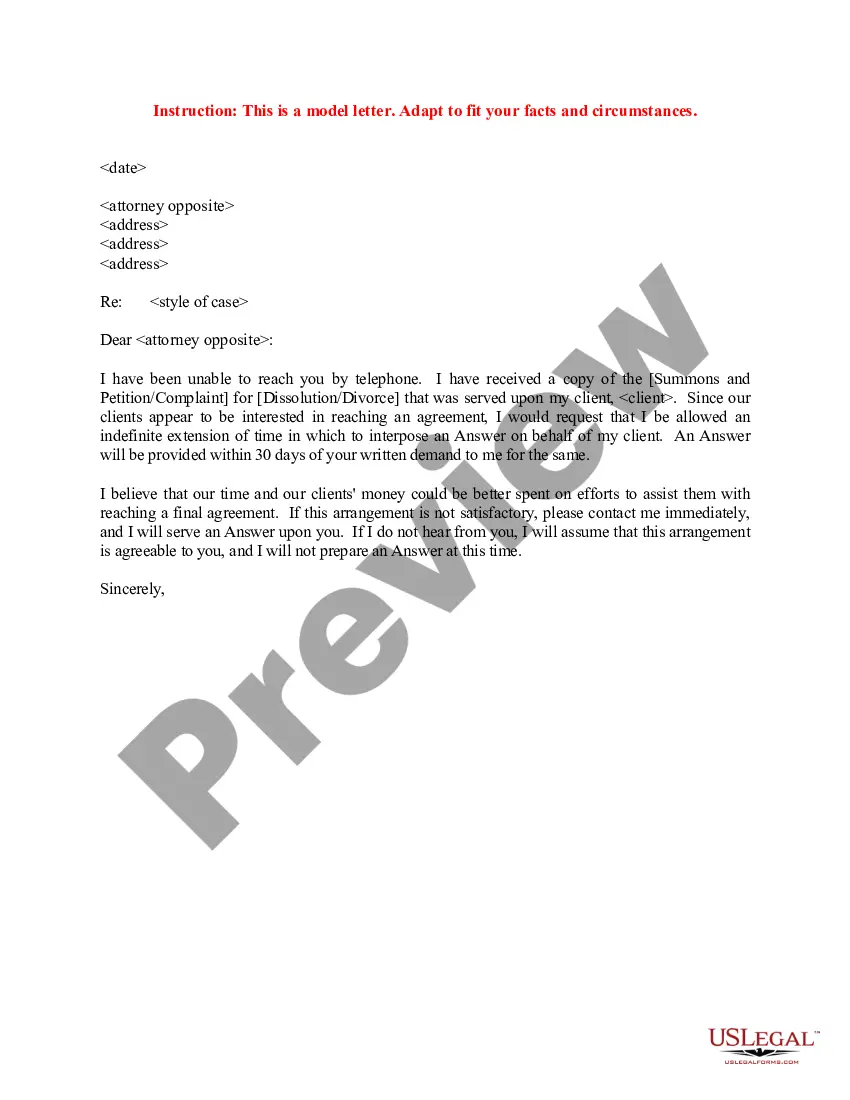
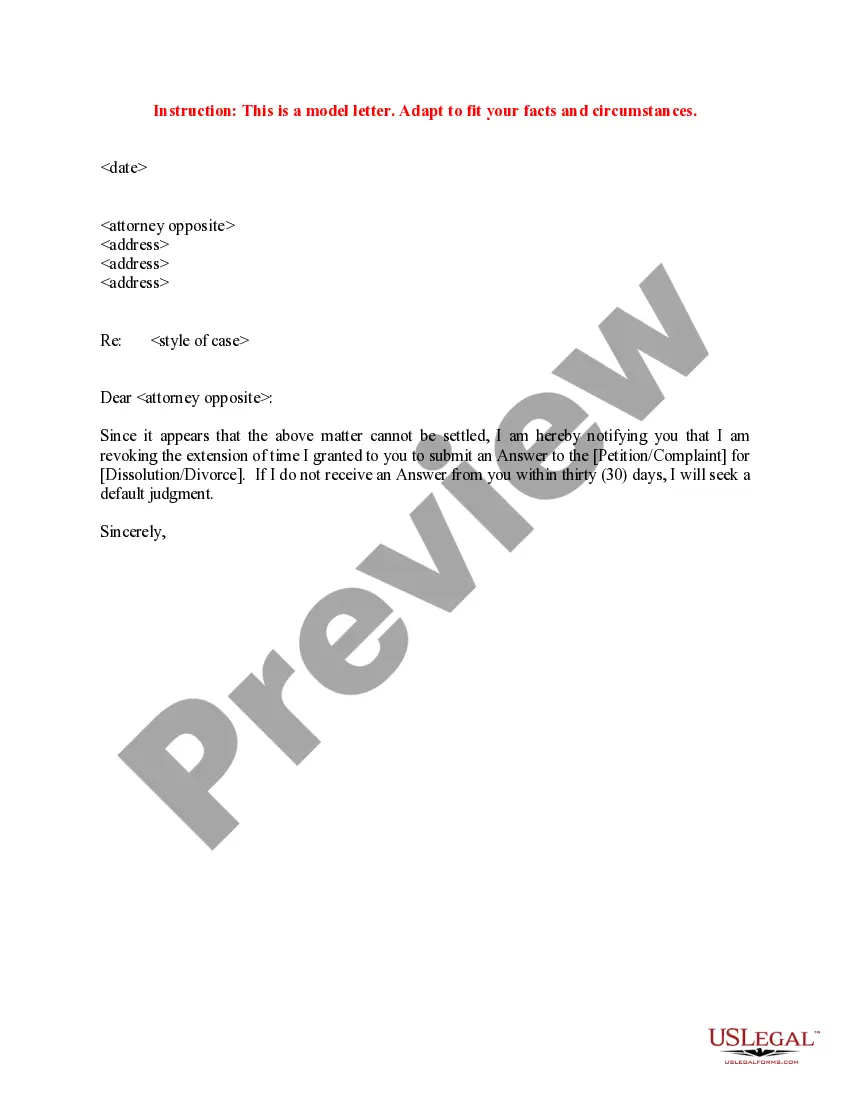
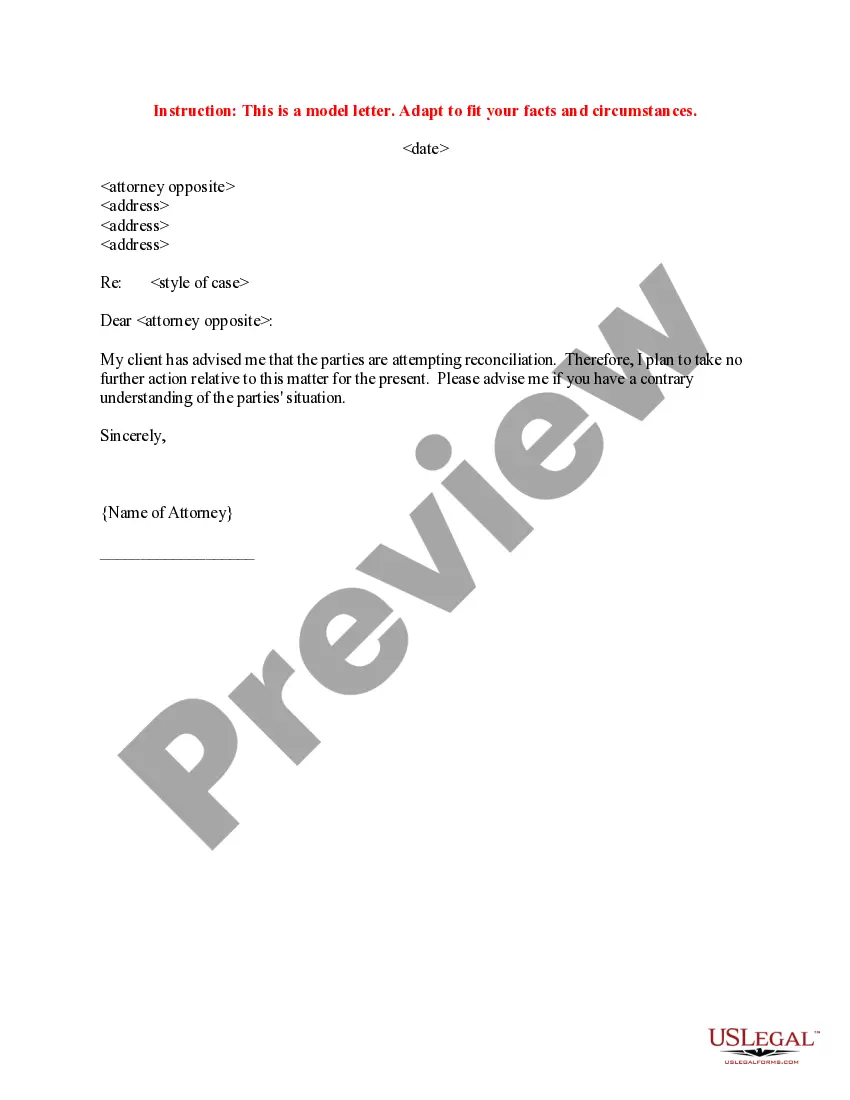
This Sample Letter to Attorney Opposite regarding Delay of Answer pending Party Negotiation is a template for communicating with the opposing counsel. It serves to request an extension for filing an answer to a summons and petition, while indicating a willingness to negotiate a settlement. This form is particularly useful in divorce proceedings, differentiating it from standard response letters in that it emphasizes negotiations over litigation.
Key components of this form
- Date of the letter
- Recipient's name and address (opposing attorney)
- Subject line referencing the style of case
- Request for an indefinite extension to file an answer
- Statement of intention to act within 30 days upon receiving a demand
- Closing statement for lack of response
When this form is needed
This form is essential when your client has been served with a divorce petition but both parties are interested in negotiating a settlement. It allows you to formally request additional time to file an answer without incurring the costs associated with immediate litigation. Utilizing this form can help maintain communication and foster a collaborative approach between opposing parties.
Intended users of this form
- Attorneys representing clients in divorce proceedings
- Legal professionals managing negotiations between parties
- Individuals who are not lawyers but are handling their own divorce cases
How to prepare this document
- Enter the date at the top of the letter.
- Fill in the opposing attorney's name and address.
- Specify the subject line with the appropriate style of case.
- Clearly state the request for an indefinite extension.
- Note your commitment to file an answer within 30 days upon request.
- Close the letter with your contact information.
Is notarization required?
This form does not typically require notarization unless specified by local law. Review any state-specific requirements to confirm before sending.
Get your form ready online
Our built-in tools help you complete, sign, share, and store your documents in one place.
Make edits, fill in missing information, and update formatting in US Legal Forms—just like you would in MS Word.
Download a copy, print it, send it by email, or mail it via USPS—whatever works best for your next step.
Sign and collect signatures with our SignNow integration. Send to multiple recipients, set reminders, and more. Go Premium to unlock E-Sign.
If this form requires notarization, complete it online through a secure video call—no need to meet a notary in person or wait for an appointment.
We protect your documents and personal data by following strict security and privacy standards.

Make edits, fill in missing information, and update formatting in US Legal Forms—just like you would in MS Word.

Download a copy, print it, send it by email, or mail it via USPS—whatever works best for your next step.

Sign and collect signatures with our SignNow integration. Send to multiple recipients, set reminders, and more. Go Premium to unlock E-Sign.

If this form requires notarization, complete it online through a secure video call—no need to meet a notary in person or wait for an appointment.

We protect your documents and personal data by following strict security and privacy standards.
Common mistakes
- Failing to accurately address the opposing attorney.
- Neglecting to include the subject line.
- Not specifying a response timeframe for the opposing counsel.
Benefits of using this form online
- Convenient access and download whenever needed.
- Editable format allowing for customization to specific cases.
- Drafted by licensed attorneys, ensuring legal validity.
Legal use & context
- This form facilitates extended communication and negotiation in divorce proceedings.
- It helps prevent unnecessary legal costs associated with immediate filing requirements.
Main things to remember
- A sample letter is a strategic tool for negotiating extensions in legal proceedings.
- Timely communication can lead to better outcomes for all parties involved.
- Customize the letter to align with jurisdiction guidelines for divorce cases.
Looking for another form?



Form popularity
FAQ
Current filing fees are: In district court, the fee for defendant's first filing is typically $223.00, but that might vary depending on the type of case. To verify your filing fee, click to visit Filing Fees and Waivers. In justice court, the fee for defendant's first filing is typically $71.
Provide the name of the court at the top of the Answer. You can find the information on the summons. List the name of the plaintiff on the left side. Write the case number on the right side of the Answer. Address the Judge and discuss your side of the case. Ask the judge to dismiss the case.
1The name of the court - you can find this at the top of the Complaint you got.2The Court Division - this is the county where the complaint was filed.3The Docket No.4The Plaintiff's name.5The Defendant's name - your name.6The kind of complaint you are answering.Answering a Complaint in Probate & Family Court - MassLegalHelp\nwww.masslegalhelp.org > probate-and-family-court > the-answer
Be brief. Answer the allegations in the complaint with one or two sentences. Again remember that the statements you make in your answer can be used as admissions against you. Your response to the allegations in the complaint may admit part of the statement in the specific paragraph and deny part.
You can file an answer or a general denial. Filing an answer. You can file a motion In certain situations, you can respond to the lawsuit by filing a motion (a request) that usually tells the court that the plaintiff made a mistake in the lawsuit. Talk to a lawyer!
Read the summons and make sure you know the date you must answer by. Read the complaint carefully. Write your answer. Sign and date the answer. Make copies for the plaintiff and yourself. Mail a copy to the plaintiff. File your answer with the court by the date on the summons.
When drafting an answer, one must: (1) follow the local, state, and federal court rules; (2) research the legal claims in the adversary's complaint; (3) respond to the adversary's factual allegations; and (4) assert affirmative defenses, counterclaims, cross-claims, or third-party claims, if applicable.
Provide the name of the court at the top of the Answer. You can find the information on the summons. List the name of the plaintiff on the left side. Write the case number on the right side of the Answer. Address the Judge and discuss your side of the case. Ask the judge to dismiss the case.
Contact the clerk's office of the court where the lawsuit was filed. You'll find a phone number and address for the clerk's office on your summons. The clerk will be able to tell you exactly what documents you should file with your answer and whether any filing fee is required.