Florida Warranty Deed - One Individual to Two Individuals as Joint Tenants with the Right of Survivorship
Understanding this form
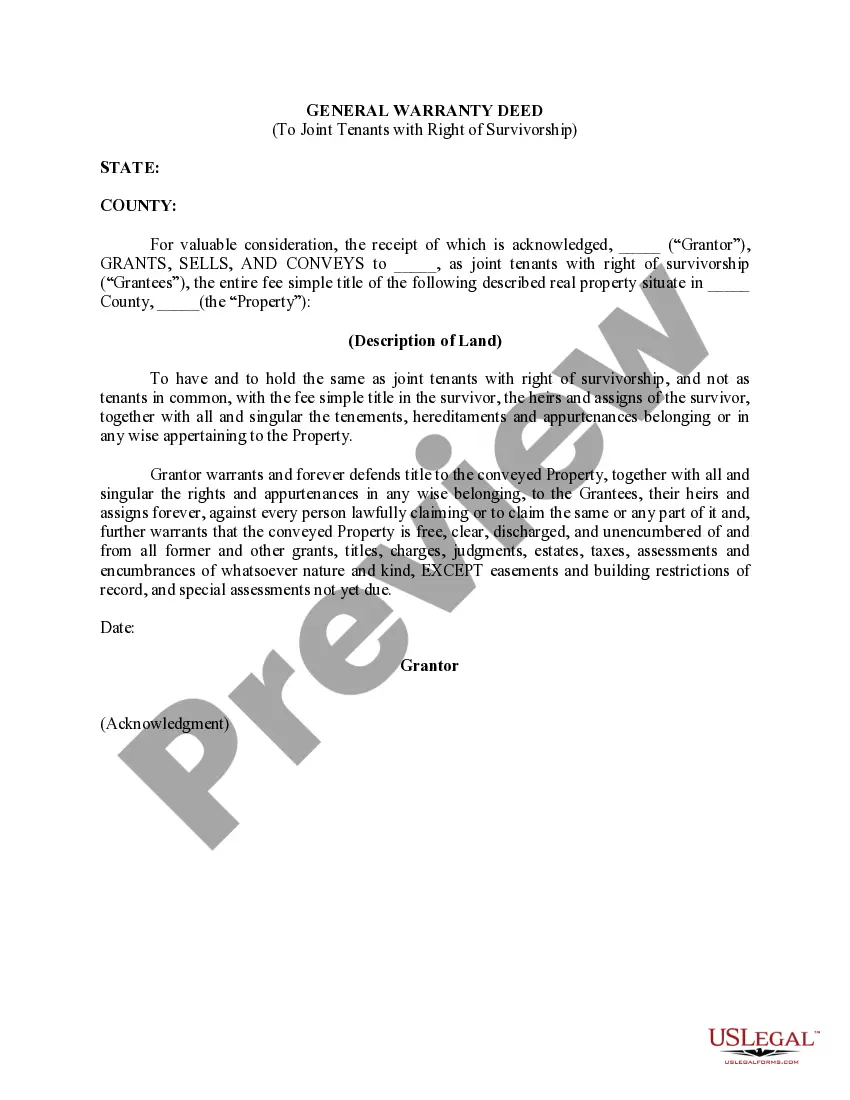
The Warranty Deed - One Individual to Two Individuals as Joint Tenants with the Right of Survivorship is a legal document that transfers property ownership from one individual (the grantor) to two individuals (the grantees) as joint tenants. This means that both grantees have equal ownership rights and the right of survivorship, allowing the surviving grantee to inherit the property automatically upon the death of the other. This form differs from other deed types by specifically addressing joint tenancy and the transfer of rights upon death, making it crucial for estate planning and property transfer purposes.
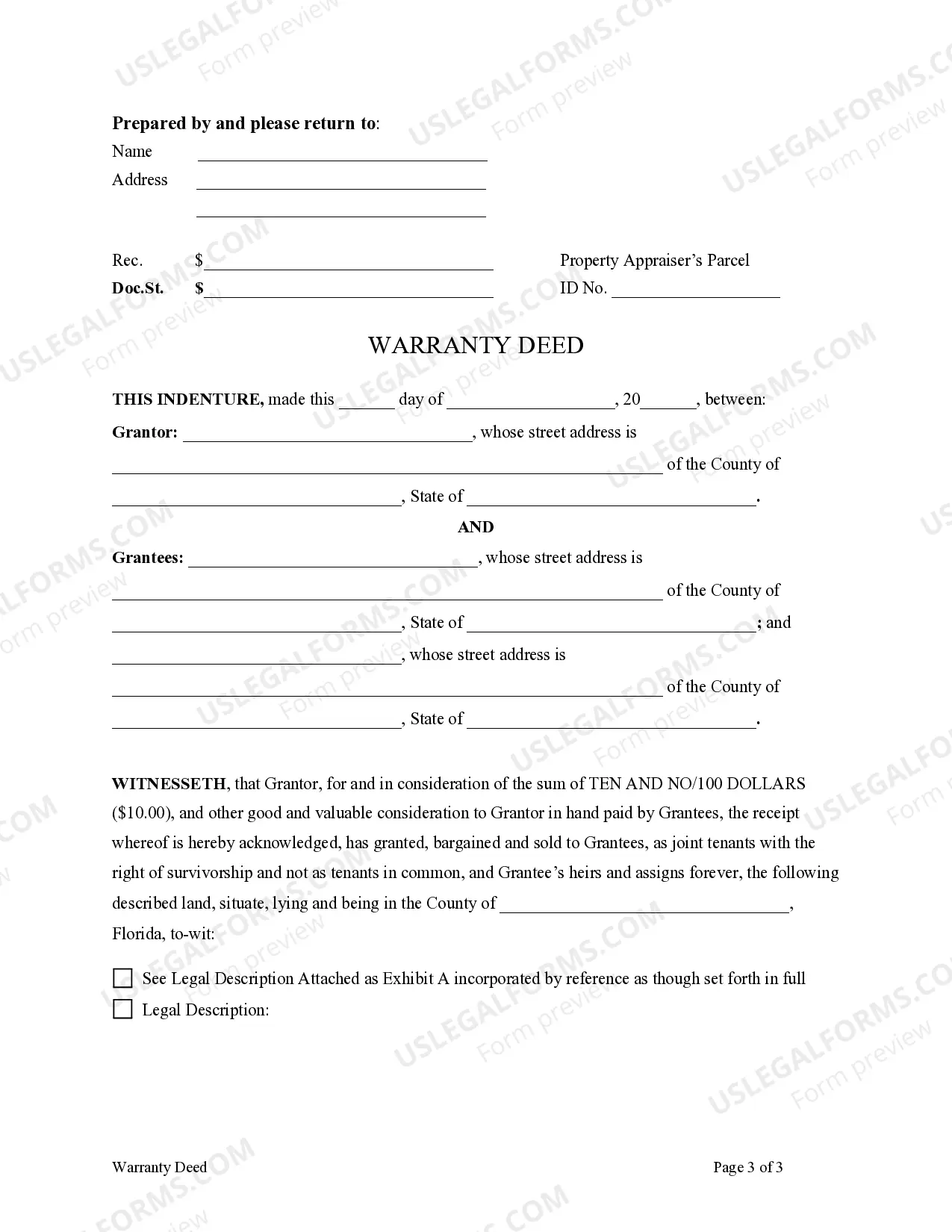
What’s included in this form
- Identification of the grantor and grantees.
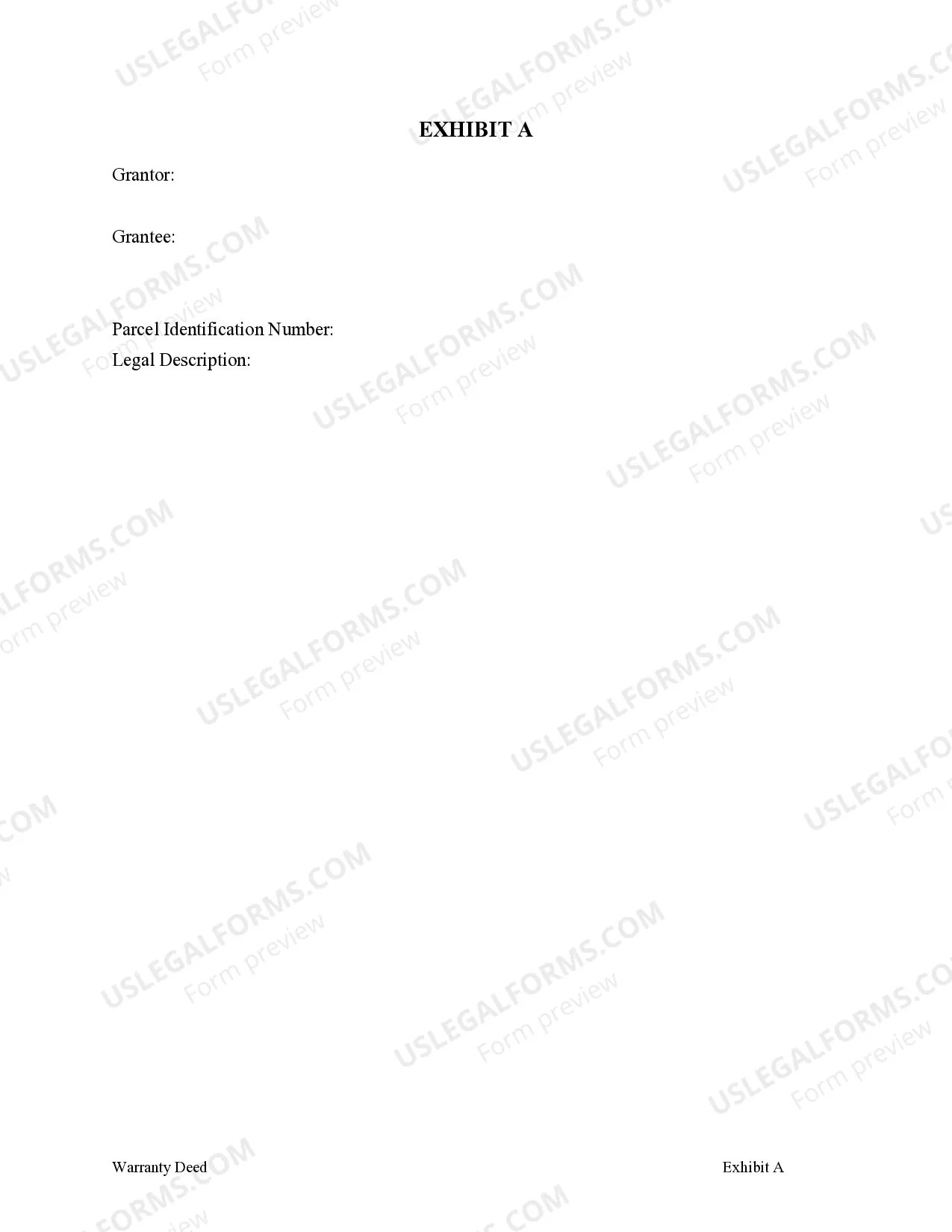
- Description of the property being transferred.
- Statement of joint tenancy and right of survivorship.
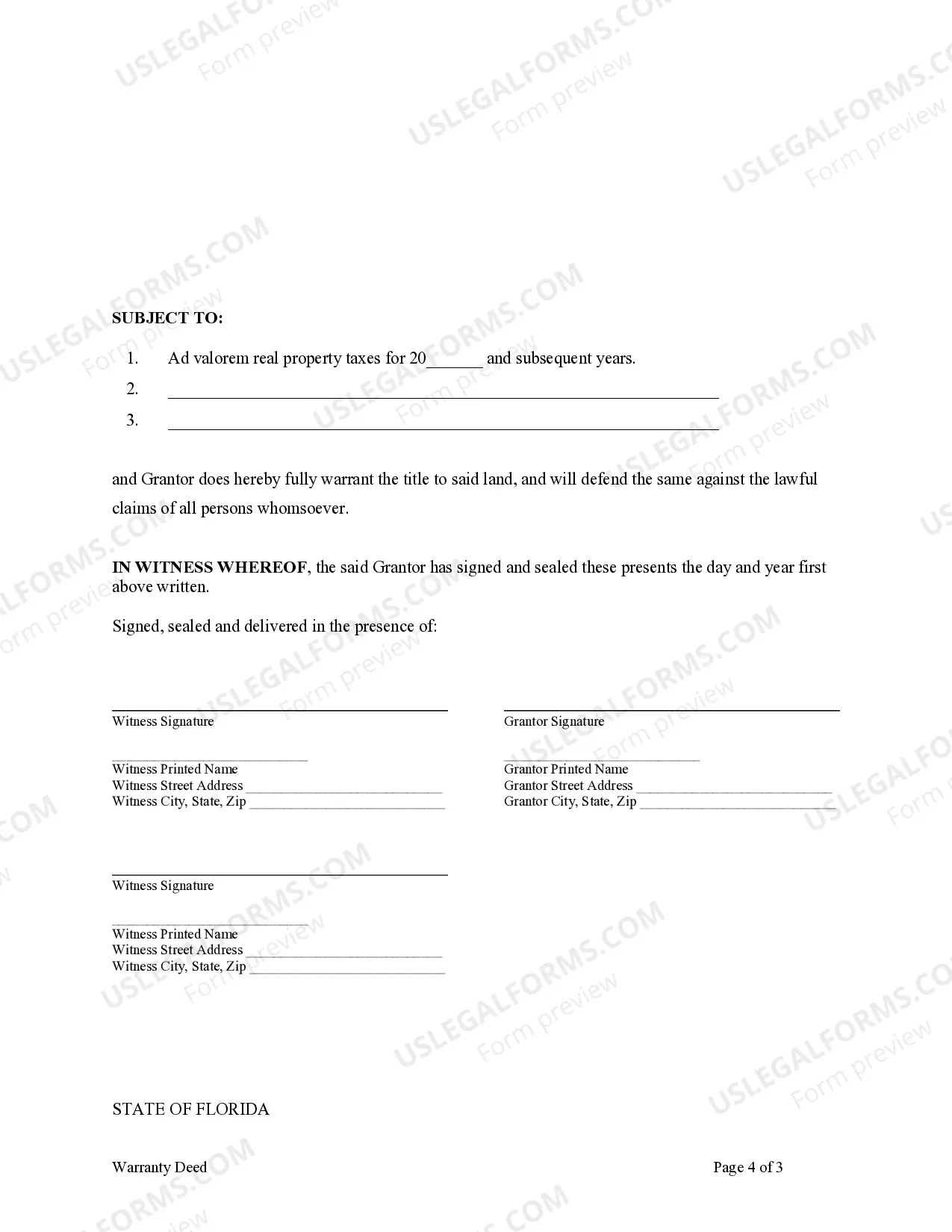
- Signatures of the grantor and required witnesses.
- Date of execution.


When this form is needed
This form is needed when an individual wishes to transfer real estate ownership to two people while ensuring both have equal rights to the property and the right of survivorship. It is commonly used in situations where partners, family members, or friends wish to co-own property and wish to avoid probate issues upon the death of one owner.
Who needs this form
- Individuals transferring property to two joint tenants.
- Partners or family members wanting to co-own real estate.
- Anyone looking for a way to manage property inheritance efficiently without probate.
How to complete this form
- Identify the parties by entering the names of the grantor and the two grantees.
- Provide a detailed description of the property being transferred, including its legal description.
- Clearly state that the ownership is intended as joint tenancy with the right of survivorship.
- Gather signatures from the grantor and, if required, the witnesses.
- Enter the date of execution of the deed.
Does this document require notarization?
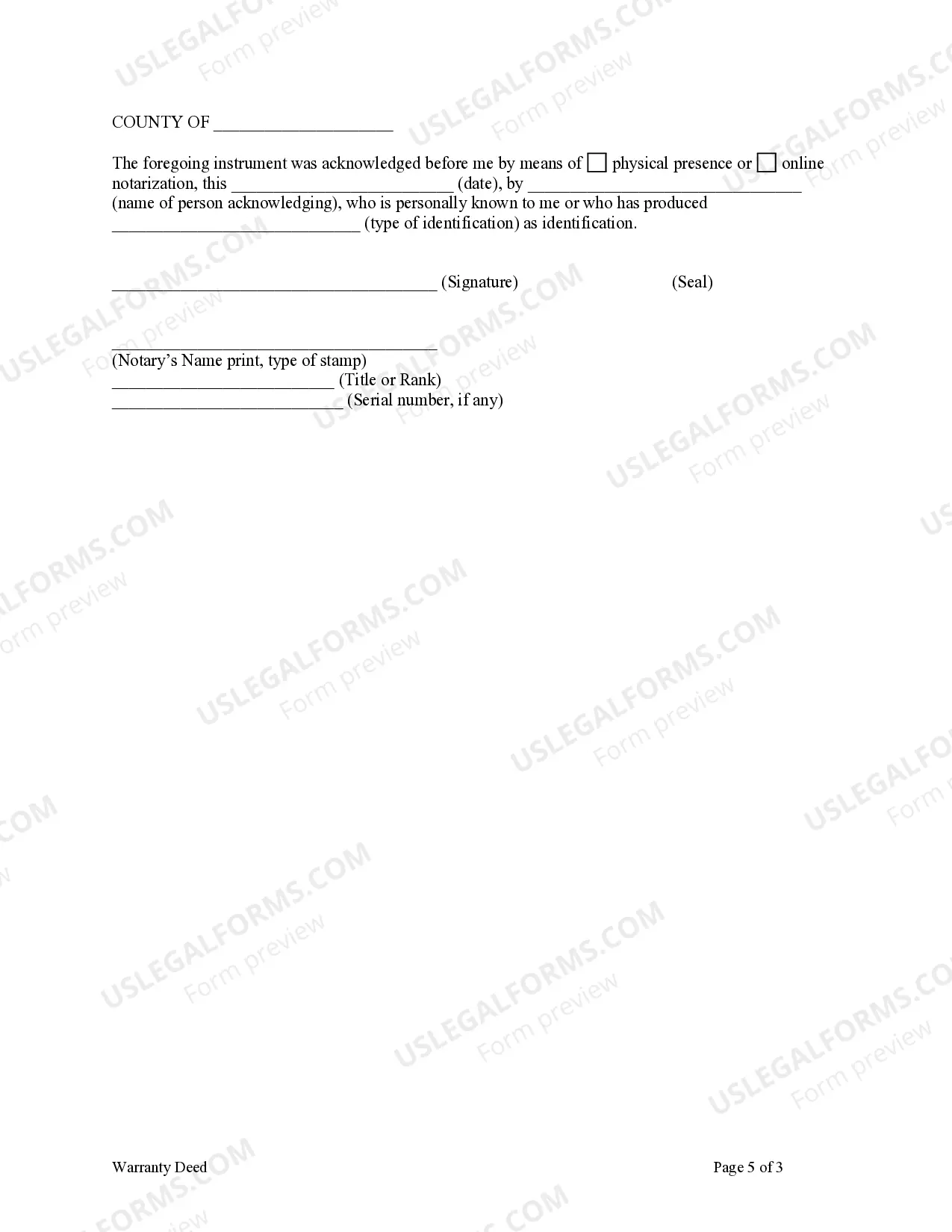
Notarization is required for this form to take effect. Our online notarization service, powered by Notarize, lets you verify and sign documents remotely through an encrypted video session, available 24/7.
Get your form ready online
Our built-in tools help you complete, sign, share, and store your documents in one place.
Make edits, fill in missing information, and update formatting in US Legal Forms—just like you would in MS Word.
Download a copy, print it, send it by email, or mail it via USPS—whatever works best for your next step.
Sign and collect signatures with our SignNow integration. Send to multiple recipients, set reminders, and more. Go Premium to unlock E-Sign.
If this form requires notarization, complete it online through a secure video call—no need to meet a notary in person or wait for an appointment.
We protect your documents and personal data by following strict security and privacy standards.

Make edits, fill in missing information, and update formatting in US Legal Forms—just like you would in MS Word.

Download a copy, print it, send it by email, or mail it via USPS—whatever works best for your next step.

Sign and collect signatures with our SignNow integration. Send to multiple recipients, set reminders, and more. Go Premium to unlock E-Sign.

If this form requires notarization, complete it online through a secure video call—no need to meet a notary in person or wait for an appointment.

We protect your documents and personal data by following strict security and privacy standards.
Mistakes to watch out for
- Failing to include all required signatures from the grantor and witnesses.
- Not providing a complete legal description of the property.
- Leaving out the statement regarding joint tenancy and right of survivorship.
- Failing to date the document appropriately.
Why complete this form online
- Convenient access to legal documents from home or office.
- Edit and customize the form to fit specific needs before downloading.
- Time-efficient compared to traditional legal services.
- Documents are prepared by licensed attorneys, ensuring legal compliance.
Legal use & context
- Ensures a legally binding transfer of property rights.
- Facilitates clear ownership rights and inheritance without probate complications.
- Complies with state-specific legal requirements regarding property transfers.
Key takeaways
- This Warranty Deed transfers property to two individuals as joint tenants with rights of survivorship.
- It is essential for facilitating smooth property transfer and avoidance of probate.
- Completing the form requires accurate information about all parties and the property.
- Be aware of local legal requirements that may affect how the form is used.
Looking for another form?
Form popularity
FAQ
Breaking a joint tenancy with the right of survivorship in Florida requires specific legal steps. You can do this by mutual agreement between the joint tenants to sever the tenancy or by filing a partition action in court. This legal process can be complex, so you may benefit from consulting an attorney for tailored advice. Additionally, USLegalForms offers resources that can help you navigate the necessary documents and procedures effectively.
To file for joint tenancy with the right of survivorship in Florida, you must properly prepare and execute a Florida Warranty Deed. This deed should clearly state the intent to create joint tenancy and include both owners' names. Once completed, the deed needs to be recorded with the local county clerk's office. For assistance in creating this deed, consider using USLegalForms, which provides templates and guidance tailored to your needs.
Yes, Florida recognizes joint tenancy with the right of survivorship. This means that when one owner passes away, their share automatically transfers to the surviving owner(s). It provides a clear and straightforward way to transfer property without going through probate. If you're considering a Florida Warranty Deed - One Individual to Two Individuals as Joint Tenants with the Right of Survivorship, this feature simplifies inheritance.
The step up basis refers to the adjustment of the property's value for tax purposes when one joint tenant passes away. In the context of a Florida Warranty Deed - One Individual to Two Individuals as Joint Tenants with the Right of Survivorship, this means that the surviving tenant receives the deceased tenant's share at its current market value. This can significantly reduce capital gains taxes if the property is sold. Therefore, understanding this concept is essential for effective estate planning and tax management.
When two people are on a deed, it is often referred to as joint tenancy or joint owners. In the context of a Florida Warranty Deed, this arrangement allows owners to share possession of the property with rights of survivorship, adding a layer of protection and clarity in property rights. It is a popular choice for couples or family members who want to ensure a smooth transition of ownership.
You can add someone to a Florida Warranty Deed, but it requires certain processes to ensure it is legally valid. This usually involves drafting a new deed that includes the additional person and then signing and recording it with the local recorder's office. It's essential to consider the implications of joint ownership before making this decision.
Yes, you can have two names on a Florida Warranty Deed, which is common for joint ownership arrangements. This allows both individuals to equally share in the ownership rights and responsibilities of the property. It's a straightforward process to include both names when drafting the deed.
The right of survivorship in a Florida Warranty Deed means that when one owner passes away, their share automatically transfers to the surviving owner. This ensures that the property does not enter probate, allowing for a smoother transition of ownership. This feature is especially beneficial for couples or close family members looking to secure their joint assets.
Adding someone to a Florida Warranty Deed can lead to potential complications. One major drawback is that you may lose full control over the property, as both individuals will have a say in decisions regarding it. Additionally, the other person's financial situation could impact your ownership status, especially in cases of debt or legal troubles.
Yes, two people can be on a Florida Warranty Deed as the property owners. When you list two individuals on the deed, they can hold ownership together, which is common in joint ownership situations. This structure also allows for flexibility in how the property is managed or transferred in the future.