Request to Locate Former Employee
Understanding this form
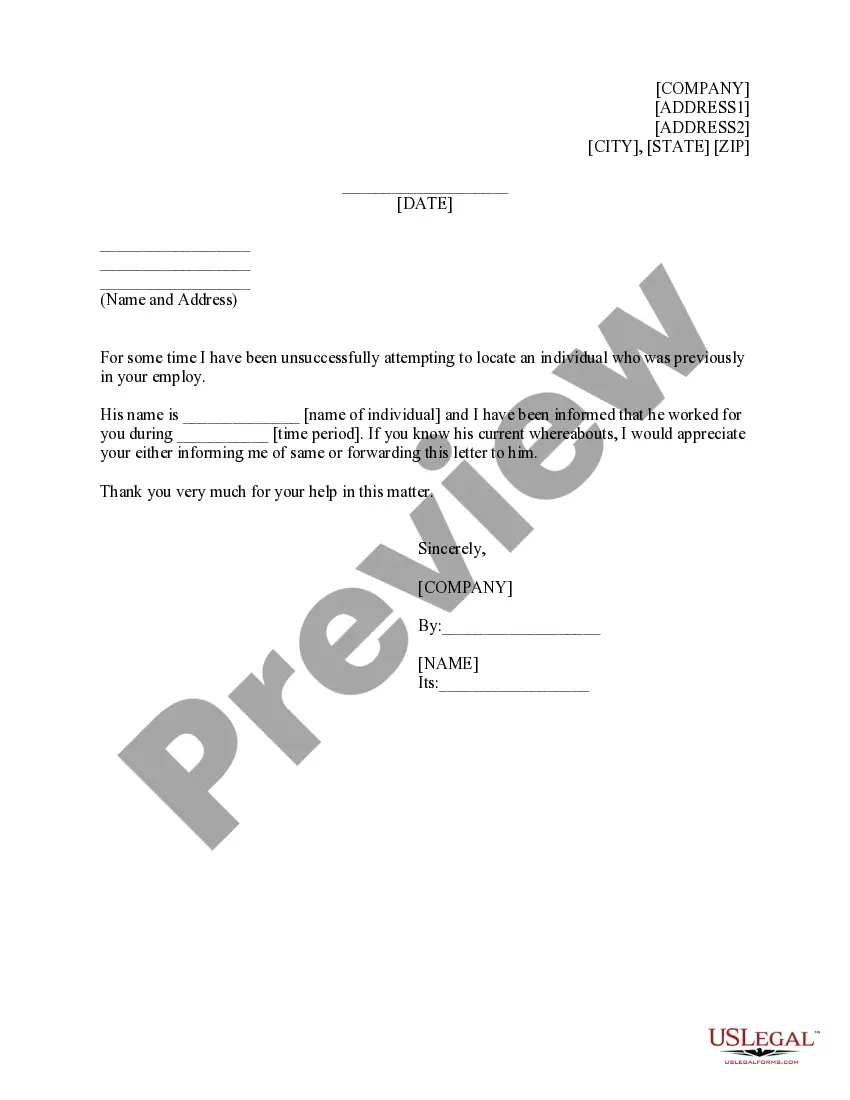
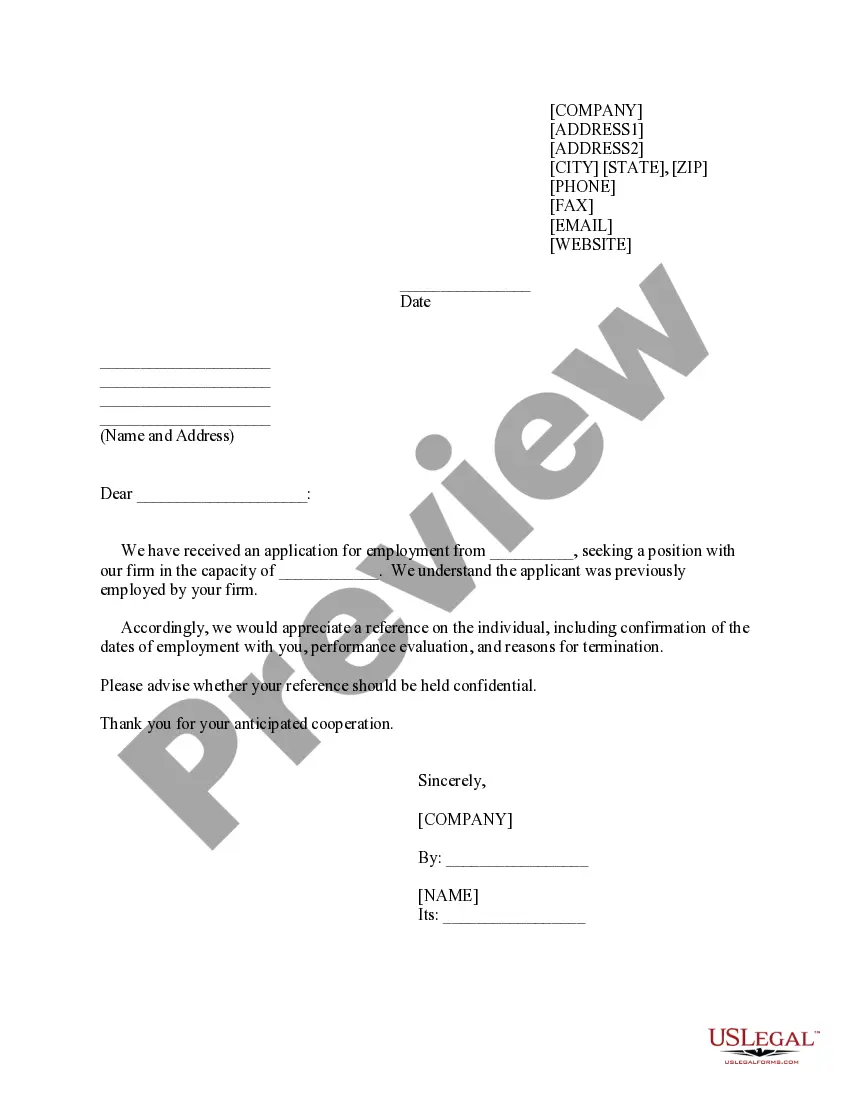
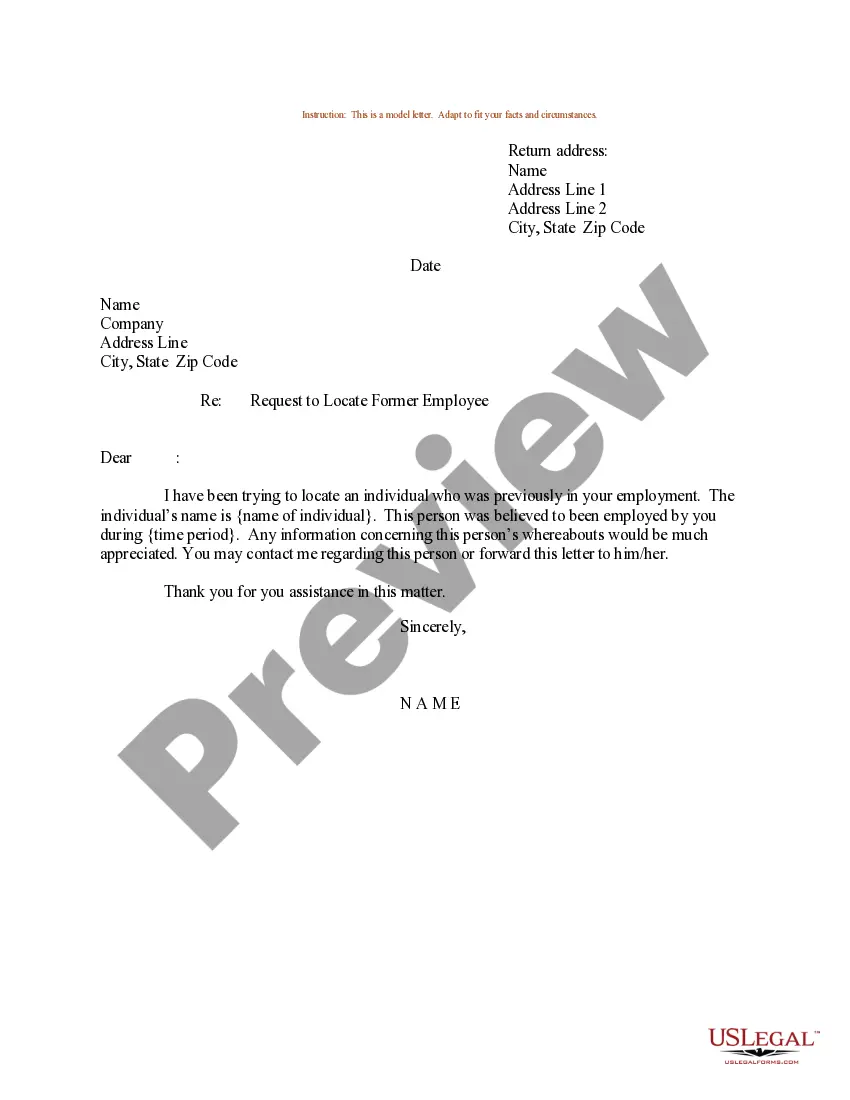
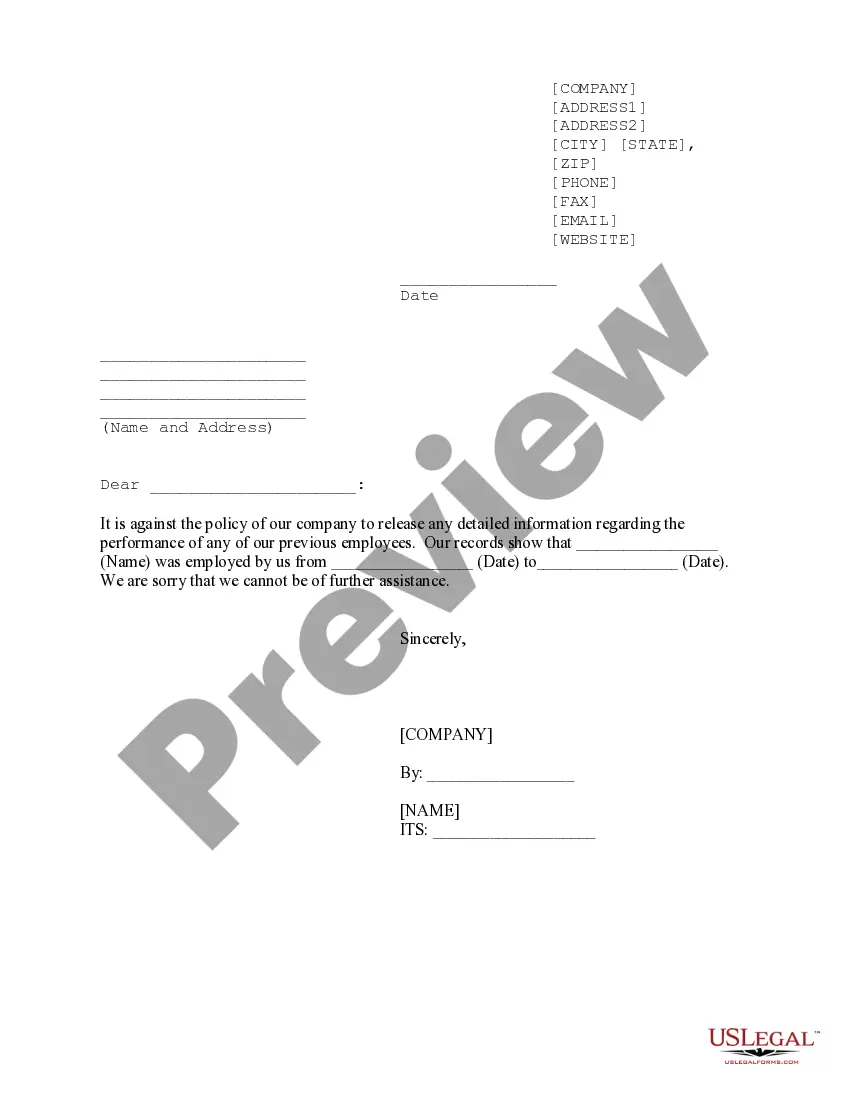
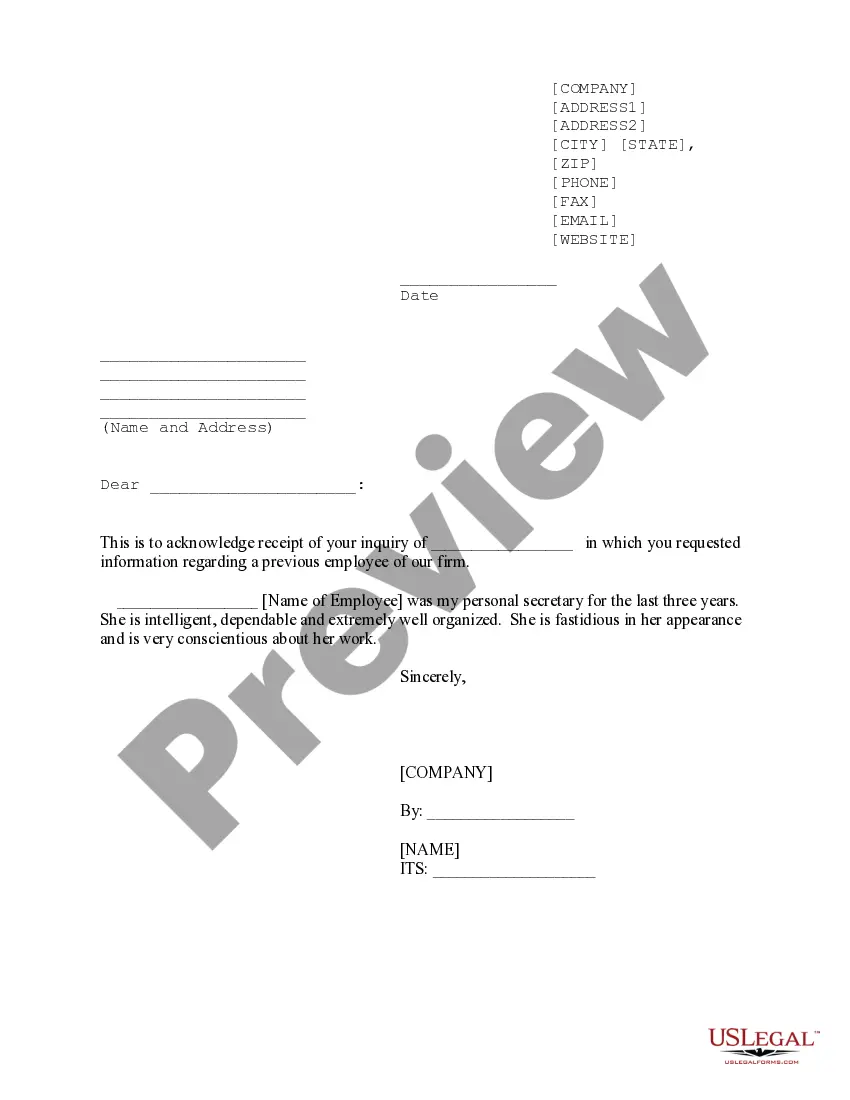
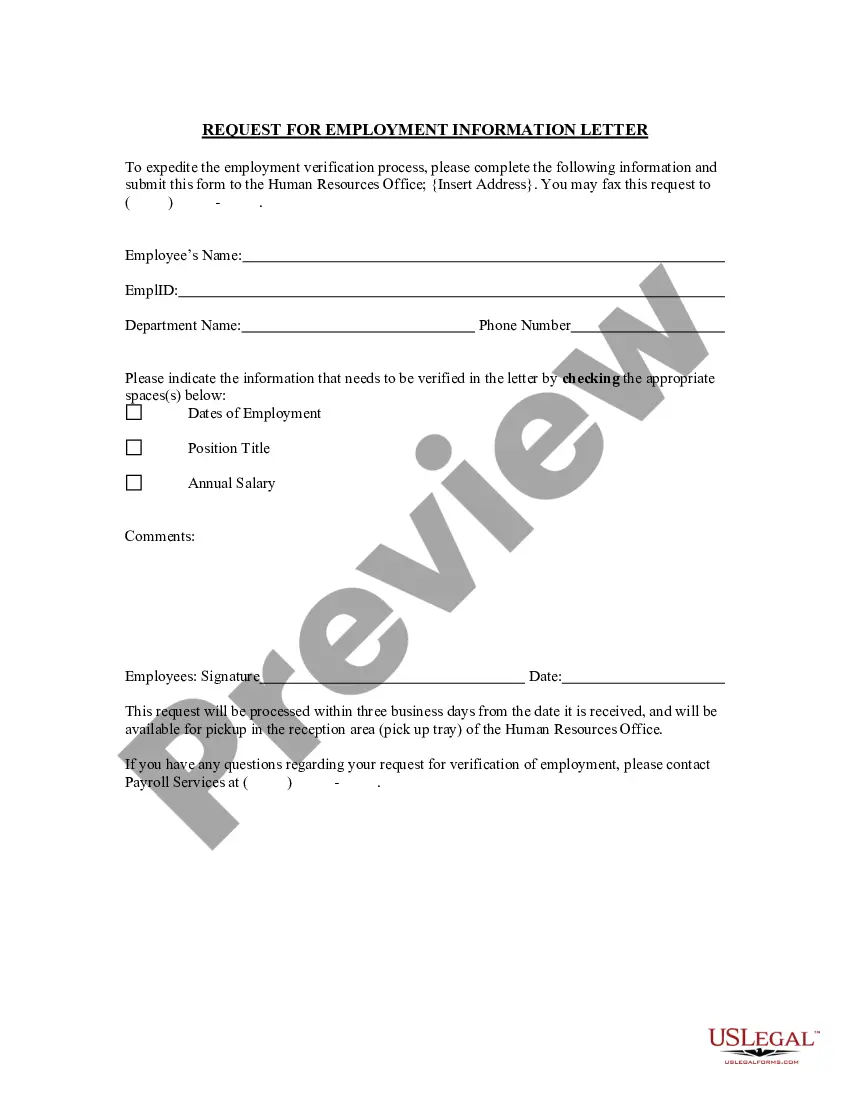
The Request to Locate Former Employee is a legal document used to formally inquire about the whereabouts of an individual who previously worked for a company. This form serves a distinct purpose by enabling employers or other interested parties to request updated contact information from the former employer, ensuring that they can reach the individual for matters related to employment or benefits. It is important to use this specific form rather than a general inquiry letter, as it provides a structured approach to the request.
Main sections of this form
- Requestor's contact information: Includes the address and date.
- Name of the individual: Space to fill in the name of the former employee.
- Employment details: Section to specify the time period the person worked for the employer.
- Instructions for response: A request for the employer to either provide the contact information or forward the letter.
- Signature block: Area for the requesting company's representative to sign and identify their role.
Common use cases
This form is appropriate when an individual or company is trying to find a former employee for reasons such as reinstating benefits, resolving outstanding pay issues, or for personal communication. It can also be used by legal representatives or family members seeking to reach the individual for specific purposes such as legal claims or notifications.
Who needs this form
- Companies trying to reconnect with former employees.
- Legal representatives seeking information for legal purposes.
- Family members needing to locate their relatives who were former employees.
- Any individual needing to establish contact for legitimate reasons.
Instructions for completing this form
- Identify the requestor: Fill in your name, address, and date at the top of the form.
- Enter the former employee's information: Clearly write the name and employment period of the individual you are trying to locate.
- Request the necessary information: Include a polite request for the employer to provide the individual's contact details or to forward the letter.
- Sign the document: Have the appropriate company representative sign the form, including their name and title.
- Send the form: Deliver the completed form to the address of the former employer.
Does this form need to be notarized?
This form does not typically require notarization unless specified by local law. It is advisable to check any specific requirements in your jurisdiction.
Get your form ready online
Our built-in tools help you complete, sign, share, and store your documents in one place.
Make edits, fill in missing information, and update formatting in US Legal Forms—just like you would in MS Word.
Download a copy, print it, send it by email, or mail it via USPS—whatever works best for your next step.
Sign and collect signatures with our SignNow integration. Send to multiple recipients, set reminders, and more. Go Premium to unlock E-Sign.
If this form requires notarization, complete it online through a secure video call—no need to meet a notary in person or wait for an appointment.
We protect your documents and personal data by following strict security and privacy standards.

Make edits, fill in missing information, and update formatting in US Legal Forms—just like you would in MS Word.

Download a copy, print it, send it by email, or mail it via USPS—whatever works best for your next step.

Sign and collect signatures with our SignNow integration. Send to multiple recipients, set reminders, and more. Go Premium to unlock E-Sign.

If this form requires notarization, complete it online through a secure video call—no need to meet a notary in person or wait for an appointment.

We protect your documents and personal data by following strict security and privacy standards.
Avoid these common issues
- Failing to include accurate dates or names may delay the response.
- Not providing complete contact information for the requestor.
- Using informal language instead of maintaining a professional tone.
- Omitting a signature or failing to include the title of the signing representative.
Benefits of using this form online
- Convenience of accessing and filling the form from anywhere.
- Editable fields allow for easy personalization.
- Secure storage of your completed forms and responses for future reference.
- Accessible guidance through the form completion process.
Looking for another form?


Form popularity
FAQ
An employee personnel file is an electronic or paper record of a past or current employee's history with their employer. In general, a personnel file contains job-related documents associated with an employee's performance, knowledge, skills, abilities, and behavior.
The Internet ? Looking Beyond Google Company Website. This may seem like a no-brainer, but this most obvious source of information is commonly overlooked.Archive.org.Professional Organizations.Media.Resume Databases.LinkedIn.Facebook, Twitter, Instagram, Tumblr, and Pinterest.Professional Licenses / Regulatory Agencies.
You can request your personnel file from a former employer by contacting them, often in writing, and demanding access to the file. Employers are legally required to maintain records about your time at work. You generally have a right to review these records.
(Contact at Human Resources Department): I am writing to request a complete copy of my employment records maintained by (employer's name), including my medical file, pursuant to the Personnel Records Review Act (820 ILCS 40/0.01 et seq.). Please provide these documents or a written response within seven business days.
Those files may contain information that helps you prove discrimination, harassment, or other civil rights violations. It could also help you prove that the reasons an employer has provided for adverse employment action against you are untrue.
There are no federal laws restricting what an employer can or cannot say about a former employee. That being said, some employers are extremely cautious about what they do and don't say to minimize their liability in the event of a lawsuit.
You can ask a former employer for your personnel file by getting in touch with them (typically in writing) and requesting access to the file. Employers are obligated by law to keep records of your time at work. In general, you are entitled to see these records.
An employee's personnel file usually contains information related to their performance, salary, and any investigations of misconduct or medical issues. As a result, these records are generally considered private and can be accessed by only the employer and the employee.