Sample Letter for Request to Locate Former Employee
Understanding this form
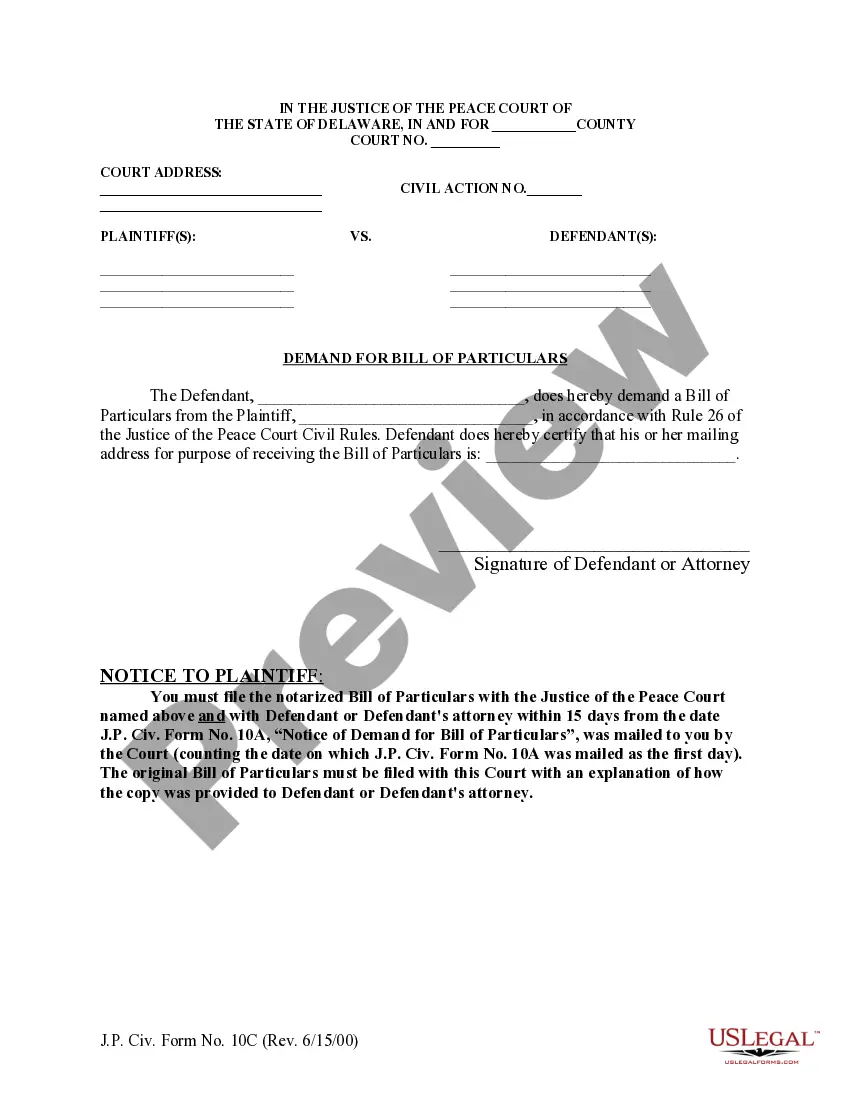
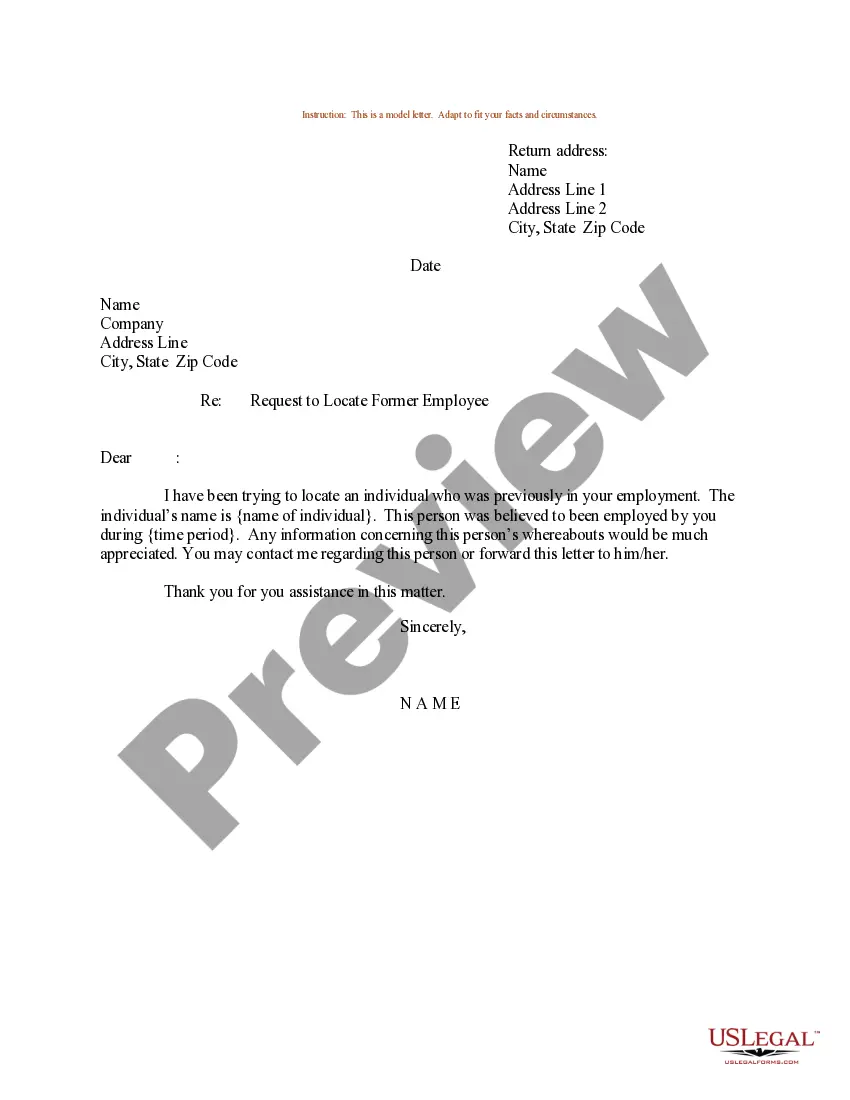
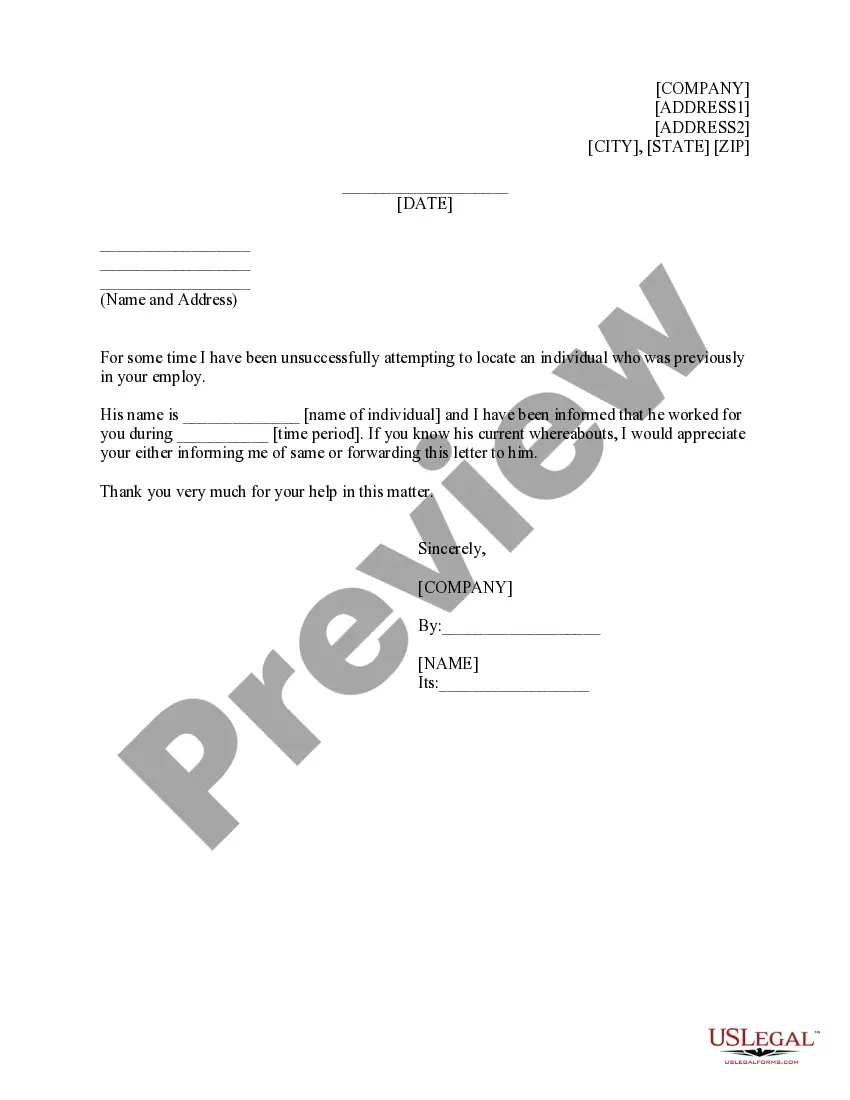
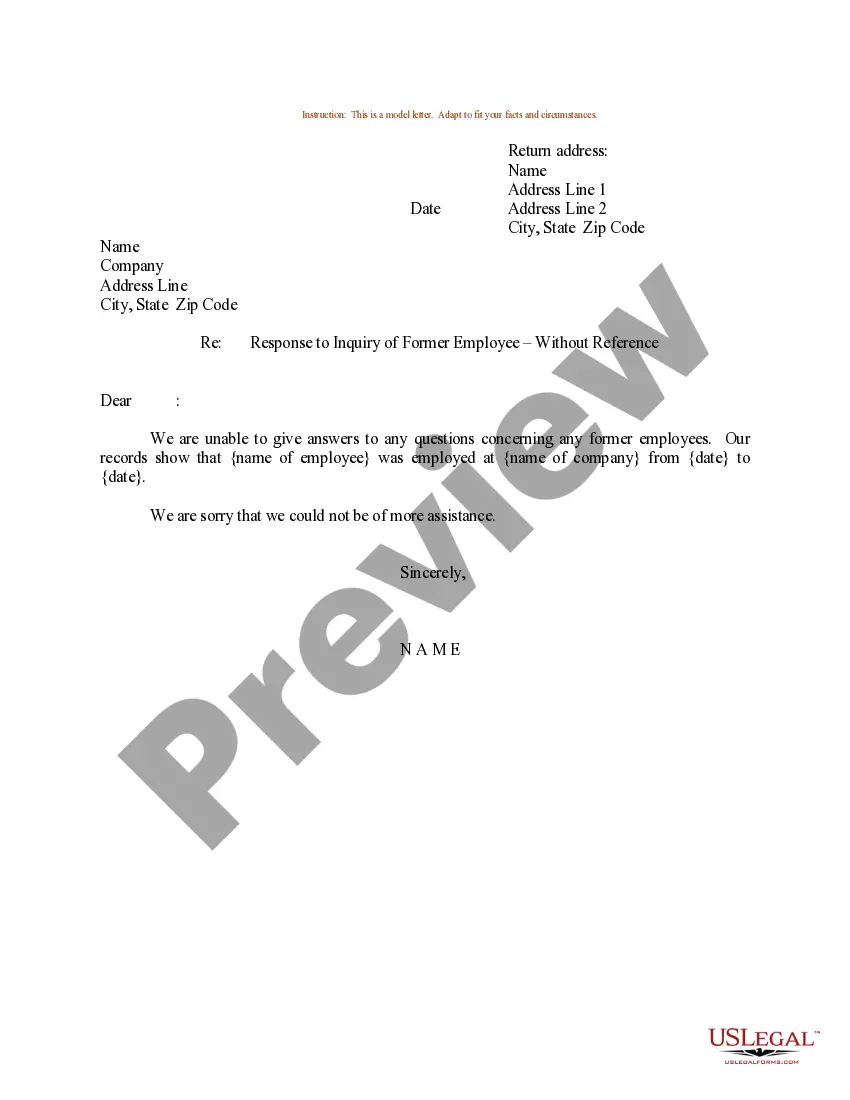
The Sample Letter for Request to Locate Former Employee is a formal communication used to request information regarding a past employee's whereabouts. This letter is typically utilized by employers or organizations seeking to connect with former staff for various reasons, such as employment verification, settlement discussions, or reference requests. Unlike general communication templates, this form provides a structured format to ensure professionalism and clarity in reaching out for sensitive information.
Form components explained
- Return address: Includes the sender's name and contact details.
- Date: The date when the letter is sent.
- Recipient's details: Name, company, and address of the former employee's last known employer.
- Subject line: Clearly states the purpose of the letter as a request to locate the former employee.
- Closing: A polite thank you and signature line for the sender's name.

Common use cases
This form is useful when an employer needs to reconnect with a former employee for reasons such as conducting a background check, verifying employment history, addressing unresolved compensation issues, or inviting them to participate in organizational events. It is especially relevant if the employer has lost contact with the employee and needs formal documentation to trace their whereabouts.
Who should use this form
- Employers looking to verify the employment history of a former employee.
- HR professionals seeking to conduct background checks.
- Organizations needing to resolve outstanding matters with previous staff members.
- Legal representatives working on behalf of an employer.
Steps to complete this form
- Identify the senderâs details to be added to the return address section.
- Fill in the current date when the letter is being sent.
- Enter the former employee's full name and last known employer's address.
- Clearly state the purpose of the letter in the subject line.
- Conclude with a polite message and your signature line for formal closure.
Notarization guidance
This form does not typically require notarization unless specified by local law. It functions as a formal letter that outlines a request, and thus, is generally sufficient without a notary's verification.
Get your form ready online
Our built-in tools help you complete, sign, share, and store your documents in one place.
Make edits, fill in missing information, and update formatting in US Legal Forms—just like you would in MS Word.
Download a copy, print it, send it by email, or mail it via USPS—whatever works best for your next step.
Sign and collect signatures with our SignNow integration. Send to multiple recipients, set reminders, and more. Go Premium to unlock E-Sign.
If this form requires notarization, complete it online through a secure video call—no need to meet a notary in person or wait for an appointment.
We protect your documents and personal data by following strict security and privacy standards.

Make edits, fill in missing information, and update formatting in US Legal Forms—just like you would in MS Word.

Download a copy, print it, send it by email, or mail it via USPS—whatever works best for your next step.

Sign and collect signatures with our SignNow integration. Send to multiple recipients, set reminders, and more. Go Premium to unlock E-Sign.

If this form requires notarization, complete it online through a secure video call—no need to meet a notary in person or wait for an appointment.

We protect your documents and personal data by following strict security and privacy standards.
Common mistakes to avoid
- Not including detailed contact information for the recipient.
- Failing to be clear about the reason for the request.
- Ignoring privacy considerations when reaching out.
- Leaving out the date, which is important for record-keeping.
Benefits of completing this form online
- Convenience of accessing the form from anywhere at any time.
- Easy editing capabilities to customize the letter as needed.
- Reliable template drafted by licensed attorneys for accuracy.
Looking for another form?
Form popularity
FAQ
A recommendation letter should include information on who you are, your connection with the person you are recommending, why they are qualified, and the specific skills they have. Specifics. Whenever possible, it's helpful to provide specific anecdotes and examples that illustrate your support.
Explain precisely what your request is. Mention the reason for the request. Use polite language and a professional tone. Demonstrate respect and gratitude to the reader. The content of the letter should be official. You may provide contact information where you can be reached.
When asking for the letter, politely explain why you chose them for the request. Describe any specific details that made you believe they would be the best person to write the letter. If your employer refuses, offer your gratitude for their time, and mention that you would still like to stay in touch.
Be sure to use specific examples to speak to their qualifications. Provide a brief summary of why you are recommending the person. State that you "recommend without reservation" or "strongly recommend" the person or something similar. Offer to provide more information and include your phone number.
Keep it simple. In requesting employee records, it's usually a good idea to keep it simple. Be clear about your request. Keep the tone respectful. Give a Deadline for a Response. Optional: Reference the laws that give you the right to access these records.
The start of the letter should be with a warm greeting, then you should introduce yourself properly, that who are you, your name, job, position and name of the organization. It will make it easy for the reader to understand who is asking for a letter of request.
In what capacity had the employee worked for you. How much time the employee held his position. The attributes and skills that the employee possesses which makes him a good candidate. Your reason for writing the letter about the employee.
Start by explaining your relationship to the candidate. How do you know the candidate? Include long you've known the candidate. Add positive personal qualities with specific examples. Close with a statement of recommendation. Offer your contact information.
When you write a letter of reference, include this information: Relationship with the candidate: To establish yourself as a reliable reference, describe your relationship with the employee. Include your professional relationship, the length of time you've known the employee and if you know them on a personal level.