Florida Warranty Deed from Individual to Two Individuals as Tenants in Common
Understanding this form
A Warranty Deed from Individual to Two Individuals as Tenants in Common is a legal document that transfers property ownership from one individual (the grantor) to two individuals (the grantees) who will hold the property as tenants in common. This form is essential for ensuring that both grantees have a share of ownership, which can be unequal, unlike joint tenancy where ownership is typically equal and includes rights of survivorship.
Main sections of this form
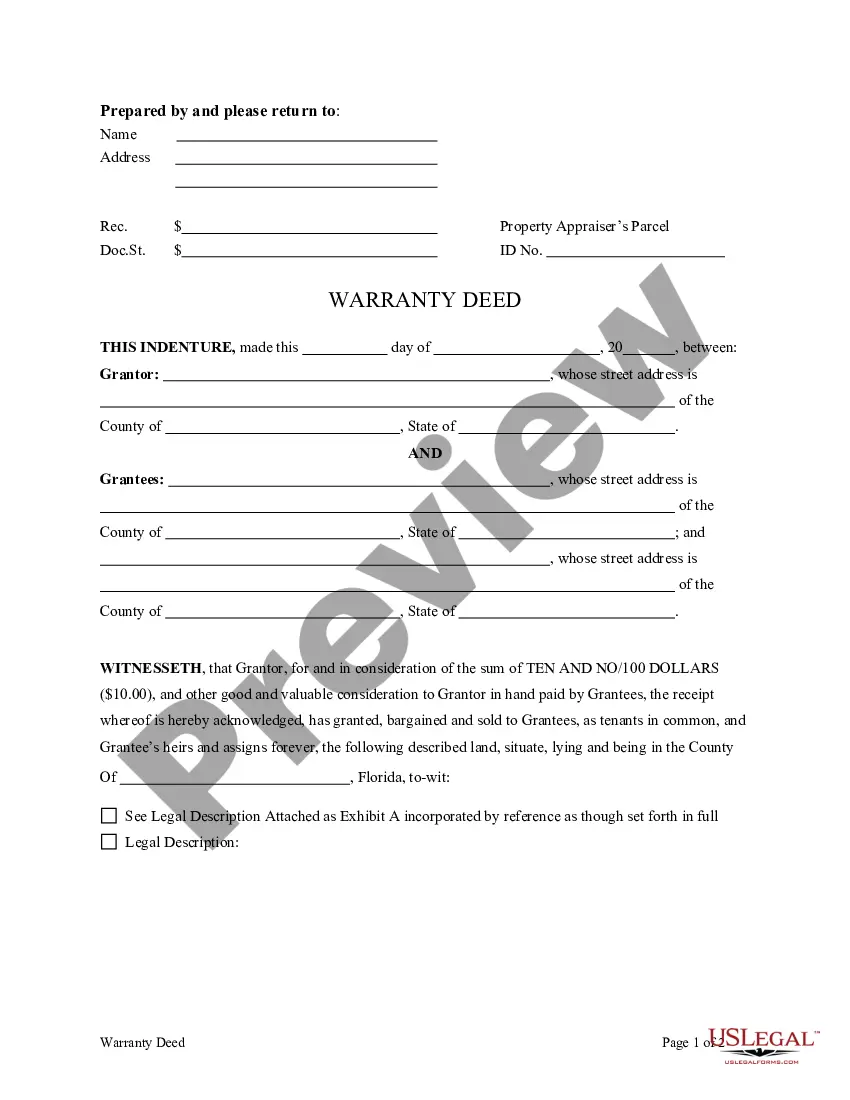
- Information about the grantor, including their name and address.
- Details of the grantees, listing both individuals who will receive ownership.
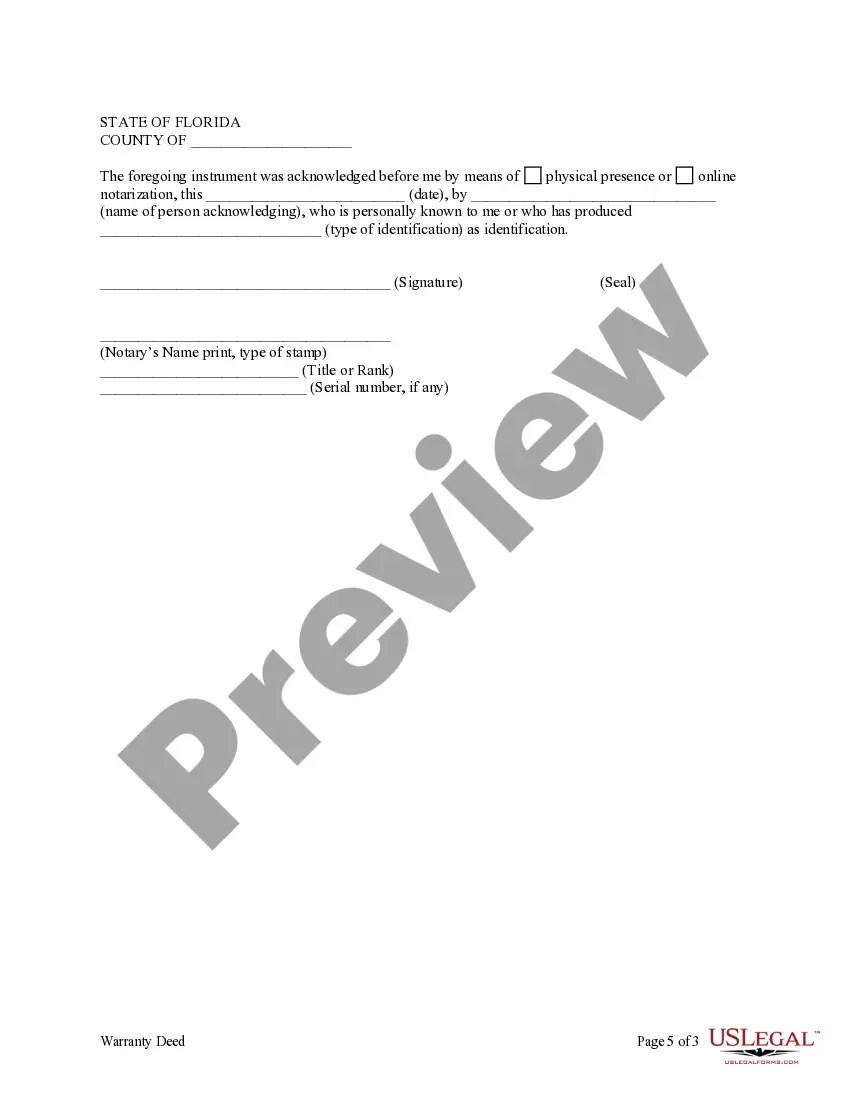
- Property description, ensuring it is clearly identified, including parcel number or lot information.
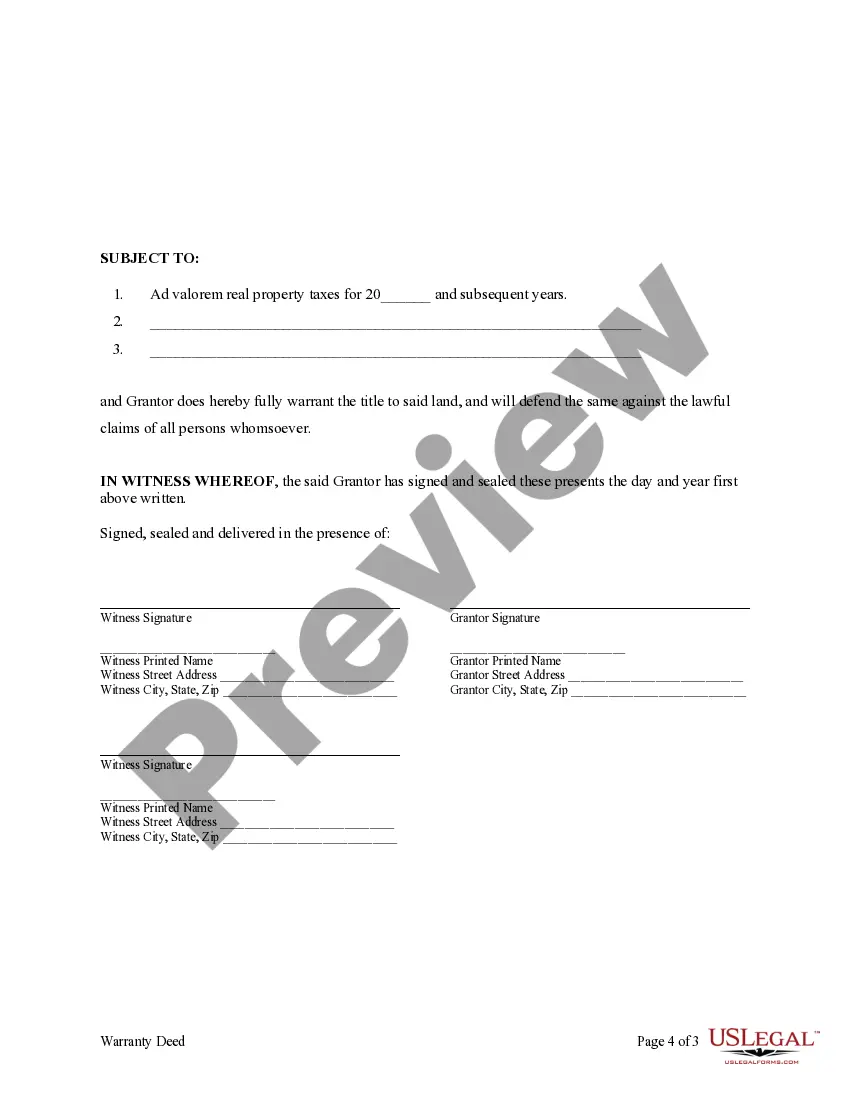
- Signatures of the grantor and any witnesses, if required by state law.
- Notarization section to validate the deed, if necessary.





Situations where this form applies
This form should be used when an individual wishes to transfer their property ownership to two persons who will share the property as tenants in common. This scenario often arises in family situations, such as spouses wishing to share investment property or friends purchasing property together. It ensures that each tenant is treated as a separate owner with distinct rights to their share of the property.
Intended users of this form
- Individuals looking to legally transfer property ownership to two other individuals.
- Property owners who want to establish shared tenancy arrangements.
- Persons who understand the implications of tenants in common vs. joint tenancy.
Instructions for completing this form
- Identify the grantor by entering their full name and address in the specified fields.
- List the names and addresses of the two individuals who will be the grantees.
- Provide a detailed description of the property being transferred, including any relevant identifiers.
- Include the date of the transfer and ensure all parties sign the document.
- If required by state law, obtain notarization and any necessary witness signatures.
Notarization requirements for this form
Yes, this form must be notarized to be legally valid in the State of Florida. U.S. Legal Forms provides integrated online notarization services that are available 24/7. This secure process allows you to have your documents notarized through a video call, ensuring legal equivalence without the need for travel.
Get your form ready online
Our built-in tools help you complete, sign, share, and store your documents in one place.
Make edits, fill in missing information, and update formatting in US Legal Forms—just like you would in MS Word.
Download a copy, print it, send it by email, or mail it via USPS—whatever works best for your next step.
Sign and collect signatures with our SignNow integration. Send to multiple recipients, set reminders, and more. Go Premium to unlock E-Sign.
If this form requires notarization, complete it online through a secure video call—no need to meet a notary in person or wait for an appointment.
We protect your documents and personal data by following strict security and privacy standards.

Make edits, fill in missing information, and update formatting in US Legal Forms—just like you would in MS Word.

Download a copy, print it, send it by email, or mail it via USPS—whatever works best for your next step.

Sign and collect signatures with our SignNow integration. Send to multiple recipients, set reminders, and more. Go Premium to unlock E-Sign.

If this form requires notarization, complete it online through a secure video call—no need to meet a notary in person or wait for an appointment.

We protect your documents and personal data by following strict security and privacy standards.
Typical mistakes to avoid
- Failing to provide a complete and accurate description of the property.
- Not signing the form where indicated, which can invalidate the document.
- Neglecting to have the form notarized when necessary.
- Using incorrect names or misspellings for the grantor and grantees.
Benefits of completing this form online
- Convenient access to legal forms anytime and anywhere.
- Editability allows customization to fit your specific needs.
- Reliability and assurance that forms are drafted by licensed attorneys.
- Saves time compared to searching for forms offline or through legal counsel.
Legal use & context
- Establishes clear ownership rights among grantees in the shared property.
- Can be recorded with the county clerk's office to provide public notice of the ownership transfer.
- Methods of revoking or changing the deed can affect the rights of parties involved.
What to keep in mind
- This form is designed for individuals transferring property to two others as tenants in common.
- Notarization is mandatory for the validity of the deed.
- Providing complete information and ensuring compliance with local laws is essential.
- Using this form online offers added benefits of convenience and reliability.
Looking for another form?
Form popularity
FAQ
While you can transfer a deed without a lawyer, it may be beneficial to consult one. A legal professional can guide you through the process of transferring a Florida Warranty Deed from Individual to Two Individuals as Tenants in Common, ensuring compliance with local laws. Using uslegalforms can also simplify this process, providing you with the necessary forms and instructions.
Yes, a warranty deed can certainly be transferred. This legal document allows the property owner to convey their ownership interest to new individuals. When transferring a Florida Warranty Deed from Individual to Two Individuals as Tenants in Common, ensure all necessary steps are followed, including proper identification and notarization, to create a valid transfer.
To transfer a warranty deed in Florida, you must first complete the deed form accurately. This includes outlining the property details and the names of the individuals involved. Next, sign the document in the presence of a notary public. Lastly, file the completed Florida Warranty Deed from Individual to Two Individuals as Tenants in Common with the county clerk's office to ensure the transfer is legally recognized.
As a tenant in common, one significant disadvantage is that co-owners can sell their share without the consent of others, potentially complicating ownership dynamics. Additionally, if one tenant encounters financial difficulties, creditors may target their share, affecting the other owners. It is also essential to consider that disagreements can arise, leading to disputes over property management or decisions. To better understand your rights and responsibilities, a Florida Warranty Deed from Individual to Two Individuals as Tenants in Common can be a valuable resource.
To change a deed from joint tenants to tenants in common, you need to draft a new deed that clearly states the change. This process typically requires signatures from all current owners and must be recorded with the county clerk's office. Consulting a legal professional can ensure the correct procedures are followed. Using services like US Legal Forms can provide the necessary legal forms to guide you through creating a Florida Warranty Deed from Individual to Two Individuals as Tenants in Common.
No, joint tenancy and tenants in common are not the same in Florida. In joint tenancy, co-owners have equal shares and the right of survivorship, meaning if one owner passes away, their share goes to the other. Conversely, tenants in common can own unequal shares, and there is no right of survivorship, allowing each owner to pass their share to heirs. If you are considering a Florida Warranty Deed from Individual to Two Individuals as Tenants in Common, understanding this distinction is crucial.
The primary disadvantage of the right of survivorship is that it limits the flexibility of ownership transfer. Upon the death of one owner, their share goes automatically to the surviving owner, which may not align with the deceased owner’s wishes or estate planning intentions. This can lead to unintended consequences, such as excluding heirs from inheritance. Therefore, if you're considering a Florida Warranty Deed from Individual to Two Individuals as Tenants in Common, ensure it fits your long-term plans.
A deed with the right of survivorship in Florida allows co-owners to inherit each other's share automatically upon death. This type of deed ensures that the ownership passes directly to the surviving owner, avoiding probate complications and improving the transfer process. Typically, this is established in a joint tenancy deed, enhancing estate planning efficiency. When exploring options like a Florida Warranty Deed from Individual to Two Individuals as Tenants in Common, consider how you want to handle ownership transitions during life and after death.
To split jointly owned property, owners typically need to agree on the division and the method of distribution. Options may include selling the property and dividing the proceeds or one owner buying out the other's interest. If there's no agreement, legal action may be required to resolve disputes, potentially through mediation or partition lawsuits. Using a Florida Warranty Deed from Individual to Two Individuals as Tenants in Common can help clarify ownership shares and make the process smoother when division becomes necessary.
A warranty deed itself does not inherently grant the right of survivorship; this right must be explicitly stated in the deed. In Florida, if you want to include the right of survivorship, you would typically create a joint tenancy deed instead. Therefore, when drafting a Florida Warranty Deed from Individual to Two Individuals as Tenants in Common, you should clarify the terms to suit your ownership preferences. It's crucial to understand this distinction to avoid confusion in the future.