Authorization to adopt a plan for payment of accrued vacation benefits to employees with company stock with copy of plan
What this document covers
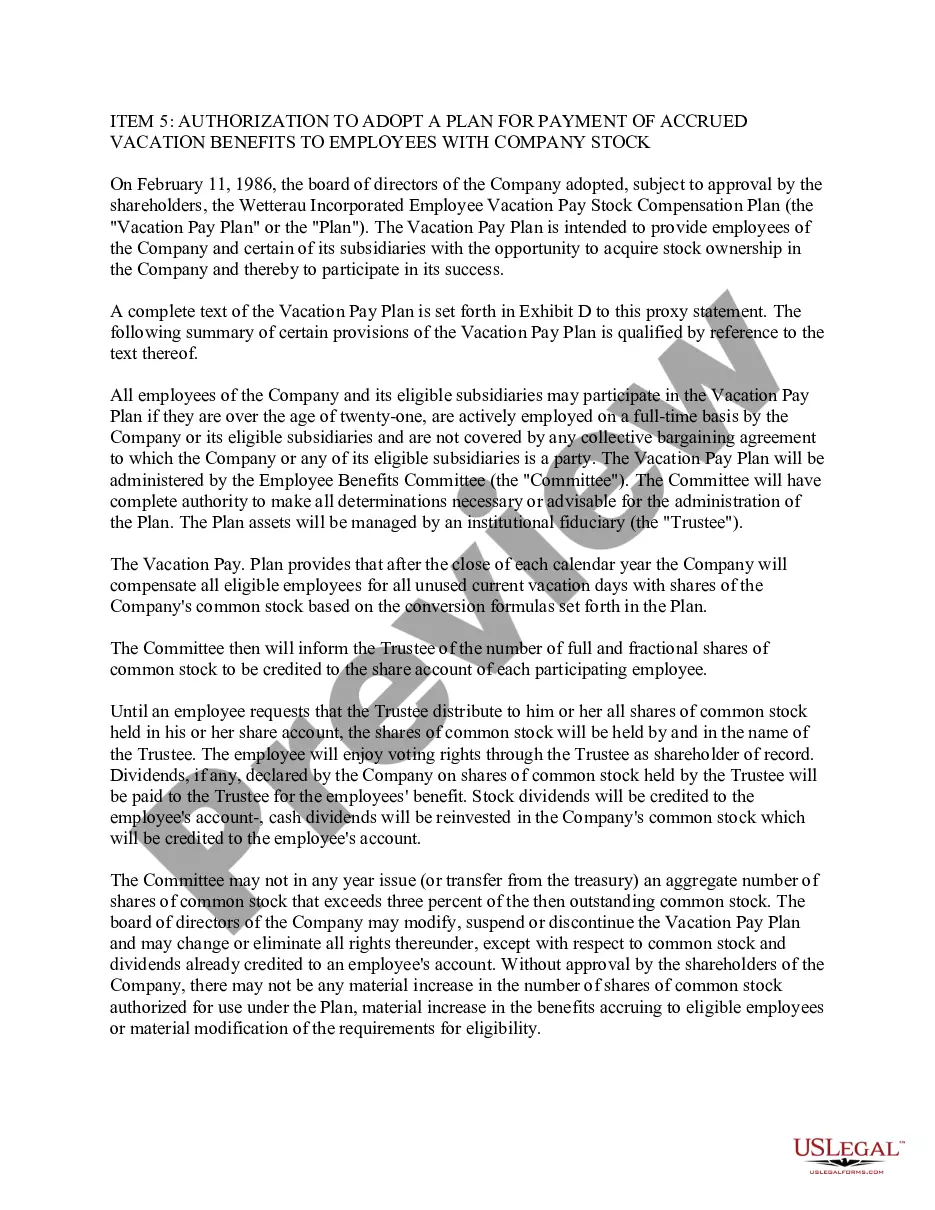
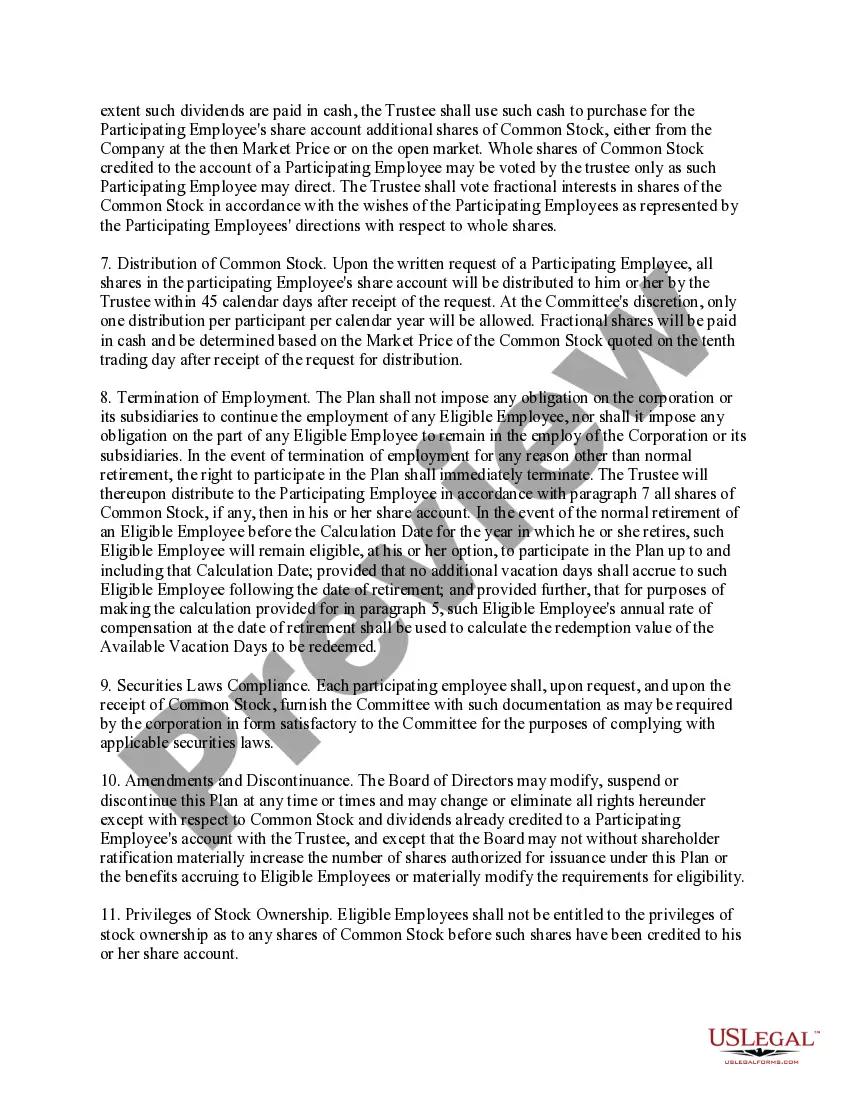
This is an Authorization to Adopt a Plan for Payment of Accrued Vacation Benefits to Employees with Company Stock. This form allows corporate boards to implement a plan that compensates employees for unused vacation time in the form of company stock. Utilizing a stock compensation plan differentiates it from traditional vacation payout methods, helping employees engage with the company's financial success while also ensuring a structured approach to vacation benefits.
Key components of this form
- Overview of the Vacation Pay Plan and its purpose.
- Eligibility criteria for employee participation.
- Administration and authority of the Employee Benefits Committee.
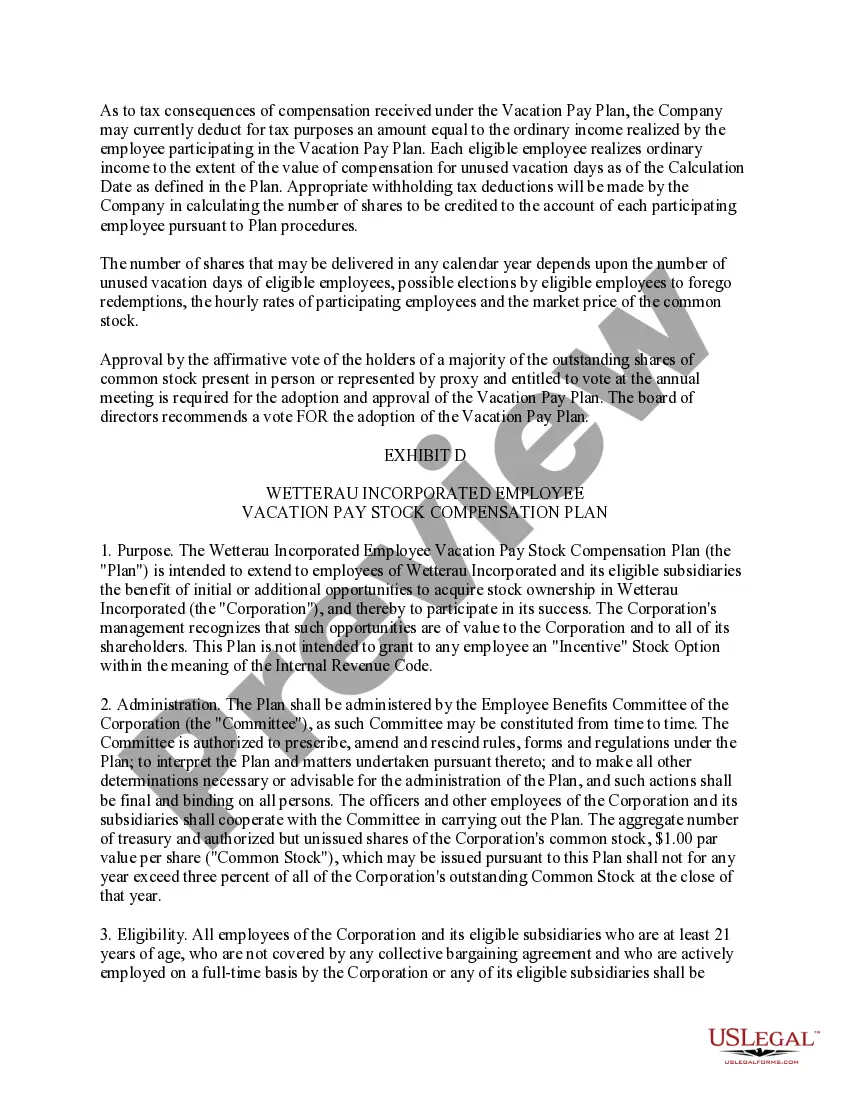
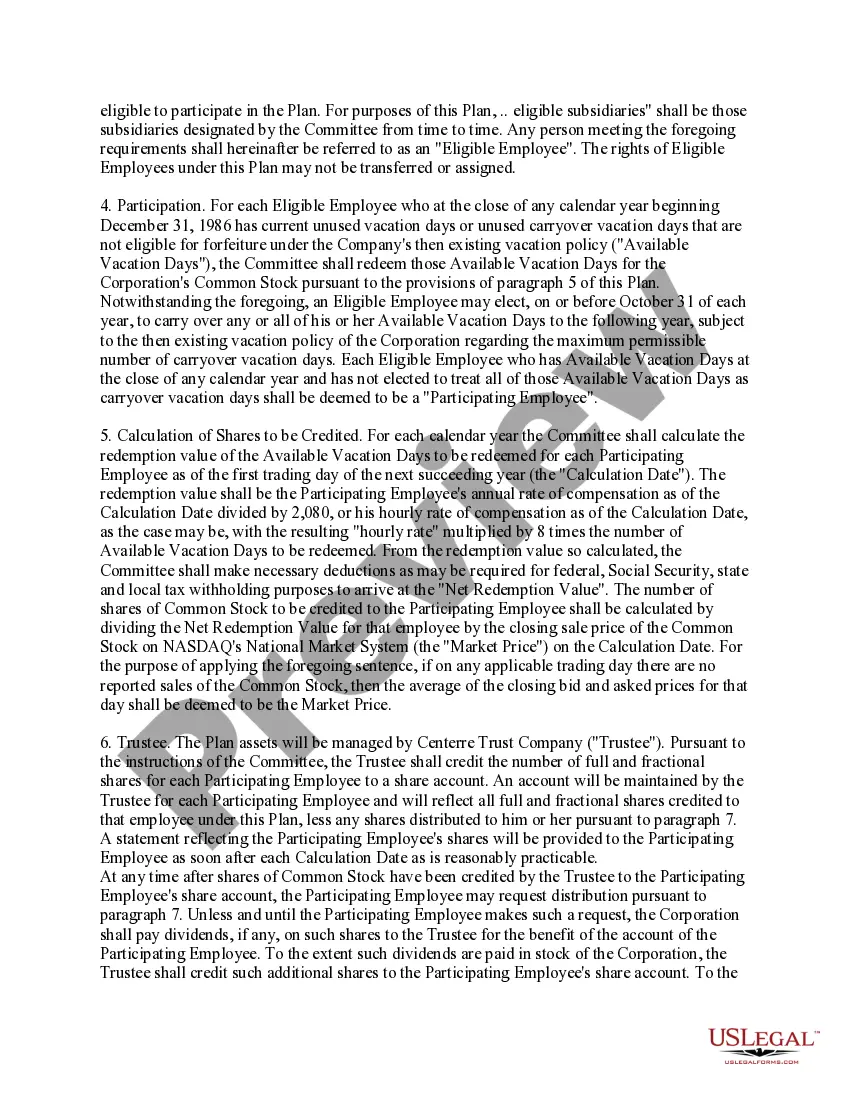
- Calculation of shares to be credited based on accrued vacation days.
- Distribution process for the credited stock to employees.
- Provisions on the termination of employment and its impact on benefits.

Situations where this form applies
This form should be used when a corporation's board of directors wishes to establish or modify an Employee Vacation Pay Stock Compensation Plan. It is applicable when companies want to reward employees for accrued vacation days in the form of company stock, providing an incentive for employees to remain engaged with their organization.
Who can use this document
- Corporate boards of directors responsible for employee compensation plans.
- Human resources departments looking to implement stock-based vacation pay plans.
- Eligible employees interested in participating in a plan that compensates unused vacation time through stock ownership.
How to complete this form
- Identify the board of directors who will adopt the plan.
- Review and outline the eligibility criteria for employee participation.
- Detail the calculation methods for redeeming unused vacation days into stock.
- Specify the administrative responsibilities of the Employee Benefits Committee.
- Ensure proper shareholder approval is indicated for adoption of the plan.
Does this document require notarization?
This form does not typically require notarization unless specified by local law. It is advisable, however, to consult with a legal professional to confirm any notarization needs specific to your jurisdiction.
Get your form ready online
Our built-in tools help you complete, sign, share, and store your documents in one place.
Make edits, fill in missing information, and update formatting in US Legal Forms—just like you would in MS Word.
Download a copy, print it, send it by email, or mail it via USPS—whatever works best for your next step.
Sign and collect signatures with our SignNow integration. Send to multiple recipients, set reminders, and more. Go Premium to unlock E-Sign.
If this form requires notarization, complete it online through a secure video call—no need to meet a notary in person or wait for an appointment.
We protect your documents and personal data by following strict security and privacy standards.

Make edits, fill in missing information, and update formatting in US Legal Forms—just like you would in MS Word.

Download a copy, print it, send it by email, or mail it via USPS—whatever works best for your next step.

Sign and collect signatures with our SignNow integration. Send to multiple recipients, set reminders, and more. Go Premium to unlock E-Sign.

If this form requires notarization, complete it online through a secure video call—no need to meet a notary in person or wait for an appointment.

We protect your documents and personal data by following strict security and privacy standards.
Mistakes to watch out for
- Failing to obtain necessary shareholder approval before implementation.
- Not clearly defining employee eligibility requirements, leading to confusion.
- Overlooking the language regarding stock distribution and tax implications.
Why use this form online
- Quick and easy access to a comprehensive stock compensation plan template.
- Edit and customize the form to fit your company's specific requirements.
- Reliable updates to ensure compliance with evolving employment laws.
Looking for another form?

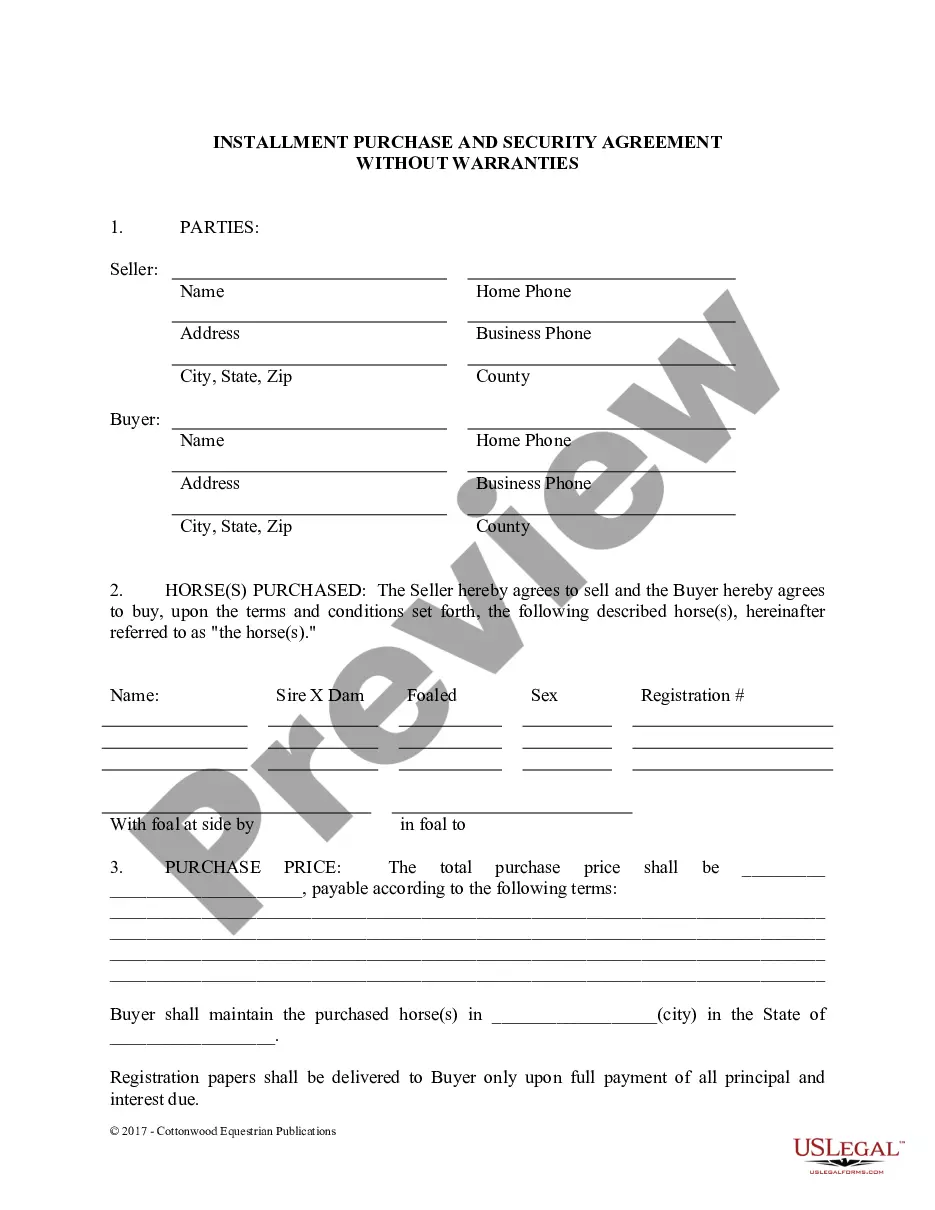
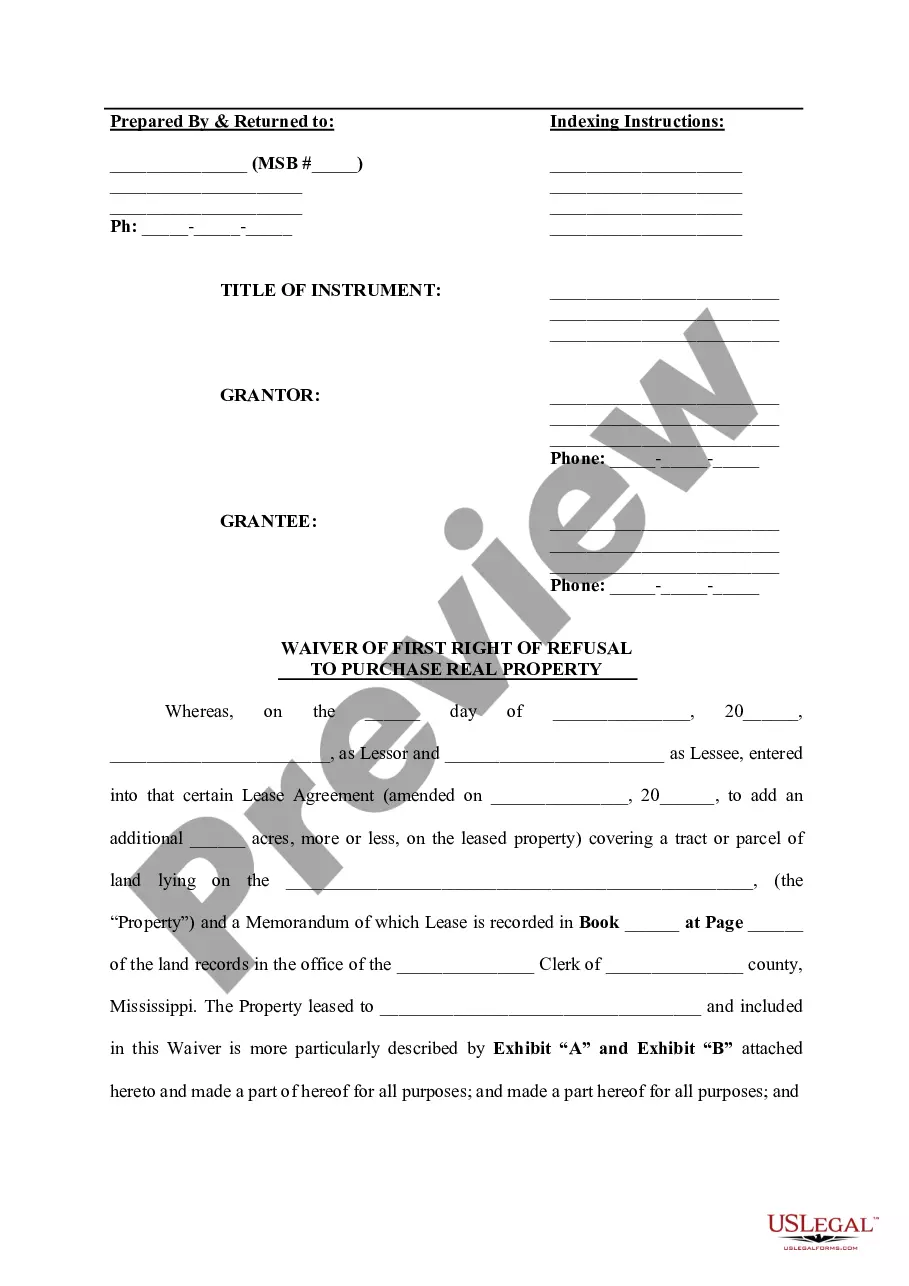
Form popularity
FAQ
California requires that employers pay terminated employees for accrued vacation time in their final paycheck. Under California law, vacation pay is considered a form of wages if an employer chooses to offer it to employees.
Accrued time off is time off an employee has earned but not yet used. PTO accrual especially comes into play at the end of the year or when an employee leaves your business. Employees might earn general personal time off hours that they can delegate toward vacation, sick, or personal time.
Add the number of vacation hours earned. Subtract the number of vacation hours used by the employee. Multiply the number of accrued vacation hours by the employee's hourly rate to get the total vacation accrual you should list in your books.
Total Accrual= Net profit - Net Cash from Operating Activities.
Employers are required to pay employees any accrued, unused vacation time at separation. Earned vacation time is considered wages when an organization has established policies or precedent of paying employees for this time.
To calculate the number of accrued vacation the employee earned, divide their hours worked by 30 (1,500 / 30). The employee earned 50 hours of vacation time. Next, subtract the number of hours the employee used from what they earned (50 10). The employee has 40 hours of accrued vacation time.
Multiply your pay period PTO by time worked. Multiply the amount you accrue each pay period by the number of pay periods you've worked. If you've worked two months without taking any time off and are paid semimonthly, you've accrued 20 hours; 5 PTO hours per pay period times 4 pay periods equals 20.
The number of paid vacation days generally accrues to employees based on their years of service to the organization and the level of their position. For example, employees accrue 3.0769 hours per pay period worked in the case where they are eligible for 10 days or two workweeks of vacation.
In general, vacation accrues over time as an employee works. For example, if a vacation policy gives an employee ten days of vacation each year, he or she will accrue five days of vacation after working for six months.For example, employers may give vacation only to full-time employees or only to managers.