Mississippi Order Allowing Withdrawal of Counsel
Understanding this form
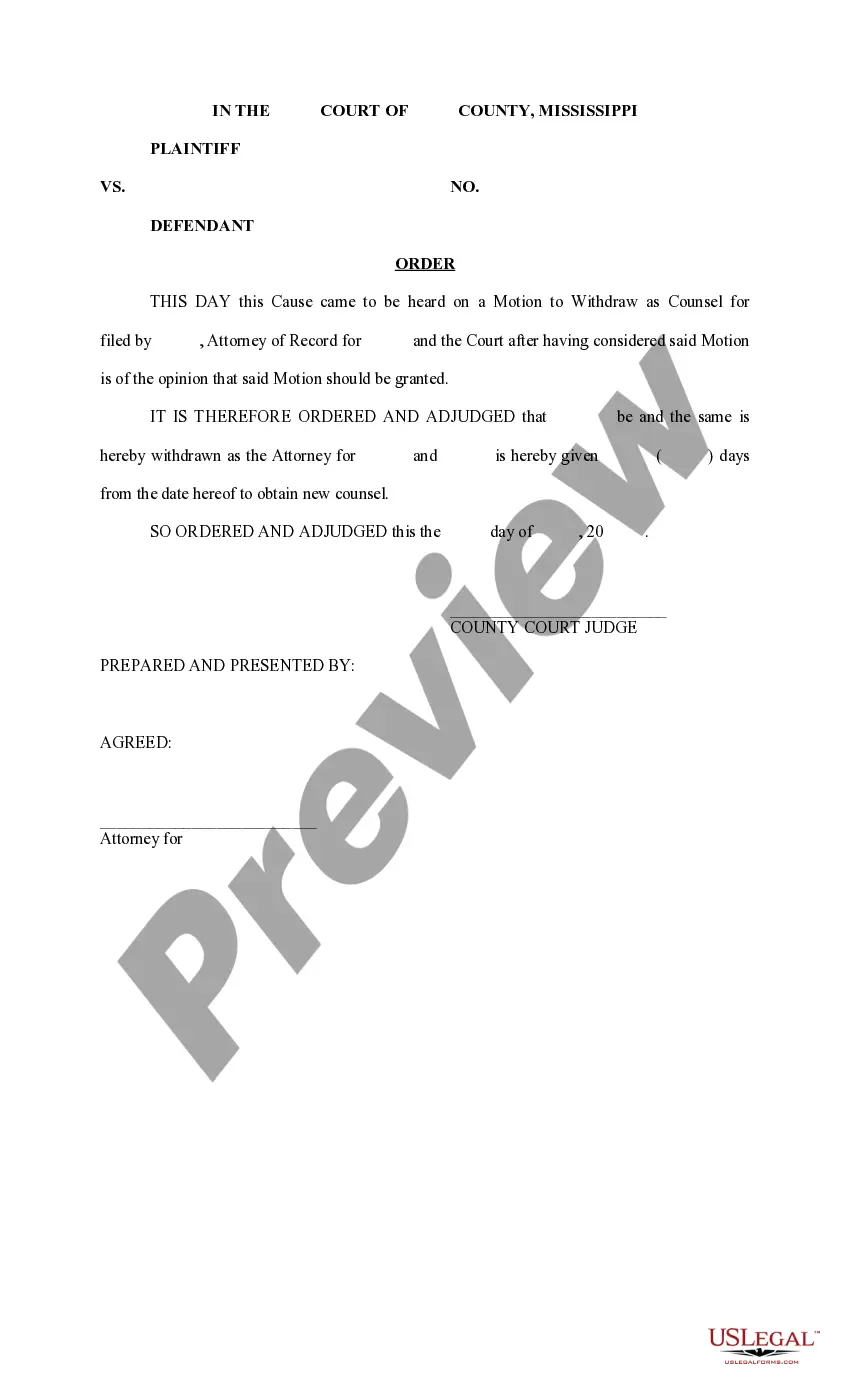
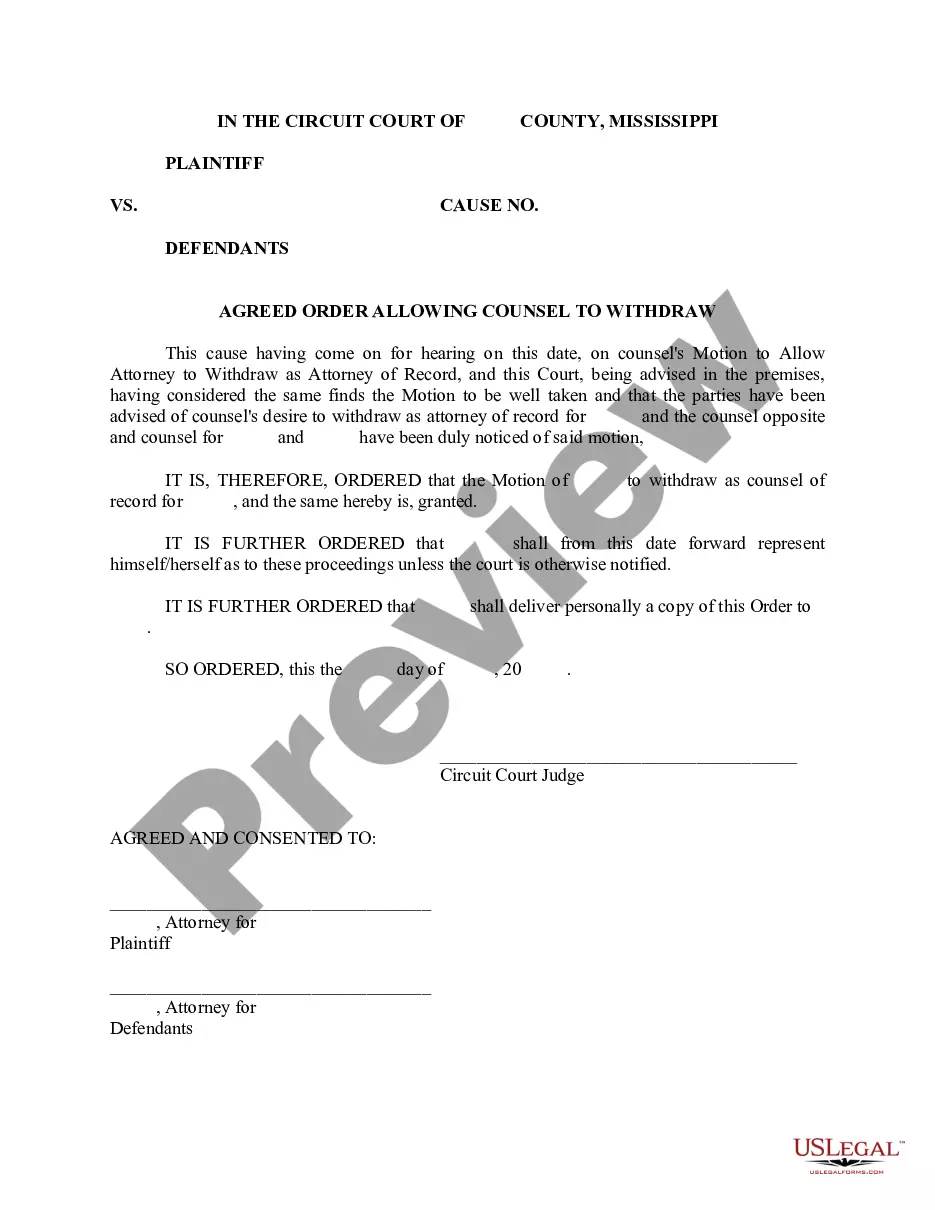
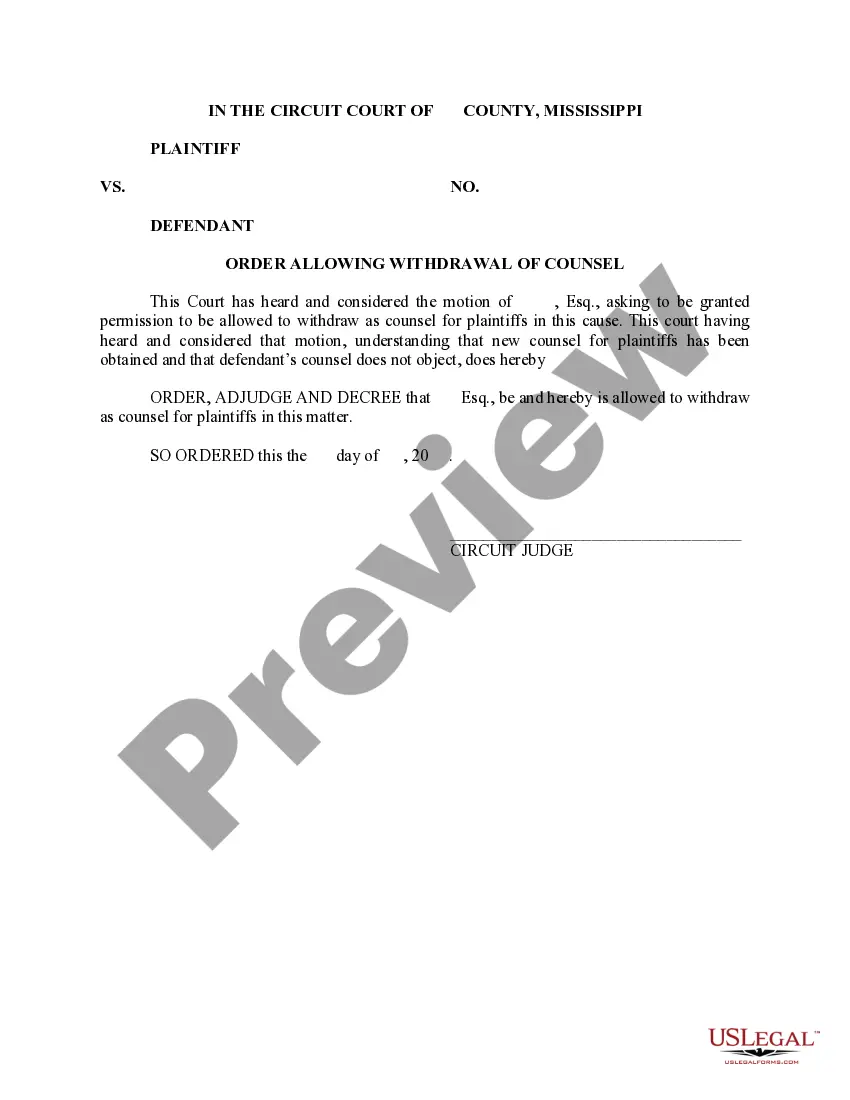
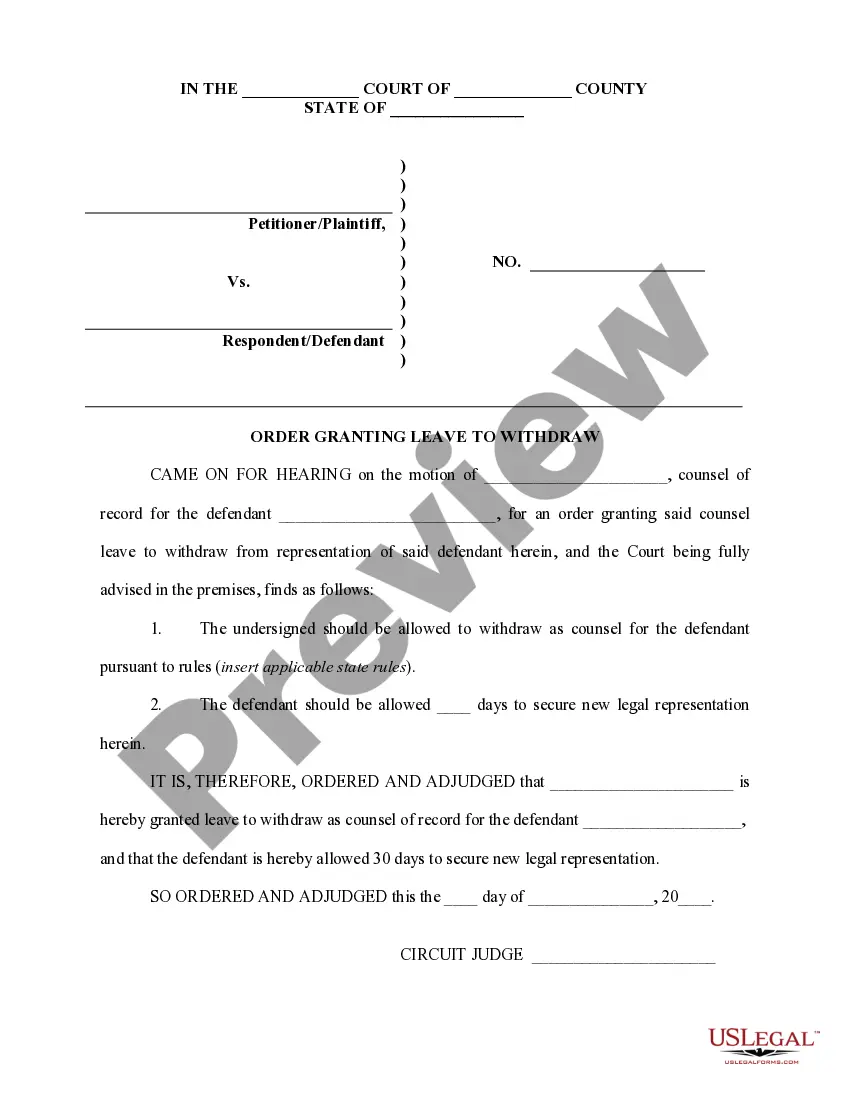
The Order Allowing Withdrawal of Counsel is an official court document that permits an attorney to withdraw from representing a client in a legal matter. This form serves as a directive from the judge, ensuring that the withdrawal follows legal protocols. It is distinct from other legal forms as it specifically addresses the attorney-client relationship and the formal withdrawal process, ensuring that clients are appropriately notified and that their legal rights are preserved.
Form components explained
- Title of the order, clearly stating its purpose.
- Case identification, including the case number and names of the parties involved.
- Statement of the attorney's request to withdraw and the grounds for this request.
- Conditions set by the court, if any, regarding the withdrawal.
- Judge's signature line, validating the order.
When to use this document
This form should be used when an attorney wants to formally withdraw from representing a client in a legal proceeding. It is applicable in situations where the attorney-client relationship has become untenable, whether due to a breakdown in communication, conflict of interest, or non-payment of legal fees. Courts typically require this order to ensure an orderly transition and to protect the interests of the client and the legal process.
Who needs this form
- Attorneys seeking to withdraw from representation.
- Clients who are aware their attorney will withdraw and need formal documentation.
- Legal professionals managing case transitions smoothly and in compliance with court rules.
How to complete this form
- Enter the case number and names of the parties involved in the relevant fields.
- Clearly state the reasons for the attorney's withdrawal.
- Include any specific instructions or conditions set by the court regarding the withdrawal.
- Have the form signed by the judge to make it official.
- Ensure that the client is notified of the withdrawal as per legal requirements.
Is notarization required?
This form does not typically require notarization unless specified by local law. Always confirm local requirements to ensure compliance.
Get your form ready online
Our built-in tools help you complete, sign, share, and store your documents in one place.
Make edits, fill in missing information, and update formatting in US Legal Forms—just like you would in MS Word.
Download a copy, print it, send it by email, or mail it via USPS—whatever works best for your next step.
Sign and collect signatures with our SignNow integration. Send to multiple recipients, set reminders, and more. Go Premium to unlock E-Sign.
If this form requires notarization, complete it online through a secure video call—no need to meet a notary in person or wait for an appointment.
We protect your documents and personal data by following strict security and privacy standards.

Make edits, fill in missing information, and update formatting in US Legal Forms—just like you would in MS Word.

Download a copy, print it, send it by email, or mail it via USPS—whatever works best for your next step.

Sign and collect signatures with our SignNow integration. Send to multiple recipients, set reminders, and more. Go Premium to unlock E-Sign.

If this form requires notarization, complete it online through a secure video call—no need to meet a notary in person or wait for an appointment.

We protect your documents and personal data by following strict security and privacy standards.
Avoid these common issues
- Failing to provide adequate reasons for the withdrawal.
- Not notifying the client before submitting the order.
- Omitting key case details, such as the case number or names of parties.
- Not following the court's specific instructions regarding format and submission.
Benefits of using this form online
- Convenience of completing the form at your own pace.
- Easy access to review and modify as necessary.
- Reliable quality, drafted by licensed attorneys to meet legal standards.
What to keep in mind
- The Order Allowing Withdrawal of Counsel is essential for formalizing an attorneyâs withdrawal from a case.
- Proper completion and submission of the form are vital to avoid legal complications.
- Always be aware of state-specific requirements regarding legal representation and form submissions.
Looking for another form?
Form popularity
FAQ
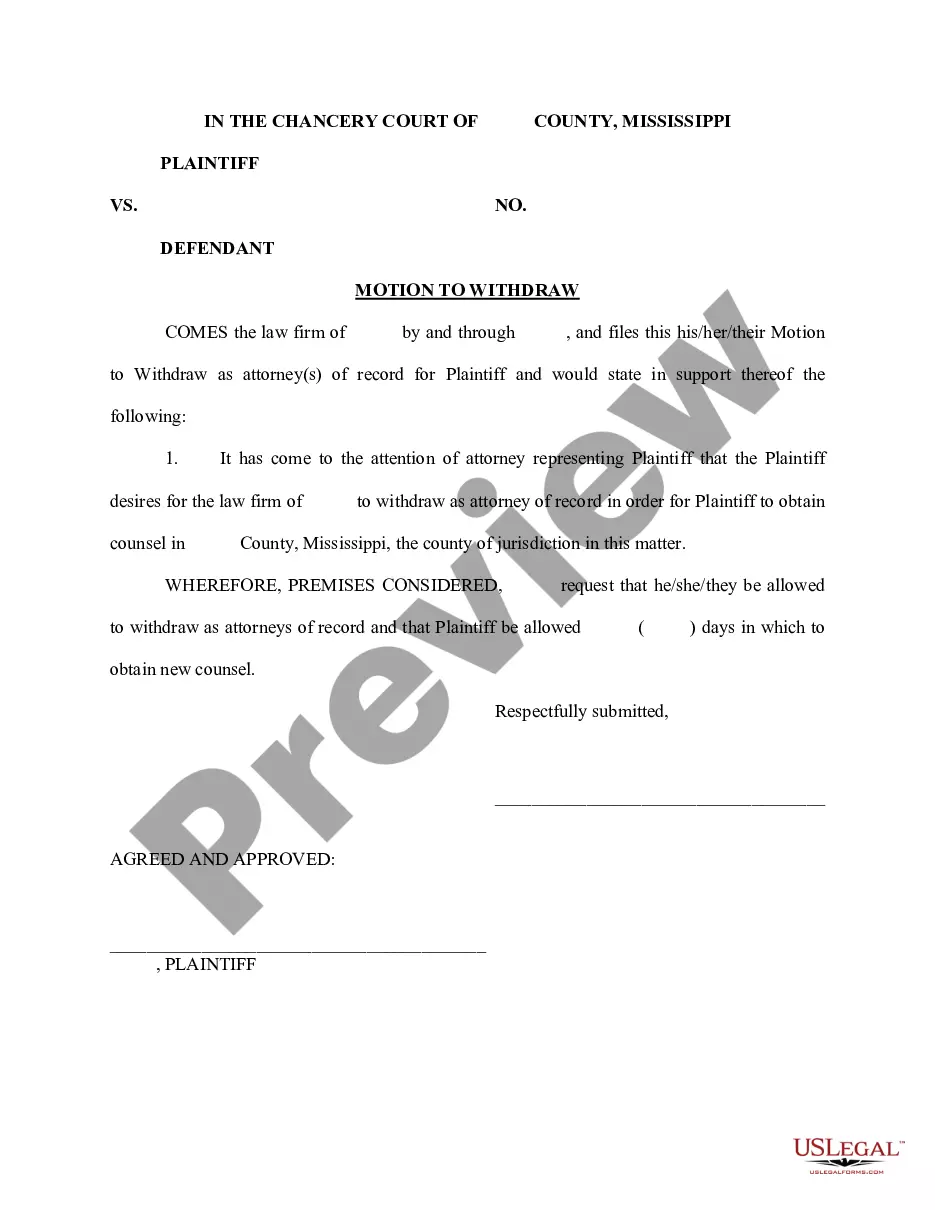
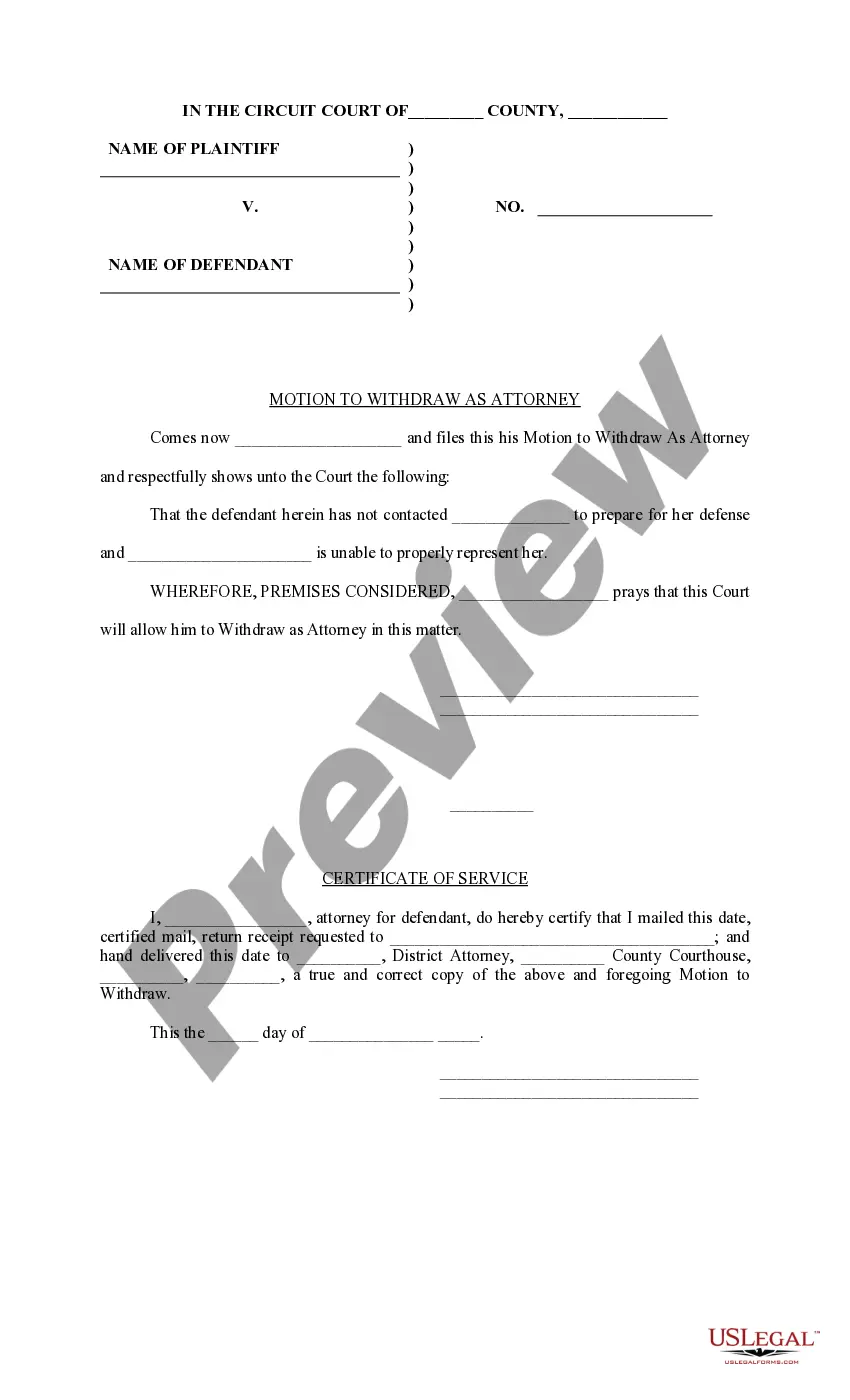
A motion to withdraw is usually when an attorney asks the permission of the judge to be taken off of a case. This usually happens when the client does not pay the lawyer, or when another attorney wants to take over or be substituted onto the...
Withdrawal from representation, in United States law, occurs where an attorney terminates a relationship of representing a client.Where litigation has been filed and an attorney is representing the client in court, permission of the court must usually be sought in support of an attorney's withdrawal.
(a) Notice of withdrawal. An attorney may withdraw from the case by filing with the court and serving on all parties a notice of withdrawal. The notice of withdrawal shall include the address of the attorney's client and a statement that no motion is pending and no hearing or trial has been set.
If a lawyer does withdraw from a case, he or she still has ongoing duties. For example, he or she must maintain client confidentiality. Additionally, if the lawyer has any of the client's property, he or she must return it. He or she must provide the client's file upon request and cooperate with the transfer process.
Typically, it is legally mandatory for an attorney to withdraw from the case if the client fires him or her. Your old attorney requests permission from the judge to withdraw as your attorney by filing a motion to withdraw.