Mississippi Order Allowing Withdrawal of Counsel
Understanding this form
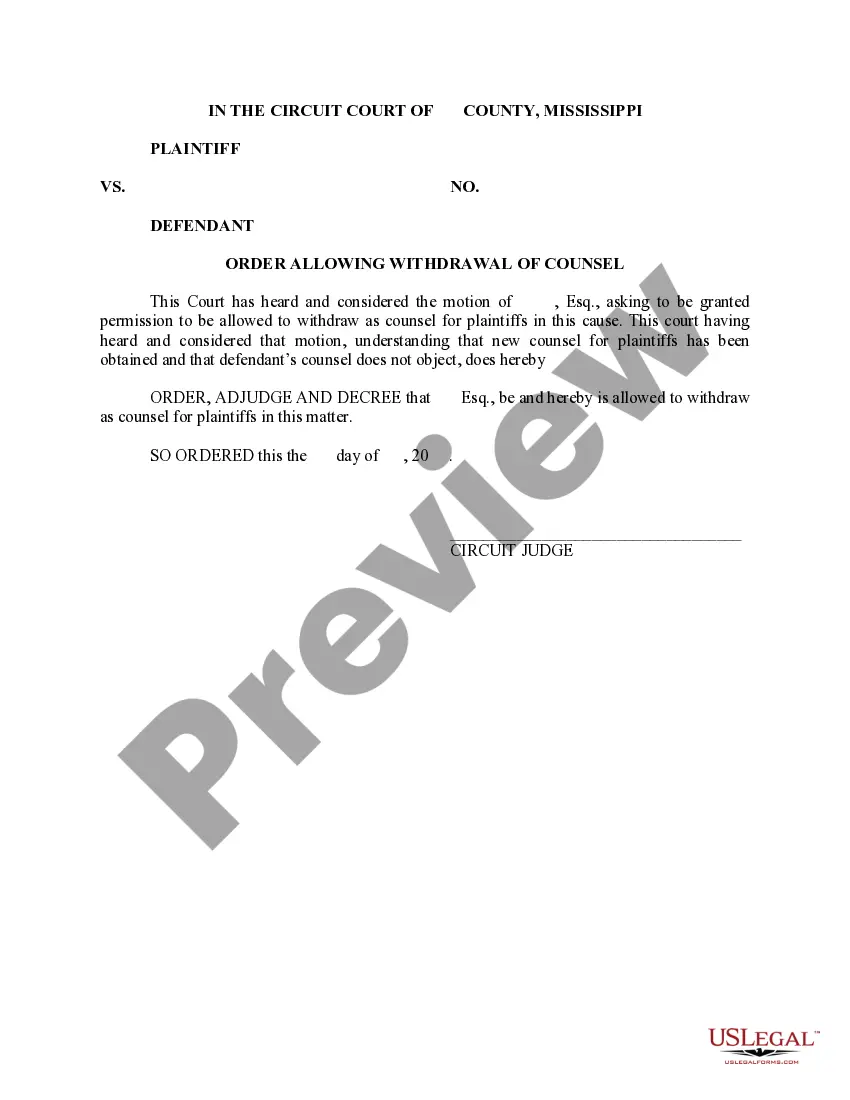
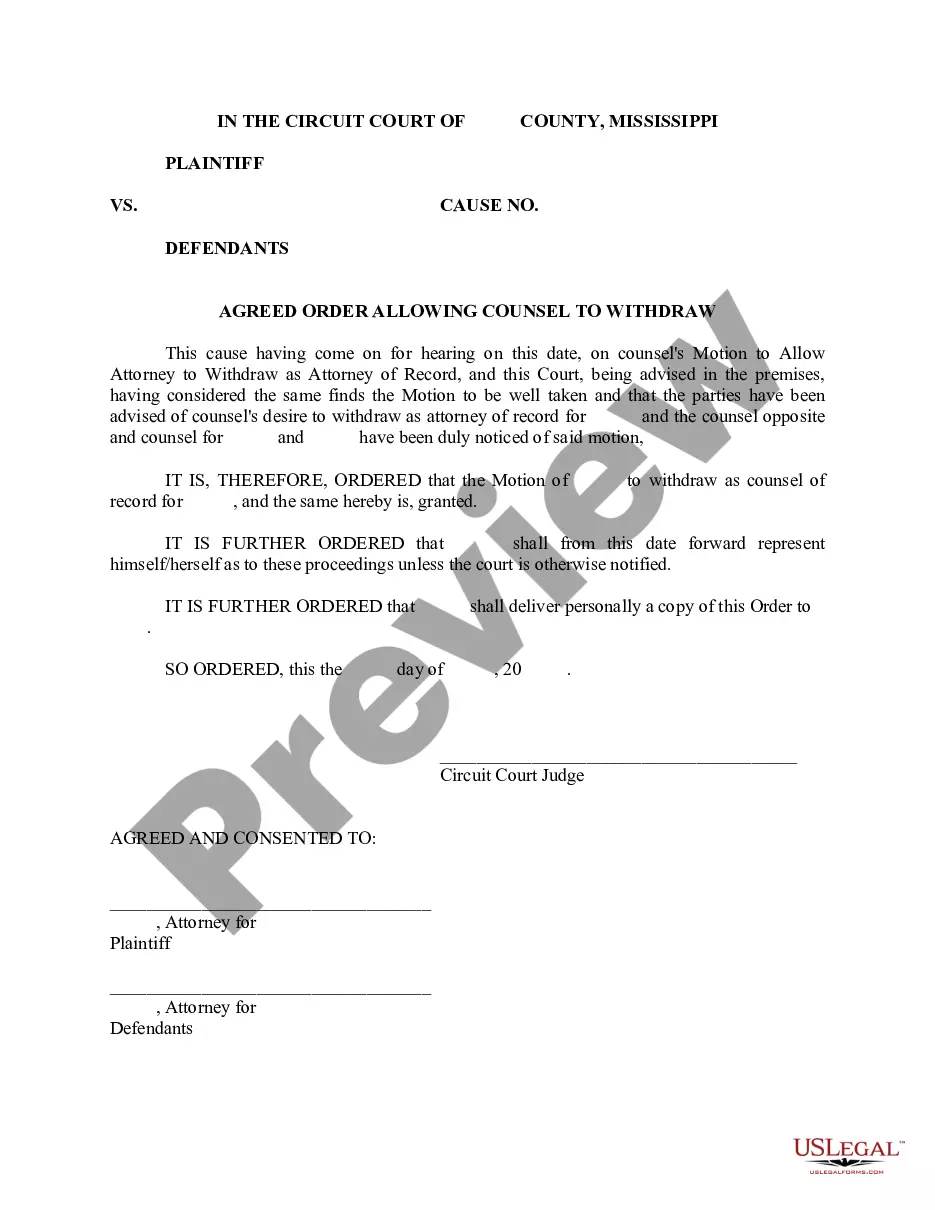
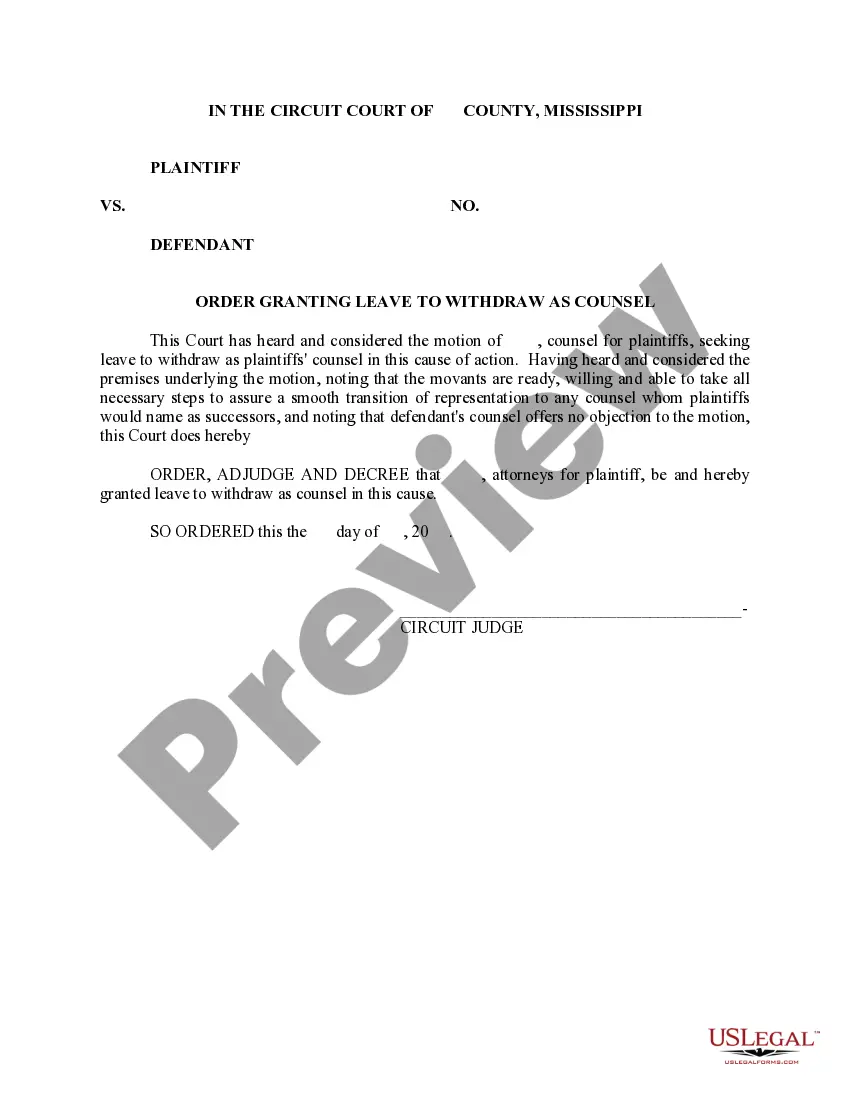
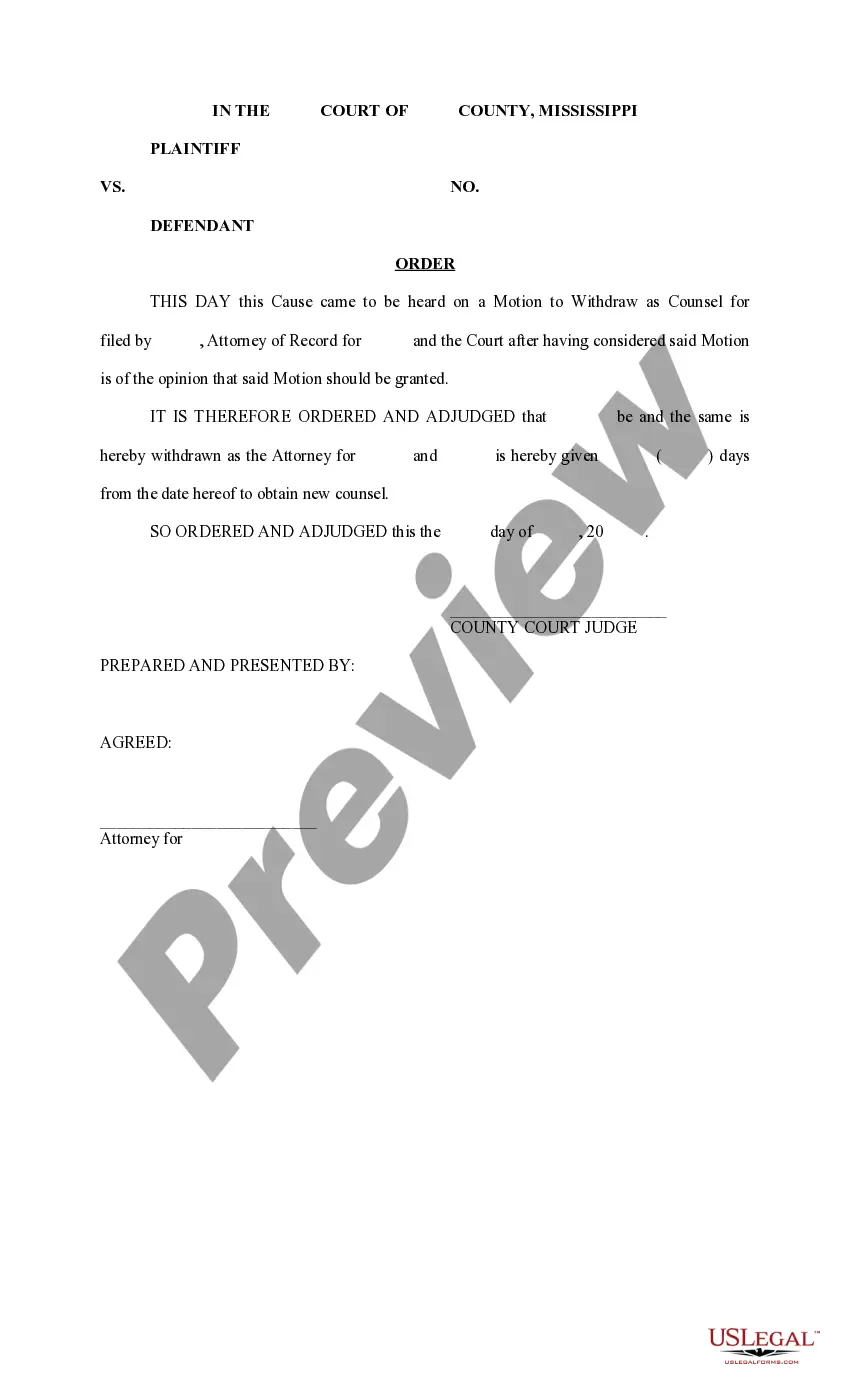
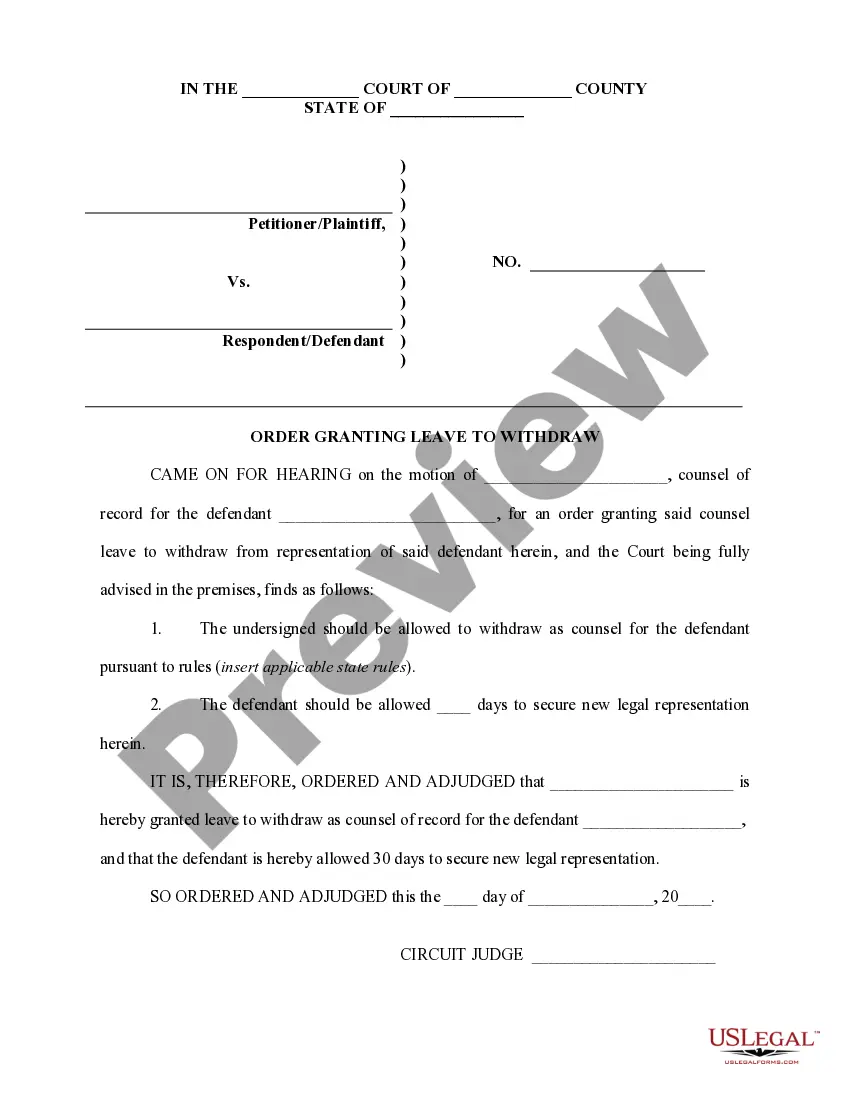
The Order Allowing Withdrawal of Counsel is a legal document issued by a court that grants permission for an attorney to cease representing a client in a specific case. This order is distinct from a motion or notice and requires the judge's approval. It is essential for maintaining the integrity of legal representation, ensuring that clients are properly informed when their counsel withdraws. This form serves as a template to guide parties in drafting their own order when a change in legal representation occurs.
Form components explained
- Case title including names of the plaintiff and defendant.
- Motion details from the attorney requesting withdrawal.
- Confirmation of new counsel's appointment.
- Statement of non-objection from the opposing counsel.
- Order issued by the judge, formally allowing the withdrawal.
- Date of the order and signature line for the judge.
When to use this document
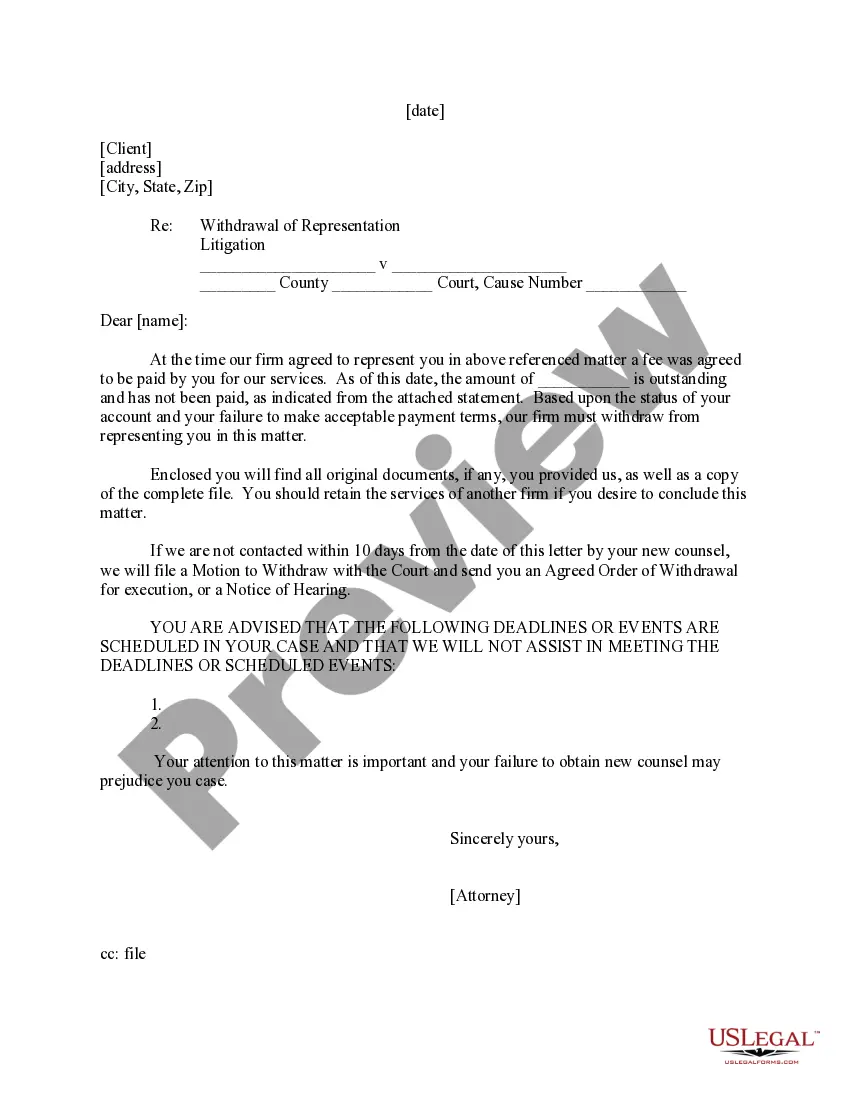
This form is used when an attorney wishes to officially withdraw from representing a client in a legal case. You may need this document if your attorney is leaving the firm, if you are switching legal representation, or if you and your attorney mutually agree that the attorney should no longer represent you in the matter. Courts often require formal documentation to ensure proper procedures are followed during the transition.
Who needs this form
- Clients seeking to change their legal representation.
- Attorneys wishing to withdraw from a case.
- Legal professionals handling court submissions related to representation changes.
Completing this form step by step
- Identify and fill in the names of the parties involved in the case.
- Provide the attorney's name requesting to withdraw and indicate new counsel, if applicable.
- Ensure the opposing counsel has been notified and indicate their lack of objection.
- Include the date on which the order is to be issued.
- Leave space for the judge's signature and title.
Does this form need to be notarized?
This form does not typically require notarization to be legally valid. However, some jurisdictions or document types may still require it. US Legal Forms provides secure online notarization powered by Notarize, available 24/7 for added convenience.
Get your form ready online
Our built-in tools help you complete, sign, share, and store your documents in one place.
Make edits, fill in missing information, and update formatting in US Legal Forms—just like you would in MS Word.
Download a copy, print it, send it by email, or mail it via USPS—whatever works best for your next step.
Sign and collect signatures with our SignNow integration. Send to multiple recipients, set reminders, and more. Go Premium to unlock E-Sign.
If this form requires notarization, complete it online through a secure video call—no need to meet a notary in person or wait for an appointment.
We protect your documents and personal data by following strict security and privacy standards.

Make edits, fill in missing information, and update formatting in US Legal Forms—just like you would in MS Word.

Download a copy, print it, send it by email, or mail it via USPS—whatever works best for your next step.

Sign and collect signatures with our SignNow integration. Send to multiple recipients, set reminders, and more. Go Premium to unlock E-Sign.

If this form requires notarization, complete it online through a secure video call—no need to meet a notary in person or wait for an appointment.

We protect your documents and personal data by following strict security and privacy standards.
Common mistakes
- Failing to notify the opposing counsel before filing the order.
- Not providing the required information about new legal representation.
- Omitting the date or proper signature line for the judge.
Why complete this form online
- Convenient access to essential legal templates from anywhere.
- Edit and customize the form to fit your specific case needs.
- Templates drafted by licensed attorneys enhance reliability and accuracy.
Looking for another form?
Form popularity
FAQ
A motion to withdraw is usually when an attorney asks the permission of the judge to be taken off of a case. This usually happens when the client does not pay the lawyer, or when another attorney wants to take over or be substituted onto the...
Withdrawal from representation, in United States law, occurs where an attorney terminates a relationship of representing a client.Where litigation has been filed and an attorney is representing the client in court, permission of the court must usually be sought in support of an attorney's withdrawal.
(a) Notice of withdrawal. An attorney may withdraw from the case by filing with the court and serving on all parties a notice of withdrawal. The notice of withdrawal shall include the address of the attorney's client and a statement that no motion is pending and no hearing or trial has been set.
If a lawyer does withdraw from a case, he or she still has ongoing duties. For example, he or she must maintain client confidentiality. Additionally, if the lawyer has any of the client's property, he or she must return it. He or she must provide the client's file upon request and cooperate with the transfer process.
Typically, it is legally mandatory for an attorney to withdraw from the case if the client fires him or her. Your old attorney requests permission from the judge to withdraw as your attorney by filing a motion to withdraw.