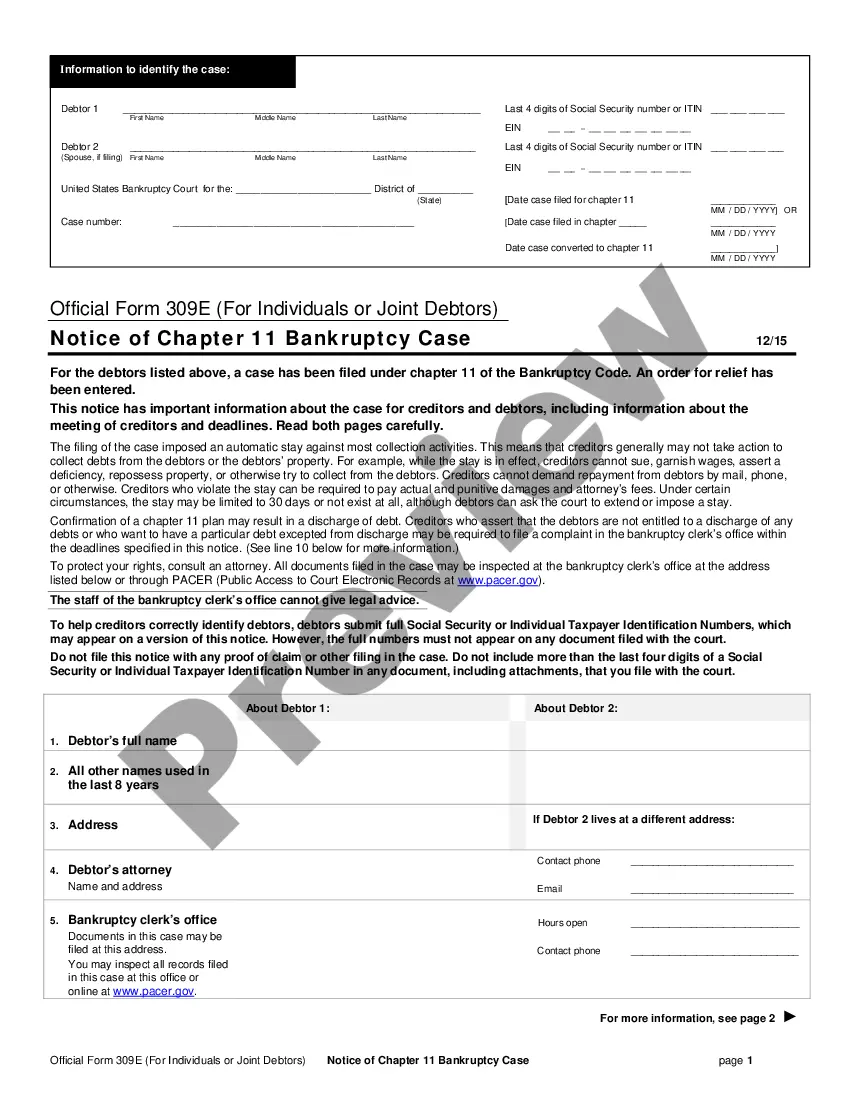
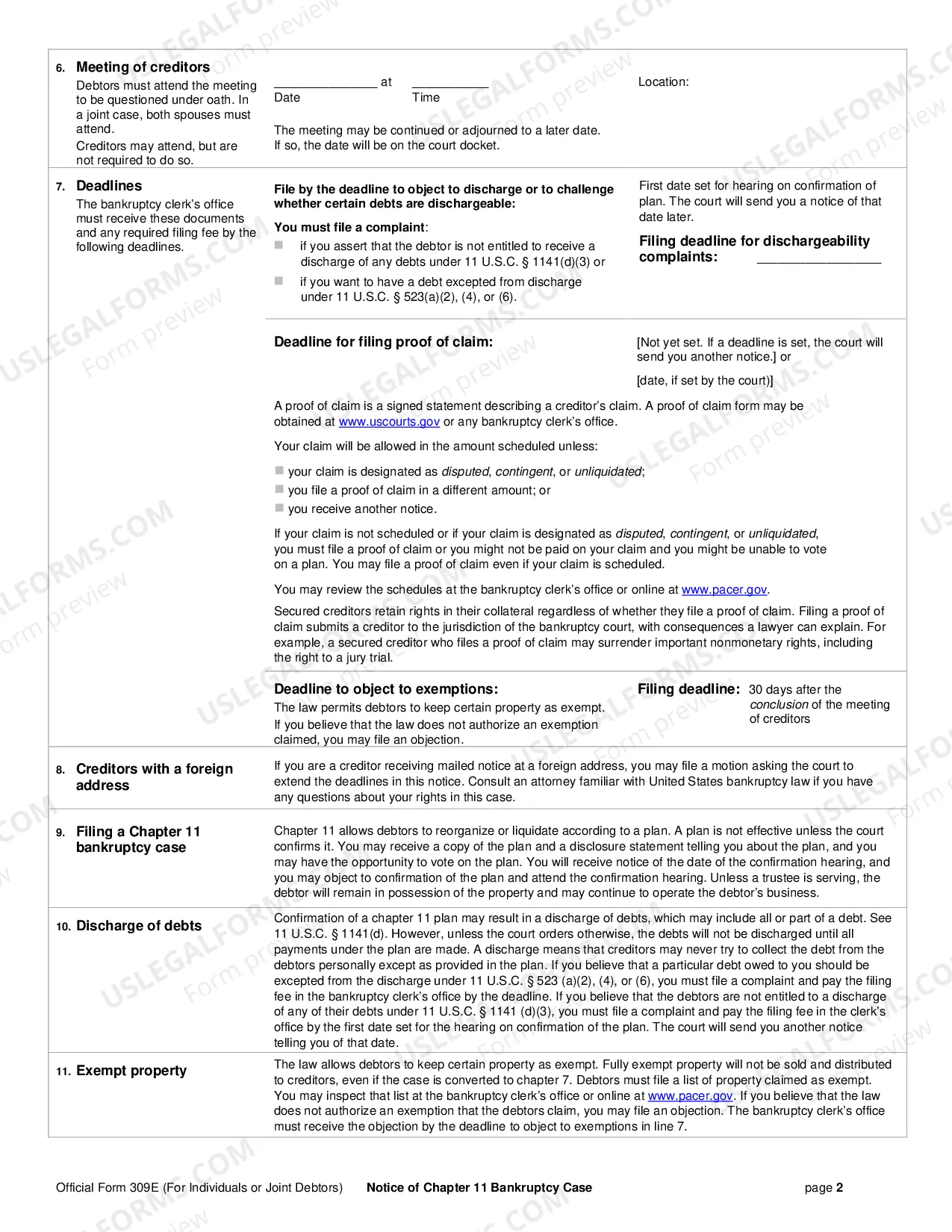
Notice of Chapter 11 Bankruptcy Case (For Individuals or Joint Debtors)
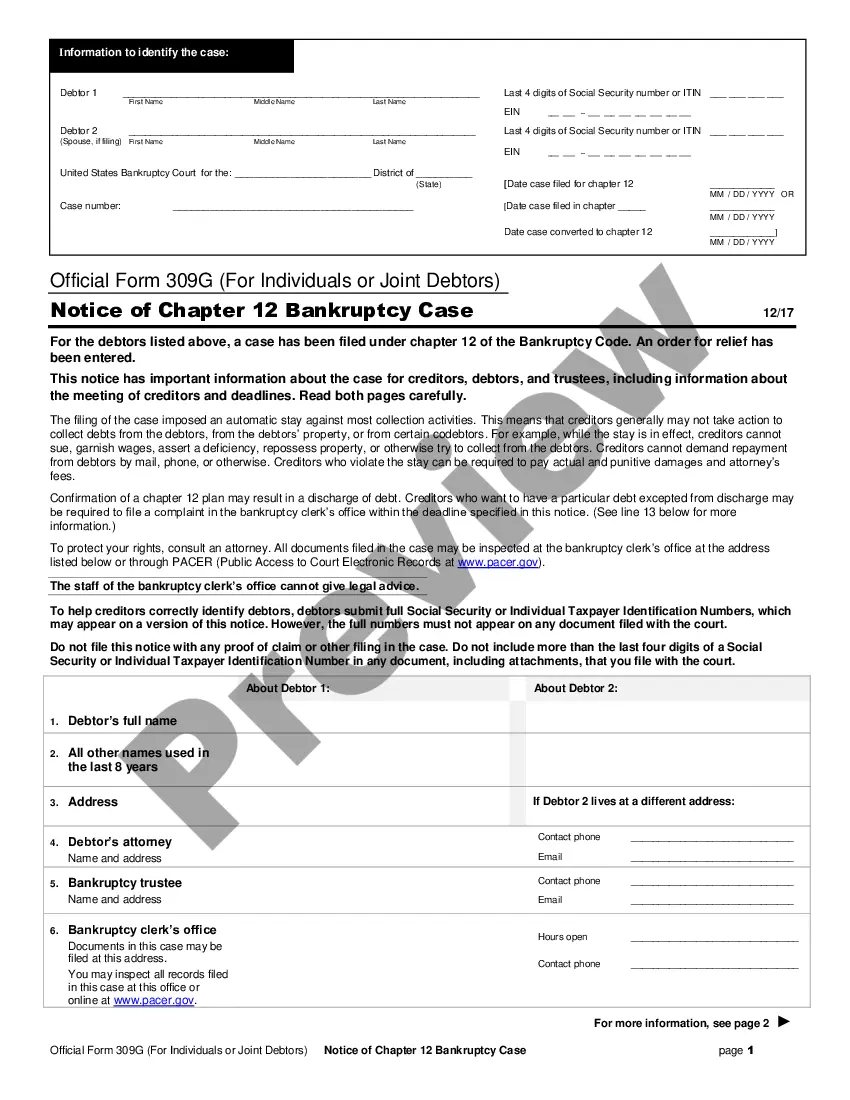
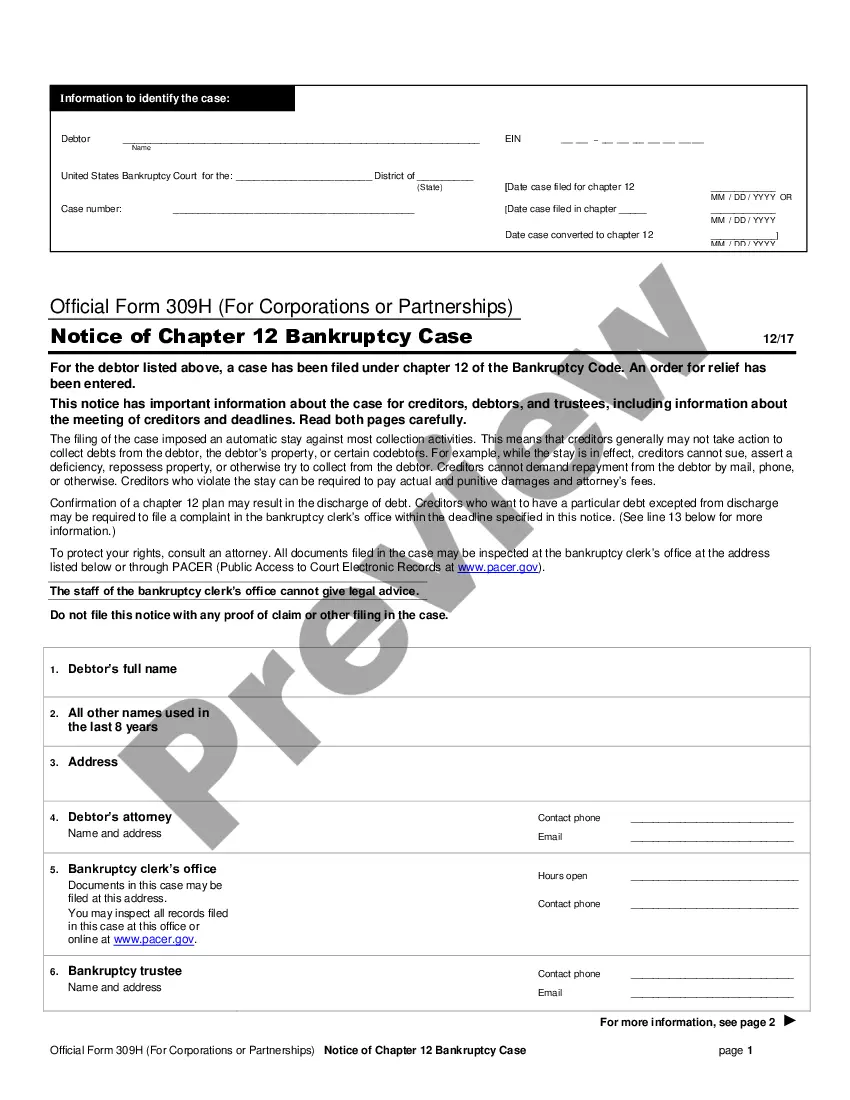
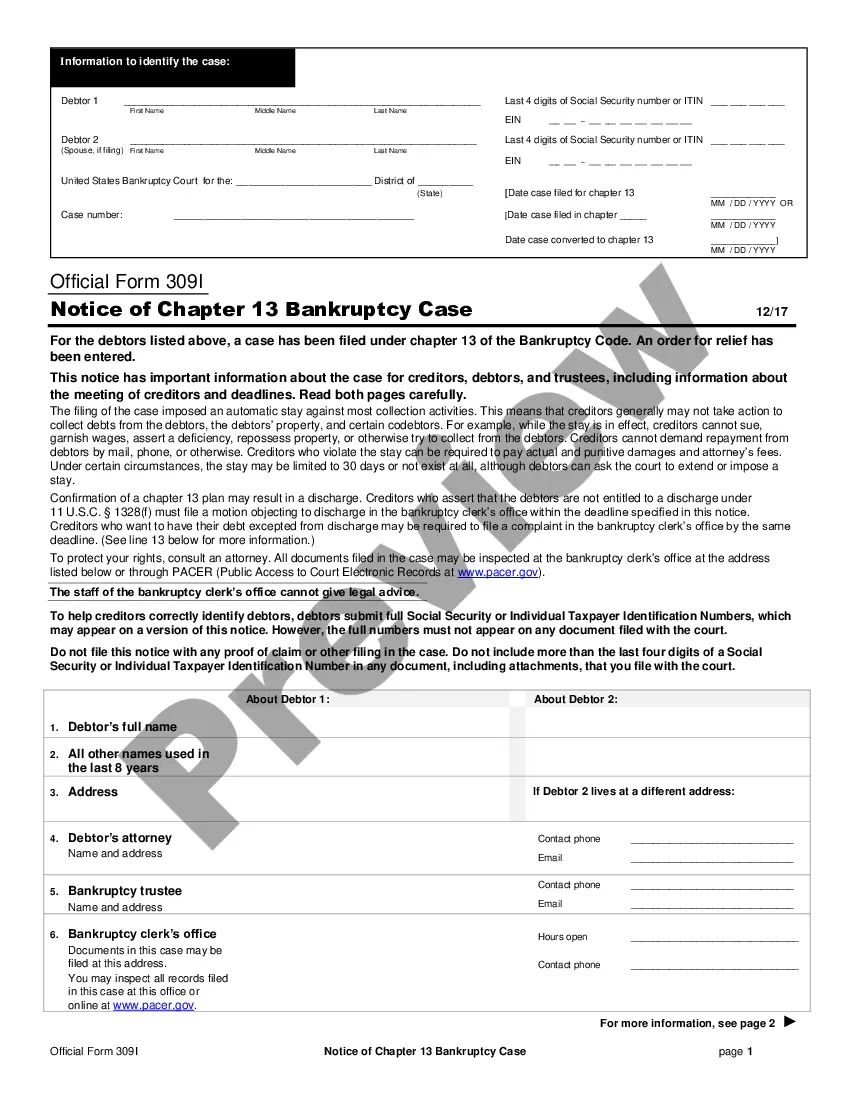
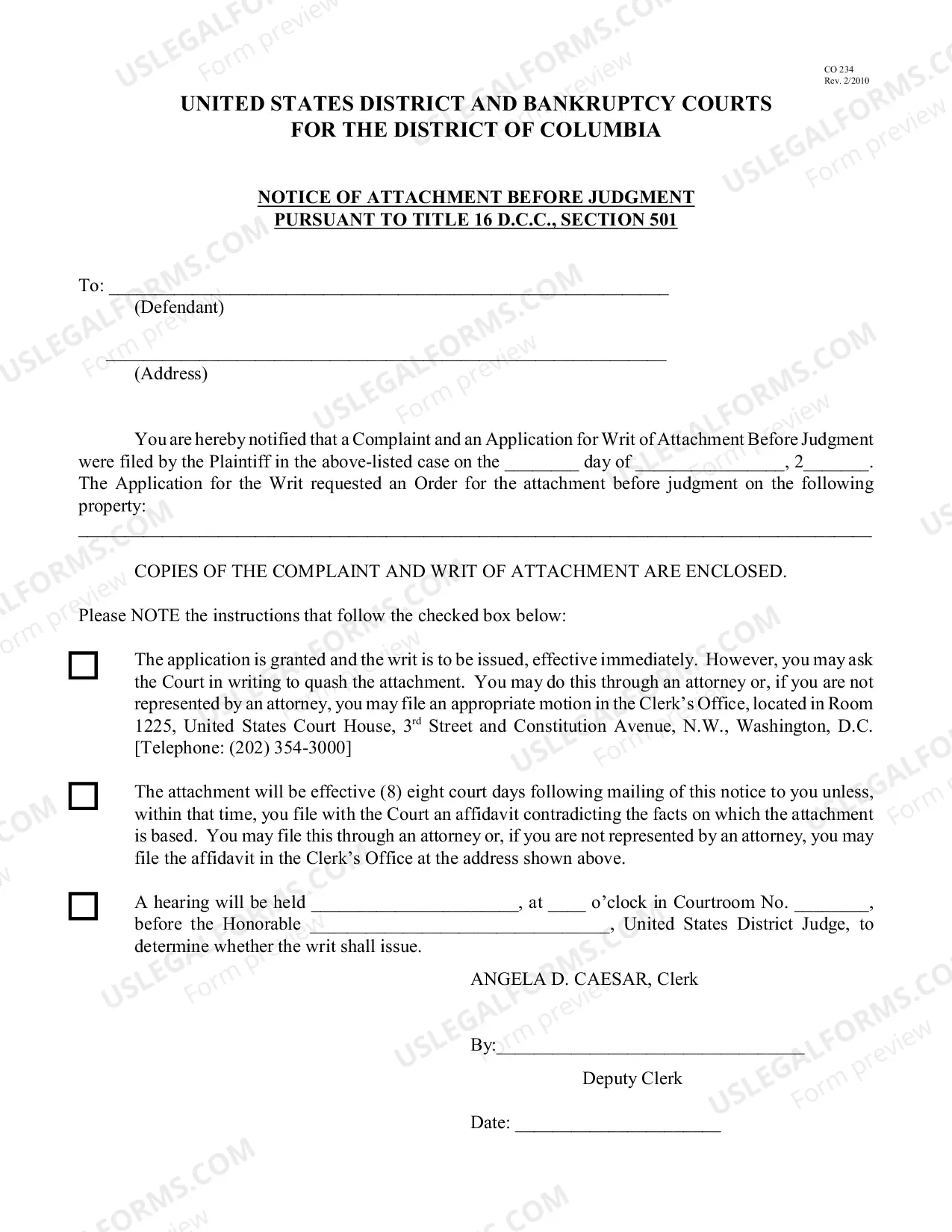
Does this form need to be notarized?
This form does not typically require notarization to be legally valid. However, some jurisdictions or document types may still require it. US Legal Forms provides secure online notarization powered by Notarize, available 24/7 for added convenience.
Get your form ready online
Our built-in tools help you complete, sign, share, and store your documents in one place.
Make edits, fill in missing information, and update formatting in US Legal Forms—just like you would in MS Word.
Download a copy, print it, send it by email, or mail it via USPS—whatever works best for your next step.
Sign and collect signatures with our SignNow integration. Send to multiple recipients, set reminders, and more. Go Premium to unlock E-Sign.
If this form requires notarization, complete it online through a secure video call—no need to meet a notary in person or wait for an appointment.
We protect your documents and personal data by following strict security and privacy standards.

Make edits, fill in missing information, and update formatting in US Legal Forms—just like you would in MS Word.

Download a copy, print it, send it by email, or mail it via USPS—whatever works best for your next step.

Sign and collect signatures with our SignNow integration. Send to multiple recipients, set reminders, and more. Go Premium to unlock E-Sign.

If this form requires notarization, complete it online through a secure video call—no need to meet a notary in person or wait for an appointment.

We protect your documents and personal data by following strict security and privacy standards.
Looking for another form?
Form popularity
FAQ
Business owners and individuals struggling under the weight of debt may find new life under Chapter 11 bankruptcy. Commonly called reorganization bankruptcy, Chapter 11 allows businesses to continue operating while the business owner and creditors reorganize the debts so the business can be profitable once again.
Does a Chapter 11 bankruptcy erase a business's debts? Not exactly. Creditors often have to accept less under a court-approved reorganization plan. But the idea is for the business to keep earning money so it can pay back as much as possible.
In a Chapter 11 proceeding, for an individual debtor, the court may order discharge at any time after the plan is confirmed.
Question 5 Under Chapter 11, the debtor's obligations most likely to be discharged are taxes accruing within the last three years.
Unless a trustee is appointed, the debtor may continue to operate its business during a Chapter 11 case as a debtor in possession. In operating its business during a Chapter 11 case, the debtor, as a debtor in possession, must abide by the requirements of Chapter 11 and the orders of the bankruptcy court.
A case filed under chapter 11 of the United States Bankruptcy Code is frequently referred to as a "reorganization" bankruptcy. Usually, the debtor remains ?in possession,? has the powers and duties of a trustee, may continue to operate its business, and may, with court approval, borrow new money.
This goal is accomplished through the bankruptcy discharge, which releases debtors from personal liability from specific debts and prohibits creditors from ever taking any action against the debtor to collect those debts.