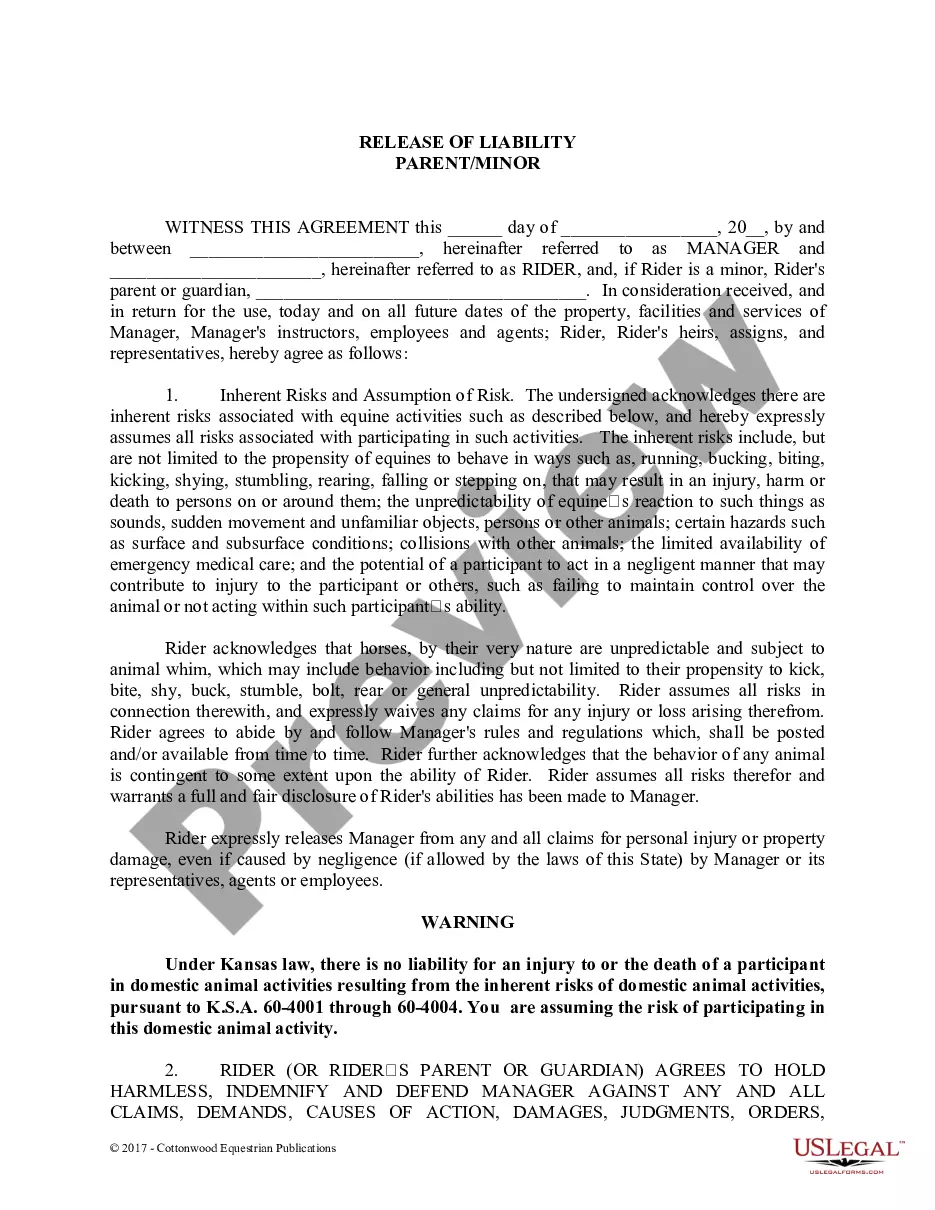
Confidentiality and Nonuse Agreement Including Protection of Confidential Information of Former Clients and Third Parties
What is this form?
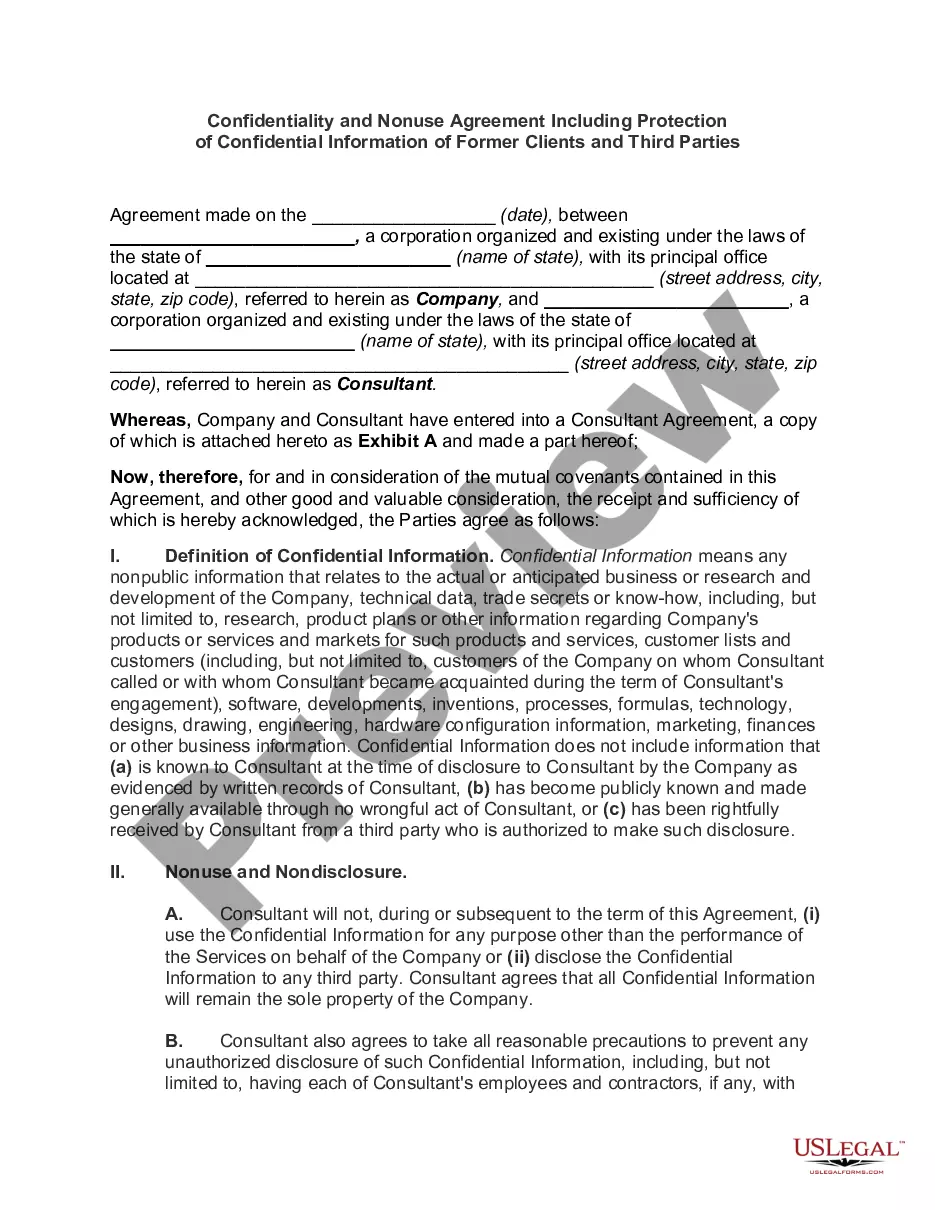
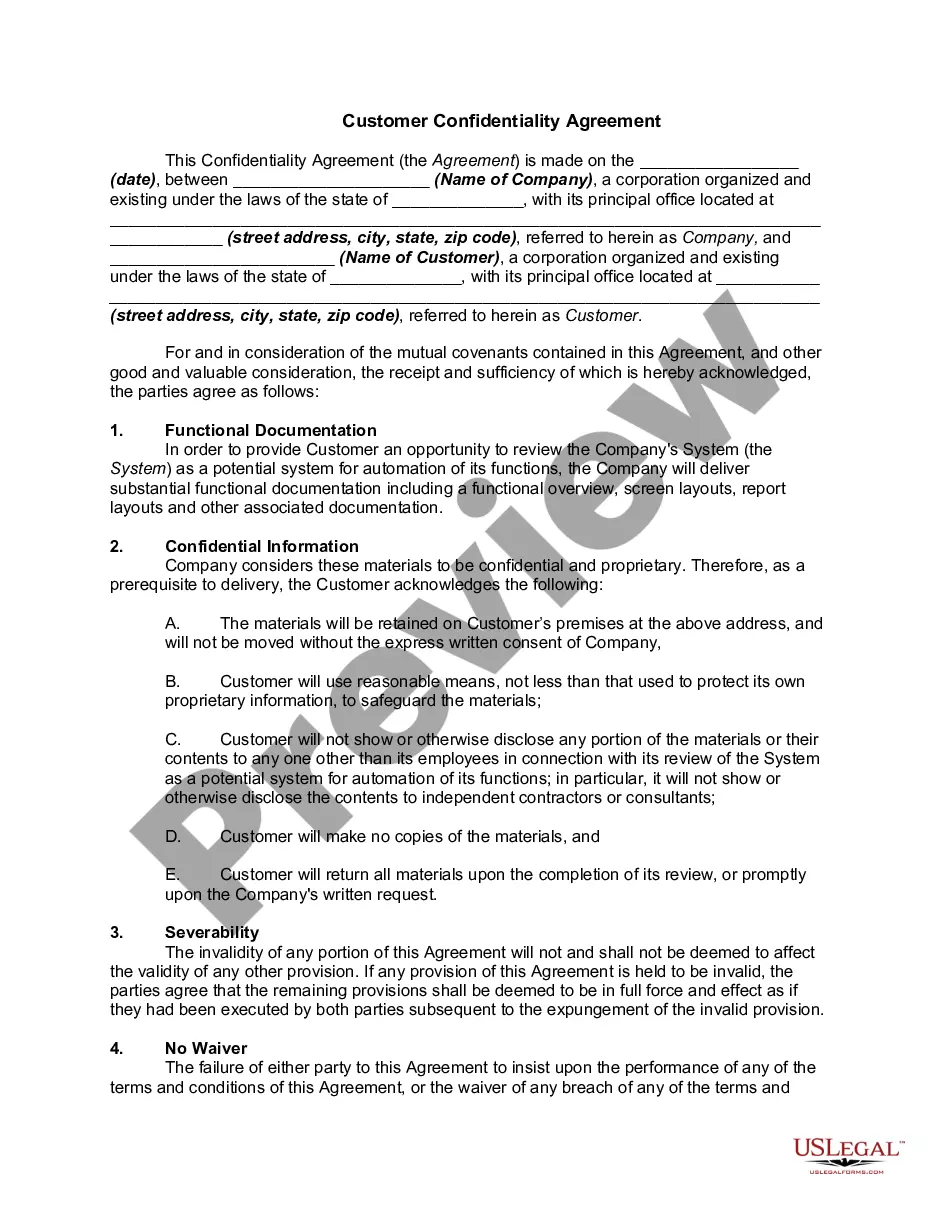
The Confidentiality and Nonuse Agreement is a legal document designed to protect sensitive information shared between a company and a consultant. This form ensures that confidential materials, knowledge, or information are kept private and restricts their use or disclosure to unauthorized parties. It is especially important for businesses dealing with proprietary data or trade secrets, setting it apart from other agreements by focusing specifically on confidentiality and nonuse obligations related to the company's former clients and third parties.
Key parts of this document
- Definition of Confidential Information: Describes what constitutes confidential information and excludes certain exceptions.
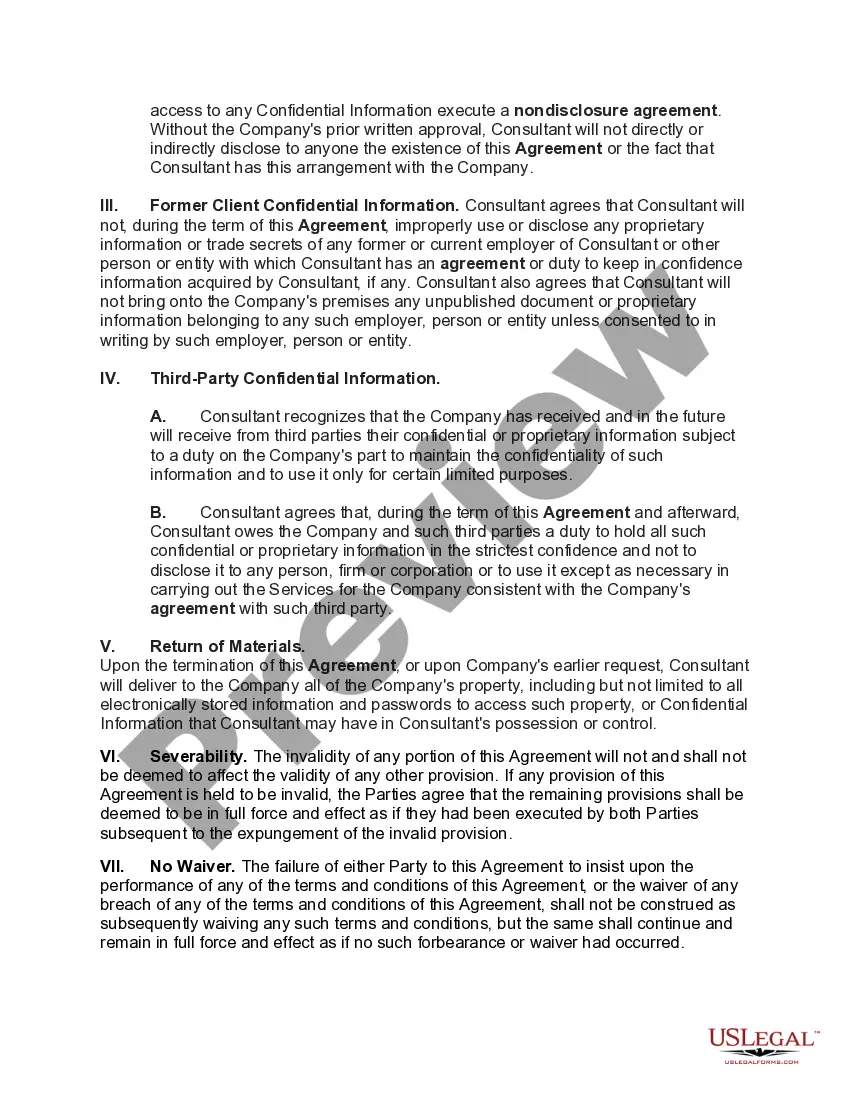
- Nonuse and Nondisclosure: Outlines the obligations of the consultant to refrain from using or disclosing confidential information.
- Return of Materials: Specifies the requirement to return all company property upon termination of the agreement.
- Former Client Confidential Information: Addresses the handling of proprietary information from former employers.
- Third-Party Confidential Information: Affirms the consultant's duty to protect and confidentially manage information received from third parties.

When to use this form
This Confidentiality and Nonuse Agreement is used when a company hires a consultant and needs to protect sensitive and confidential information. Common scenarios include when a company is developing new products, sharing client lists, or discussing proprietary technologies with outside consultants. It is essential in ensuring that the consultant cannot share or misuse any sensitive information learned during their engagement.
Who can use this document
- Businesses or corporations that wish to safeguard their confidential information.
- Consultants who are engaging with companies and have access to sensitive material.
- Organizations working on projects involving proprietary data or trade secrets.
- Parties who have prior obligations of confidentiality with other entities.
Completing this form step by step
- Identify the parties involved by entering their names and addresses at the beginning of the agreement.
- Specify the date the agreement is made to contextualize the document.
- Define confidential information as outlined in the agreement, ensuring all relevant data types are included.
- Enter any additional terms that may be required based on specific needs or agreements between parties.
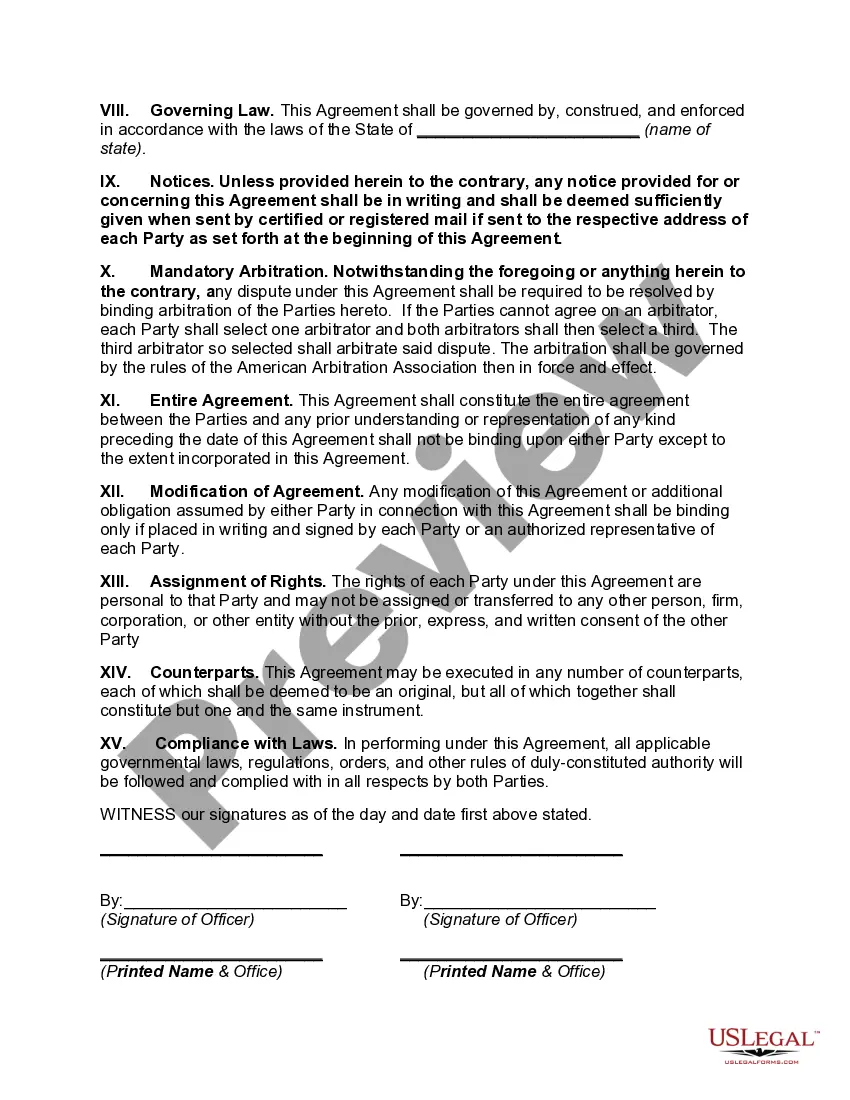
- Ensure both parties sign and print their names along with their titles, confirming mutual agreement.
Notarization requirements for this form
This form does not typically require notarization unless specified by local law. However, it is advisable to check specific state regulations or consult an attorney regarding notarization before finalizing the agreement.
Get your form ready online
Our built-in tools help you complete, sign, share, and store your documents in one place.
Make edits, fill in missing information, and update formatting in US Legal Forms—just like you would in MS Word.
Download a copy, print it, send it by email, or mail it via USPS—whatever works best for your next step.
Sign and collect signatures with our SignNow integration. Send to multiple recipients, set reminders, and more. Go Premium to unlock E-Sign.
If this form requires notarization, complete it online through a secure video call—no need to meet a notary in person or wait for an appointment.
We protect your documents and personal data by following strict security and privacy standards.

Make edits, fill in missing information, and update formatting in US Legal Forms—just like you would in MS Word.

Download a copy, print it, send it by email, or mail it via USPS—whatever works best for your next step.

Sign and collect signatures with our SignNow integration. Send to multiple recipients, set reminders, and more. Go Premium to unlock E-Sign.

If this form requires notarization, complete it online through a secure video call—no need to meet a notary in person or wait for an appointment.

We protect your documents and personal data by following strict security and privacy standards.
Common mistakes to avoid
- Failing to clearly define what constitutes confidential information.
- Not specifying the duration of the confidentiality obligations.
- Neglecting to have all parties sign the agreement.
- Overlooking the return of materials clause, which can lead to disputes over property.
- Using vague language that may lead to misinterpretation of the agreement terms.
Why use this form online
- Convenience of immediate download and access to the agreement.
- Editability allows customization to suit specific business needs.
- Reliability by using templates drafted by licensed attorneys.
Looking for another form?
Form popularity
FAQ
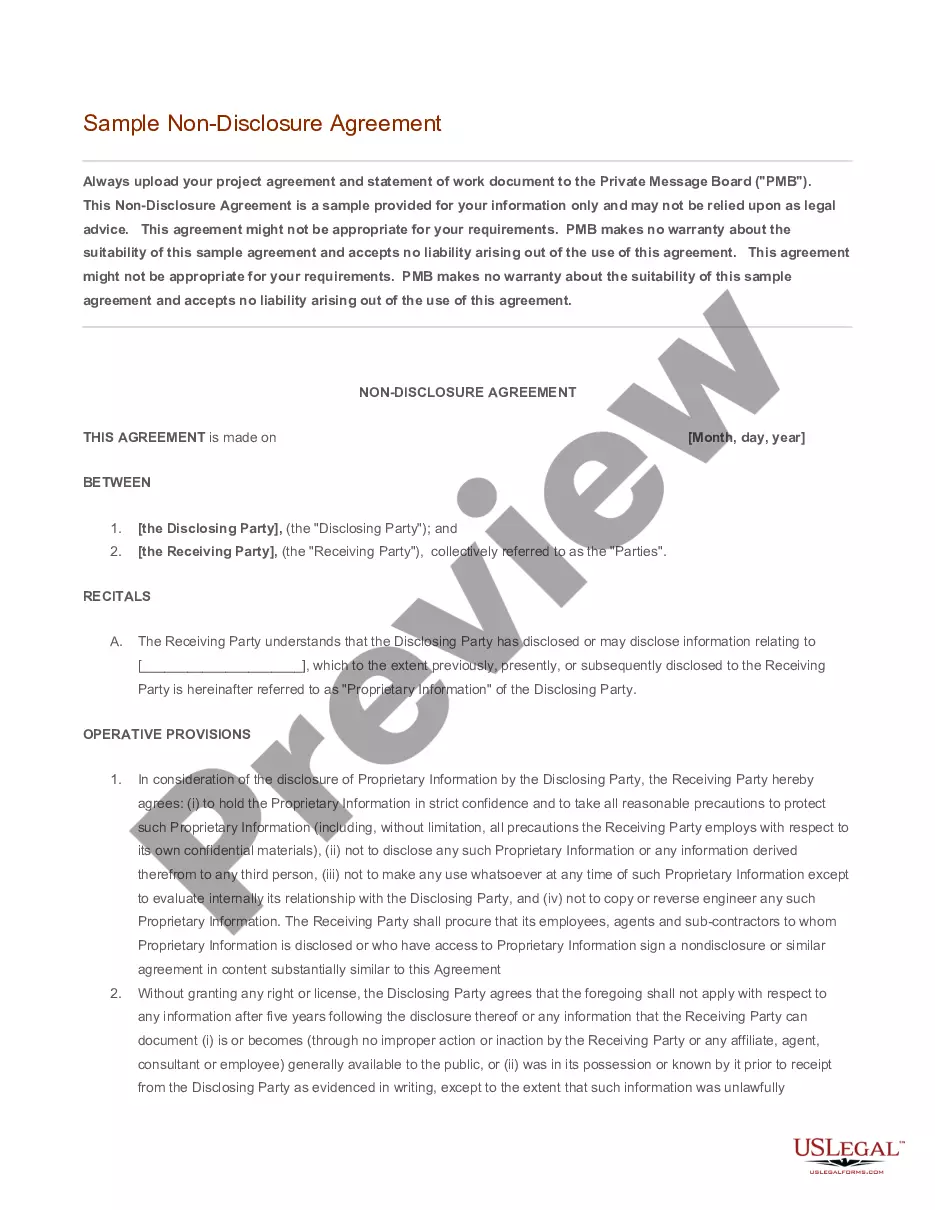
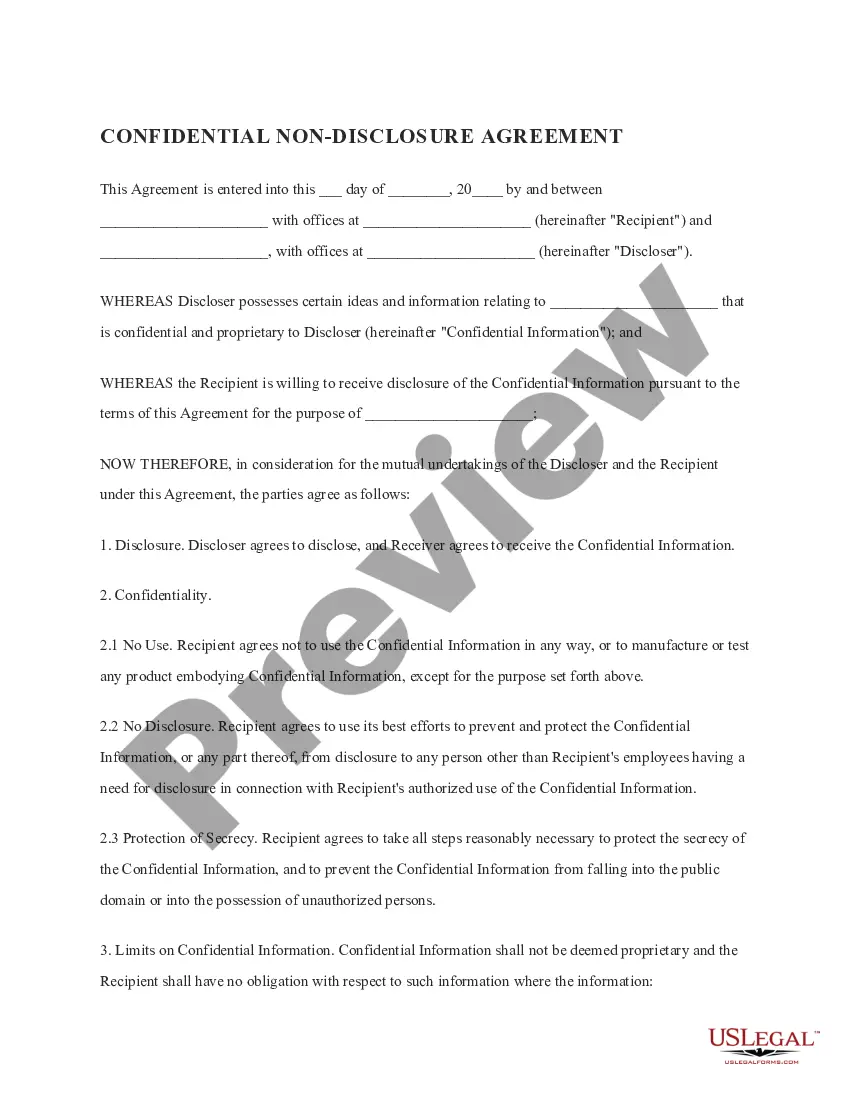
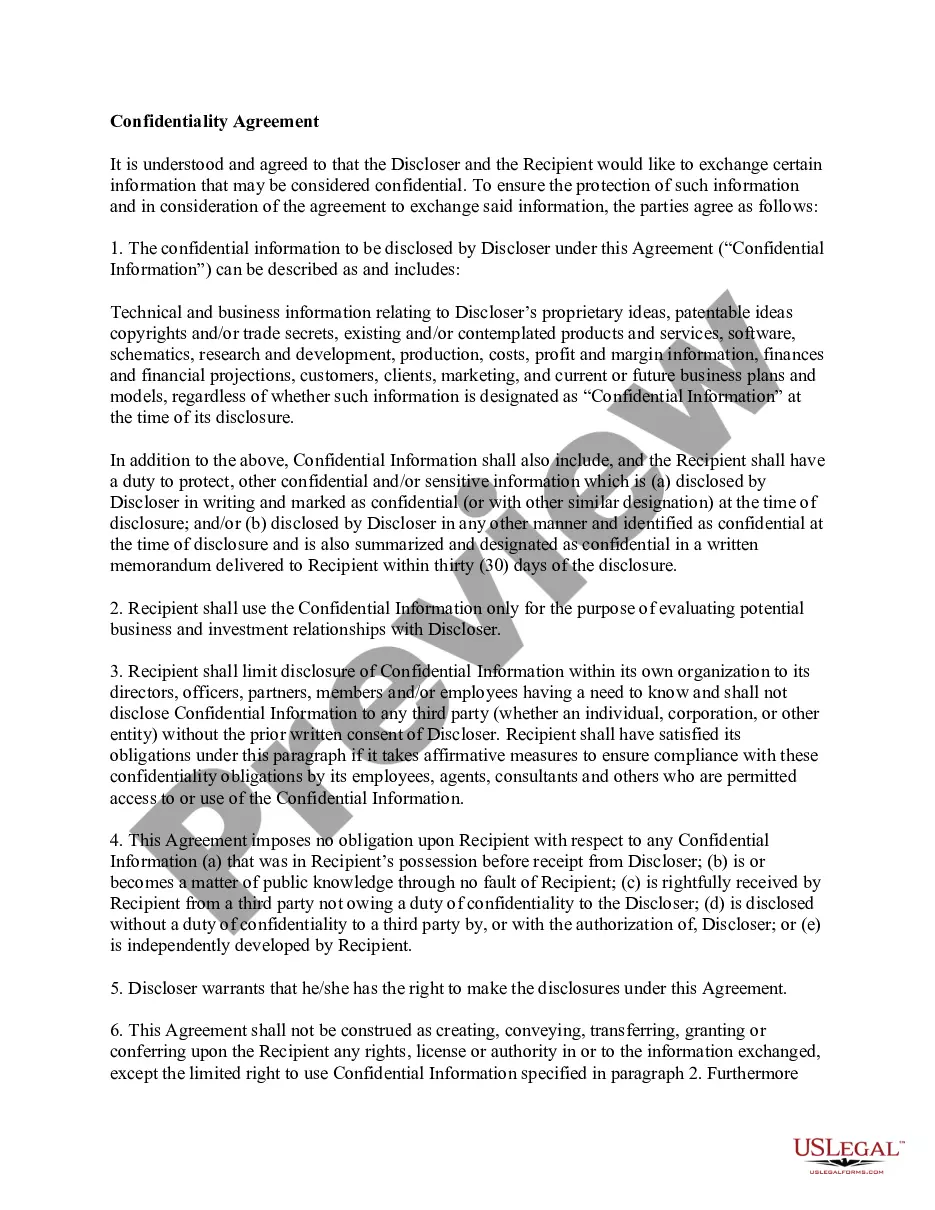
A confidentiality agreement, which is also known as non-disclosure agreement or simply as an NDA, is simply a contract between two or more parties where the subject of the agreement is a promise that information conveyed will be maintained in secrecy.
An NDA creates a confidential relationship between the parties, typically to protect any type of confidential and proprietary information or trade secrets. As such, an NDA protects non-public business information. Like all contracts, they cannot be enforced if the contracted activities are illegal.
Confidentiality agreements usually allow the recipient to disclose confidential information if required to do so by court order or other legal process.
For the purpose of this Law confidential information shall be any form or type of financial, business, scientific, technical, economic or engineering information, including the whole or any portion or phase of any process, procedure, formula, improvement, pattern, plan, design, prototype, code, compilation, program,
To prevent employees from revealing sensitive information that could jeopardize your business, you might have them sign an employee confidentiality agreement. Businesses use employee confidentiality agreements to protect their innovative ideas, effective processes, unique products, or customer information.
1. Confidentiality Agreement is used when a higher degree of secrecy is required. Non-disclosure implies you must not disclose personal or private information. But keeping confidential implies you be more proactive in making sure information is kept secret.
Non-disclosure agreements are essential where the relationship between parties is reliant on a disclosing party being able to divulge its confidential information, with the assurance that the receiving party will neither disclose nor use any of its confidential information for any reason or purpose beyond that agreed
Confidential information is generally defined as information disclosed to an individual employee or known to that employee as a consequence of the employee's employment at a company.Confidential information can include information in any form, such as written documents/records or electronic data.