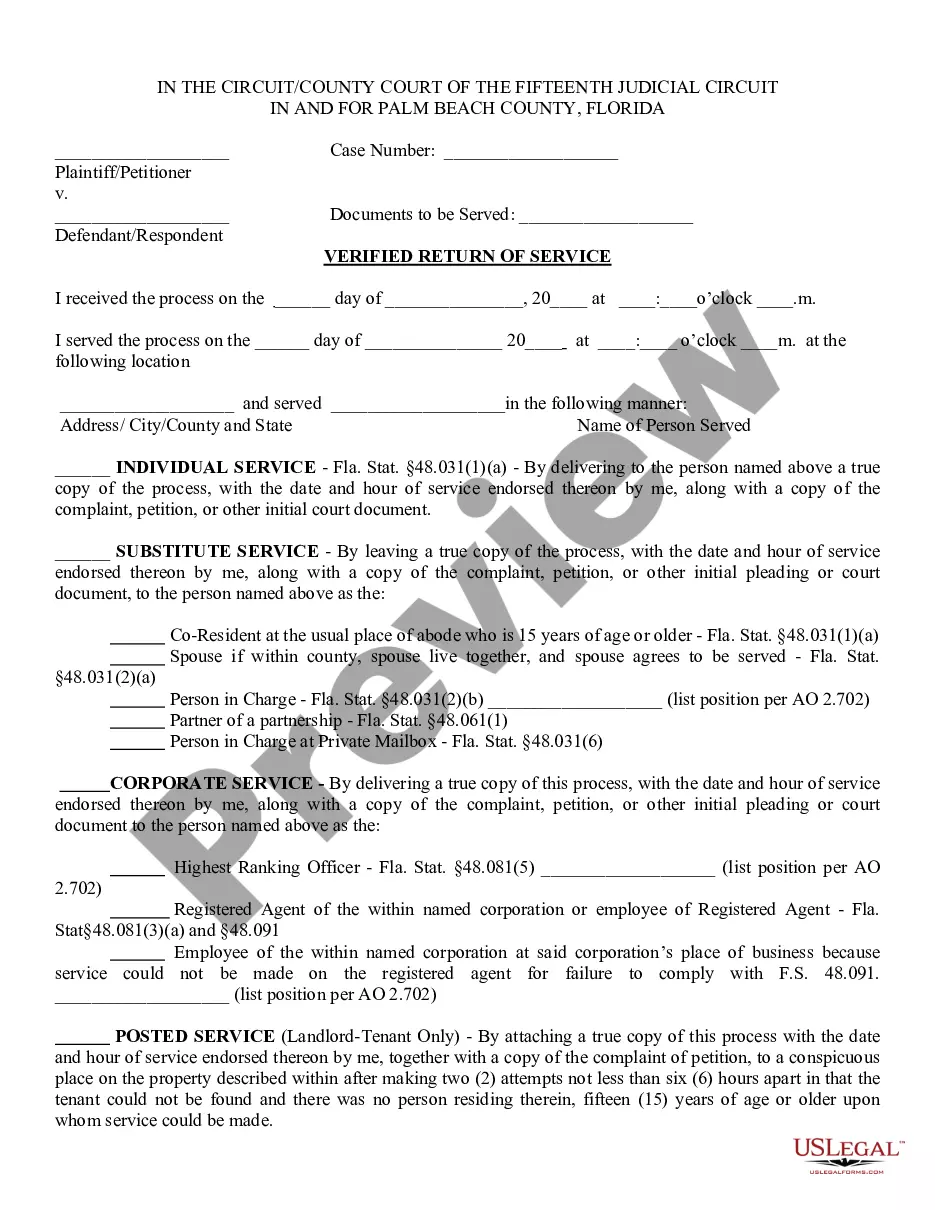
Unanimous Consent to Action by the Board of Trustees of Corporation, in Lieu of meeting, Ratifying Past actions of Officers
Understanding this form
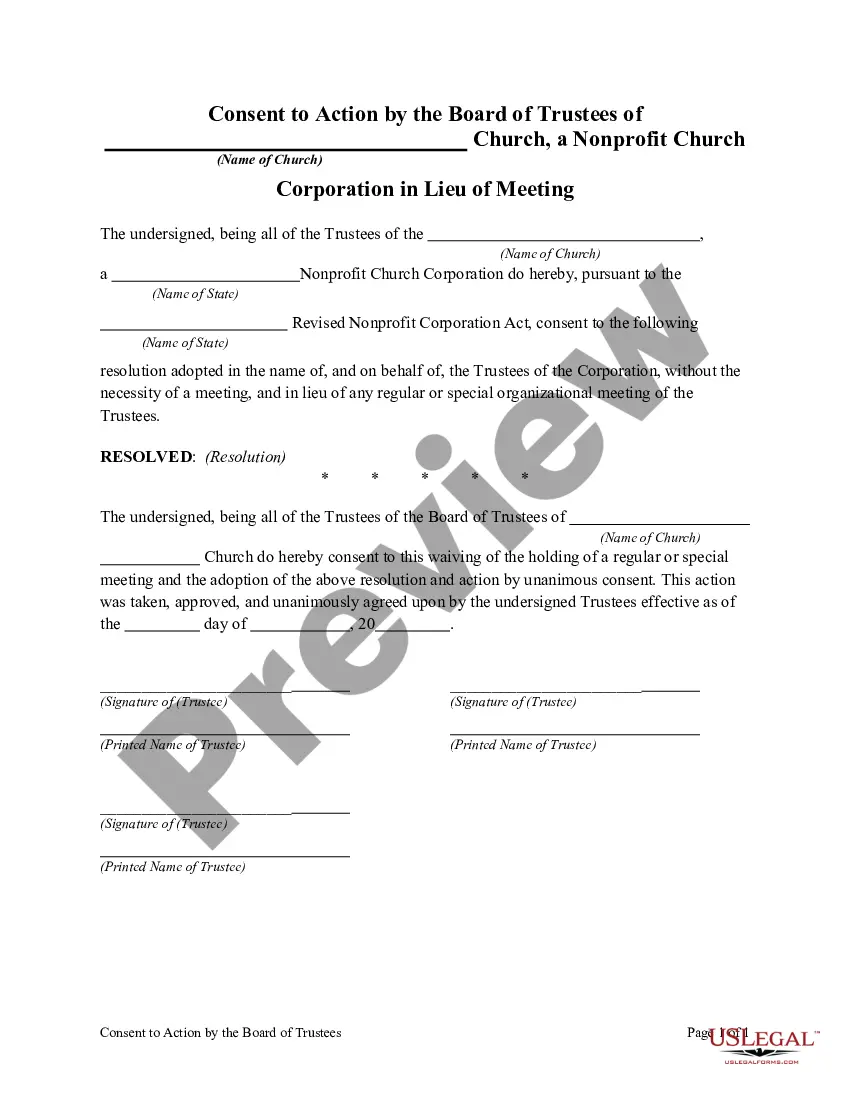
The Unanimous Consent to Action by the Board of Trustees of Corporation allows corporate directors to approve actions without convening a formal meeting. This form is crucial for ratifying past actions taken by officers of the corporation, streamlining decision-making when immediate action is required. It differs from standard meeting minutes by enabling all directors to provide consent in writing without the need for a meeting, ensuring efficient governance in a nonprofit context.
Form components explained
- Identification of the corporation and its board of trustees.
- Explicit waiver of formal meeting requirements.
- Details of prior actions taken by officers that are being ratified.
- Signature block for all consenting board members.
- Date of signatures to indicate when the action is taken.

Situations where this form applies
This form is useful in scenarios where the board of trustees wishes to approve actions taken by corporate officers without holding a formal meeting. Situations may include urgent financial decisions, emergency resolutions, or any circumstance where gathering all trustees in person is impractical or unnecessary.
Who should use this form
- Nonprofit organizations with a board of trustees.
- Corporate secretaries responsible for maintaining official records.
- Directors needing to quickly ratify past decisions.
- Officers who require confirmation of prior actions taken for corporate compliance.
Steps to complete this form
- Identify the corporation by entering its official name and registration details.
- List the actions taken by the officers that require ratification.
- Each board member should sign and date the consent to confirm their approval.
- Ensure all signatures are collected and maintain the document in corporate records.
- Distribute a copy of the completed form to all board members for their records.
Is notarization required?
Notarization is not commonly needed for this form. However, certain documents or local rules may make it necessary. Our notarization service, powered by Notarize, allows you to finalize it securely online anytime, day or night.
Get your form ready online
Our built-in tools help you complete, sign, share, and store your documents in one place.
Make edits, fill in missing information, and update formatting in US Legal Forms—just like you would in MS Word.
Download a copy, print it, send it by email, or mail it via USPS—whatever works best for your next step.
Sign and collect signatures with our SignNow integration. Send to multiple recipients, set reminders, and more. Go Premium to unlock E-Sign.
If this form requires notarization, complete it online through a secure video call—no need to meet a notary in person or wait for an appointment.
We protect your documents and personal data by following strict security and privacy standards.

Make edits, fill in missing information, and update formatting in US Legal Forms—just like you would in MS Word.

Download a copy, print it, send it by email, or mail it via USPS—whatever works best for your next step.

Sign and collect signatures with our SignNow integration. Send to multiple recipients, set reminders, and more. Go Premium to unlock E-Sign.

If this form requires notarization, complete it online through a secure video call—no need to meet a notary in person or wait for an appointment.

We protect your documents and personal data by following strict security and privacy standards.
Avoid these common issues
- Failing to include all required signatures from directors.
- Not dating the consent forms, which may lead to confusion about when decisions were made.
- Omitting specific details about the actions taken, which can impact transparency.
- Using vague language that does not clearly state the actions ratified.
Why complete this form online
- Convenient access to templates designed by licensed attorneys.
- Editable forms that allow for quick customization to suit specific needs.
- Reliable and up-to-date legal documents compliant with current laws.
What to keep in mind
- The Unanimous Consent form streamlines the ratification of actions by directors without a formal meeting.
- It must be signed by all directors to be valid.
- Ensure compliance with state-specific requirements for corporate governance.
Looking for another form?
Form popularity
FAQ
Passing the resolution at a meeting where a quorum has been met. A quorum is the minimum number of members required for the meeting to be valid. Passing the resolution with necessary written consent. Passing the resolution with unanimous written consent.
This might be a member of the board of directors, the company owner, or someone else with authority, such as a chief executive officer or president. When an individual agrees to or confirms the action being taken by the business, this is referred to as "ratification" in law.
The Unanimous in Unanimous Written Consent reflects the fact that board of director consents typically must be approved by all board members. See, e.g., California Corporations Code Section 307(b) and Delaware General Corporation Law Section 141(f).
Shareholder action by written consent refers to corporate shareholders' right to act by written consent instead of a meeting. This type of consent avoids some of the negative characteristics of shareholder meetings.Shareholder action by written consent is also known as: Shareholders' Consent to Action Without Meeting.
When a group or a decision is unanimous, it means that everyone is in total agreement.The adjective unanimous comes from the similar Latin word unanimus, which means of one mind. So when people think unanimously, they all have the same idea in their heads. A vote is unanimous when all voters are in agreement.
Unanimous resolution means a resolution which is unanimously passed at a duly convened general meeting of a body corporate at which all persons entitled to exercise the powers of voting conferred by or under this Act are present personally or by proxy or vote in writing at the time of the motion.
When a board resolution is passed by a simple majority, it is called an ordinary resolution. Votes cast in favor are more than the ones against. A resolution with a majority of just over 50% of the quorum is considered passed. For example, 6 'yes' votes out of 10 are considered a majority.
Directors' decisions made by written resolution must be unanimous. This means that all eligible directors, i.e. those entitled to vote, must vote for the same view on a matter.All eligible directors must either sign copies of the written resolution, or otherwise agree to it in writing.