Delaware Landlord Agreement to allow Tenant Alterations to Premises
What this document covers
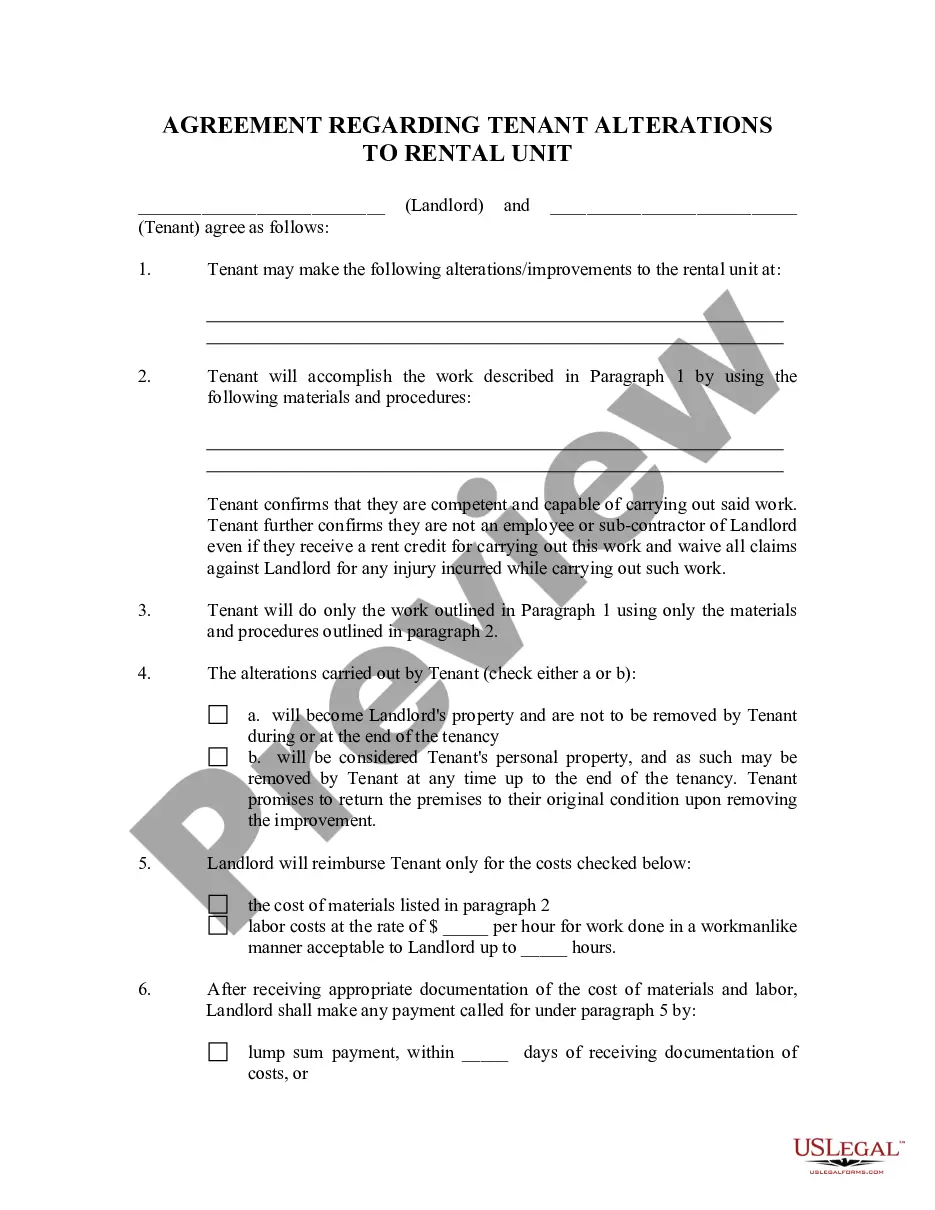
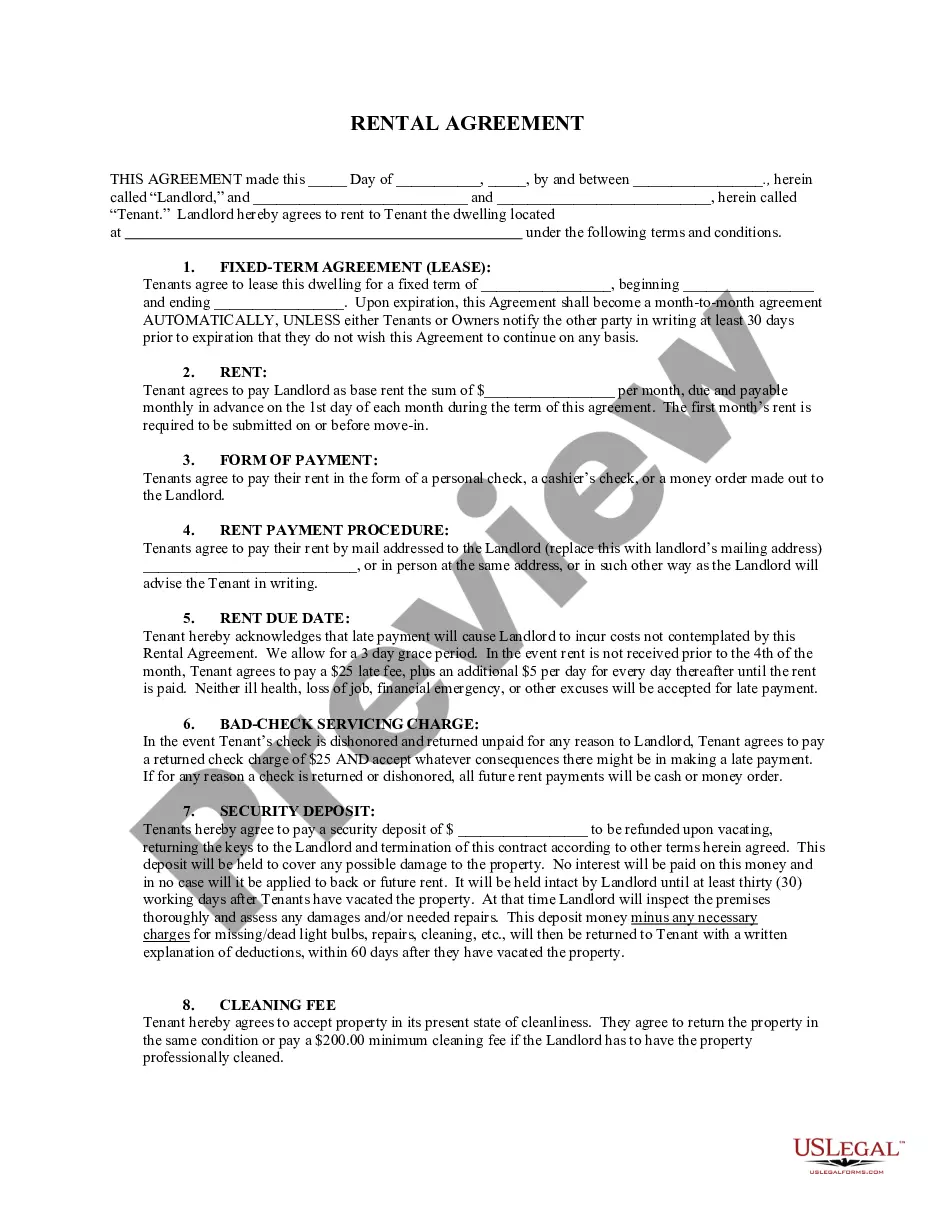
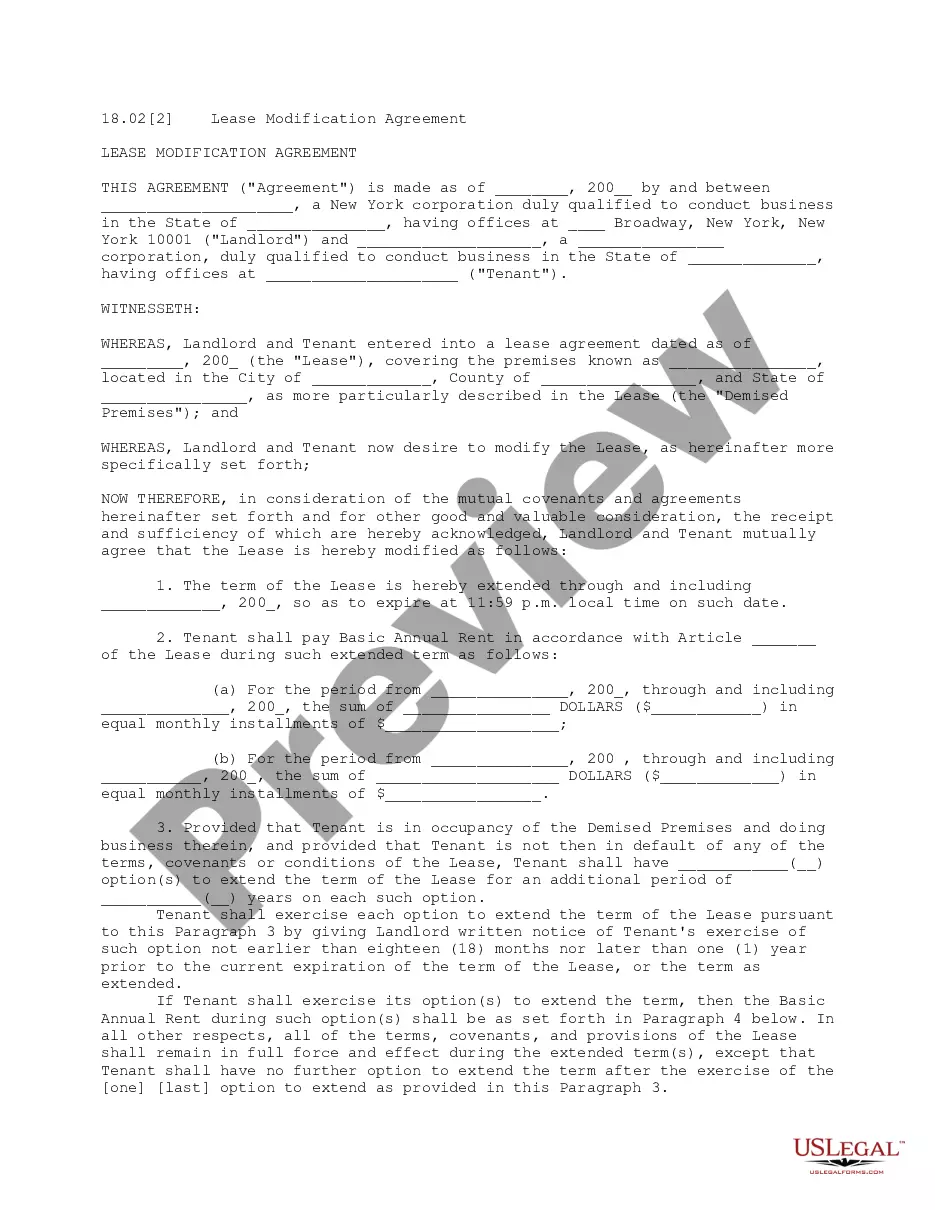
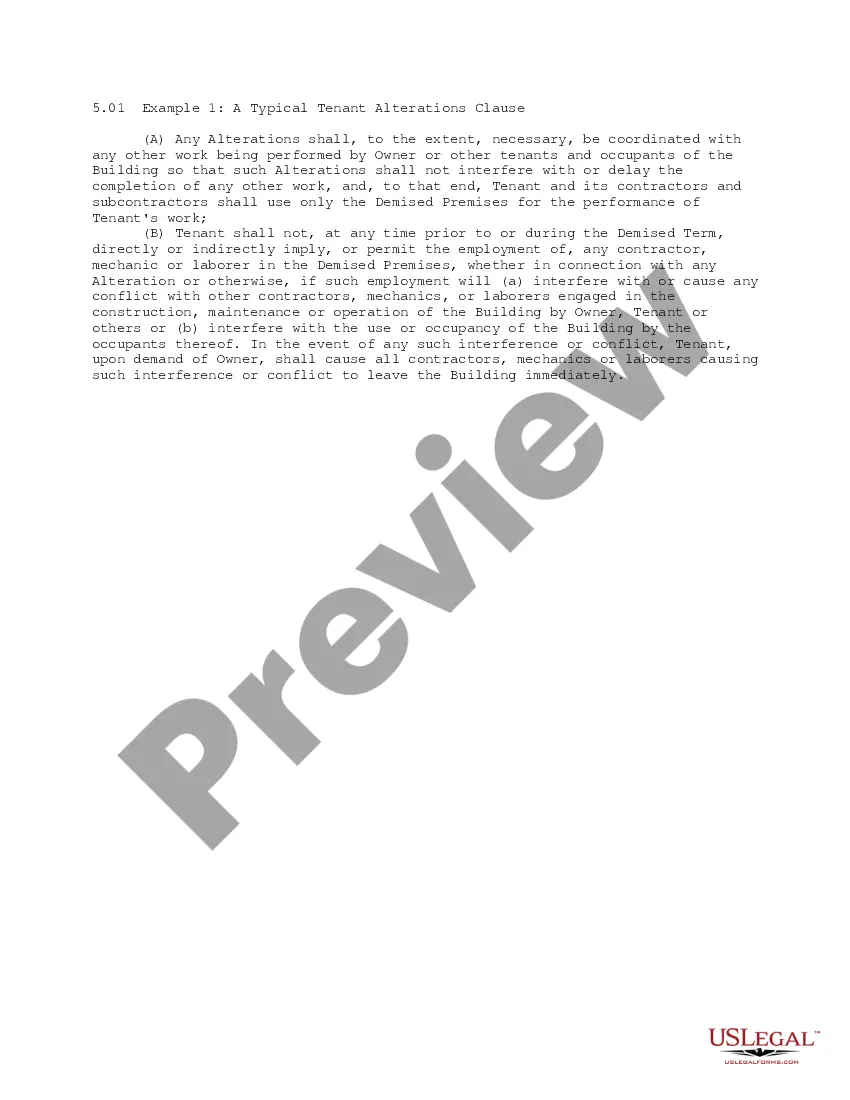
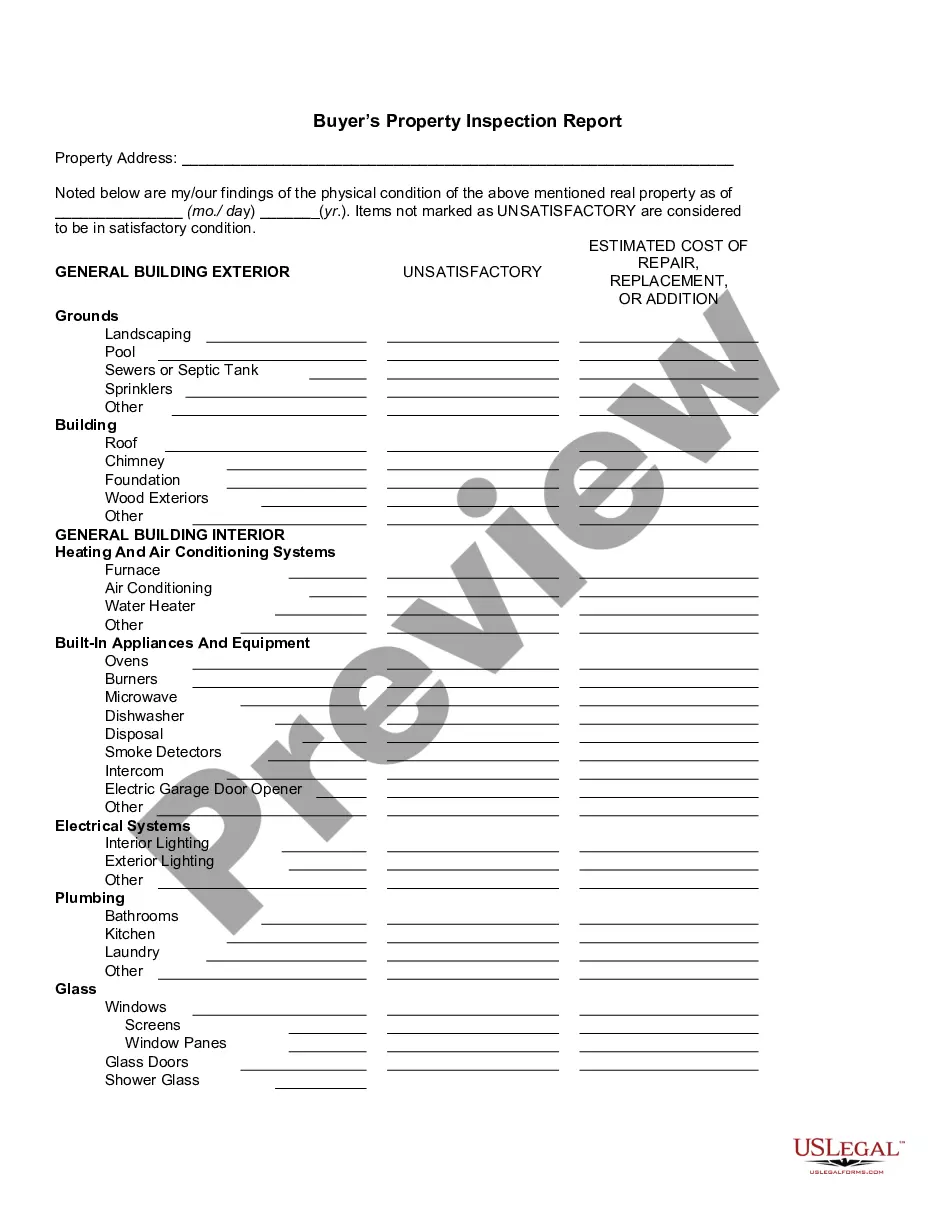
The Landlord Agreement to allow Tenant Alterations to Premises is a legal document that formalizes an agreement between a landlord and a tenant regarding modifications the tenant wants to make to a rented property. This form clarifies responsibilities for payment and ownership of alterations, ensuring smooth communication and minimizing potential disputes about property changes. It differs from other rental agreements by focusing specifically on tenant improvements and alterations to the premises.
Main sections of this form
- Identifies the landlord and tenant involved in the agreement.
- Outlines specific alterations or improvements the tenant is permitted to make.
- Defines whether the alterations will be considered landlord's property or tenant's personal property.
- Details reimbursement arrangements for the cost of materials and labor.
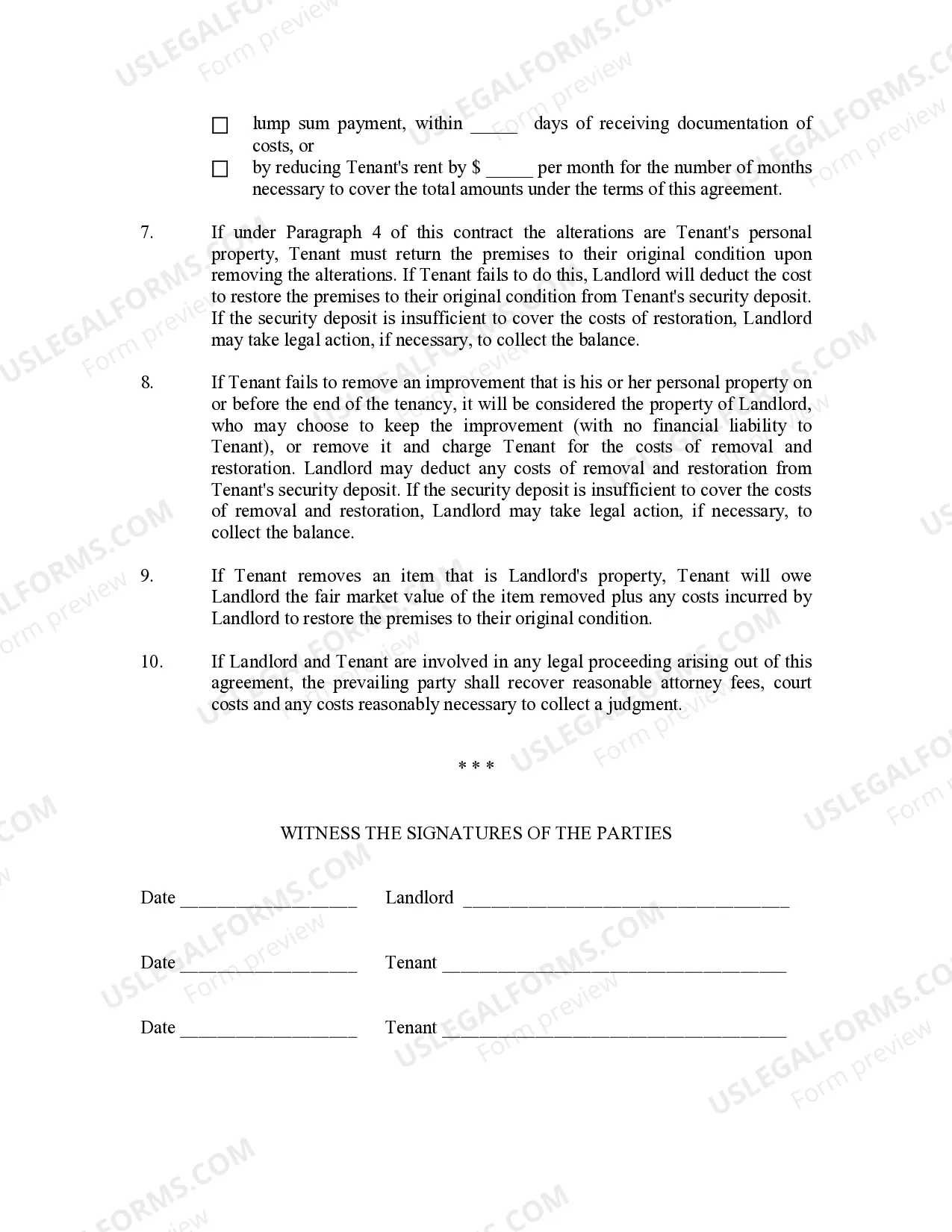
- Establishes conditions for returning the property to its original state upon tenant's departure.
- Defines responsibilities for removal or restoration of alterations at the end of tenancy.
When to use this form
This form should be used when a tenant wishes to make alterations or improvements to a rental property and the landlord needs clear guidelines in writing. It is especially important when significant changes are proposed, as it helps prevent misunderstandings about property ownership, cost responsibilities, and the conditions under which alterations may be removed or retained.
Who this form is for
- Landlords who are granting permission for tenants to modify rental spaces.
- Tenants seeking to make changes to their rented premises.
- Real estate agents or property managers who need to document tenant improvements.
How to complete this form
- Identify and enter the names of the landlord and tenant at the beginning of the form.
- Specify the alterations or improvements the tenant is permitted to make.
- Choose whether the alterations will be treated as landlord's property or tenant's personal property.
- Detail the reimbursement amount for materials and labor if applicable.
- Enter the timeframe for any required payments related to the alterations.
- Ensure all parties sign and date the agreement to validate it.
Does this document require notarization?
This form does not typically require notarization to be legally valid. However, some jurisdictions or document types may still require it. US Legal Forms provides secure online notarization powered by Notarize, available 24/7 for added convenience.
Get your form ready online
Our built-in tools help you complete, sign, share, and store your documents in one place.
Make edits, fill in missing information, and update formatting in US Legal Forms—just like you would in MS Word.
Download a copy, print it, send it by email, or mail it via USPS—whatever works best for your next step.
Sign and collect signatures with our SignNow integration. Send to multiple recipients, set reminders, and more. Go Premium to unlock E-Sign.
If this form requires notarization, complete it online through a secure video call—no need to meet a notary in person or wait for an appointment.
We protect your documents and personal data by following strict security and privacy standards.

Make edits, fill in missing information, and update formatting in US Legal Forms—just like you would in MS Word.

Download a copy, print it, send it by email, or mail it via USPS—whatever works best for your next step.

Sign and collect signatures with our SignNow integration. Send to multiple recipients, set reminders, and more. Go Premium to unlock E-Sign.

If this form requires notarization, complete it online through a secure video call—no need to meet a notary in person or wait for an appointment.

We protect your documents and personal data by following strict security and privacy standards.
Avoid these common issues
- Failing to clearly outline the specific alterations allowed.
- Not defining the property ownership status of the alterations.
- Leaving out signatures or dates from involved parties.
- Overlooking reimbursement details, leading to misunderstandings about costs.
Benefits of completing this form online
- Convenience of downloading and completing at your own pace.
- Editability to customize the agreement to fit specific needs.
- Access to attorney-drafted templates, ensuring legal validity.
- Secure and reliable storage options for your completed forms.
Looking for another form?
Form popularity
FAQ
Section 5106 of the Delaware landlord-tenant code deals with the rights of tenants to make modifications for health or safety reasons. This section affirms the importance of maintaining a habitable environment. By incorporating a Delaware Landlord Agreement to allow Tenant Alterations to Premises, both parties can ensure all modifications meet legal standards.
The 50% rule in rental property generally states that if a tenant makes alterations that significantly increase the value of a property, those alterations may exceed 50% of the property's original value. This guideline can affect how landlords handle alterations. A Delaware Landlord Agreement to allow Tenant Alterations to Premises can help clarify the implications of this rule.
Section 5514 of the Delaware landlord/tenant code addresses the procedures for tenant alterations and improvements. This section highlights the rights and obligations surrounding alterations made by tenants. For security and clarity, referencing this section in a Delaware Landlord Agreement to allow Tenant Alterations to Premises can be beneficial.
The no alterations clause in a lease explicitly prohibits tenants from making any changes to the property without the landlord's consent. This clause protects landlords from unwanted modifications that may affect property value or safety. Utilizing a Delaware Landlord Agreement to allow Tenant Alterations to Premises can help negotiate mutually beneficial terms.
In a lease context, alterations pertain to changes that a tenant wishes to make to the rental unit. The lease agreement often outlines which alterations require landlord approval. A well-structured Delaware Landlord Agreement to allow Tenant Alterations to Premises helps clarify the extent of permissible modifications.
In real estate, alteration refers to any modification to the original structure or design of a property. This can encompass improvements, repairs, or adjustments made by a tenant. Understanding alterations in the context of the Delaware Landlord Agreement to allow Tenant Alterations to Premises is crucial for both parties to avoid disputes.
An alteration to a rental property typically includes any physical change made to the premises, such as painting walls, installing new fixtures, or modifying layout. These changes often require a Delaware Landlord Agreement to allow Tenant Alterations to Premises to ensure compliance with lease terms. Such agreements clarify the responsibilities of both landlords and tenants regarding alterations.
Section 5513 of the Delaware Landlord Tenant Code outlines the requirements for a Delaware Landlord Agreement to allow Tenant Alterations to Premises. This section ensures that tenants can make certain alterations to their living spaces, provided they receive prior written consent from their landlords. It balances the rights of tenants to personalize their homes with the need for landlords to protect their property. Understanding this section is crucial for both landlords and tenants to operate within legal boundaries and maintain a harmonious rental relationship.
In Delaware, landlords can raise rent as they see fit, as there are no statewide rent control laws. However, it is important to check your lease agreement for any stipulations regarding rent increases. Always communicate with your landlord to ensure that any changes align with your agreement. A well-structured Delaware Landlord Agreement to allow Tenant Alterations to Premises may also provide clarity on rent adjustments and help maintain a good landlord-tenant relationship.
In Delaware, a landlord must return a security deposit within 20 days of the lease termination. Additionally, landlords must provide an itemized list of any deductions taken from the deposit. Knowing your rights regarding the security deposit is vital for a smooth transition when you move out. Having a detailed Delaware Landlord Agreement to allow Tenant Alterations to Premises can safeguard your deposit and clarify repair responsibilities.