Employment Verification Letter for Green Card
Overview of this form
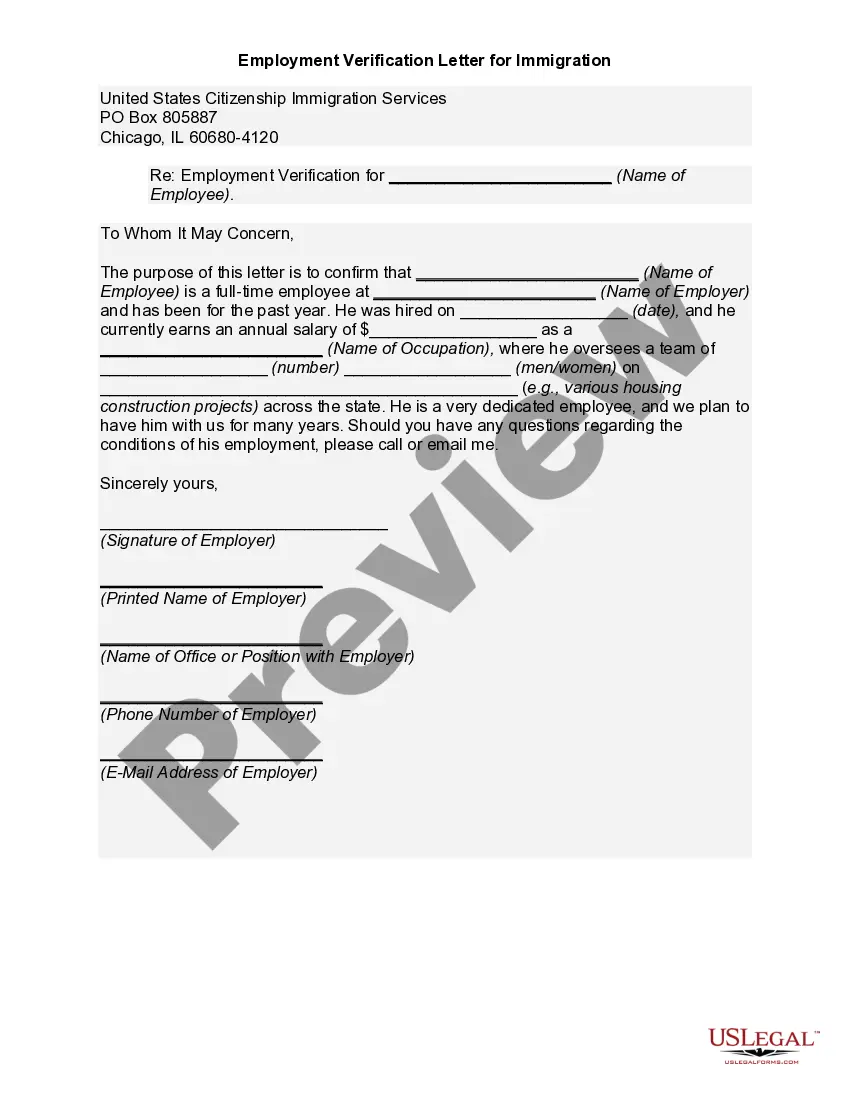
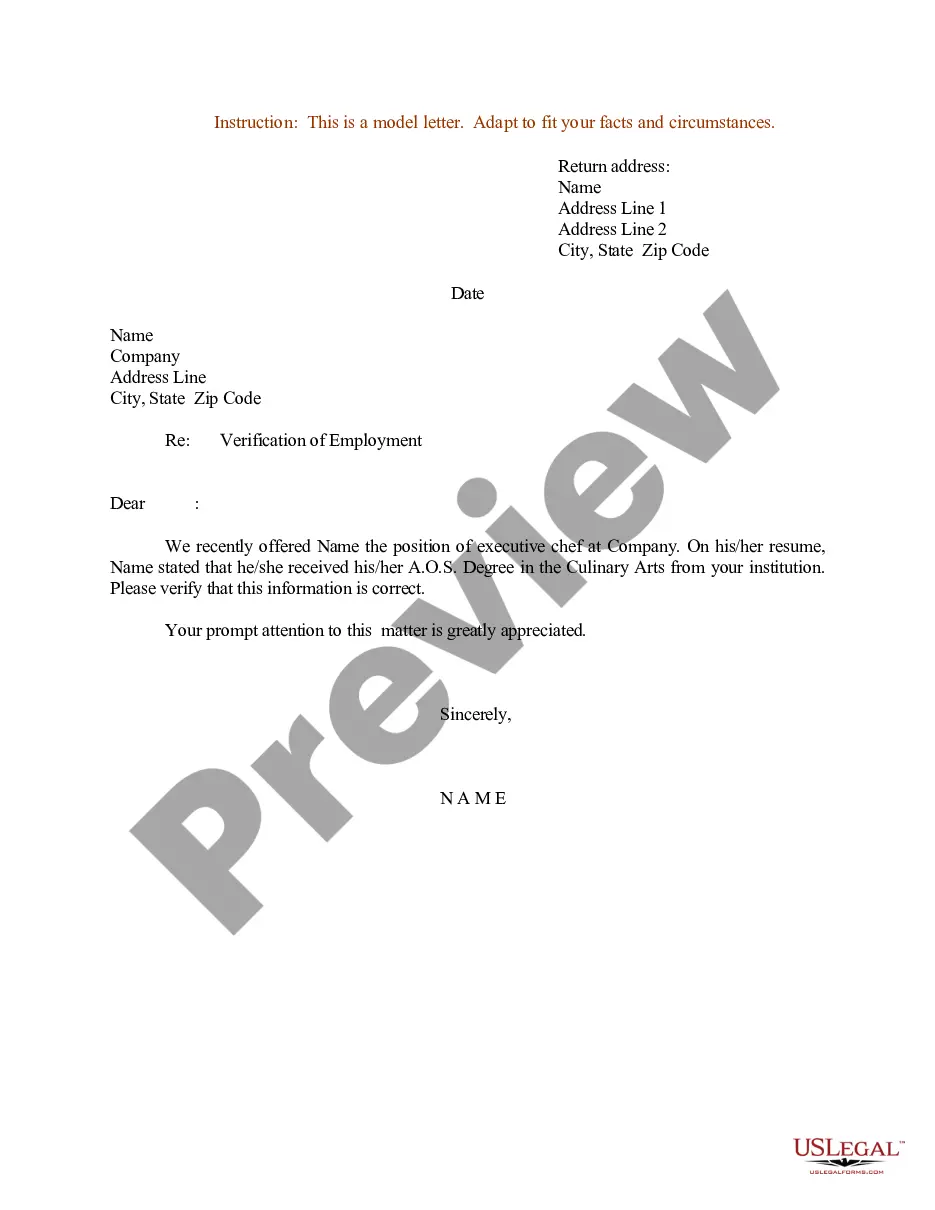
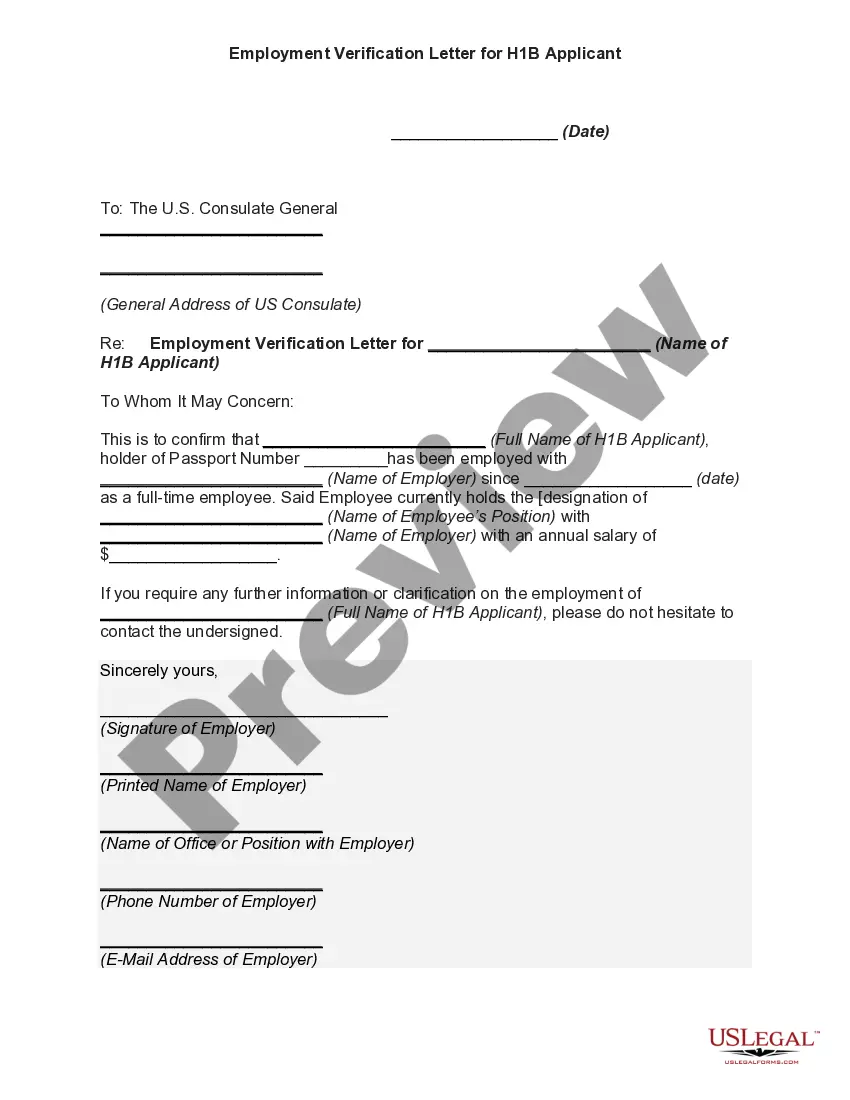
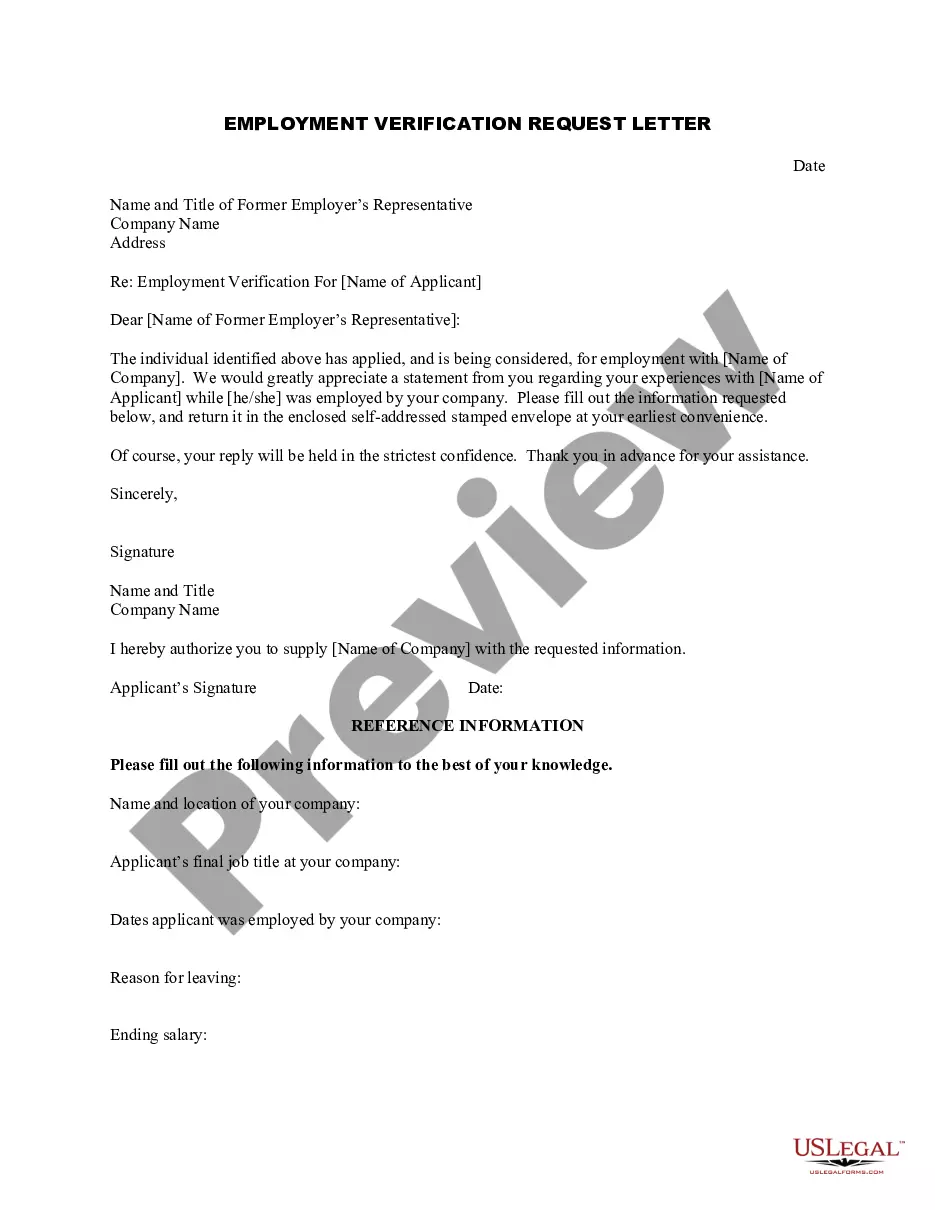
The Employment Verification Letter for Green Card is a formal document that outlines an individual's employment status and details. This letter is often required by U.S. Citizenship and Immigration Services (USCIS) as part of the immigration process for obtaining a green card. It serves as proof of employment and may differ from other verification letters by specifically addressing immigration requirements.
Key components of this form
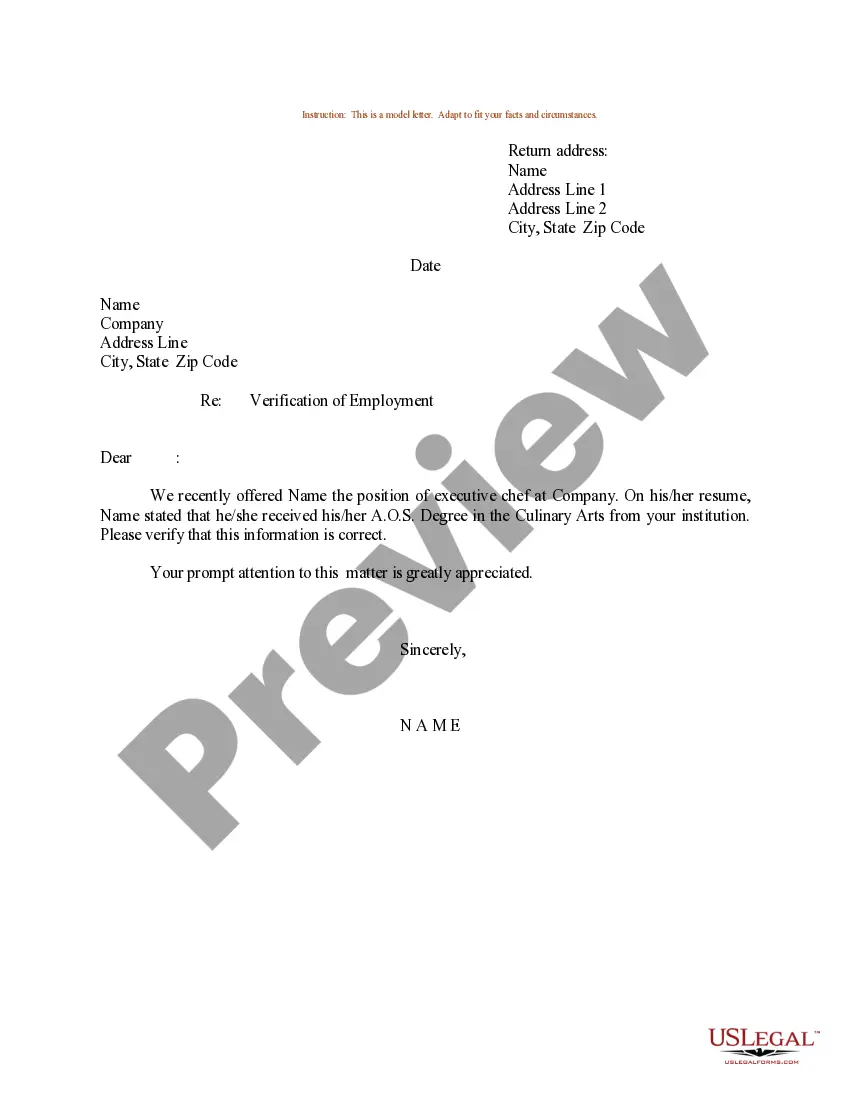
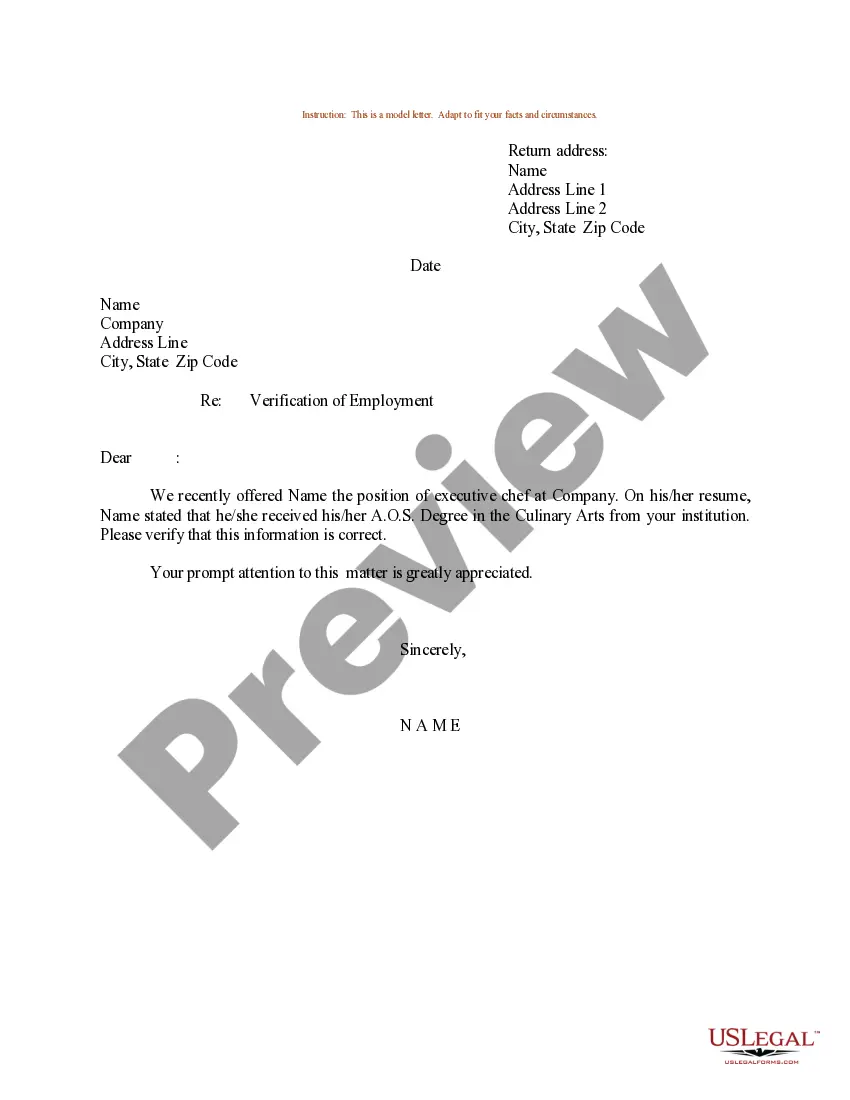
- Return address: Clearly includes the employer's address.
- Date: The date the letter is issued.
- Recipient's information: The name and address of the person or organization receiving the letter.
- Subject line: Clearly states the purpose of the letter.
- Body: Contains a statement verifying the employee's job title, salary, and employment duration.
- Signature: Signed by an authorized representative of the company.
Situations where this form applies
This form should be used when an employee is applying for a green card and needs to prove their employment status as part of their application. It is typically required during the adjustment of status process or when an employee is seeking to change their immigration status. Employers may also need this letter when responding to requests from USCIS for additional evidence of employment.
Who needs this form
The following individuals or parties should utilize this form:
- Employers seeking to provide verification for current or past employees.
- Employees in the process of applying for a green card who need to provide evidence of employment.
- Human resources representatives needing to document employee status for immigration purposes.
How to prepare this document
- Identify the employer and employee details: Include the names and addresses of both parties.
- Specify the date of the letter: Clearly write the date on which the letter is issued.
- Outline employment specifics: Include the job title, salary, and duration of employment in the body of the letter.
- Address the letter to the appropriate entity: Write the recipient's name and address.
- Include a closing and signature: Conclude the letter with a polite closing, and have it signed by an authorized representative.
Does this document require notarization?
This form does not typically require notarization unless specified by local law. However, ensuring the letter is on company letterhead and signed by an authorized representative is crucial for its validity.
Get your form ready online
Our built-in tools help you complete, sign, share, and store your documents in one place.
Make edits, fill in missing information, and update formatting in US Legal Forms—just like you would in MS Word.
Download a copy, print it, send it by email, or mail it via USPS—whatever works best for your next step.
Sign and collect signatures with our SignNow integration. Send to multiple recipients, set reminders, and more. Go Premium to unlock E-Sign.
If this form requires notarization, complete it online through a secure video call—no need to meet a notary in person or wait for an appointment.
We protect your documents and personal data by following strict security and privacy standards.

Make edits, fill in missing information, and update formatting in US Legal Forms—just like you would in MS Word.

Download a copy, print it, send it by email, or mail it via USPS—whatever works best for your next step.

Sign and collect signatures with our SignNow integration. Send to multiple recipients, set reminders, and more. Go Premium to unlock E-Sign.

If this form requires notarization, complete it online through a secure video call—no need to meet a notary in person or wait for an appointment.

We protect your documents and personal data by following strict security and privacy standards.
Common mistakes
- Failing to include essential employment details such as job title and salary.
- Not addressing the letter to the specific recipient or organization.
- Leaving out the signature of an authorized company representative.
- Neglecting to write the letter on company letterhead.
Benefits of completing this form online
- Convenience: Download and complete the form from anywhere at any time.
- Editability: Easily customize the letter to fit specific employment scenarios and needs.
- Reliability: The form is drafted by licensed attorneys, ensuring it meets legal standards and requirements.
Looking for another form?
Form popularity
FAQ
The FBI fingerprint checks typically take between 24 and 48 hours. If your fingerprints show you have a criminal record, a full report which contains your full criminal history (known as the RAP sheet) will be sent to the USCIS. Your fingerprints will be valid for 15 months from the date of processing by the FBI.
USCIS doesn't check USPS records. Is the new place in the same district area? If it is, your residency ties carry over. If you're moving to another district area , you'll have to reestablish residency for at least 90 days before you can apply, regardless of if you use a PO box in between moves.
Ask your supervisor or manager. Contact Human Resources. Get a template from the company or organization requesting the letter. Use an employment verification service.
Employment start date. Current employment status (full time, part time) Title or position. Annual salary or hourly wage.
Questions From the USCIS Officer The job of the USCIS officer during the interview is to decide whether you are eligible for citizenship.Moreover, the officer might have information about you from sources other than what you provided in your applicationassume that USCIS knows almost everything about you!
Actually speaking they do not verify your employment history. If they suspect that something g they will issue an RFE ask the petitioner to provide evidence. They have a department that does deep background check on you.
First, fill out an employment verification form. Second, draft a short letter of consent, if necessary. Next, provide a list of all required details. Last, include your contact information and complete your request.
If the unlawful job involves filing a tax document like a Form 1099, the USCIS may find out through your income tax. While this is the jurisdiction of the IRS, the USCIS can simply request the information from them.
Employment start date. Current employment status (full time, part time) Title or position. Annual salary or hourly wage.