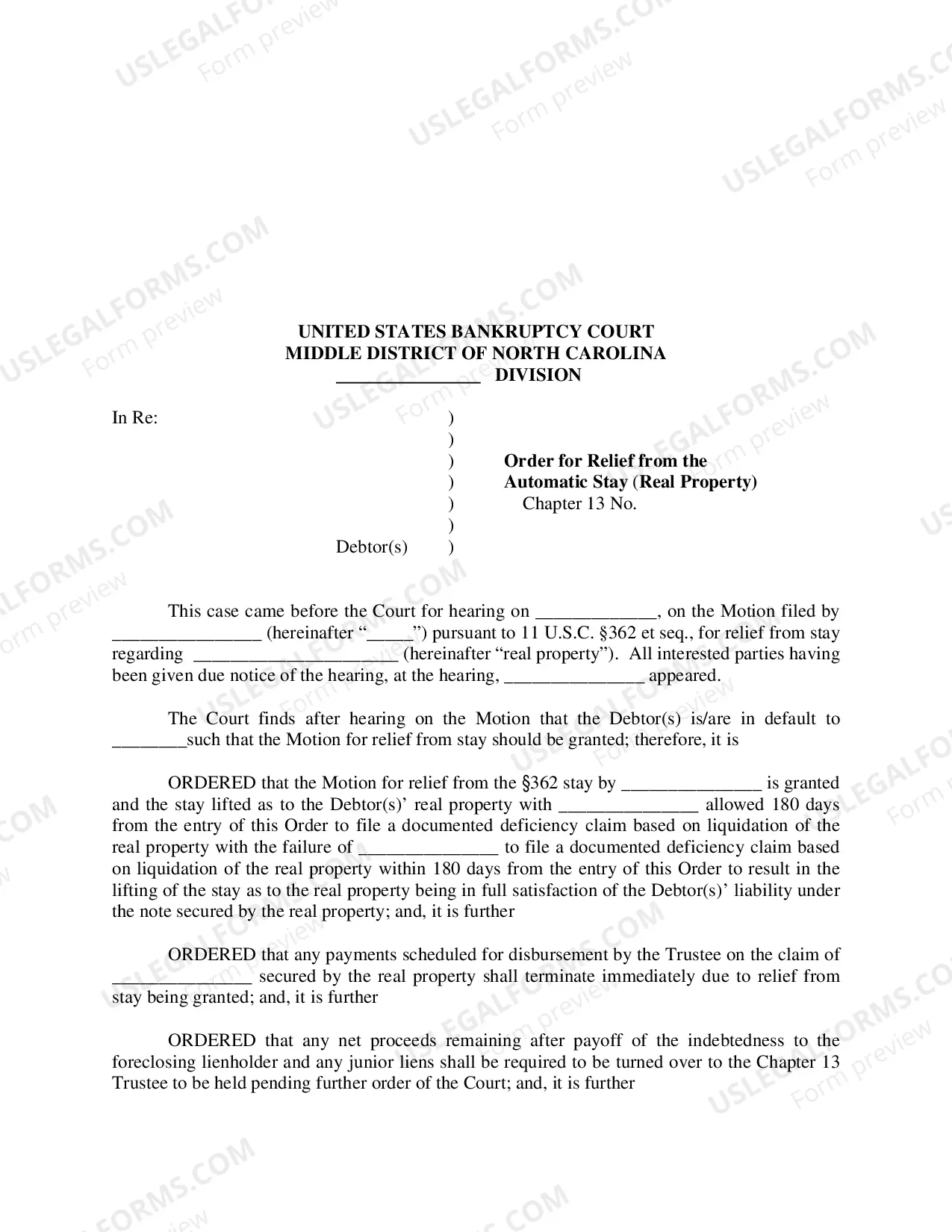
Nebraska Right of First Refusal
About this form
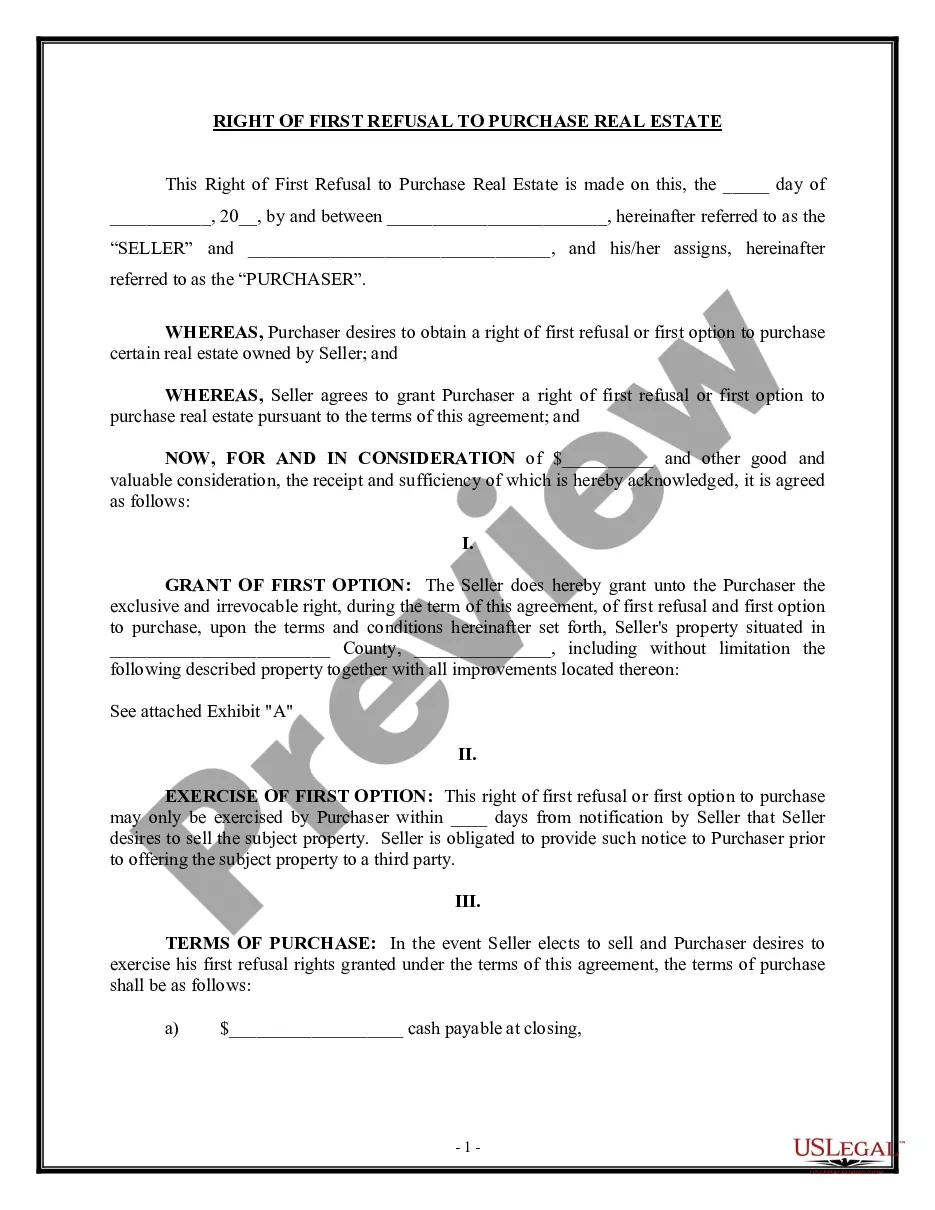
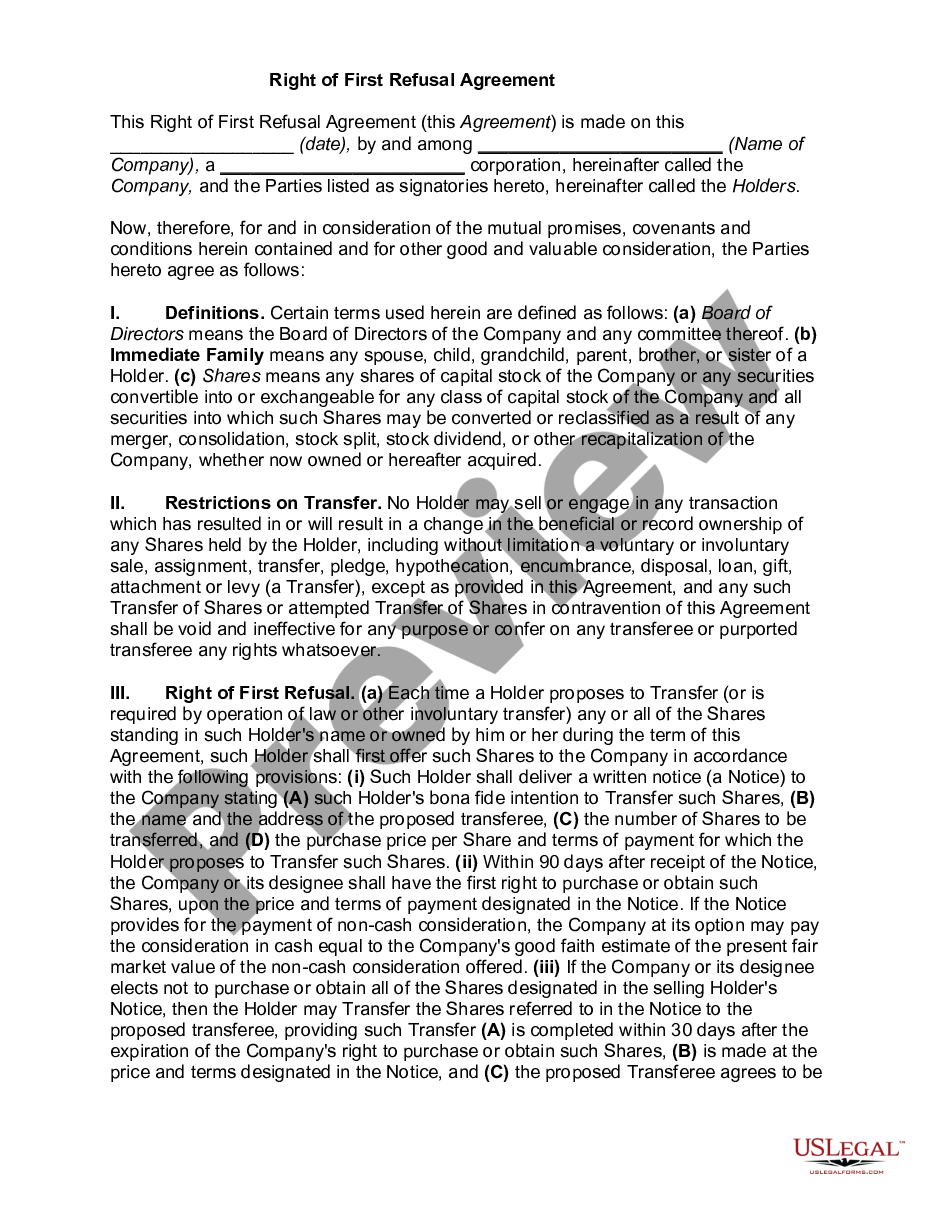
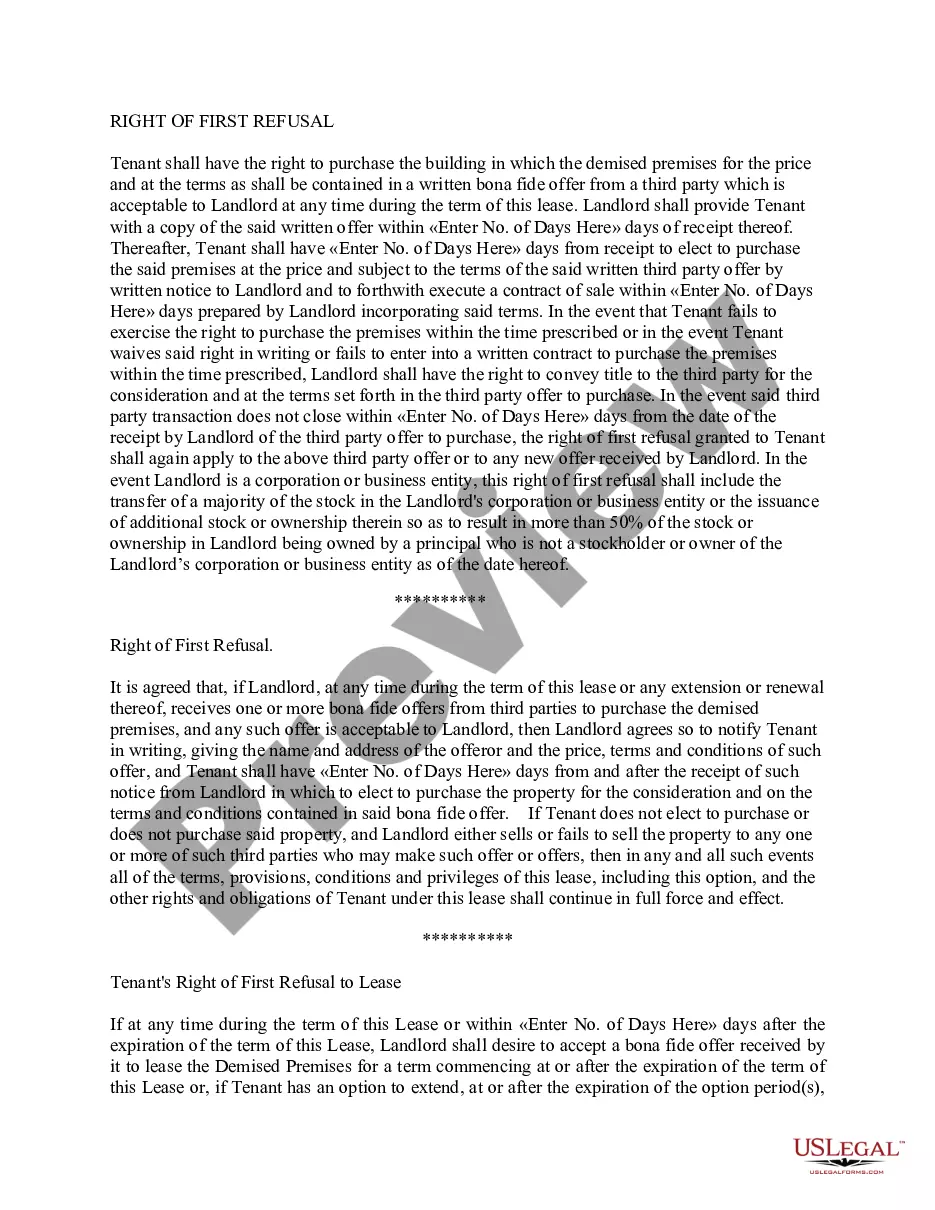
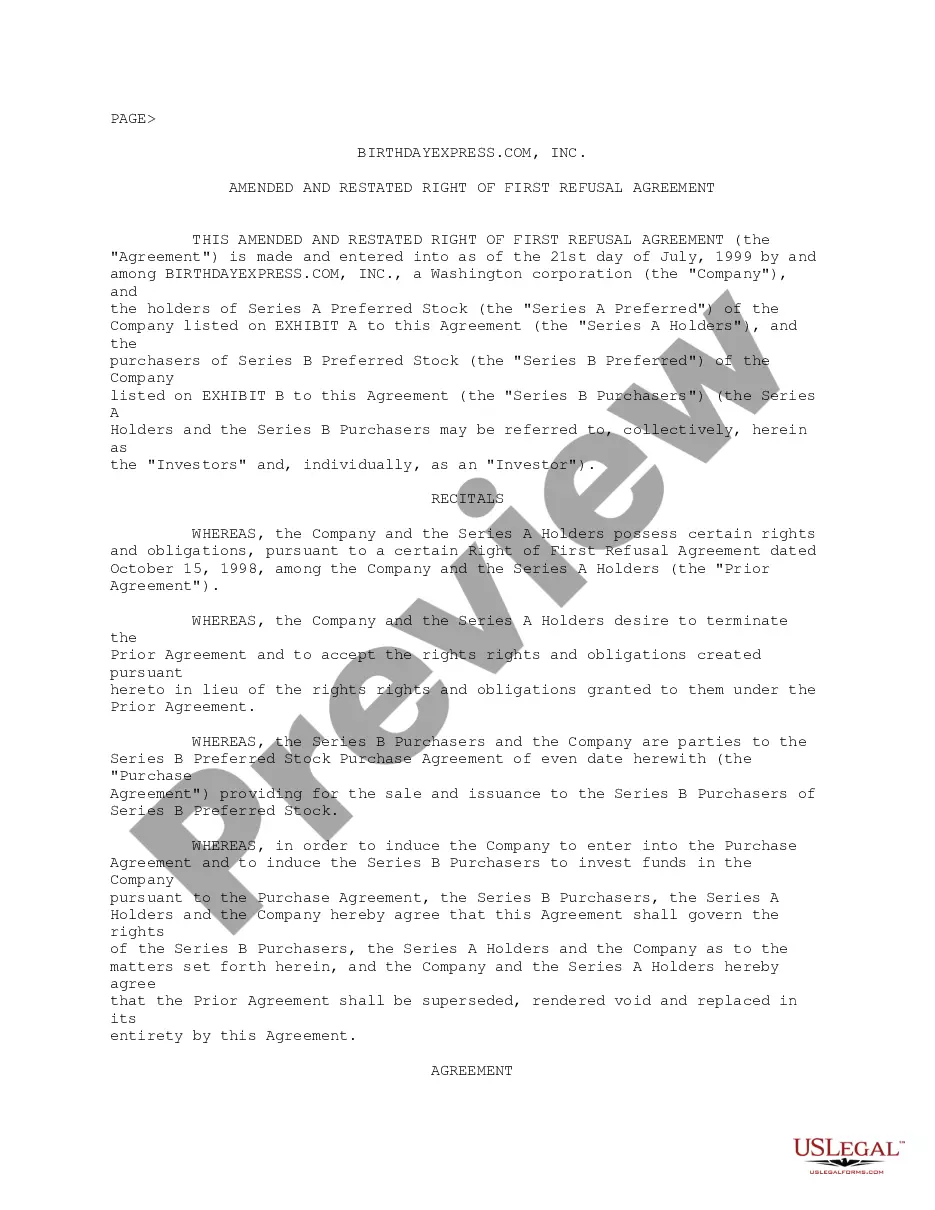
The Right of First Refusal form provides a legal agreement that grants an individual the priority to purchase a property before the owner can sell it to anyone else. This form differs from a simple purchase agreement as it specifically outlines terms for the existing party to have the first chance at buying the property, fostering trust and clarity in real estate transactions.
Key components of this form
- Identification of the Grantor (property owner) and Grantee (individual receiving the right).
- Specific description of the real estate subject to the right of first refusal.
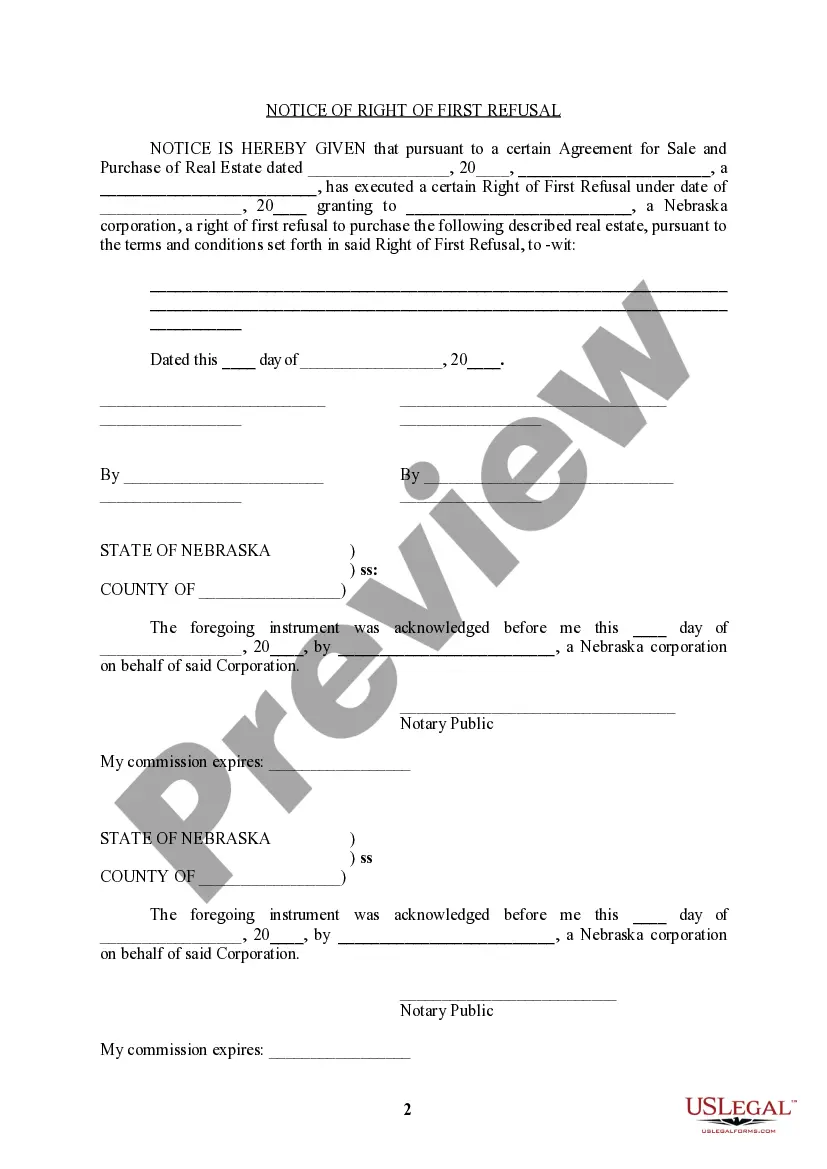
- Written notice requirement before selling the property.
- Defined time frame for the Grantee to exercise their right.
- Establishment of the purchase price based on third-party offers.
- Conditions regarding assignment of the right and binding nature of the agreement.

When this form is needed
This form should be used when a property owner wants to give an individual the opportunity to purchase their property prior to making it available on the market. It is commonly utilized in real estate transactions where the parties have a pre-existing relationship, or when the owner wishes to ensure that a particular buyer has the chance to purchase before considering other offers.
Who should use this form
- Property owners who wish to provide a potential buyer with the first option to buy their property.
- Individuals such as family members or friends who may want the ability to purchase property from someone they know.
- Real estate investors looking to secure property rights in a trust or collaborative arrangement.
How to complete this form
- Identify the parties involved, including the Grantor and Grantee.
- Clearly describe the property that is subject to the right of first refusal.
- Determine the monetary consideration being exchanged for this right.
- Specify the time period within which the Grantee can exercise their right.
- Ensure both parties sign and date the form.
Is notarization required?
This form does not typically require notarization unless specified by local law. However, notarizing a document can provide an extra layer of authenticity.
Get your form ready online
Our built-in tools help you complete, sign, share, and store your documents in one place.
Make edits, fill in missing information, and update formatting in US Legal Forms—just like you would in MS Word.
Download a copy, print it, send it by email, or mail it via USPS—whatever works best for your next step.
Sign and collect signatures with our SignNow integration. Send to multiple recipients, set reminders, and more. Go Premium to unlock E-Sign.
If this form requires notarization, complete it online through a secure video call—no need to meet a notary in person or wait for an appointment.
We protect your documents and personal data by following strict security and privacy standards.

Make edits, fill in missing information, and update formatting in US Legal Forms—just like you would in MS Word.

Download a copy, print it, send it by email, or mail it via USPS—whatever works best for your next step.

Sign and collect signatures with our SignNow integration. Send to multiple recipients, set reminders, and more. Go Premium to unlock E-Sign.

If this form requires notarization, complete it online through a secure video call—no need to meet a notary in person or wait for an appointment.

We protect your documents and personal data by following strict security and privacy standards.
Mistakes to watch out for
- Failing to clearly define the property in question.
- Not specifying the time frame for exercising the right.
- Overlooking the necessity of both parties' signatures.
- Neglecting to consider applicable local laws regarding rights of first refusal.
Advantages of online completion
- Convenience of downloading and completing the form at your own pace.
- Editability allows for adjustments based on individual needs.
- Reliable access to attorney-drafted forms that provide legal validity.
Looking for another form?
Form popularity
FAQ
How is This Clause Enforced? Both parents have to state and agree that they want the right of first refusal clause placed into the child custody agreement. Once it is included in the agreement, the parent who has custody of the children will have to contact the other parent to see if they can watch the kids.
The Right of First Refusal is a court-ordered right, usually negotiated in an agreement between the parties, granting the non-custodial parent an option to care for the child or children during the custodial parent's designated time, when the custodial parent is otherwise unavailable, instead of placing that child in
The right of first refusal applies to sales as well as rentals. And with any sale or rental, the board has the opportunity to exercise its right of first refusal or to waive that right.The bylaws state that if the board does not exercise its rights within a certain period, it is deemed waived.
The right of first refusal is usually triggered when a third party offers to buy or lease the property owner's asset. Before the property owner accepts this offer, the property holder (the person with the right of first refusal) must be allowed to buy or lease the asset under the same terms offered by the third party.
One or two years is the typical range. Some RFRs allow either seller or buyer to invoke the RFR at any point during its term. Others give the buyer the right to make an offer only at the end of the specified term.
The Right of First Refusal is a court-ordered right, usually negotiated in an agreement between the parties, granting the non-custodial parent an option to care for the child or children during the custodial parent's designated time, when the custodial parent is otherwise unavailable, instead of placing that child in
A right of first refusal agreement allows a buyer and seller to enter into an arrangement by which the potential buyer is given the first crack at a property when it goes up for sale.
Every RFR should be drafted as either an agreement or a contract (in which the holder gives some consideration, or pays for, the right). It may bind the current owner alone or run with the land. In either case, I would advise having it recorded.
The United States District Court for the District of Columbia restated the fundamental principle that in order for a right of first refusal to be enforceable, it must be in writing under the Statute of Frauds.