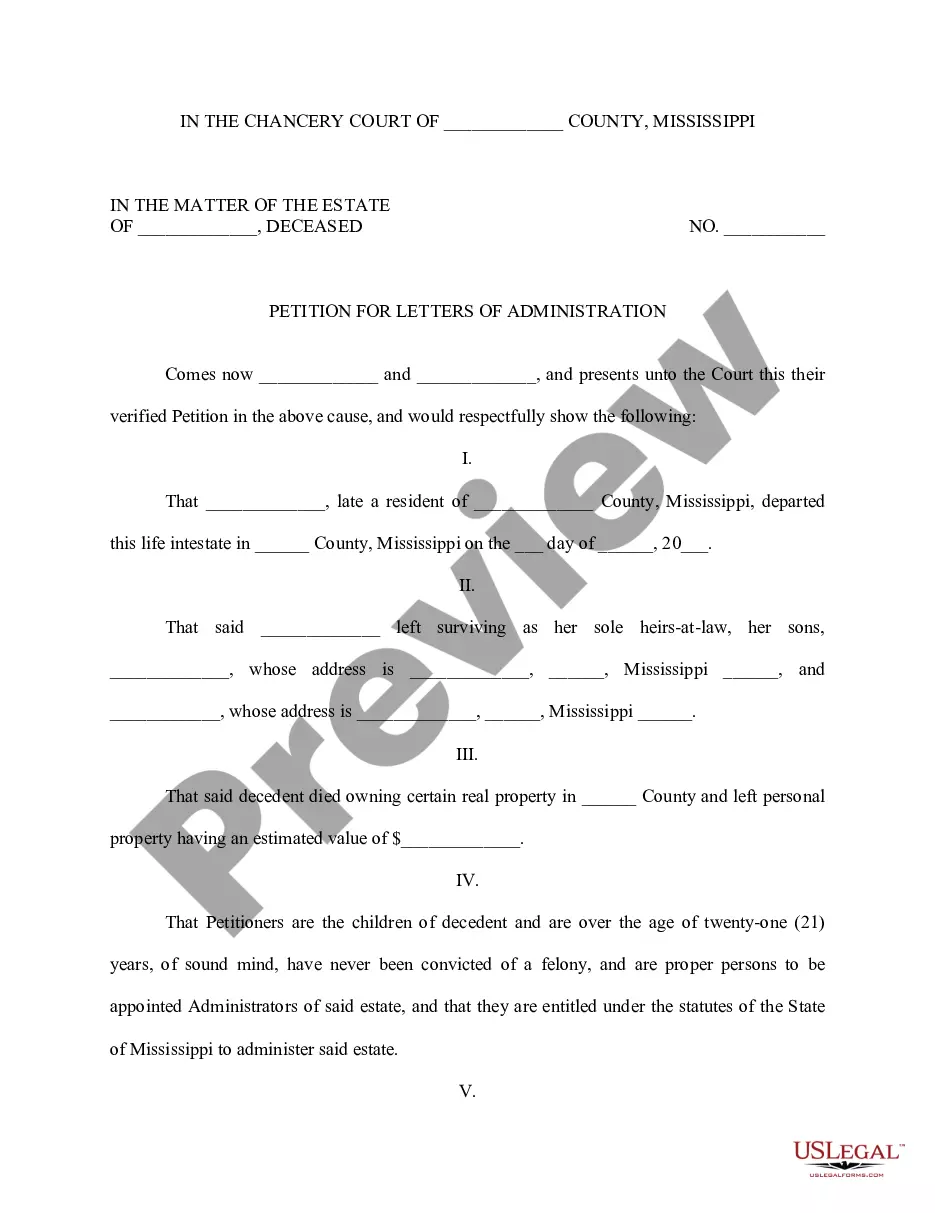
North Carolina Last Will and Testament for a Widow or Widower with Adult Children

What is this form?
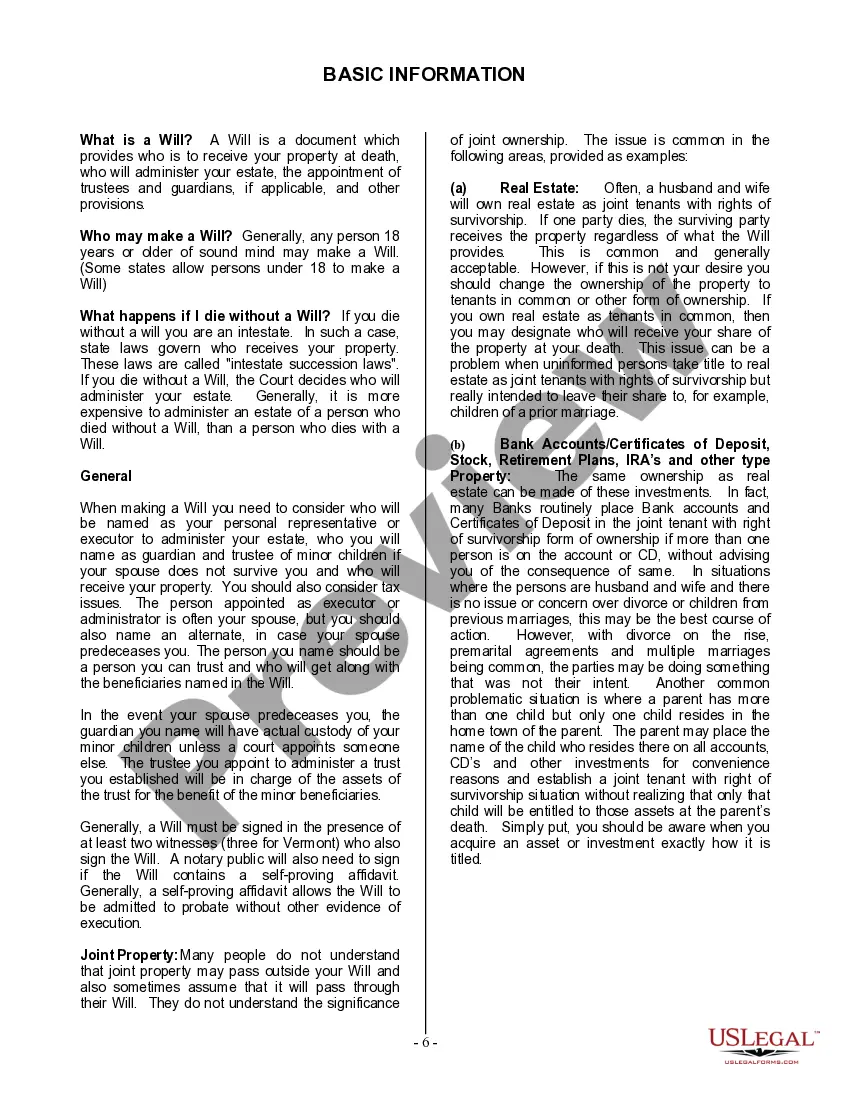
The Last Will and Testament for a Widow or Widower with Adult Children is a legal document that outlines how a person's estate will be distributed upon their death. This form is designed specifically for individuals who are widowed and have adult children, enabling them to designate beneficiaries, appoint an executor, and specify other important provisions regarding their assets. It differs from other wills by addressing the unique circumstances of widowed individuals, particularly regarding the distribution of property to adult children.
Form components explained
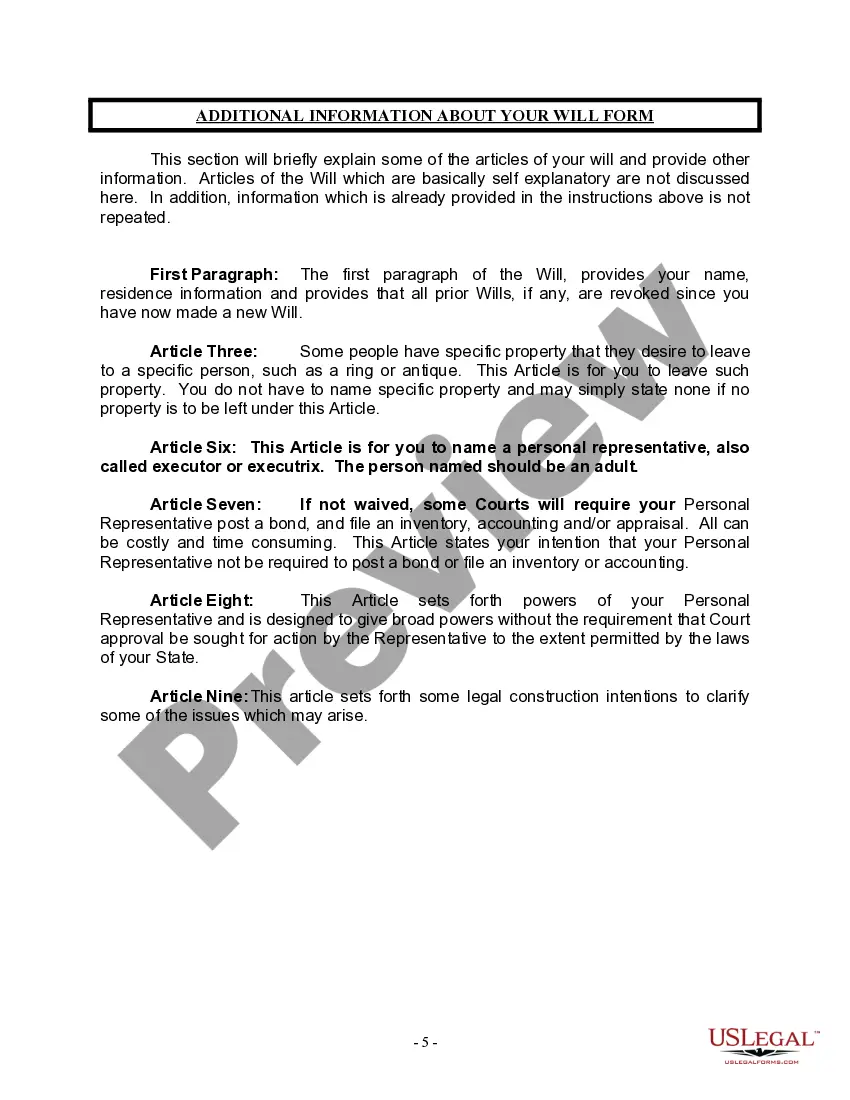
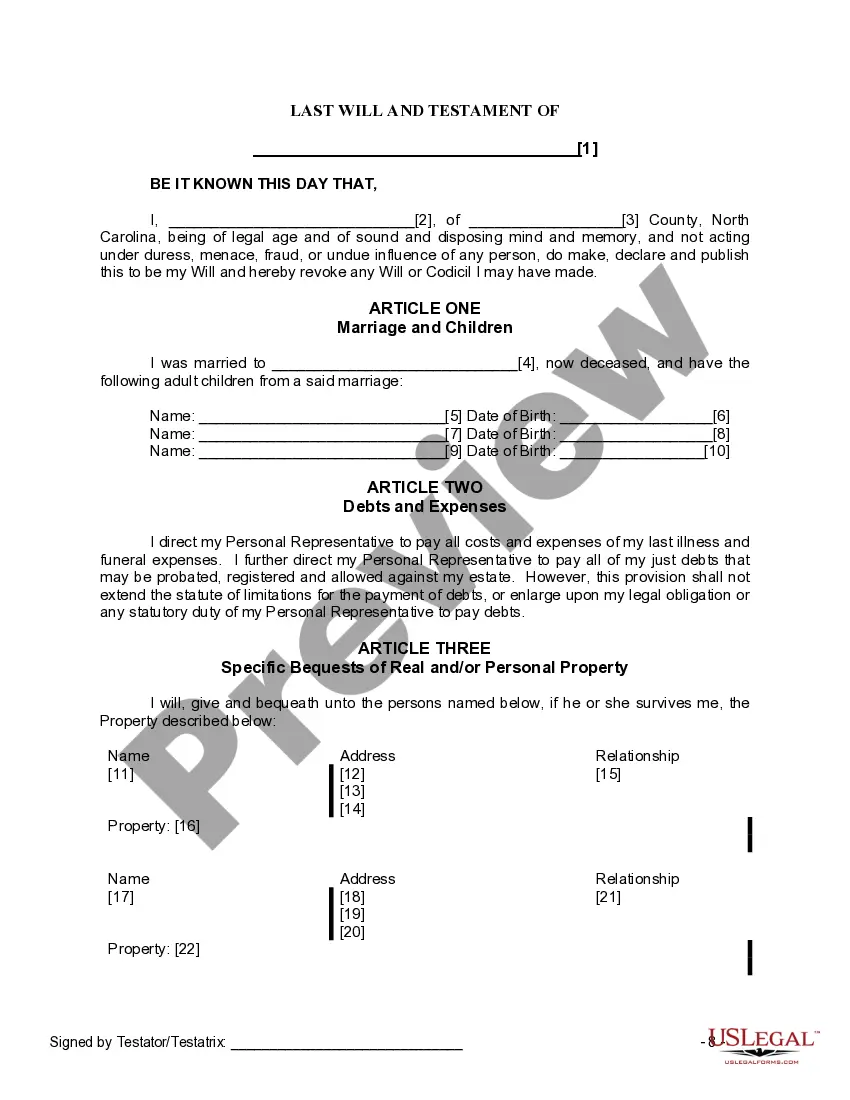
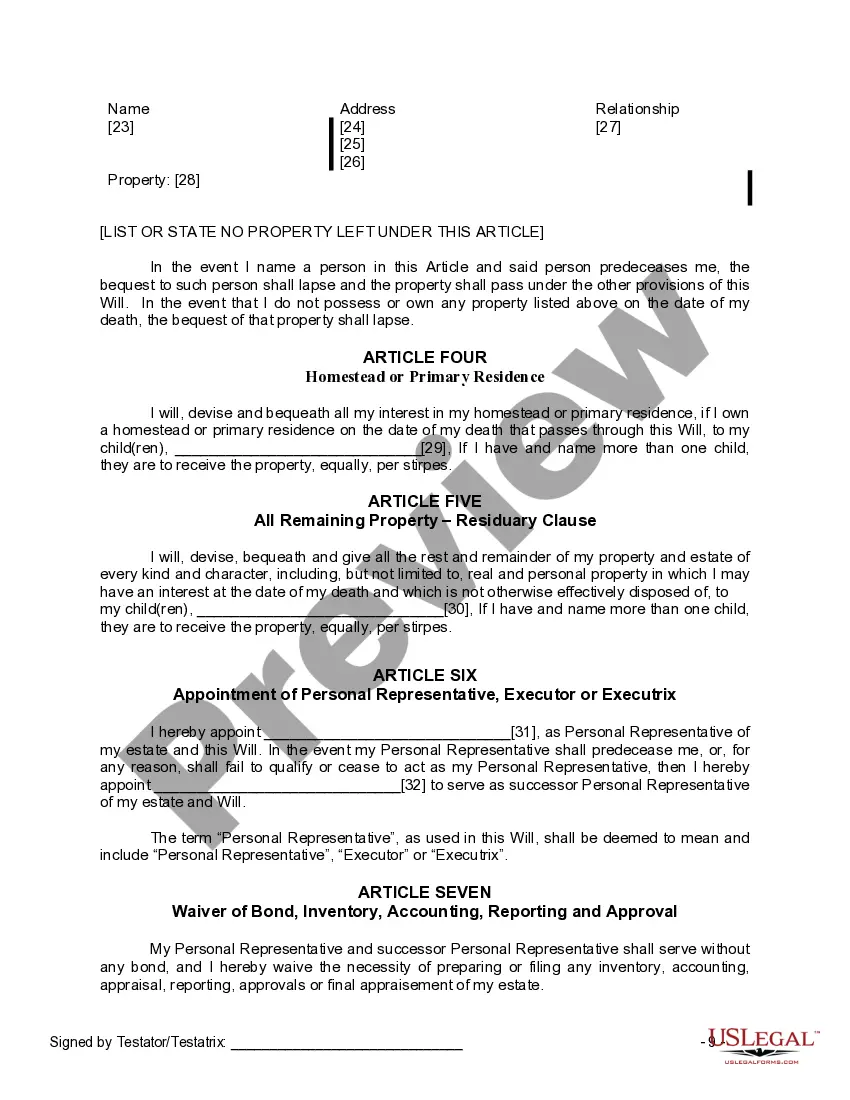
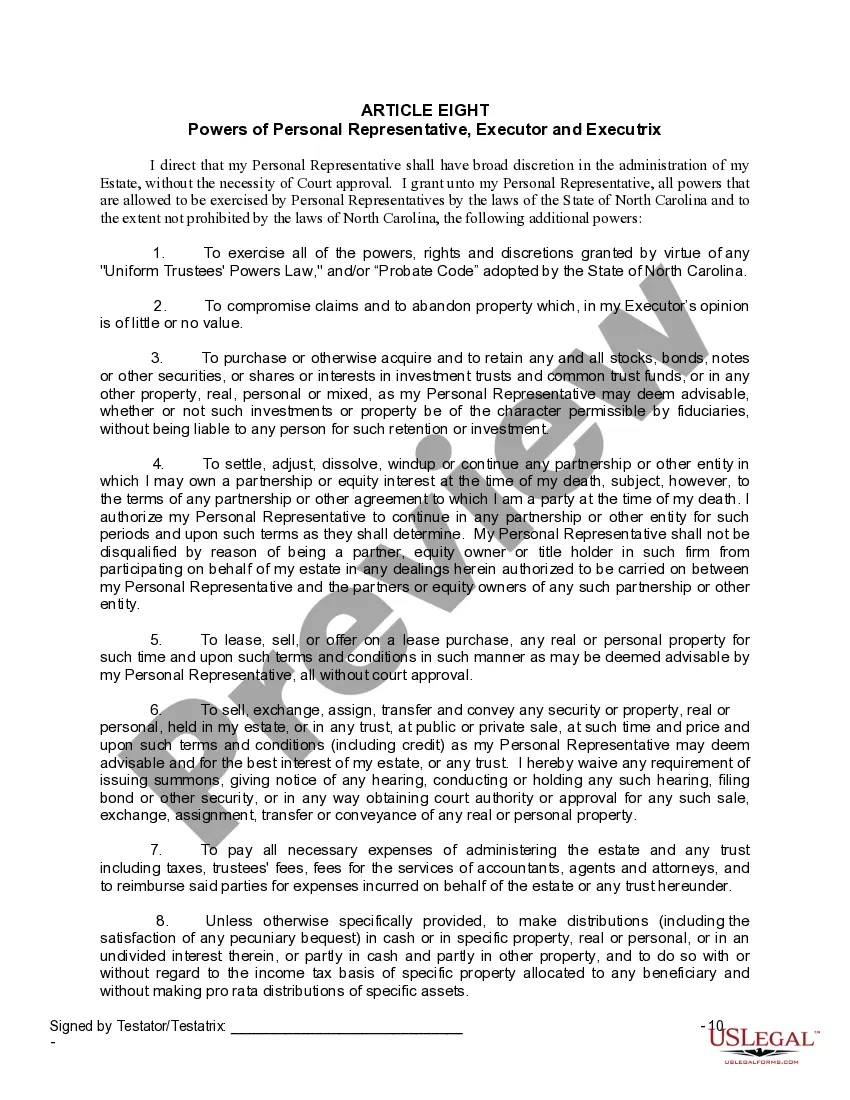
- Appointment of a personal representative or executor to manage the estate.
- Designations of beneficiaries, including specific bequests of property.
- Instructions for the division of homestead or primary residence.
- Provisions for the distribution of remaining property to beneficiaries.
- Options concerning the waiver of bond for the personal representative.
- Instructions for the signing and witnessing of the will.





When to use this document
This form should be used when a widow or widower wishes to document their final wishes regarding asset distribution after their death. It is appropriate to use this will if you have adult children and wish to provide clear instructions on how your estate will be managed and divided. This may be particularly important if you want to ensure your assets are distributed according to your preferences and to avoid any potential disputes among heirs.
Intended users of this form
- Widows or widowers with adult children looking to establish their last will.
- Individuals wanting to designate an executor for their estate.
- People wishing to specify particular bequests for their assets.
- Anyone needing to create a legally binding will to ensure their final wishes are honored.
Instructions for completing this form
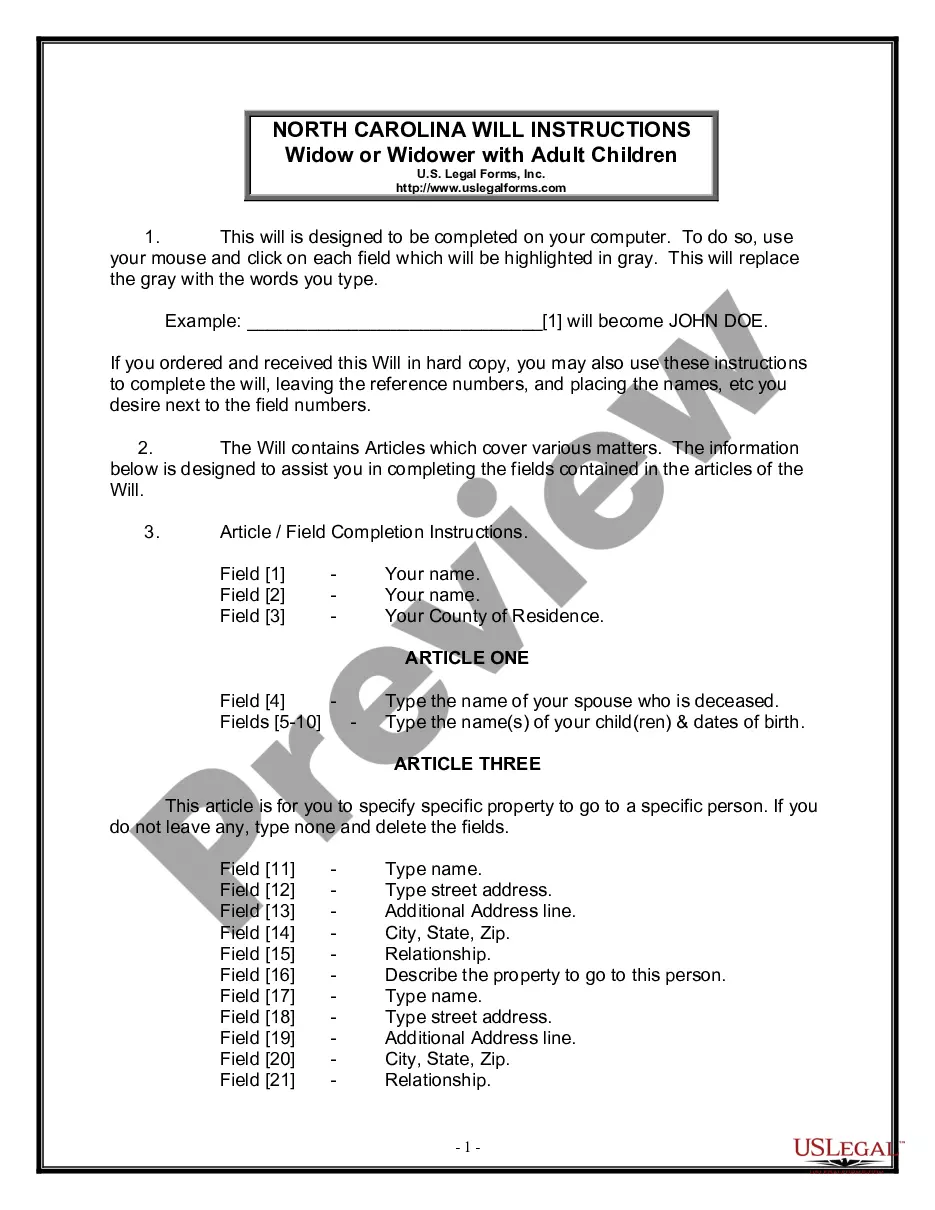
- Enter your full name and county of residence at the beginning of the document.
- Provide the name of your deceased spouse and the names and birth dates of your adult children.
- Specify any specific property you wish to bequeath to individuals, or state "none" if there are no specific bequests.
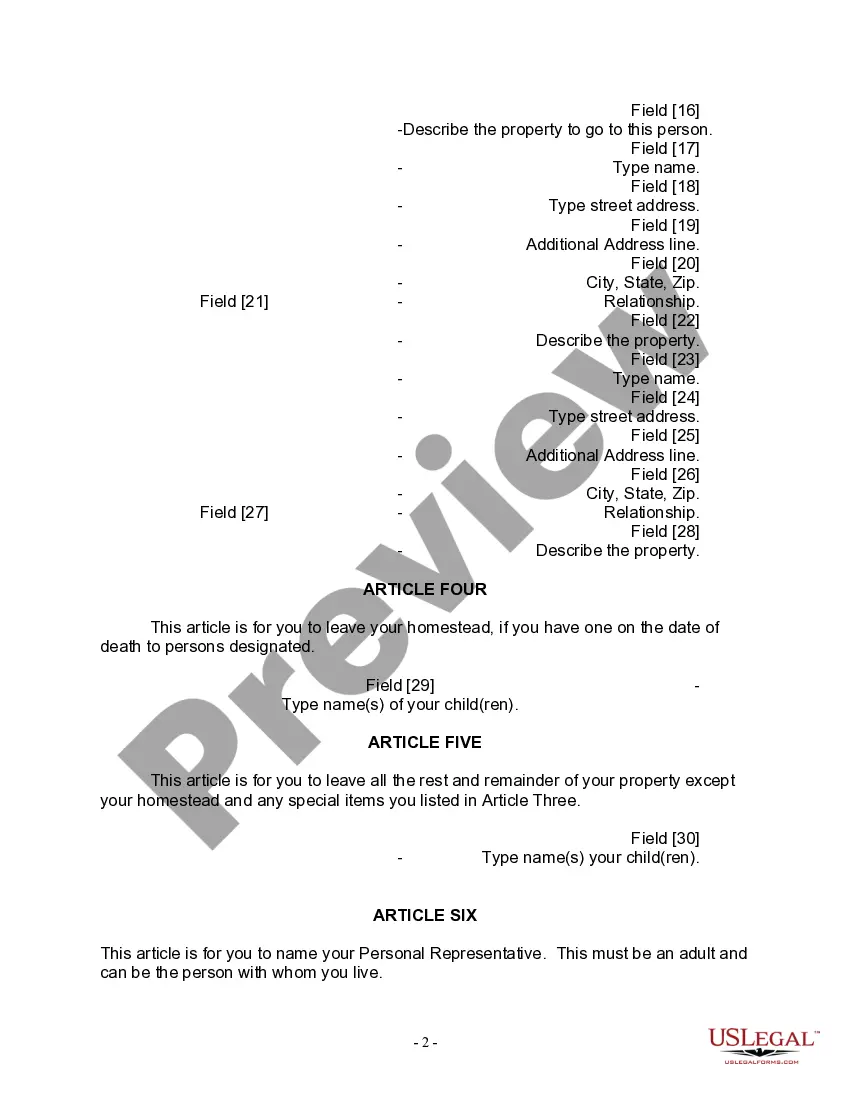
- Designate your homestead, if applicable, and how it should be divided among your children.
- Appoint your personal representative and, if desired, a successor representative to manage your estate.
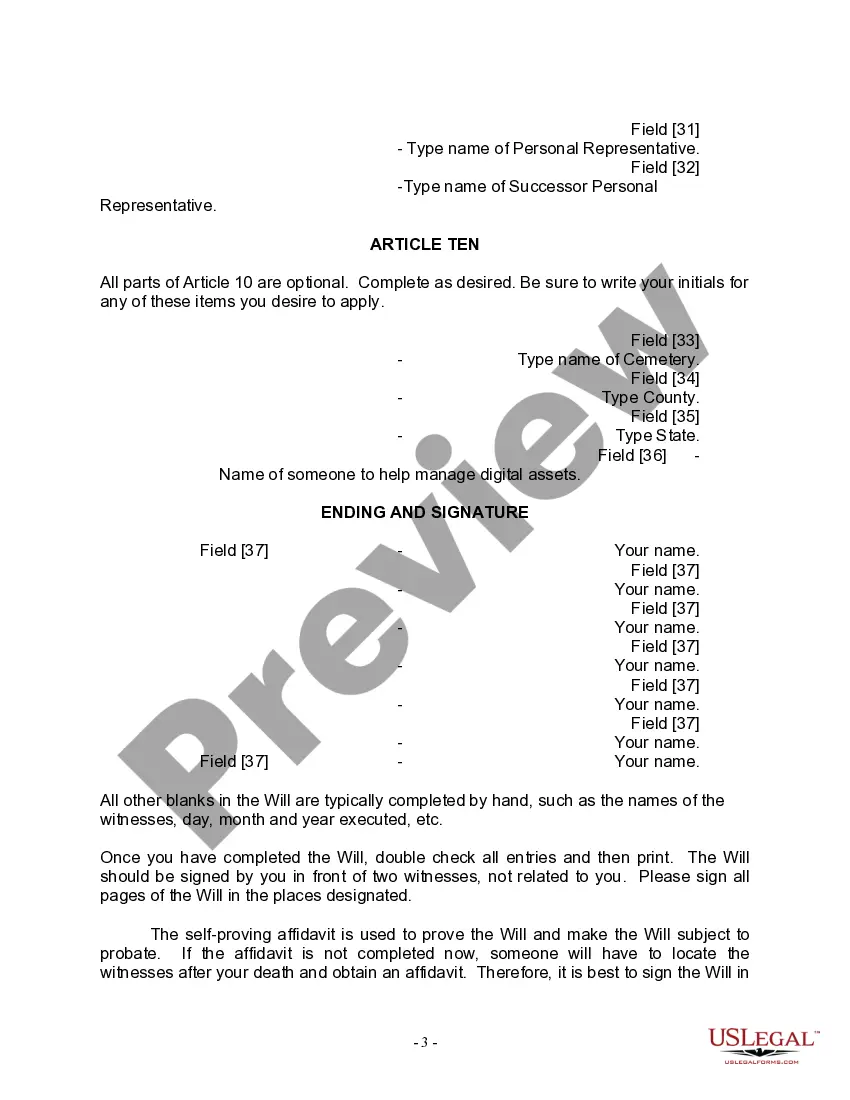
- Sign the will in the presence of two witnesses, ensuring that they also sign it to validate the document.
Notarization requirements for this form
Yes, this form must be notarized to be legally valid. Having it notarized helps in establishing its authenticity during the probate process. US Legal Forms offers an integrated online notarization option, available 24/7 via secure video calls, providing legal equivalence without requiring travel.
Get your form ready online
Our built-in tools help you complete, sign, share, and store your documents in one place.
Make edits, fill in missing information, and update formatting in US Legal Forms—just like you would in MS Word.
Download a copy, print it, send it by email, or mail it via USPS—whatever works best for your next step.
Sign and collect signatures with our SignNow integration. Send to multiple recipients, set reminders, and more. Go Premium to unlock E-Sign.
If this form requires notarization, complete it online through a secure video call—no need to meet a notary in person or wait for an appointment.
We protect your documents and personal data by following strict security and privacy standards.

Make edits, fill in missing information, and update formatting in US Legal Forms—just like you would in MS Word.

Download a copy, print it, send it by email, or mail it via USPS—whatever works best for your next step.

Sign and collect signatures with our SignNow integration. Send to multiple recipients, set reminders, and more. Go Premium to unlock E-Sign.

If this form requires notarization, complete it online through a secure video call—no need to meet a notary in person or wait for an appointment.

We protect your documents and personal data by following strict security and privacy standards.
Typical mistakes to avoid
- Not signing the will in front of the required number of witnesses.
- Failing to provide complete and accurate information about beneficiaries and property.
- Omitting the self-proving affidavit when required, making the probate process more difficult.
- Not keeping the will in a safe location or failing to inform the executor of its whereabouts.
Benefits of using this form online
- Convenient access to fill out the will from home.
- Editable fields to ensure accurate and personalized input.
- Peace of mind knowing that the document is drafted in compliance with legal standards.
- Immediate download and storage options for easy access.
Main things to remember
- The Last Will and Testament for a Widow or Widower with Adult Children is designed to address the specific needs of widowed individuals.
- Properly completing and executing this form ensures that your wishes regarding asset distribution are respected after your death.
- Notarization simplifies the probate process and validates the document's authenticity.
- Clear instructions and accurate information are crucial to prevent future disputes among heirs.
Looking for another form?

Form popularity
FAQ
When Is Probate Required? Probate is generally required in North Carolina only when a decedent owned property in their name alone. Assets that were owned with a spouse, for which beneficiaries were named outside of a will, or held in revocable living trusts, generally do not need to go through probate.
North Carolina recognizes the validity of handwritten wills. Under NC law, a handwritten will must satisfy the following requirements: Written entirely in the handwriting of the testator (the will-maker);Found after the testator's death among his valuable papers or effects or in a place of safekeeping.
Yes, under some circumstances. If no consideration is provided for the mutual wills, except the mutual agreement of the spouses, either spouse can change the will prior to the death of the first spouse.After the first spouse dies, however, the surviving spouse cannot change the will.
A widow's will must meet her state's standards in order to be considered legally valid. Typically, this means the will must be in writing and signed. States generally require the signatures of two neutral witnesses who watch the widow sign the document, and a notary may also be required.
Choose an online legal services provider or locate a will template. Carefully consider your distribution wishes. Identify a personal representative/executor. Understand the requirements to make your will legal. Make sure someone else knows about your will. Consult a lawyer if you have a more complicated estate.
No, in North Carolina, you do not need to notarize your will to make it legal.A self-proving will speeds up probate because the court can accept the will without contacting the witnesses who signed it.
According to North Carolina law, a valid written Will is constituted by several formalities. The testator must be of sound mind and eighteen years of age or older. Essentially, the testator must be found competent at the time the Will is executed.
What makes a will legal?The will must be signed by at least two witnesses. The witnesses must watch you sign the will, though they don't need to read it. Your witnesses, in most states, must be people who won't inherit anything under the will.
In most situations, a will template is an easy and inexpensive way to make sure your wishes are known and carried out. Most people can get everything they need by using a will template, with little cost or hassle.