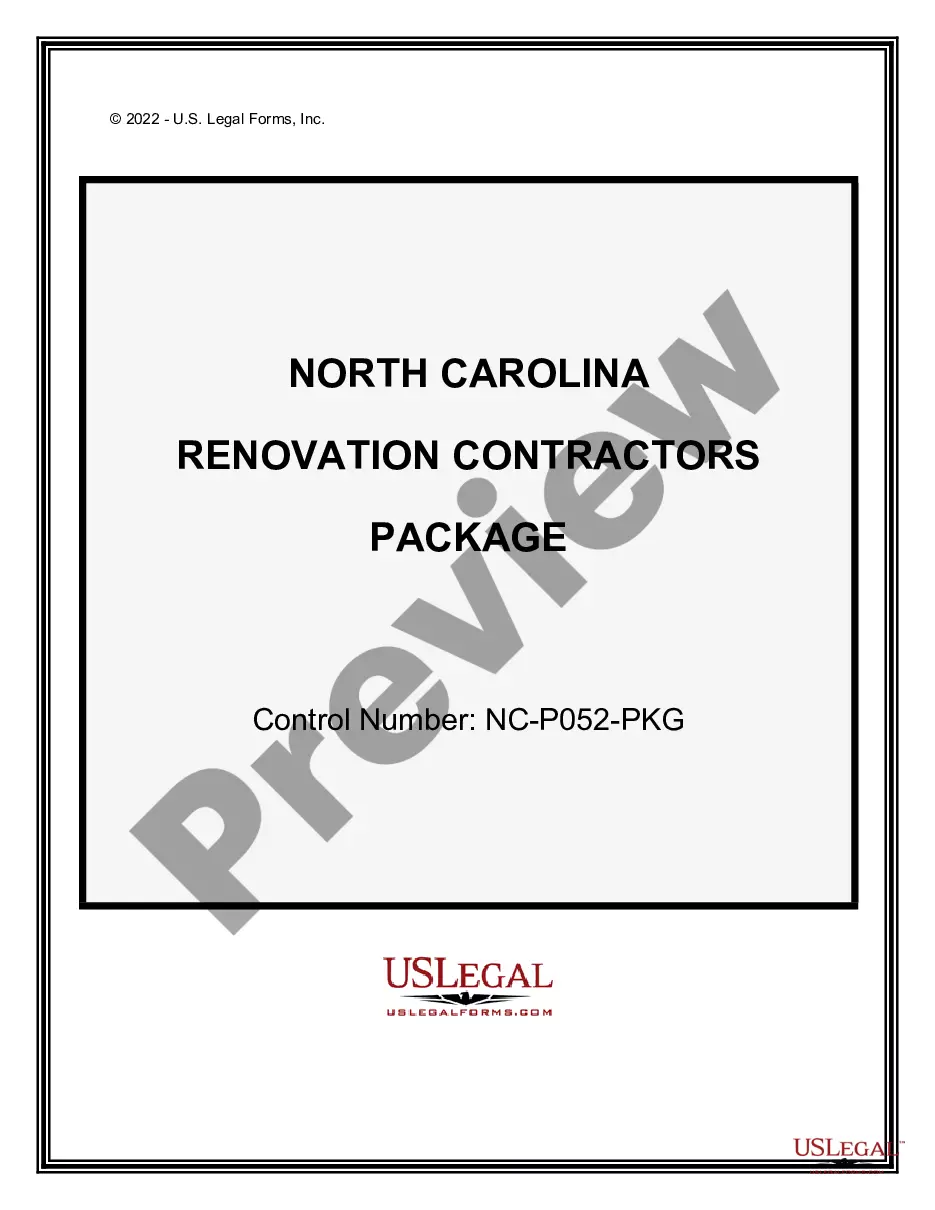
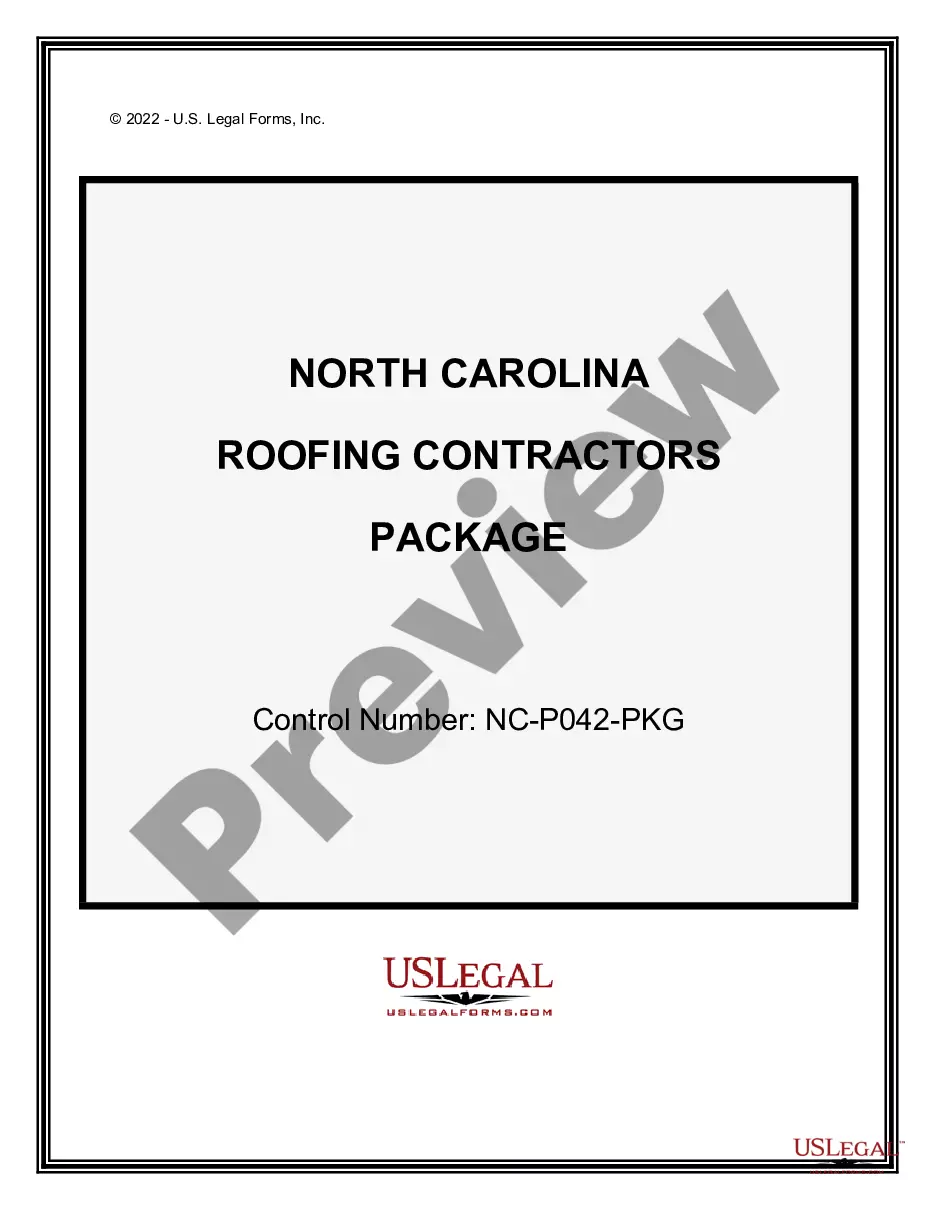
North Carolina Renovation Contractor Package
Understanding this form package
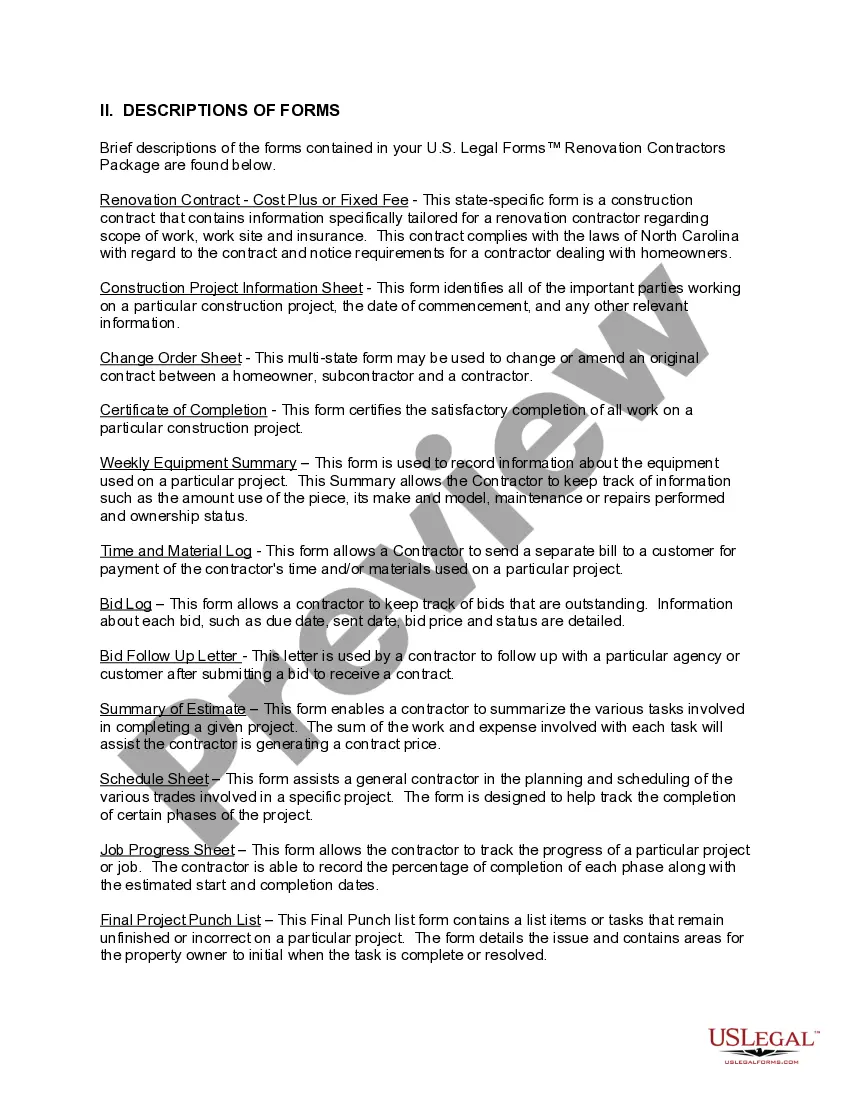
The North Carolina Renovation Contractor Package is a comprehensive set of legal documents specifically designed for renovation contractors, owners, suppliers, and subcontractors involved in residential construction projects. This form package includes essential forms that assert legal rights and address various legal issues that may arise during a renovation project. The core of this package is the renovation contract, which is compliant with North Carolina state law, setting it apart from other general construction form packages.
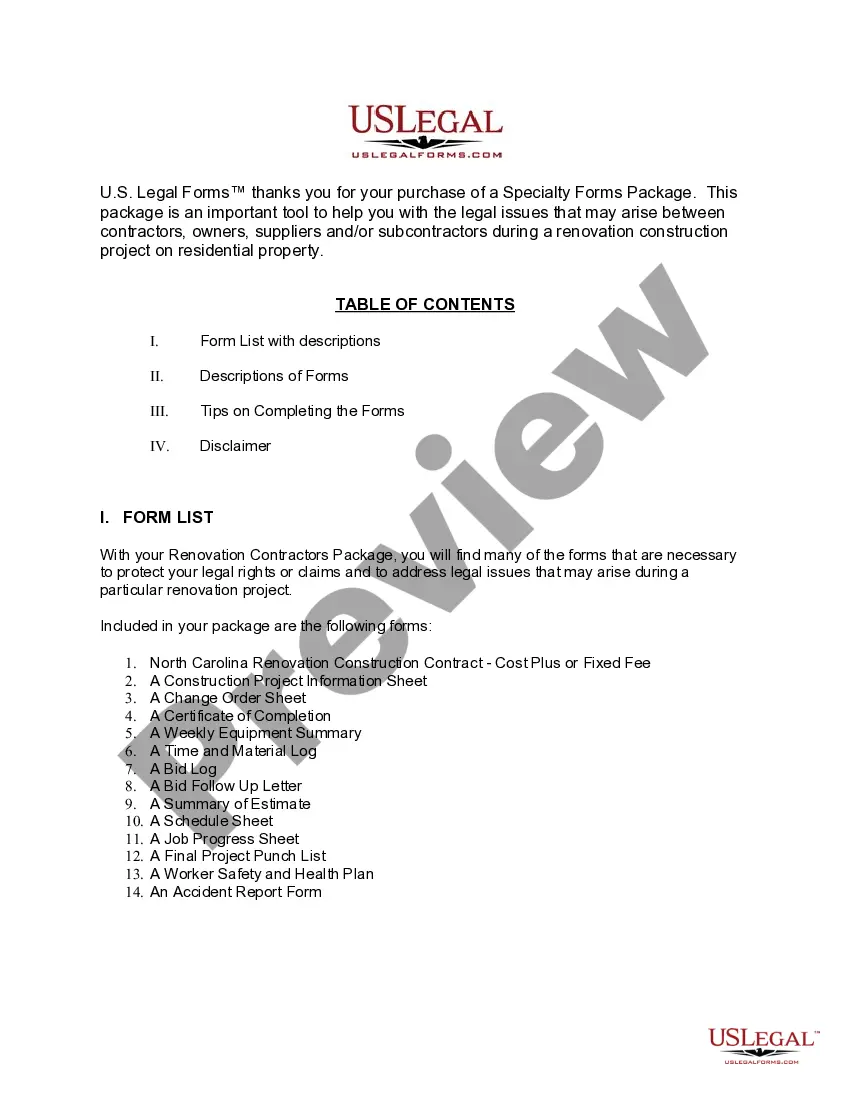
Forms provided in this package
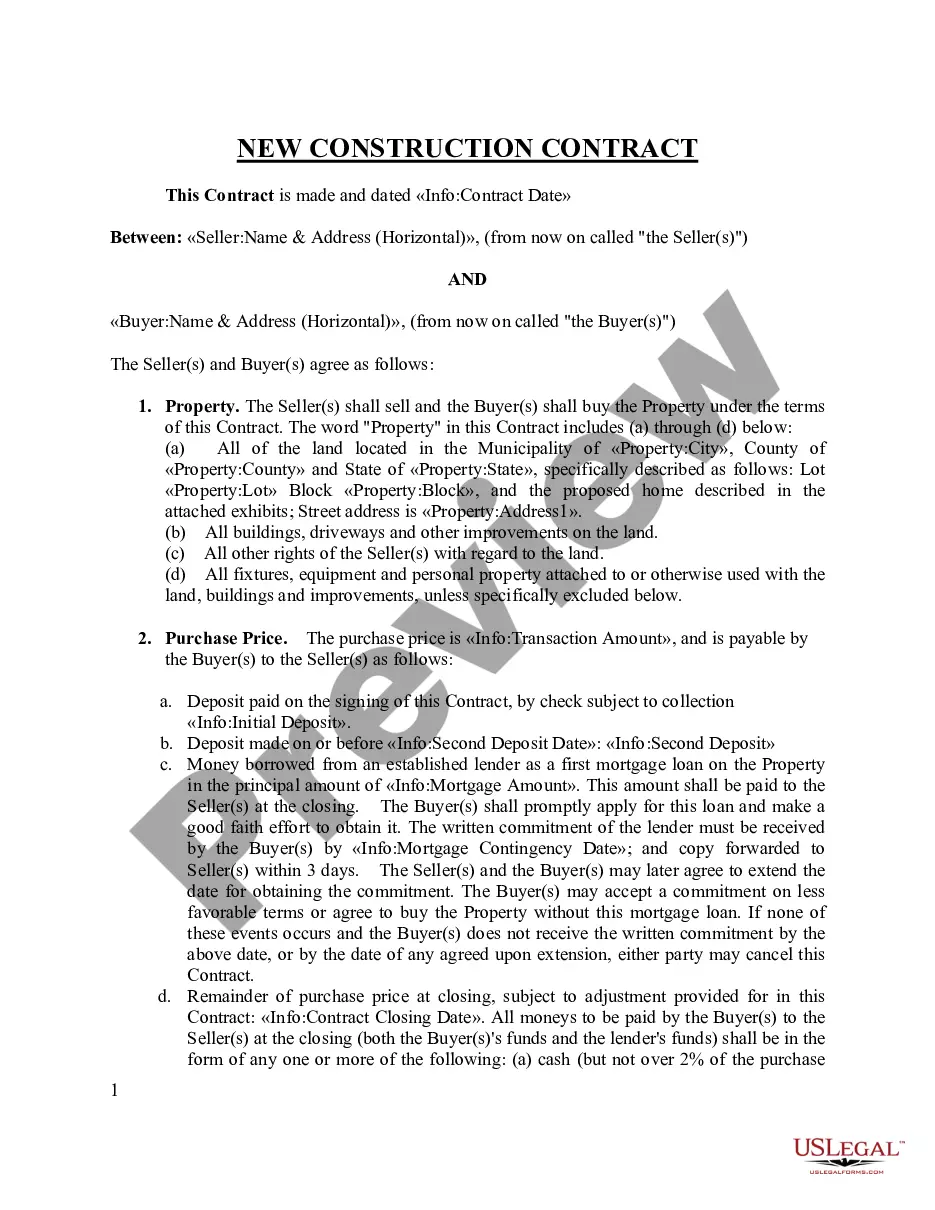
- Renovation Contract for Contractor
- Contractor's Weekly Equipment Summary
- Contractor's Time and Materials Log
- Contractor's Bid Log
- Contractor's Bid Follow Up Letter
- Contractor's Summary of an Estimate
- Contractor's Schedule Sheet
- Contractor's Job Progress Sheet
- Contractor's Final Punch List
- Construction Accident Report
- Construction Safety and Health Plan
- Change Order for Construction or Repairs by Contractor
- Certification of Completion by Contractor
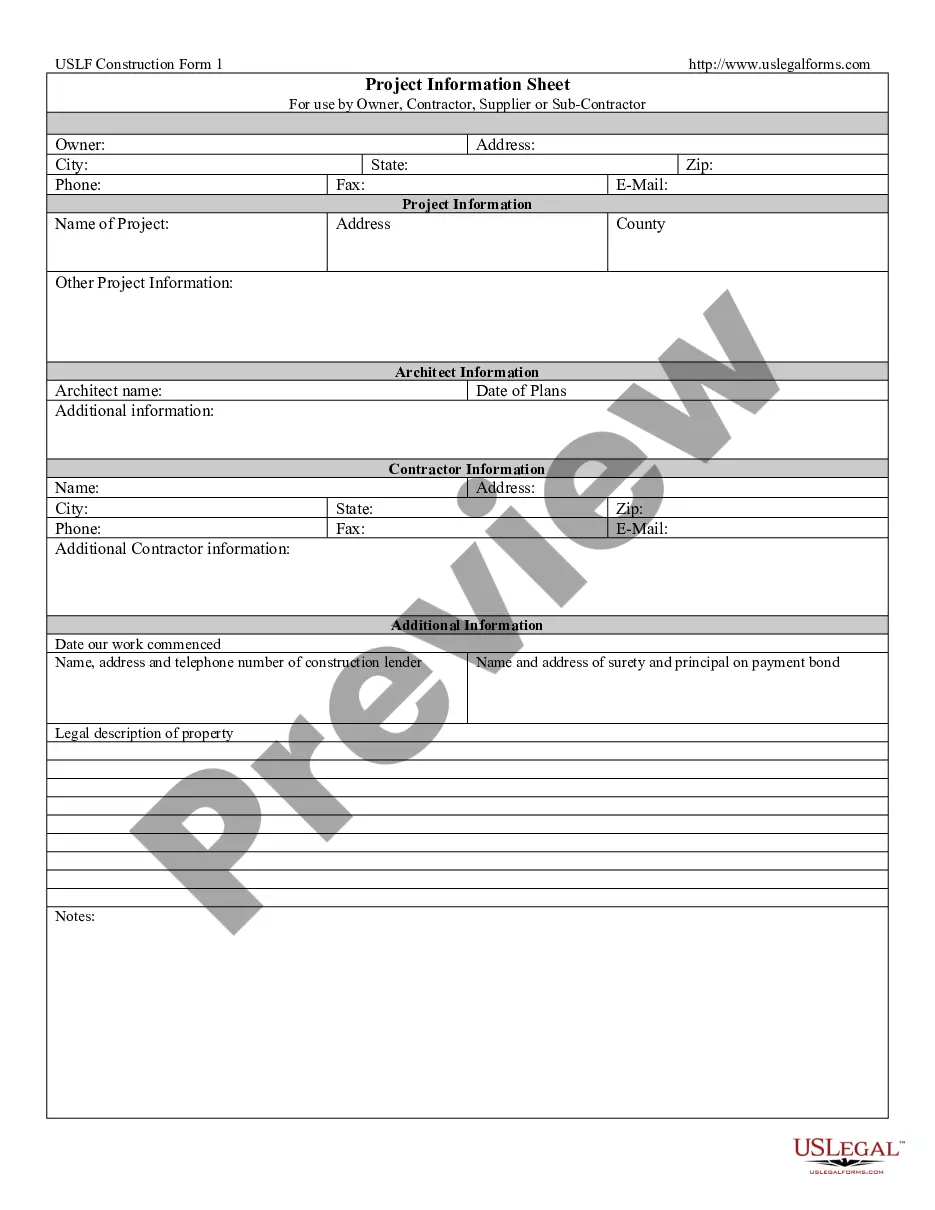
- Construction Project Information Sheet
Situations where these forms applies
This form package is particularly useful in various scenarios, including:
- When entering into contracts for renovation projects.
- If changes to the project scope or pricing need to be documented.
- To track job progress and manage project timelines effectively.
- For documenting safety procedures and reporting accidents on-site.
Who this form package is for
- Renovation contractors seeking to formalize agreements.
- Homeowners managing their own renovation projects.
- Subcontractors working under a primary contractor.
- Suppliers providing materials or equipment for renovation projects.
Instructions for completing these forms
- Review all forms included in the package carefully.
- Identify the parties involved in the renovation project.
- Enter project details including dates and locations in the templates provided.
- Sign and date all relevant documents where indicated.
- Keep copies for your records and distribute as needed.
Notarization details for included forms
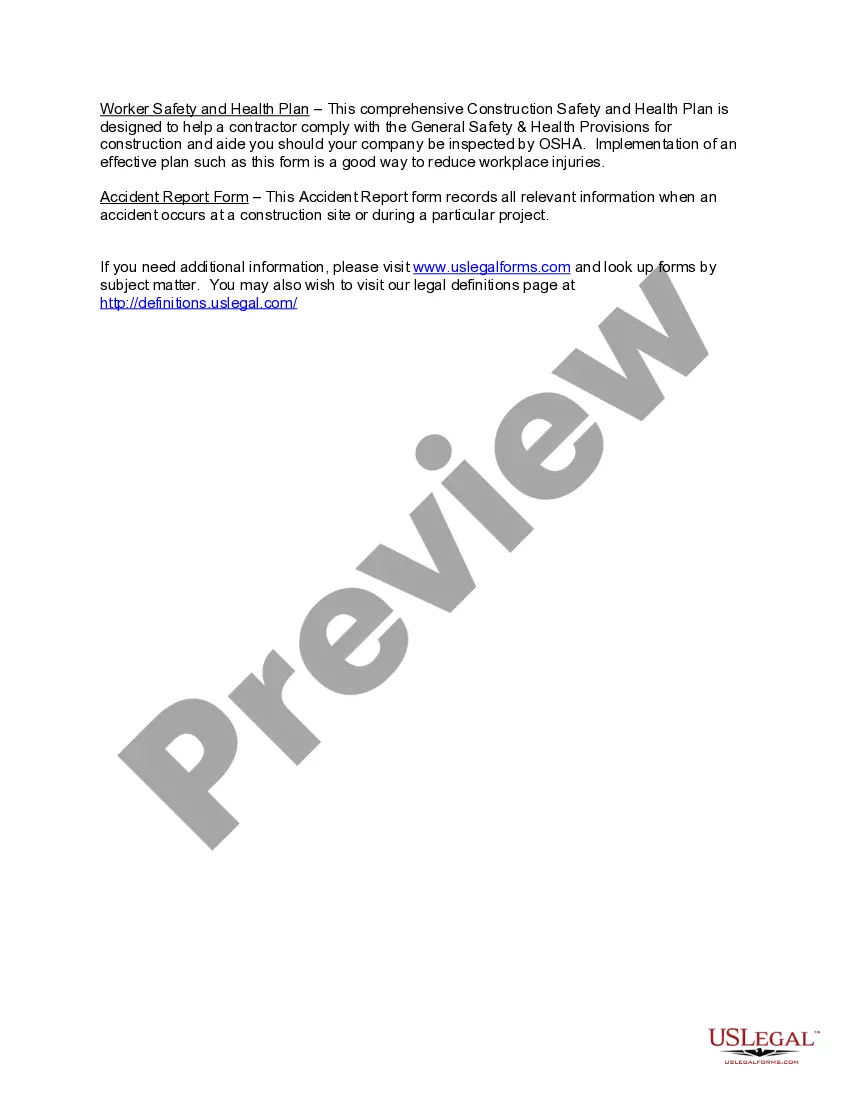
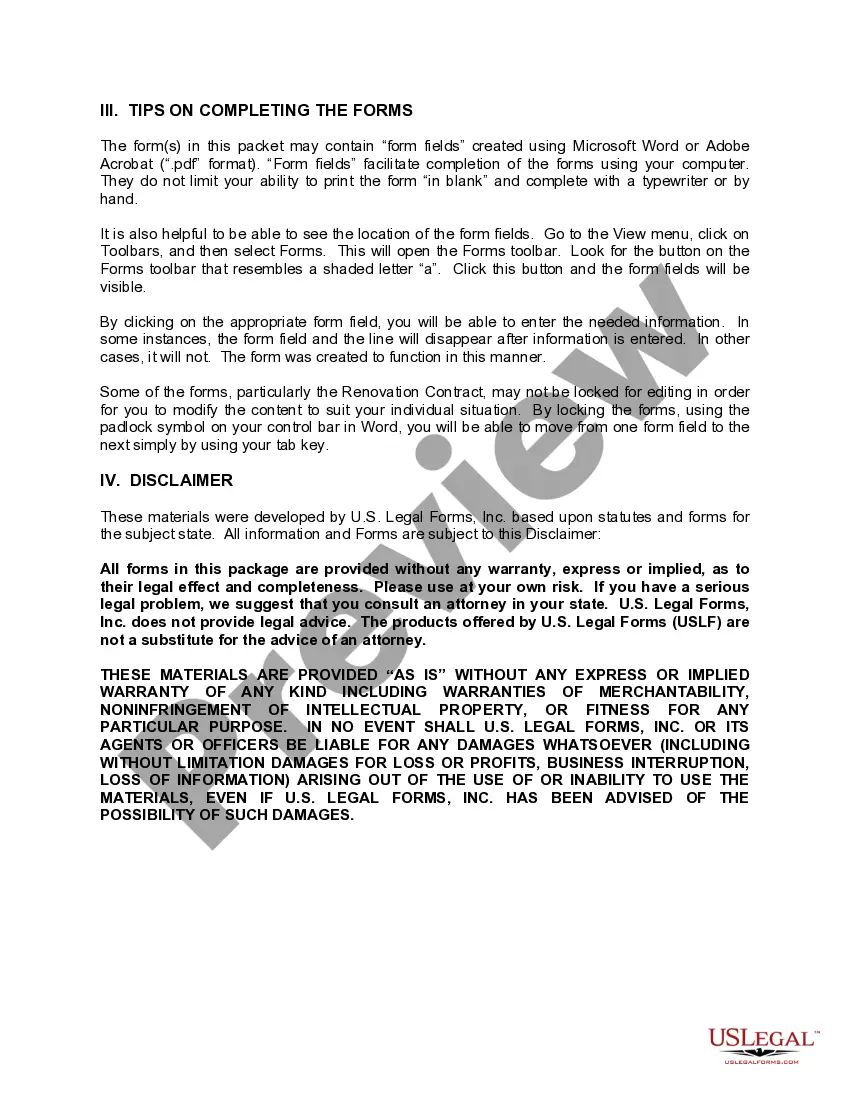
Forms in this package typically do not require notarization unless required by local law. It is advisable to check with local regulations to confirm whether notarization is necessary for specific documents.
Get your form ready online
Our built-in tools help you complete, sign, share, and store your documents in one place.
Make edits, fill in missing information, and update formatting in US Legal Forms—just like you would in MS Word.
Download a copy, print it, send it by email, or mail it via USPS—whatever works best for your next step.
Sign and collect signatures with our SignNow integration. Send to multiple recipients, set reminders, and more. Go Premium to unlock E-Sign.
If this form requires notarization, complete it online through a secure video call—no need to meet a notary in person or wait for an appointment.
We protect your documents and personal data by following strict security and privacy standards.

Make edits, fill in missing information, and update formatting in US Legal Forms—just like you would in MS Word.

Download a copy, print it, send it by email, or mail it via USPS—whatever works best for your next step.

Sign and collect signatures with our SignNow integration. Send to multiple recipients, set reminders, and more. Go Premium to unlock E-Sign.

If this form requires notarization, complete it online through a secure video call—no need to meet a notary in person or wait for an appointment.

We protect your documents and personal data by following strict security and privacy standards.
Common mistakes
- Failing to fully complete all applicable fields in forms.
- Not retaining copies of signed documents for future reference.
- Overlooking the need for change orders when modifications arise.
- Misunderstanding contractor requirements under state law.
Advantages of online completion
- Convenience of downloading and completing forms anytime.
- Forms are editable, allowing for customization based on specific project needs.
- Reliable legal content created by licensed attorneys.
- Cost savings of over 50 percent compared to buying forms individually.
Legal use & context
- All forms provided in this package are vetted for compliance with North Carolina laws.
- Using these forms can help protect your rights and streamline communication between parties.
- Ensure accurate completion and understanding of each document to avoid legal pitfalls.
Quick recap
- The North Carolina Renovation Contractor Package includes vital documents for managing renovation projects.
- Utilizing this package helps ensure compliance with state regulations.
- Take care to complete and maintain proper documentation throughout the project lifecycle.
Looking for another form?
Form popularity
FAQ
You need a general contractor license in North Carolina if you want to bid, construct, superintend or manage the construction of buildings, highways, public utilities and other types of projects over $30,000. To get licensed, you must apply to the North Carolina Licensing Board for General Contractors (NCLBGC).
Since the licensure statute requires a license only for projects that cost $30,000 or more, there is arguably a fourth tier which is sometimes known as the "handyman exception"for construction projects that cost under $30,000, no license is required.
North Carolina does not issue handyman licenses. Handyman professionals are required to apply for a general contractor license in order to work on projects that exceed $30,000. The North Carolina licensing board restricts the types of services that handyman professionals are authorized to provide.
Be your own general contractor. Plan and plan and plan before you start building anything. Go shopping2026. Buy your supplies separate from your labor 2026 Give yourself plenty of time. Learn how to negotiate prices. Hire the right people.
The maximum allowed is $10,000. Also, contractors that have provided materials and labor to property may have lien rights against the real property.
You shouldn't pay more than 10 percent of the estimated contract price upfront, according to the Contractors State License Board.
The local building inspector is required to submit the affidavit to the North Carolina Licensing Board for General Contractors for verification that the property owner is eligible to act as his own general contractor under the exemption to G.S. 87-1.
-Register your handyman business name. -Select your business structure. -Register your handyman business. -Open a Business Checking Account with your Bank. -Find out about taxes and hire an accountant. -Get Business Software. -Get Liability Insurance. -Register as a Contractor.
A general contractor provides a strong background in framing and carpentry along with many other skills. Because remodeling jobs typically involve several specialty areas, the general contractor serves as a project manager who coordinates the entire job.