North Carolina Name Change Notification Form
What is this form?
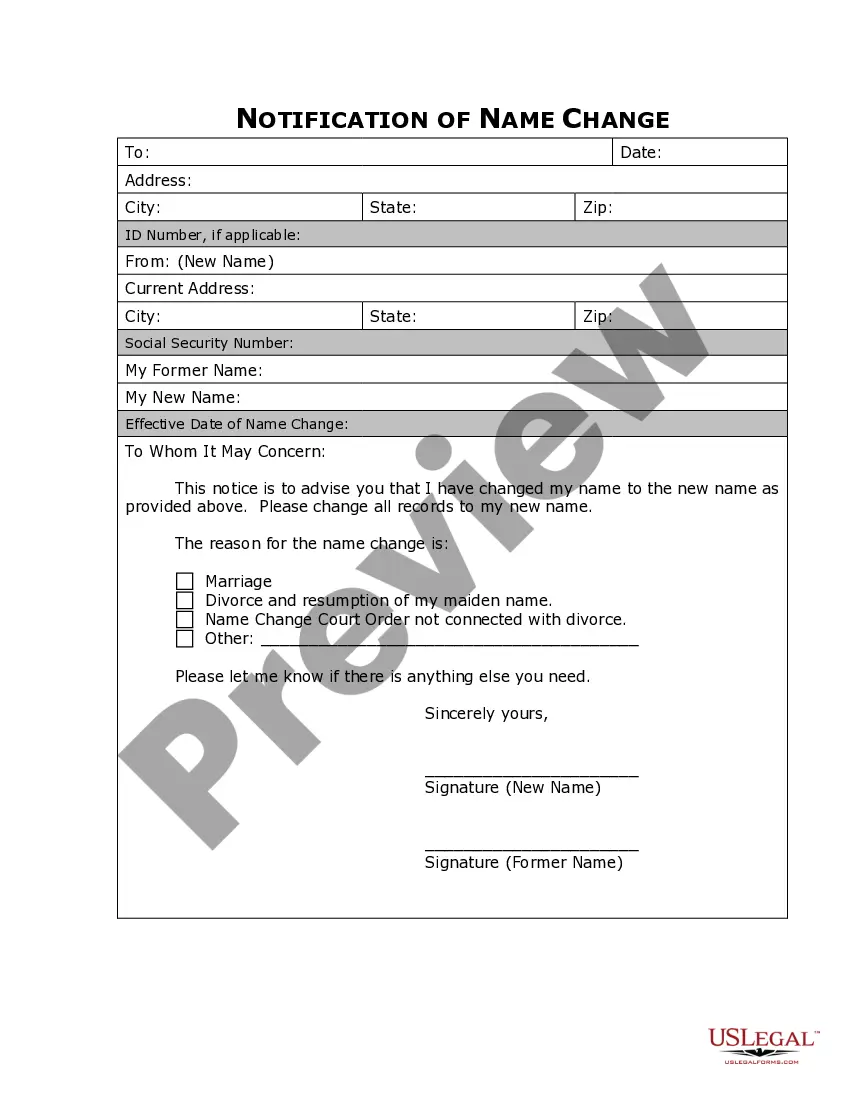
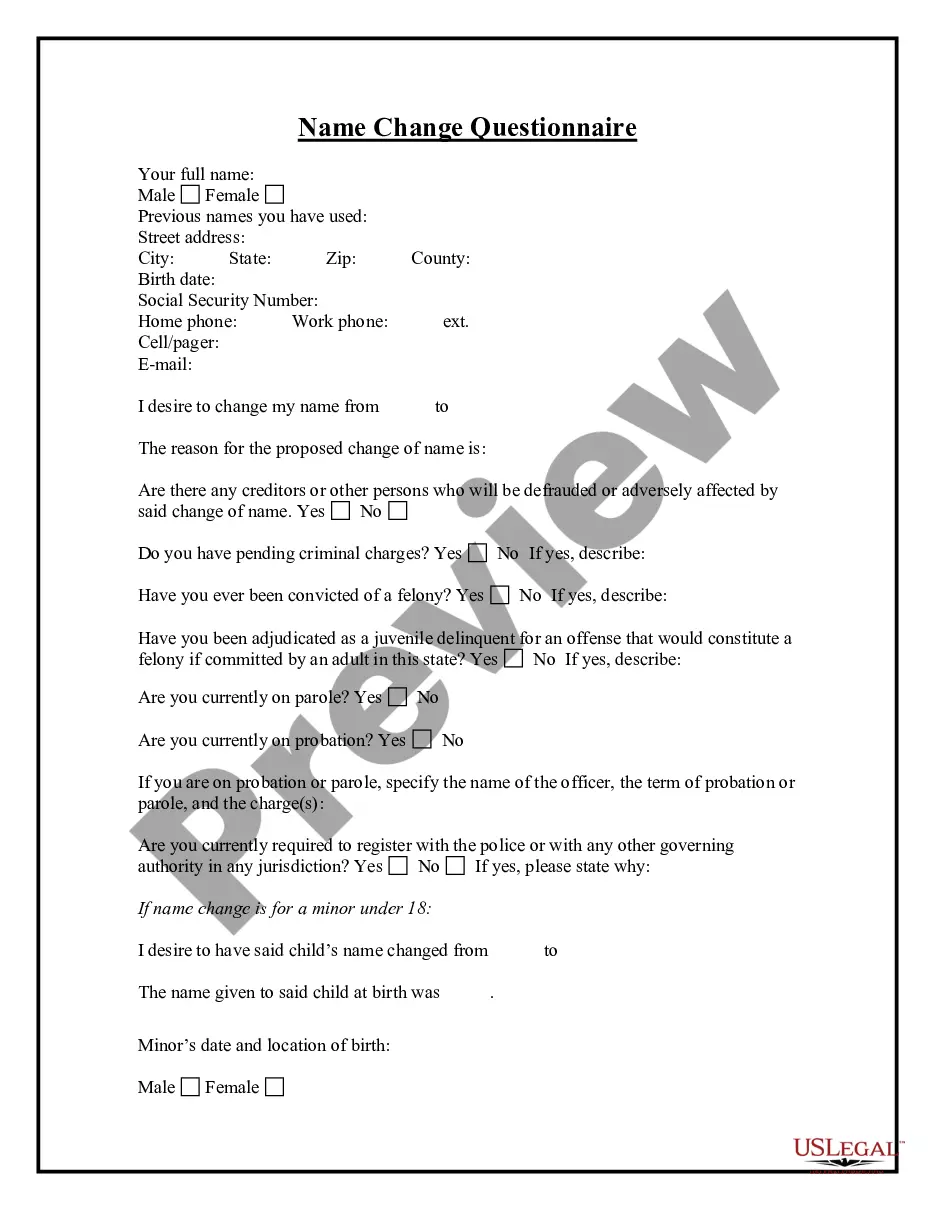
The Name Change Notification Form is a crucial document used to inform various entities about your new name after you have legally changed it. This form is essential for ensuring that records and documentation are updated in accordance with your new legal name. It differs from other forms, such as a name change petition, which is used to request the change rather than notify others of it.
Key parts of this document
- Personal information: Enter your former and new names.
- Contact details: Provide your current address and contact number.
- List of entities being notified: Specify the companies and organizations that need to be informed.
- Signature: Include your signature to attest to the notification.
- Date of name change: Indicate the date when your name change was legally recognized.


When to use this form
You should use the Name Change Notification Form after you have legally changed your name. This form is necessary whenever you need to update your name on important documents, such as bank accounts, insurance policies, social security records, and other official entities that maintain your personal records.
Who should use this form
- Individuals who have legally changed their name.
- Anyone needing to notify banks, government agencies, or organizations of their name change.
- People who want to ensure that their personal records are accurate and up to date.
How to complete this form
- Identify the parties: Enter your previous name and new name in the specified fields.
- Provide your contact information: Fill in your current address and phone number.
- List the entities to notify: Note all companies and organizations being informed of the name change.
- Sign the form: Include your signature to confirm the notification.
- Record the date of the name change: Clearly state when the legal name change occurred.
Does this document require notarization?
In most cases, this form does not require notarization. However, some jurisdictions or signing circumstances might. US Legal Forms offers online notarization powered by Notarize, accessible 24/7 for a quick, remote process.
Get your form ready online
Our built-in tools help you complete, sign, share, and store your documents in one place.
Make edits, fill in missing information, and update formatting in US Legal Forms—just like you would in MS Word.
Download a copy, print it, send it by email, or mail it via USPS—whatever works best for your next step.
Sign and collect signatures with our SignNow integration. Send to multiple recipients, set reminders, and more. Go Premium to unlock E-Sign.
If this form requires notarization, complete it online through a secure video call—no need to meet a notary in person or wait for an appointment.
We protect your documents and personal data by following strict security and privacy standards.

Make edits, fill in missing information, and update formatting in US Legal Forms—just like you would in MS Word.

Download a copy, print it, send it by email, or mail it via USPS—whatever works best for your next step.

Sign and collect signatures with our SignNow integration. Send to multiple recipients, set reminders, and more. Go Premium to unlock E-Sign.

If this form requires notarization, complete it online through a secure video call—no need to meet a notary in person or wait for an appointment.

We protect your documents and personal data by following strict security and privacy standards.
Typical mistakes to avoid
- Not providing all necessary contact information.
- Failing to sign the form before submission.
- Leaving out important entities that need to be notified.
- Not including the exact date of the name change.
Why complete this form online
- Convenience: Download and complete the form at your own pace.
- Editability: Easily customize the document to fit your specific requirements.
- Reliability: Access forms created by licensed attorneys, ensuring they are legally sound.
Quick recap
- The Name Change Notification Form is essential for updating your name across various organizations.
- Ensure all fields are accurately completed and signed.
- Review state-specific laws to verify any additional requirements.
Looking for another form?


Form popularity
FAQ
Petition to change your name by filling out a name change form, an order to show cause for legally changing your name, and a decree to legally change your name. Take these forms to the court clerk and file them along with your state's required filing fees.
Social Security Administration. Department of Motor Vehicles. Passport Office. Post Office. IRS. Voter Registration. Banks and other financial institutions. Credit Card companies (or issuers)
Get Your Marriage License and Certified Copies. Update Your Social Security Card. Get a New Driver's License. Get a New Passport and Travel Documents. Change the Name on Your Bank Accounts. Change the Name on Your Credit Cards. Provide Your New Name and Banking Information to Your Employer.
Obtain a certified copy of your marriage license. Prepare an application for a new Social Security card. Submit the application to the SSA. Update your North Carolina driver's license. Change your name with other important businesses.
Limitations and restrictions. In NSW, you can only change your name once in a 12-month period and 3 times in your lifetime. If you change your name or use an additional or other name with the intention of breaking the law in any way, you could face criminal charges.
The Civil Clerk's Office will charge you a filing fee for filing your paperwork to get a name change. The amount of this fee will vary from county to county, but typically will range from $88 to $120. Receive your Order and Certificate of Name Change from the Clerk. The Clerk's Office will sign this Order.
The Civil Clerk's Office will charge you a filing fee for filing your paperwork to get a name change. The amount of this fee will vary from county to county, but typically will range from $88 to $120. Receive your Order and Certificate of Name Change from the Clerk. The Clerk's Office will sign this Order.
File an application with the clerk of the court; Submit a sworn statement that you're a bona fide resident of the county where the court sits; File a proof of your good character, offered by two citizens of the county who know you; Publish notice of the application through the courthouse;
File an application with the clerk of the court; Submit a sworn statement that you're a bona fide resident of the county where the court sits; File a proof of your good character, offered by two citizens of the county who know you; Publish notice of the application through the courthouse;