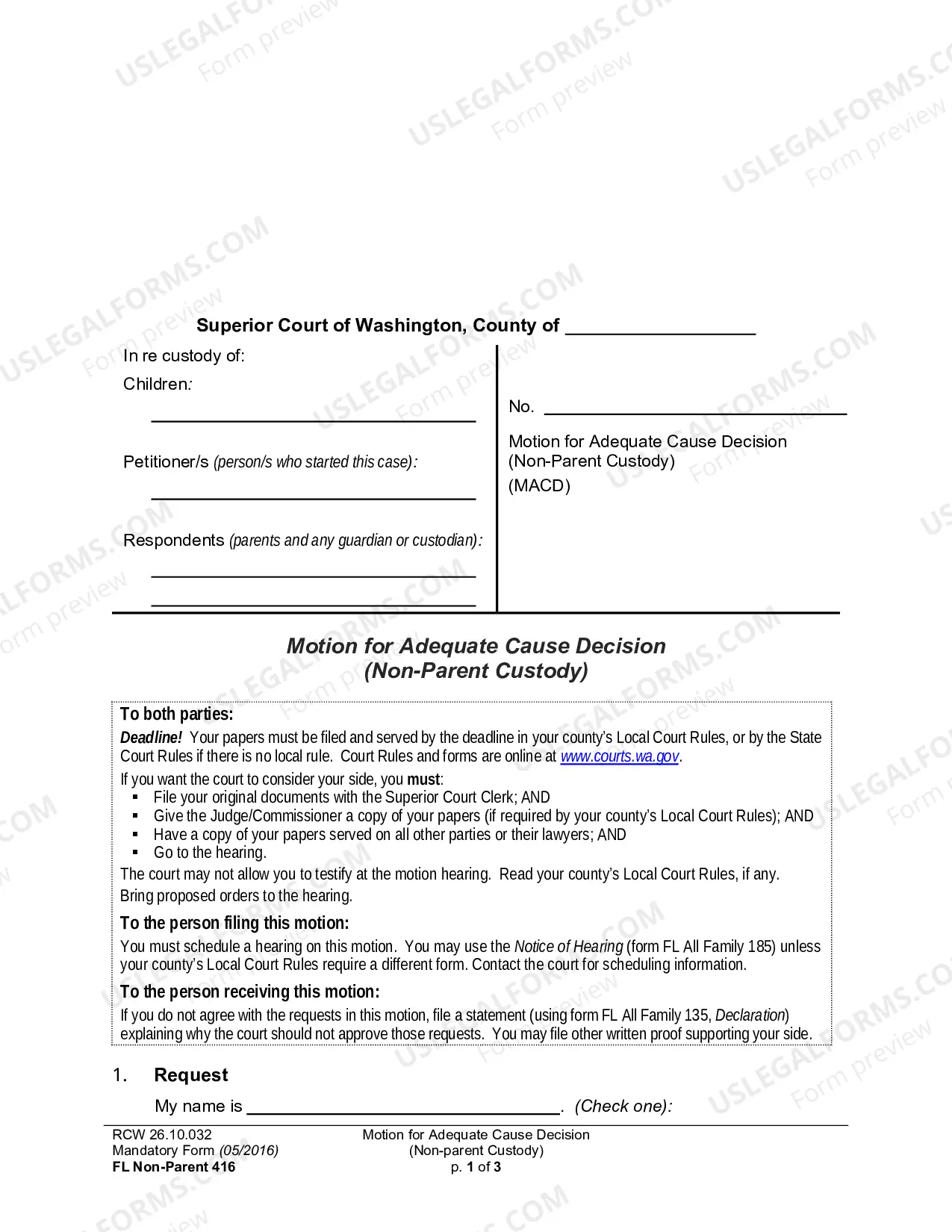
Mississippi Order of Administrative Judge
What this document covers
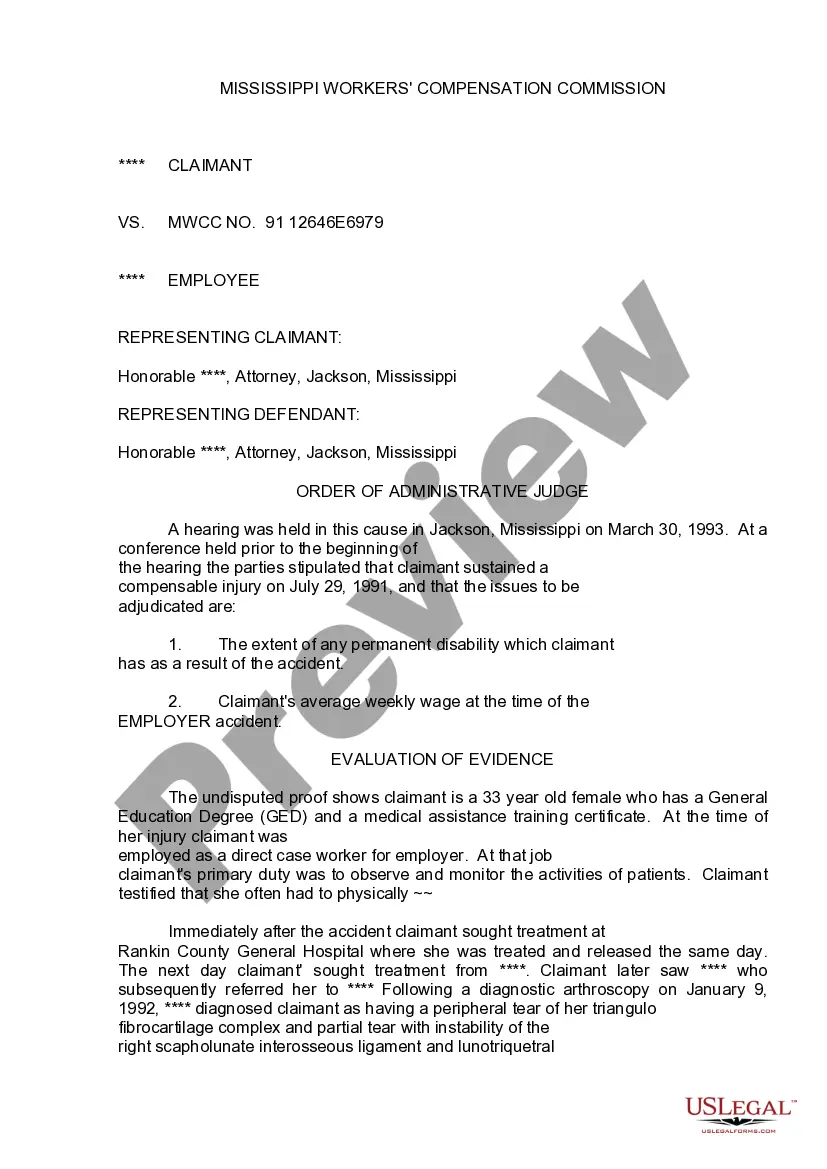
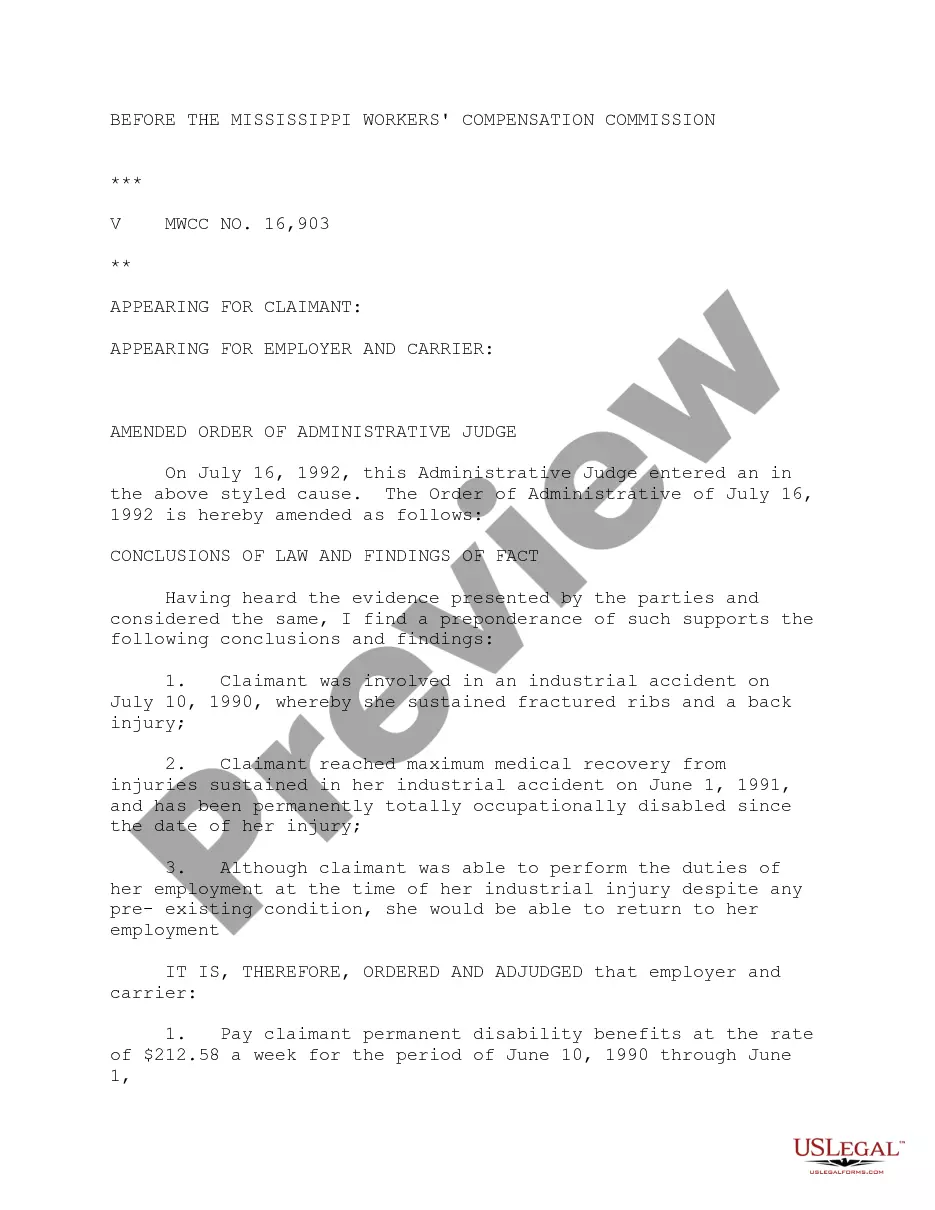
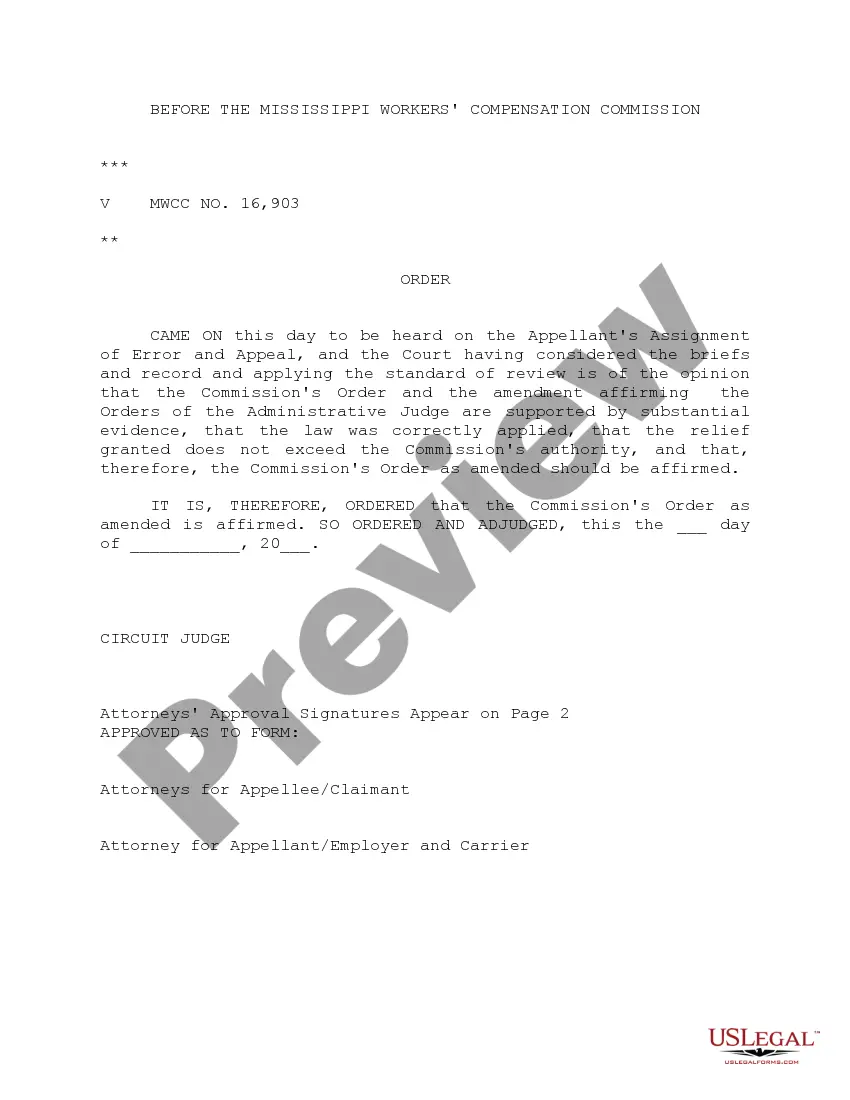
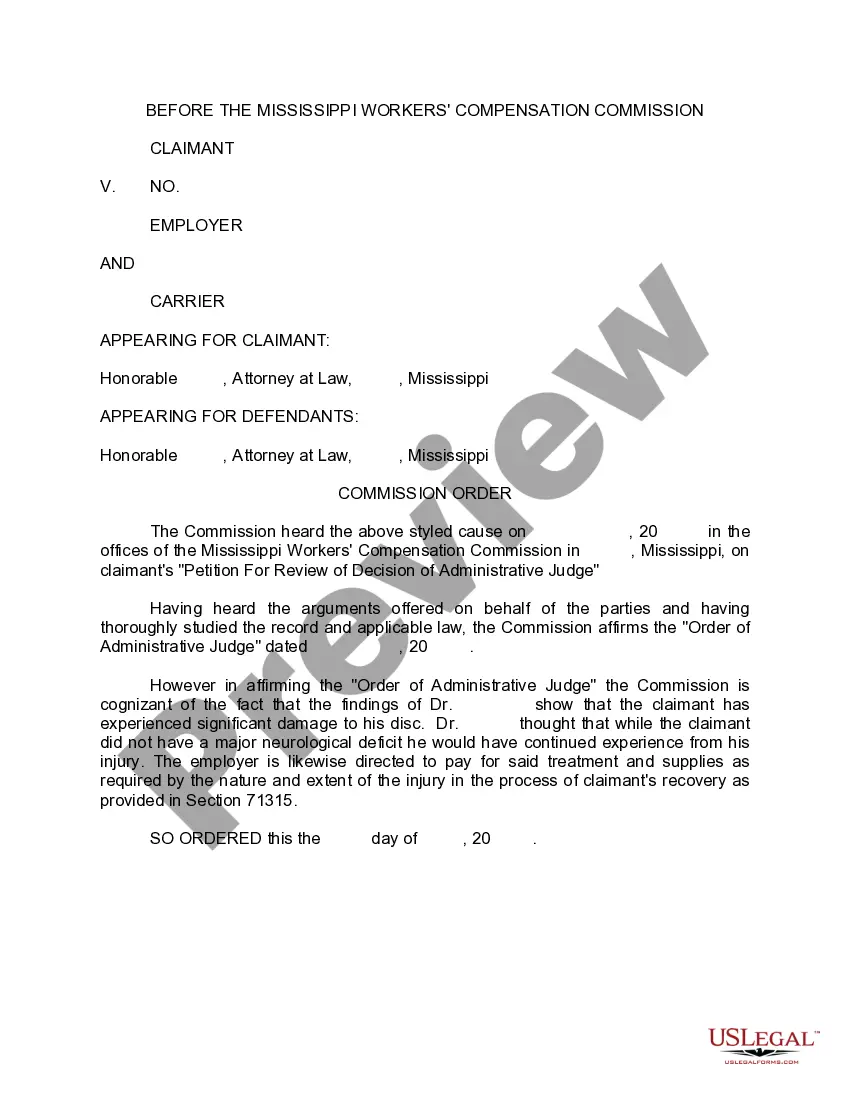
The Order of Administrative Judge is an official court document that directs specific actions based on administrative hearings. This form serves as a template for drafting such orders, particularly in cases involving workers' compensation disputes. Unlike other legal forms, this order is signed by a judge, making it a binding directive that requires compliance. Failing to follow the order may lead to legal consequences, such as contempt of court charges.
Key components of this form
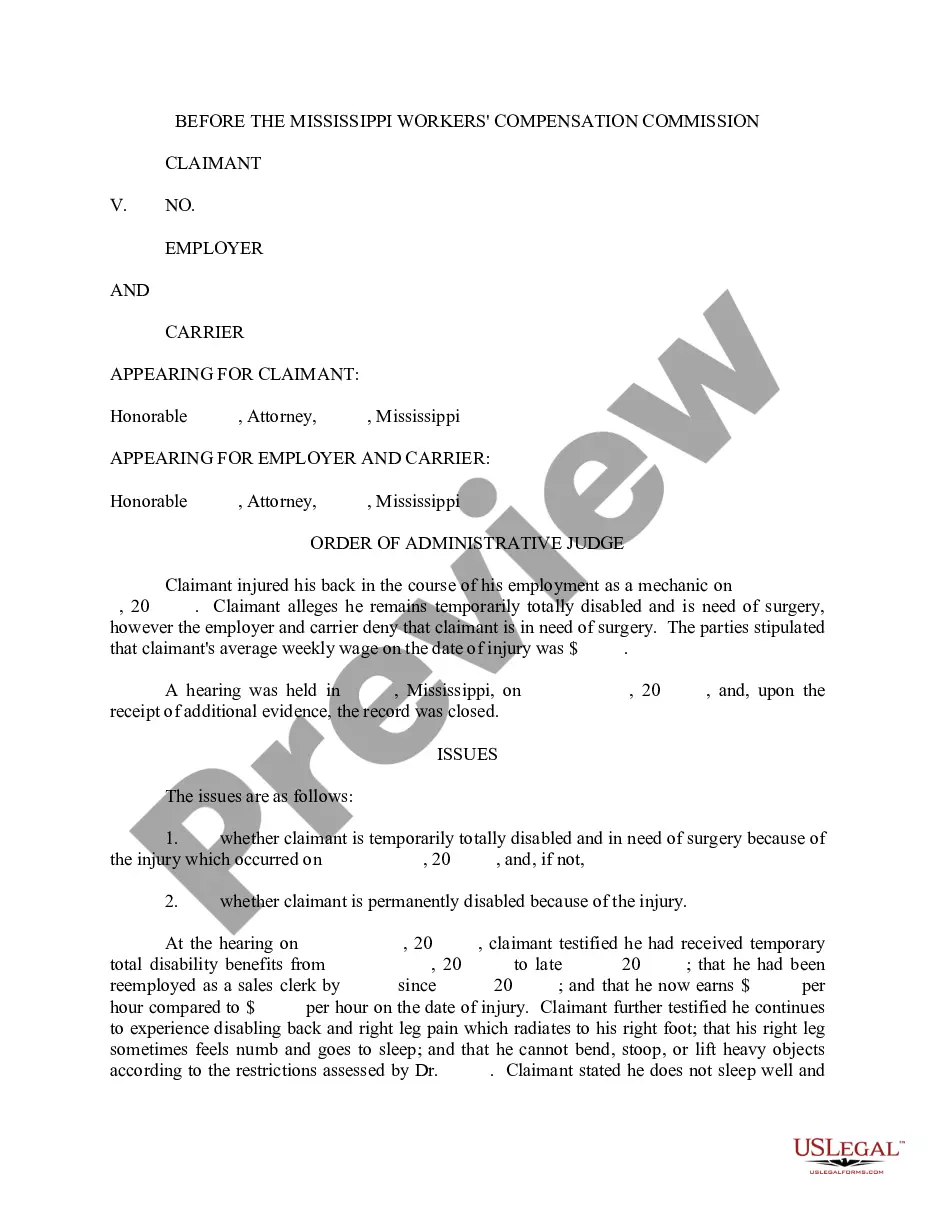
- Caption: Identifies the parties involved and the case number.
- Order section: Contains the judge's directive regarding the actions required by the parties.
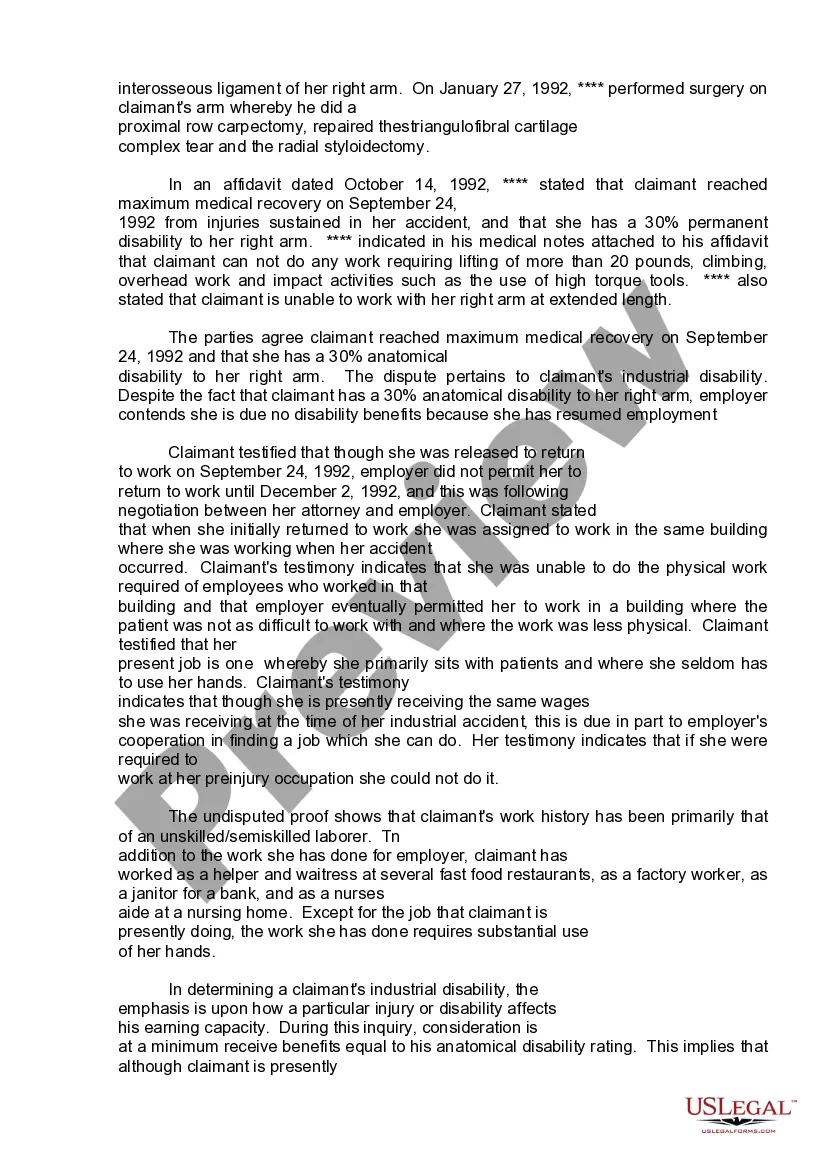
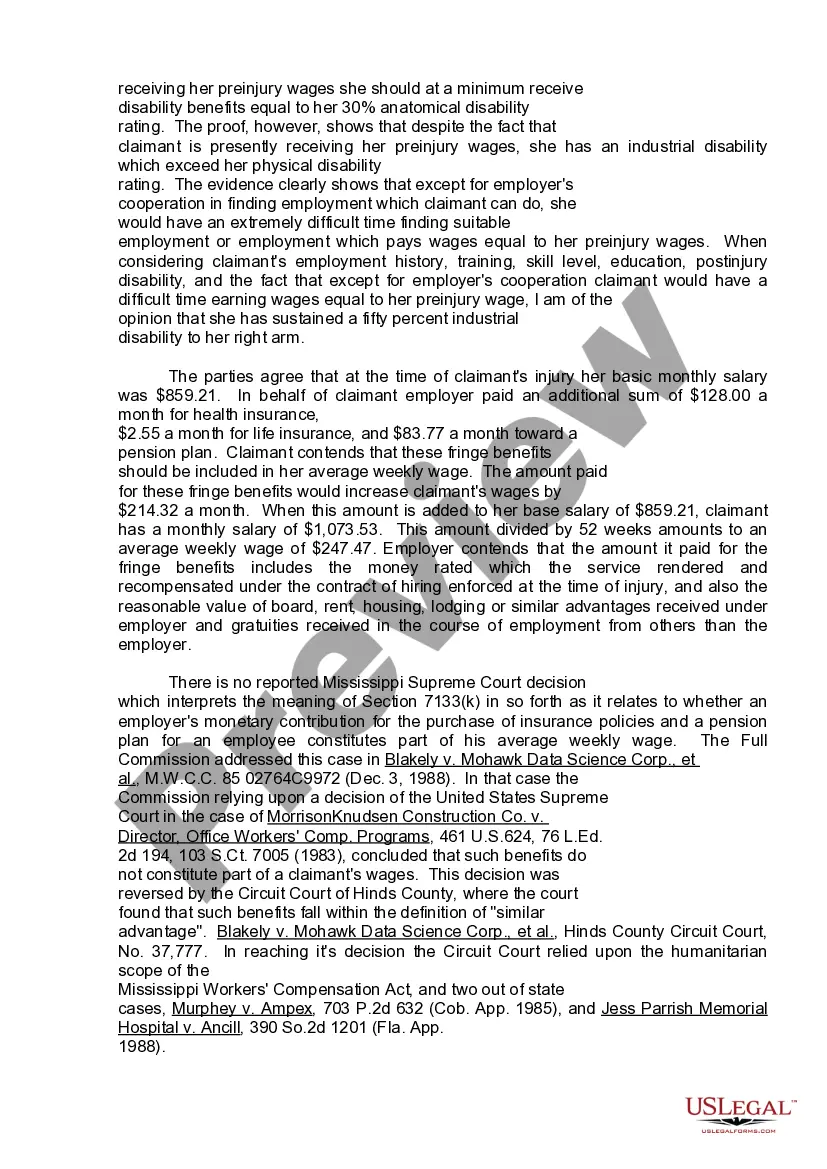
- Evaluation of evidence: Details the evidence presented, including testimony and medical evaluations.
- Disputes: Clarifies the key issues under consideration, including disability evaluations and wage calculations.
- Conclusions: Summarizes findings and decisions made by the administrative judge.

When to use this document
This form is used when a party is required to submit an order to the court, typically following an administrative hearing related to workers' compensation claims. It is appropriate when there is a disagreement about a claim's merits or the extent of disability benefits due to an injury. Use this form to formalize the outcomes of these hearings and ensure compliance with the court's directives.
Who this form is for
- Claimants seeking formal documentation of a court ruling regarding their workers' compensation benefits.
- Attorneys representing claimants or defendants in administrative hearings.
- Employers involved in workers' compensation disputes where a formal order is required.
- Insurance companies managing workers' compensation claims and obligations.
How to complete this form
- Identify the parties: Clearly state the names of the claimant and defendant along with their representatives.
- Enter the case number: Fill in the appropriate case number assigned by the court.
- Specify the date and location: Include the date of the hearing and the relevant jurisdiction.
- Detail the evidence: Summarize the evidence presented during the hearing, focusing on medical evaluations and testimony.
- Outline the judge's order: Clearly state the findings and directives that the judge has ruled upon.
- Sign and file: Ensure the order is signed and submitted to the court as required.
Notarization requirements for this form
In most cases, this form does not require notarization. However, some jurisdictions or signing circumstances might. US Legal Forms offers online notarization powered by Notarize, accessible 24/7 for a quick, remote process.
Get your form ready online
Our built-in tools help you complete, sign, share, and store your documents in one place.
Make edits, fill in missing information, and update formatting in US Legal Forms—just like you would in MS Word.
Download a copy, print it, send it by email, or mail it via USPS—whatever works best for your next step.
Sign and collect signatures with our SignNow integration. Send to multiple recipients, set reminders, and more. Go Premium to unlock E-Sign.
If this form requires notarization, complete it online through a secure video call—no need to meet a notary in person or wait for an appointment.
We protect your documents and personal data by following strict security and privacy standards.

Make edits, fill in missing information, and update formatting in US Legal Forms—just like you would in MS Word.

Download a copy, print it, send it by email, or mail it via USPS—whatever works best for your next step.

Sign and collect signatures with our SignNow integration. Send to multiple recipients, set reminders, and more. Go Premium to unlock E-Sign.

If this form requires notarization, complete it online through a secure video call—no need to meet a notary in person or wait for an appointment.

We protect your documents and personal data by following strict security and privacy standards.
Common mistakes
- Failing to include all parties involved in the case.
- Not summarizing the evidence adequately or accurately.
- Omitting necessary details such as dates and locations.
- Neglecting to sign the order before filing.
- Using outdated or incorrect case numbers.
Advantages of online completion
- Convenience: Download and complete the form at your convenience, avoiding the need for a physical visit to a legal office.
- Editability: Easily modify the form to fit your specific case requirements.
- Access to legal expertise: Benefit from templates created by licensed attorneys, ensuring compliance with legal standards.
- Time-efficient: Quickly obtain the necessary documentation needed for court submissions.
Legal use & context
- The Order of Administrative Judge is legally binding once signed by the judge.
- Non-compliance may result in legal repercussions, including contempt of court charges.
- The form serves as a model and must be adapted to reflect the unique details of each individual case.
- It is essential to ensure that the order accurately represents the judge's findings and directives.
Key takeaways
- The Order of Administrative Judge is a crucial document in workers' compensation disputes.
- Accurate completion and filing are essential to avoid legal consequences.
- Understanding the context of the order can aid in better preparation for hearings.
- Using an online version of the form offers numerous advantages, including legal guidance and ease of use.
Looking for another form?
Form popularity
FAQ
Administrative law judges (ALJs) preside at administrative hearings in order to resolve disputes between government agencies and people affected by the decisions of those agencies.ALJs can administer oaths, rule on questions of evidence, hear testimony, and make rulings, very much like a trial judge.
Sometimes (rarely) an ALJ will announce a favorable decision at the hearing. Usually, however, it takes 2-3 months to get a decision. Sometimes it can take six months or longer. (In our experience, the longer it takes for the ALJ to make a decision, the more likely it is that the decision will be unfavorable.)
Be respectful of the administrative process, and address the Administrative Law Judge as Your Honor , Judge, or Mr. or Ms2026. but do not address the Judge by his or her first name or as a hearing officer. 2. WELL... ISN'T THAT SPECIAL?
Administrative Order a legal document issued by an administrative agency such as the Environmental Protection Agency (EPA) directing an individual, business, or other entity to take corrective action or refrain from an activity. It describes the violations and actions to be taken and can be enforced in court.
An administrative law judge (ALJ) in the United States is a judge and trier of fact who both presides over trials and adjudicates claims or disputes (in other words, ALJ-controlled proceedings are bench trials) involving administrative law.
An administrative law judge serves as both the judge and the jury in an administrative hearing. The Administrative Procedure Act requires that administrative law judges preside over hearings during formal adjudication proceedings, but they may also preside over hearings during informal adjudication.
An administrative law judge (ALJ) in the United States is a judge and trier of fact who both presides over trials and adjudicates claims or disputes (in other words, ALJ-controlled proceedings are bench trials) involving administrative law.
What usually happens to decisions of administrative law judges that are appealed to the federal court system? The decisions are usually upheld. The decisions are usually denied.If a case falls within federal jurisdiction, it may not also fall within state jurisdiction.