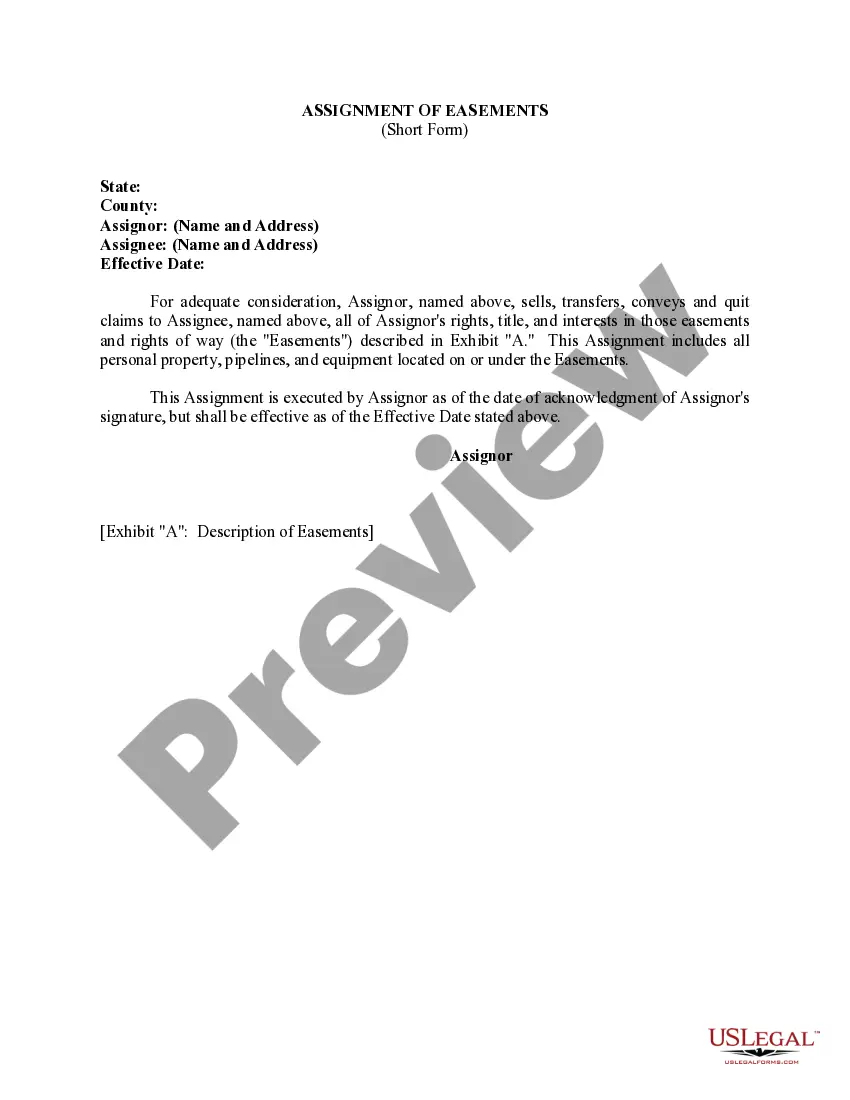
Assignment of Easements and Rights of Way
Description
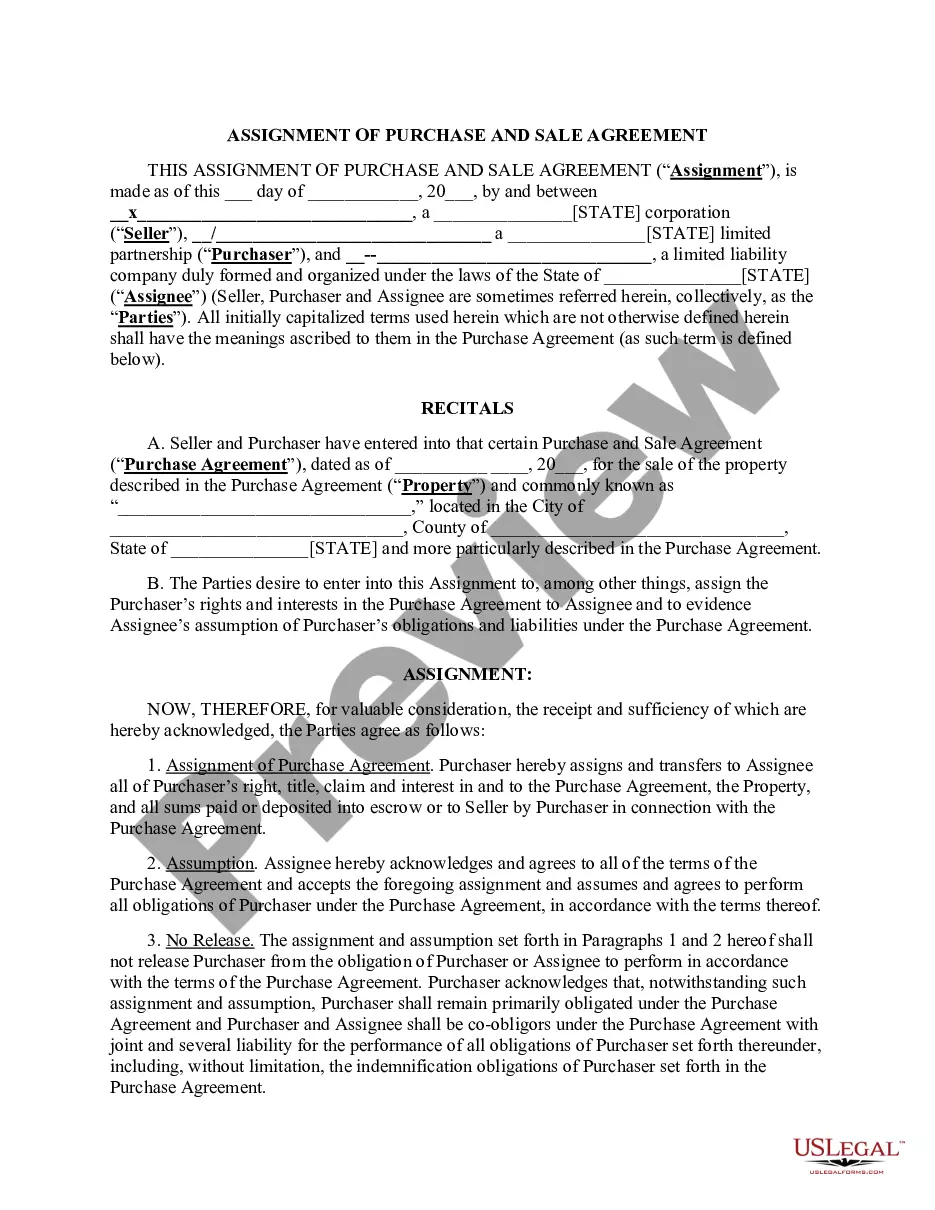
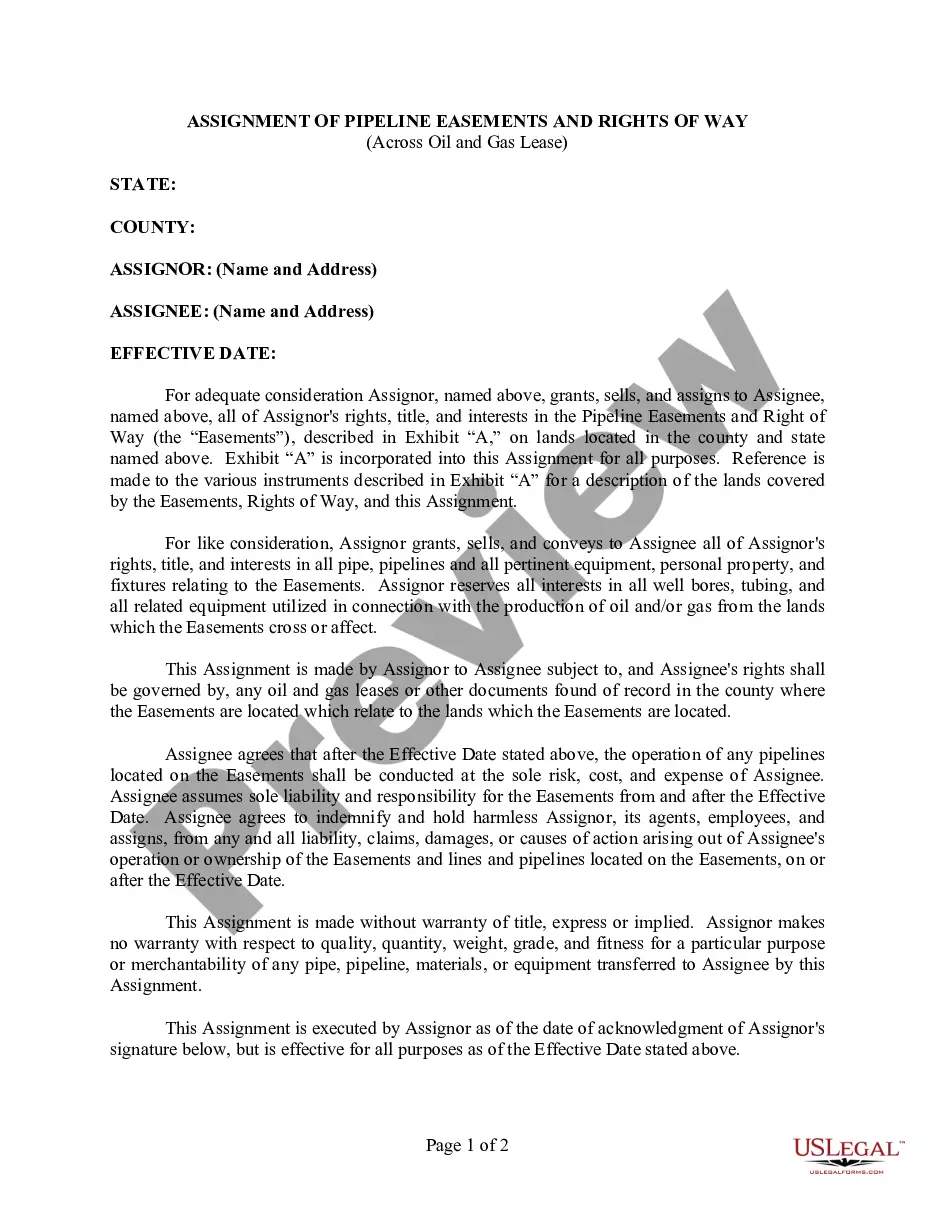
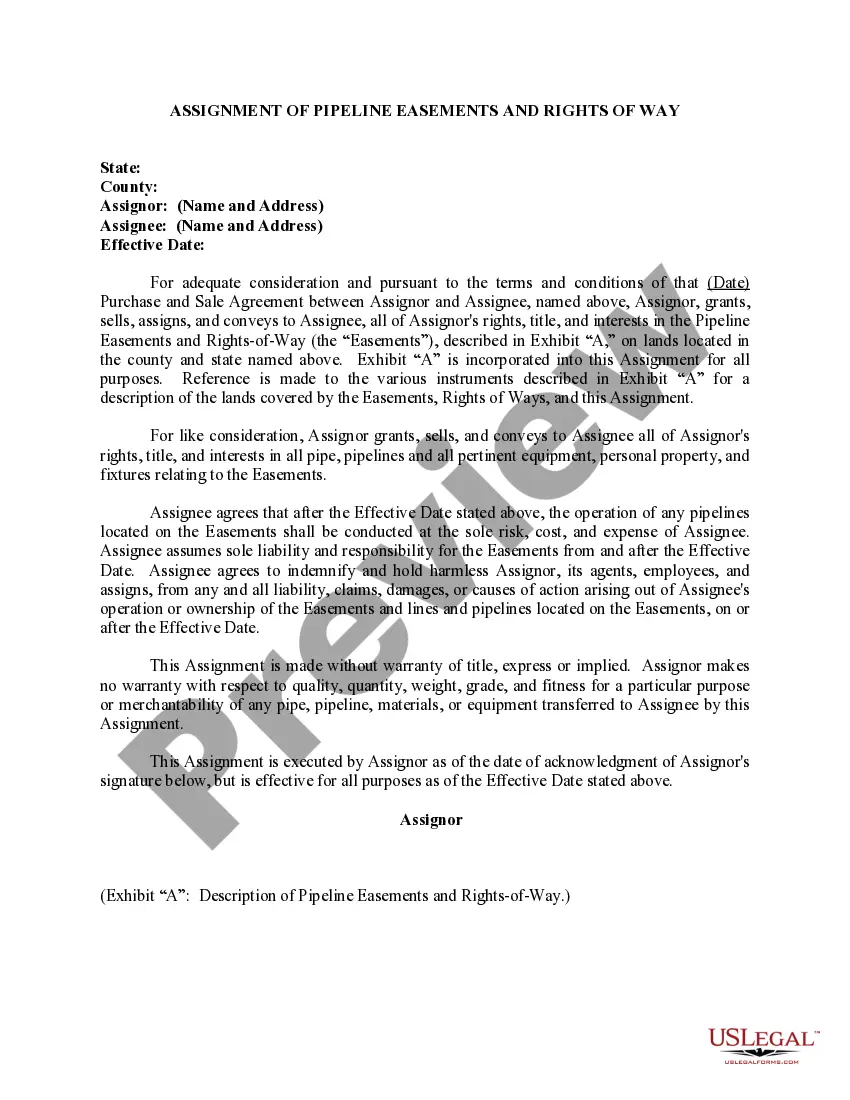
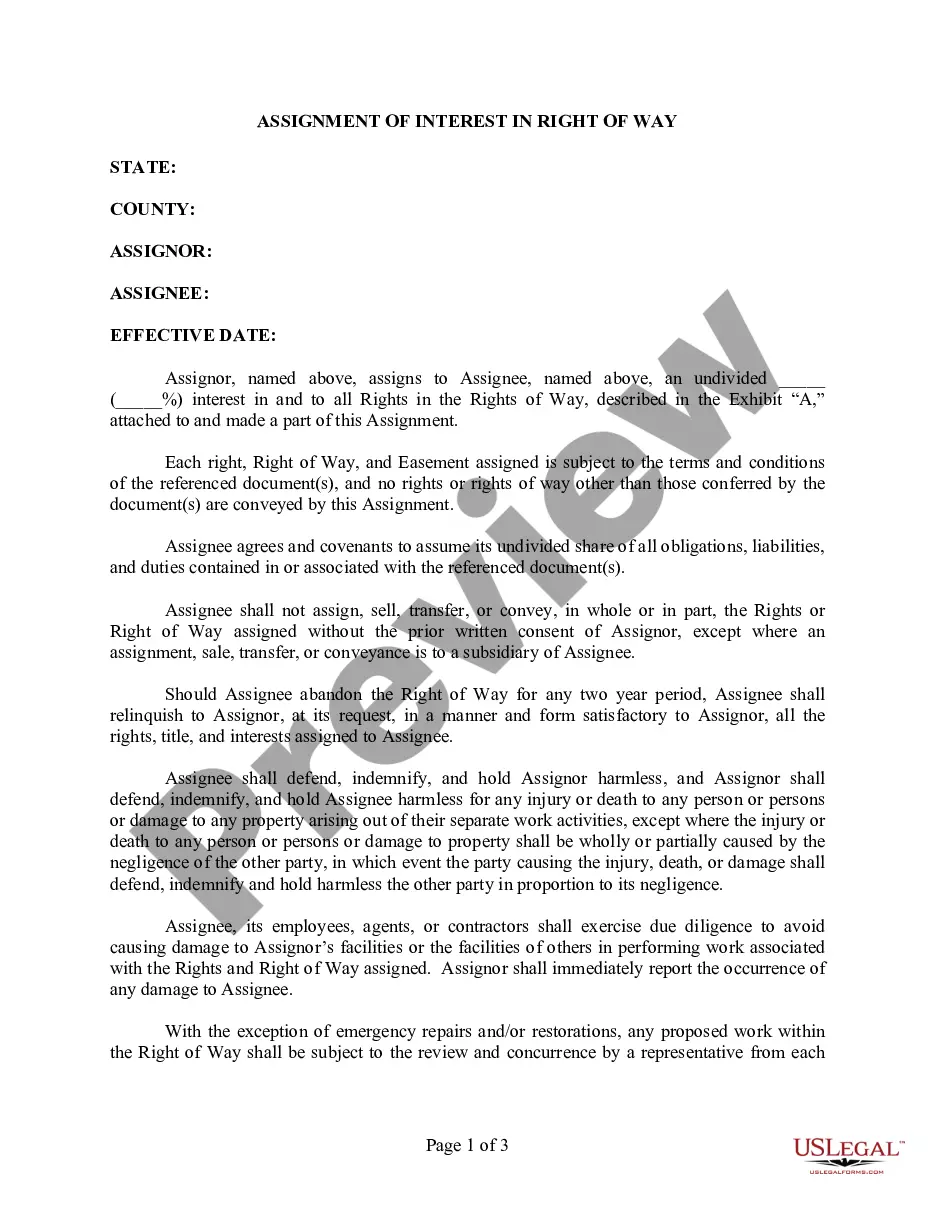
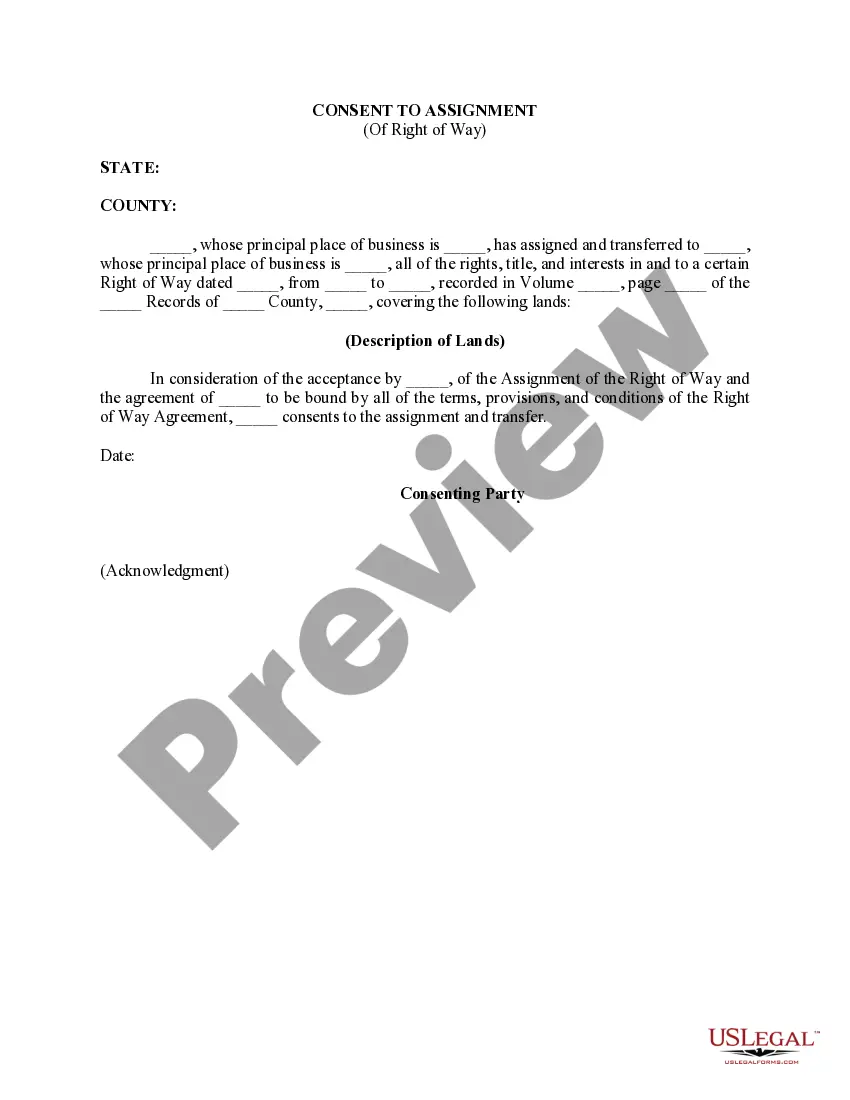

How to fill out Assignment Of Easements And Rights Of Way?
When it comes to drafting a legal form, it is easier to leave it to the experts. However, that doesn't mean you yourself can’t get a template to use. That doesn't mean you yourself can not get a template to use, however. Download Assignment of Easements and Rights of Way from the US Legal Forms site. It provides a wide variety of professionally drafted and lawyer-approved documents and samples.
For full access to 85,000 legal and tax forms, users simply have to sign up and choose a subscription. After you are signed up with an account, log in, look for a particular document template, and save it to My Forms or download it to your device.
To make things less difficult, we’ve included an 8-step how-to guide for finding and downloading Assignment of Easements and Rights of Way quickly:
- Make confident the document meets all the necessary state requirements.
- If available preview it and read the description before purchasing it.
- Click Buy Now.
- Choose the suitable subscription to suit your needs.
- Make your account.
- Pay via PayPal or by debit/credit card.
- Choose a preferred format if several options are available (e.g., PDF or Word).
- Download the document.
When the Assignment of Easements and Rights of Way is downloaded you are able to complete, print out and sign it in almost any editor or by hand. Get professionally drafted state-relevant files within a matter of minutes in a preferable format with US Legal Forms!
Form popularity
FAQ
A property easement is generally written and recorded with the local assessor's office. The documented easement will show up when a title search is conducted and it stays there indefinitely, unless both parties agree to remove it.
Include the whole length and width. Do this by reference to plans and a ground inspection. Deduct the "after scenario" value from the "before scenario" value to arrive at a value per unit of the easement land. Multiply by the measured area of the easement land to arrive at a total market value.
What are Easements and Rights-of-Way? Easements are nonpossessory interests in real property. More simply, an easement is the right to use another's property for a specific purpose. Rights-of-way are easements that specifically grant the holder the right to travel over another's property.
Easements are usually but not always registered on the Title to the property. Registration takes place with Land and Property Information in NSW and the Office of Regulatory Services in the ACT. The purpose of registering an easement over land is to show on the public record that an easement exists.
An easement is a limited right to use another person's land for a stated purpose. Examples of easements include the use of private roads and paths, or the use of a landowner's property to lay railroad tracks or electrical wires.
Easements will be shown on the survey and are usually delineated by dashed lines. Easements are not ownership, but are Rights, usually for a specific use. An example of an easement would be a 10' utility easement on your property.
The duration of the easement. The amount of use. Who else can use the easement.
Give the document a simple title: Grant of Easement is sufficient. Identify the parties. You need to explain who the parties are to the agreement. The person granting the easement to his property is the Grantor and the person gaining access to the property is the Grantee.
If you want to know where any utility easements are located on your property, call the utility company. Or you can go to the county land records office or city hall and ask a clerk to show you a map of the easement locations. A survey of the property will also show the location of utility easements.