Self-Employed Environmental Testing Service Contract
What is this form?
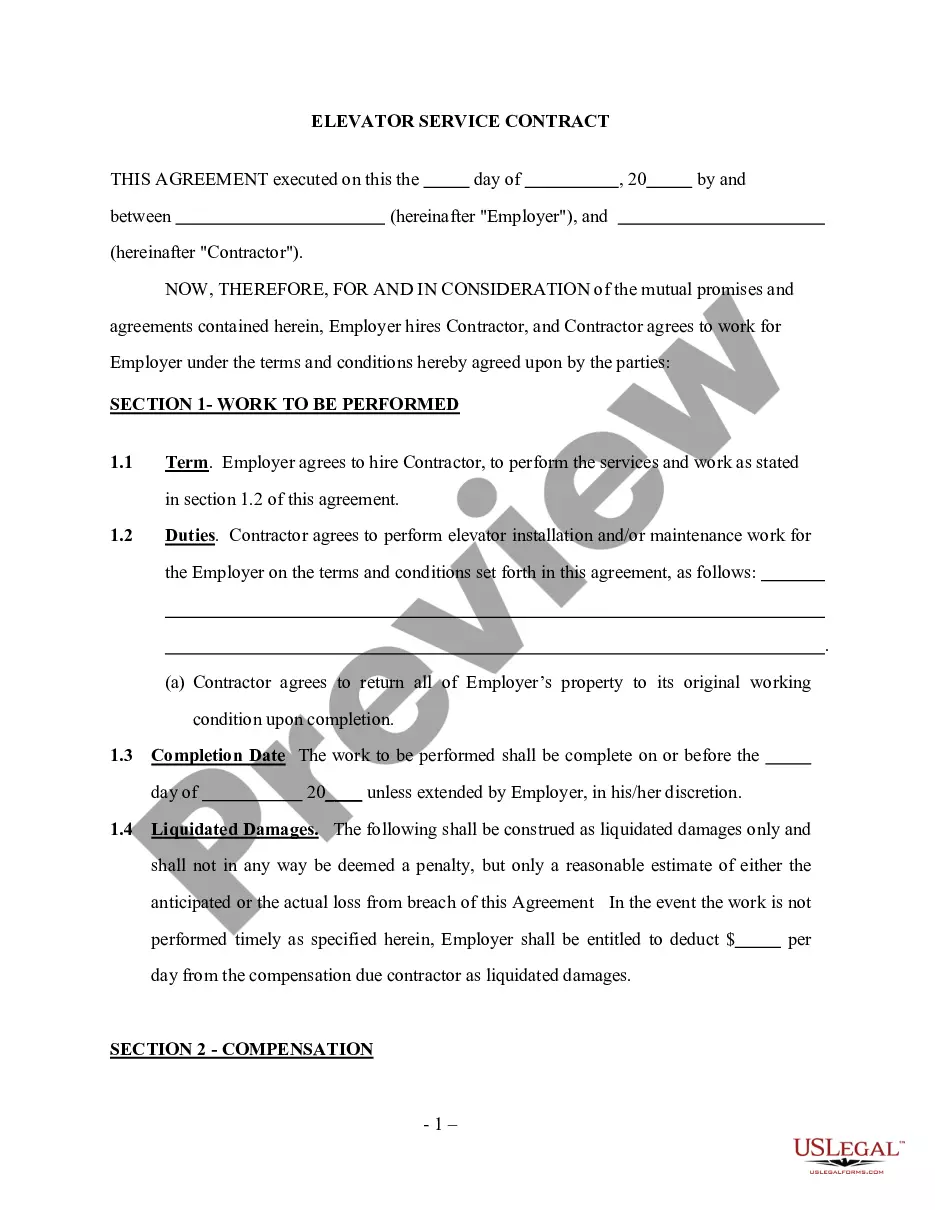
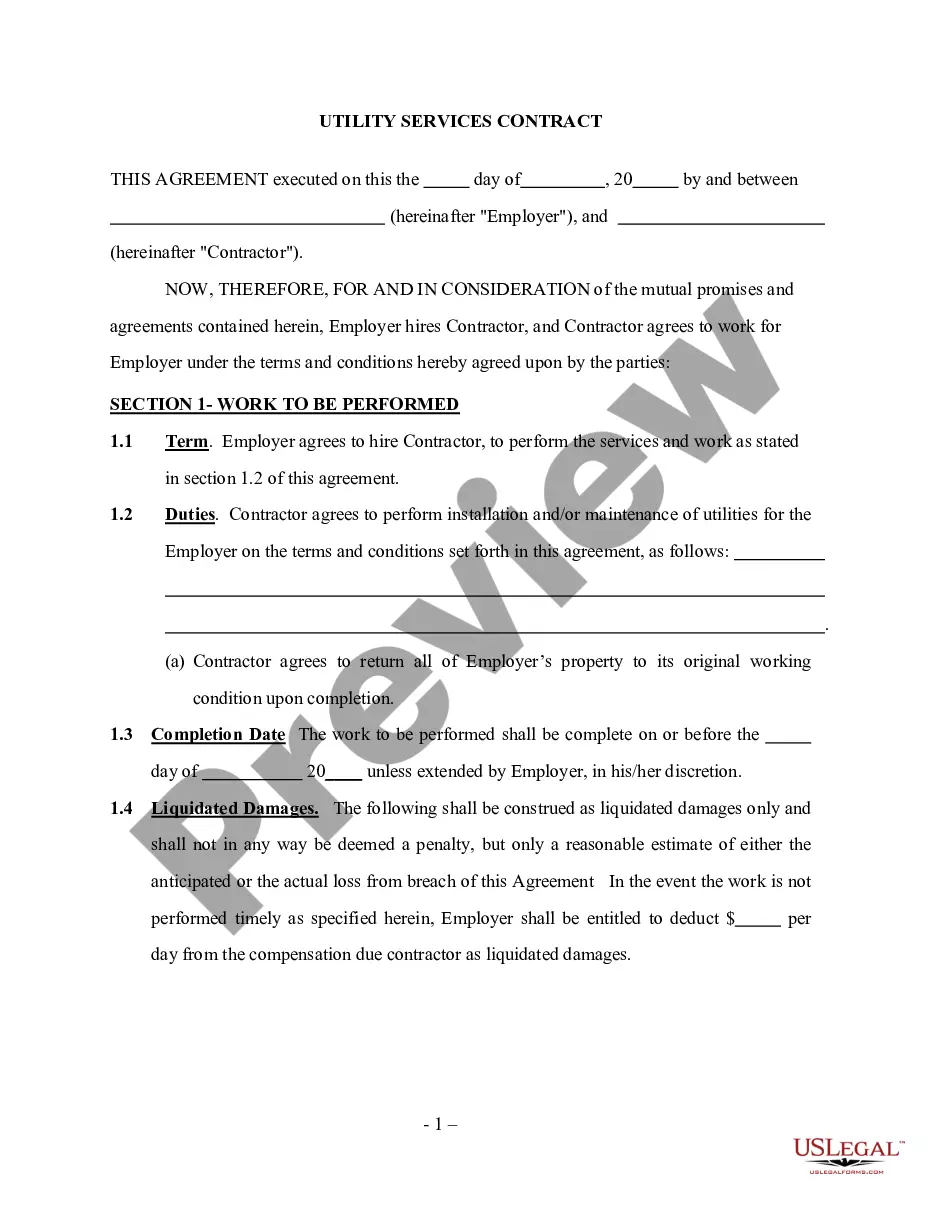
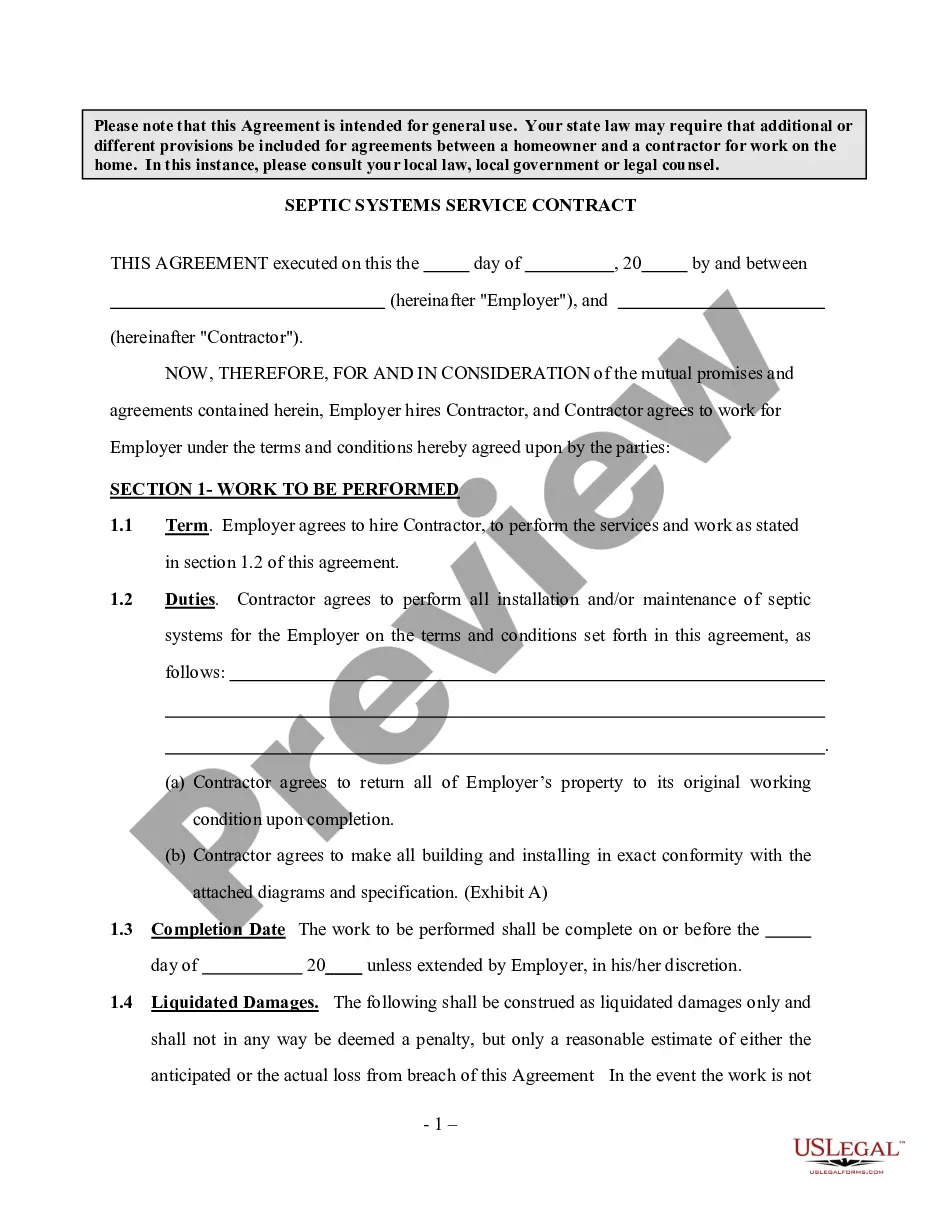
The Self-Employed Environmental Testing Service Contract is a legal document that formalizes the agreement between an employer and an independent contractor for environmental testing services. Unlike standard employment contracts, this form distinctly identifies the contractor as an independent entity, emphasizing no employer-employee relationship. This ensures both parties understand their rights and responsibilities concerning the contracted work.
Key components of this form
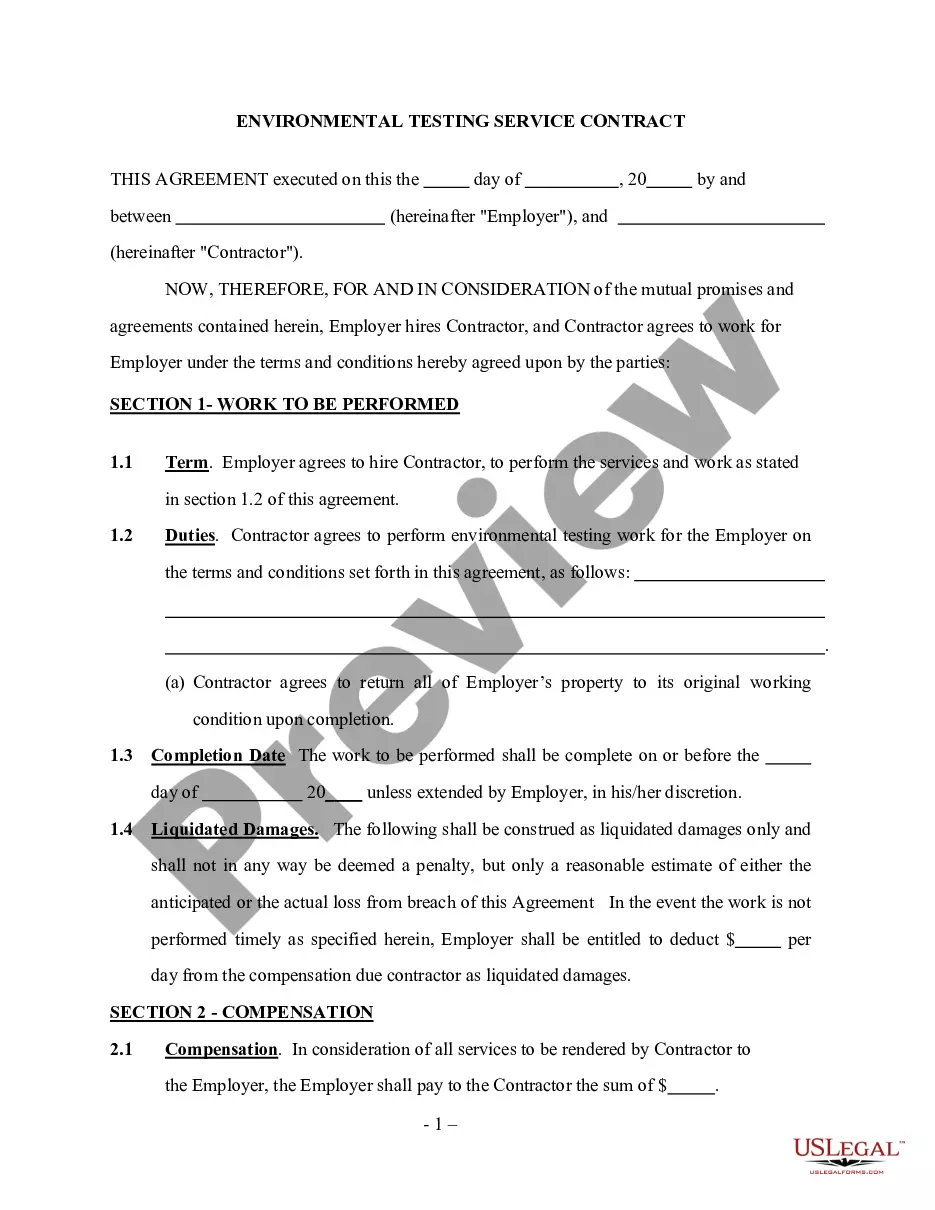
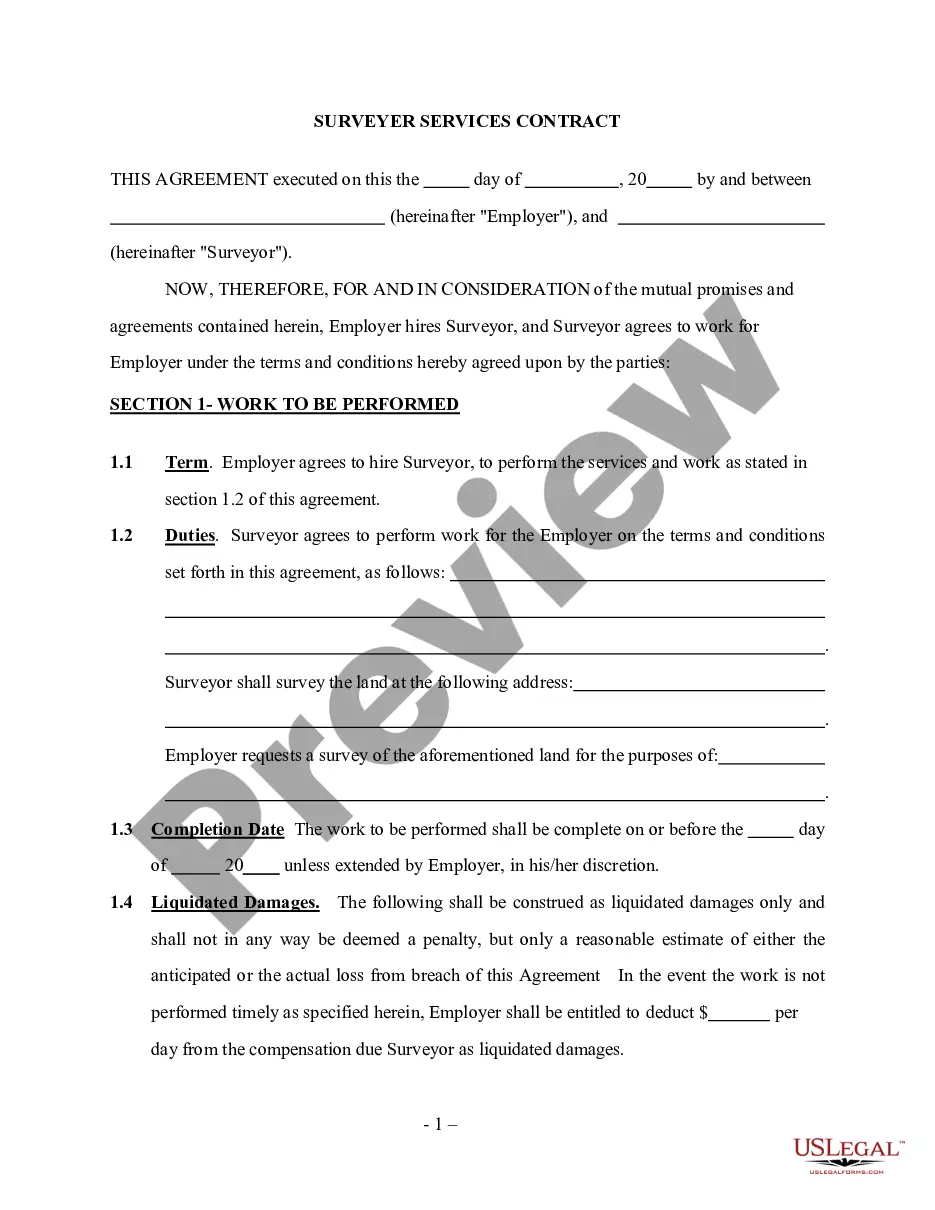
- Section 1 - Work to be performed: Details the specific services the contractor will provide.
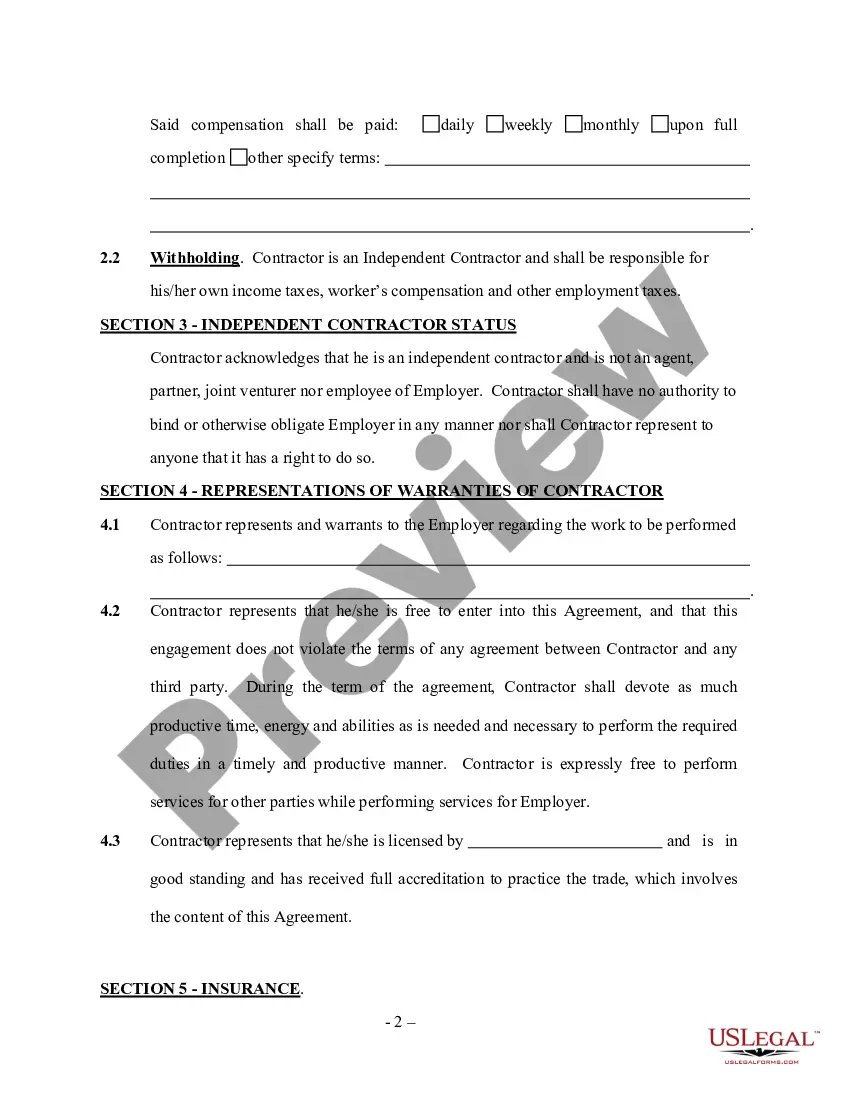
- Section 3 - Independent contractor status: Clarifies the relationship, stating that the contractor is not an employee.
- Section 4 - Representations and warranties: Outlines the promises made by the contractor regarding their qualifications and capabilities.
Situations where this form applies
This form is essential when an employer needs to hire an independent contractor for environmental testing services. Common scenarios include hiring contractors for soil testing, water analysis, or hazardous material assessments. Use this contract to ensure all details regarding the nature of the work and compensation are clearly outlined, preventing misunderstandings or disputes later on.
Who should use this form
This form is intended for:
- Employers seeking to contract independent professionals for environmental testing.
- Independent contractors who provide environmental testing services and wish to formalize their agreements.
- Companies needing clarity on compliance and contractual obligations in environmental assessments.
Steps to complete this form
- Identify the parties: Clearly state the names and addresses of both the employer and the contractor.
- Specify the work: In Section 1, detail the environmental testing services to be performed.
- Include contract duration: Indicate the term of the engagement under Section 1.1.
- Acknowledge contractor status: Ensure Section 3 is completed to clarify the independent contractor relationship.
- Sign and date: Both parties must sign and date the contract to make it legally binding.
Does this document require notarization?
In most cases, this form does not require notarization. However, some jurisdictions or signing circumstances might. US Legal Forms offers online notarization powered by Notarize, accessible 24/7 for a quick, remote process.
Get your form ready online
Our built-in tools help you complete, sign, share, and store your documents in one place.
Make edits, fill in missing information, and update formatting in US Legal Forms—just like you would in MS Word.
Download a copy, print it, send it by email, or mail it via USPS—whatever works best for your next step.
Sign and collect signatures with our SignNow integration. Send to multiple recipients, set reminders, and more. Go Premium to unlock E-Sign.
If this form requires notarization, complete it online through a secure video call—no need to meet a notary in person or wait for an appointment.
We protect your documents and personal data by following strict security and privacy standards.

Make edits, fill in missing information, and update formatting in US Legal Forms—just like you would in MS Word.

Download a copy, print it, send it by email, or mail it via USPS—whatever works best for your next step.

Sign and collect signatures with our SignNow integration. Send to multiple recipients, set reminders, and more. Go Premium to unlock E-Sign.

If this form requires notarization, complete it online through a secure video call—no need to meet a notary in person or wait for an appointment.

We protect your documents and personal data by following strict security and privacy standards.
Avoid these common issues
- Failing to clearly define the scope of work, leading to potential disputes.
- Not acknowledging the independent contractor status, which can create misclassification issues.
- Overlooking the need for signatures, rendering the contract unenforceable.
Why use this form online
- Convenience of downloading and editing the contract from anywhere.
- Pre-drafted by licensed attorneys, ensuring compliance with legal standards.
- Ability to customize the form to suit specific needs and circumstances.
Looking for another form?
Form popularity
FAQ
The climate crisis is accelerating at an unprecedented rate, and we are not ready for it. While the crisis has many factors that play a role in its exacerbation, there are some that warrant more attention than others. Poor Governance. Food Waste. Biodiversity Loss. Plastic Pollution. Deforestation. Air Pollution. Agriculture.
Climate Change. We are all no stranger to the term 'climate change' but what does it actually mean for us, along with the animals and habitats that we live amongst? Endangered Species. Pollution. Disposal Of Waste. Overpopulation. Making The Planet 'Greener'
The climate crisis is accelerating at an unprecedented rate, and we are not ready for it. While the crisis has many factors that play a role in its exacerbation, there are some that warrant more attention than others. Poor Governance. Food Waste. Biodiversity Loss. Plastic Pollution. Deforestation. Air Pollution. Agriculture.
The list of issues surrounding our environment go on, but there are three major ones that affect the majority of them overall: global warming and climate change; water pollution and ocean acidification; and loss of biodiversity.
The major environmental problems are pollution, global warming, ozone layer depletion, acid rain, natural resource depletion, overpopulation, waste disposal, deforestation and loss of biodiversity.
An ecosystem (also called as environment) is a natural unit consisting of all plants, animals and micro-organisms (biotic factors) in an area functioning together with all of the non-living physical (abiotic) factors of the environment.
Pollution. Global warming. Overpopulation. Waste disposal. Ocean acidification. Loss of biodiversity. Deforestation. Ozone layer depletion.