Colorado Subcontractors Package
Understanding this form package
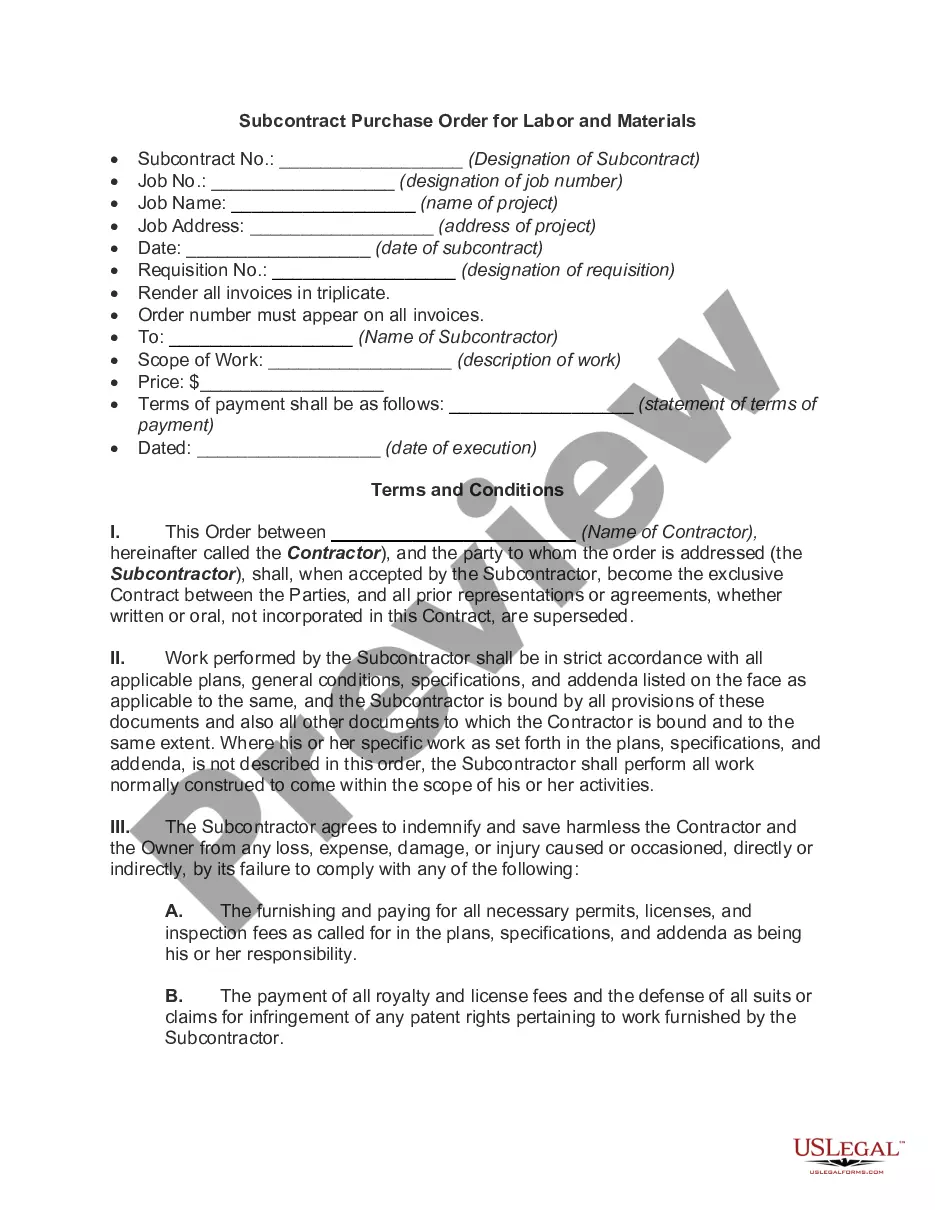
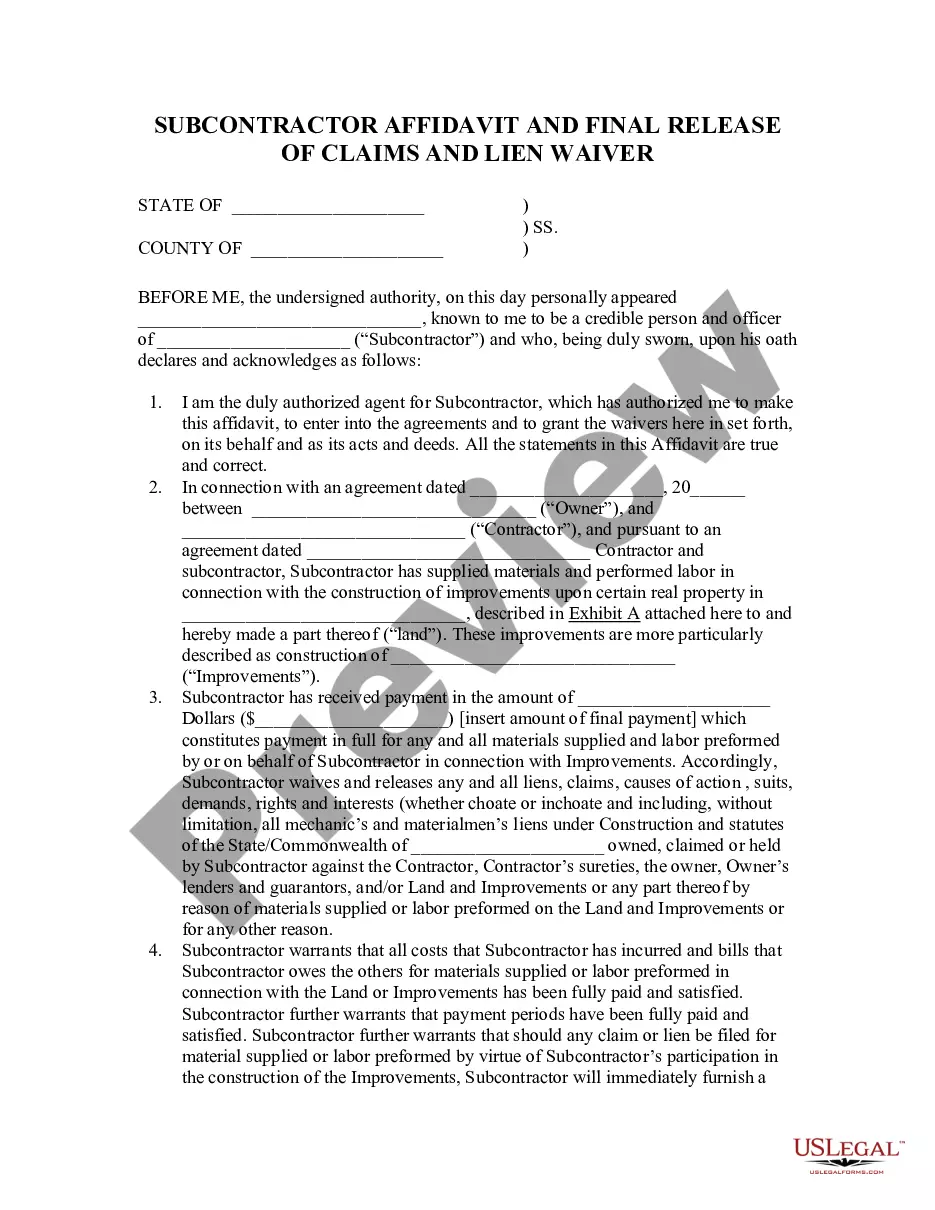
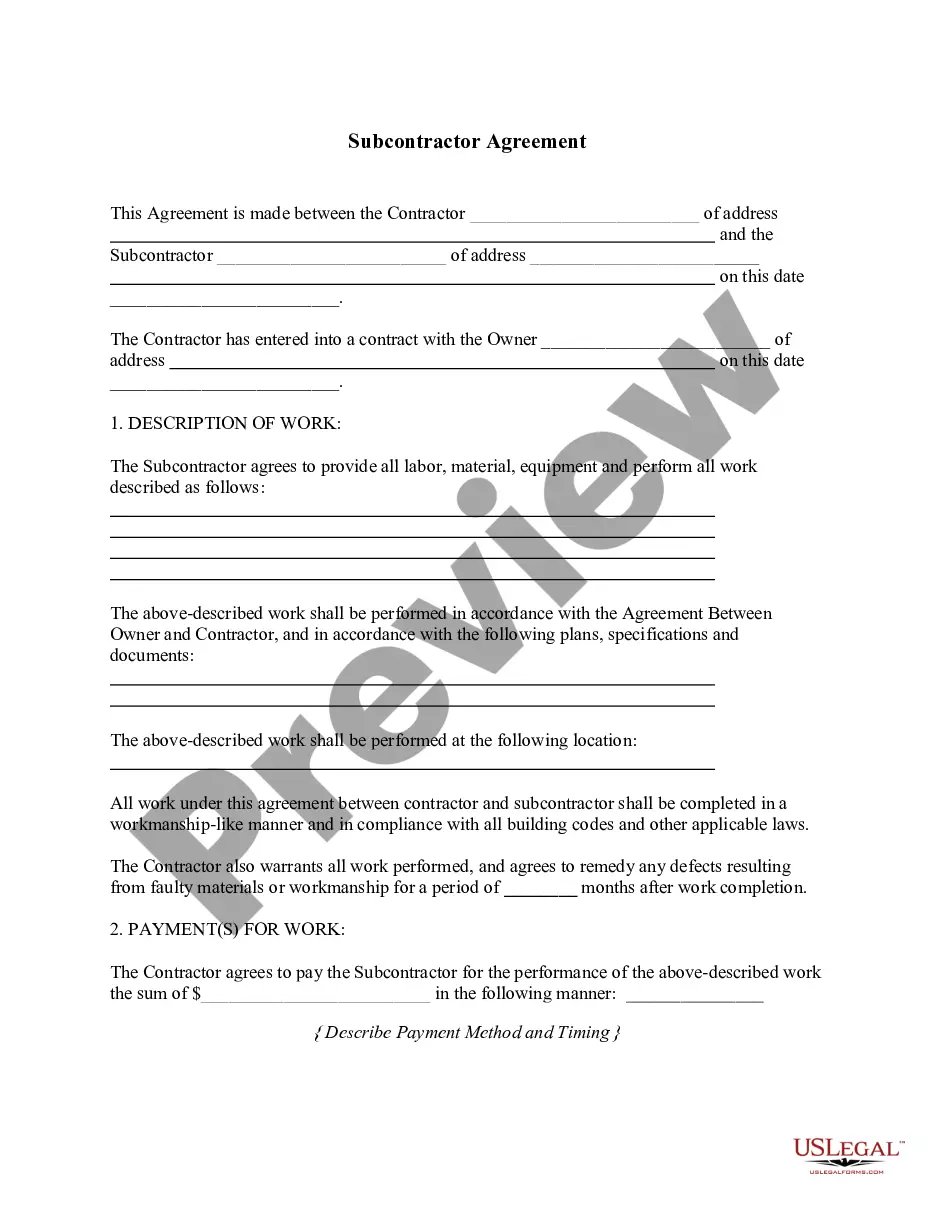
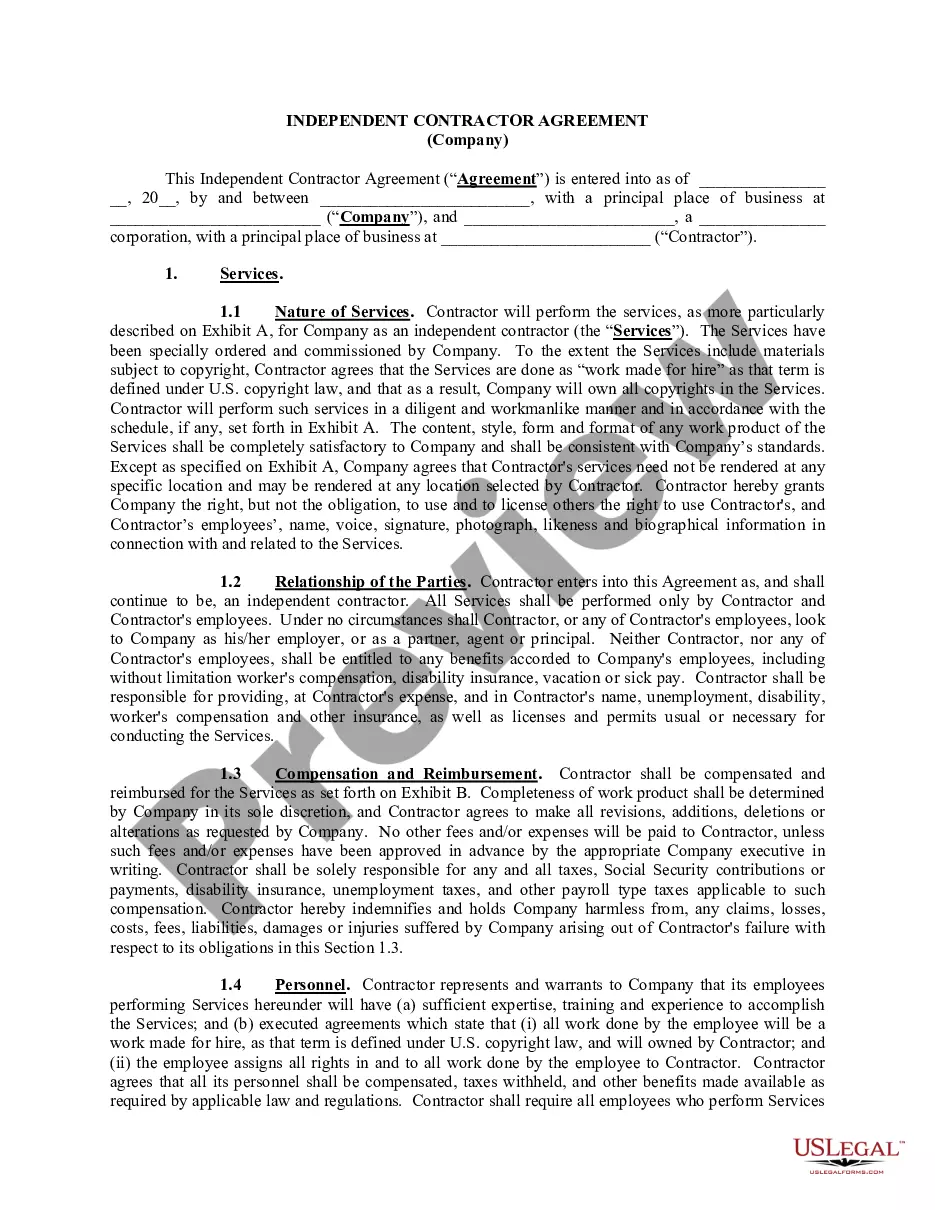
The Colorado Subcontractors Package is a comprehensive set of legal documents specifically designed for subcontractors in the construction industry. This package includes essential forms that help manage construction projects while safeguarding your legal rights. It features a subcontractor's agreement compliant with Colorado state law, differentiating it from generic subcontractor form packages.
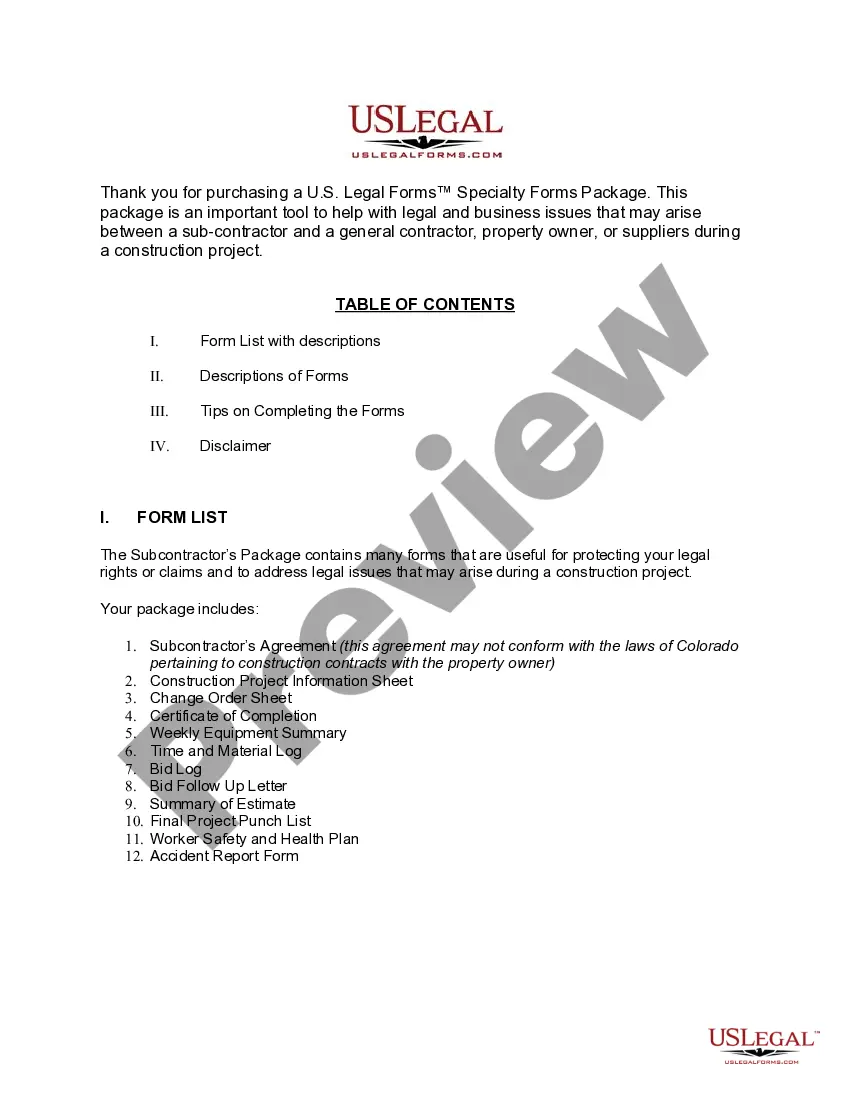
Forms you’ll find in this package
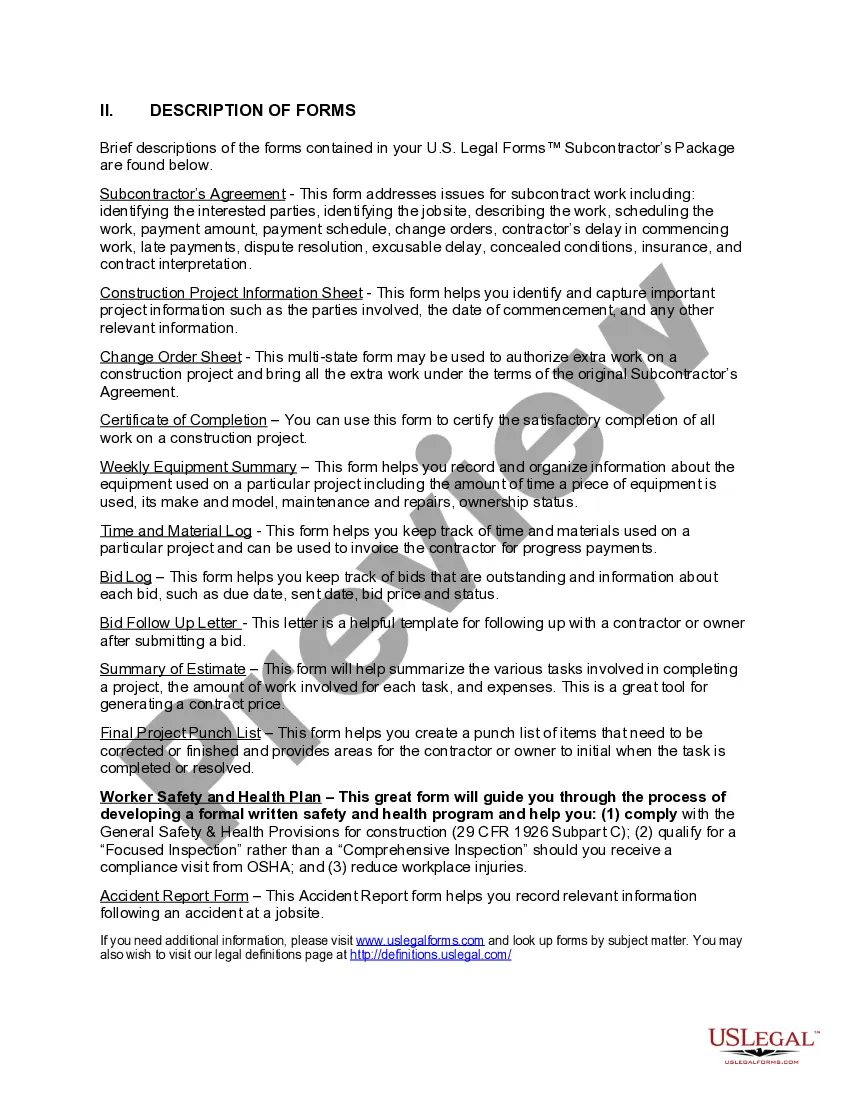
- Subcontractor's Agreement
- Contractor's Weekly Equipment Summary
- Contractor's Time and Materials Log
- Contractor's Bid Log
- Contractor's Bid Follow Up Letter
- Contractor's Summary of an Estimate
- Contractor's Final Punch List
- Construction Accident Report
- Construction Safety and Health Plan
- Change Order for Construction or Repairs by Contractor
- Certification of Completion by Contractor
- Construction Project Information Sheet

Situations where these forms applies
This form package is useful in various scenarios, including:
- Initiating a subcontractor agreement for construction projects.
- Documenting project details and changes during construction.
- Tracking labor and materials to ensure proper invoicing.
- Ensuring workplace safety and compliance with regulations.
- Finalizing project requirements and correcting deficiencies.
Who needs this form package
- Subcontractors engaged in construction work in Colorado.
- Construction businesses looking to streamline their documentation process.
- Individuals or organizations requiring legal protection for their construction projects.
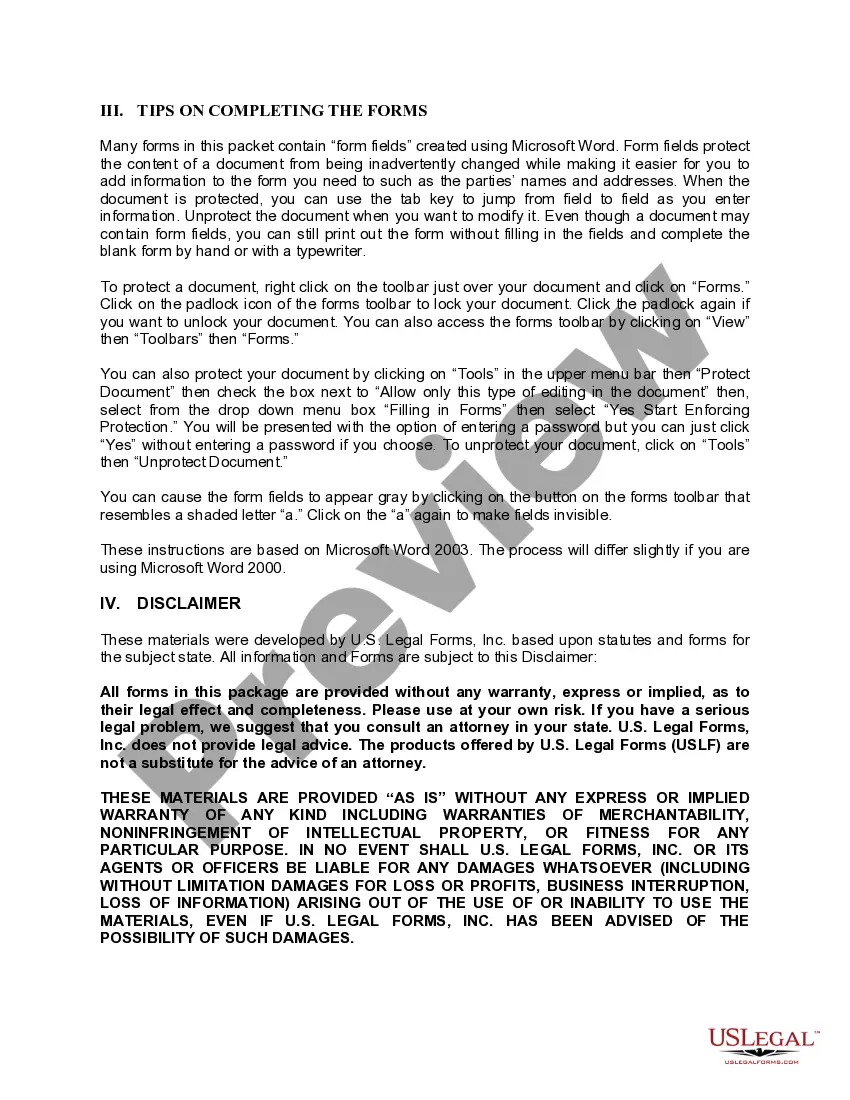
How to complete these forms
- Review the included forms to understand their purpose and requirements.
- Identify the parties involved in the construction project.
- Enter necessary information, such as dates and project details.
- Gather signatures from all relevant parties to validate the documents.
- Keep copies of completed forms for your records and future reference.
Notarization guidance for this package
Most forms in this package do not require notarization. However, local laws or specific situations may demand it. Our online notarization service, powered by Notarize, lets you complete the process through a verified video call, available anytime.
Get your form ready online
Our built-in tools help you complete, sign, share, and store your documents in one place.
Make edits, fill in missing information, and update formatting in US Legal Forms—just like you would in MS Word.
Download a copy, print it, send it by email, or mail it via USPS—whatever works best for your next step.
Sign and collect signatures with our SignNow integration. Send to multiple recipients, set reminders, and more. Go Premium to unlock E-Sign.
If this form requires notarization, complete it online through a secure video call—no need to meet a notary in person or wait for an appointment.
We protect your documents and personal data by following strict security and privacy standards.

Make edits, fill in missing information, and update formatting in US Legal Forms—just like you would in MS Word.

Download a copy, print it, send it by email, or mail it via USPS—whatever works best for your next step.

Sign and collect signatures with our SignNow integration. Send to multiple recipients, set reminders, and more. Go Premium to unlock E-Sign.

If this form requires notarization, complete it online through a secure video call—no need to meet a notary in person or wait for an appointment.

We protect your documents and personal data by following strict security and privacy standards.
Common mistakes
- Failing to specify all parties involved in the agreement.
- Not outlining detailed project information on the Construction Project Information Sheet.
- Neglecting to track changes or additional work via the Change Order Sheet.
- Inadequate documentation of safety protocols and accident reports.
- Overlooking the requirement for signatures on contracts to ensure they are binding.
Benefits of completing this package online
- Convenient access to a comprehensive set of forms, eliminating the need to search individually.
- Editability allows easy customization for specific project needs.
- Reliability, as all forms are drafted by licensed attorneys familiar with Colorado law.
- Cost savings of more than 50 percent compared to purchasing forms separately.
Looking for another form?




Form popularity
FAQ
A contractor package is a compilation of essential documents and agreements required for a contractor to operate legally and efficiently. This package often includes contracts, subcontractor agreements, permits, and insurance documents. Having a comprehensive contractor package ensures compliance with local laws and smooth project execution. By using a Colorado Subcontractors Package, contractors can simplify the process of gathering these critical documents.
The three types of subcontractors typically include general subcontractors, specialty subcontractors, and sub-subcontractors. General subcontractors manage broader aspects of a project, while specialty subcontractors focus on specific trades, like electrical or plumbing work. Sub-subcontractors are hired by the primary subcontractors to assist with niche tasks. If you're looking to understand how to engage with different subcontractors, the Colorado Subcontractors Package offers valuable insights.
The 2-year contractor rule is a guideline that affects the licensing of contractors in Colorado. It states that subcontractors must have been working under the primary contractor for at least two years to qualify for certain benefits or to challenge a contractor’s license. Understanding this rule is important for subcontractors when navigating legal and regulatory compliance. The Colorado Subcontractors Package can provide essential information about this rule and how it may impact your business.
The purpose of a subcontract agreement is to outline the responsibilities and expectations between the primary contractor and the subcontractor. It ensures that both parties understand the scope of work, payment terms, and deadlines. Additionally, a well-structured subcontract agreement helps mitigate risks and legal disputes. Utilizing the Colorado Subcontractors Package can facilitate the creation of a clear, comprehensive agreement.
A subcontract is a legal agreement between a primary contractor and a subcontractor. For instance, if a general contractor is building a house, they might hire a plumbing subcontractor to handle all the plumbing work. This arrangement allows the general contractor to manage various tasks efficiently while ensuring specialized work meets quality standards and timelines. Using a Colorado Subcontractors Package can help you draft this type of agreement effectively.
Yes, you can report a contractor to the IRS if you suspect they have failed to report their income or comply with tax obligations. Ensure you have the necessary documentation to support your claim. Utilize the Colorado Subcontractors Package to help maintain clear records, which can be useful if you need to report a contractor.
Dealing with a bad subcontractor requires a structured approach. First, communicate your concerns directly and document your discussions. If issues persist, refer to the terms outlined in the Colorado Subcontractors Package, which can guide you on next steps, including potential termination of the contract.
Holding a subcontractor accountable begins with clear contractual obligations. Establishing expectations in your agreements, like those found in the Colorado Subcontractors Package, sets the foundation for accountability. Regular communication and performance reviews also play a crucial role in ensuring that subcontractors deliver as promised.
To report a subcontractor, you should initially document the issues you have encountered. Collect any evidence such as photos, emails, or contracts. You can then file a complaint with the relevant state licensing board in Colorado, and utilizing the Colorado Subcontractors Package can help you create the necessary documentation for your report.
In most cases, the general contractor is responsible for overseeing subcontractors. This includes managing their work quality and ensuring they meet project deadlines. The Colorado Subcontractors Package simplifies this oversight by providing detailed agreements that clarify each party's responsibilities.