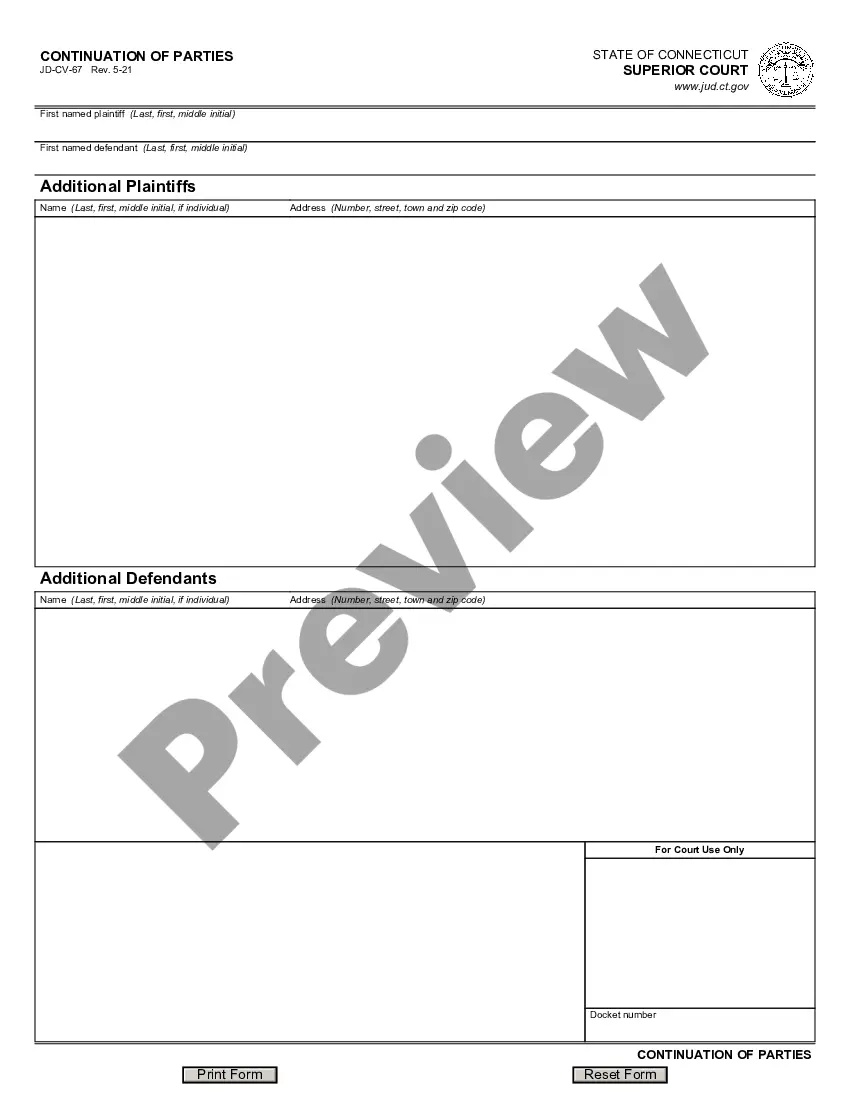
Mississippi Amended Order of Administrative Judge
Overview of this form
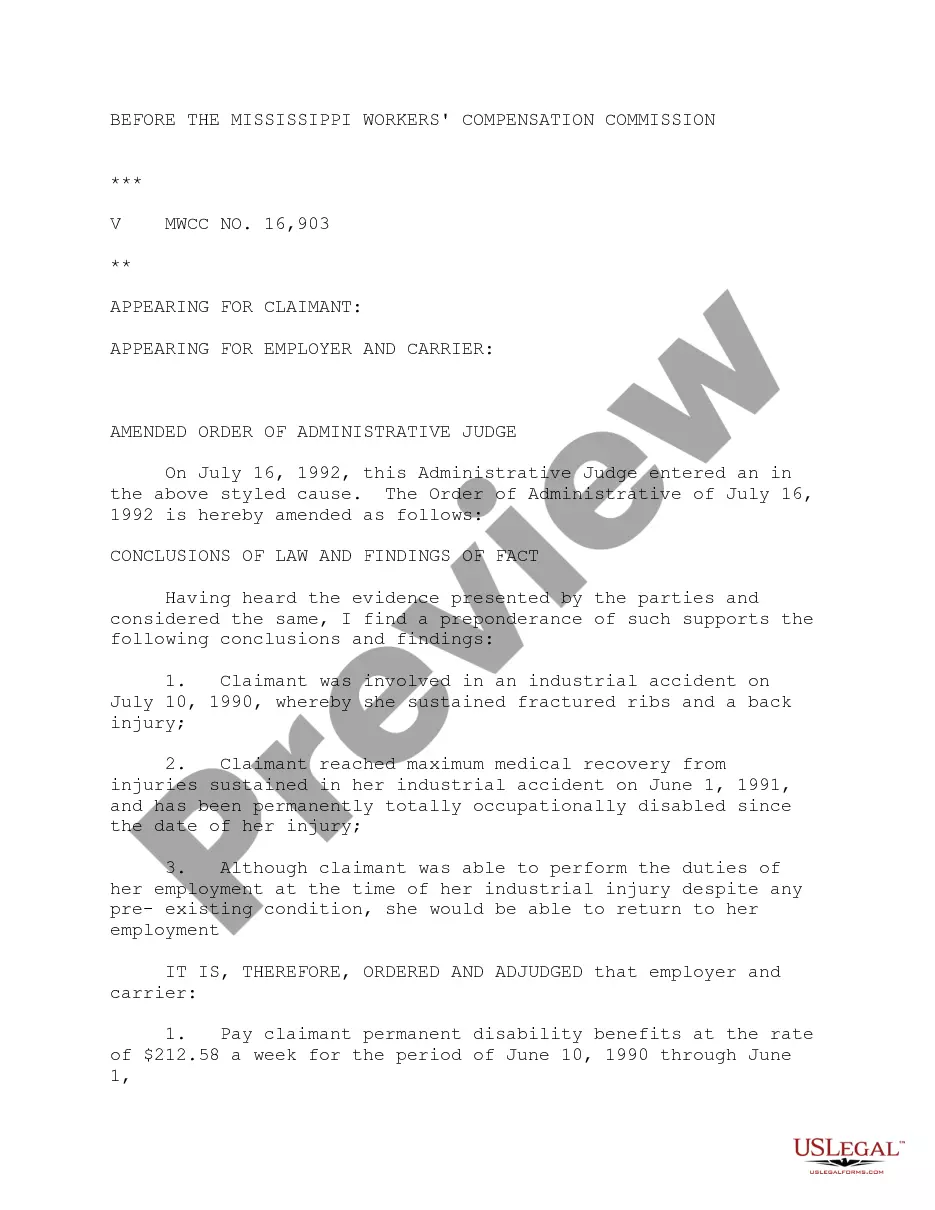
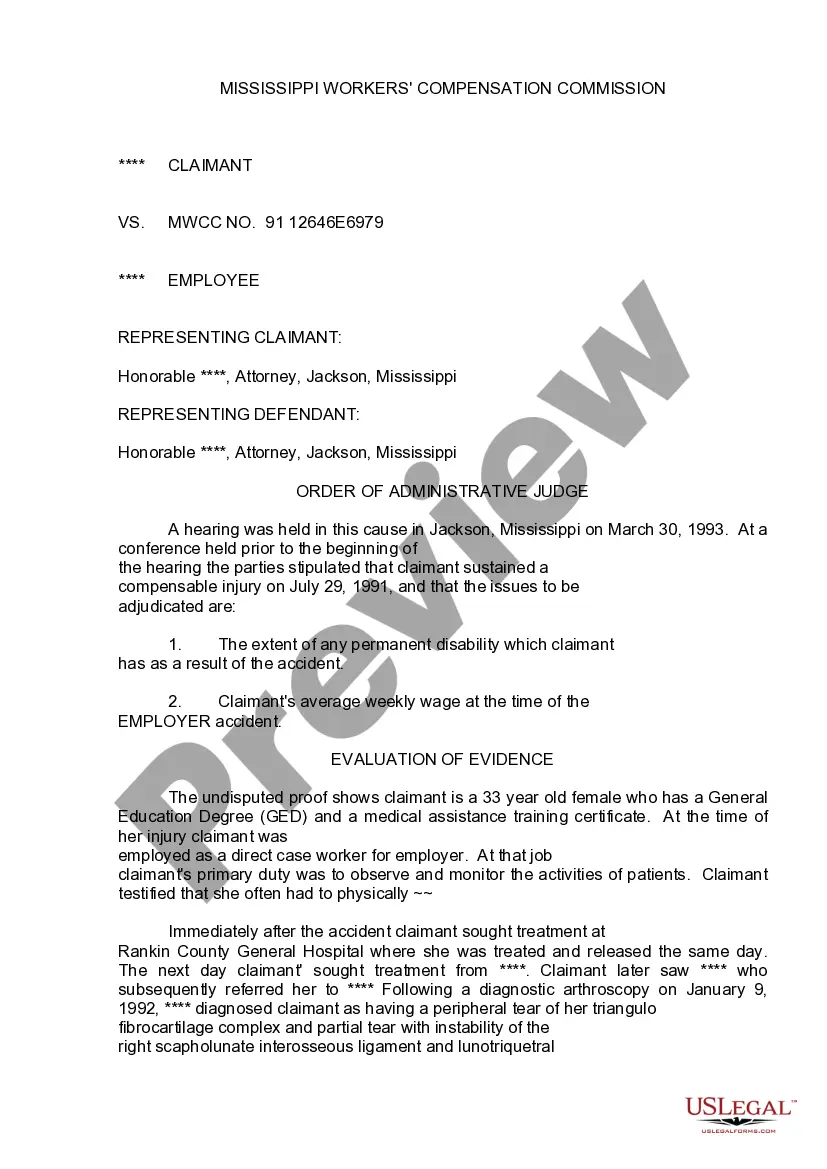
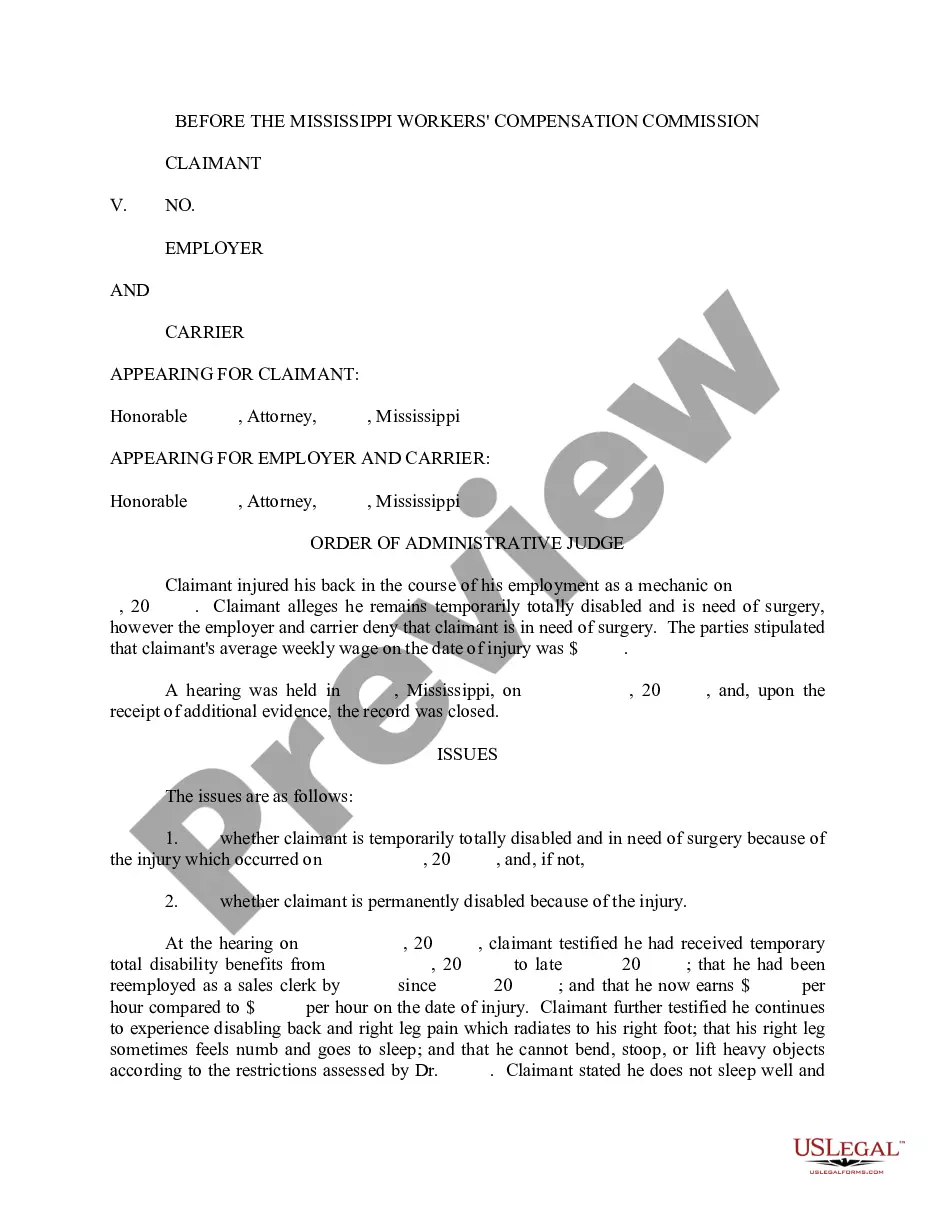
The Amended Order of Administrative Judge is a legal document used in worker's compensation cases to modify a previously issued order. It reflects new findings or decisions after reviewing the evidence related to a worker's claim for benefits. Unlike standard orders, this form specifically details amendments made to previous rulings, ensuring that all parties are informed of changes in the case status or obligations.
Key parts of this document
- Identification of the claim: Includes the MWCC number and parties involved (claimant, employer, insurance carrier).
- Statement of the original order: Describes the date and nature of the original administrative decision.
- Findings of fact: Summarizes evidence presented and conclusions drawn by the judge regarding the claimant's injuries and recovery status.
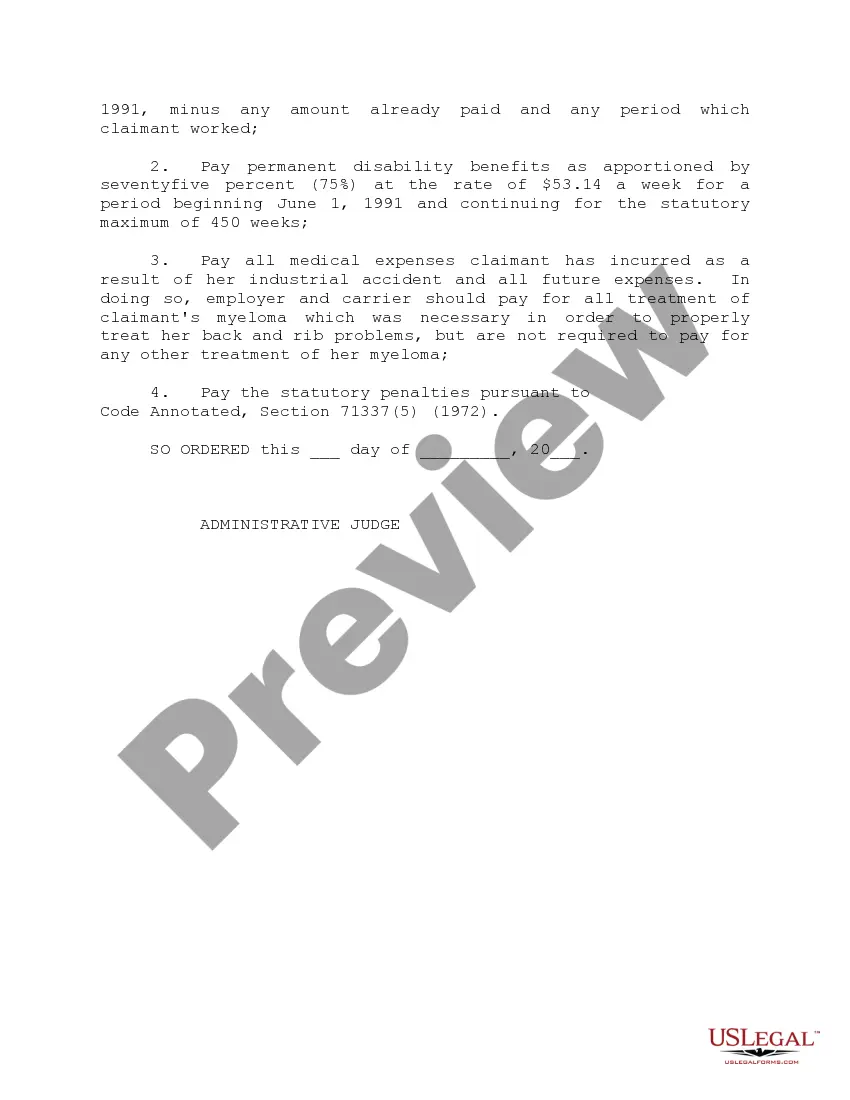
- Ordering clauses: Specifies the obligations of the employer and carrier, including payment amounts and duration for disability benefits.
- Future medical expenses: Addresses the medical care related to the claimant's injuries and any necessary treatments.
- Signature of the administrative judge: Formal confirmation of the amended order.
Situations where this form applies
This form is necessary when there are changes or corrections to a previous order issued by an administrative judge in a worker's compensation case. It is typically used when new evidence has come to light or when earlier rulings need to be clarified or adjusted based on the claimant's ongoing medical condition or the extent of their disability.
Who should use this form
- Claimants seeking to amend their previous worker's compensation orders.
- Employers and insurance carriers involved in a worker's compensation dispute.
- Legal representatives or attorneys handling worker's compensation cases for clients.
How to complete this form
- Identify all parties involved, including the claimant, employer, and insurance carrier.
- Reference the prior order by including its date and the nature of the amendments needed.
- Detail the findings of fact, including the claimant's injuries and recovery status.
- List the new obligations for the employer and carrier, including payment details.
- Include the administrative judge's signature with the date of the amended order.
Notarization requirements for this form
This form does not typically require notarization unless specified by local law. However, ensuring proper completion and adherence to state guidelines is crucial for its enforceability.
Get your form ready online
Our built-in tools help you complete, sign, share, and store your documents in one place.
Make edits, fill in missing information, and update formatting in US Legal Forms—just like you would in MS Word.
Download a copy, print it, send it by email, or mail it via USPS—whatever works best for your next step.
Sign and collect signatures with our SignNow integration. Send to multiple recipients, set reminders, and more. Go Premium to unlock E-Sign.
If this form requires notarization, complete it online through a secure video call—no need to meet a notary in person or wait for an appointment.
We protect your documents and personal data by following strict security and privacy standards.

Make edits, fill in missing information, and update formatting in US Legal Forms—just like you would in MS Word.

Download a copy, print it, send it by email, or mail it via USPS—whatever works best for your next step.

Sign and collect signatures with our SignNow integration. Send to multiple recipients, set reminders, and more. Go Premium to unlock E-Sign.

If this form requires notarization, complete it online through a secure video call—no need to meet a notary in person or wait for an appointment.

We protect your documents and personal data by following strict security and privacy standards.
Common mistakes
- Failing to reference the correct MWCC number from the original order.
- Omitting necessary details regarding medical expenses related to the claimant's injuries.
- Not including the proper signatures, which can render the order invalid.
- Using outdated information from prior orders without making necessary updates.
Why complete this form online
- Convenience of completing the form from any location at any time.
- Editable templates allow for easy customization to fit specific needs.
- Access to forms drafted by licensed attorneys ensures reliability and legality.
- Quick download for immediate use without waiting for physical copies.
What to keep in mind
- The Amended Order of Administrative Judge is crucial for modifying previous workers' compensation decisions.
- It is important for both claimants and employers to understand their rights and obligations under the amended order.
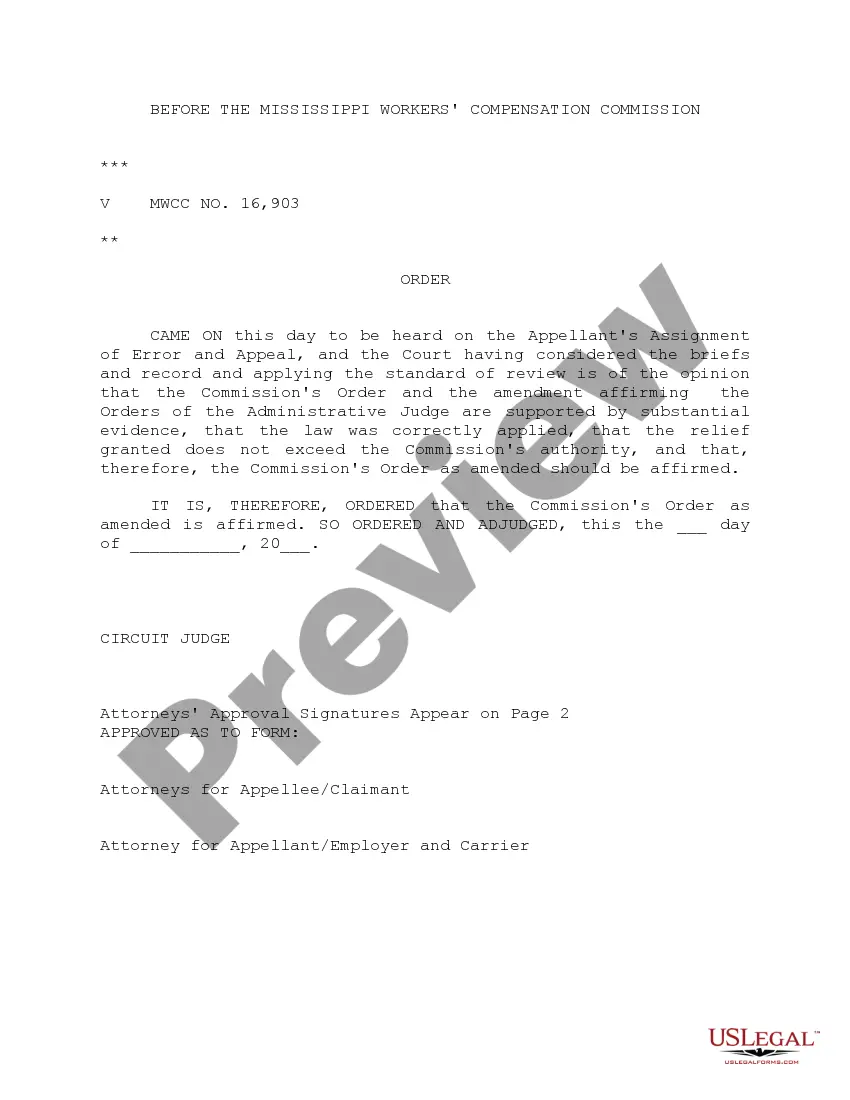
- Proper completion of this form ensures legal enforceability and clarity in compensation matters.
Looking for another form?
Form popularity
FAQ
The insurance company may use your rating to come up with a starting settlement amount, but you may want to ask for a moderately higher amount for permanent disability compensation, plus the cost of future medical treatment and any past-due temporary disability benefits.
Approximately 5% of workers' comp cases go to trial. If you are unsatisfied with the settlement amount you were offered or your employer's workers' comp carrier has denied your claim, your lawyer would start preparing your case for trial.
First Aid Claims and Medical Only Claims Section 5401 of the California Labor Code defines first aid claims as being a one-time treatment and any follow-up visits to observe injuries which do not generally require medical care, such as minor cuts, scratches, burns, splinters, or minor industrial injuries.
First Aid, as it pertains to workers comp, means: Any one-time treatment, and any follow-up visit for the purpose of observation of minor scratches, cuts, burns, splinters, or other minor industrial injury, which do not ordinarily require medical care.
Workers injured on the job are eligible for cash disability benefits and medical care through the Mississippi Workers' Compensation Act, passed by the state legislature in 1948.Coverage includes medical services and supplies, cash payments for lost wages, and rehabilitation services.
You may be wondering what the odds of winning a workers' comp case really are. If you're looking for an easy answer, we can reassure you that only 7 percent of workers' comp claims are denied and only 5 percent of the total cases even go to a trial. The vast majority are settled out of court.
There are a variety of factors that go into how much an employee gets in a workers comp settlement. Overall, the average employee gets around $20,000 for their payout. The typical range is anywhere from $2,000 to $40,000. This may seem like a huge range in possible payout amounts.
Make Sure Your Workers' Comp Claim Is Legitimate. If Your Claim Is Denied, File an Appeal. Notify Your Employer and File Your Worker's Comp Claim. Seek Medical Treatment. Take Advantage of Your Disability Benefits. Keep a Record of Everything. Prepare for an Independent Medical Exam.
With a compromise and release, you are agreeing to close out your workers' comp case for good in exchange for a lump sum payment.A compromise and release is final. As long as you signed the agreement voluntarily, workers' comp judges usually won't let you take it backeven if you end up needing more money later.