Colorado Protecting Deceased Persons from Identity Theft
Understanding this form package
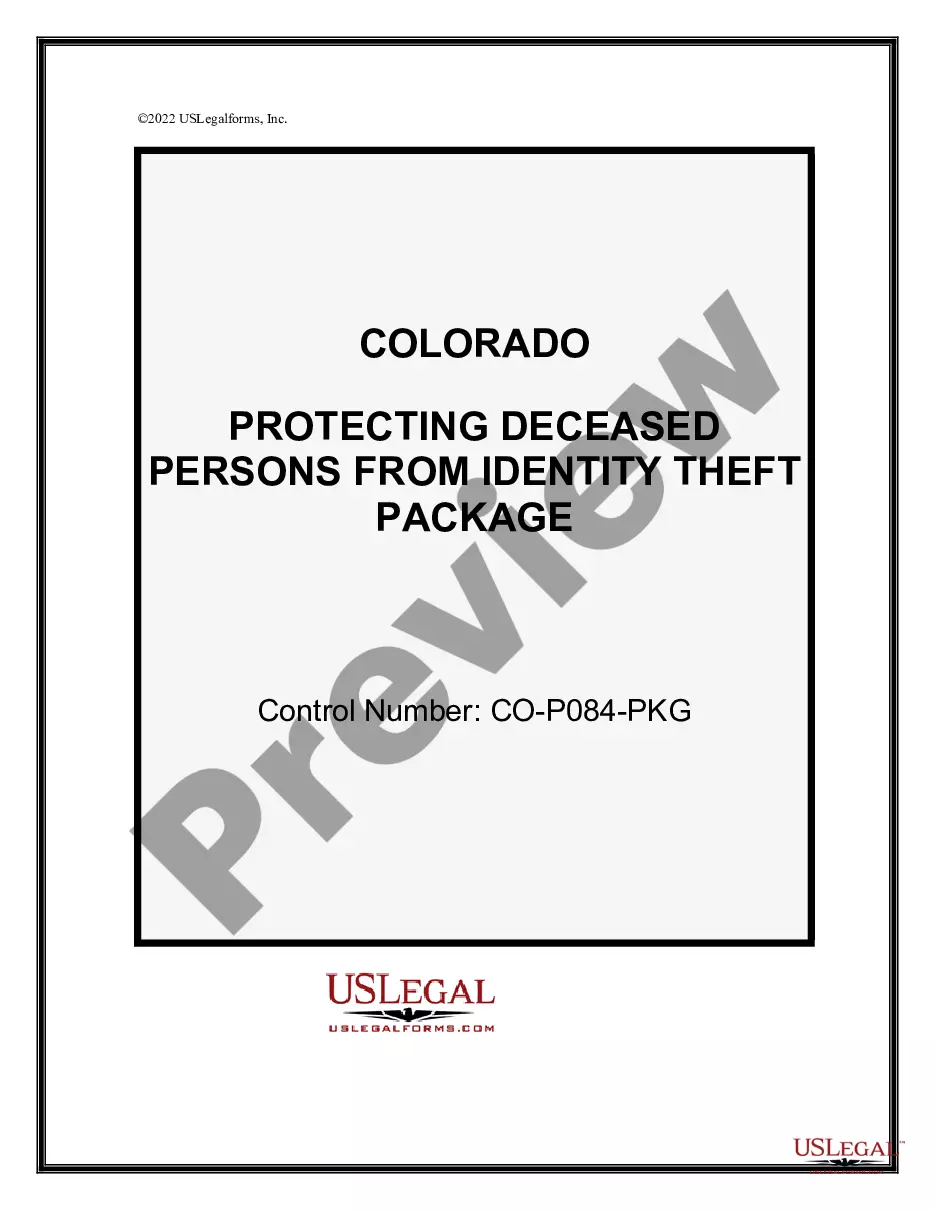
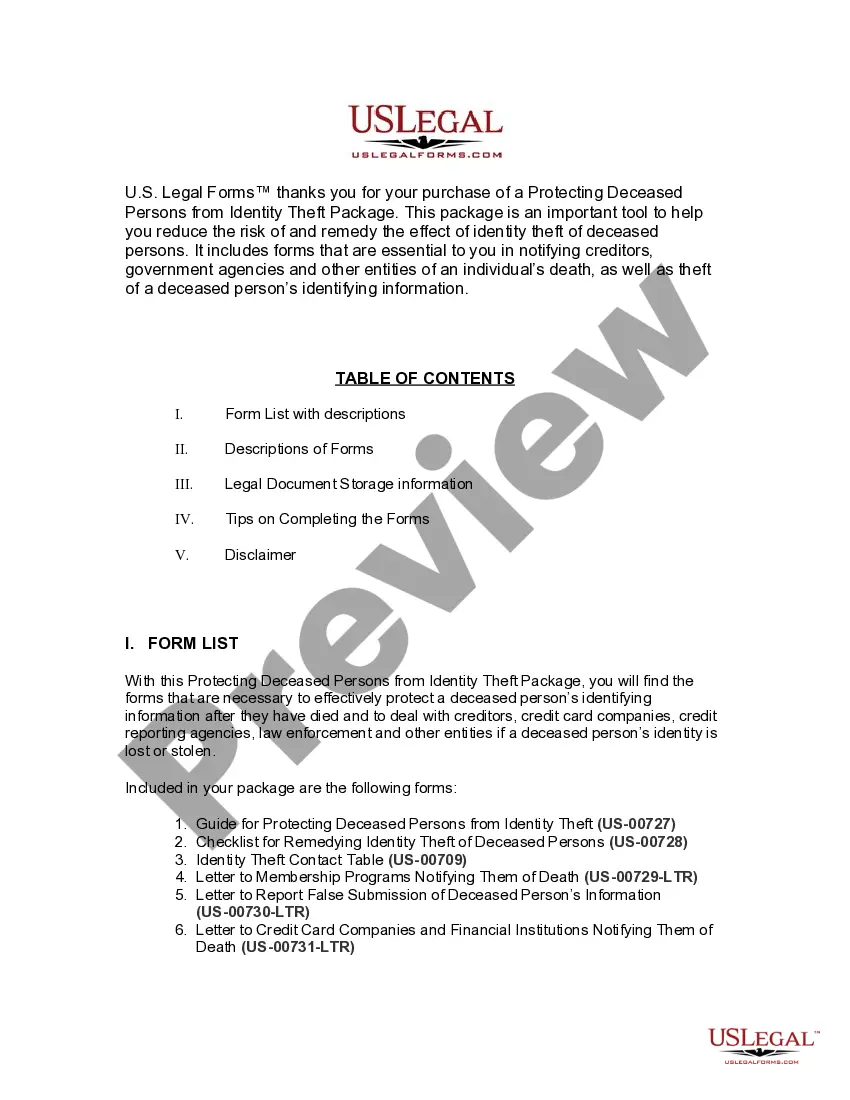
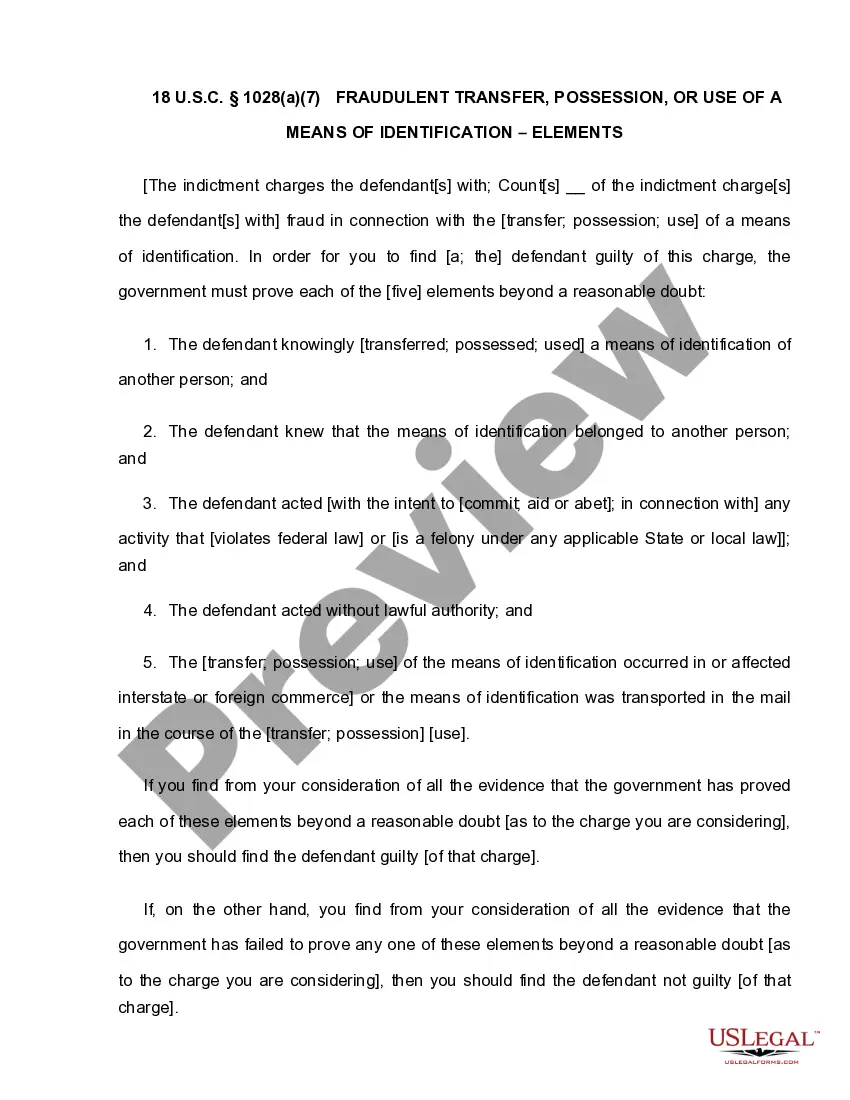
The Colorado Protecting Deceased Persons from Identity Theft form package includes essential documents designed to help notify various entities of a deceased person's passing and protect their identifying information from theft. This package stands out as it provides a comprehensive suite of forms specifically tailored to address the unique challenges that arise after an individual's death, mitigating the risk of identity theft in a sensitive and efficient manner.
Forms you’ll find in this package
- Identity Theft Contact Table
- Guide for Protecting Deceased Persons from Identity Theft
- Checklist for Remedying Identity Theft of Deceased Persons
- Letter to Membership Programs Notifying Them of Death
- Letter to Report False Submission of Deceased Person's Information
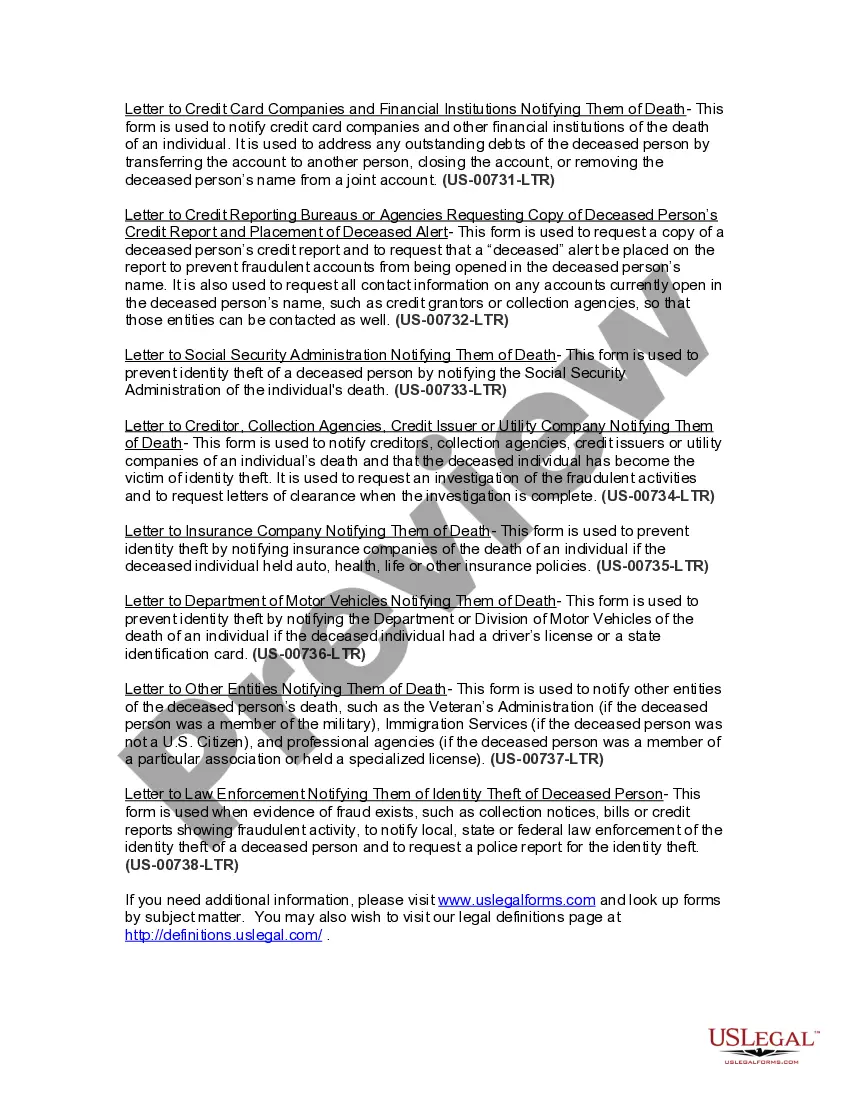
- Letter to Credit Card Companies and Financial Institutions Notifying Them of Death
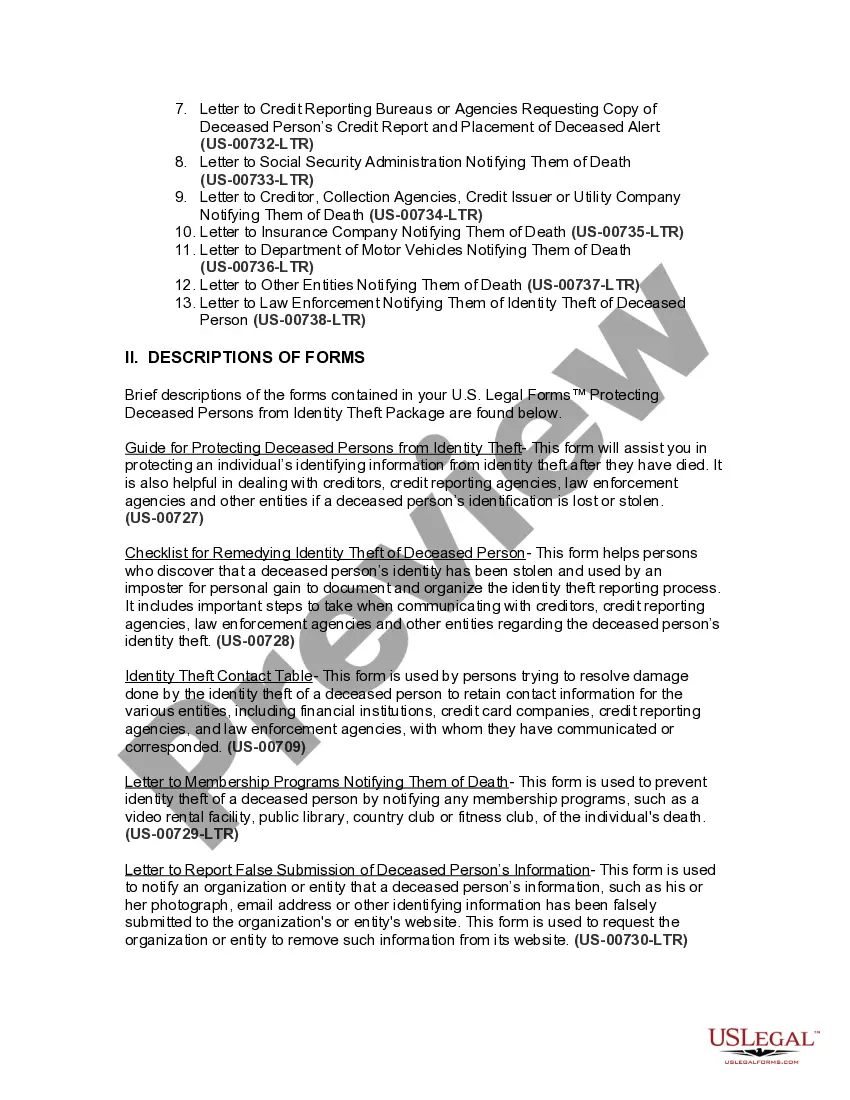
- Letter to Credit Reporting Bureaus or Agencies Requesting Copy of Deceased Person's Credit Report and Placement of Deceased Alert
- Letter to Social Security Administration Notifying Them of Death
- Letter to Creditor, Collection Agencies, Credit Issuer or Utility Company Notifying Them of Death
- Letter to Insurance Company Notifying Them of Death
- Letter to Department of Motor Vehicles Notifying Them of Death
- Letter to Other Entities Notifying Them of Death
- Letter to Law Enforcement Notifying Them of Identity Theft of Deceased Person
Common use cases
This form package is crucial in various situations, including:
- When a loved one has passed away and you need to notify creditors and financial institutions of their death.
- If you suspect that a deceased person's identity may be stolen or misused.
- When you need to address any identity theft issues following a death, ensuring that necessary precautions are taken to protect the deceased's personal information.
- To ensure proper communication is conducted with government agencies such as the Social Security Administration.
Who this form package is for
- Family members or next of kin of the deceased.
- Personal representatives or executors of the deceased's estate.
- Legal guardians responsible for managing the affairs of a deceased person.
- Anyone who needs to handle the identity theft risks of a deceased individual.
Instructions for completing these forms
- Review the included forms to understand the requirements and documentation needed.
- Identify the deceased individual's pertinent information to be included in each form.
- Complete the forms accurately, entering all necessary data in the designated fields.
- Sign and date each form where applicable.
- Submit the forms to the respective entities as specified in the guidelines provided.
Do documents in this package require notarization?
Forms in this package typically do not require notarization unless required by local law. However, it is advisable to verify if any specific forms might necessitate notarization based on the circumstances surrounding the death.
Get your form ready online
Our built-in tools help you complete, sign, share, and store your documents in one place.
Make edits, fill in missing information, and update formatting in US Legal Forms—just like you would in MS Word.
Download a copy, print it, send it by email, or mail it via USPS—whatever works best for your next step.
Sign and collect signatures with our SignNow integration. Send to multiple recipients, set reminders, and more. Go Premium to unlock E-Sign.
If this form requires notarization, complete it online through a secure video call—no need to meet a notary in person or wait for an appointment.
We protect your documents and personal data by following strict security and privacy standards.

Make edits, fill in missing information, and update formatting in US Legal Forms—just like you would in MS Word.

Download a copy, print it, send it by email, or mail it via USPS—whatever works best for your next step.

Sign and collect signatures with our SignNow integration. Send to multiple recipients, set reminders, and more. Go Premium to unlock E-Sign.

If this form requires notarization, complete it online through a secure video call—no need to meet a notary in person or wait for an appointment.

We protect your documents and personal data by following strict security and privacy standards.
Common mistakes to avoid
- Failing to provide accurate information about the deceased.
- Not notifying all relevant entities, which can lead to continued identity theft.
- Neglecting to sign or date certain forms, making them invalid.
- Overlooking the importance of sending notifications promptly after death.
Benefits of completing this package online
- Convenient access to all necessary forms in one package, saving time.
- Editability allows for quick adjustments to meet specific situations.
- Reliability of documents drafted by licensed attorneys ensures legal validity.
- Instant download capability means you can start the process immediately.
Looking for another form?


Form popularity
FAQ
In Colorado, identity theft is classified as a serious crime, with laws designed to protect citizens against theft of personal information. The law stipulates that using someone's identity without their consent, particularly for financial gain, can lead to severe penalties. This legal framework plays a critical role in Colorado protecting deceased persons from identity theft. Families can lean on this legislation to pursue necessary action when protecting their loved ones' identities.
Certain aspects are typically not covered under identity theft, such as damages resulting from normal credit fraud or unauthorized transactions if reported late. Furthermore, many laws do not cover identity theft associated with business accounts unless explicitly stated. Understanding these limitations helps you navigate the complexities associated with Colorado protecting deceased persons from identity theft.
You can protect a deceased person from identity theft by promptly notifying creditors and financial institutions of their passing. Additionally, consider placing a fraud alert or credit freeze on their accounts. Utilizing tools and resources from platforms like US Legal Forms can assist in proper documentation and ensure Colorado protecting deceased persons from identity theft remains a priority.
The four main types of identity theft include financial identity theft, medical identity theft, criminal identity theft, and synthetic identity theft. Each type involves the unauthorized use of someone’s identity for various purposes, such as financial gain or operating outside the law. Understanding these types can help in Colorado protecting deceased persons from identity theft more effectively.
Colorado has specific laws that address identity theft, ensuring that individuals can seek justice and recover from such crimes. Under Colorado law, identity theft includes using another person’s identifying information without permission for personal gain. Familiarizing yourself with these laws can assist you in Colorado protecting deceased persons from identity theft effectively.
If someone steals your identity, that individual can face criminal charges, but as a victim, you generally will not go to jail. However, if you become entangled in activities related to the theft, it’s important to seek legal advice. In the context of Colorado protecting deceased persons from identity theft, it is crucial to take action quickly to prevent any legal complications.
The Fair Credit Reporting Act (FCRA) and the Identity Theft and Assumption Deterrence Act provide frameworks for compensation for victims of identity theft. These laws protect individuals whose identities have been compromised and allow for the recovery of damages. If you are dealing with identity theft related to a deceased person, understanding these laws can aid in Colorado protecting deceased persons from identity theft.
To report identity theft of a deceased person online, you can visit the Federal Trade Commission (FTC) website and follow their process for reporting identity theft. Make sure to have the deceased person's information ready, including their Social Security number and any documentation you may have. Additionally, you might consider using US Legal Forms to file necessary documents to facilitate the reporting process as part of Colorado protecting deceased persons from identity theft.