Mississippi Jury Instruction - Preemptory Instruction for Defendant
About this form
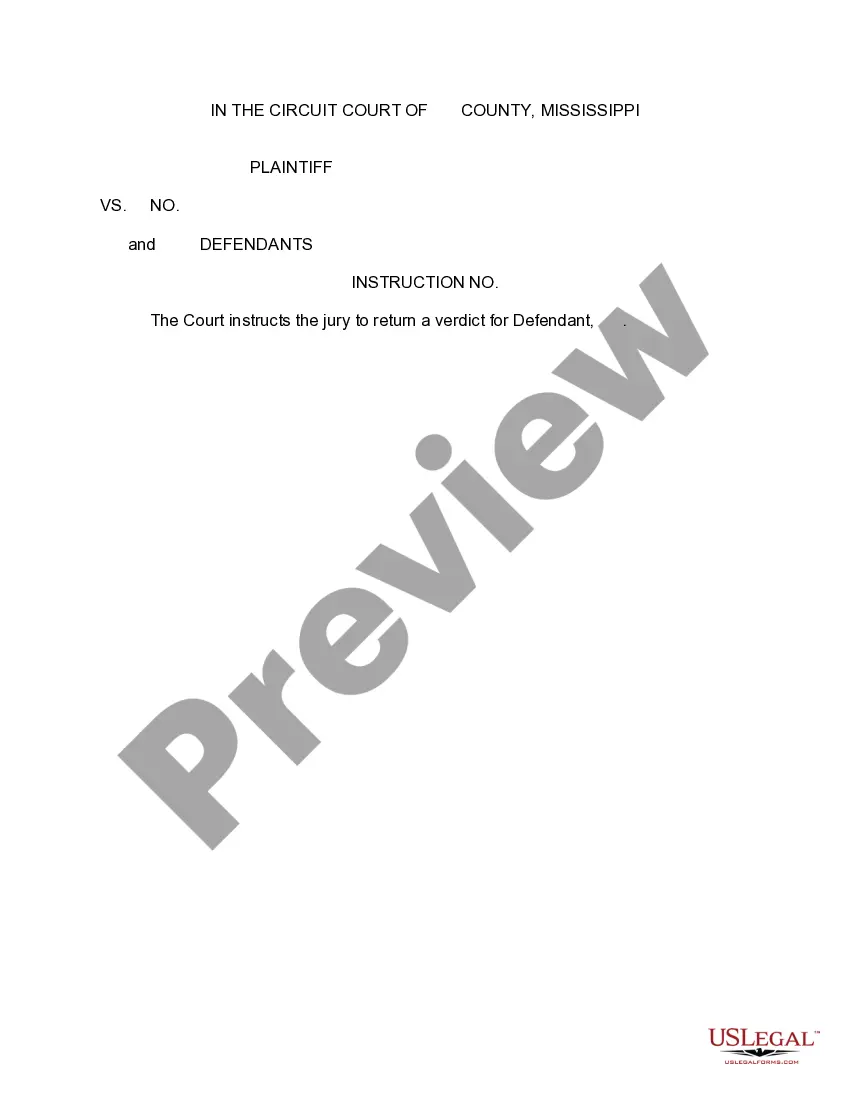
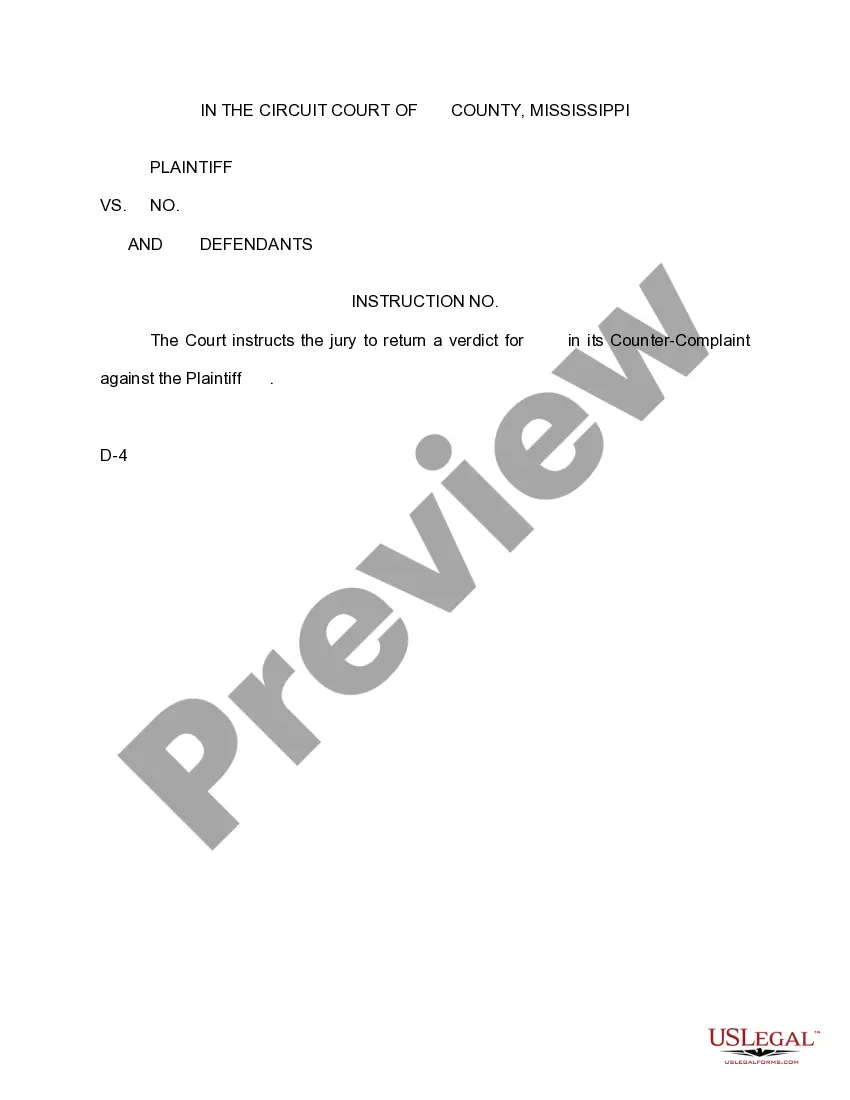
The Jury Instruction - Preemptory Instruction for Defendant is a legal document used in Mississippi courts. It serves as a guide for juries, instructing them on returning a verdict for the defendant in a trial. This form is specifically designed for use in situations where the court needs to direct the jury to make a decision favoring the defendant, distinguishing it from forms related to plaintiff jury instructions or other legal directives. The language used in this instruction must comply with current case law, making it essential to review thoroughly.
Main sections of this form
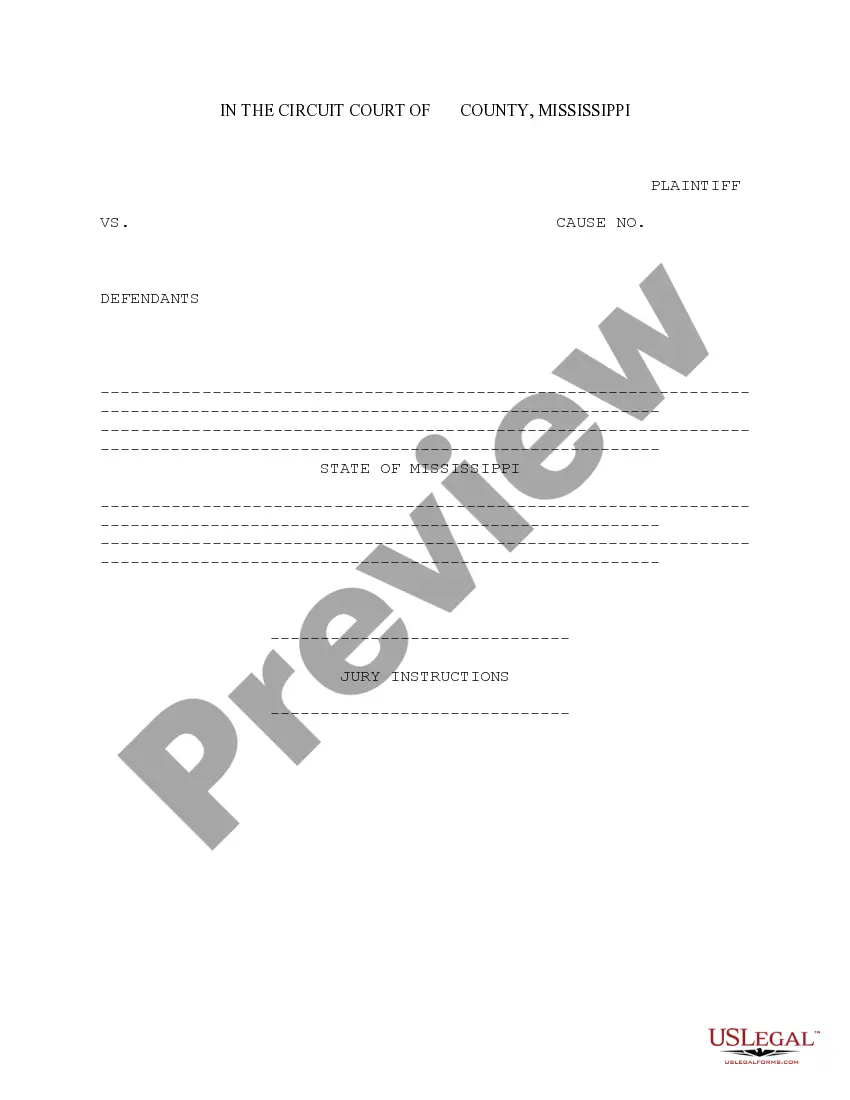
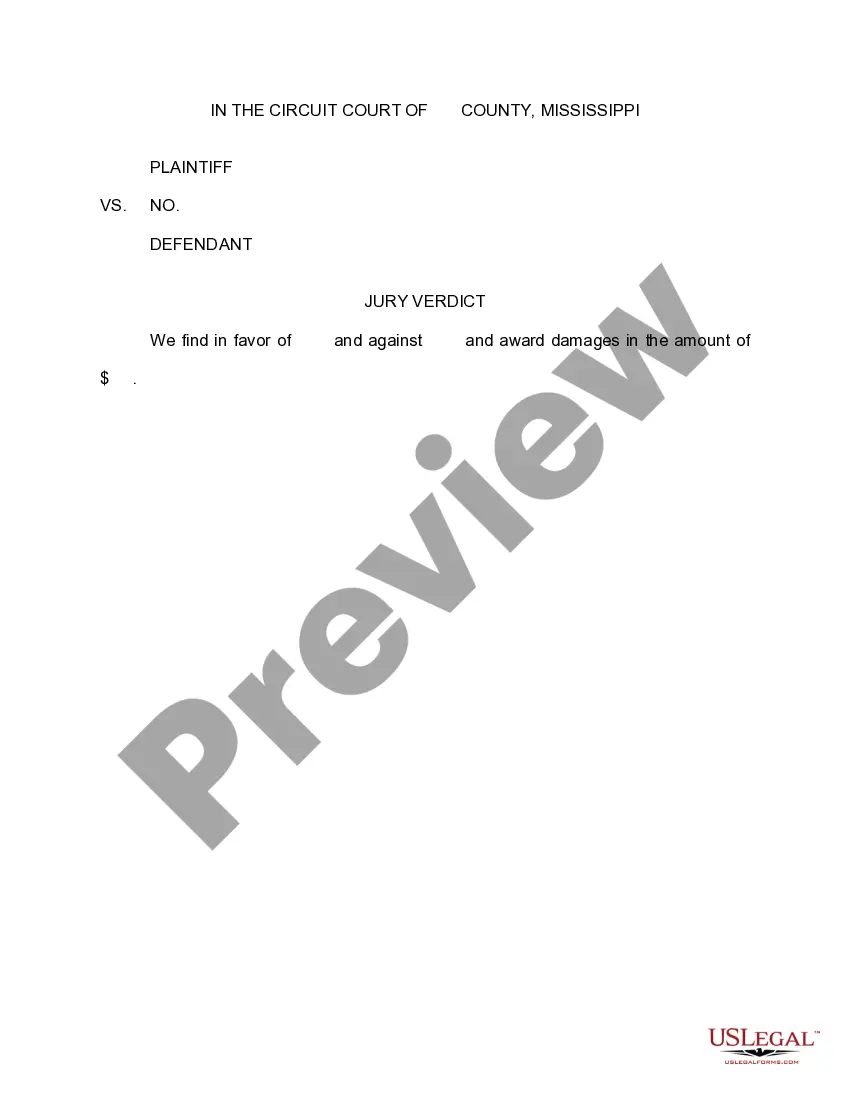
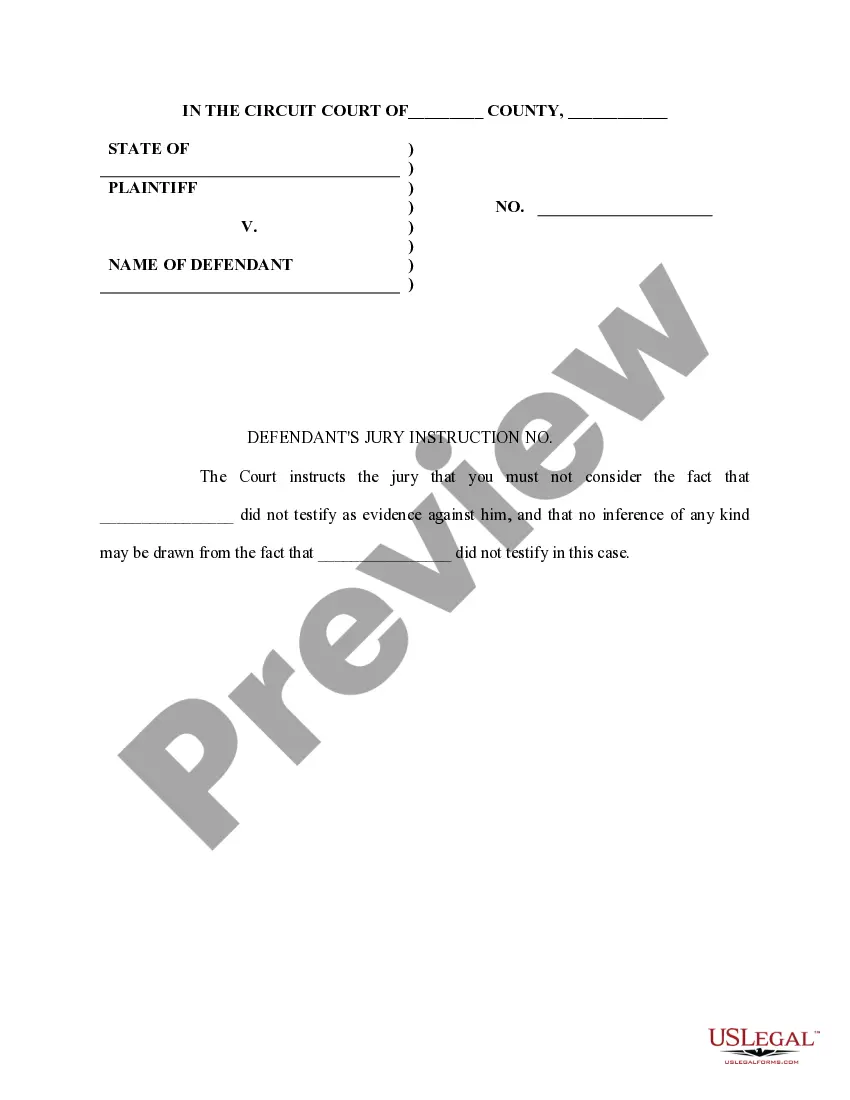
- Case Caption: Identifies the parties involved in the lawsuit.
- Instruction Number: Specifies this particular jury instruction's identification number.
- Verdict Directive: Clearly states the jury's charge to return a verdict for the defendant.
When to use this document
This form is used during court trials when the defense requires the jury to be instructed that a verdict should be returned in favor of the defendant. Situations include cases where evidence clearly supports the defendant's position or when legal standards necessitate such an instruction to avoid wrongful conviction.
Intended users of this form
- Defendants involved in civil or criminal trials in Mississippi.
- Defense attorneys seeking to provide the jury with specific legal instructions.
- Legal professionals preparing for trial who need to guide jury deliberations.
Steps to complete this form
- Identify the case caption, including the names of the plaintiff and defendant.
- Enter the court case number in the appropriate field.
- Complete the instruction number section as required.
- Clearly state the directive for the jury regarding the verdict for the defendant.
- Review the instructions to ensure compliance with current legal standards.
Does this document require notarization?
Notarization is not commonly needed for this form. However, certain documents or local rules may make it necessary. Our notarization service, powered by Notarize, allows you to finalize it securely online anytime, day or night.
Get your form ready online
Our built-in tools help you complete, sign, share, and store your documents in one place.
Make edits, fill in missing information, and update formatting in US Legal Forms—just like you would in MS Word.
Download a copy, print it, send it by email, or mail it via USPS—whatever works best for your next step.
Sign and collect signatures with our SignNow integration. Send to multiple recipients, set reminders, and more. Go Premium to unlock E-Sign.
If this form requires notarization, complete it online through a secure video call—no need to meet a notary in person or wait for an appointment.
We protect your documents and personal data by following strict security and privacy standards.

Make edits, fill in missing information, and update formatting in US Legal Forms—just like you would in MS Word.

Download a copy, print it, send it by email, or mail it via USPS—whatever works best for your next step.

Sign and collect signatures with our SignNow integration. Send to multiple recipients, set reminders, and more. Go Premium to unlock E-Sign.

If this form requires notarization, complete it online through a secure video call—no need to meet a notary in person or wait for an appointment.

We protect your documents and personal data by following strict security and privacy standards.
Common mistakes
- Failing to verify compliance with the latest case law.
- Using outdated or incorrect terminology in the instruction.
- Not properly identifying all parties involved in the case.
- Omitting key details that could impact jury understanding.
Legal use & context
The Jury Instruction - Preemptory Instruction for Defendant is used in formal legal contexts to guide juries in verdict determinations. Its proper use can influence trial outcomes significantly, underscoring its importance in legal proceedings.
What to keep in mind
- This form is essential for instructing juries in favor of defendants in Mississippi trials.
- Ensure the form adheres to current legal standards to avoid complications.
- Review all instructions carefully for clarity and legal precision.
Looking for another form?


Form popularity
FAQ
An example of a jury is twelve men and women selected to decide if a person is guilty or innocent in a murder trial.
The use of juries in civil cases is limited, and in New South Wales usually only occurs in defamation cases. In civil cases the jury decides whether the defendant is liable on the balance of probabilities. Majority verdicts in civil cases are also allowed for now under the Jury Act 1977, section 57.
Jury instructions, directions to the jury, or judge's charge are legal rules that jurors should follow when deciding a case.
A jury instruction is given by the judge to the jury to explain what is happening in the court, to explain the points of law relevant to the case, to explain certain aspects of the evidence presented and to assist the jurors in understanding their duties in reaching a verdict.
Choosing a Jury. Opening Statements. Witness Testimony and Cross-Examination. Closing Arguments. Jury Instruction. Jury Deliberation and Verdict.
Jury Instructions. instructions that are given by the trial judge that specifically state what the defendant can be found guilty of and what the prosecution or plaintiff has to prove in order for a guilty verdict.
A curative instruction is given to a jury by the judge in a case to negate the prejudicial effect of an erroneous instruction or tainted evidence.
Instructions to the Jury The judge instructs the jury about the relevant laws that should guide its deliberations. (In some jurisdictions, the court may instruct the jury at any time after the close of evidence. This sometimes occurs before closing arguments.) The judge reads the instructions to the jury.