Mississippi Jury Instruction - Prohibition Against Double Damages
Overview of this form
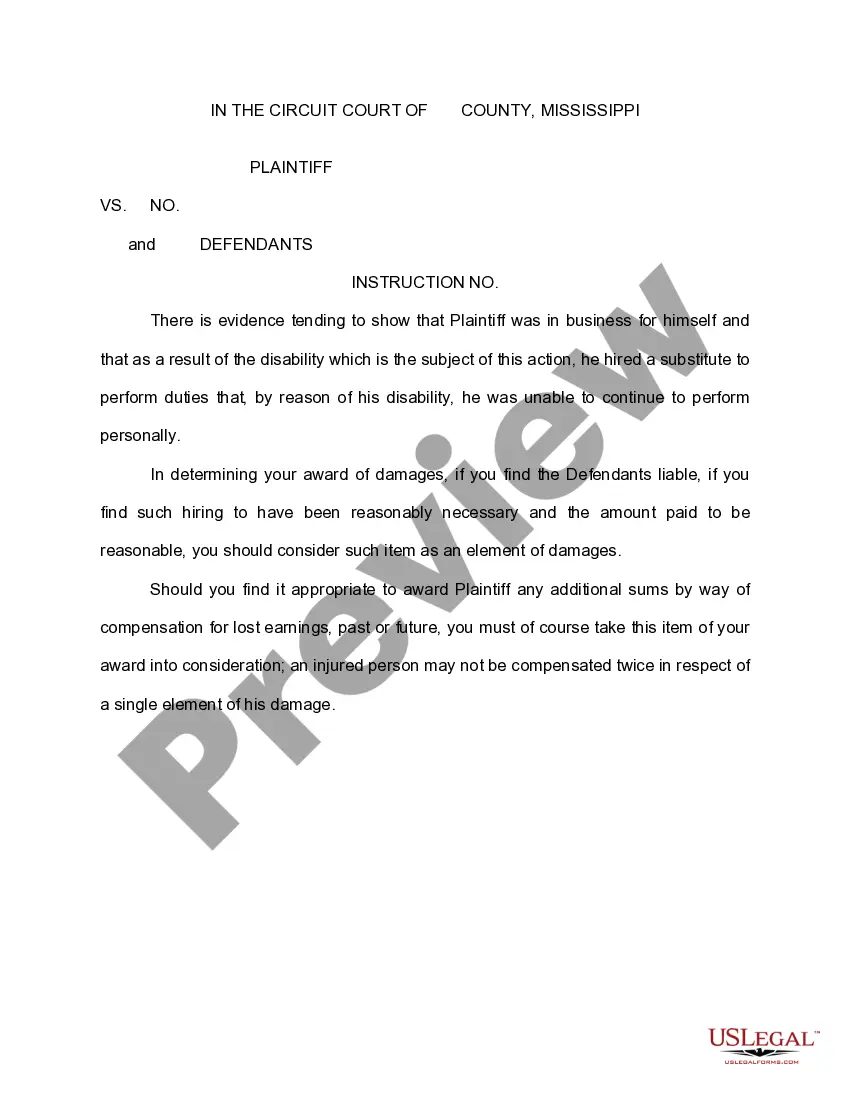
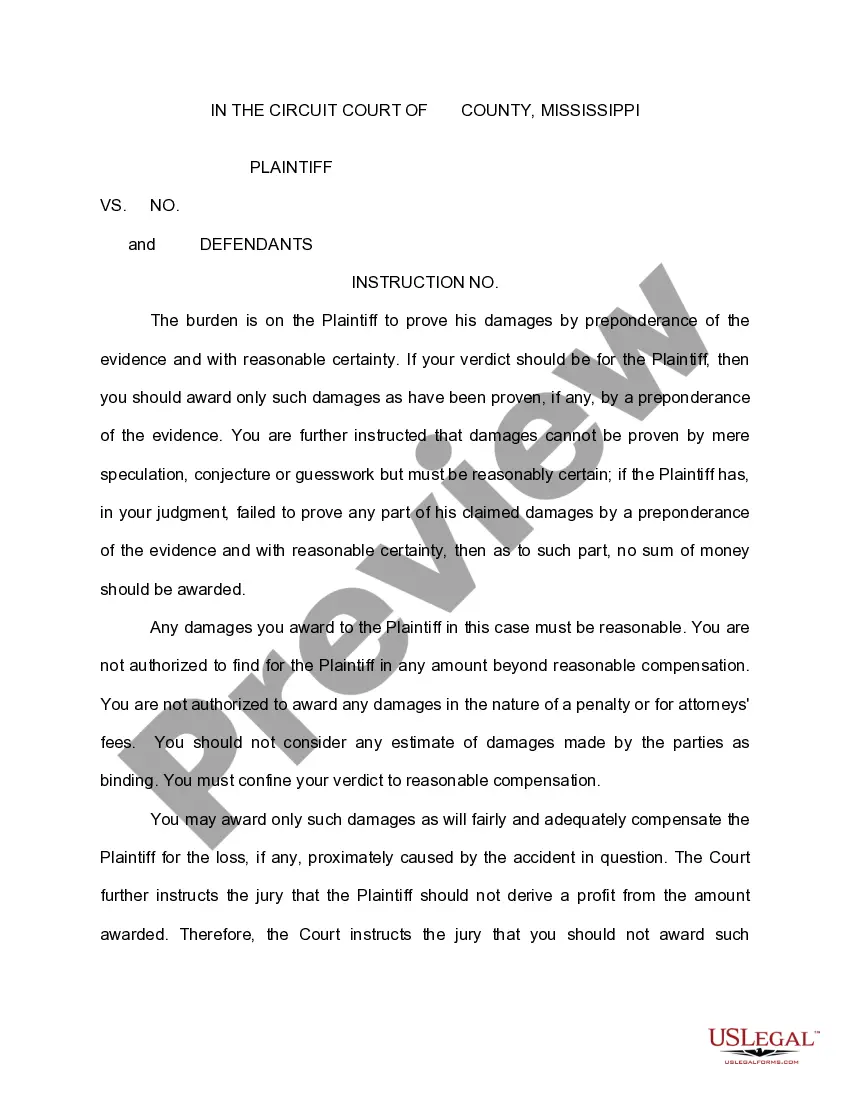
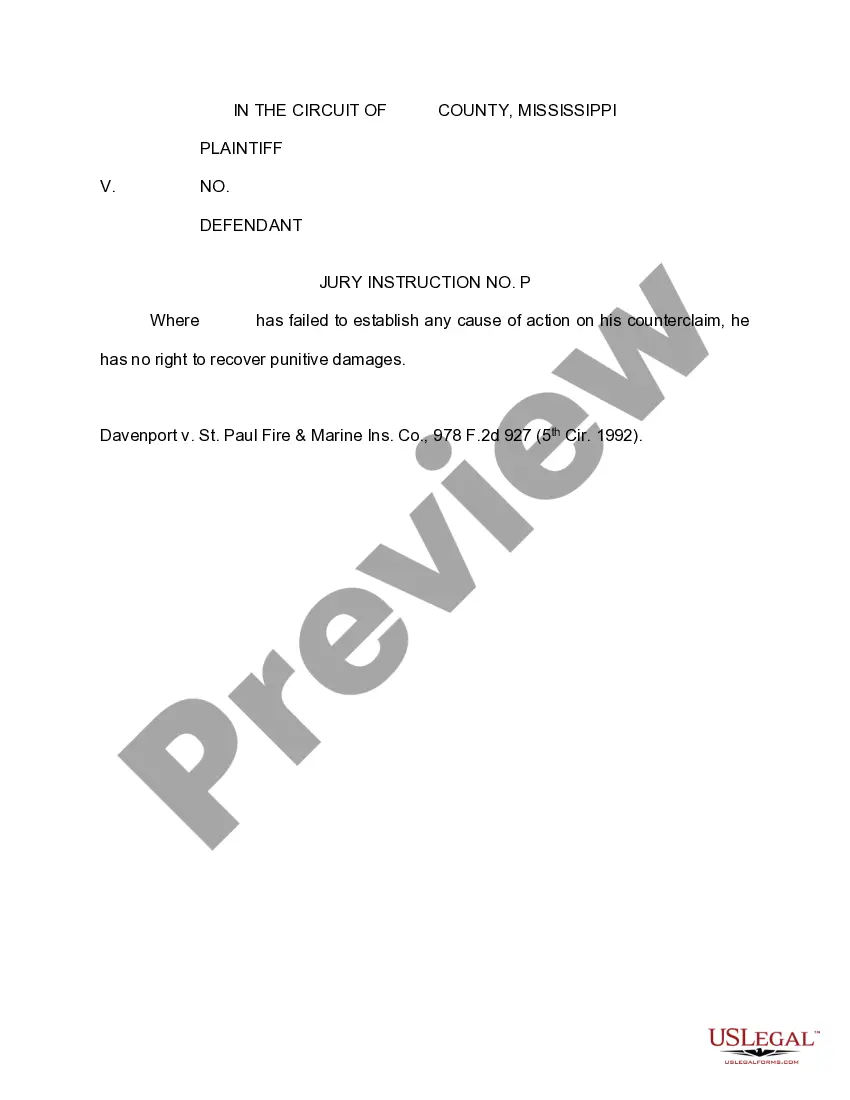
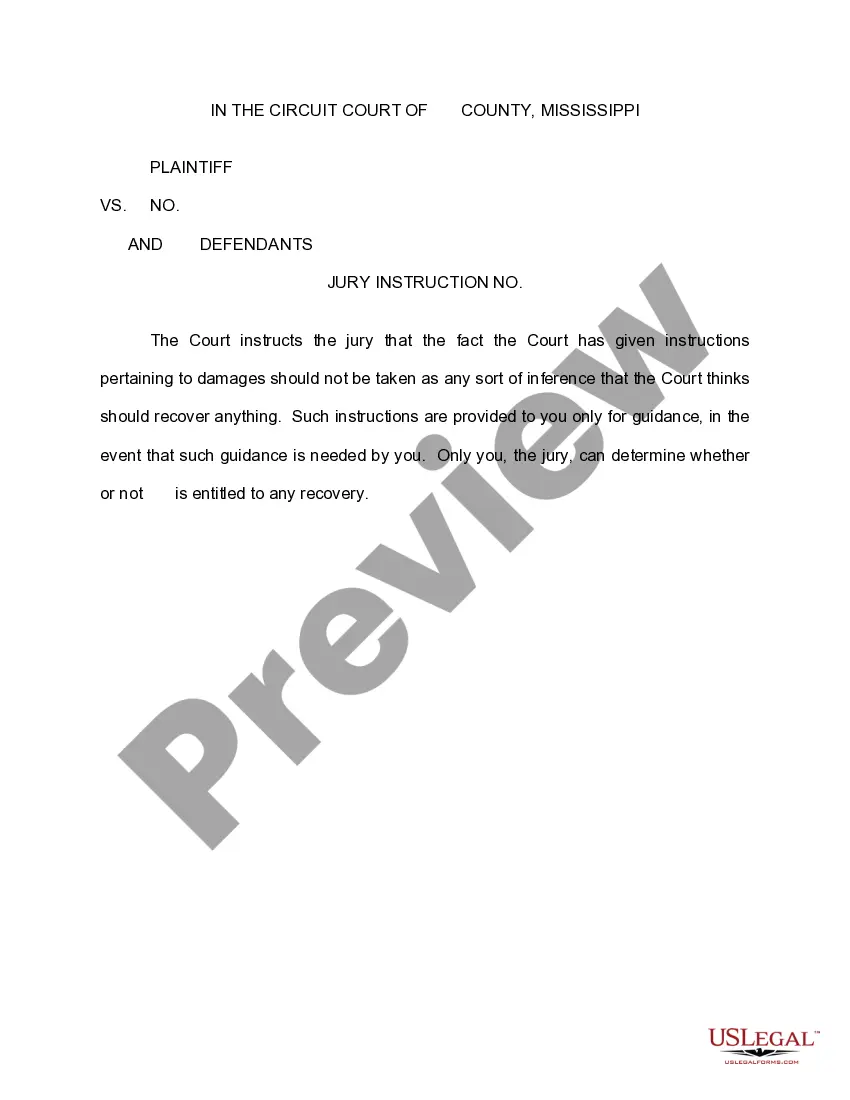
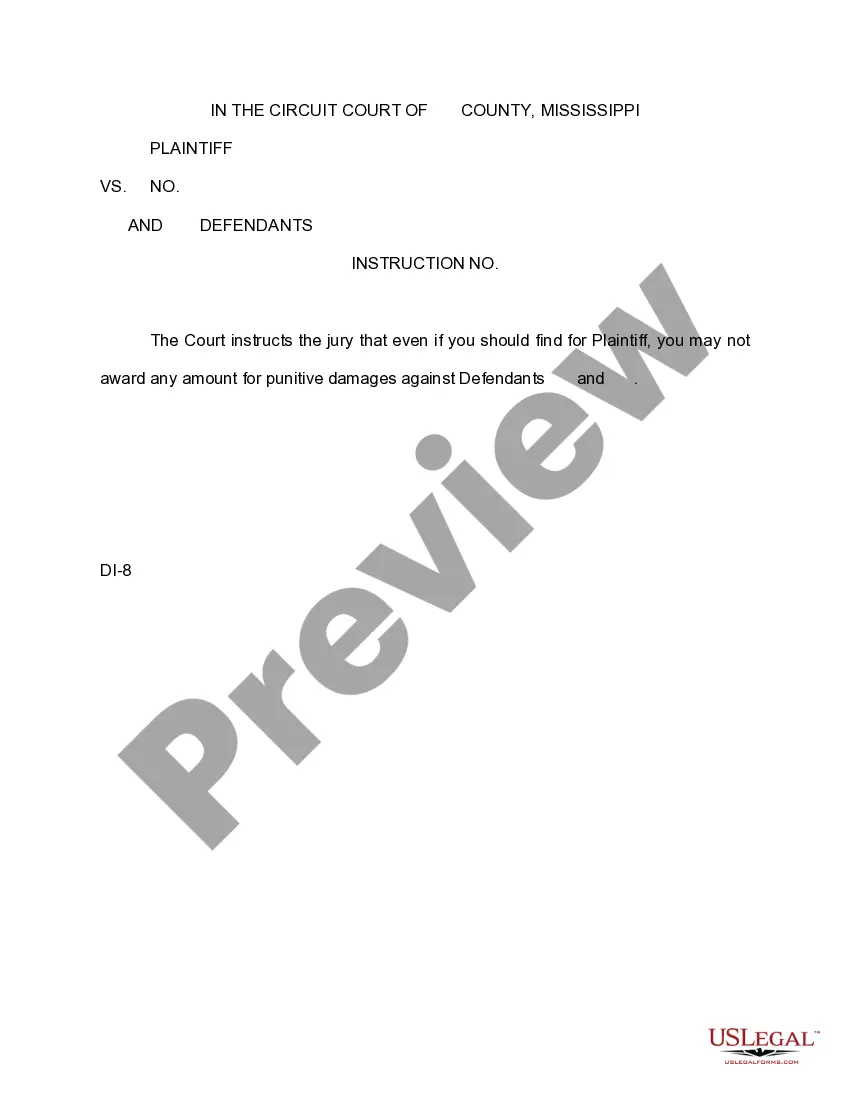
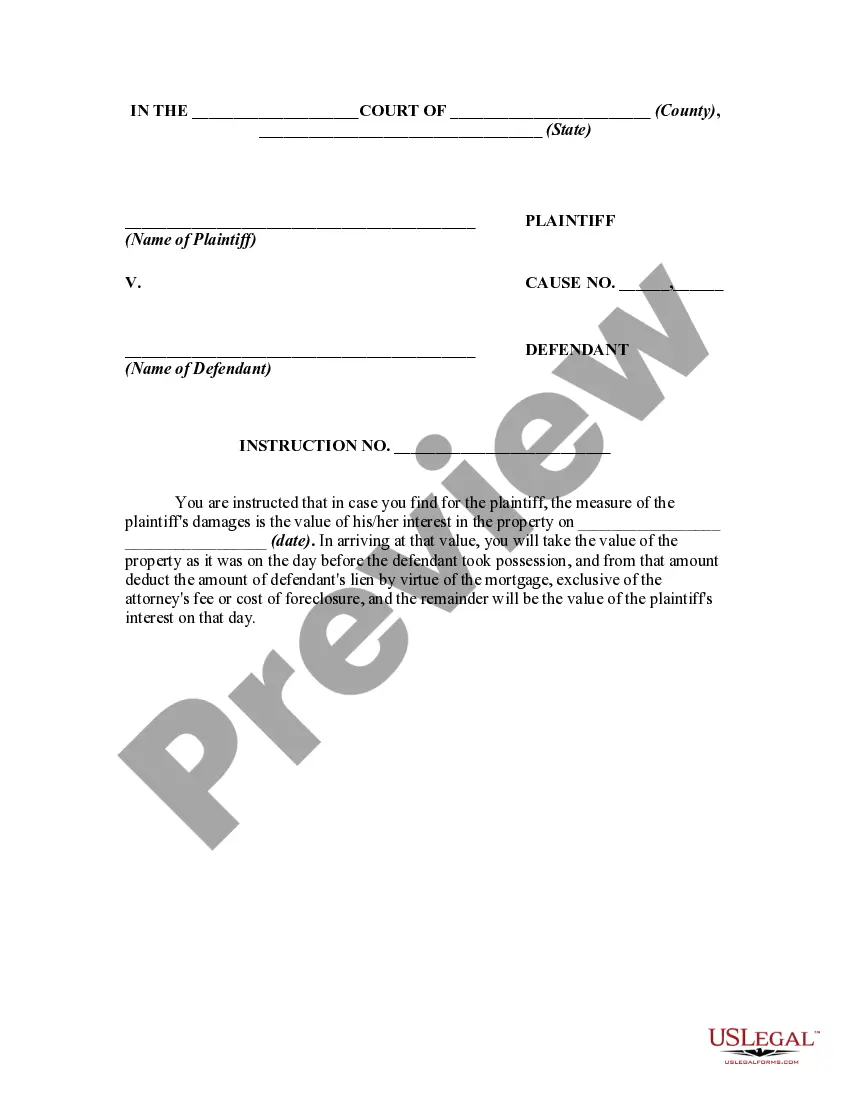
The Jury Instruction - Prohibition Against Double Damages is a legal document designed for use in Mississippi courts. This form provides guidance to jurors on how to consider damages related to a plaintiff's claims, specifically emphasizing that a plaintiff cannot receive compensation more than once for the same damage. This form is particularly important as it outlines the parameters that jurors need to follow when determining an appropriate damage award, differentiating it from other jury instructions that may address different aspects of liability and compensation.
Main sections of this form
- Identification of the case parties: Clearly states the plaintiff and defendants involved.
- Summary of the plaintiff's situation: Details the necessity for hiring a substitute due to the plaintiff's disability.
- Factors for awarding damages: Instructions for jurors on considering reasonable expenses for hire.
- Guidance against double compensation: Clarifies that injured individuals may not receive double payment for a single damage element.
When to use this form
This jury instruction should be used during civil litigation cases where the plaintiff has hired a substitute due to a disability and seeks damages. It is particularly relevant when the issue of reasonable compensation arises, and it ensures that jurors are aware of the prohibition against awarding double damages for the same loss. This can occur in personal injury cases, wrongful termination, or other situations where a plaintiffâs ability to work has been adversely affected by a condition or event.
Who needs this form
- Attorneys representing plaintiffs in civil lawsuits in Mississippi.
- Legal professionals involved in jury trials related to personal injuries or disabilities.
- Defendant's counsel wanting to understand potential jury instructions.
Steps to complete this form
- Identify the parties involved in the case, including the plaintiff and defendants.
- Summarize the evidence regarding the plaintiffâs disability and the need for a substitute.
- Detail the reasonable expenses incurred for hiring the substitute.
- Provide clear instructions to the jurors about considering both hire expenses and lost earnings in their damage award.
- Ensure jurors are informed about the prohibition on double compensation.
Does this form need to be notarized?
This form does not typically require notarization unless specified by local law. Ensure compliance with any additional state-specific requirements or court rules before submission.
Get your form ready online
Our built-in tools help you complete, sign, share, and store your documents in one place.
Make edits, fill in missing information, and update formatting in US Legal Forms—just like you would in MS Word.
Download a copy, print it, send it by email, or mail it via USPS—whatever works best for your next step.
Sign and collect signatures with our SignNow integration. Send to multiple recipients, set reminders, and more. Go Premium to unlock E-Sign.
If this form requires notarization, complete it online through a secure video call—no need to meet a notary in person or wait for an appointment.
We protect your documents and personal data by following strict security and privacy standards.

Make edits, fill in missing information, and update formatting in US Legal Forms—just like you would in MS Word.

Download a copy, print it, send it by email, or mail it via USPS—whatever works best for your next step.

Sign and collect signatures with our SignNow integration. Send to multiple recipients, set reminders, and more. Go Premium to unlock E-Sign.

If this form requires notarization, complete it online through a secure video call—no need to meet a notary in person or wait for an appointment.

We protect your documents and personal data by following strict security and privacy standards.
Typical mistakes to avoid
- Failing to clearly define the substitute's roles and costs, leading to potential confusion.
- Not updating the form language to reflect current Mississippi law.
- Overlooking the importance of instructing jurors on the prohibition against double damages.
Benefits of completing this form online
- Convenient access: Download and complete the form from any location at your convenience.
- Easy to edit: Fill in the necessary details directly on your device before printing.
- Reliability: The form is prepared by licensed attorneys, ensuring compliance with legal standards.
Looking for another form?
Form popularity
FAQ
Damages, in law, money compensation for loss or injury caused by the wrongful act of another. Recovery of damages is the objective of most civil litigation.
Damages refers to the sum of money the law imposes for a breach of some duty or violation of some right.Compensatory damages, like the name suggests, are intended to compensate the injured party for loss or injury. Punitive damages are awarded to punish a wrongdoer.
There are six different types of damages: compensatory, incidental, consequential, nominal, liquidated, and (sometimes) punitive.
Damage is the loss suffered by the person due to the wrongful act of another person whereas, Damages is the amount of money which is paid as compensation for the injury suffered by a person. So, damages are different from damage and it is one of the remedies which is available to the plaintiff.
Verb (used with object), dam·aged, damA·agA·ing. to cause damage to; injure or harm; reduce the value or usefulness of: He damaged the saw on a nail.
Damages, in law, money compensation for loss or injury caused by the wrongful act of another. Recovery of damages is the objective of most civil litigation.
There are 3 types of damages in personal injury claims: economic damages, noneconomic damages, and punitive damages.
General and Special Damages. Substantial Damages. Aggravated and Exemplary Damages. Liquidated and Unliquidated Damages. Consequential Damage and Incidental Loss.