Short Form Questionnaire for Directors and Officers
About this form
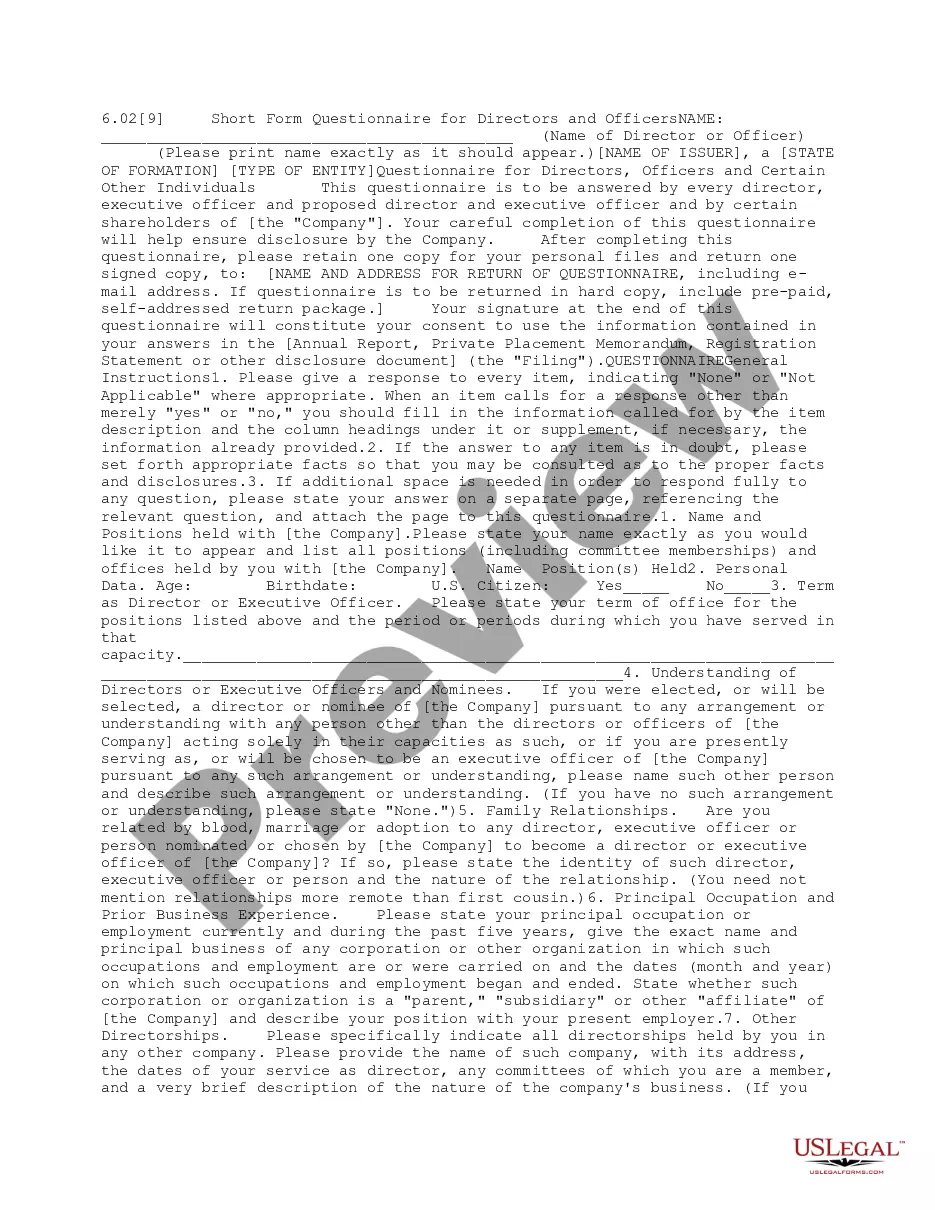
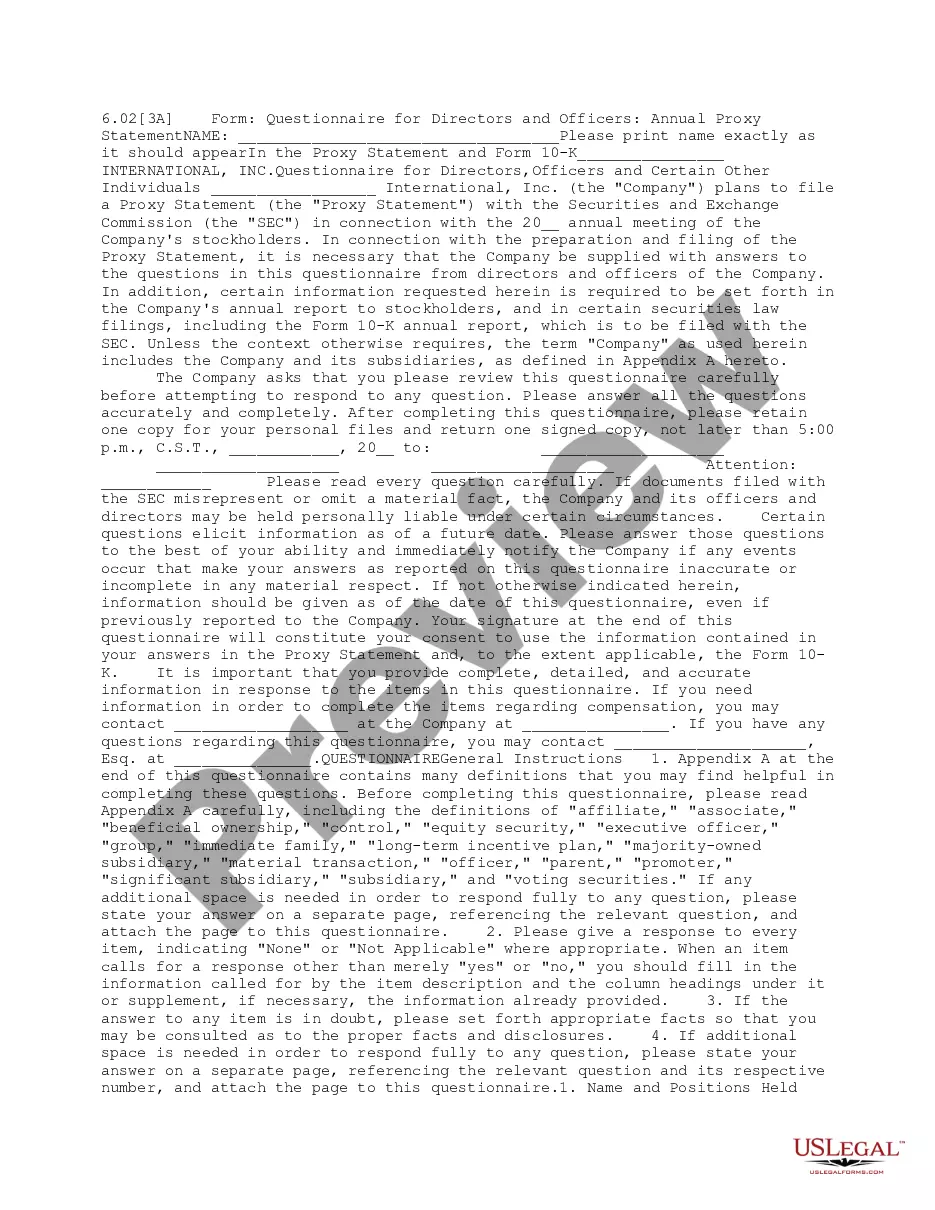
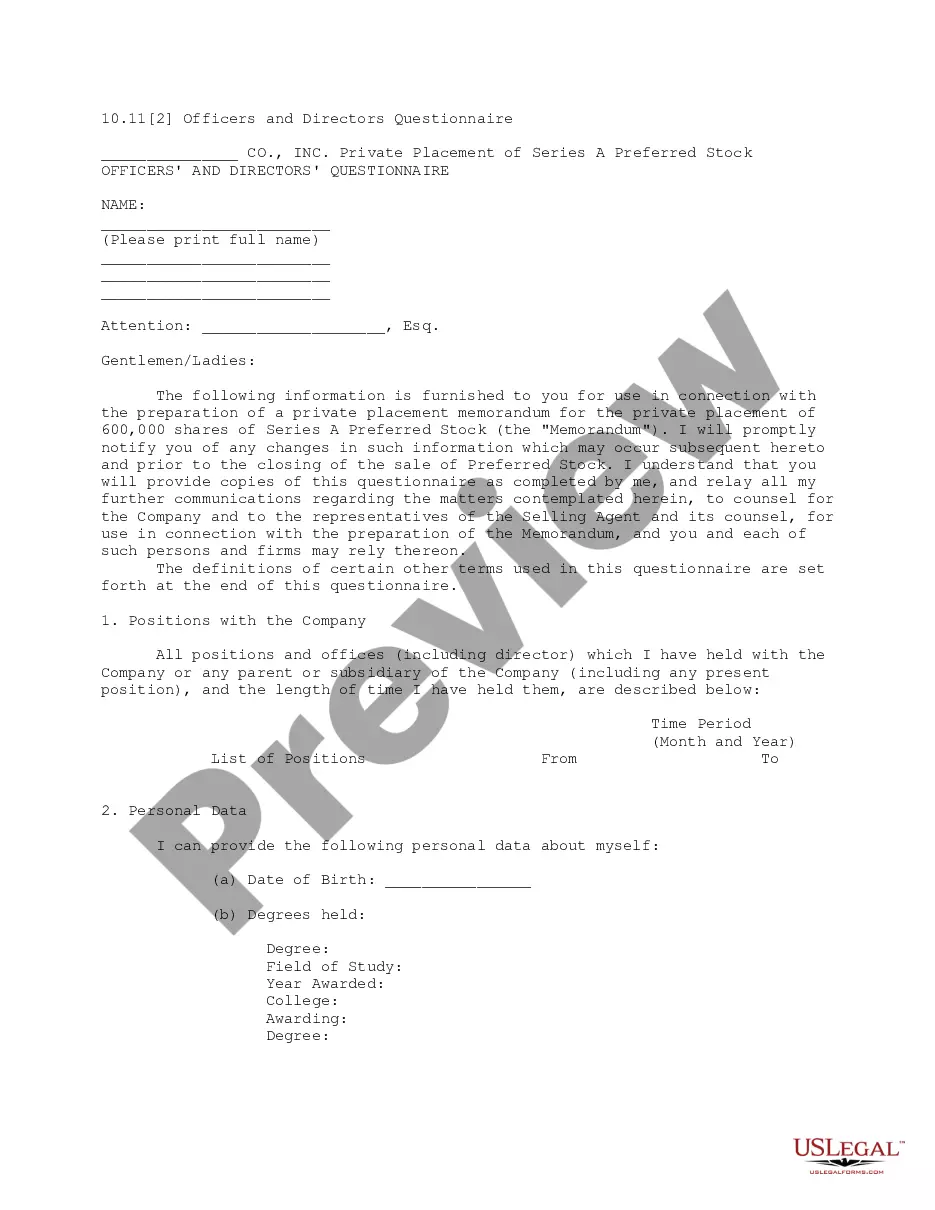
The Short Form Questionnaire for Directors and Officers is a crucial due diligence document used in business transactions. It is designed to be completed by current and proposed directors, executive officers, and certain shareholders of a company. This questionnaire differs from other forms in its specific focus on collecting detailed personal, professional, and legal disclosure information from key individuals who hold significant positions within a company.
Key parts of this document
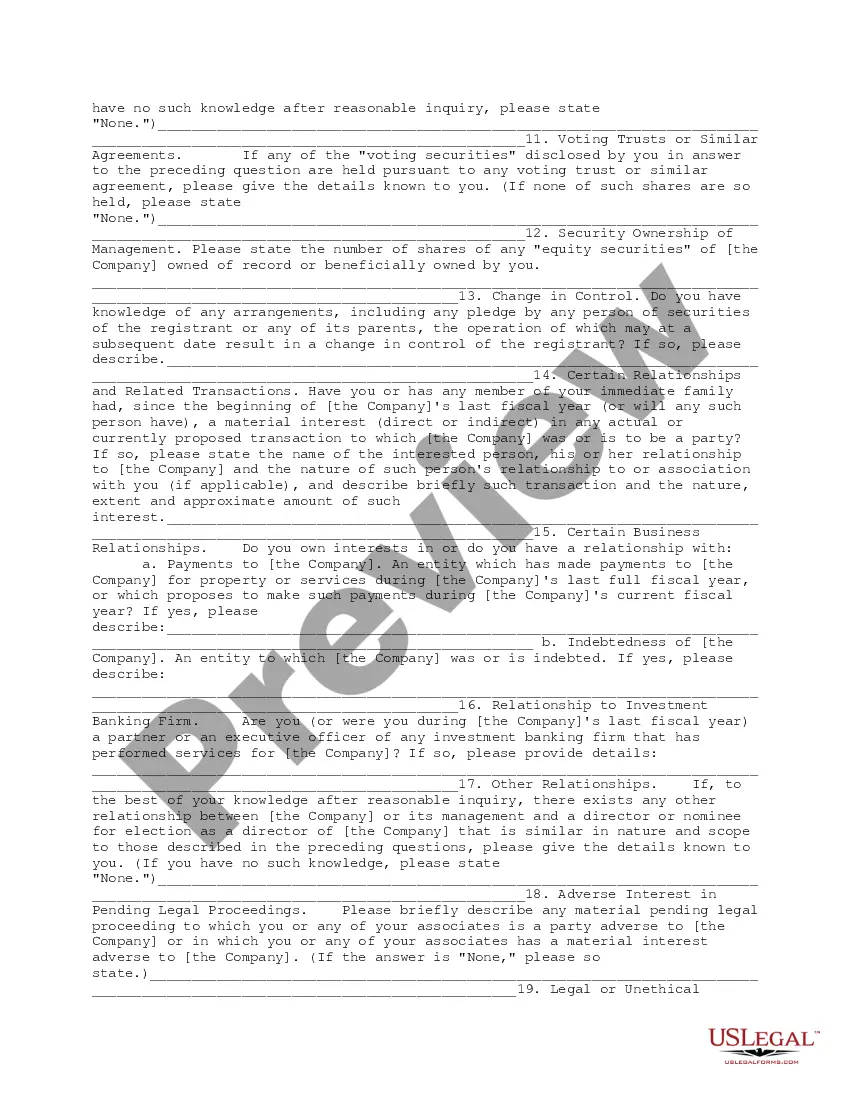
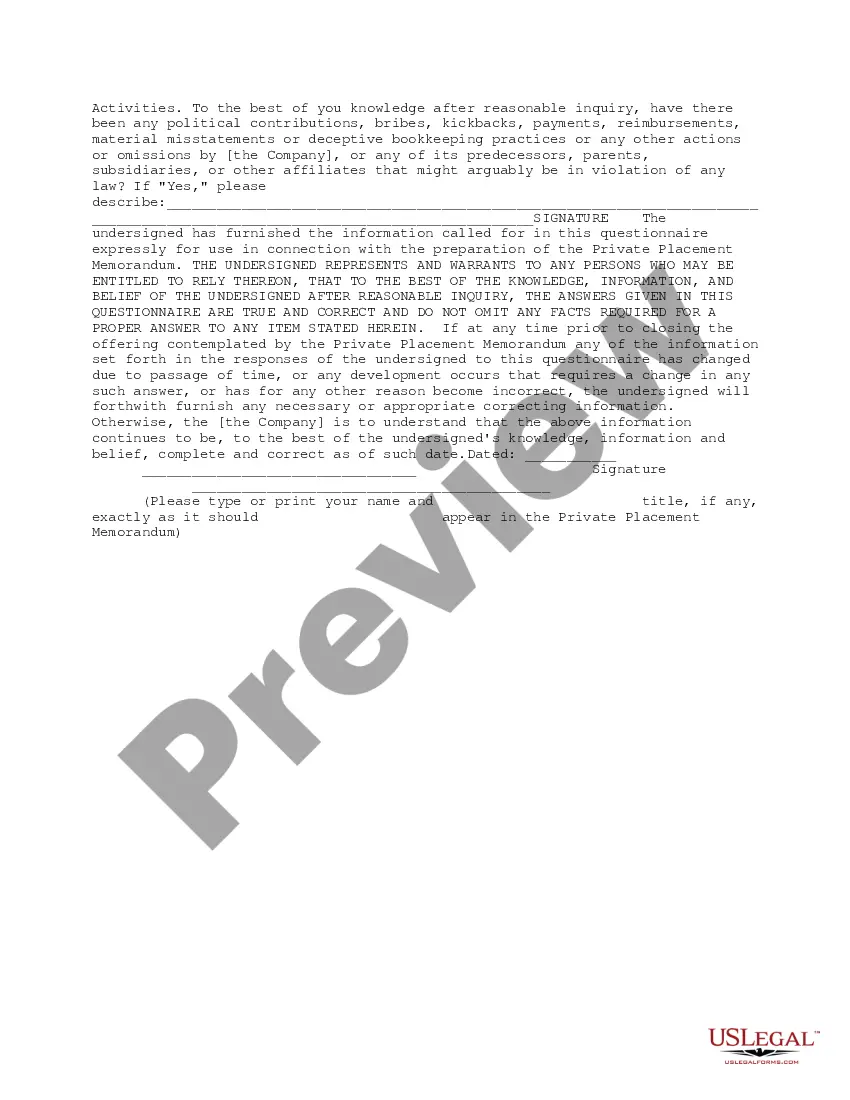
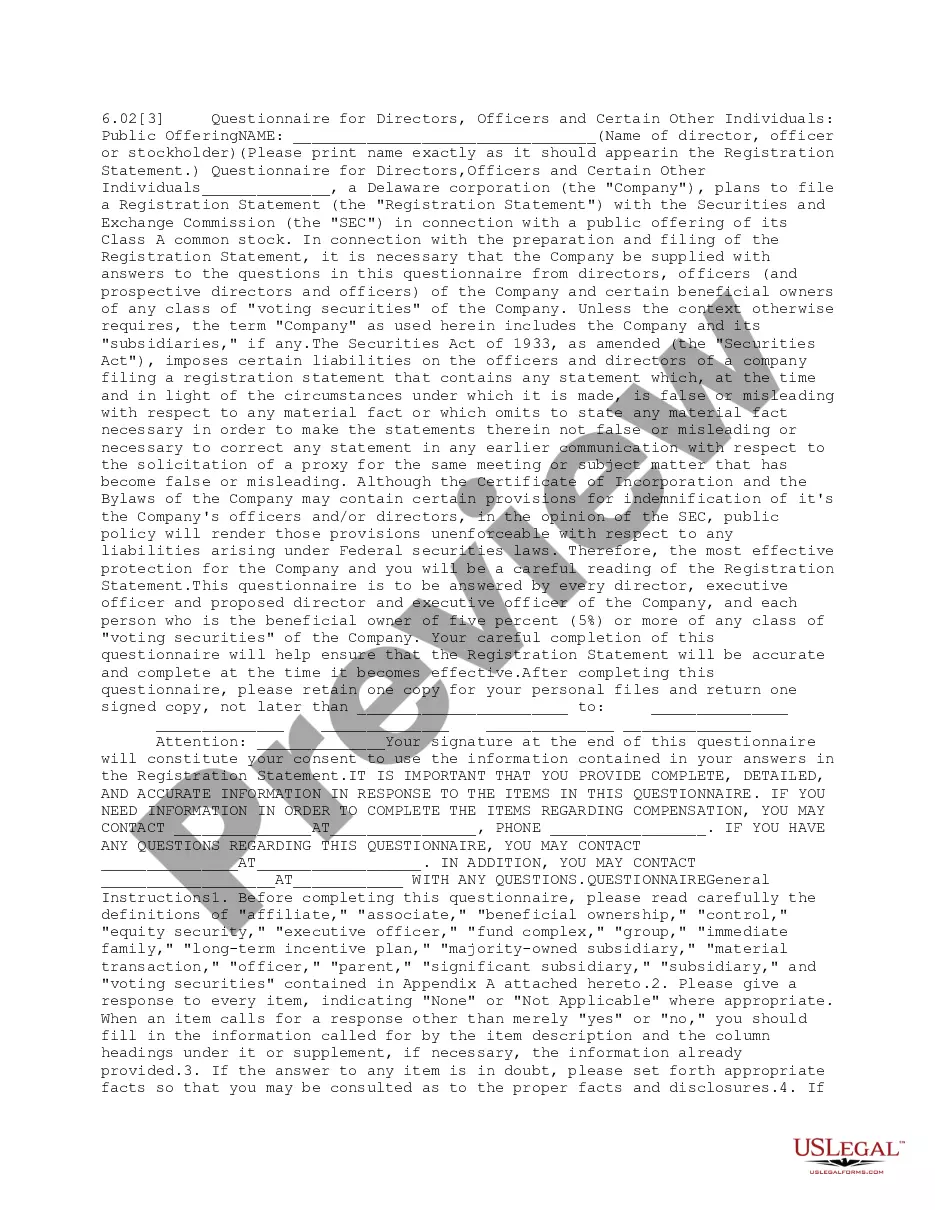
- Personal information including name, age, citizenship, and positions held.
- Details of any family relationships with company officials.
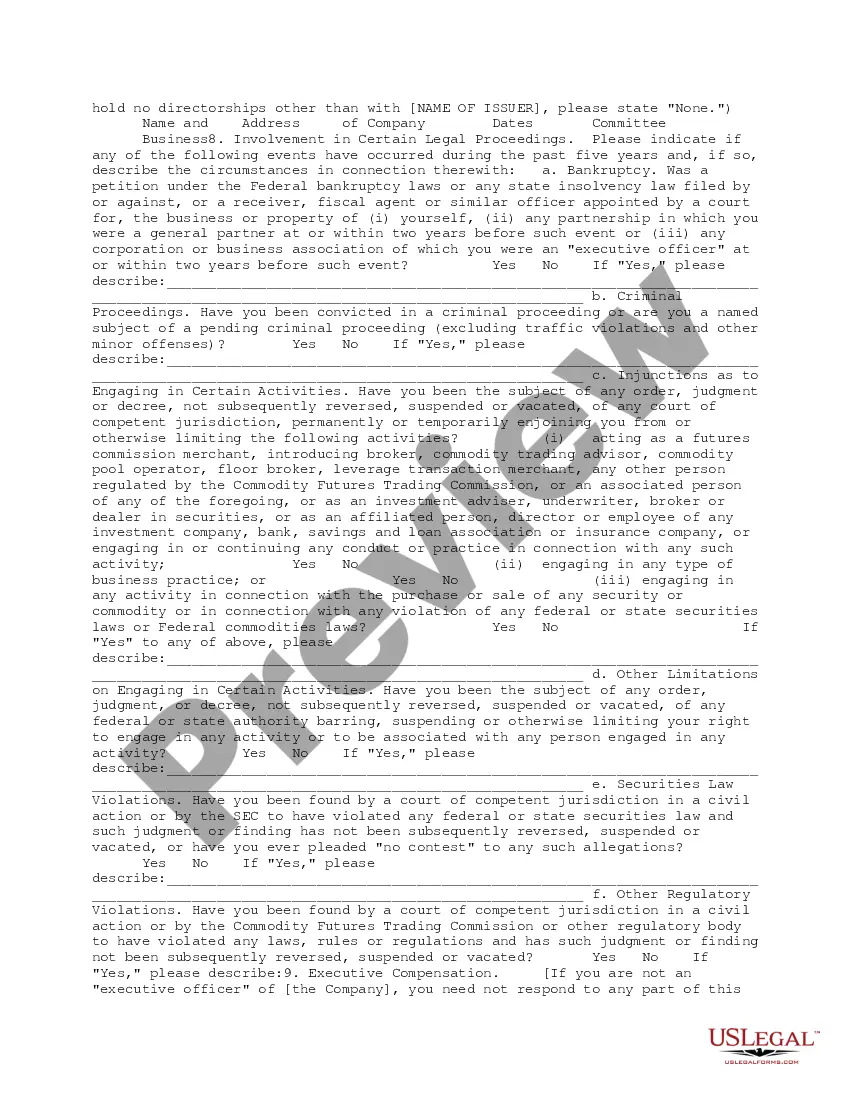
- History of any legal proceedings affecting the individual.
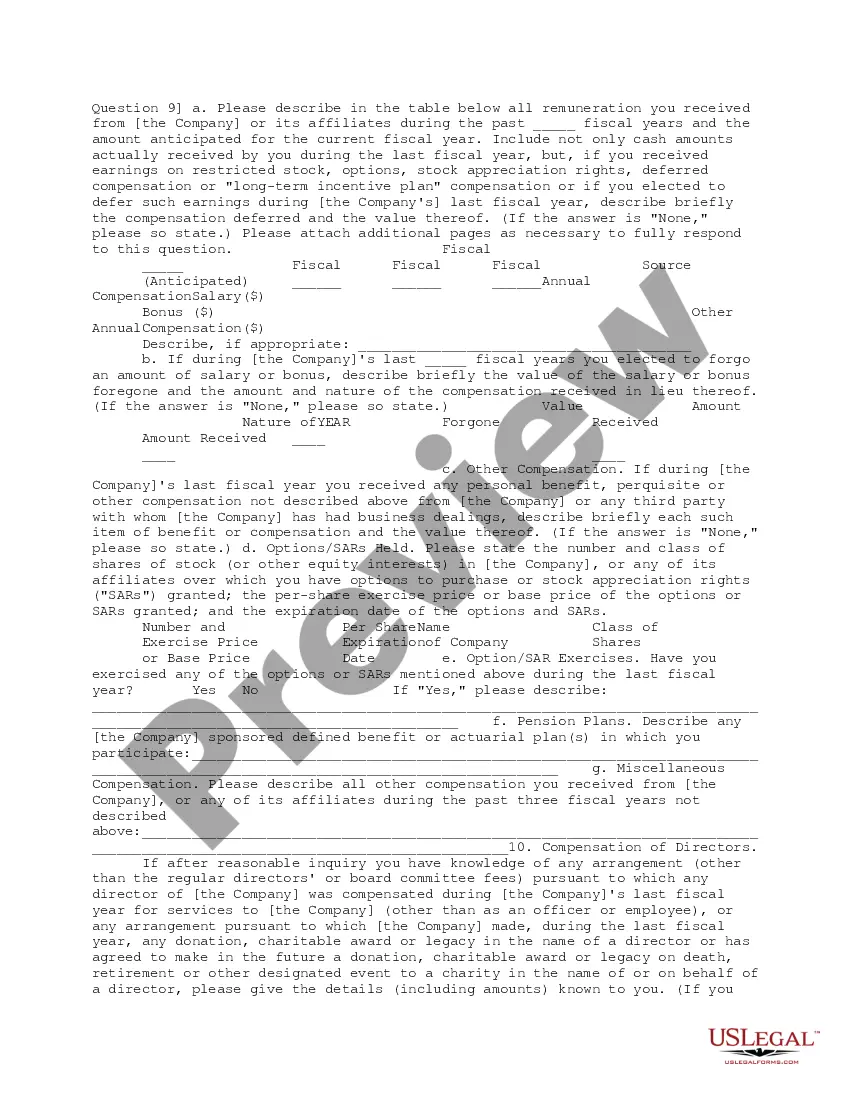
- Declaration of compensation received from the company.
- Disclosure of securities ownership and any potential conflicts of interest.
- Signatures affirming the accuracy of the information provided.
When to use this document
This questionnaire is necessary in various contexts, such as during mergers, acquisitions, or when seeking financing. It serves as an essential tool for companies to gather comprehensive information about their leadership to ensure transparency and compliance with legal obligations.
Intended users of this form
- Current directors of a company.
- Executive officers who manage the company's operations.
- Proposed directors and executive officers who are being considered for appointment.
- Shareholders who may be involved in business transactions.
How to complete this form
- Provide your name and the positions you hold within the company.
- Indicate your age, birth date, and citizenship status.
- Fill out the term details for your positions within the company, including duration of service.
- Disclose any past or current legal proceedings you have been involved in.
- Sign the questionnaire at the end to confirm the accuracy of your responses.
Does this form need to be notarized?
This form does not typically require notarization to be legally valid. However, some jurisdictions or document types may still require it. US Legal Forms provides secure online notarization powered by Notarize, available 24/7 for added convenience.
Get your form ready online
Our built-in tools help you complete, sign, share, and store your documents in one place.
Make edits, fill in missing information, and update formatting in US Legal Forms—just like you would in MS Word.
Download a copy, print it, send it by email, or mail it via USPS—whatever works best for your next step.
Sign and collect signatures with our SignNow integration. Send to multiple recipients, set reminders, and more. Go Premium to unlock E-Sign.
If this form requires notarization, complete it online through a secure video call—no need to meet a notary in person or wait for an appointment.
We protect your documents and personal data by following strict security and privacy standards.

Make edits, fill in missing information, and update formatting in US Legal Forms—just like you would in MS Word.

Download a copy, print it, send it by email, or mail it via USPS—whatever works best for your next step.

Sign and collect signatures with our SignNow integration. Send to multiple recipients, set reminders, and more. Go Premium to unlock E-Sign.

If this form requires notarization, complete it online through a secure video call—no need to meet a notary in person or wait for an appointment.

We protect your documents and personal data by following strict security and privacy standards.
Mistakes to watch out for
- Failing to provide complete answers or leaving questions unanswered.
- Omitting required personal or professional details that could raise compliance issues.
- Not updating information promptly if circumstances change before submission.
Advantages of online completion
- Convenient access and flexibility to fill out the questionnaire at your own pace.
- Editable format allows for easy corrections or updates.
- Reliability through a system designed to guide you in completing the questionnaire accurately.
Looking for another form?

Form popularity
FAQ
Ignore your questionnaire or summons The first step in the Jury selection process is to be sent a Juror Questionnaire.If you fail to return the questionnaire, you will be either fined $5,000.00, face imprisonment of up to 6 months or receive both punishments.
Name, address, age, employment, and education are the questions commonly asked in court-generated questionnaires. That information is better than nothing, but such questionnaires usually leave out questions on relevant attitudes.
Yes; failure to respond to a jury questionnaire could result in fines or other penalties.If you do not answer the questionnaire correctly or do not provide proof that you are a non-citizen, you will receive a summons ordering you to appear at court.
Jury questionnaires, which are used to gather information concerning jurors for use in jury selection, address a variety of aspects of the jurors' lives, including: Background characteristics (e.g., age, occupation, race, educational background, and marital status)
Whether you are selected or not, you aren't eligible for jury duty for the next three years. However, you may receive another jury questionnaire. If you receive a jury questionnaire within three years of your service, you still need to complete and return it.
The Court emphasizes that the information compiled from jury questionnaire responses is CONFIDENTIAL. It is used strictly for jury selection; and is not disseminated to any other agencies or parties unless specifically authorized by Federal or State law or by Court order.
The Juror Qualification Questionnaire simply allows the Court to determine if a person is qualified to serve as a juror. If a person is selected to serve and receives a summons to report, he/she may ask to be excused at that time.
You don't have to answer anything. However, you should answer truthfully if you do so. No one is going to ask you to "publicly state your social security number in the selection process".