Mississippi Jury Instruction - Punitive Damages - No Right to Recover
About this form
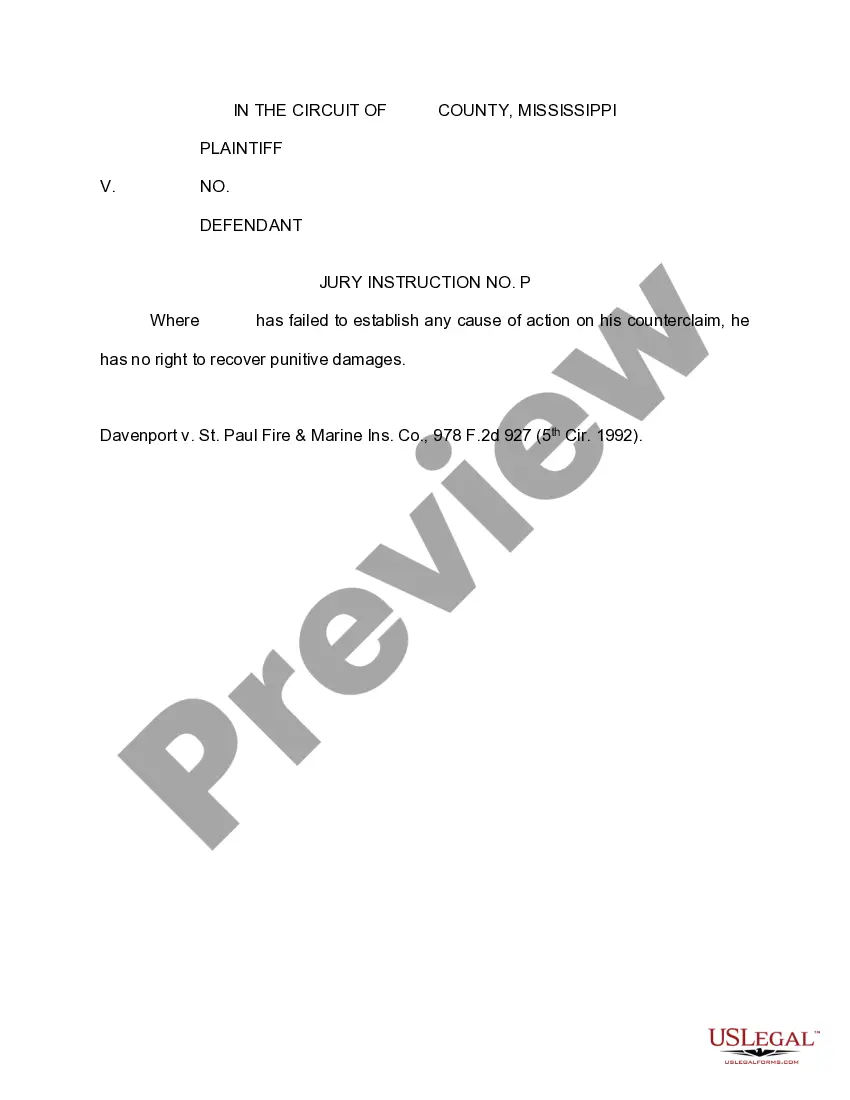
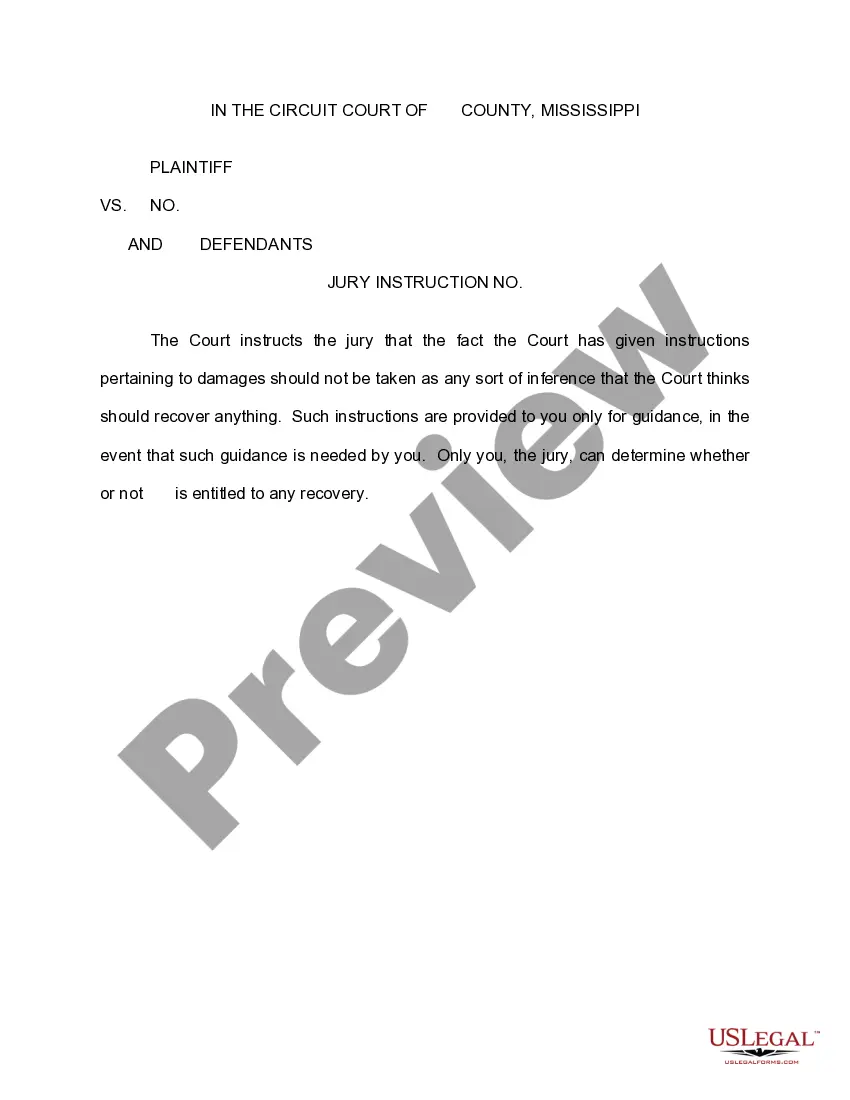
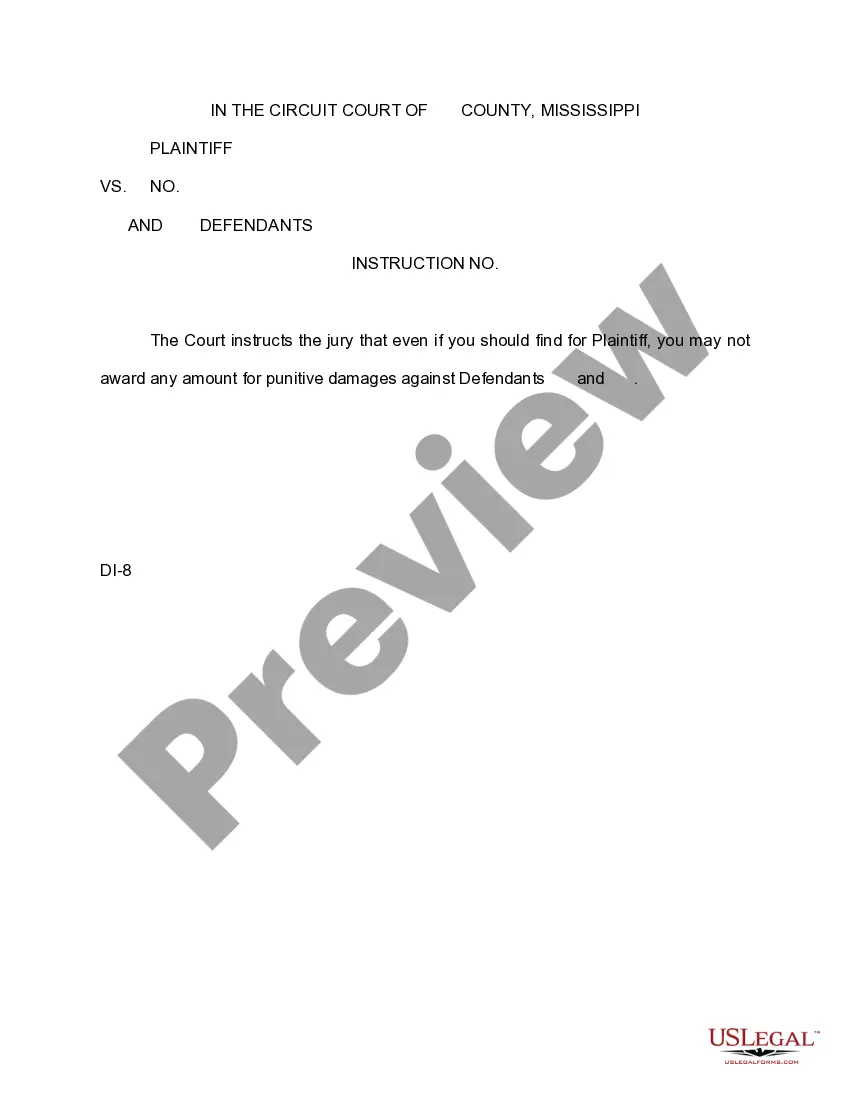
The Jury Instruction - Punitive Damages - No Right to Recover is a legal document used in Mississippi courts. This form provides essential guidance for juries regarding punitive damages in cases where the plaintiff has no right to recover such damages. It differs from other jury instructions by specifically addressing the limits on punitive damages and ensuring compliance with legal standards established by case law.
Key components of this form
- Introduction to punitive damages
- Clarification of circumstances under which punitive damages cannot be awarded
- References to relevant case law, including the Davenport case
- Instructions for jurors on interpreting the guidelines
- Provision for jury deliberation processes related to punitive damages
When to use this document
This form is essential during trials where punitive damages are discussed, particularly when the defense argues that the plaintiff has no legal basis to recover such damages. It serves to guide juries in understanding the limits of punitive damages as determined by both the evidence presented and existing case law.
Who should use this form
- Attorneys representing defendants in civil cases involving punitive damages
- Judges overseeing jury instructions in trial courts
- Law professionals seeking to understand jury guidelines on punitive damages
Completing this form step by step
- Review the details of the case and determine the applicability of punitive damages.
- Ensure that the form language is aligned with the latest Mississippi case law.
- Provide clear instructions for the jury that highlight when punitive damages cannot be awarded.
- Incorporate citations from the relevant case law, such as Davenport v. St. Paul Fire and Marine Ins. Co.
- Submit the completed instruction for court approval prior to jury deliberation.
Does this document require notarization?
Notarization is not commonly needed for this form. However, certain documents or local rules may make it necessary. Our notarization service, powered by Notarize, allows you to finalize it securely online anytime, day or night.
Get your form ready online
Our built-in tools help you complete, sign, share, and store your documents in one place.
Make edits, fill in missing information, and update formatting in US Legal Forms—just like you would in MS Word.
Download a copy, print it, send it by email, or mail it via USPS—whatever works best for your next step.
Sign and collect signatures with our SignNow integration. Send to multiple recipients, set reminders, and more. Go Premium to unlock E-Sign.
If this form requires notarization, complete it online through a secure video call—no need to meet a notary in person or wait for an appointment.
We protect your documents and personal data by following strict security and privacy standards.

Make edits, fill in missing information, and update formatting in US Legal Forms—just like you would in MS Word.

Download a copy, print it, send it by email, or mail it via USPS—whatever works best for your next step.

Sign and collect signatures with our SignNow integration. Send to multiple recipients, set reminders, and more. Go Premium to unlock E-Sign.

If this form requires notarization, complete it online through a secure video call—no need to meet a notary in person or wait for an appointment.

We protect your documents and personal data by following strict security and privacy standards.
Mistakes to watch out for
- Failing to verify that the language of the instruction complies with current Mississippi law.
- Using outdated legal references or case law that may mislead about punitive damages.
- Neglecting to explain the specific circumstances that prohibit punitive damages in the case.
Why use this form online
- Quick access to professionally drafted legal language and templates.
- Easy to download and customize according to specific case needs.
- Reliable source that ensures adherence to state-specific laws and regulations.
Legal use & context
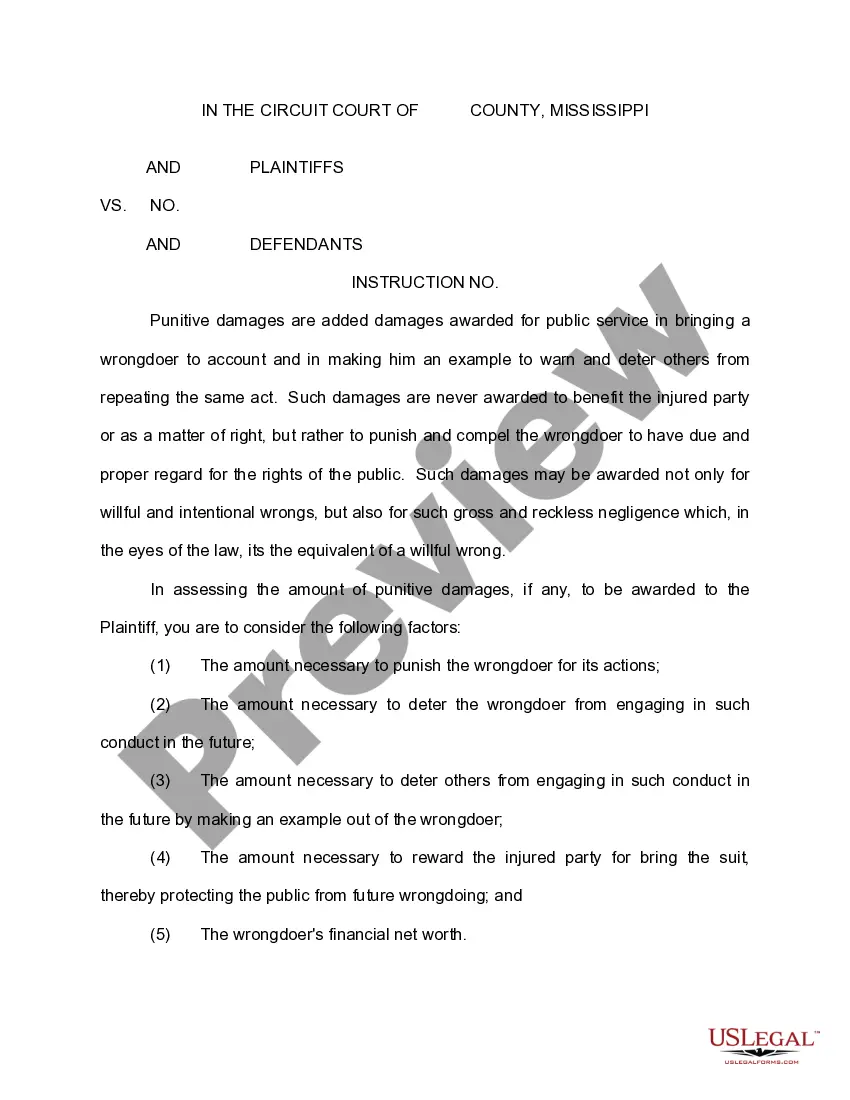
- This jury instruction provides necessary context for jurors surrounding punitive damages.
- Informs jurors about their responsibilities and the legal limits imposed on damages claims.
- Helps uphold fairness and legal standards in jury deliberations involving punitive damages.
Looking for another form?
Form popularity
FAQ
In many jurisdictions, punitive damages are inappropriate if there was no award of compensatory damages. Many appellate courts have ruled that a simple liability finding without an award of compensatory damages is not enough to support a punitive damages award.
Home Blog Personal Injury Law When Are Punitive Damages Recoverable?Punitive damages can be awarded in addition to compensatory damages, but the purpose of punitive damages is not to compensate the plaintiff, but to punish the defendant.
Although there is no maximum sum, punitive damages typically do not exceed four times the amount of compensatory damages. For example, if a plaintiff recovers $100,000 in compensatory damages and is awarded punitive damages, they most likely will receive up to $400,000 in punitive damages.
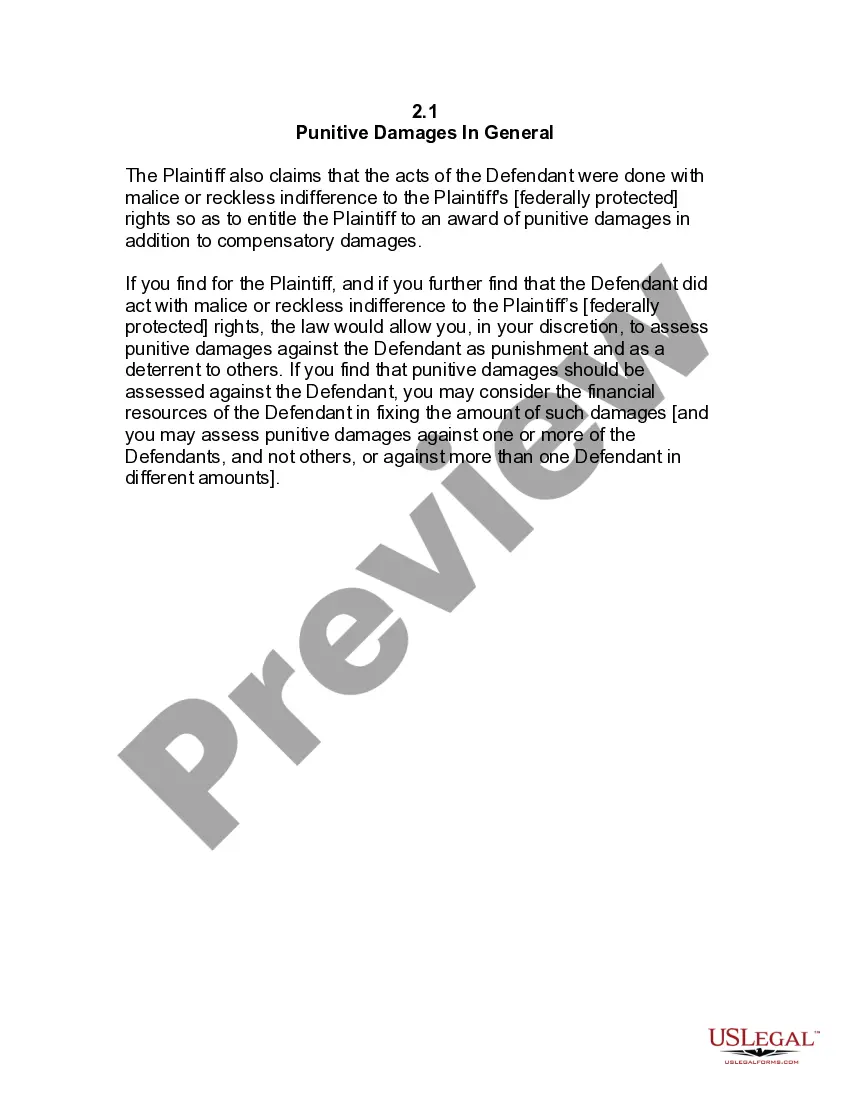
Punitive damages may only be awarded if the plaintiff proves by clear and convincing evidence that his or her harm was the result of actual malice. This burden of proof may not be satisfied by proof of any degree of negligence including gross negligence.
A defendant who acted in negligence isn't enough to justify the awarding of punitive damages. For punitive damages to be awarded, the defendant needs to have acted in a way that is either malicious, purposeful, or a combination of the two.
Even though punitive damage awards are meant to punish the defendant and benefit society, not the plaintiff, punitive damage awards are paid to the plaintiff in a case.
When can I get "punitive damages"? California Civil Code 3294 allows plaintiffs to recover punitive damages when they can show that their injuries were caused by the defendant's malice, oppression or fraud, typically in cases of intentional harm or extreme recklessness.
Punitive damages are rarely awarded for breach of contract. They arise more often in tort cases, to punish deliberate or reckless misconduct that results in personal harm.
While mandated percentage "limits" on a punitive damage award have drawn criticism, awards in excess of these limits have also drawn objection. Again, using California as an example, courts have generally found punitive damages greater than 15 percent of a defendant's net worth to be excessive.