Mississippi Motion for Additional Peremptory Challenges
What this document covers
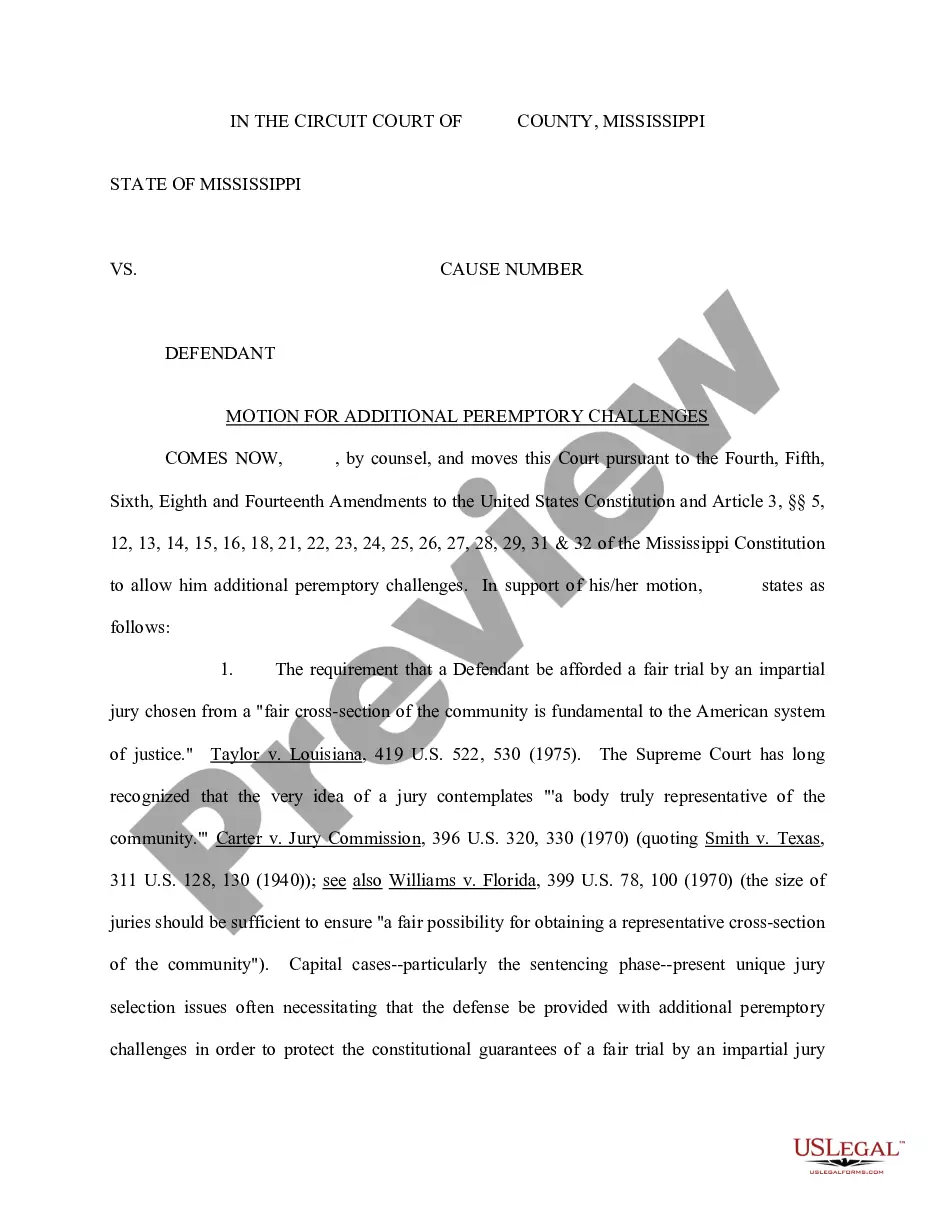
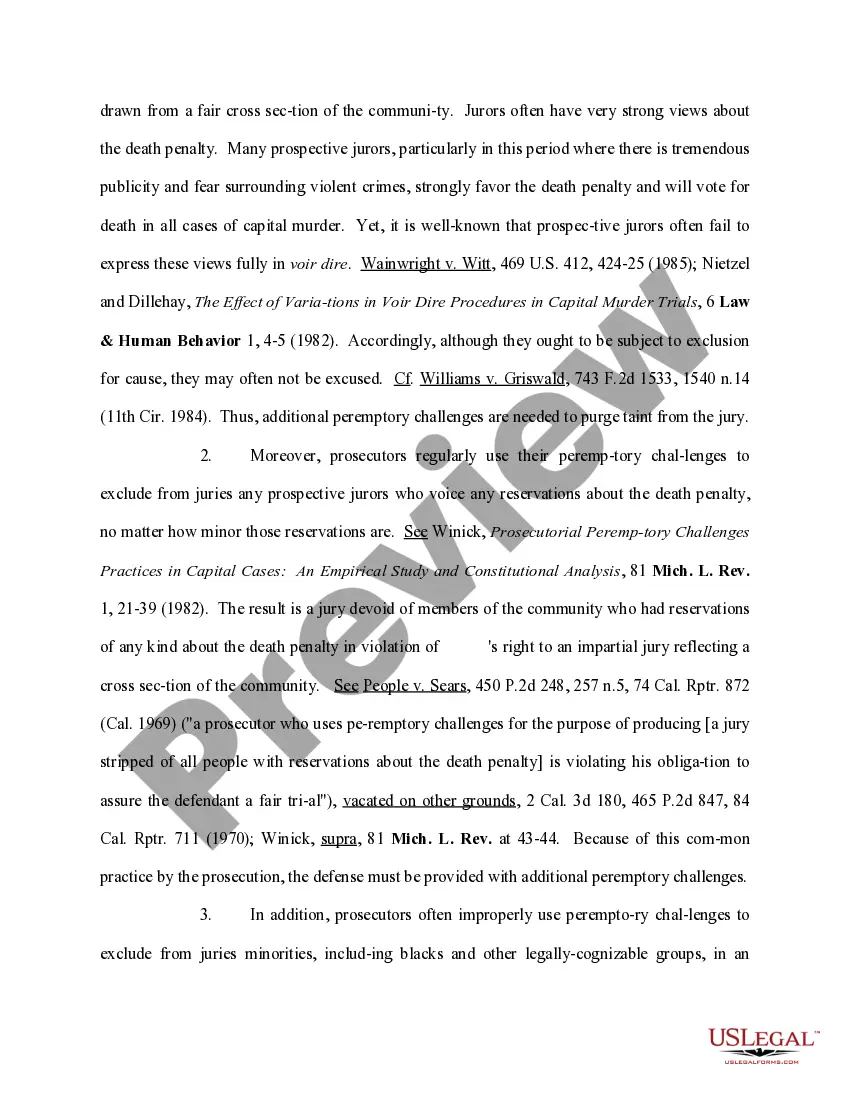
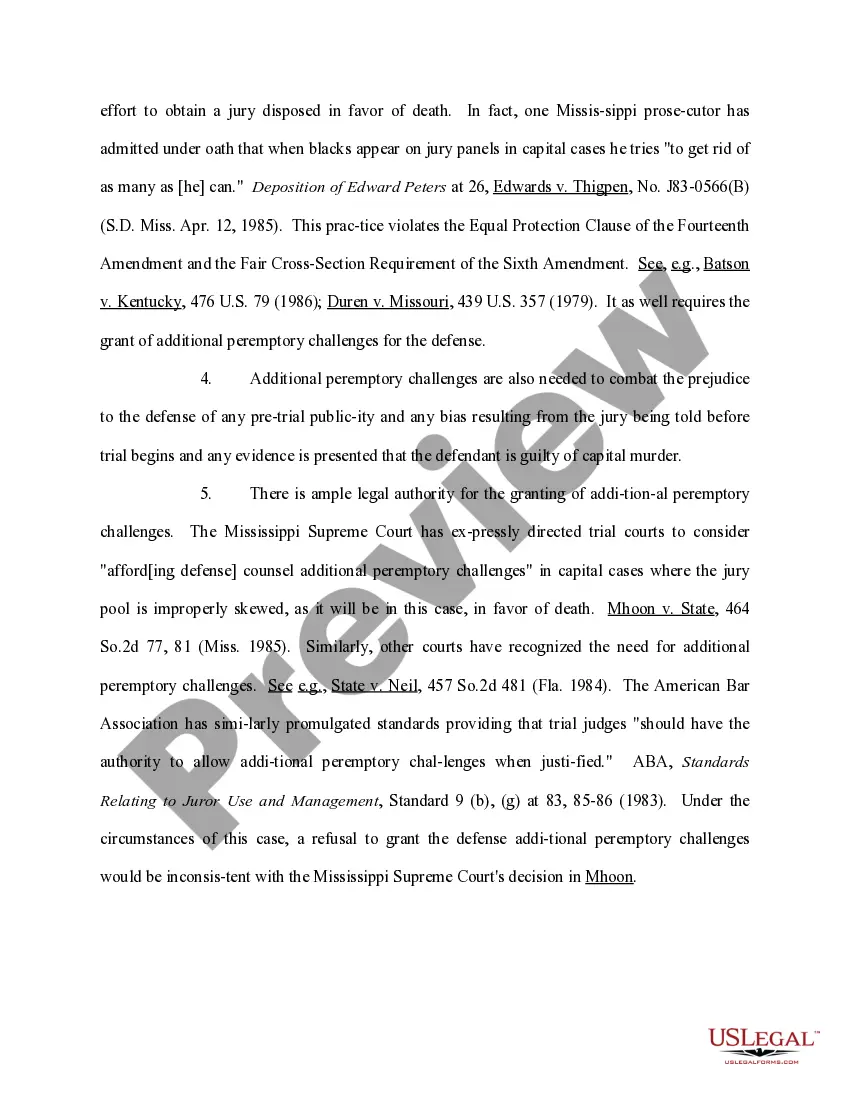
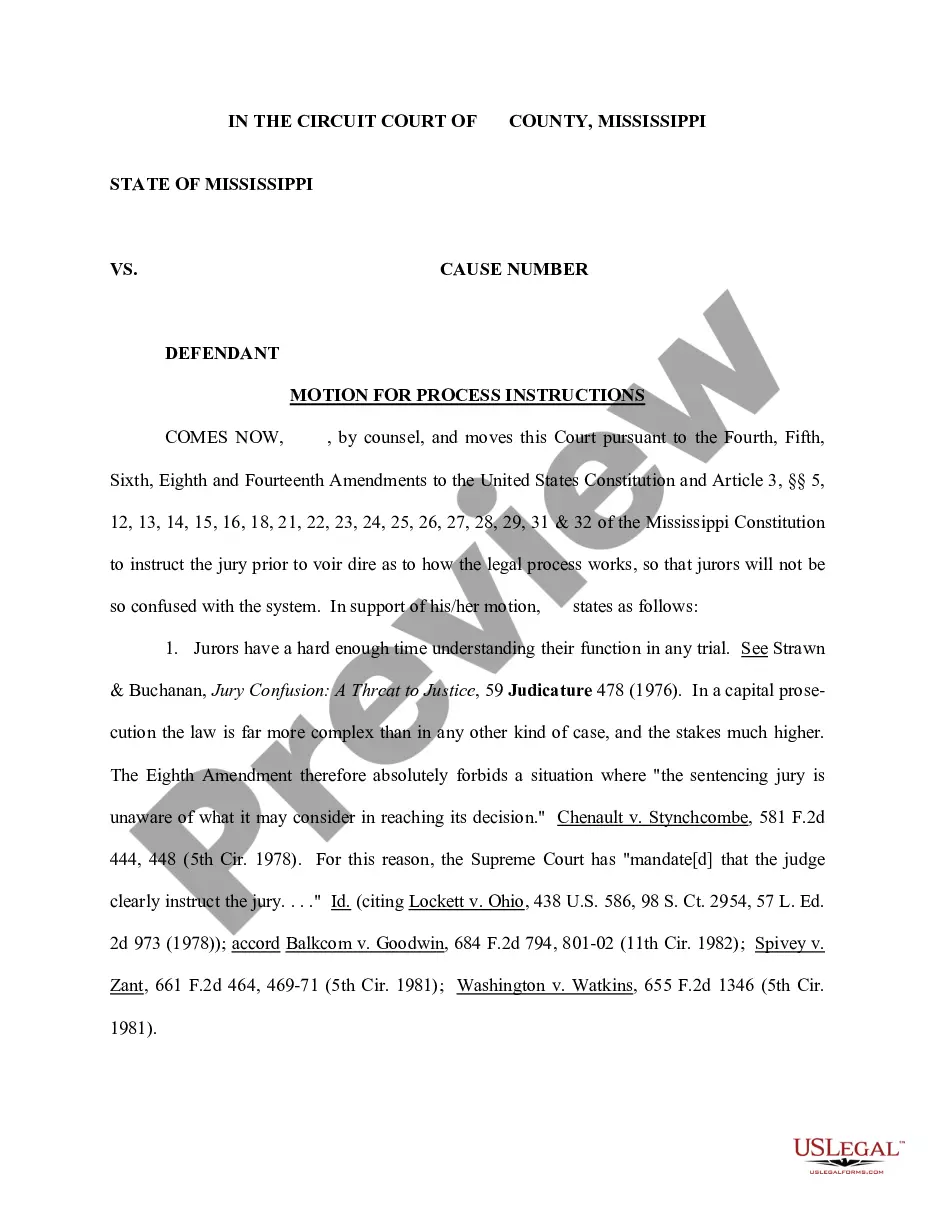
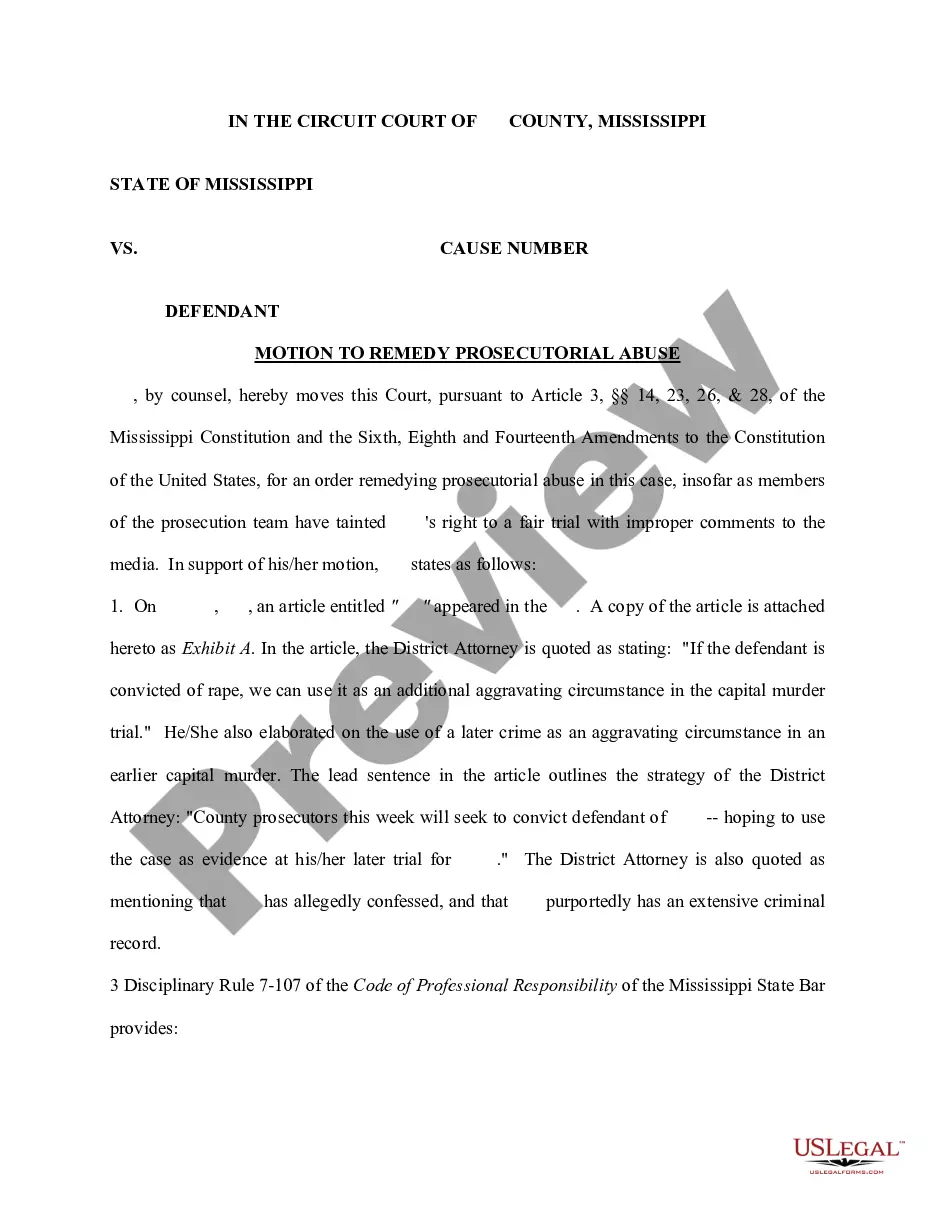
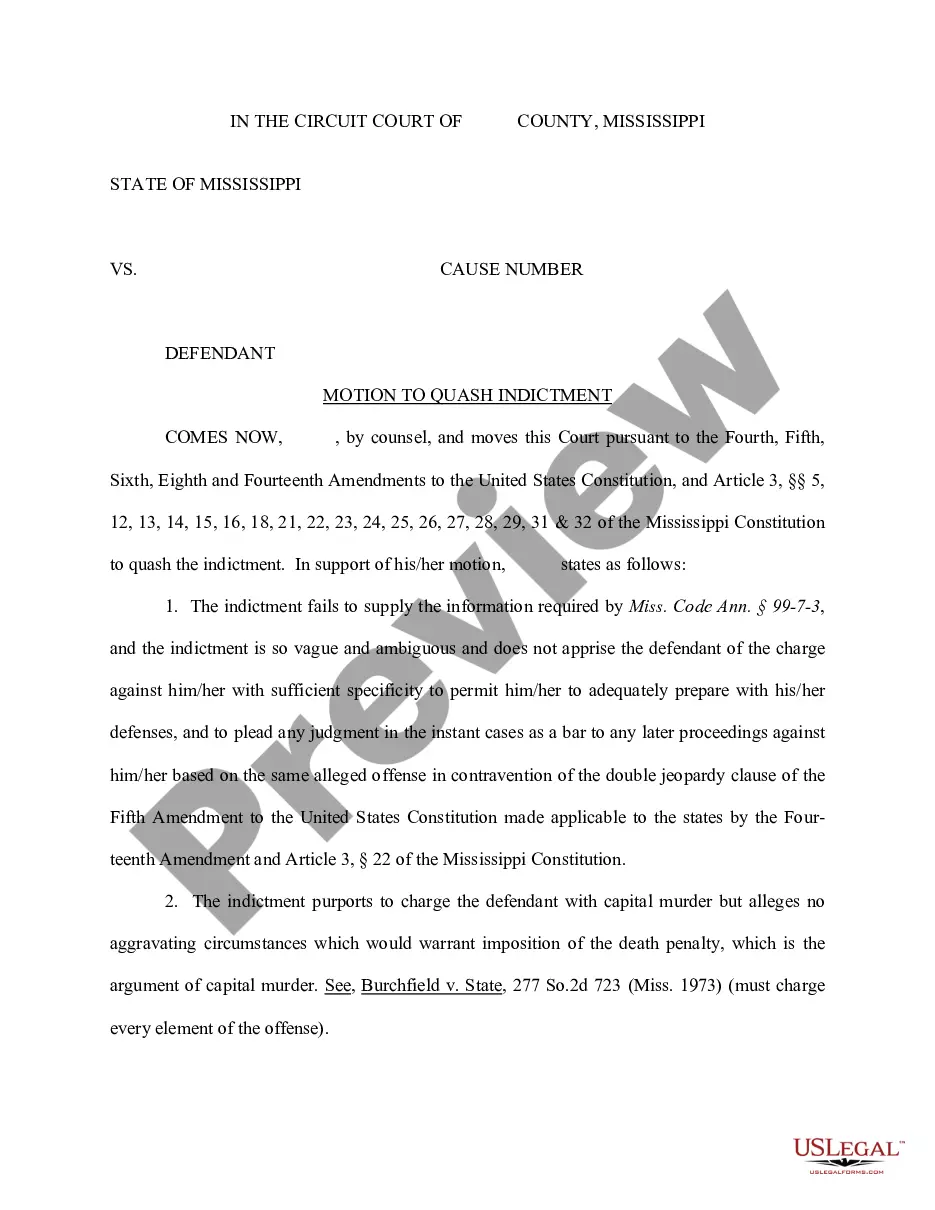
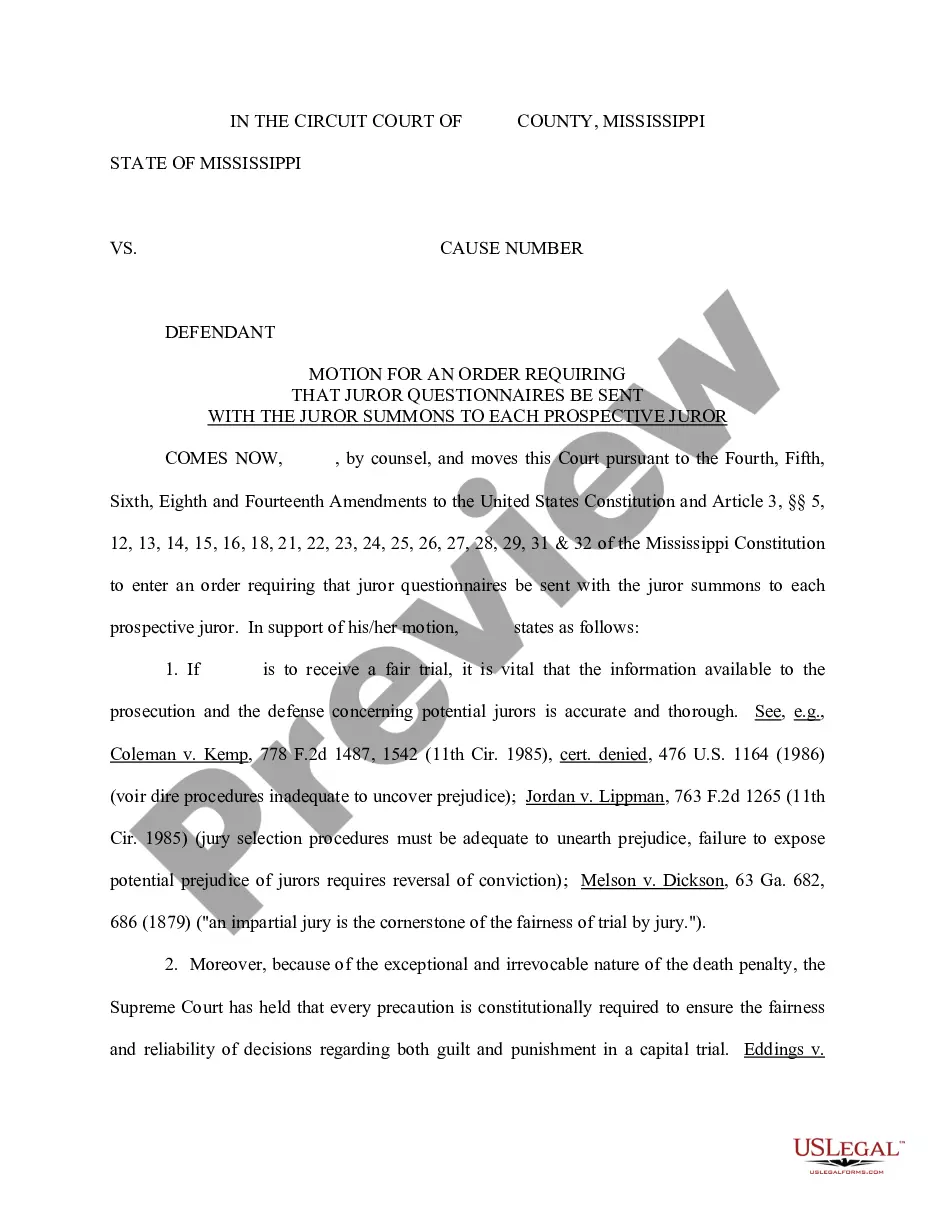
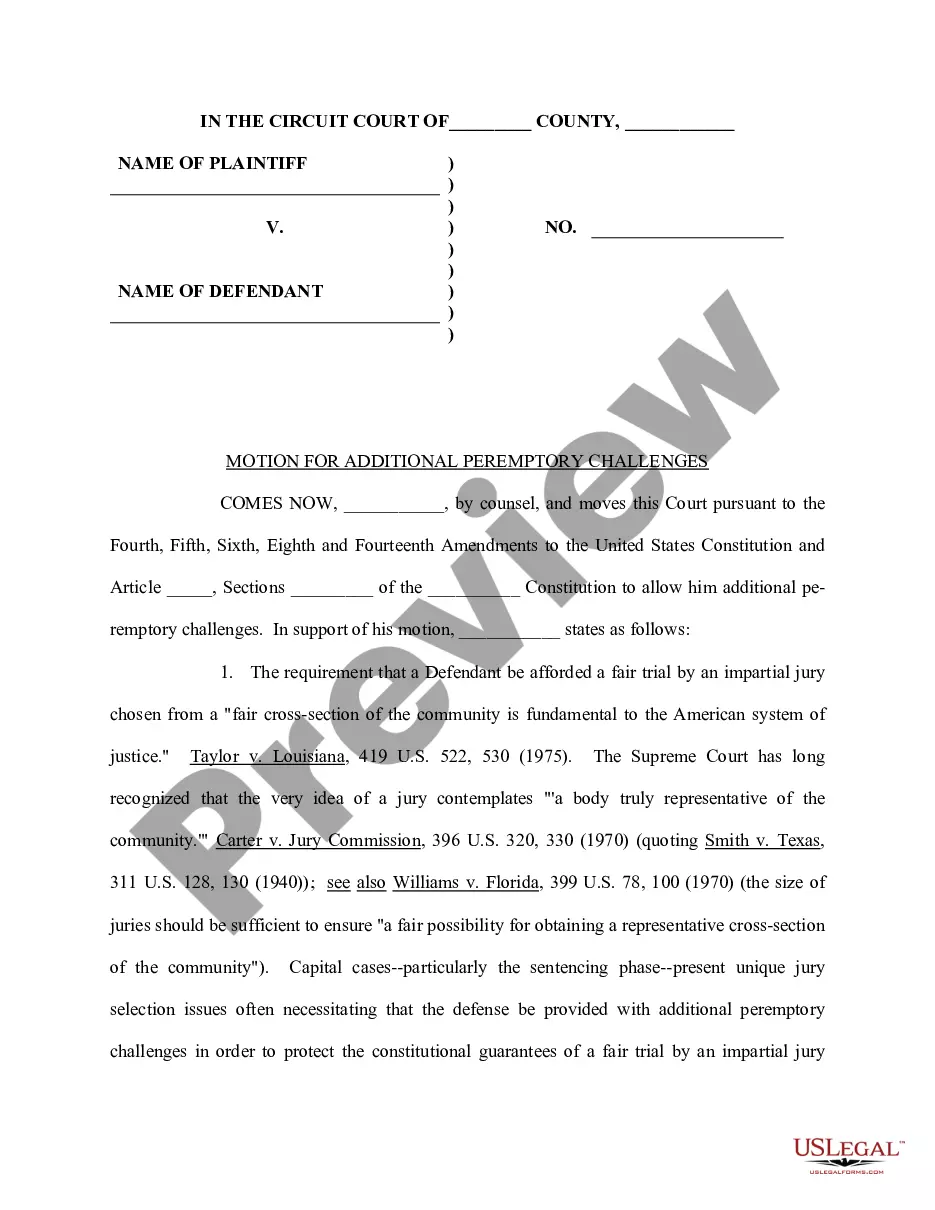
A Motion for Additional Peremptory Challenges is a written request submitted to the court, seeking permission for the defense to have extra peremptory challenges during jury selection. This legal form is essential in ensuring a fair trial, particularly in cases where there may be concerns about bias or improper exclusion of jurors based on race or other legally recognized groups. This form differs from standard motion forms as it specifically addresses the need for additional challenges to combat potential jury bias.
Main sections of this form
- Identification of the parties involved in the case.
- A statement of the legal grounds for requesting additional peremptory challenges.
- References to relevant case law supporting the request.
- Details about the jury pool and any biases evident from pretrial publicity.
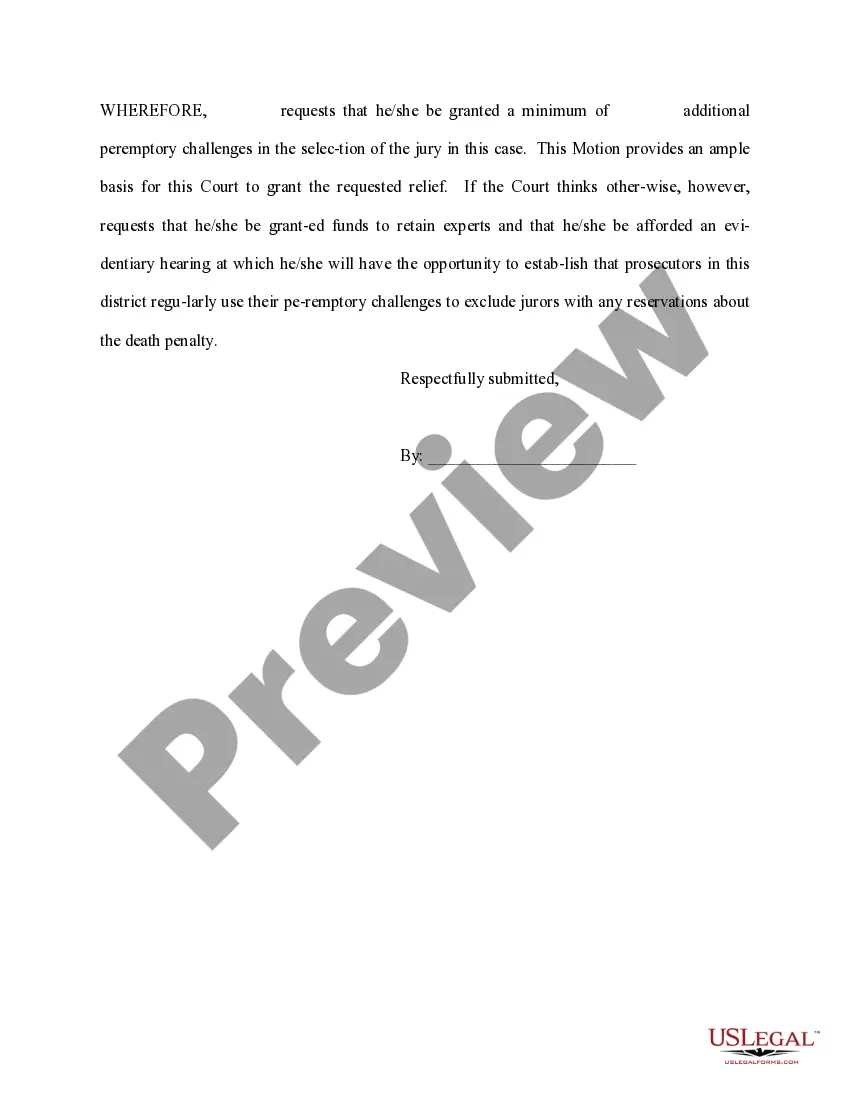
- A formal request to the court for the specific number of additional challenges required.

When to use this document
This form should be used when a defendant anticipates that the jury selection process may be conducted in a biased manner, particularly in capital cases or situations where there is a risk of racial or social prejudice. It is crucial in ensuring that a defendant has adequate opportunities to ensure a fair and impartial jury, especially in jurisdictions where historical injustices may arise during jury selection.
Who needs this form
- Defendants in criminal cases, especially capital cases.
- Defense attorneys representing clients concerned about jury bias.
- Legal representatives seeking to ensure compliance with the Equal Protection Clause.
Completing this form step by step
- Identify and enter the names of all parties involved in the case at the top of the document.
- State the reasons for requesting additional peremptory challenges, citing applicable case law.
- Provide information regarding the composition of the jury pool and any evidence of potential bias.
- Request a specific number of additional challenges needed for your case.
- Sign and date the motion, ensuring it is filed properly with the court.
Notarization guidance
Notarization is not commonly needed for this form. However, certain documents or local rules may make it necessary. Our notarization service, powered by Notarize, allows you to finalize it securely online anytime, day or night.
Get your form ready online
Our built-in tools help you complete, sign, share, and store your documents in one place.
Make edits, fill in missing information, and update formatting in US Legal Forms—just like you would in MS Word.
Download a copy, print it, send it by email, or mail it via USPS—whatever works best for your next step.
Sign and collect signatures with our SignNow integration. Send to multiple recipients, set reminders, and more. Go Premium to unlock E-Sign.
If this form requires notarization, complete it online through a secure video call—no need to meet a notary in person or wait for an appointment.
We protect your documents and personal data by following strict security and privacy standards.

Make edits, fill in missing information, and update formatting in US Legal Forms—just like you would in MS Word.

Download a copy, print it, send it by email, or mail it via USPS—whatever works best for your next step.

Sign and collect signatures with our SignNow integration. Send to multiple recipients, set reminders, and more. Go Premium to unlock E-Sign.

If this form requires notarization, complete it online through a secure video call—no need to meet a notary in person or wait for an appointment.

We protect your documents and personal data by following strict security and privacy standards.
Mistakes to watch out for
- Failing to adequately cite relevant case law supporting the request.
- Not specifying the number of additional peremptory challenges requested.
- Submitting the motion without proper signatures or filing the form incorrectly.
Benefits of using this form online
- Convenient access to a professionally drafted legal form.
- Editable format allows you to tailor the motion to your unique circumstances.
- Quick download and secure storage of your documents.
Legal use & context
- Ensure the motion aligns with statutory requirements for jury selection in your jurisdiction.
- Use the form as a protective measure in capital cases to address potential biases.
- Seek to uphold constitutional rights under the Equal Protection Clause of the Fourteenth Amendment.
Looking for another form?


Form popularity
FAQ
In California, for most cases the number of peremptory challenges available to each lawyer is ten so long as there is one defendant. For death penalty or life imprisonment cases where a single defendant is involved, each attorney is permitted 20 peremptory challenges.
A party may challenge an unlimited number of prospective jurors for cause. Parties also may exercise a limited number of peremptory challenges. These challenges permit a party to remove a prospective juror without giving a reason for the removal. Peremptory challenges provide a more impartial and better qualified jury.
A peremptory challenge results in the exclusion of a potential juror without the need for any reason or explanation - unless the opposing party presents a prima facie argument that this challenge was used to discriminate on the basis of race, ethnicity, or sex. See Batson challenge.
A peremptory challenge can be a major part of voir dire. A peremptory challenge also allows attorneys to veto a potential juror on a "hunch". The idea behind peremptory challenges is that if both parties have contributed in the configuration of the jury, they will find its verdict more acceptable.
Each attorney is allowed between six and twenty peremptory challenges, depending on the alleged offenses. There is an important point to address with respect to peremptory challenges. An attorney may not excuse prospective jurors based on their race, religion, ethnicity, etc.
California currently permits a party in a civil case six (6) peremptory challenges, and 10 in non-capital criminal cases.
In federal criminal trials, the number of peremptory challenges allowed is ten for the defendant and six for the prosecution in a felony case, 20 for each side in a death penalty case, and three for each side in a misdemeanor case (Fed. R. Crim. P.
Since an attorney is permitted an unlimited number of challenges for cause, lawyers prefer to use a challenge for cause because it allows the attorney to preserve the limited amount of peremptory challenges.