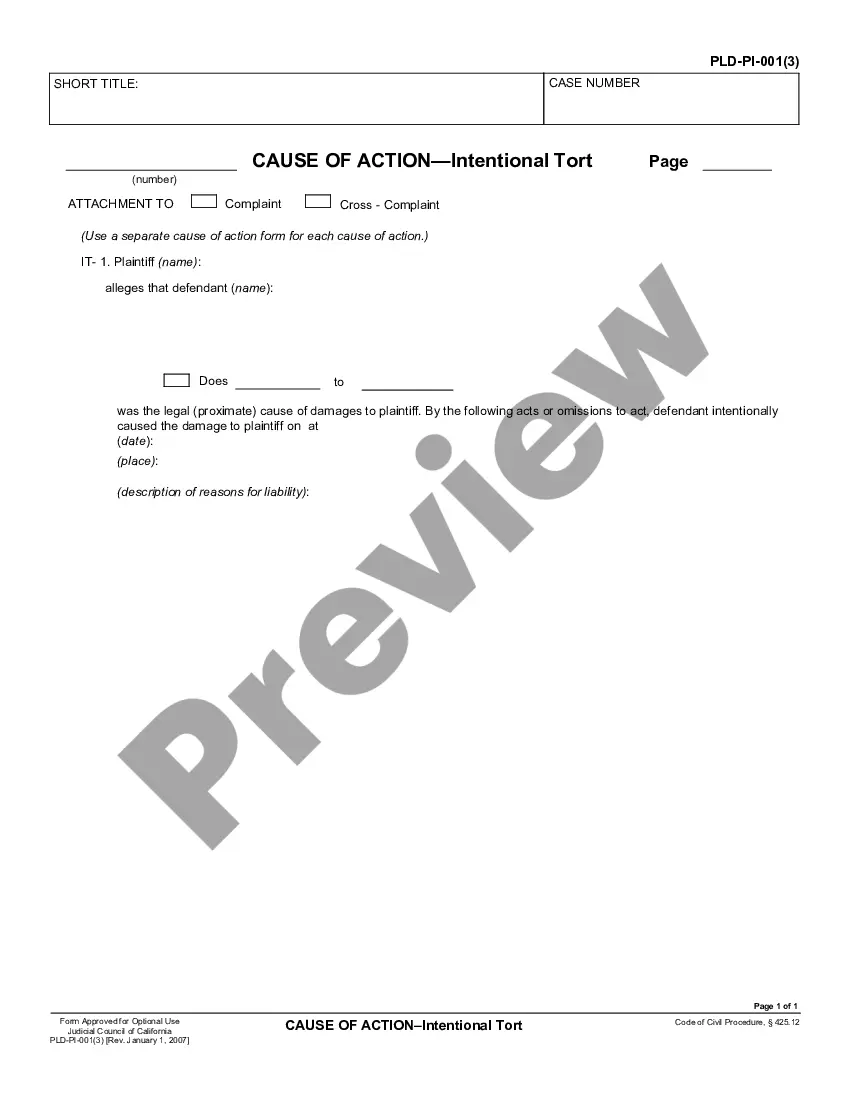
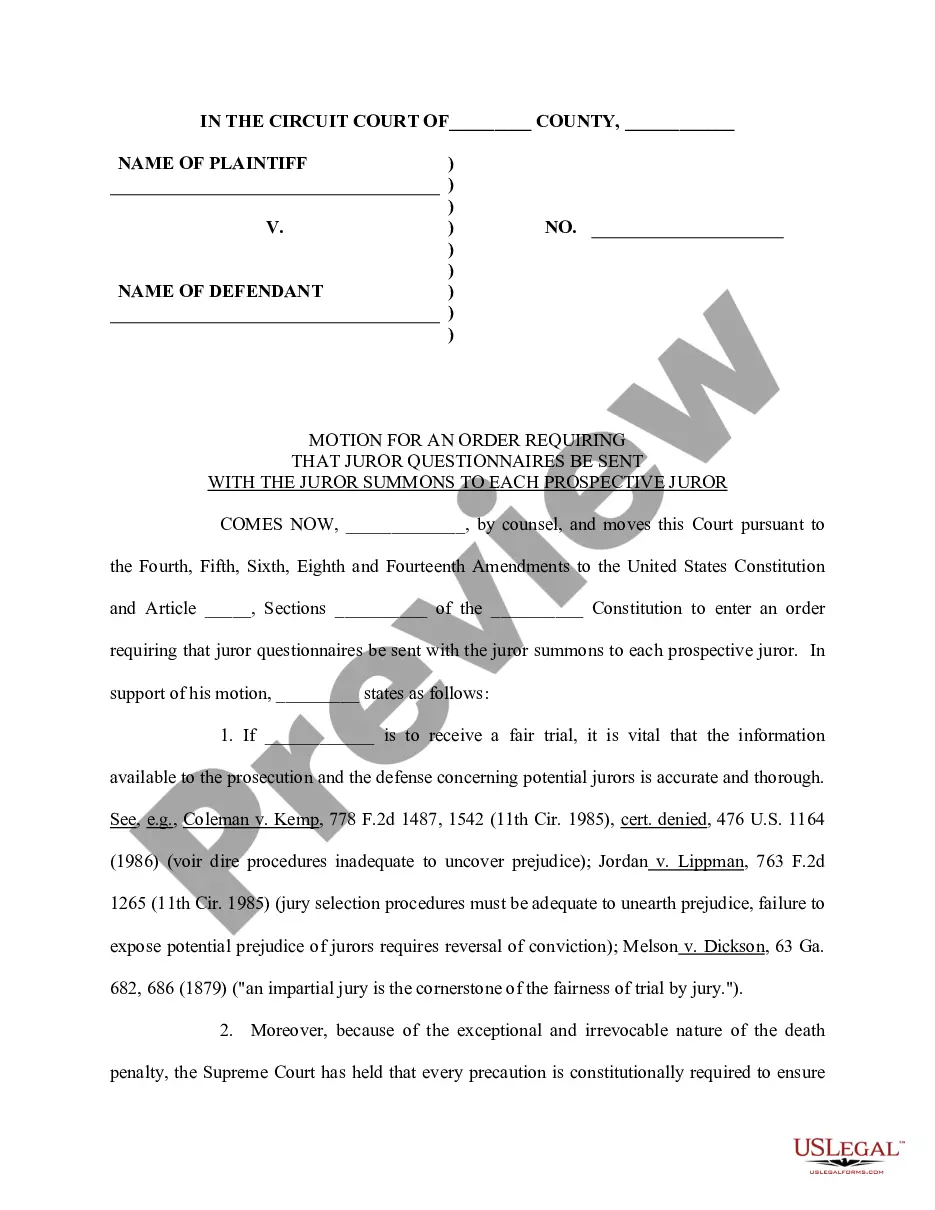
Mississippi Motion for an Order Requiring that Juror Questionnaires be Sent With the Juror Summons to Each Prospective Juror
Understanding this form
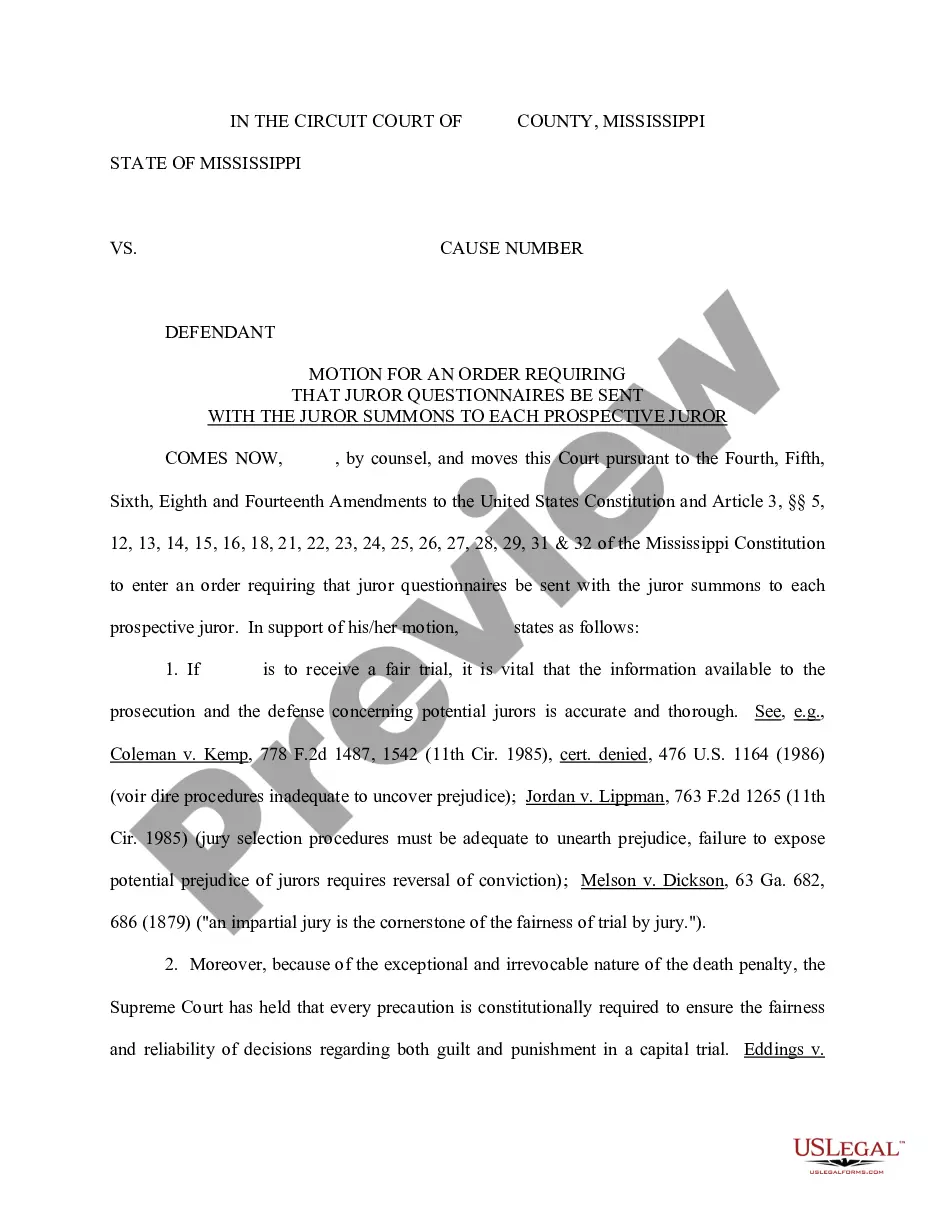
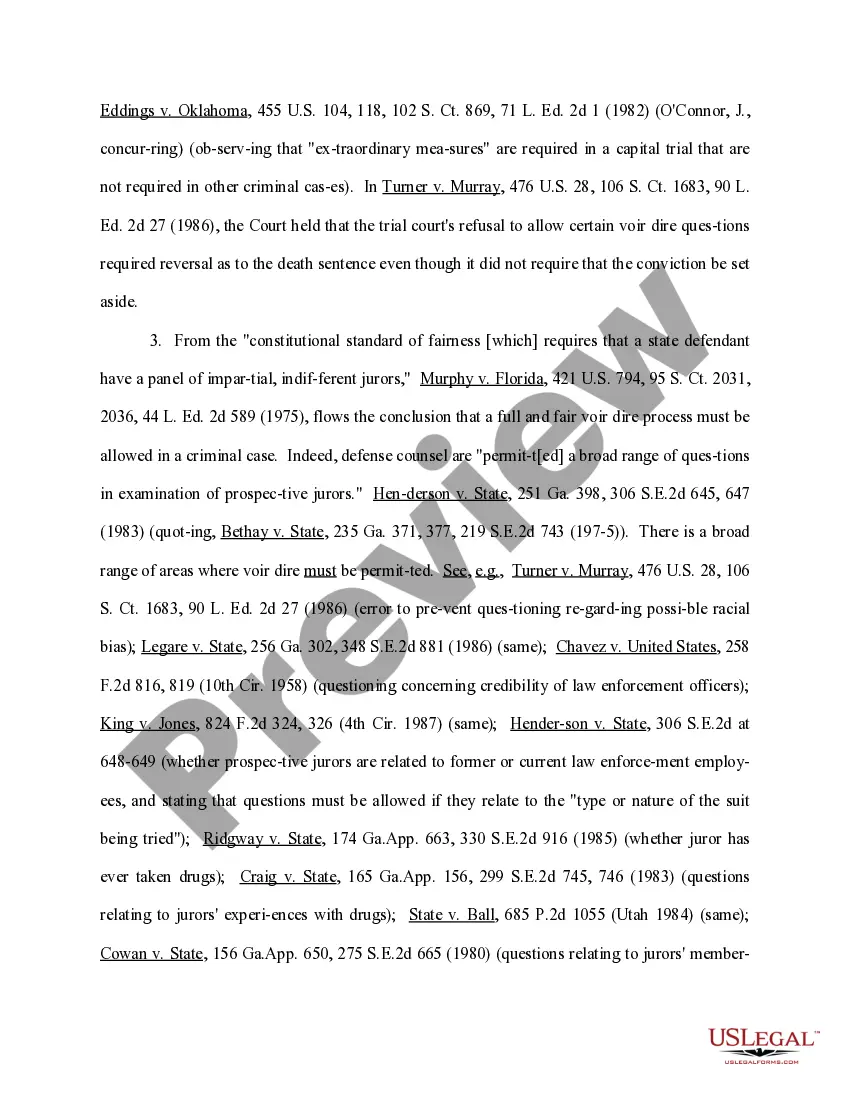
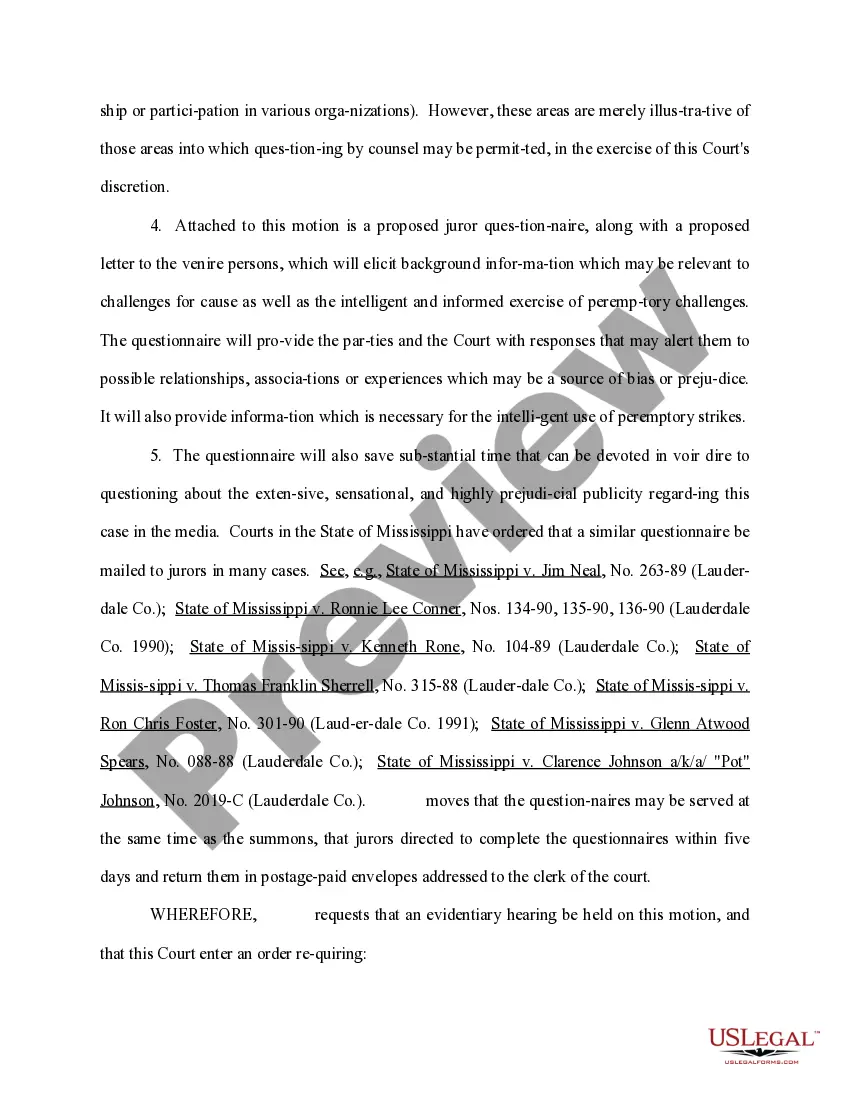
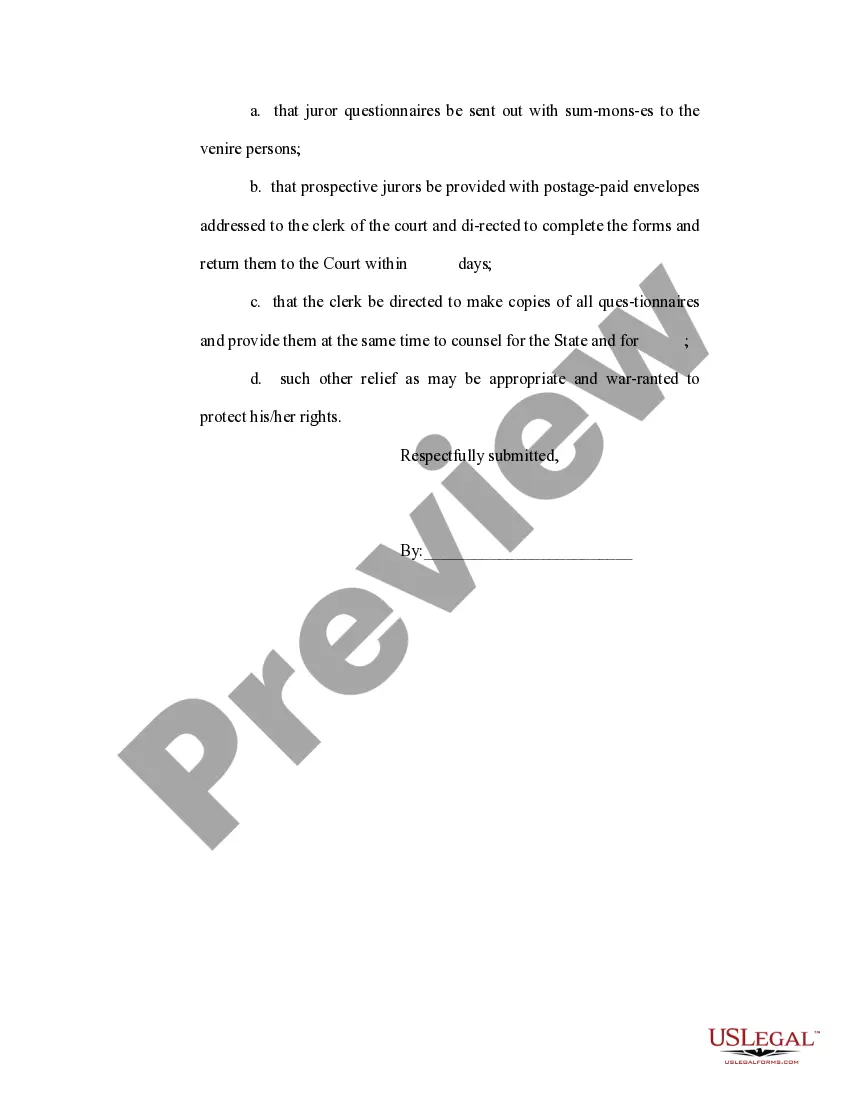
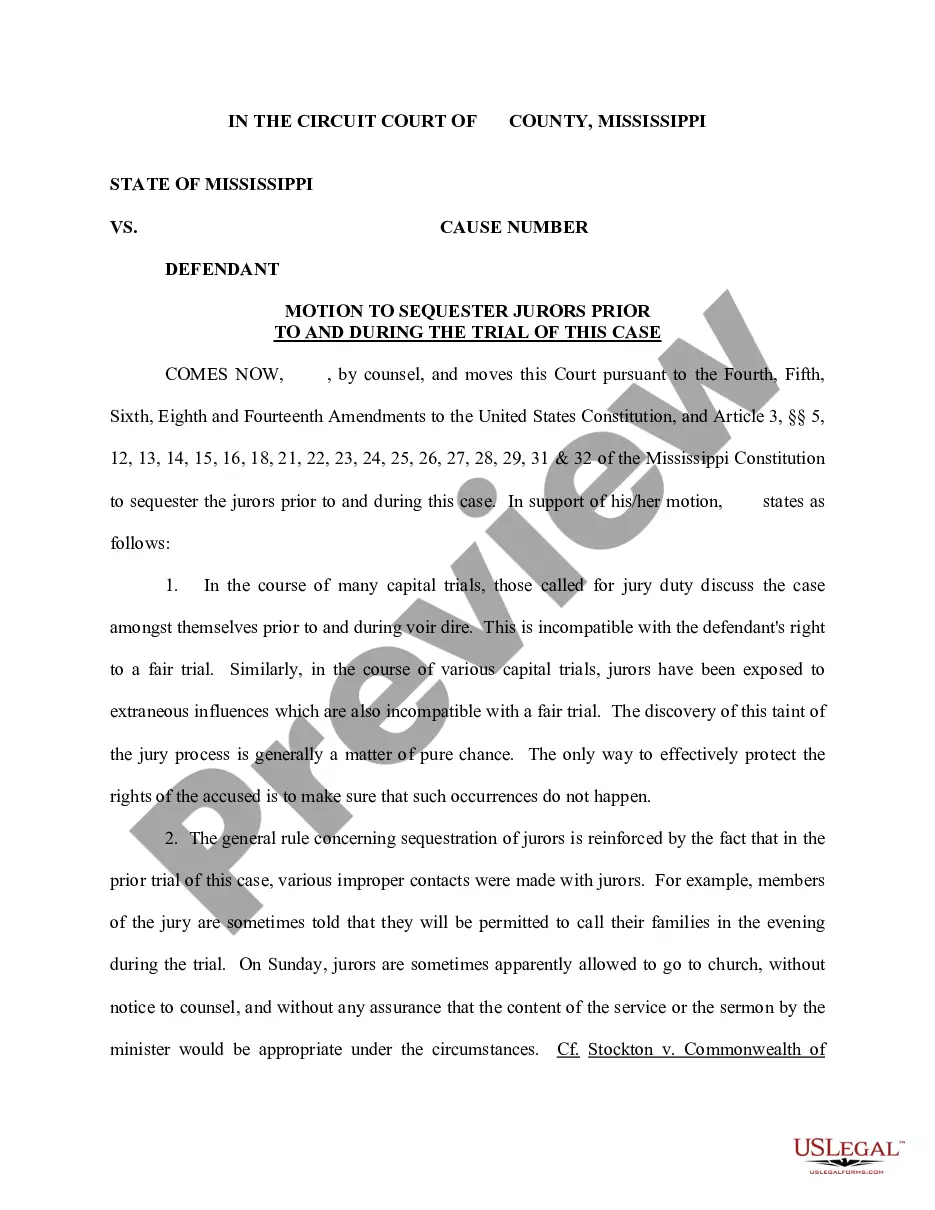
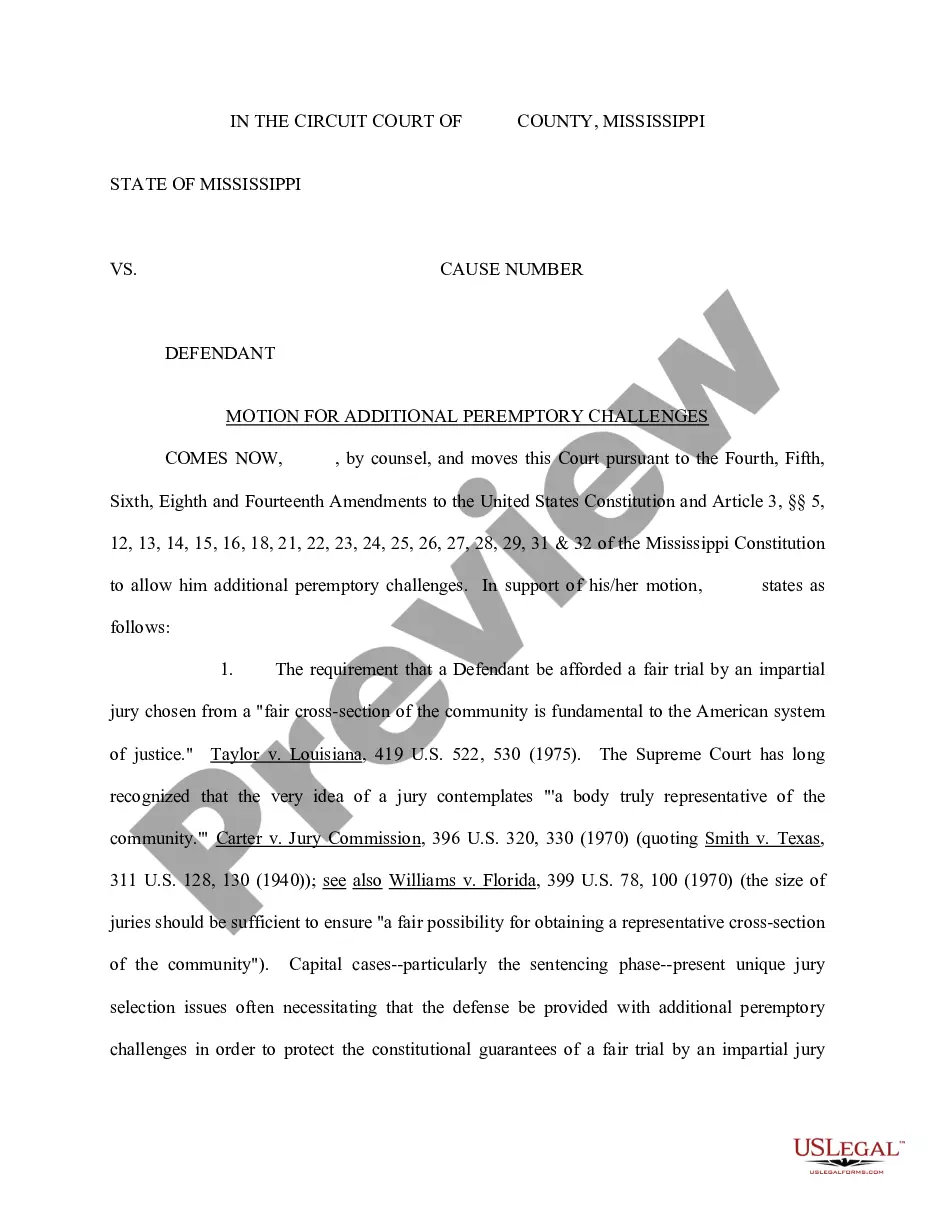
The Motion for an Order Requiring that Juror Questionnaires be Sent With the Juror Summons to Each Prospective Juror is a legal document used to request the court to include juror questionnaires along with jury summonses. This motion helps ensure a fair selection process by providing relevant background information about potential jurors. It is particularly important in cases involving serious charges, such as those where the death penalty may be applicable, ensuring that jurors are impartial and qualified to serve.
What’s included in this form
- Formal request to the court for juror questionnaires to be sent with juror summons.
- Includes a proposed juror questionnaire designed to gather pertinent information.
- Accompanied by a letter directed to prospective jurors regarding the questionnaire.
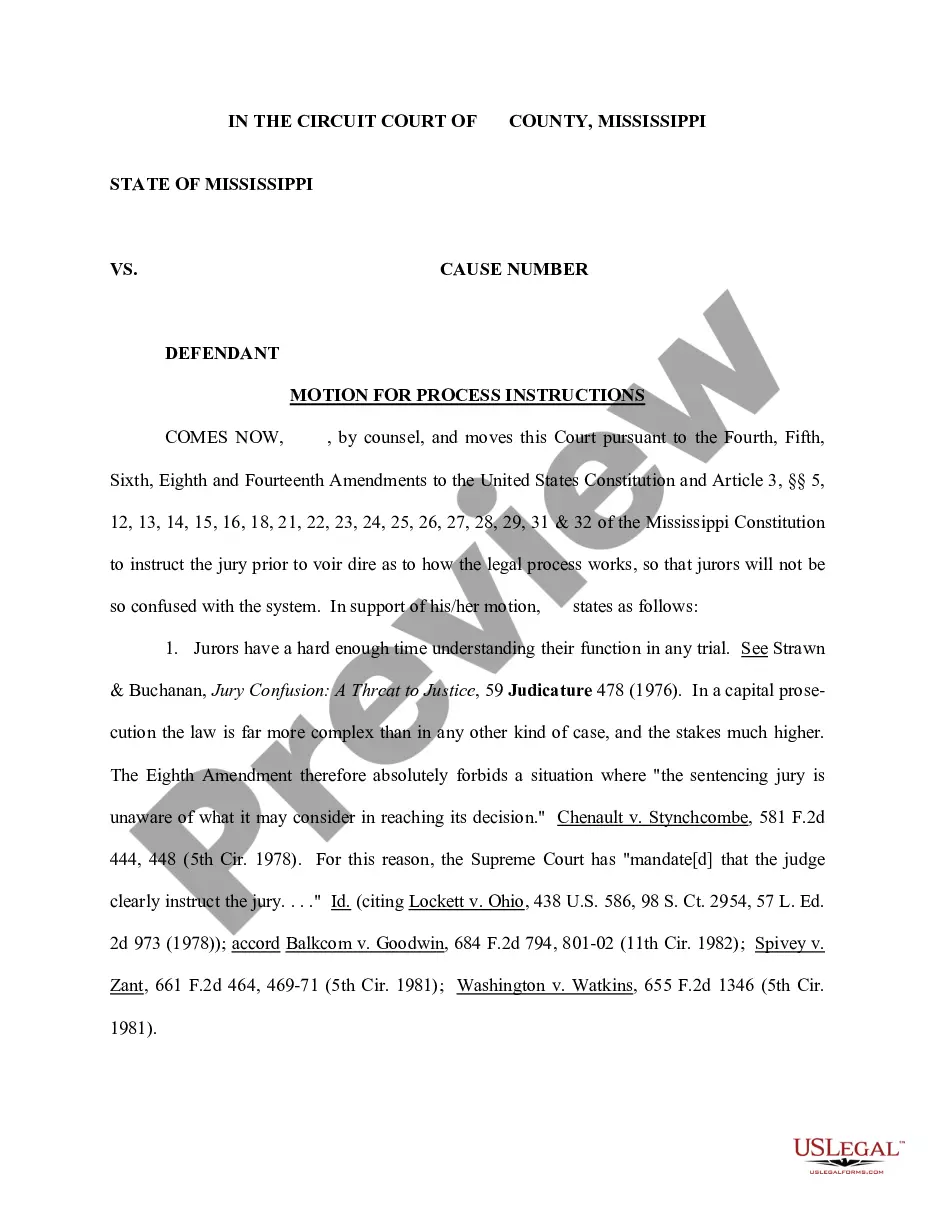
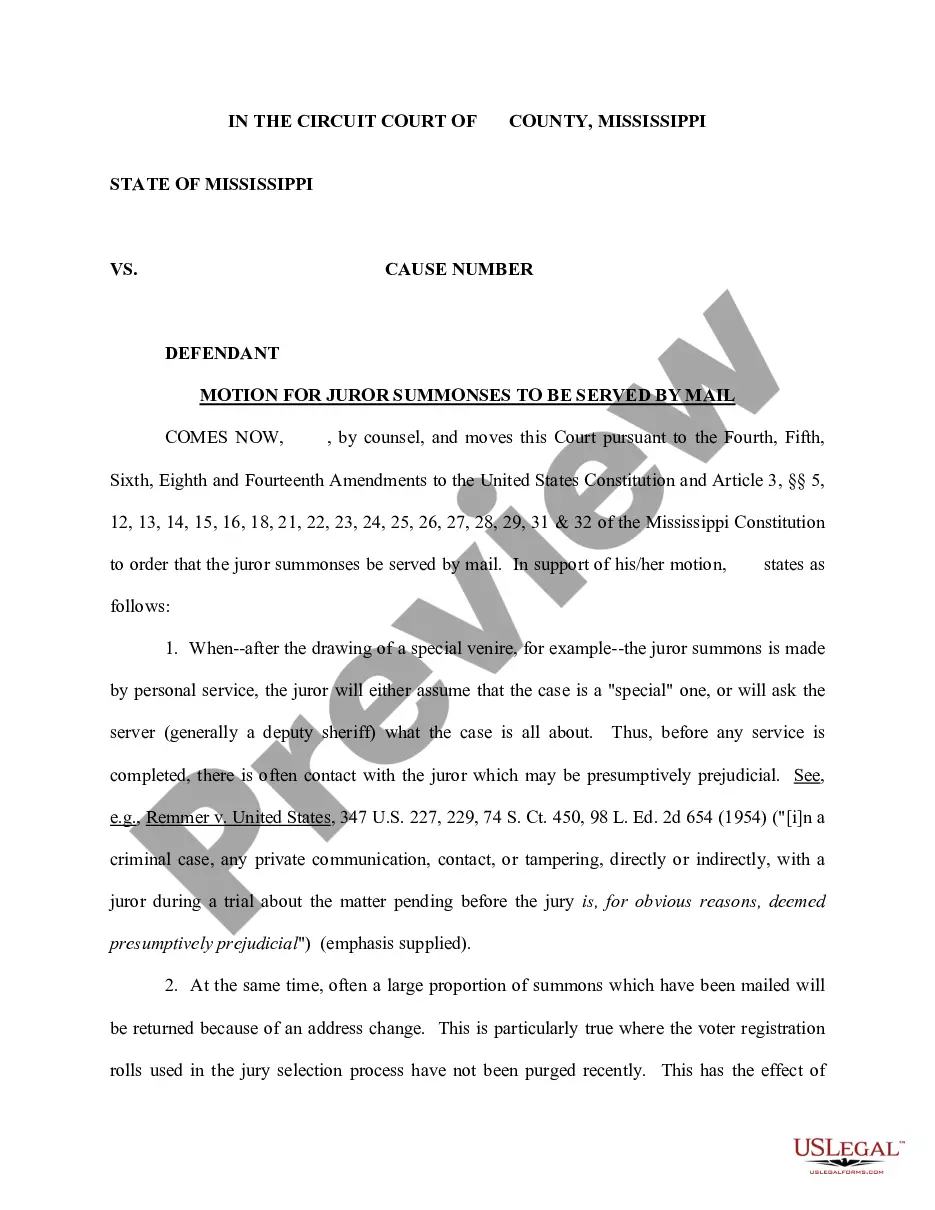
- Legal citations that support the necessity for thorough juror vetting.
- Procedural guidelines for the court's consideration of the motion.
When to use this document
This motion is used when legal counsel believes that a fair jury trial requires additional background information from potential jurors. It is particularly relevant in cases where bias might affect the outcome, such as criminal trials involving severe penalties, including the death penalty. By using this form, attorneys can ensure that jurors are adequately screened for impartiality.
Who should use this form
- Attorneys representing defendants in capital trials or serious criminal cases.
- Legal advocates seeking to ensure a fair jury selection process.
- Any party involved in litigation where juror bias may be a concern.
How to prepare this document
- Begin by providing the court's name and case number at the top of the document.
- Clearly state the purpose of the motion, requesting that juror questionnaires accompany the juror summons.
- Attach a proposed juror questionnaire that outlines the relevant topics to be covered.
- Include a letter addressed to prospective jurors explaining the questionnaire and its relevance.
- Sign and date the motion, ensuring all parties involved are included in the distribution list.
Is notarization required?
This form usually doesn’t need to be notarized. However, local laws or specific transactions may require it. Our online notarization service, powered by Notarize, lets you complete it remotely through a secure video session, available 24/7.
Get your form ready online
Our built-in tools help you complete, sign, share, and store your documents in one place.
Make edits, fill in missing information, and update formatting in US Legal Forms—just like you would in MS Word.
Download a copy, print it, send it by email, or mail it via USPS—whatever works best for your next step.
Sign and collect signatures with our SignNow integration. Send to multiple recipients, set reminders, and more. Go Premium to unlock E-Sign.
If this form requires notarization, complete it online through a secure video call—no need to meet a notary in person or wait for an appointment.
We protect your documents and personal data by following strict security and privacy standards.

Make edits, fill in missing information, and update formatting in US Legal Forms—just like you would in MS Word.

Download a copy, print it, send it by email, or mail it via USPS—whatever works best for your next step.

Sign and collect signatures with our SignNow integration. Send to multiple recipients, set reminders, and more. Go Premium to unlock E-Sign.

If this form requires notarization, complete it online through a secure video call—no need to meet a notary in person or wait for an appointment.

We protect your documents and personal data by following strict security and privacy standards.
Common mistakes
- Failing to attach the proposed juror questionnaire.
- Not providing sufficient legal justification for the request in the motion.
- Omitting necessary signatures or failing to date the document properly.
- Inaccurately addressing the court or using incorrect case numbers.
Advantages of online completion
- Convenience of immediate download and access.
- Editability allows for quick customization to fit specific case needs.
- Reliability from forms created by licensed attorneys ensuring legal compliance.
- Fast processing without the need for physical paperwork or in-person visits.
Legal use & context
- The motion aims to enhance the fairness of juror selection, critical in capital cases.
- Citations included support the argument for comprehensive and fair jury vetting.
- The attached questionnaire can help identify potential biases before trial.
Quick recap
- This motion is crucial for ensuring a fair jury trial, especially in serious legal proceedings.
- Attorneys must carefully complete the form to avoid common mistakes.
- It is beneficial to use the form in an online format for convenience and efficiency.
Looking for another form?
Form popularity
FAQ
The Sheriff's officer/staff member while you're still in the jury assembly area. the judge or coroner when you're called into court.
Extreme Financial Hardship. Full-Time Student Status. Surgery/Medical Reasons. Being Elderly. Being Too Opinionated. Mental/Emotional Instability. Relation to the Case/Conflict of Interest. Line of Work.
Jury questionnaires, which are used to gather information concerning jurors for use in jury selection, address a variety of aspects of the jurors' lives, including: Background characteristics (e.g., age, occupation, race, educational background, and marital status)
When the jury's verdict contradicts the great weight of the evidence, the trial judge is authorized to set aside that verdict and order a new trial. This power, sometimes called the thirteenth juror rule, dates back to the Blackstonian era. It exists in both civil and criminal cases, in both state and federal court.
The Juror Qualification Questionnaire simply allows the Court to determine if a person is qualified to serve as a juror. If a person is selected to serve and receives a summons to report, he/she may ask to be excused at that time.
Be an "expert" on the case at hand. Tell the judge you're not in a very good place in your life. Dig into your personal life for connections to the case. Mention your mental illness or other "sensitivities." Be a rebel. Have a crappy attitude.
The Court emphasizes that the information compiled from jury questionnaire responses is CONFIDENTIAL. It is used strictly for jury selection; and is not disseminated to any other agencies or parties unless specifically authorized by Federal or State law or by Court order.
One may be excused from jury duty if their presence is required at home or if there is an emergency or personal illness. If you are 65 years of age or older and wish to be exempt from service, a juror's affidavit of excuse should be signed and mailed to the Circuit Clerk's office.
What Happens If I Fail to Appear for Jury Duty in MS?A juror failing to appear may be ordered by the court to appear and show cause and failing to do so may be in civil contempt of court and may be fined up to $500.00 or imprisoned not more than 3or both.