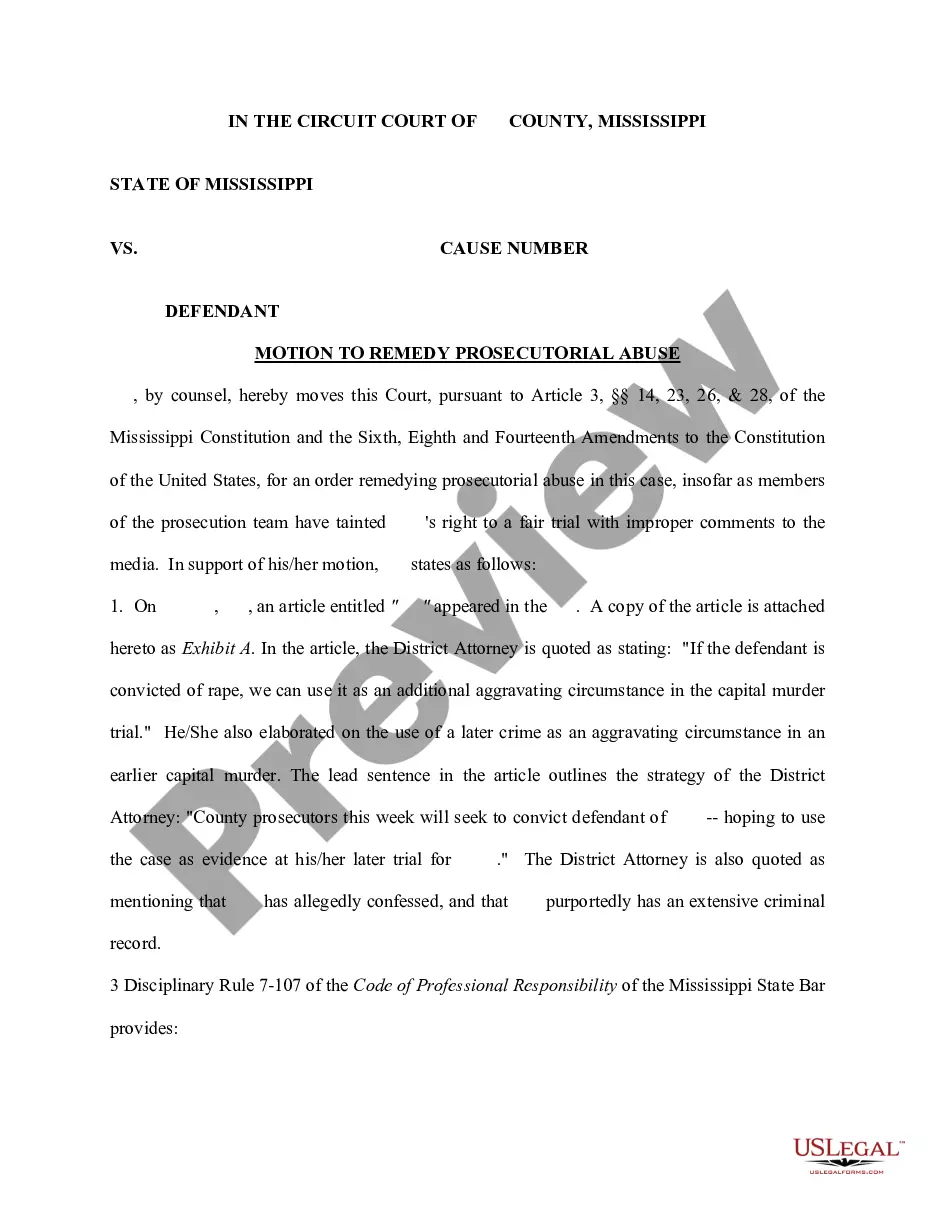
Mississippi Motion to Remedy Prosecutorial Abuse
What is this form?
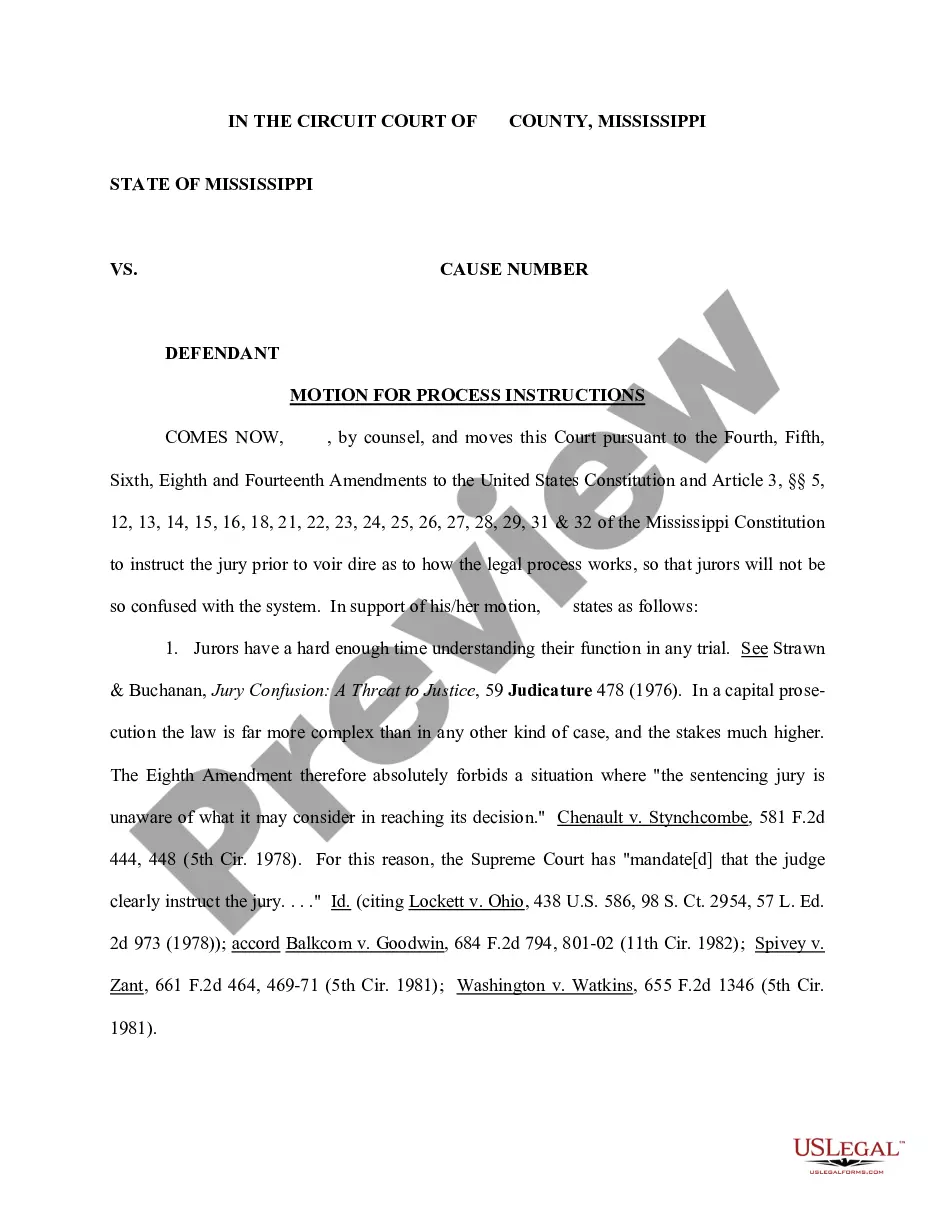
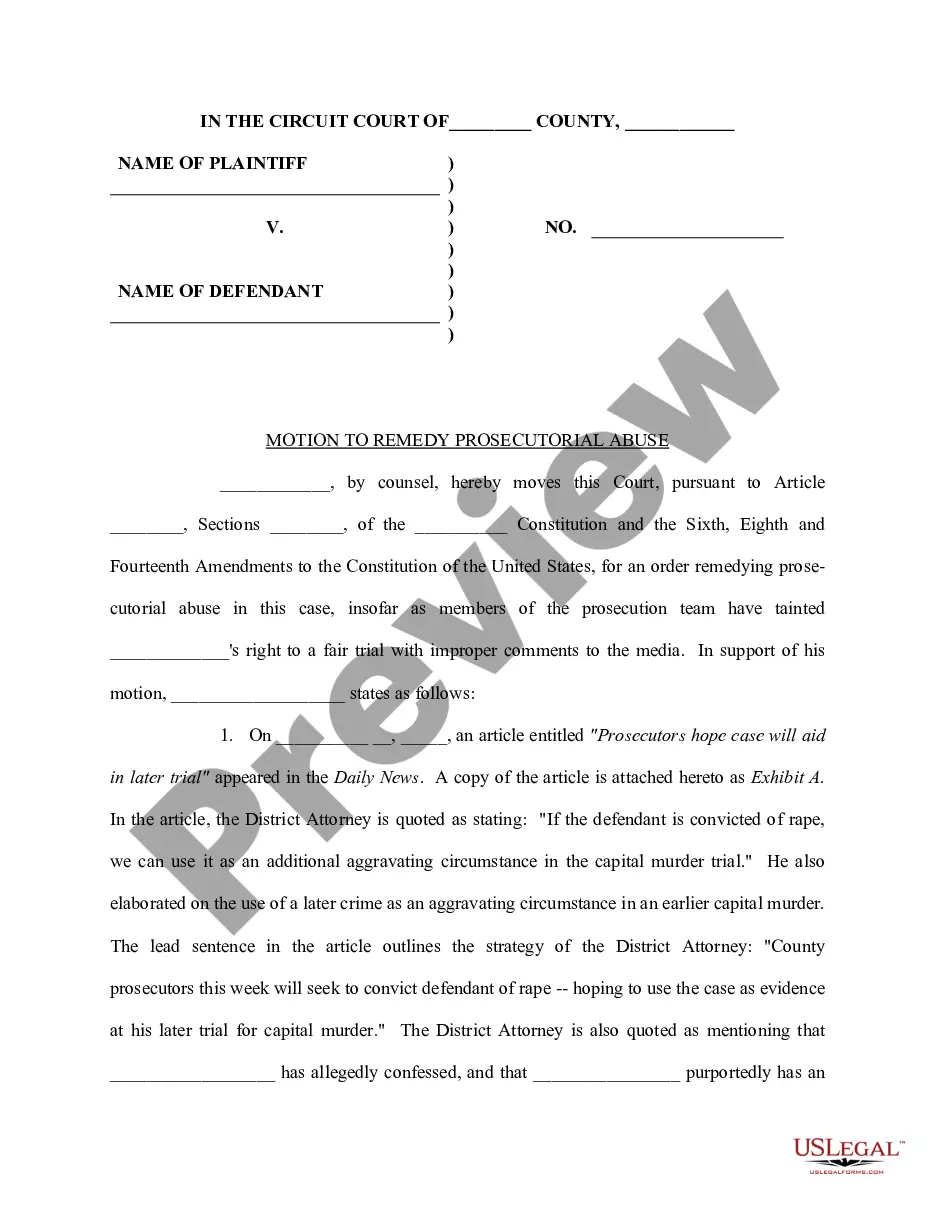
The Motion to Remedy Prosecutorial Abuse is a legal document used to request the court to take action against misconduct by the prosecution. This form is essential for ensuring that the defendant's rights to a fair trial are upheld, particularly when improper comments or actions by the prosecution may have affected public perception and jury impartiality. Unlike general motions, this specific form addresses prosecutorial misconduct, aiming to protect the accused from potential bias stemming from media coverage and public statements made prior to a trial.
Form components explained
- Title and case identification: Specifies the parties involved and the case number.
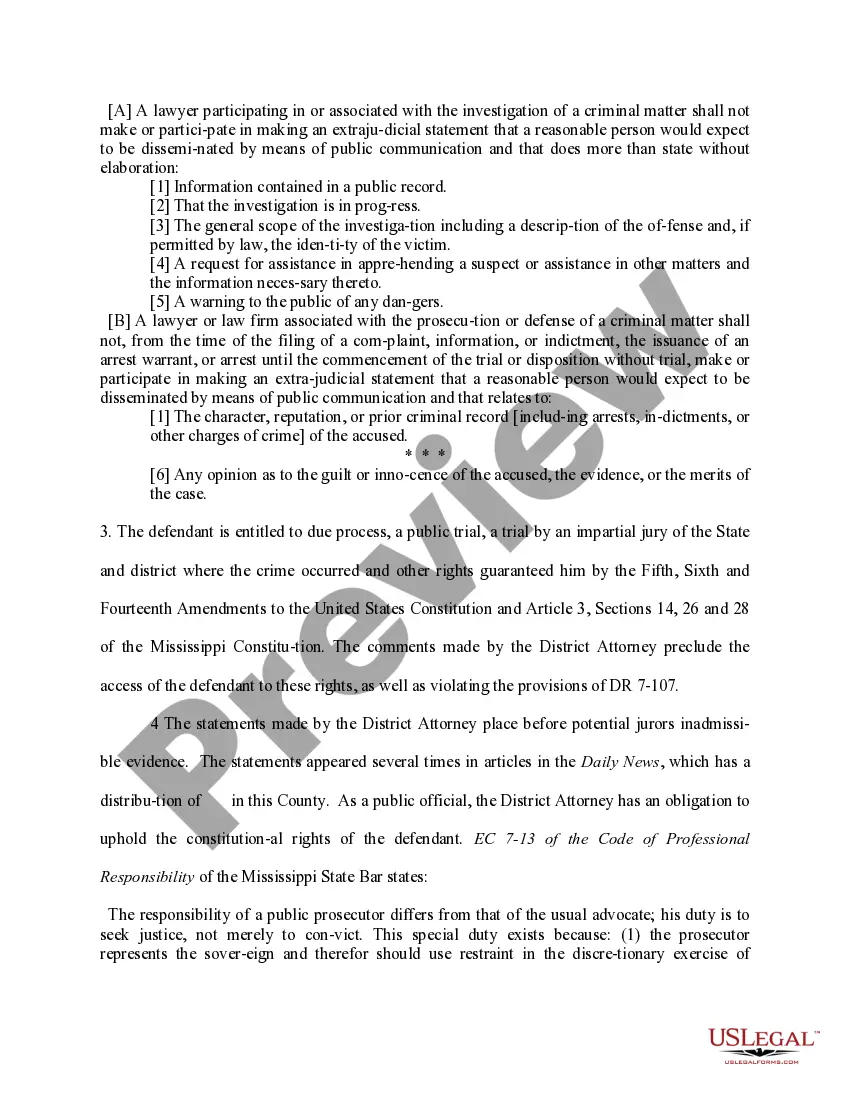
- Grounds for motion: Clearly states the legal basis for the motion, referencing relevant constitutional rights.
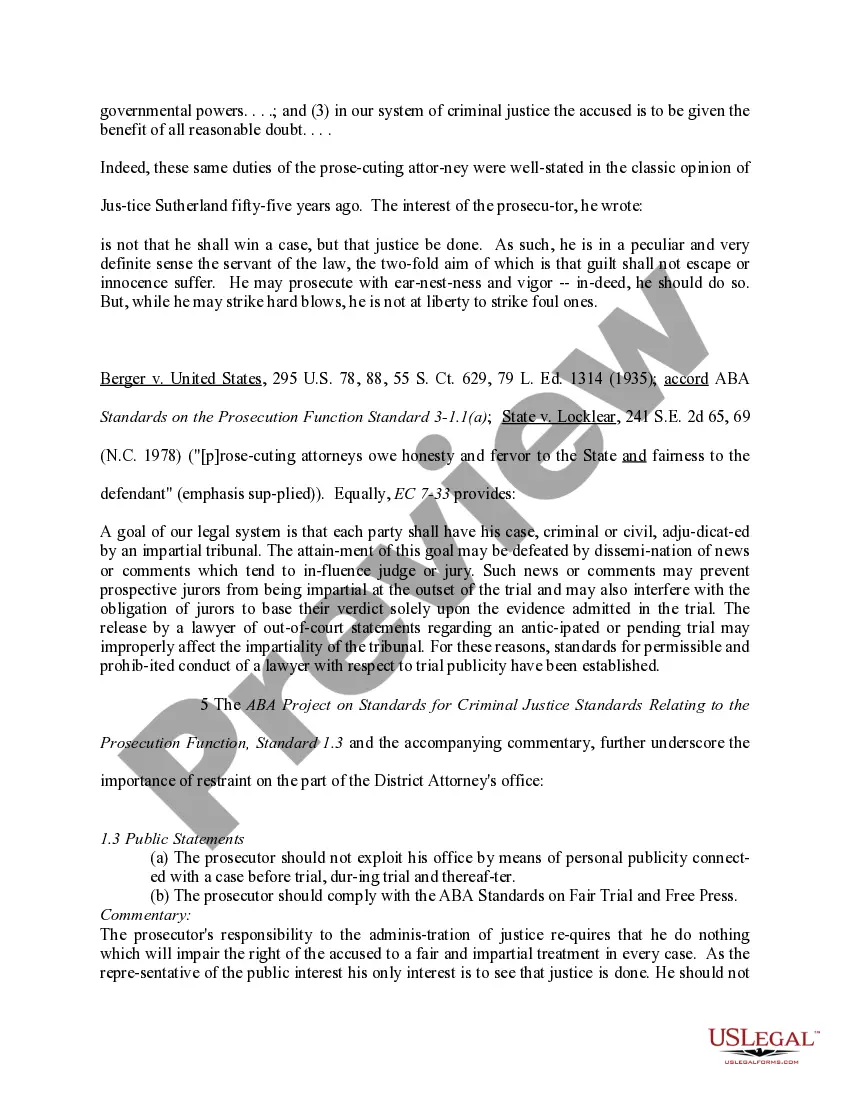
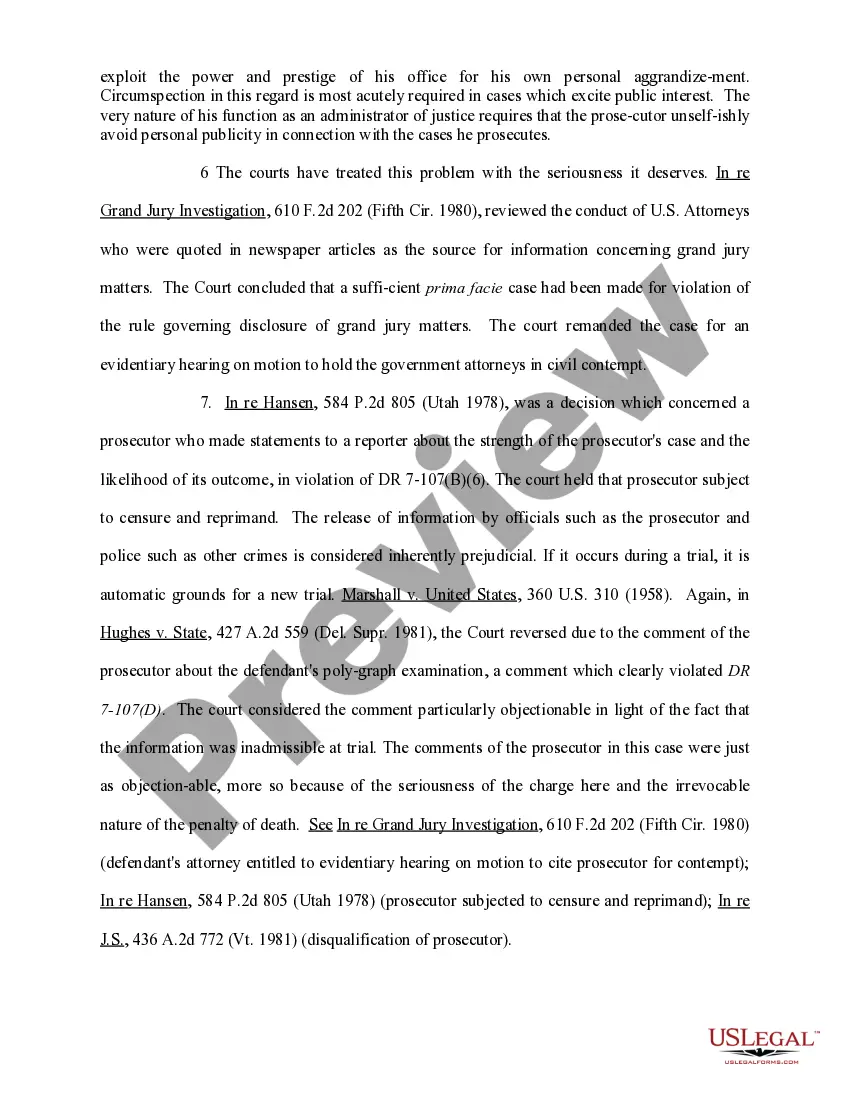
- Supportive facts: Details specific instances of alleged prosecutorial misconduct that have impacted the defendant's right to a fair trial.
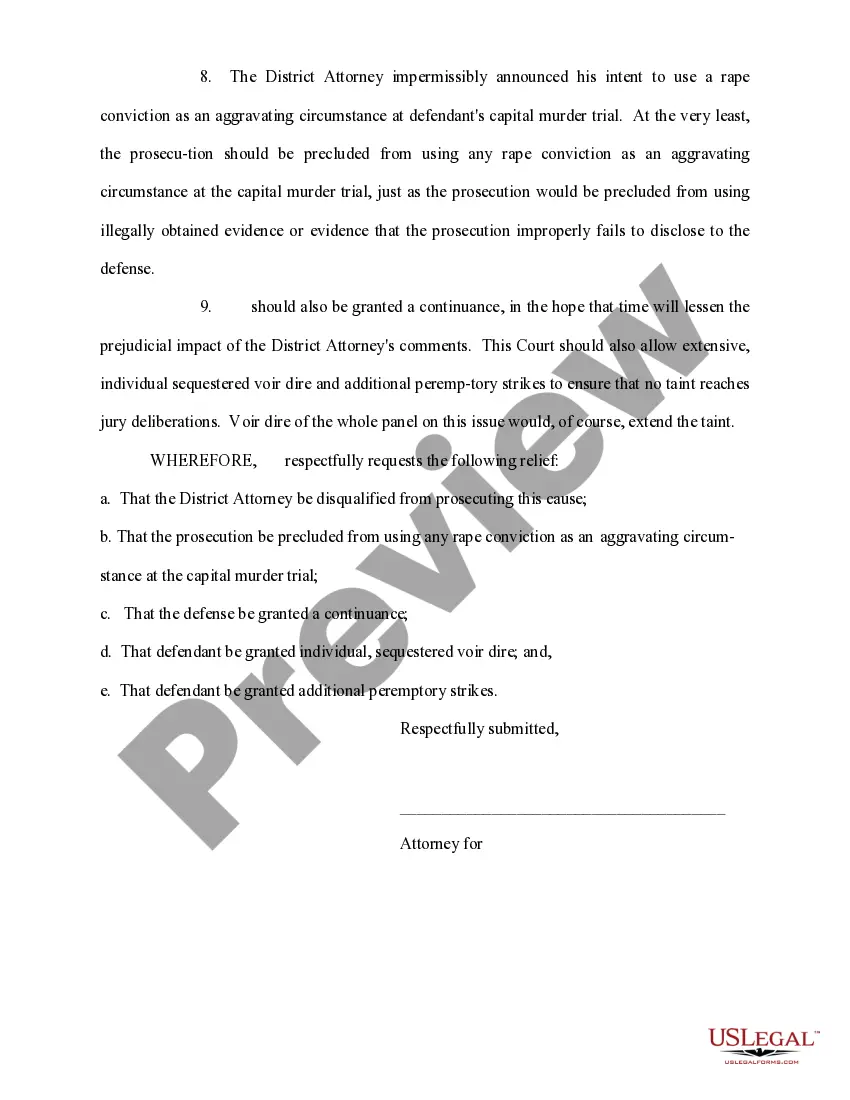
- Requests for relief: Outlines specific actions requested from the court, including disqualification of the prosecutor and continuance of the trial.
- Signature block: Provides space for the attorney to sign and date the document, affirming its submission to the court.
When this form is needed
This form should be used in situations where a defendant believes that the prosecution has engaged in misconduct that could bias jurors or violate the defendant's rights. It is particularly useful when such misconduct involves public statements or media interactions that may affect the integrity of the trial process.
Who this form is for
- Defendants facing criminal charges where prosecutorial misconduct may influence their case.
- Defense attorneys representing clients who seek to contest the influence of outside commentary in ongoing trials.
- Individuals seeking to ensure their constitutional rights are protected during legal proceedings.
Completing this form step by step
- Identify the parties involved: Fill in the names of the state and defendant, along with the case number.
- Outline the prosecutorial misconduct: Include specific instances and quotes from media articles related to the case.
- State the legal basis for your motion: Reference relevant sections of the Mississippi Constitution and any applicable amendments.
- Specify the relief sought: Clearly list the desired actions, such as disqualification of the prosecutor or a delay in trial.
- Sign and date the form: Ensure the attorney representing the defendant signs the motion to validate the document.
Does this form need to be notarized?
This form does not typically require notarization unless specified by local law.
Get your form ready online
Our built-in tools help you complete, sign, share, and store your documents in one place.
Make edits, fill in missing information, and update formatting in US Legal Forms—just like you would in MS Word.
Download a copy, print it, send it by email, or mail it via USPS—whatever works best for your next step.
Sign and collect signatures with our SignNow integration. Send to multiple recipients, set reminders, and more. Go Premium to unlock E-Sign.
If this form requires notarization, complete it online through a secure video call—no need to meet a notary in person or wait for an appointment.
We protect your documents and personal data by following strict security and privacy standards.

Make edits, fill in missing information, and update formatting in US Legal Forms—just like you would in MS Word.

Download a copy, print it, send it by email, or mail it via USPS—whatever works best for your next step.

Sign and collect signatures with our SignNow integration. Send to multiple recipients, set reminders, and more. Go Premium to unlock E-Sign.

If this form requires notarization, complete it online through a secure video call—no need to meet a notary in person or wait for an appointment.

We protect your documents and personal data by following strict security and privacy standards.
Mistakes to watch out for
- Failing to cite specific instances of misconduct clearly.
- Omitting the supporting evidence, such as articles or public statements.
- Not following the courtâs formatting and submission requirements.
- Neglecting to specify the exact relief requested from the court.
Why use this form online
- Convenient access: Downloadable immediately after payment, saving time and effort.
- Editability: Customize the form to fit specific case details and state requirements.
- Reliability: Forms are drafted by licensed attorneys to ensure legal compliance.
Legal use & context
- The motion protects a defendant's right to a fair trial under both state and federal constitutions.
- Misconduct by prosecutors can severely impact the legal process, justifying the need for this motion.
- Courts take allegations of prosecutorial misconduct seriously, and a successfully filed motion can lead to critical legal changes.
Summary of main points
- The Motion to Remedy Prosecutorial Abuse is vital for defending against prejudicial commentary affecting trial fairness.
- Understanding the key components and steps to complete this motion ensures proper legal representation.
- Using this form can help ensure that a defendant's rights are protected throughout legal proceedings.
Looking for another form?
Form popularity
FAQ
Which of the following is the most common result if a prosecutor deliberately fails to hand over required evidence to the defense? The court dismisses the charges against the defendant.
The primary, overall job of the prosecutor's office is to represent the government in criminal cases. Aspects of the courtroom such as plea bargains and its "assembly line" nature are necessary in most cases to avoid becoming swamped by the large number of cases before them.
Sixteen-year-old William Haymon has spent more than 500 days in an adult jail in rural Lexington, Mississippi. There are no state rules governing how long a person can be incarcerated without being formally charged with a crime.
What happens to the prosecutor and the case if the prosecution purposefully refuses to disclose evidence?Intentional misconduct and does impact the case leads to disciplinary actions and prosecutor loses job.
Unethical Prosecutors are Never Prosecuted A prosecutor's refusal to reveal exculpatory evidence may be immoral, unethical and illegal and it may result in the imprisonment or death of innocent individuals but the unethical prosecutor is never prosecuted.
Making statements to the media that prejudice the jury pool. Engaging in improper plea-bargaining for example, convincing a defendant to plead guilty through false promises or misrepresentations about the existence of incriminating evidence. Failing to turn over exculpatory evidence. Tampering with evidence.
The criminal statute of limitations requires prosecutors to file criminal charges against a suspect within two years for misdemeanors and within five years for certain felonies, but there is no time limit in Mississippi for charges of murder, kidnapping, rape, burglary, robbery, larceny, and several other serious
Sufficiently culpable and harmful misconduct can result in the dismissal of charges or a declaration of a mistrial. Misconduct can also be raised on appeal or by a collateral attack on the conviction through a petition for habeas corpus. Such relief is rare, however.