Mississippi Estate Planning Questionnaire
About this form
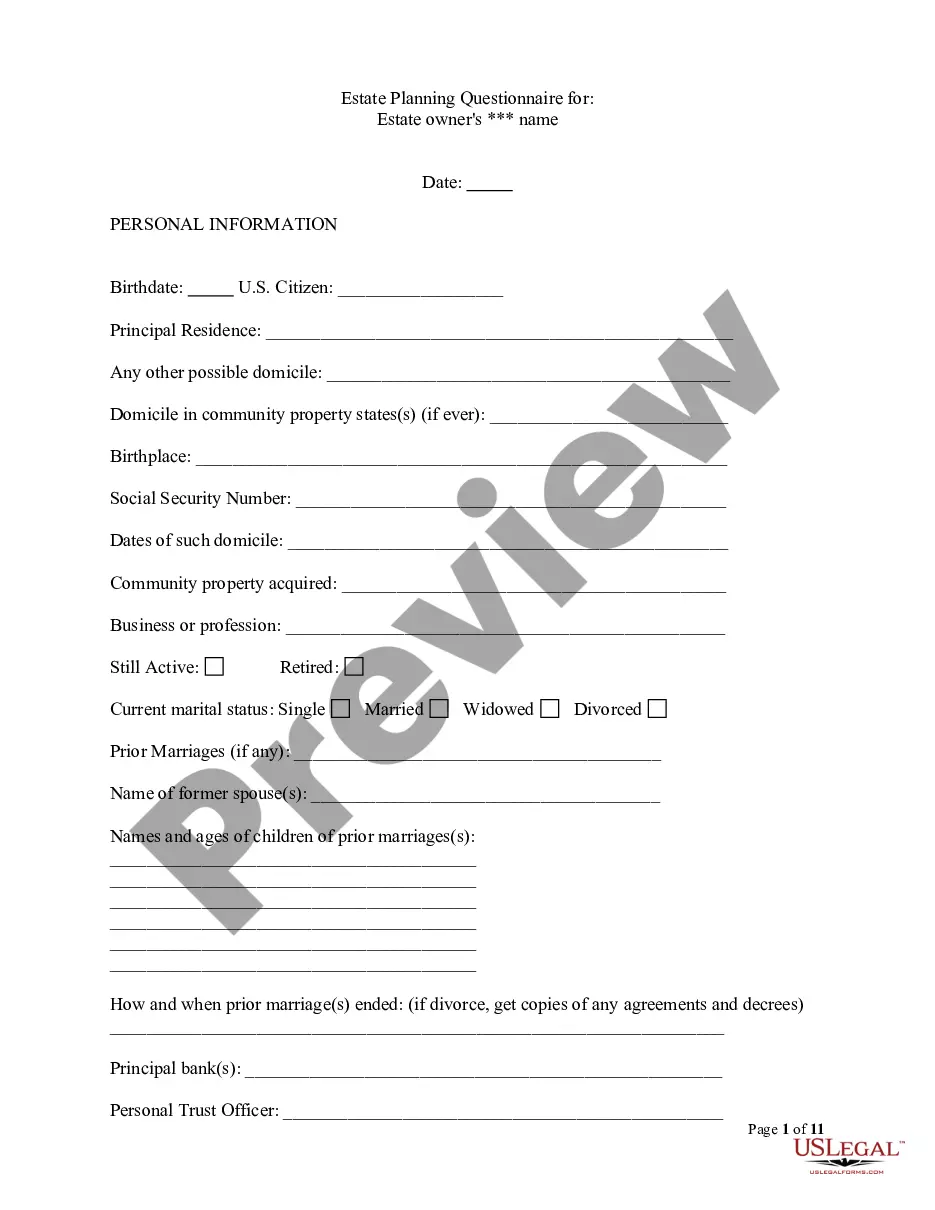
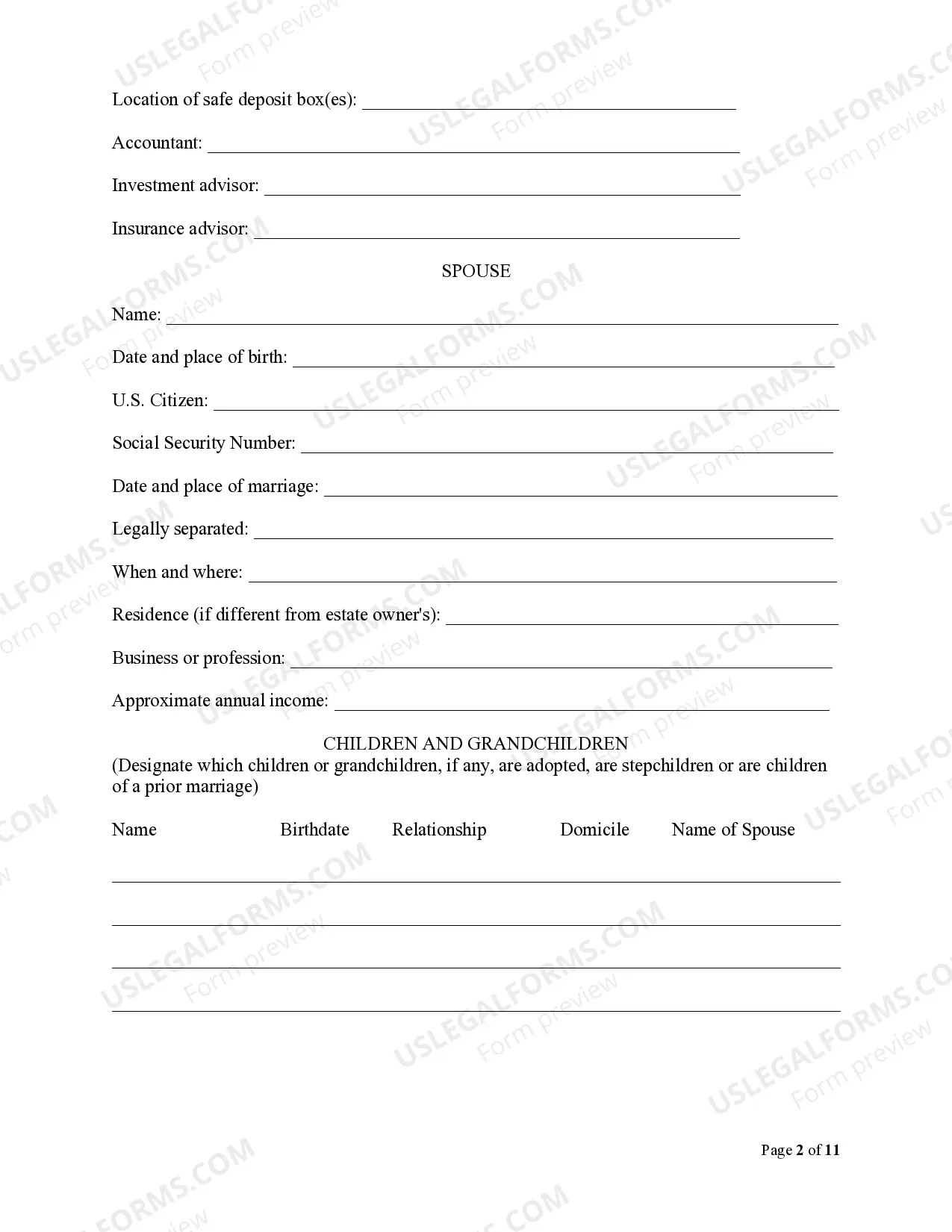
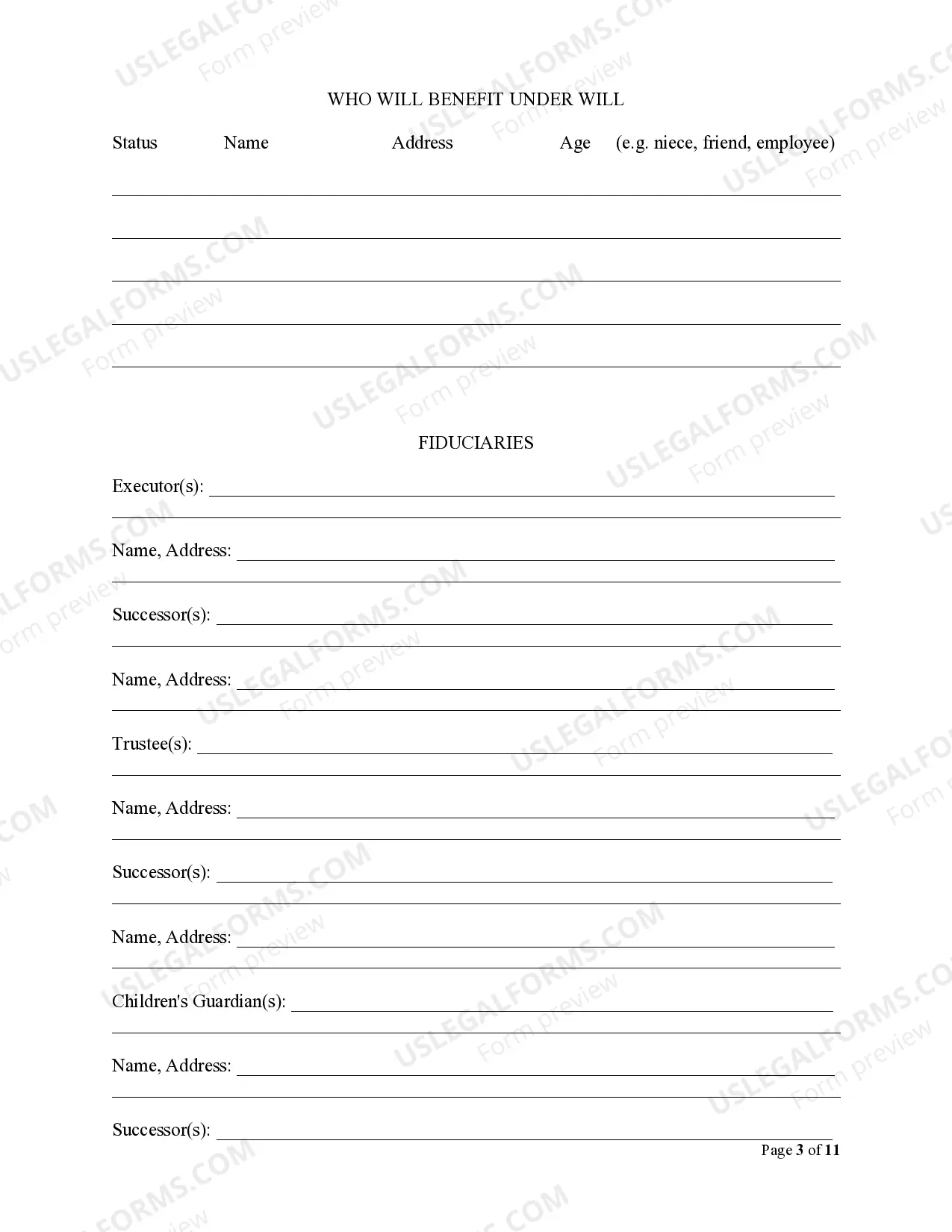
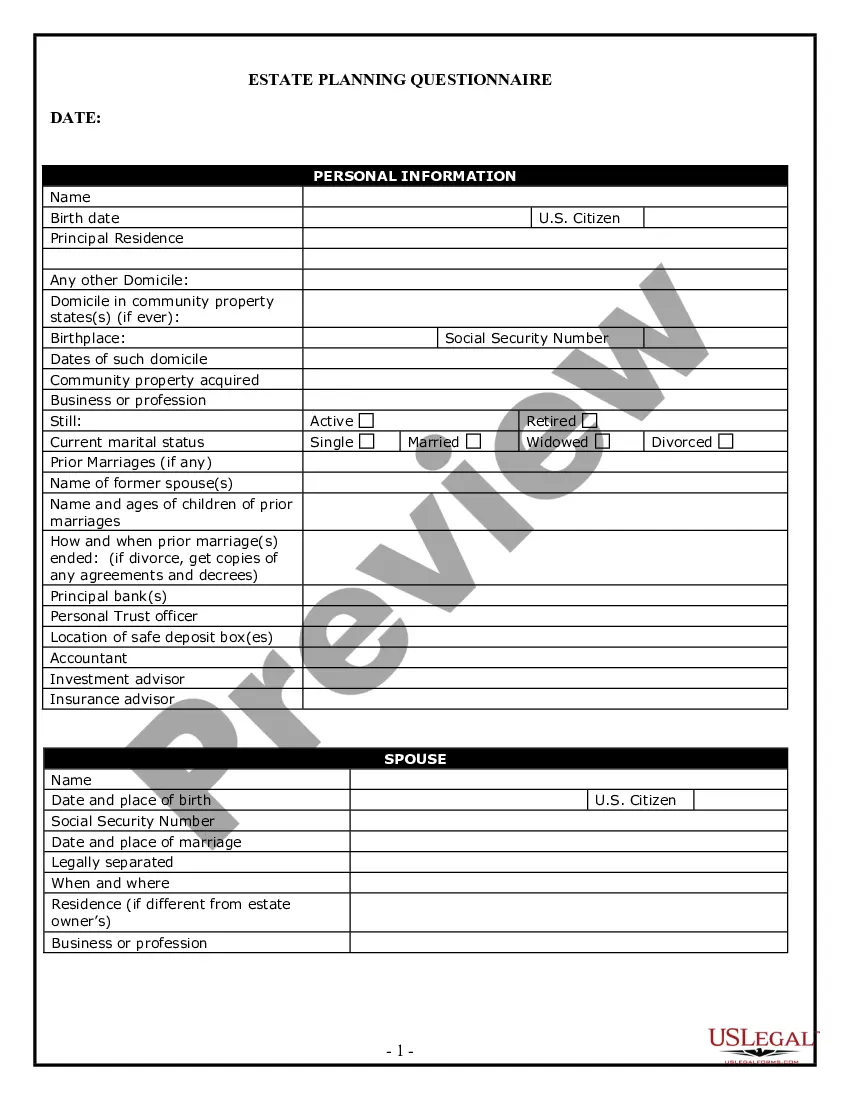
The Estate Planning Questionnaire is a legal document specifically designed for individuals in Mississippi who wish to organize their personal and financial information for estate planning. This form allows users to provide necessary details regarding their assets, beneficiaries, and personal circumstances, ensuring their estate is properly managed according to their wishes after they pass away. Unlike other legal forms, this questionnaire serves as a comprehensive starting point for developing an estate plan tailored to individual needs.
Main sections of this form
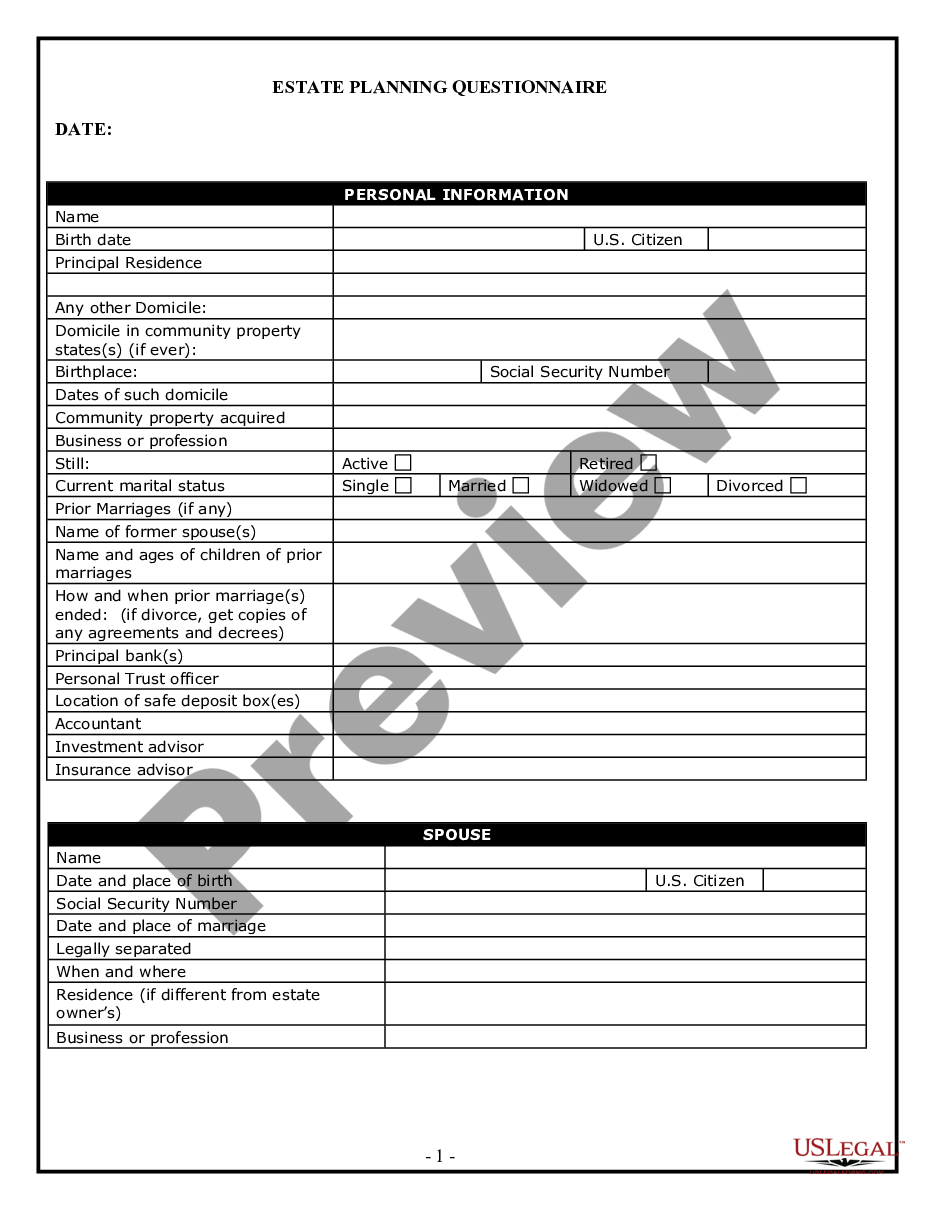
- Personal information of the estate owner, including names, birth dates, and marital status.
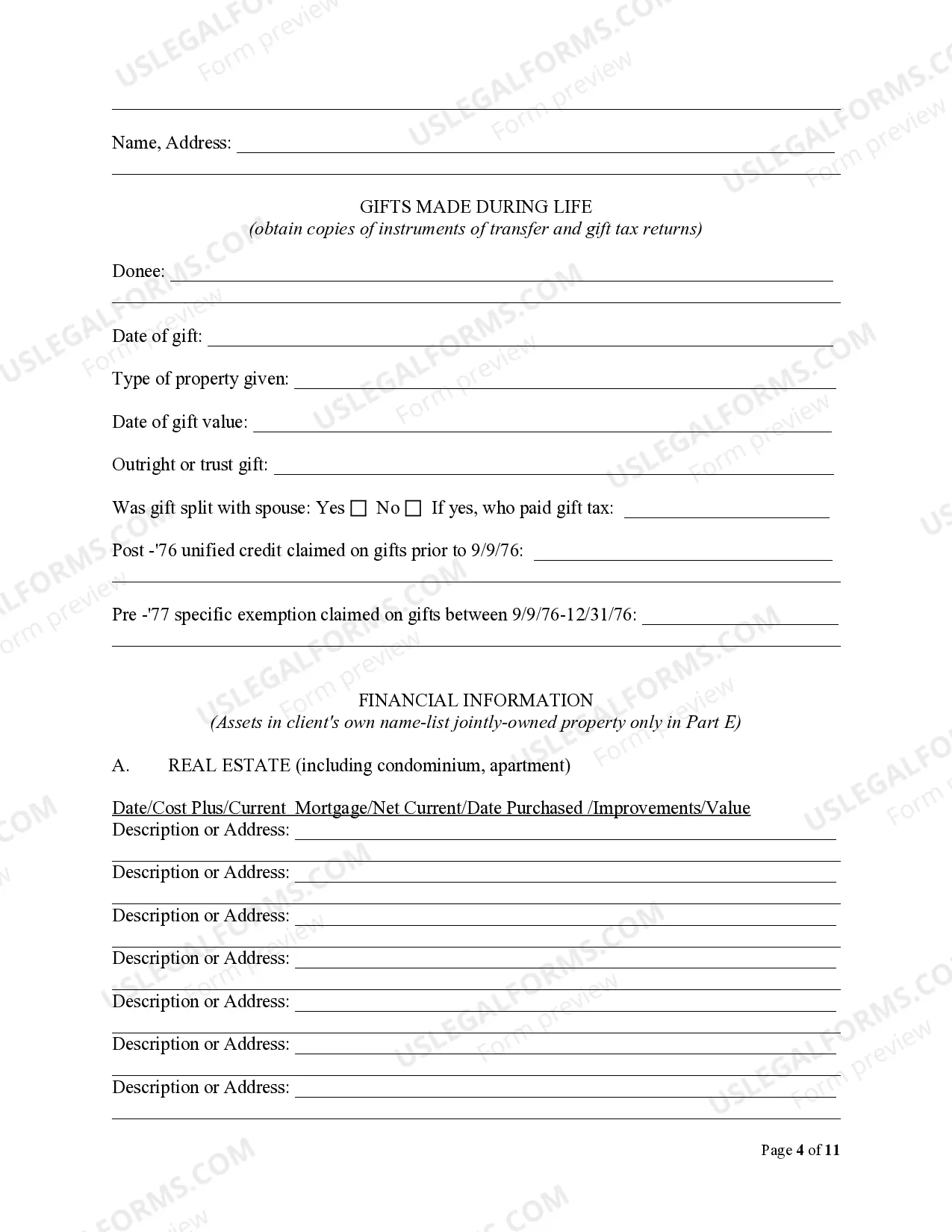
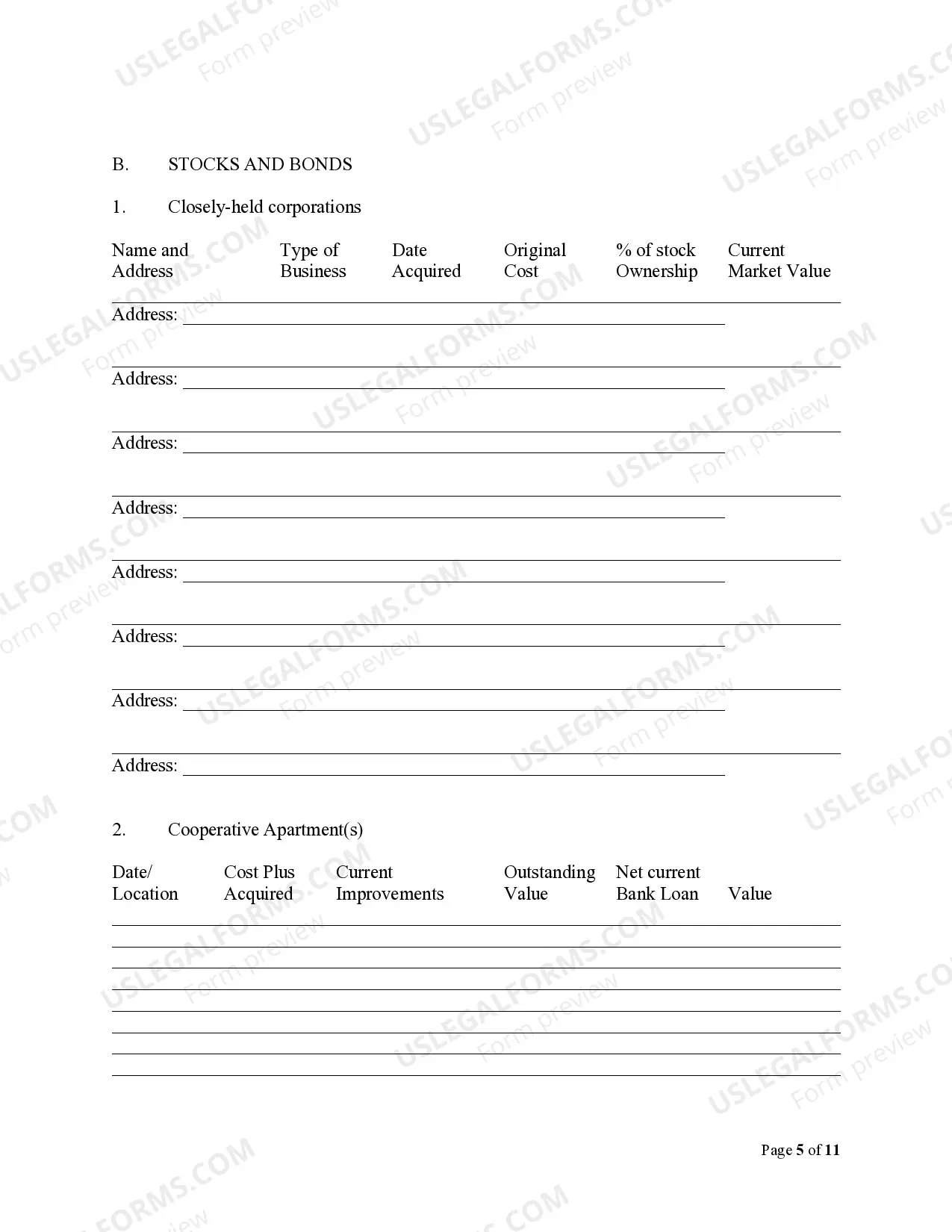
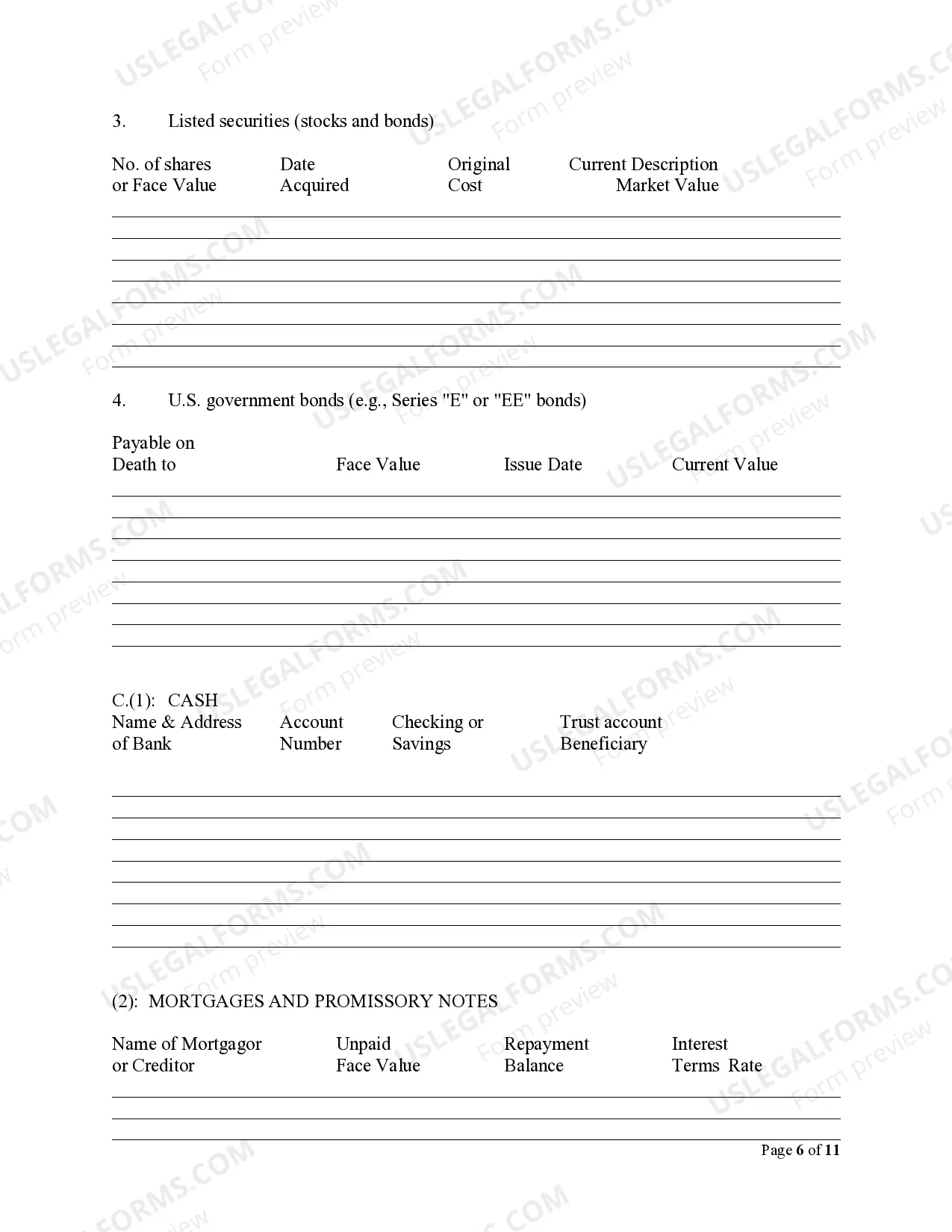
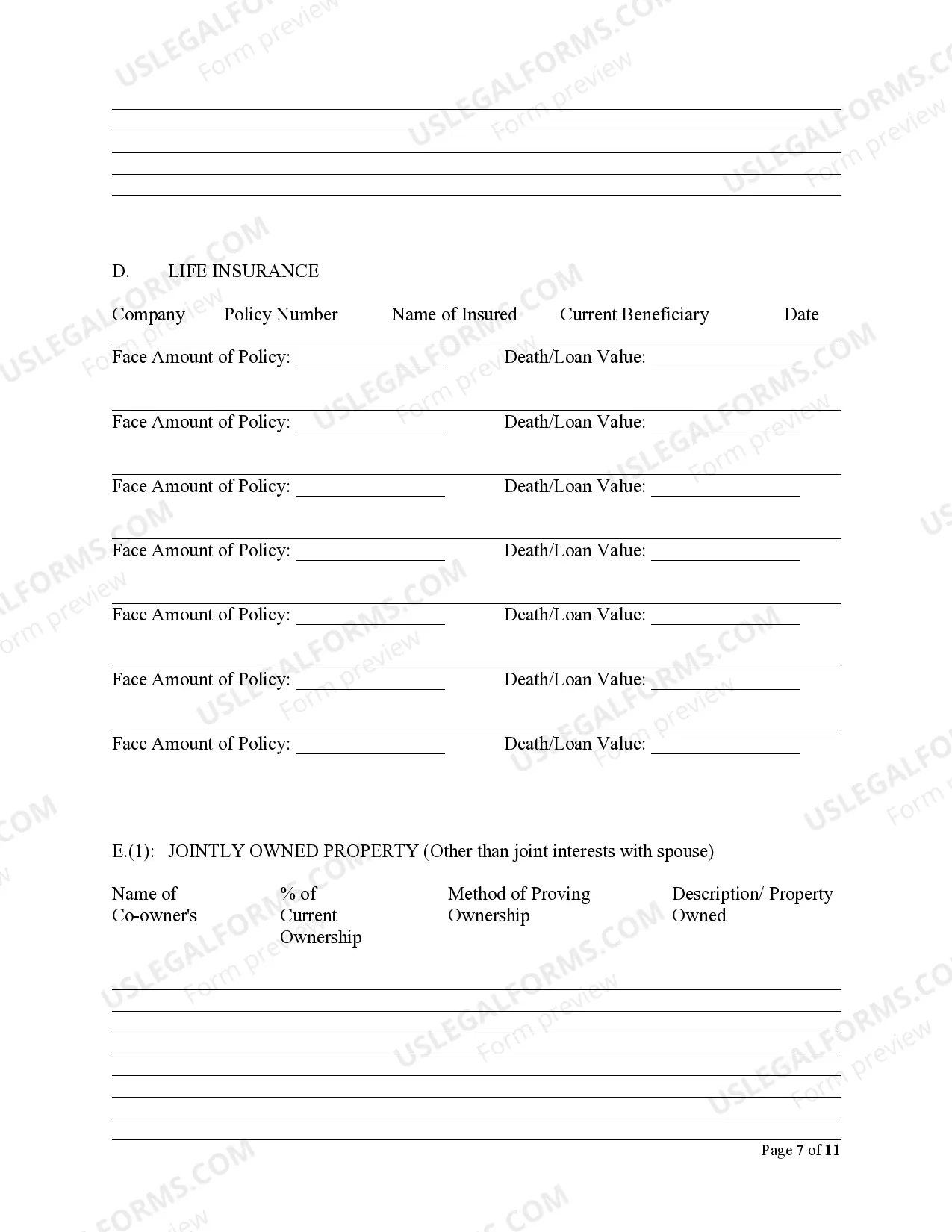
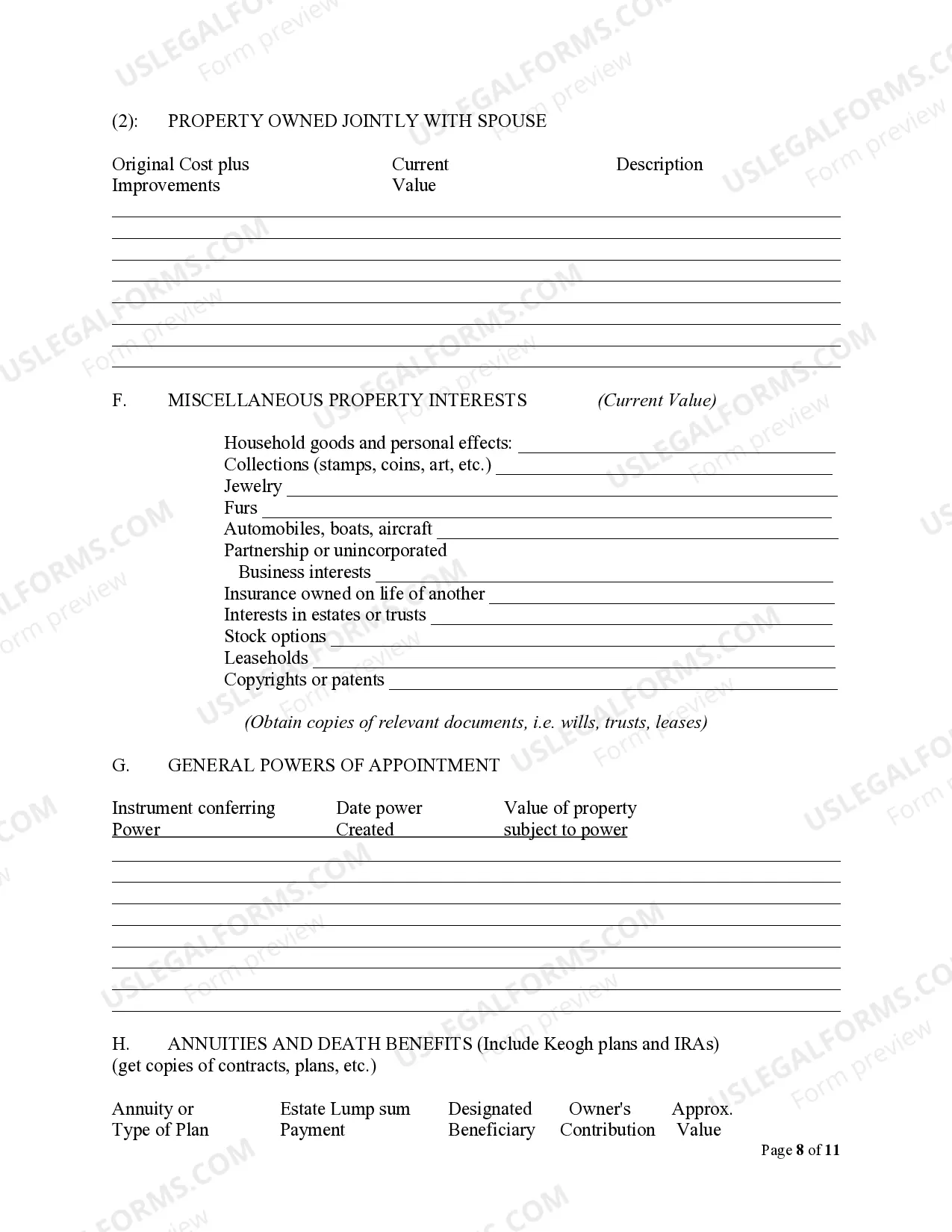
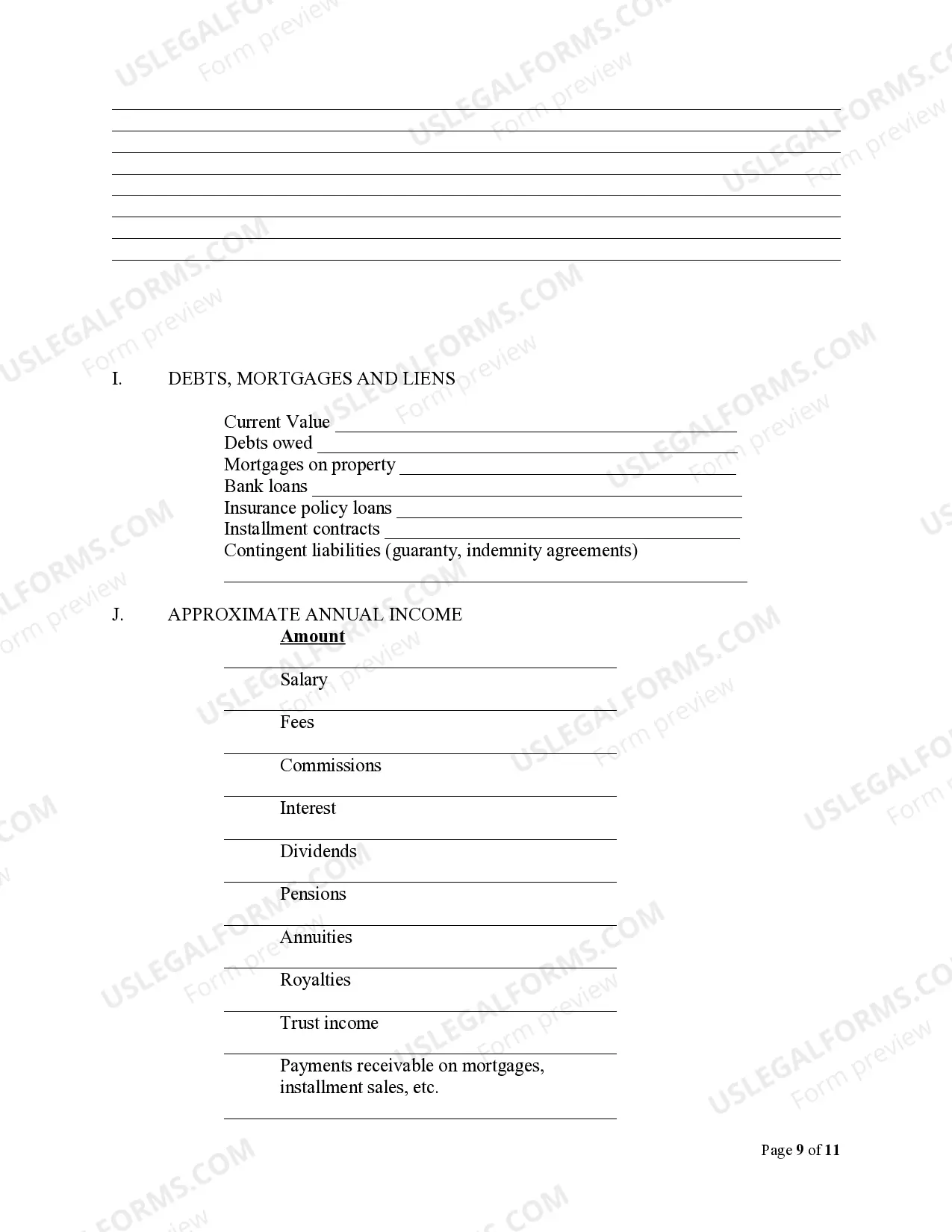
- Detailed financial information covering real estate, stocks, bonds, and cash assets.
- Designations for beneficiaries and fiduciaries, including executors and guardians.
- Gifts made during life and their details, including donees and values.
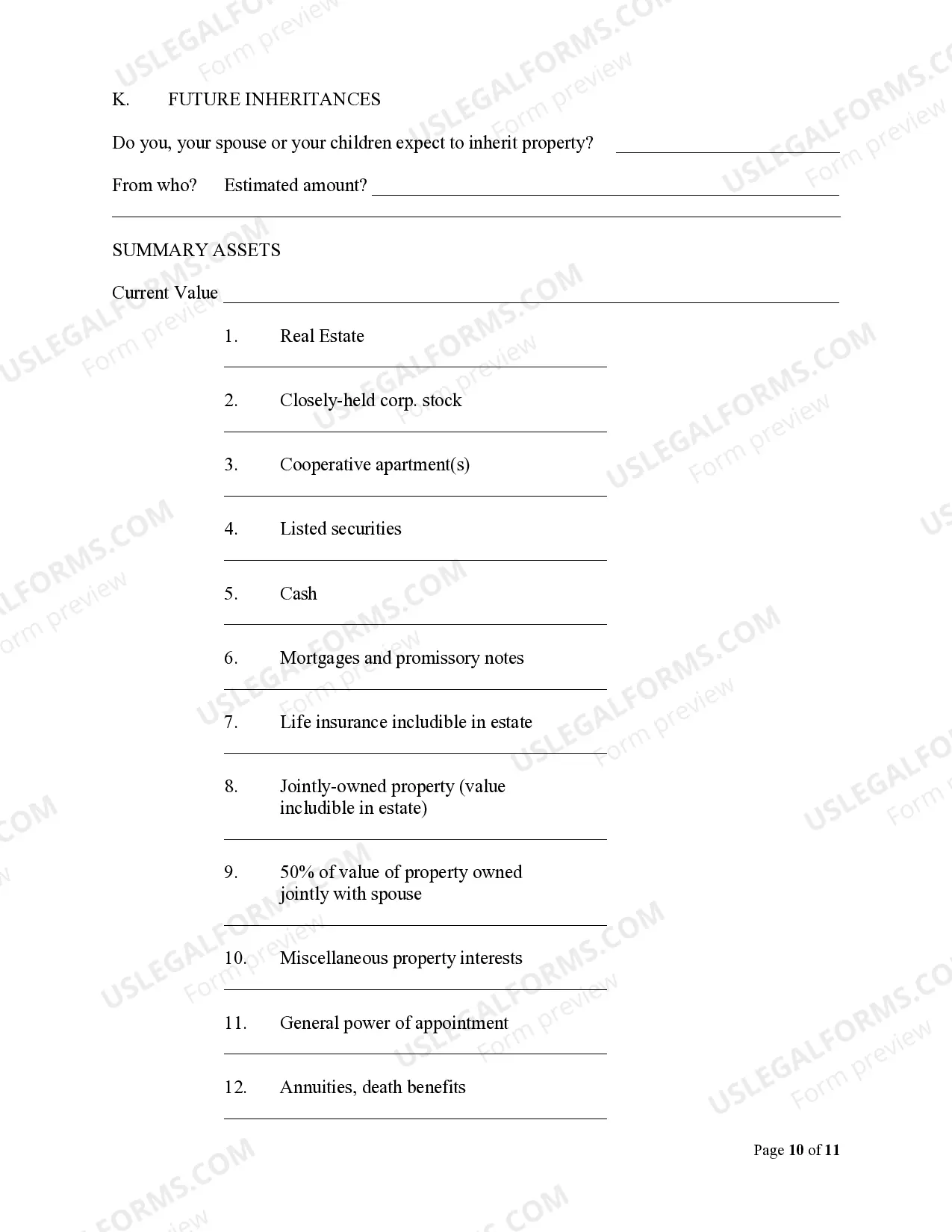
- Summary section to provide an overview of assets and liabilities.


When to use this document
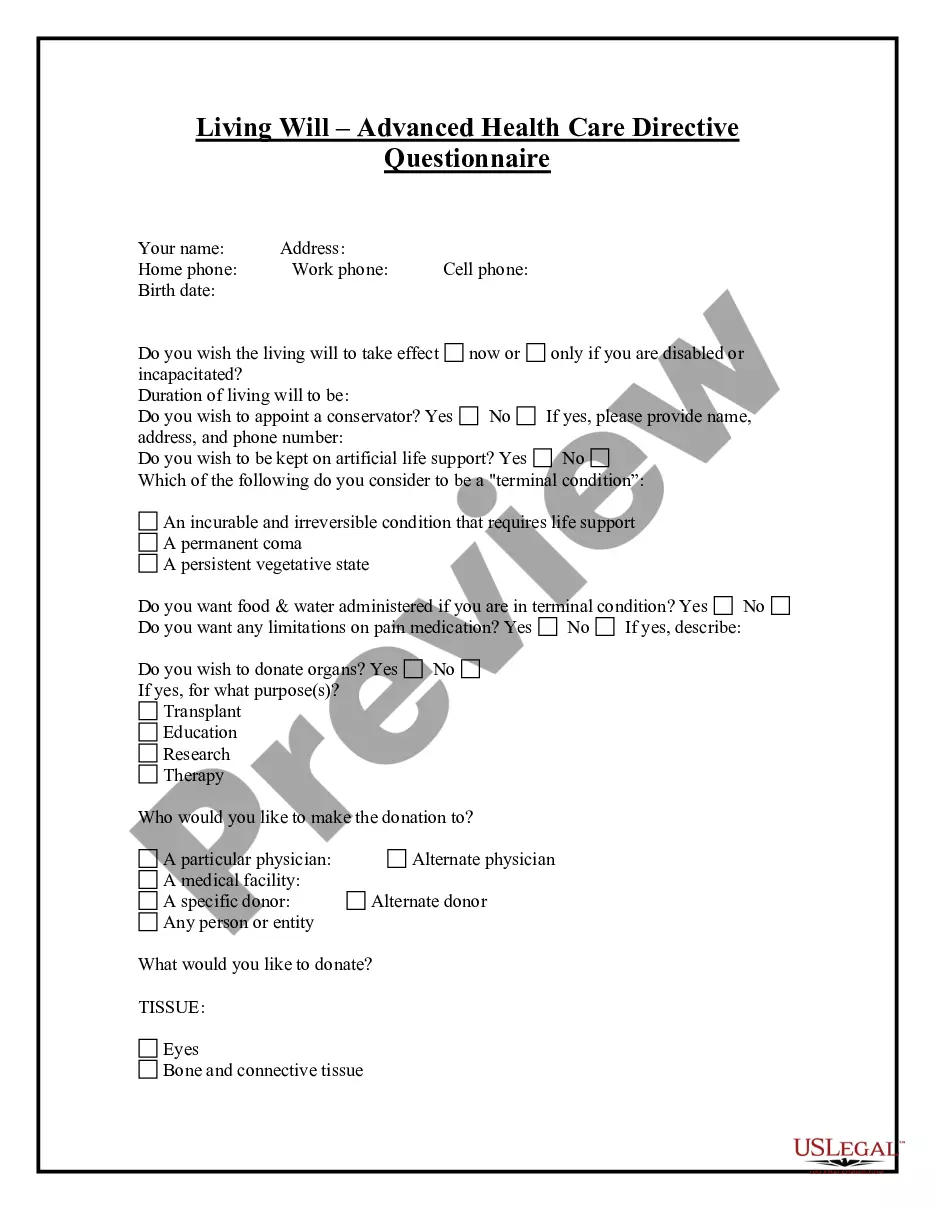
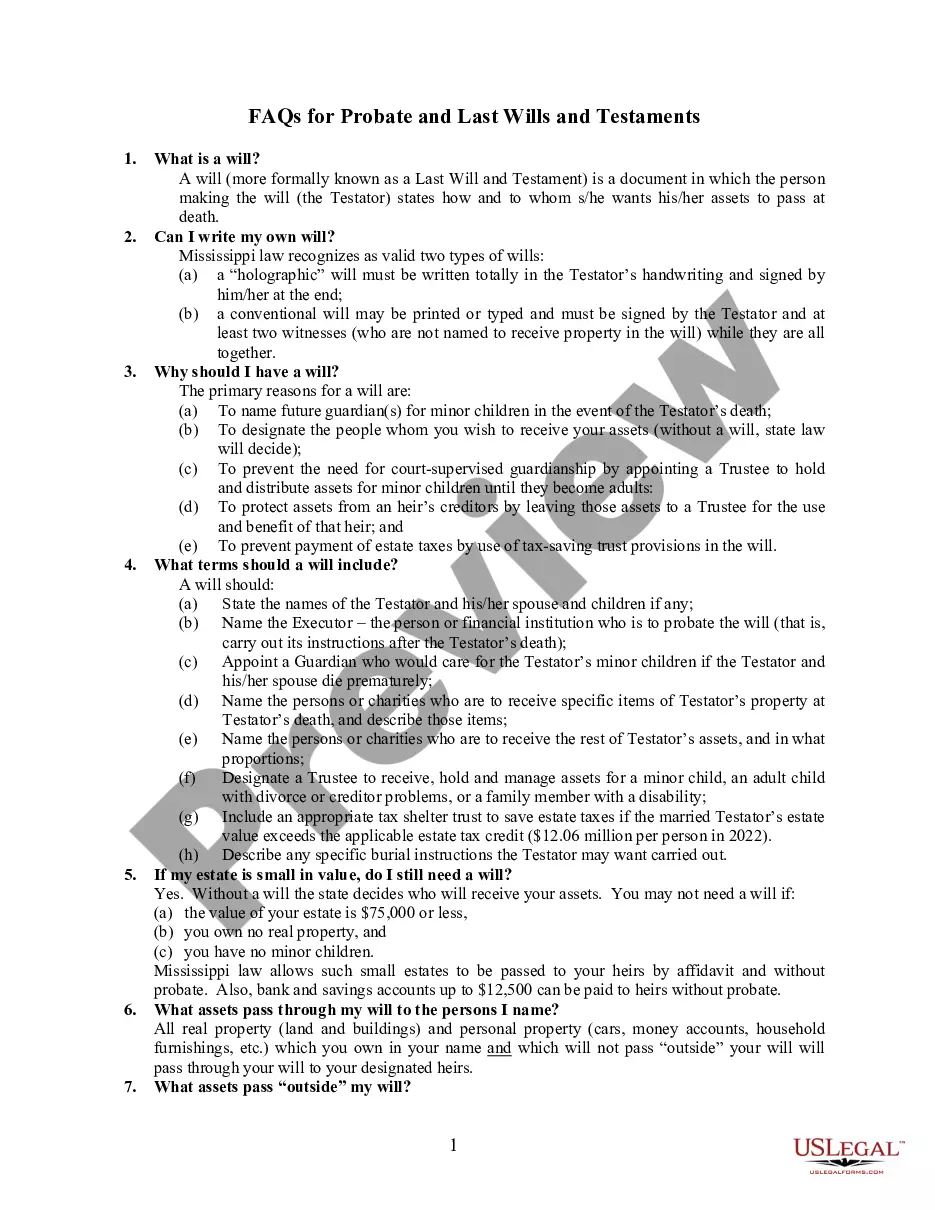
This form should be used whenever an individual decides to establish or update their estate plan. It is particularly useful for those wanting to ensure their assets are distributed according to their wishes and to clarify any complex family or financial scenarios, such as prior marriages, adoptions, or significant gifts. Additionally, it can help prepare for discussions with legal professionals about comprehensive estate planning strategies.
Who can use this document
- Individuals preparing their estate planning documents in Mississippi.
- People with significant assets who want to outline their distribution preferences.
- Those with complex family structures, including blended families or multiple marriages.
- Anyone looking to clarify their financial situations before consulting an attorney.
Steps to complete this form
- Gather personal information, including your name, birth date, and marital status.
- Provide comprehensive details about all your financial assets, including real estate and investments.
- Specify your beneficiaries and any fiduciaries, such as executors and guardians.
- Document any gifts made during your lifetime, including the recipient names and values.
- Review and summarize your total assets and liabilities for a complete estate overview.
Notarization guidance
This form does not typically require notarization unless specified by local law. However, it is advisable to check with a legal professional to ensure compliance with any specific requirements regarding your estate planning documents.
Get your form ready online
Our built-in tools help you complete, sign, share, and store your documents in one place.
Make edits, fill in missing information, and update formatting in US Legal Forms—just like you would in MS Word.
Download a copy, print it, send it by email, or mail it via USPS—whatever works best for your next step.
Sign and collect signatures with our SignNow integration. Send to multiple recipients, set reminders, and more. Go Premium to unlock E-Sign.
If this form requires notarization, complete it online through a secure video call—no need to meet a notary in person or wait for an appointment.
We protect your documents and personal data by following strict security and privacy standards.

Make edits, fill in missing information, and update formatting in US Legal Forms—just like you would in MS Word.

Download a copy, print it, send it by email, or mail it via USPS—whatever works best for your next step.

Sign and collect signatures with our SignNow integration. Send to multiple recipients, set reminders, and more. Go Premium to unlock E-Sign.

If this form requires notarization, complete it online through a secure video call—no need to meet a notary in person or wait for an appointment.

We protect your documents and personal data by following strict security and privacy standards.
Typical mistakes to avoid
- Failing to include all relevant financial information, leading to incomplete planning.
- Not updating the questionnaire after significant life changes, such as marriage or divorce.
- Omitting names of beneficiaries or fiduciaries, which can create confusion later.
- Overlooking to document gifts made, which could result in estate tax issues.
Advantages of online completion
- Convenience of filling out the form at your own pace without needing to schedule appointments.
- Editability, allowing users to revise answers as circumstances change.
- Access to updated forms drafted by licensed attorneys, ensuring compliance with current laws.
- Secure storage of your completed form for future reference or updates.
Legal use & context
- This form is intended for use in Mississippi and complies with state-specific laws.
- Inaccuracies or omissions may lead to legal challenges regarding the estate distribution.
- Consulting with an estate planning attorney can enhance the effectiveness and enforceability of your completed questionnaire.
Main things to remember
- The Estate Planning Questionnaire is essential for gathering your personal and financial details for estate planning.
- Accurate completion of the form can help prevent disputes after your passing.
- This specific form complies with Mississippi laws, making it uniquely suited for estate planning in the state.
Looking for another form?
Form popularity
FAQ
Fill out your attorney's intake questionnaire. Gather your financial documents. Bring copies of your current estate plan documents. Divorce agreements, premarital agreements, and other relevant contracts. Choose your executors and health care agents.
More Than a Last Will. Itemize Your Inventory. Follow with Non-Physical Assets. Assemble a List of Debts. Make a Memberships List. Make Copies of Your Lists. Review Your Retirement Account. Update Your Insurance.
There are four main elements of an estate plan; these include a will, a living will and healthcare power of attorney, a financial power of attorney, and a trust.
What Property Can Go in a Living Trust? Who Should Be My Trustee? Does a Living Trust Avoid Estate and Probate Taxes? What Are the Benefits of a Living Trust? What Are the Drawbacks of a Living Trust? Do I Still Need a Power of Attorney?
What will happen during an initial meeting with your office and how much will it cost? Are all of your fees flat fees? Does my planning fee include a regular review of my legal documents? Do you make sure my assets are titled in the right way and my business stays in compliance?
A highly skilled trust attorney will be able to establish trusts for loved ones, minimize estate taxes, avoid probate, create wills, plan for disability, and much more.Or, if you have extensive real estate holdings, the ideal trust planning attorney will have a wealth of knowledge about real property law.
Creating an estate plan is a lot like getting into better shape. Step 1: Sign a will. Step 2: Name beneficiaries. Step 3: Dodge estate taxes. Step 4: Leave a letter. Step 5: Draw up a durable power of attorney. Step 6: Create an advance health care directive.
Bank accounts. Brokerage or investment accounts. Retirement accounts and pension plans. A life insurance policy.
You can make your own will in Mississippi, using Nolo's do-it-yourself will software or online will programs. However, you may want to consult a lawyer in some situations. For example, if you think that your will might be contested or if you want to disinherit your spouse, you should talk with an attorney.