Mississippi Answer Of Defendants
Overview of this form
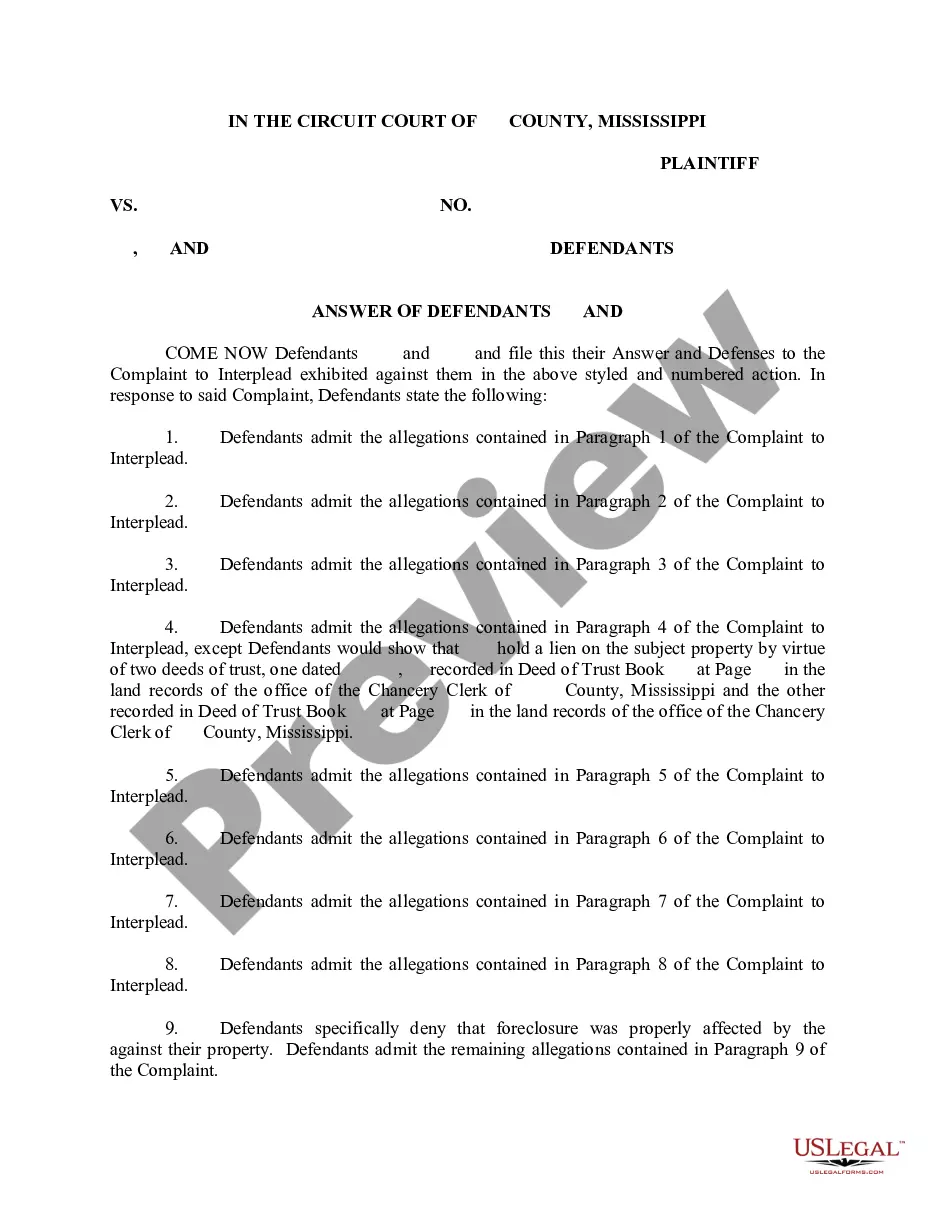
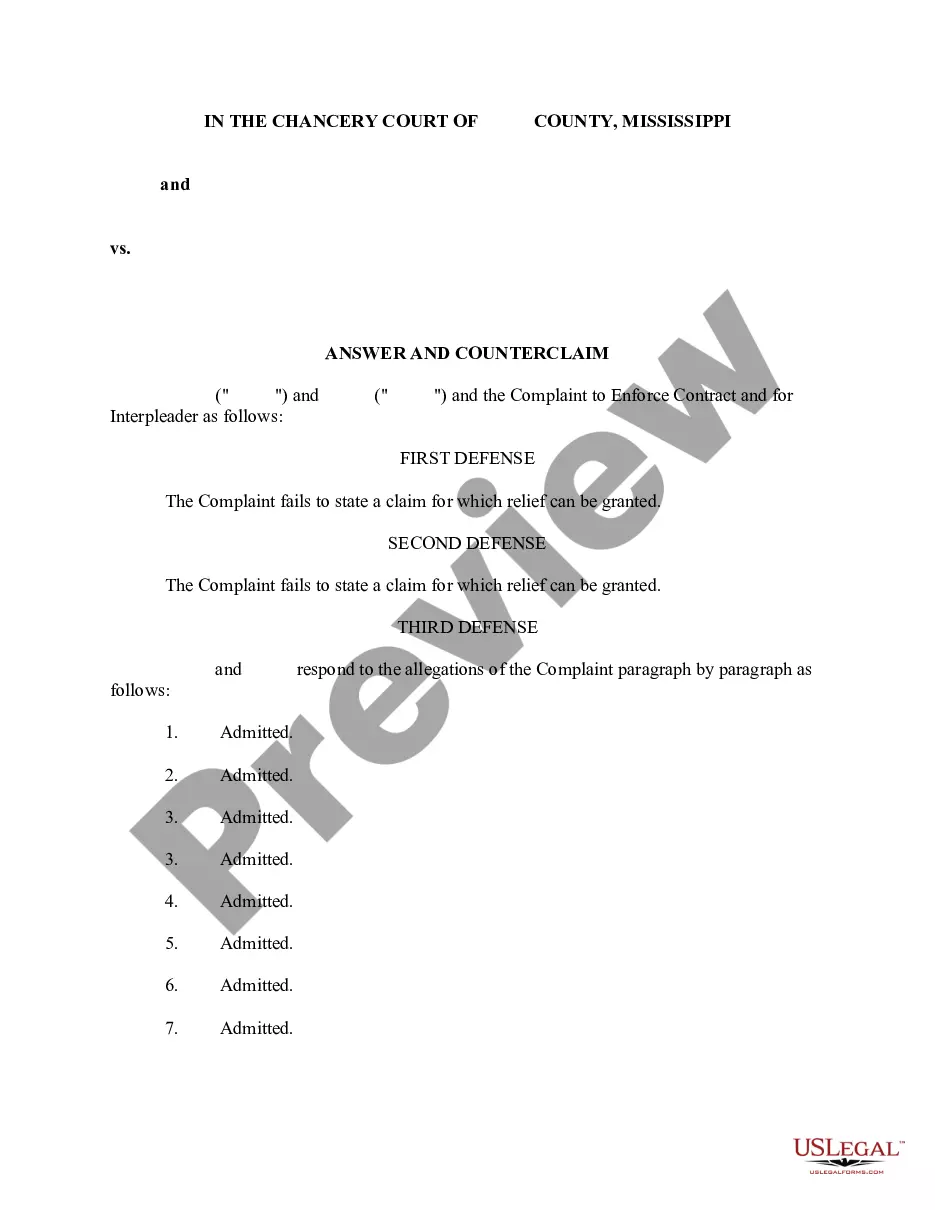
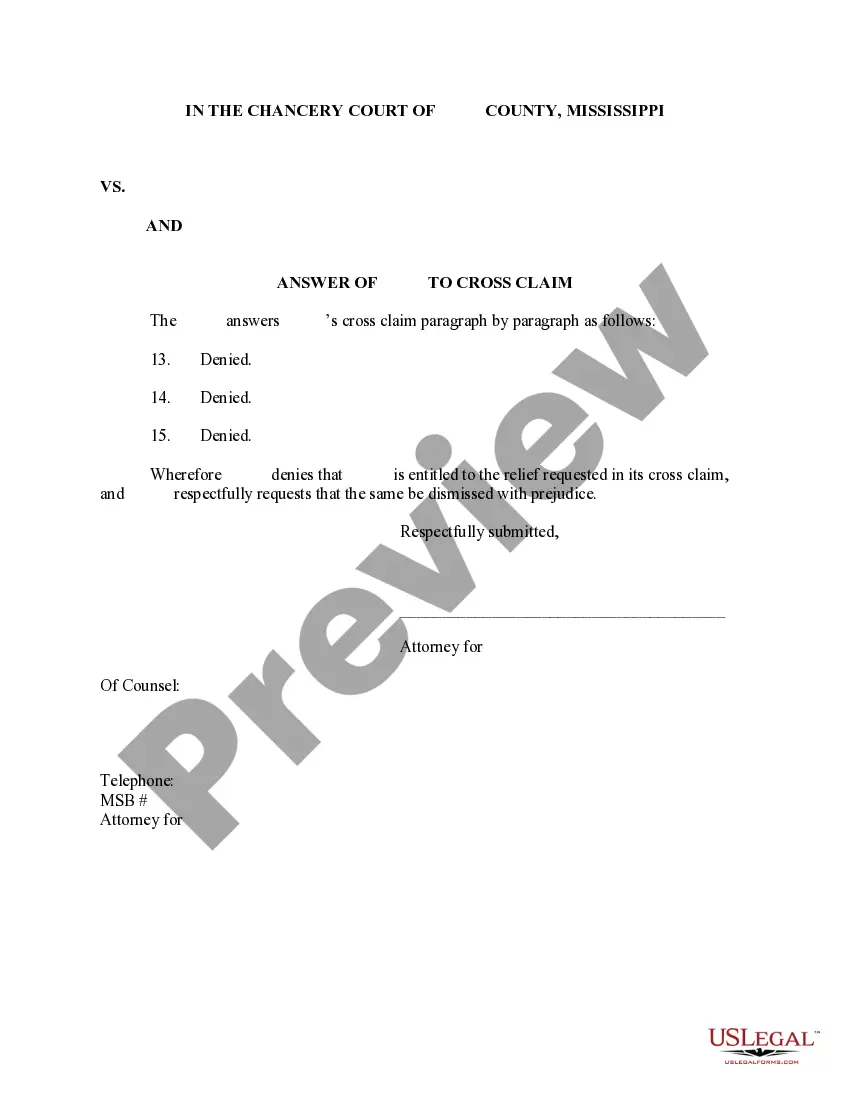
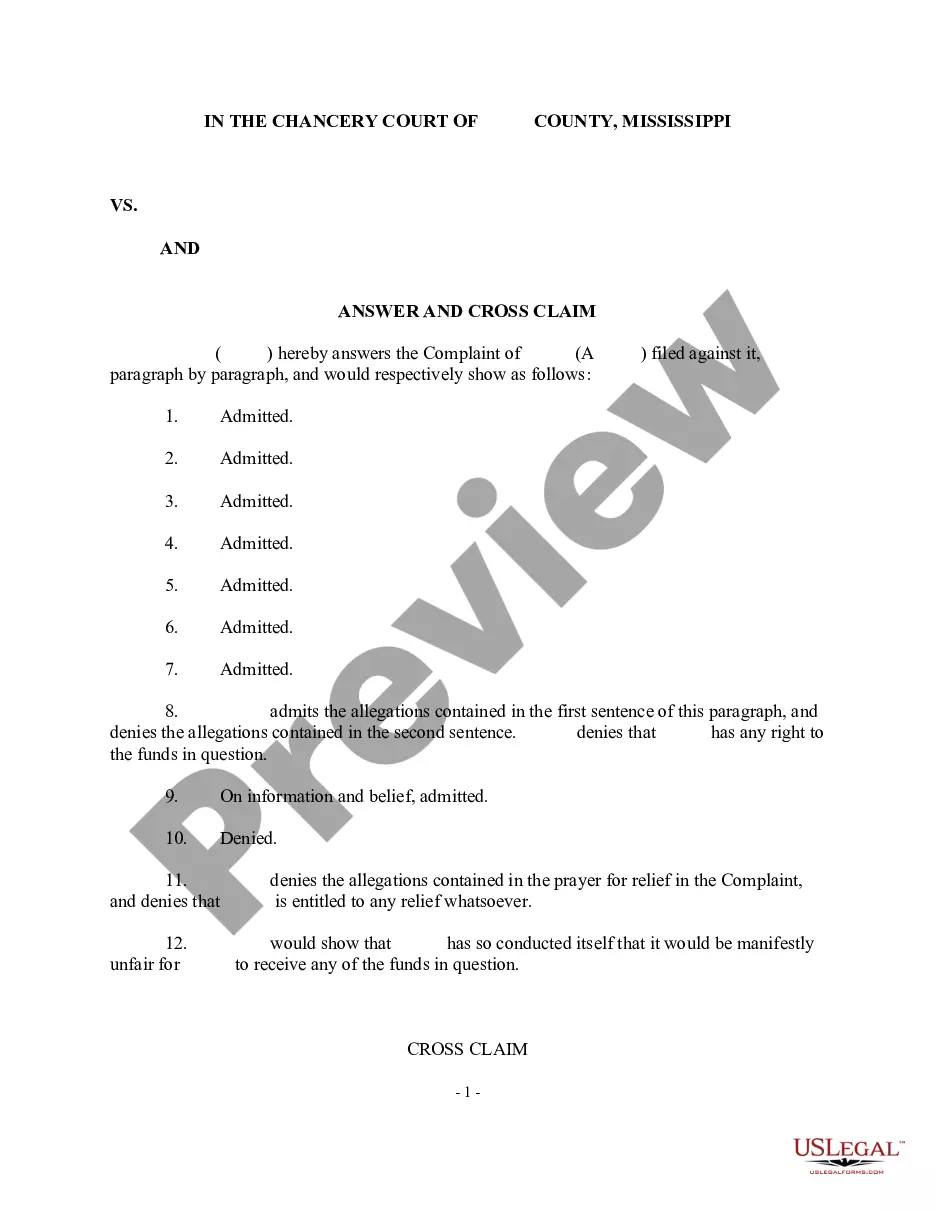
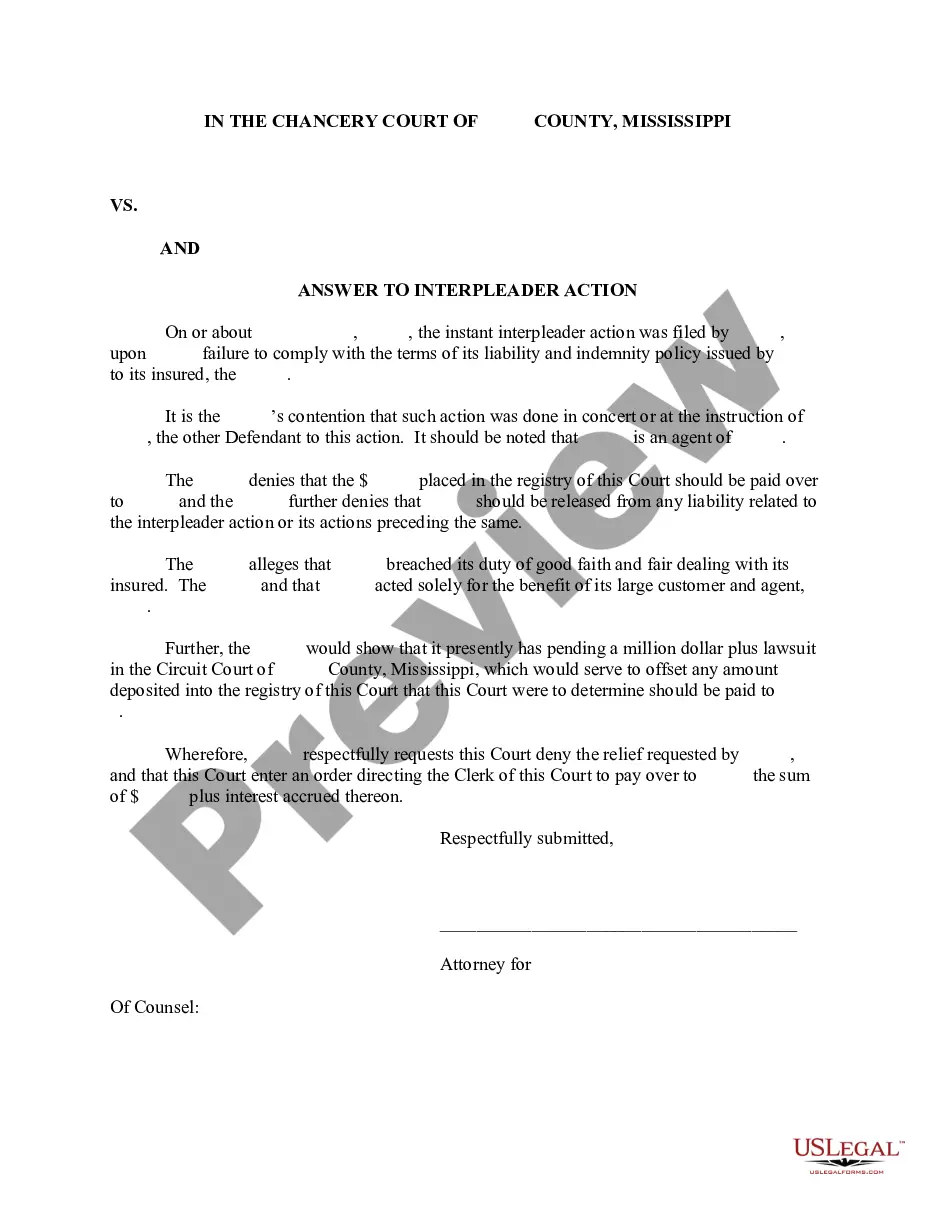
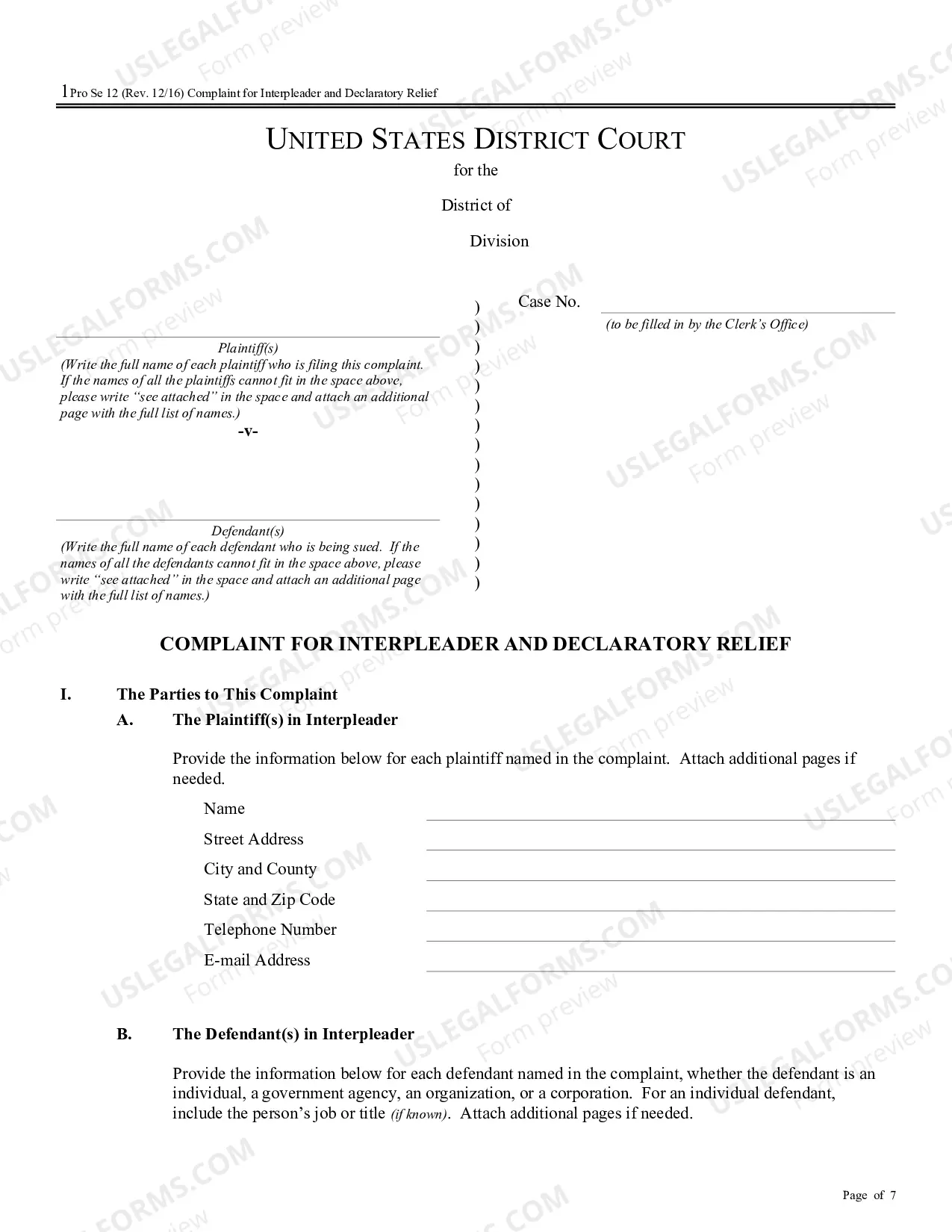
The Answer of Defendants is a legal document used in response to a complaint that initiates a lawsuit. This form is specifically designed for cases involving plaintiffs who wish to interplead, particularly in matters concerning property insurance payments. It allows defendants to formally admit or deny allegations made against them and present affirmative defenses in court. Unlike similar forms, this document includes provisions for crossclaims, making it versatile for various legal situations.
Form components explained
- Identification of the parties involved, including the plaintiff and defendants.
- A numbered list of admissions and denials regarding the allegations in the complaint.
- Instructions for submitting defenses and counterclaims against the plaintiff.
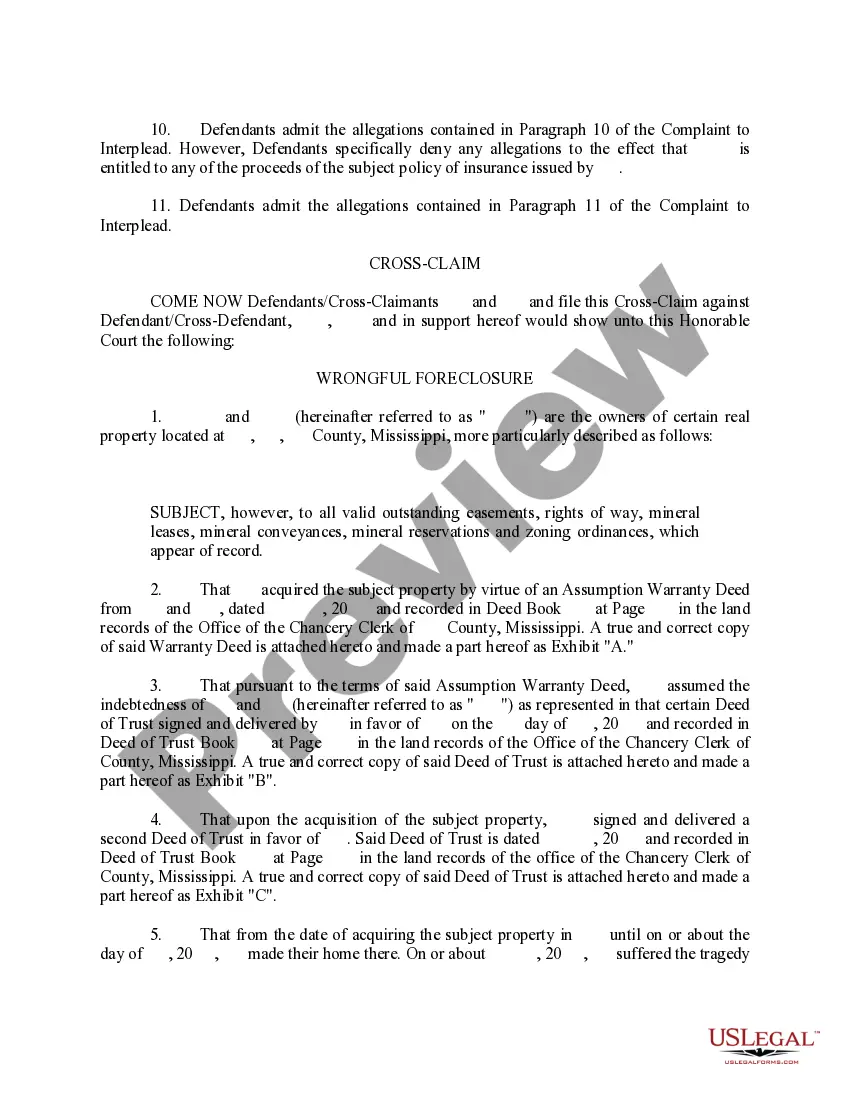
- Details about the property and relevant documents, including deeds of trust.
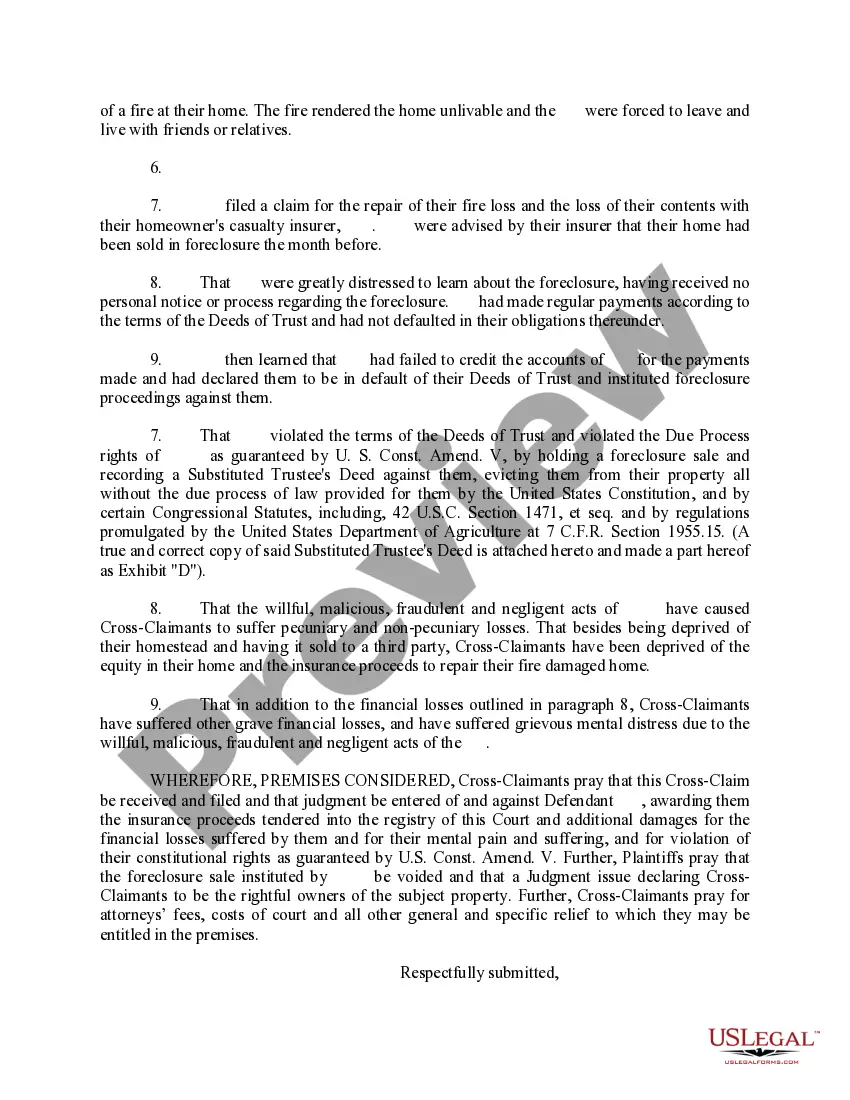
- Specific claims regarding wrongful foreclosure and related damages.
When this form is needed
This form should be used when defendants need to respond to a complaint in a civil lawsuit, particularly when a plaintiff has interpleaded their cause of action. It is applicable in disputes over property insurance claims, foreclosures, and scenarios where parties accuse each other of wrongful actions concerning property rights.
Intended users of this form
- Defendants who have been served with a complaint and need to respond legally.
- Individuals involved in property disputes, particularly concerning insurance claims.
- Parties aiming to present affirmative defenses and counterclaims in a lawsuit.
Instructions for completing this form
- Identify the parties involved in the lawsuit by entering their names in the designated fields.
- Review the complaint and clearly outline each allegation, indicating whether you admit or deny them.
- Provide supporting details for any denials, especially regarding liens or property claims.
- Attach relevant documents, such as deeds of trust or related agreements, as exhibits.
- Sign and date the form before submitting it to the court as instructed.
Notarization guidance
In most cases, this form does not require notarization. However, some jurisdictions or signing circumstances might. US Legal Forms offers online notarization powered by Notarize, accessible 24/7 for a quick, remote process.
Get your form ready online
Our built-in tools help you complete, sign, share, and store your documents in one place.
Make edits, fill in missing information, and update formatting in US Legal Forms—just like you would in MS Word.
Download a copy, print it, send it by email, or mail it via USPS—whatever works best for your next step.
Sign and collect signatures with our SignNow integration. Send to multiple recipients, set reminders, and more. Go Premium to unlock E-Sign.
If this form requires notarization, complete it online through a secure video call—no need to meet a notary in person or wait for an appointment.
We protect your documents and personal data by following strict security and privacy standards.

Make edits, fill in missing information, and update formatting in US Legal Forms—just like you would in MS Word.

Download a copy, print it, send it by email, or mail it via USPS—whatever works best for your next step.

Sign and collect signatures with our SignNow integration. Send to multiple recipients, set reminders, and more. Go Premium to unlock E-Sign.

If this form requires notarization, complete it online through a secure video call—no need to meet a notary in person or wait for an appointment.

We protect your documents and personal data by following strict security and privacy standards.
Common mistakes to avoid
- Failing to address all allegations in the complaint, leading to automatic admissions.
- Not attaching necessary documentation to support defenses and claims.
- Missing signatures or dates on the filed document, which can result in delays.
- Overlooking specific state laws or rules that govern the completion of the form.
Why complete this form online
- Convenience of downloading the form immediately without waiting for a postal service.
- Editability to suit your specific situation before printing or submitting.
- Access to quality legal templates drafted by licensed attorneys, ensuring compliance and accuracy.
Looking for another form?

Form popularity
FAQ
The Rule 81 Summons is used when directing a person to appear in court on a date and time certain, like. a scheduled court hearing. It is used to provide notice to the Defendants in a lawsuit.
Each court has different rules about how long you have to respond to this motion, but usually you will have at least two or three weeks to file an opposition to the defendant's motion to dismiss.
Failure to Respond: If a defendant fails to answer the complaint or file a motion to dismiss within the time limit set forth in the summons, the defendant is in default. The plaintiff can ask the court clerk to make a note of that fact in the file, a procedure called entry of default.
The plaintiff must give you responses to your request for admissions within 30 days. You do not need to do anything if you do not get a response. The plaintiff has 30 days to deny or object to the statements.
There is no obligation to respond to alleged affirmative defenses....they can be contested at trial or summary judgment.
A defendant may respond in an answer that admits or denies each of the plaintiff's allegations in the complaint. The answer will list defenses and counter-claims or cross-claims against the plaintiff or other defendants. The answer will state whether the defendant wants a jury trial. The case will then continue.
Service and Filing. Title. Bottom Notation. Typed Names. Headings and Subheadings. Numbered Paper.
Four fundamental rules of pleading are; (1) Pleadings should state facts and not law; (2) The facts stated in pleadings should be material facts; (3) Pleadings should not state the evidence; and (4) The facts in pleadings should be stated in a concise form.
Four fundamental rules of pleading are; (1) Pleadings should state facts and not law; (2) The facts stated in pleadings should be material facts; (3) Pleadings should not state the evidence; and (4) The facts in pleadings should be stated in a concise form.