Mississippi Answer to Interpleader Action
What is this form?
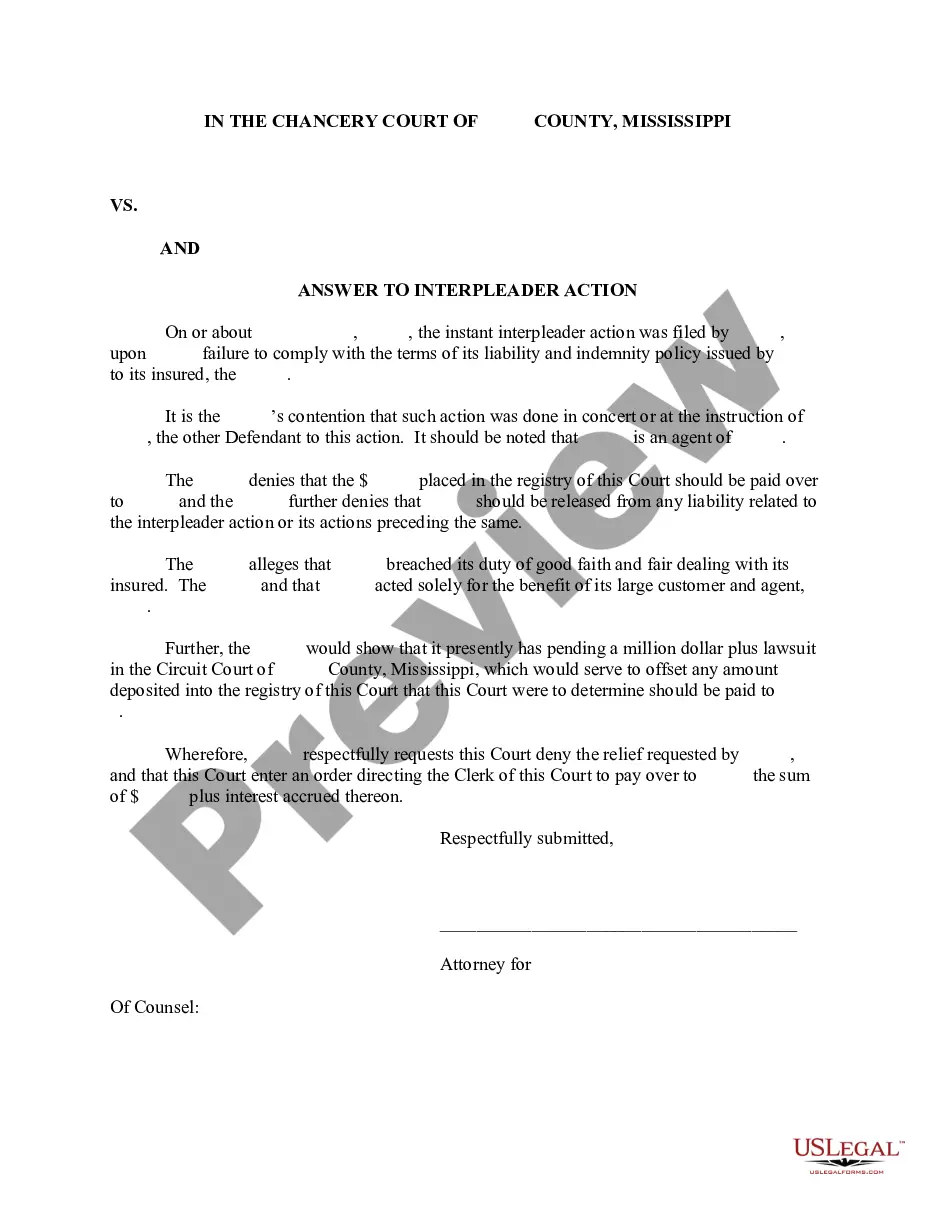
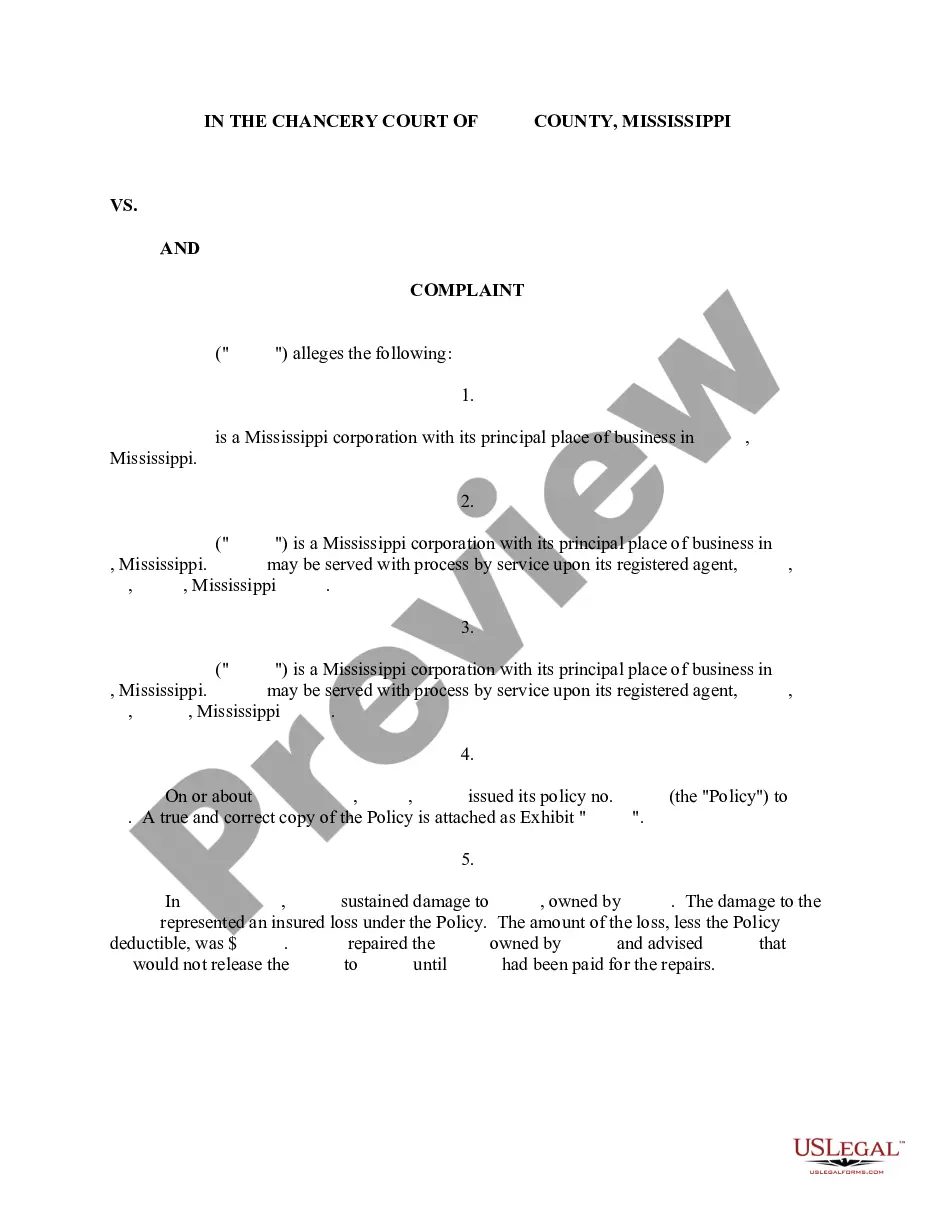
The Answer to Interpleader Action is a legal document filed in response to a lawsuit's complaint. It is specifically designed for situations where a plaintiff seeks to interplead multiple defendants regarding a particular legal matter. This form differs from other responses in that it addresses situations involving conflicting claims among various parties, thereby helping a court determine the rightful claimant. It is available for download in both Word and Rich Text formats.
Form components explained
- Caption: identifies the court and parties involved in the action.
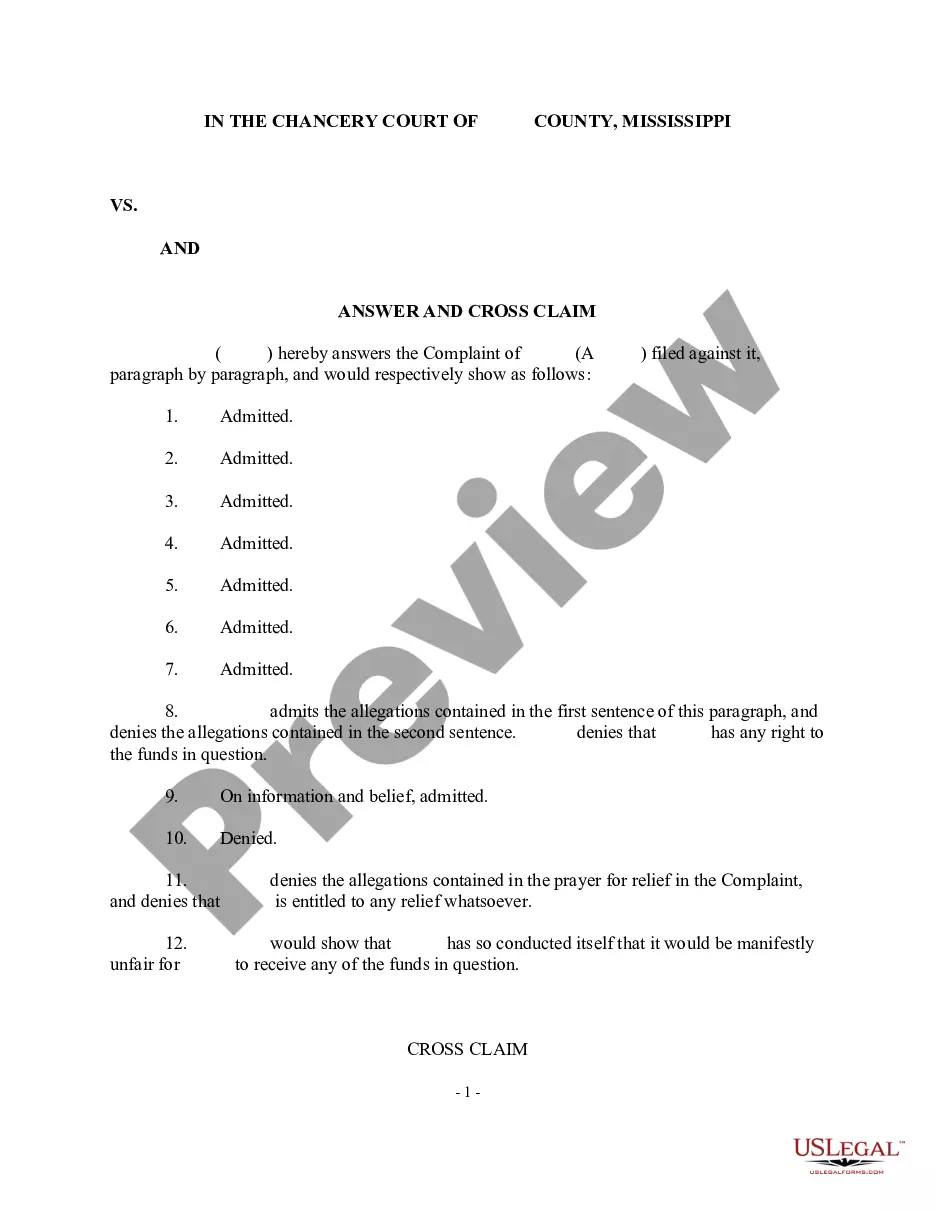
- Admission or Denial of Allegations: states whether the defendant admits or denies the claims made in the complaint.
- Affirmative Defenses: outlines any defenses the defendant may want to assert in response to the plaintiff's claims.
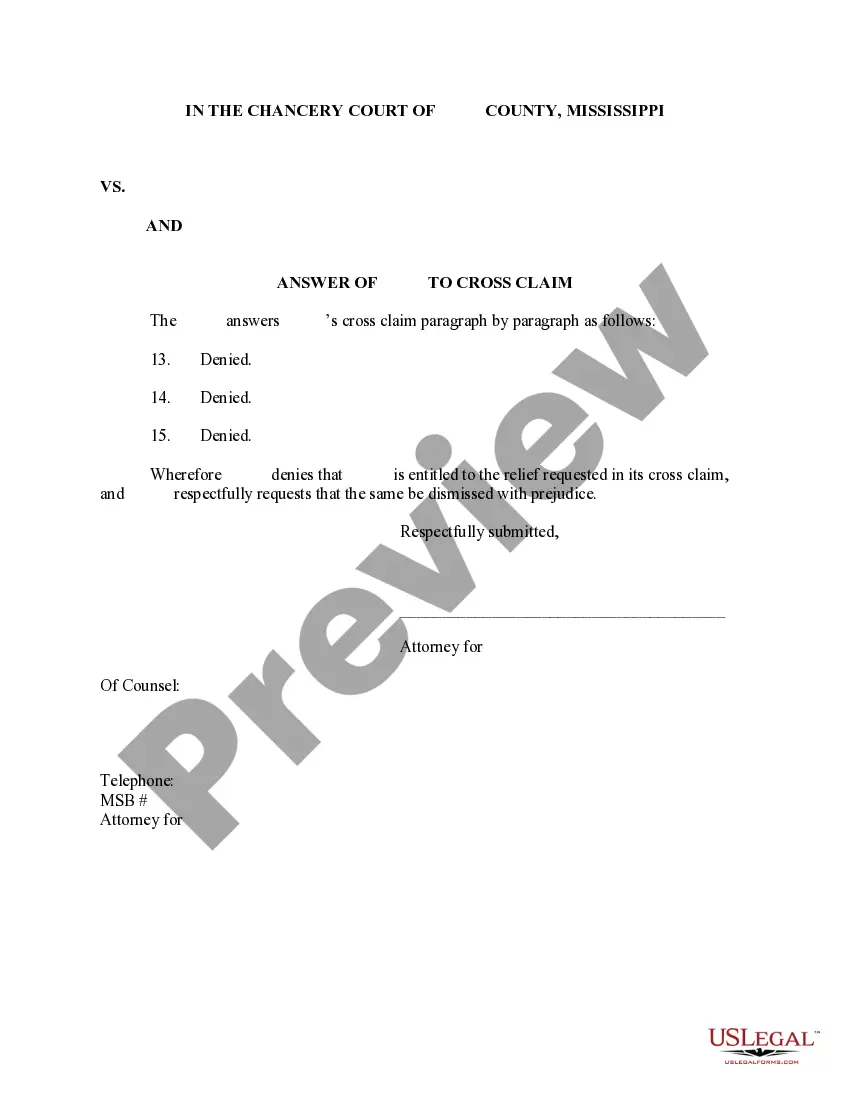
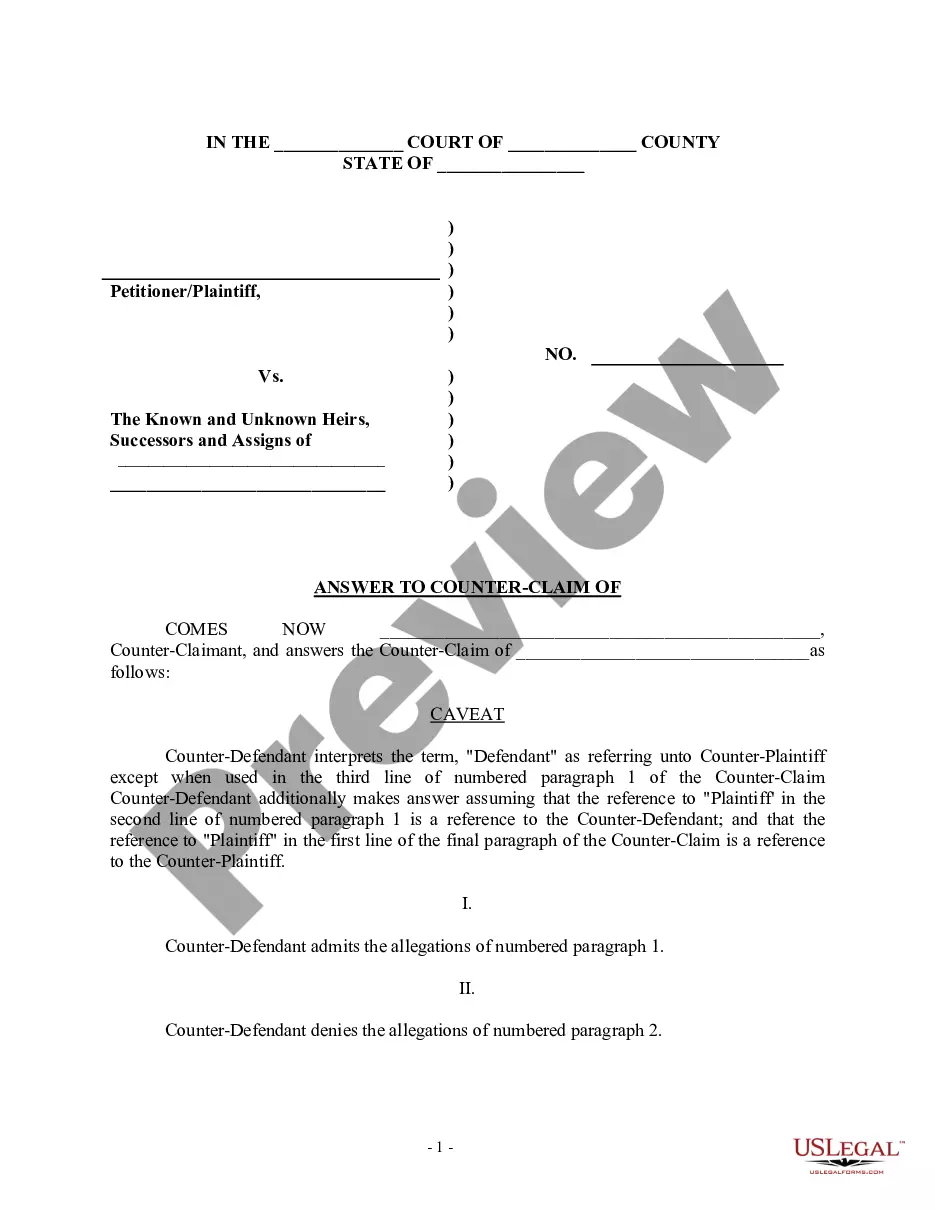
- Counterclaims: includes any claims the defendant might have against the plaintiff.
- Signature Block: provides space for the defendant or their attorney to sign and date the form.

Common use cases
This form should be used when a plaintiff initiates an interpleader action, and the defendant wishes to respond formally. Typical scenarios may include disputes over property, insurance claims, or other assets where multiple parties assert ownership or entitlement. By filing an Answer to Interpleader Action, defendants can clarify their position while ensuring that the matter is resolved equitably in court.
Who should use this form
- Defendants in an interpleader action who need to respond to a plaintiff's complaint.
- Individuals involved in disputes over claims to property or assets.
- Attorneys representing clients in interpleader cases.
- Any party seeking to clarify rights and obligations in a legal dispute involving multiple claimants.
Steps to complete this form
- Identify the parties involved in the action, including the plaintiff and all defendants.
- Review the allegations in the complaint and clearly indicate your admissions or denials.
- List any affirmative defenses that apply to your case.
- If applicable, include any counterclaims you have against the plaintiff.
- Sign and date the form, including the contact information for you or your attorney.
Notarization guidance
This form usually doesn’t need to be notarized. However, local laws or specific transactions may require it. Our online notarization service, powered by Notarize, lets you complete it remotely through a secure video session, available 24/7.
Get your form ready online
Our built-in tools help you complete, sign, share, and store your documents in one place.
Make edits, fill in missing information, and update formatting in US Legal Forms—just like you would in MS Word.
Download a copy, print it, send it by email, or mail it via USPS—whatever works best for your next step.
Sign and collect signatures with our SignNow integration. Send to multiple recipients, set reminders, and more. Go Premium to unlock E-Sign.
If this form requires notarization, complete it online through a secure video call—no need to meet a notary in person or wait for an appointment.
We protect your documents and personal data by following strict security and privacy standards.

Make edits, fill in missing information, and update formatting in US Legal Forms—just like you would in MS Word.

Download a copy, print it, send it by email, or mail it via USPS—whatever works best for your next step.

Sign and collect signatures with our SignNow integration. Send to multiple recipients, set reminders, and more. Go Premium to unlock E-Sign.

If this form requires notarization, complete it online through a secure video call—no need to meet a notary in person or wait for an appointment.

We protect your documents and personal data by following strict security and privacy standards.
Common mistakes
- Failing to respond within the specified time frame after receiving the complaint.
- Not clearly stating admissions and denials, leading to confusion about the defendant's position.
- Omitting affirmative defenses or counterclaims that could strengthen the response.
- Neglecting to sign the form, which could render it invalid.
Why use this form online
- Convenience of downloading and completing the form at your own pace.
- Editable formats allow you to customize the form as needed.
- Access to templates drafted by licensed attorneys to ensure accuracy.
Looking for another form?

Form popularity
FAQ
Mississippi Answer to Interpleader Action is a standard Mississippi court form used to respond to an interpleader complaint. It lets a defendant admit or deny claims, raise affirmative defenses, and assert counterclaims in one document. The form includes a caption, admission or denial of allegations, affirmative defenses, counterclaims, and a signature block, and is available in Word or Rich Text.
To answer an interpleader using this form, fill out the Caption to identify the court and parties, indicate which allegations you admit or deny, list any affirmative defenses, add counterclaims if applicable, and complete the signature block. This structure ensures the response addresses the interpleader complaint clearly and is suitable for Mississippi courts.
This form is organized into five sections. The Caption identifies the court and parties; the Admission or Denial of Allegations states your position on each claim; the Affirmative Defenses lists defenses; the Counterclaims covers any claims against the plaintiff; and the Signature Block finalizes the filing.
When using the Mississippi Answer to Interpleader Action, an answer should include a proper caption, a clear admission or denial of each allegation in the complaint, any affirmative defenses, any counterclaims, and a signed, dated signature block. The form guides you to present a court-ready response to an interpleader action.
An interpleader action arises when a plaintiff holds property or funds and asks the court to interplead multiple claimants to determine entitlement. The Mississippi Answer to Interpleader Action would be used by a defendant to respond, clarifying rights and defenses while the court resolves conflicting claims in the interpleader proceeding.
The form is tailored for interpleader cases with multiple claimants. It emphasizes a structured caption and five sections—Admission or Denial, Affirmative Defenses, and Counterclaims—plus a Signature Block—so the response addresses competing claims and resolves entitlement within the interpleader framework.