Mississippi Answer to Cross Claim
What this document covers
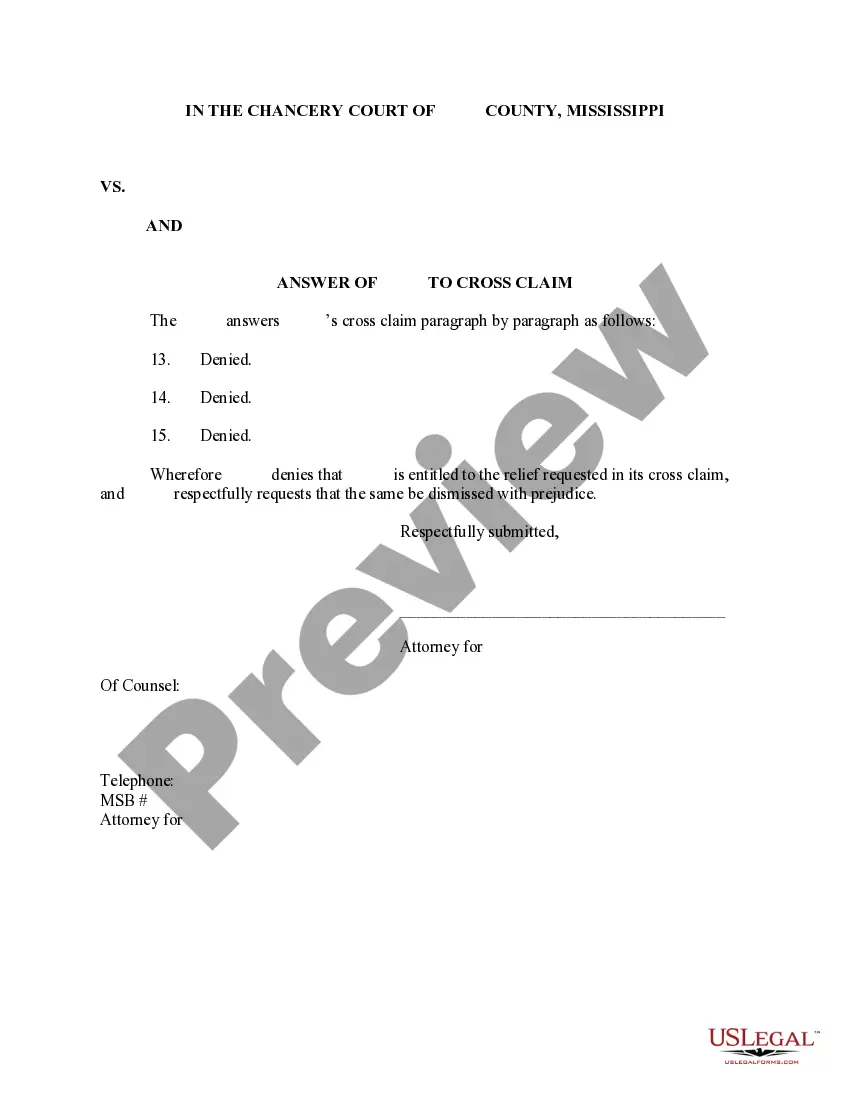
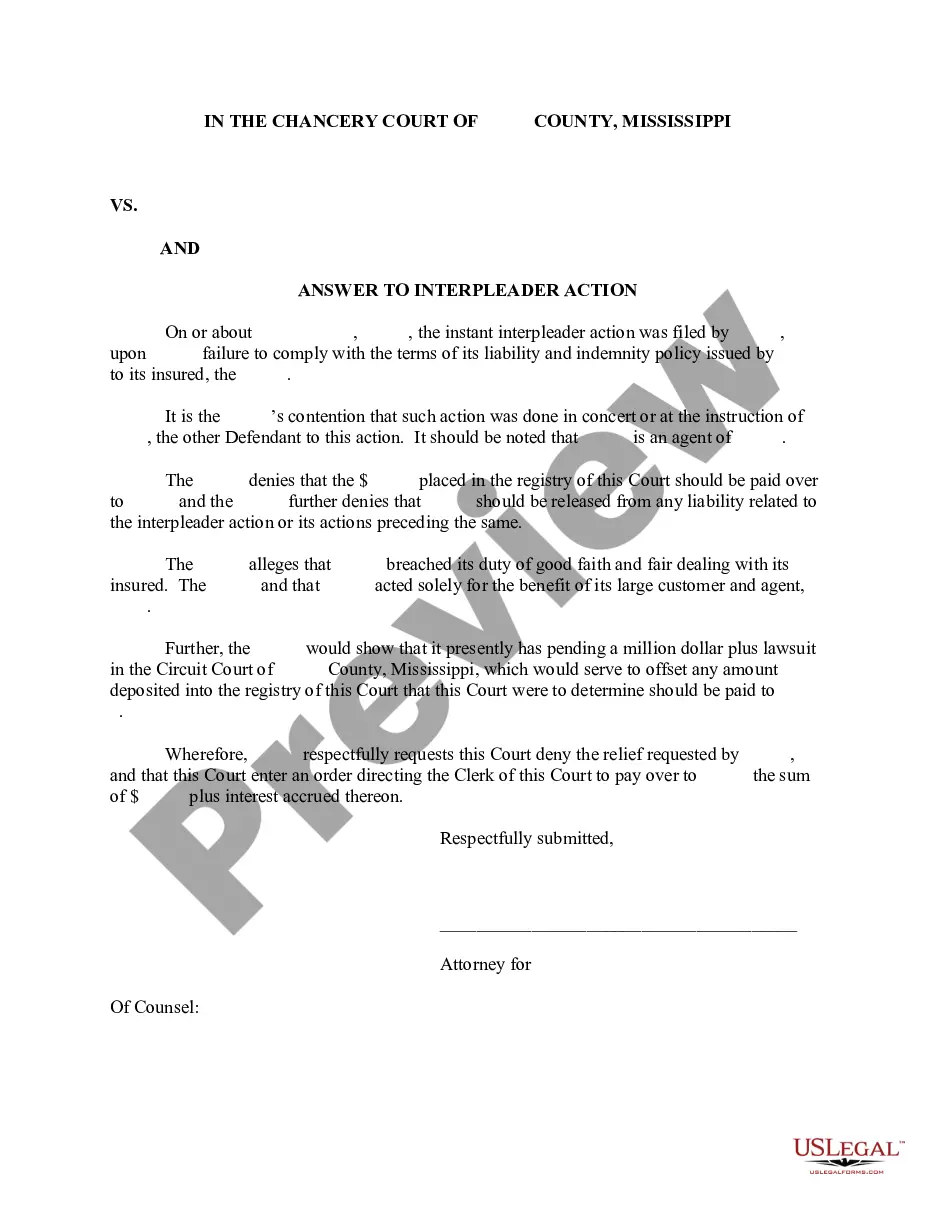
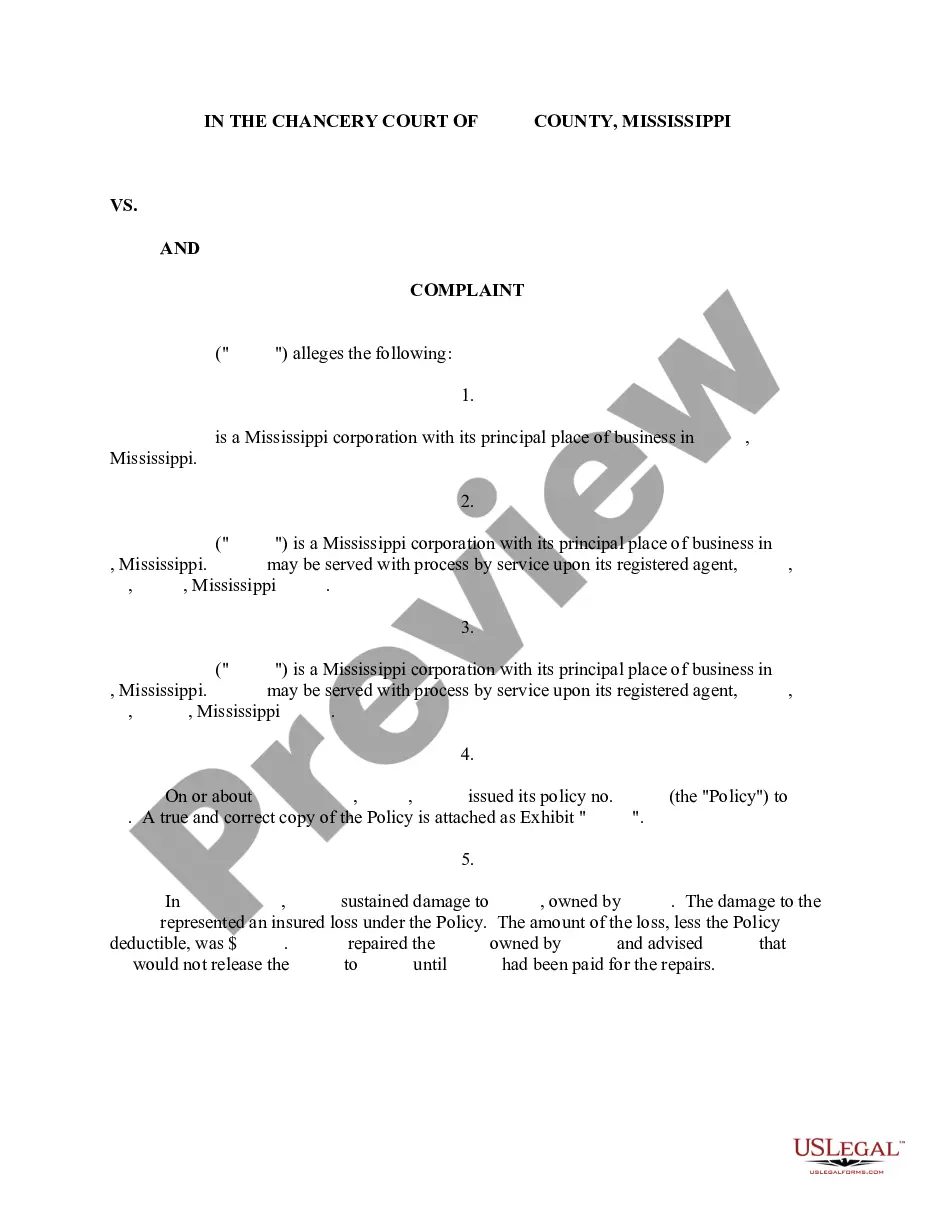
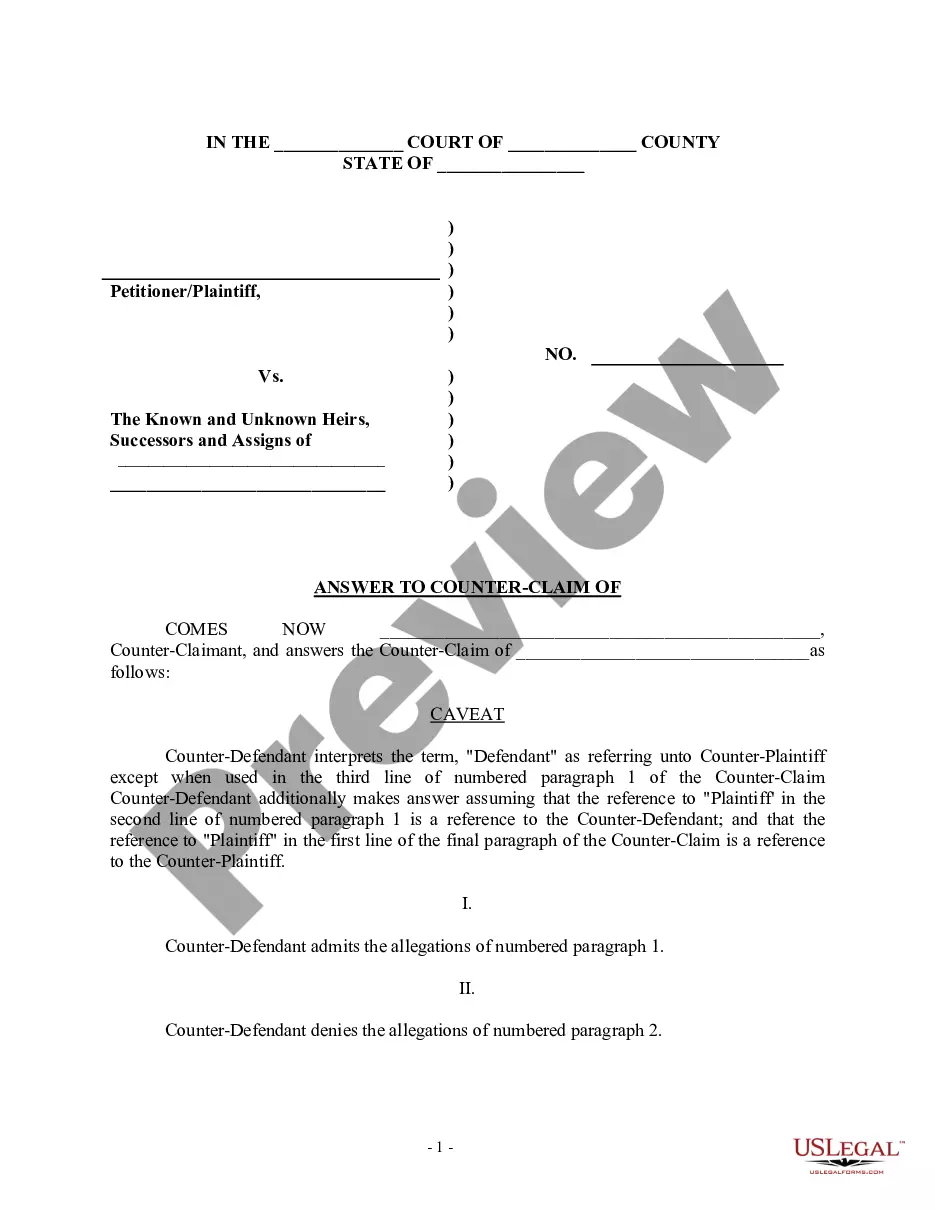
The Answer to Cross Claim is a legal document used to respond to a cross claim filed by one of the original defendants in an ongoing legal case. This form allows the responding party to present their defense or counterarguments against the claims brought forth in the cross claim. Unlike an Answer to a Complaint, this form is specifically tailored for situations where there are multiple defendants and one is counter-suing another. It is available for download in both Word and Rich Text formats, making it easy to customize to fit individual needs.
What’s included in this form
- Identification of the parties involved in the cross claim.
- Statement of facts relevant to the cross claim.
- Defenses or counterarguments against the allegations made in the cross claim.
- Request for specific relief or remedies, if applicable.
- Signature and date fields for the responding party.
When to use this document
This form should be used when a defendant receives a cross claim from another defendant in a legal action. It is essential when the responding party needs to assert their defenses formally and address the claims made against them in the cross claim. Situations may include a personal injury lawsuit where multiple parties are involved, and one party seeks to pass liability onto another, or in a contract dispute where one defendant claims that another should be responsible for the breach.
Who should use this form
- Defendants involved in a lawsuit who have received a cross claim from another defendant.
- Individuals representing themselves in legal matters (pro se litigants).
- Attorneys needing a template to draft a response to a cross claim.
Steps to complete this form
- Identify the parties involved by entering the names and roles of the plaintiffs and defendants.
- Briefly state the facts surrounding the case and the cross claim being answered.
- Outline any defenses you wish to assert against the allegations made in the cross claim.
- If seeking any remedy or relief, specify what you are requesting from the court.
- Sign and date the document before filing it with the appropriate court.
Notarization requirements for this form
This form does not typically require notarization to be legally valid. However, some jurisdictions or document types may still require it. US Legal Forms provides secure online notarization powered by Notarize, available 24/7 for added convenience.
Get your form ready online
Our built-in tools help you complete, sign, share, and store your documents in one place.
Make edits, fill in missing information, and update formatting in US Legal Forms—just like you would in MS Word.
Download a copy, print it, send it by email, or mail it via USPS—whatever works best for your next step.
Sign and collect signatures with our SignNow integration. Send to multiple recipients, set reminders, and more. Go Premium to unlock E-Sign.
If this form requires notarization, complete it online through a secure video call—no need to meet a notary in person or wait for an appointment.
We protect your documents and personal data by following strict security and privacy standards.

Make edits, fill in missing information, and update formatting in US Legal Forms—just like you would in MS Word.

Download a copy, print it, send it by email, or mail it via USPS—whatever works best for your next step.

Sign and collect signatures with our SignNow integration. Send to multiple recipients, set reminders, and more. Go Premium to unlock E-Sign.

If this form requires notarization, complete it online through a secure video call—no need to meet a notary in person or wait for an appointment.

We protect your documents and personal data by following strict security and privacy standards.
Mistakes to watch out for
- Failing to address every allegation made in the cross claim.
- Ignoring deadlines for filing the answer, which can result in a default judgment.
- Not including signatures or unapproved signatures in the document.
- Using vague statements instead of clear defenses.
Why complete this form online
- Convenience of downloading the form instantly.
- Ability to customize the document to fit specific circumstances.
- Access to a legally sound template drafted by licensed attorneys.
- Editable formats allow for easy updates and changes.
Legal use & context
- The document serves as a formal response in litigation proceedings.
- Failure to respond may result in a default judgment against the responding party.
Quick recap
- The Answer to Cross Claim is essential for defending against claims made by co-defendants.
- It should be tailored to address specific allegations and defenses.
- Always check local court rules regarding the submission process and deadlines.
Looking for another form?
Form popularity
FAQ
An answer to a counterclaim is a written response by a Plaintiff to a Defendant's counterclaim. The answer to counterclaim must also state defenses to each of the Defendant's counterclaims in short, plain statements.
If a defendant does raise counterclaims in her answer, the plaintiff must respond to those counterclaims with a pleading called an "answer to a counterclaim." The form and content of an "answer to a counterclaim" is similar to that of an answer.
The answer to counterclaim must also state defenses to each of the Defendant's counterclaims in short, plain statements. Complete the top of the Answer to Counterclaim exactly as it appears in your, the Plaintiff's, complaint.
If you filed an answer and a counterclaim, the Plaintiff will likely file a response to your counterclaim.If you filed a motion, a hearing will be scheduled for the court to make a decision. After your motion is resolved (and assuming the case is not dismissed), the case will move forward from there.
Responsive Pleadings: Cross-Complaint (CA)
You have to answer the counterclaims. They have the same effect as your lawsuit. It is not wise to proceed with litigation without an attorney.
In common law, a crossclaim is a demand made in a pleading that is filed against a party which is on the "same side" of the lawsuit.
Reply to Defence The defendant answers the case of the claimant pleaded in the particulars of claim in the defence.The defendant (ie counter-claimant) may file a reply to defence to counterclaim to answer the case of the claimant in the defence to counterclaim.