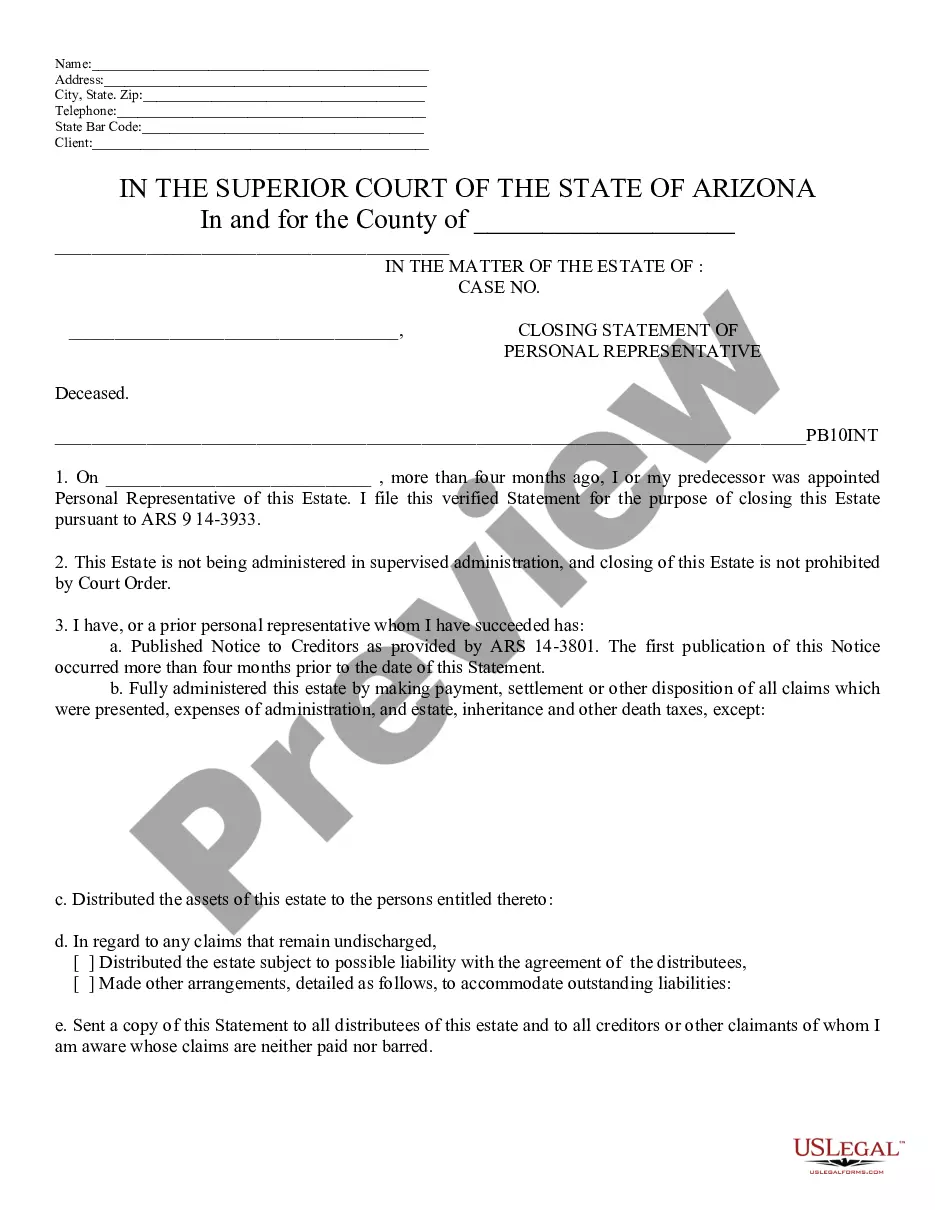
Mississippi Complaint to Establish Easement
What this document covers
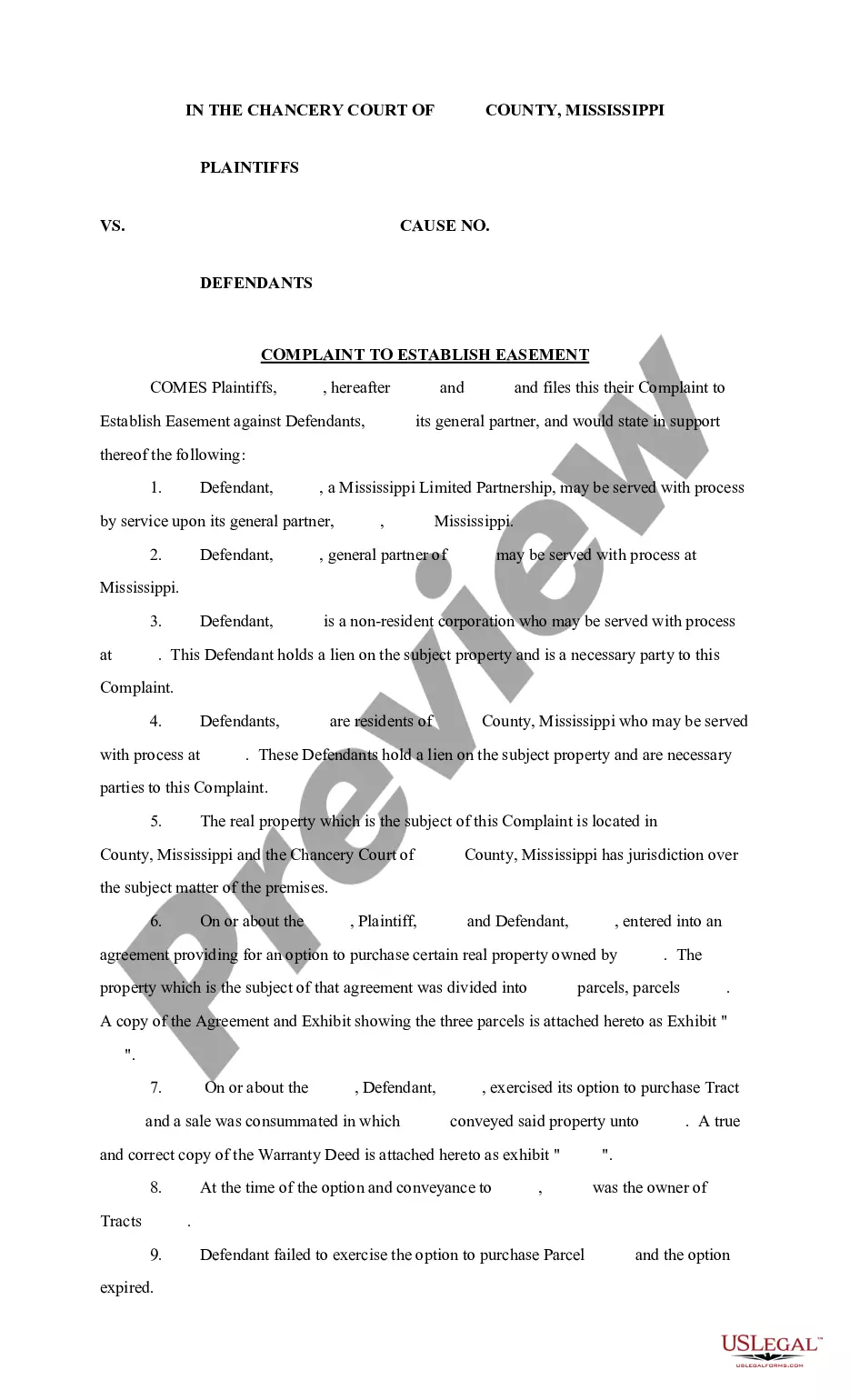
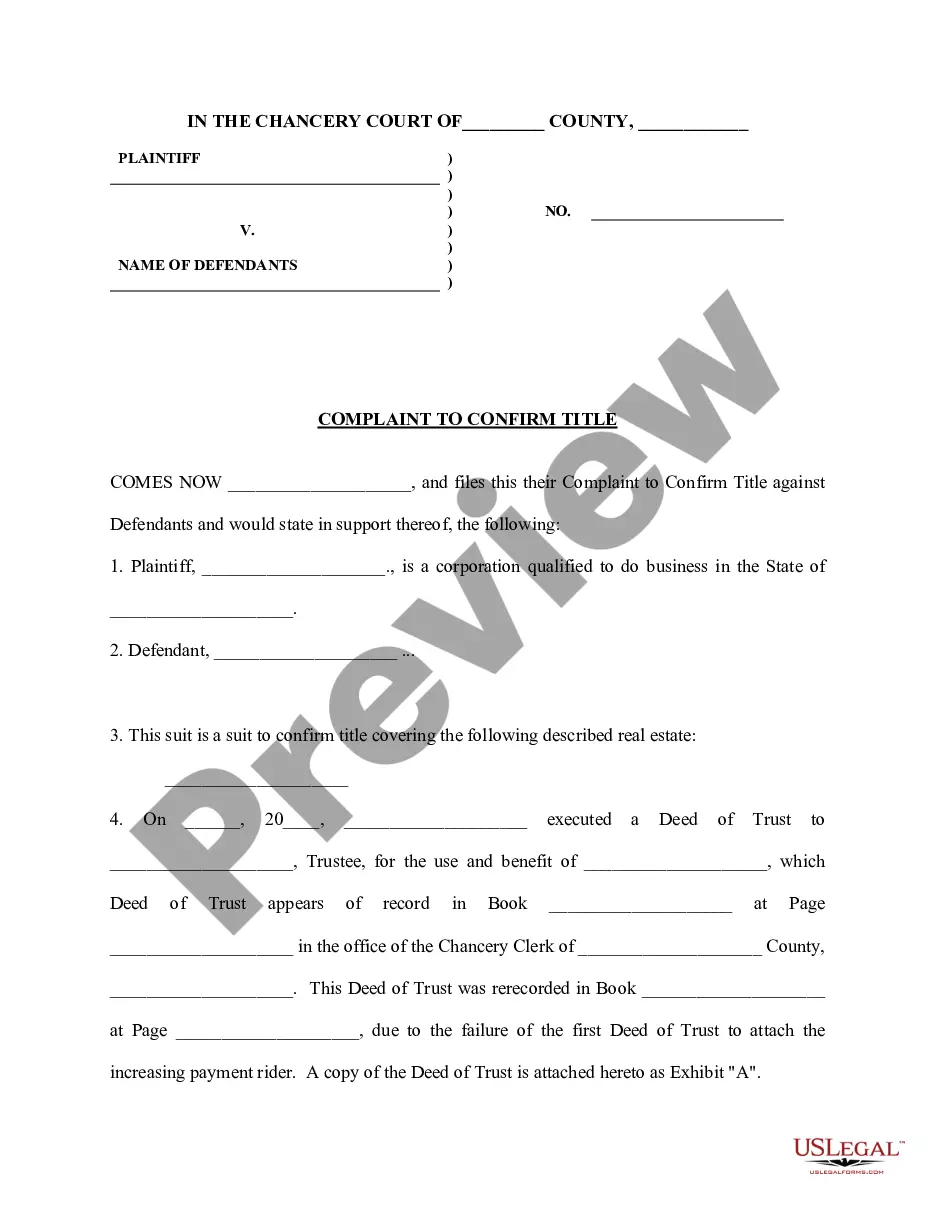
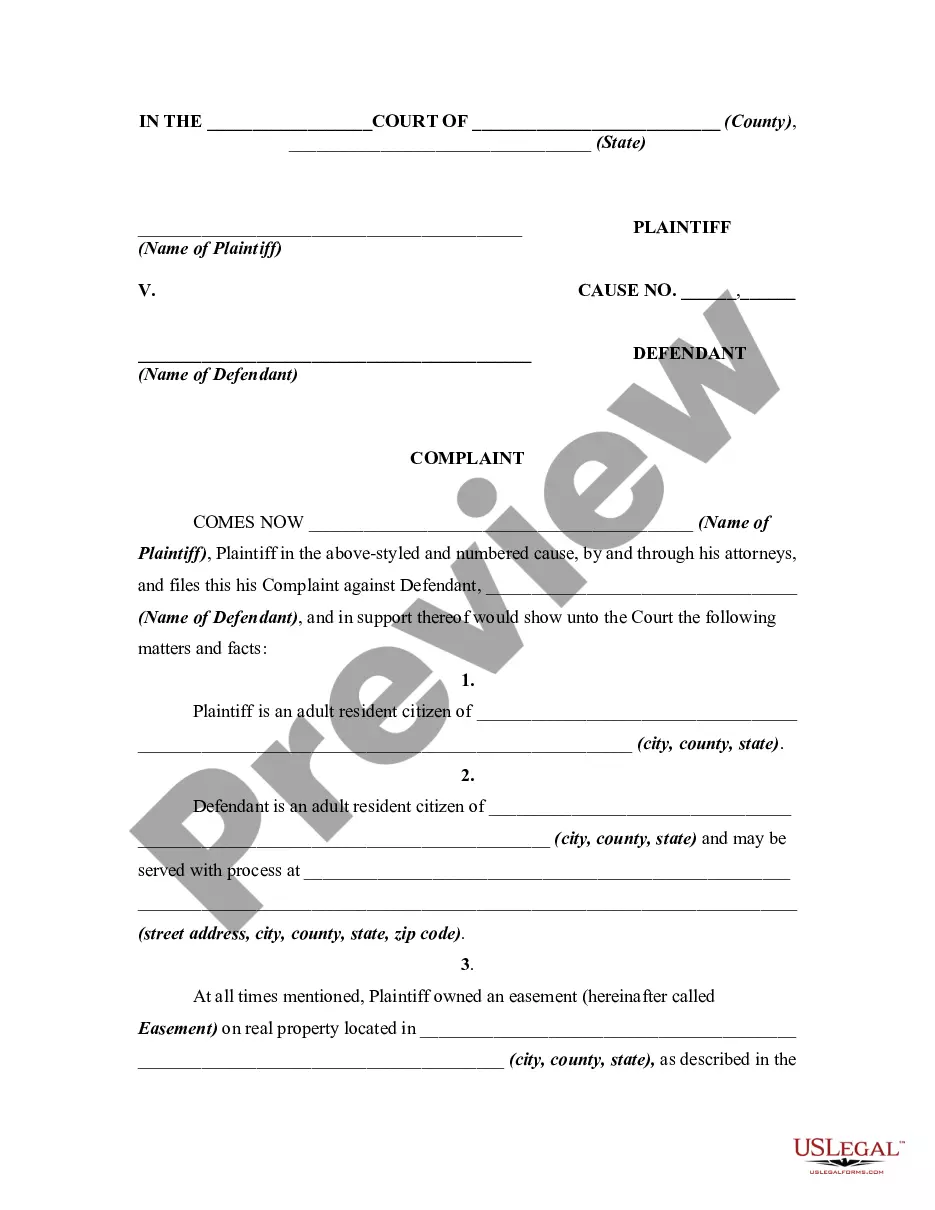
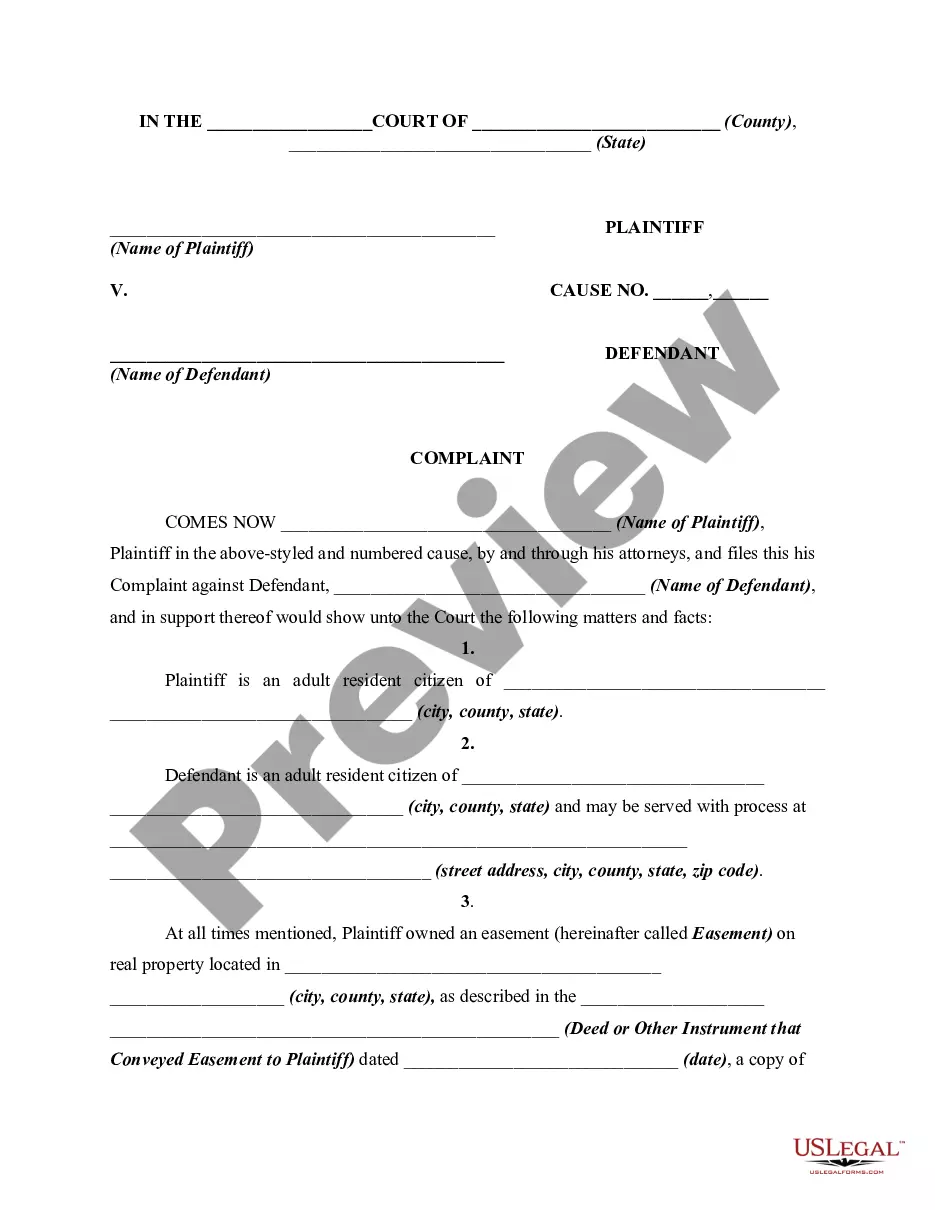
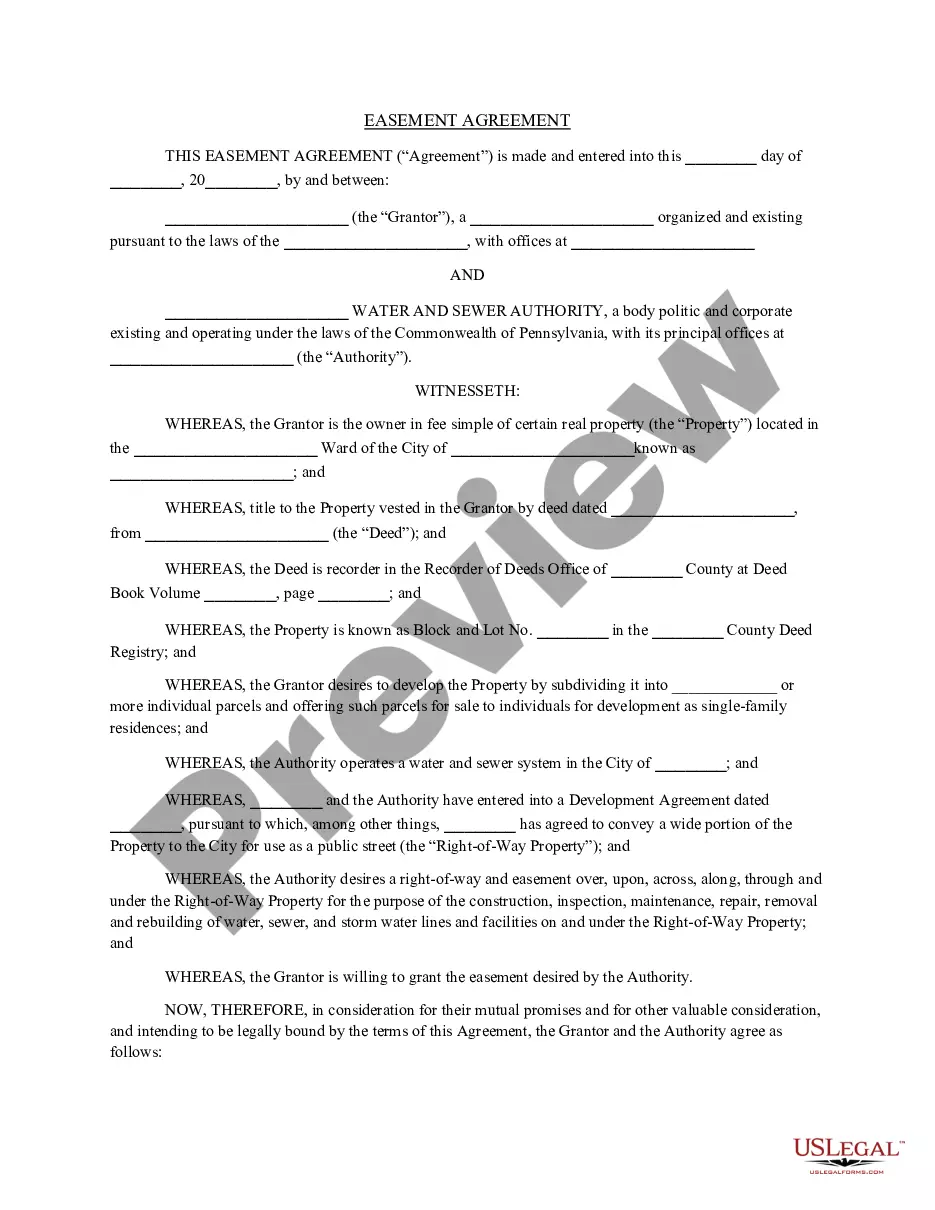
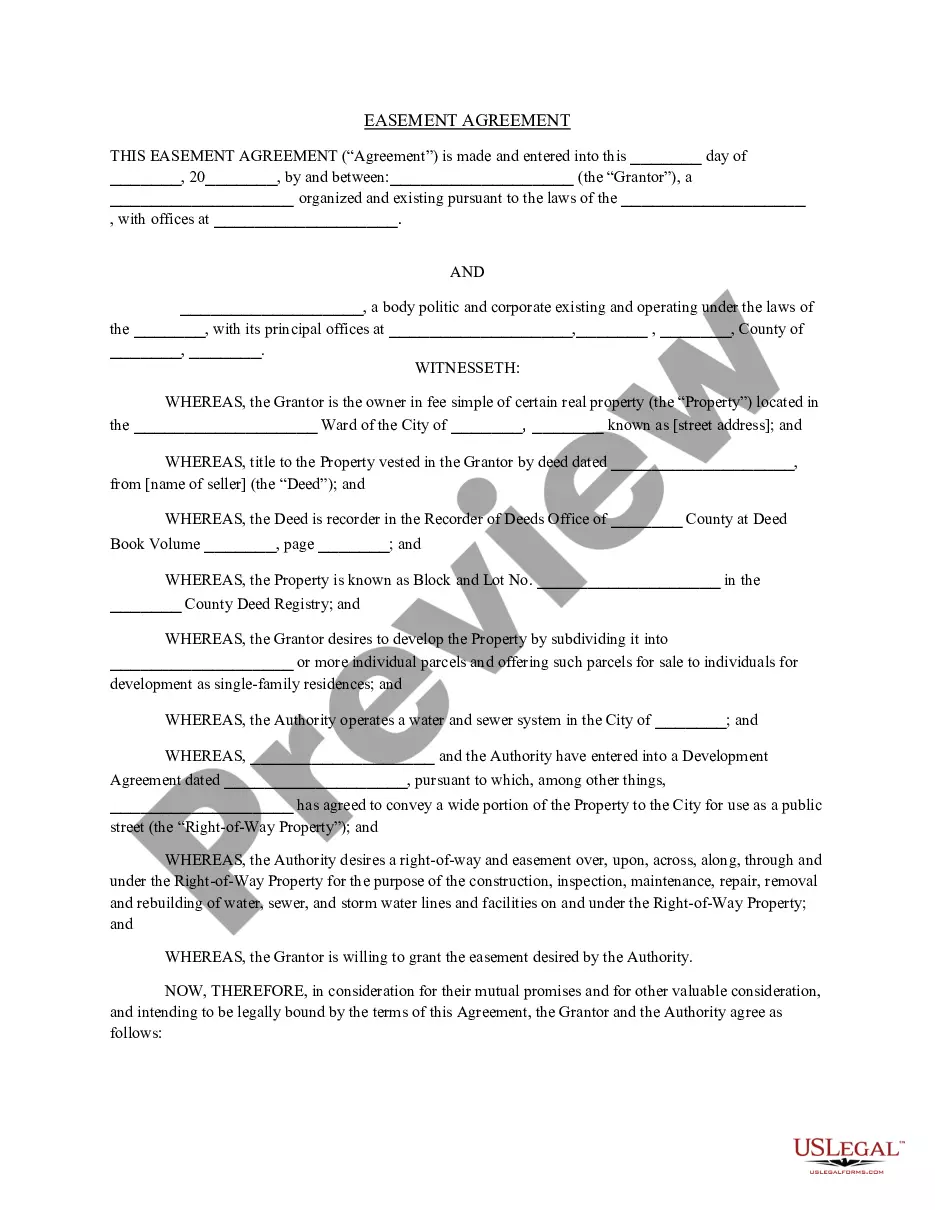
The Complaint to Establish Easement is a legal document used to initiate a lawsuit aimed at securing an easement on a property. Unlike other legal forms, this complaint specifically addresses the process of establishing the right to access or use another party's property for particular purposes. Easements are often necessary for utilities or to allow access to landlocked properties, making this form essential for individuals or entities needing legal recognition of such rights.
What’s included in this form
- Plaintiff and defendant information, detailing the parties involved in the lawsuit.
- Description of the easement sought, including the location and purpose of the easement.
- Basis for the claim, outlining the legal justifications for establishing the easement.
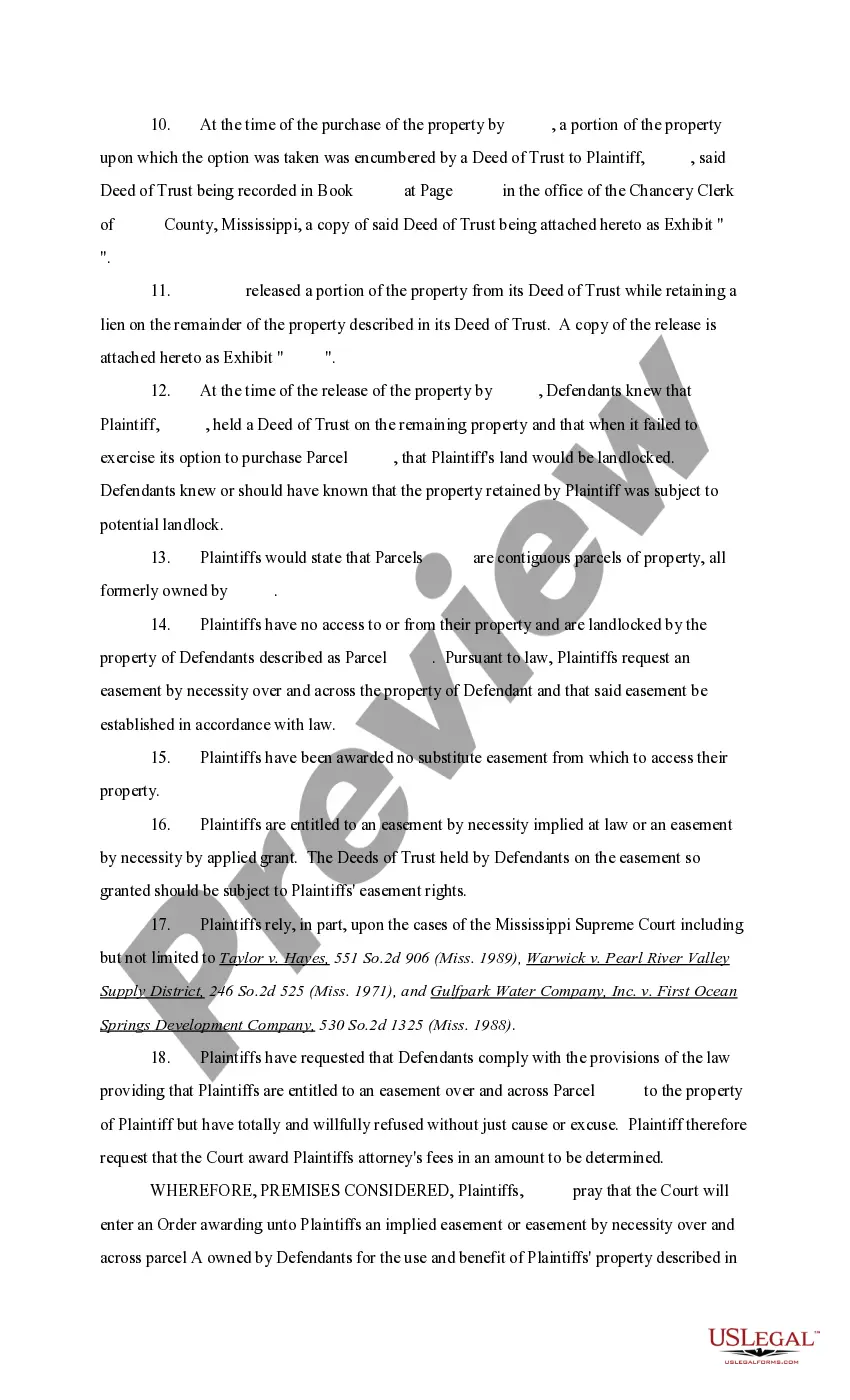
- Supporting evidence or cases from jurisdiction, citing relevant legal precedents.
- Relief sought by the plaintiffs, specifying what they are requesting from the court.
Common use cases
This form should be used in situations where an individual or organization needs to establish or enforce an easement on another person's property. Common scenarios include landowners seeking access to their land that is otherwise landlocked, utilities requiring the right to install infrastructure on private property, or neighbors who need to cross someone else's land for access to resources like water or grazing land.
Who can use this document
- Property owners seeking legal access to their land.
- Utilities needing easements for infrastructure placement.
- Businesses requiring access to land for operational needs.
- Individuals facing property disputes regarding easements.
- Attorneys representing clients in real estate or property law matters.
How to complete this form
- Identify the parties involved by entering all required names and addresses.
- Clearly describe the property in question and the specific easement being sought.
- Outline your basis for seeking the easement, including any applicable laws or precedents.
- Specify any relief you are requesting from the court, such as granting the easement.
- Sign and date the form, ensuring all signatures are executed correctly.
Notarization guidance
This form must be notarized to be legally valid. US Legal Forms provides secure online notarization powered by Notarize, allowing you to complete the process through a verified video call.
Get your form ready online
Our built-in tools help you complete, sign, share, and store your documents in one place.
Make edits, fill in missing information, and update formatting in US Legal Forms—just like you would in MS Word.
Download a copy, print it, send it by email, or mail it via USPS—whatever works best for your next step.
Sign and collect signatures with our SignNow integration. Send to multiple recipients, set reminders, and more. Go Premium to unlock E-Sign.
If this form requires notarization, complete it online through a secure video call—no need to meet a notary in person or wait for an appointment.
We protect your documents and personal data by following strict security and privacy standards.

Make edits, fill in missing information, and update formatting in US Legal Forms—just like you would in MS Word.

Download a copy, print it, send it by email, or mail it via USPS—whatever works best for your next step.

Sign and collect signatures with our SignNow integration. Send to multiple recipients, set reminders, and more. Go Premium to unlock E-Sign.

If this form requires notarization, complete it online through a secure video call—no need to meet a notary in person or wait for an appointment.

We protect your documents and personal data by following strict security and privacy standards.
Common mistakes to avoid
- Failing to provide complete and accurate descriptions of the property.
- Omitting relevant legal grounds or supporting case law.
- Not including all necessary parties in the complaint.
- Neglecting to sign and date the form appropriately.
- Using vague language that may lead to misunderstandings in court.
Why use this form online
- Convenient access from any location with an internet connection.
- Editability allows users to customize the form to fit their specific needs.
- Reliable support from licensed attorneys in drafting the document.
- Immediate download in multiple formats for easy use.
Main things to remember
- The Complaint to Establish Easement is essential for securing legal access to property.
- Complete the form accurately to avoid potential legal disputes.
- Consult local legal counsel for state-specific nuances regarding easements.
- Utilizing this form online provides convenience and support from legal professionals.
Looking for another form?


Form popularity
FAQ
This chapter discusses the characteristics of an easement: there must be a dominant and a servient tenement; the easement must accommodate the dominant tenement; the easement must be owned or occupied by different people; and an easement must be capable of forming the subject matter of a grant.
A legal easement must be registered against the dominant and servient land ("tenements"), if their titles are registered, to take effect. The benefit of legal easements pass automatically on the transfer of the dominant tenement or part of the dominant tenement.
An easement is created by 'reservation' when a vendor conveys land to a purchaser but reserves an easement over that land, for the benefit of other land that the vendor owns.
An easement may be created by means of an appropriate dealing registered in NSW LRS or by the inclusion in a Section 88B instrument lodged with a new deposited plan.
The legal term easement refers to the legal right to use another person's real property, for a specific purpose and a specific amount of time. An easement gives a person the legal right to go through another person's land, as long as the usage is consistent with the specified easement restrictions.
Easements can be created in a variety of ways. They can be created by an express grant, by implication, by necessity, and by adverse possession.An easement can be terminated if it was created by necessity and the necessity ceases to exist, if the servient land is destroyed, or if it was abandoned.
Generally, the owner of any easement has a duty to maintain the easement. If the easement is owned by more than one person, or is attached parcels of land under different ownership, each owner must share in the cost of maintaining the easement pursuant to their agreement.
The party gaining the benefit of the easement is the dominant estate (or dominant tenement), while the party granting the benefit or suffering the burden is the servient estate (or servient tenement). For example, the owner of parcel A holds an easement to use a driveway on parcel B to gain access to A's house.
There must be both a dominant and servient tenement, The easement must accommodate the dominant tenement, The dominant and servient tenements must be owned by different persons, and. The right claimed must be capable of forming the subject matter of a grant.