Sales Invoice 3
About this form
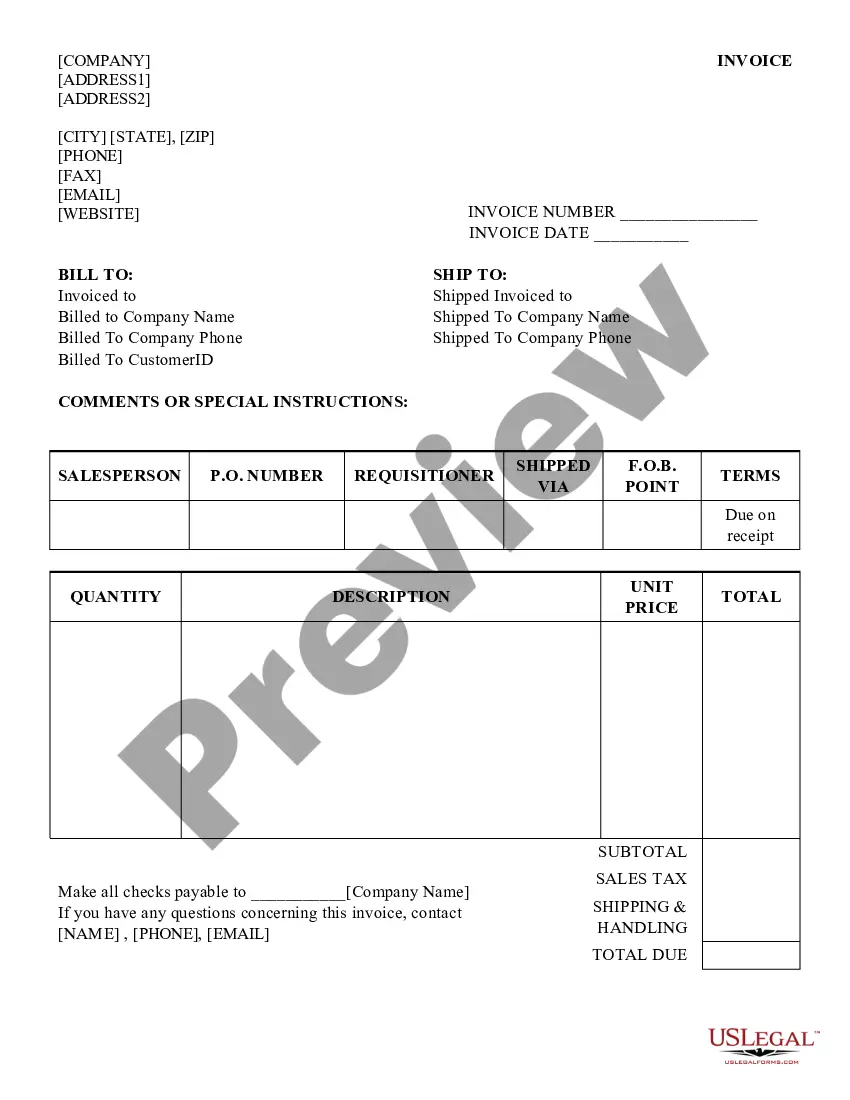
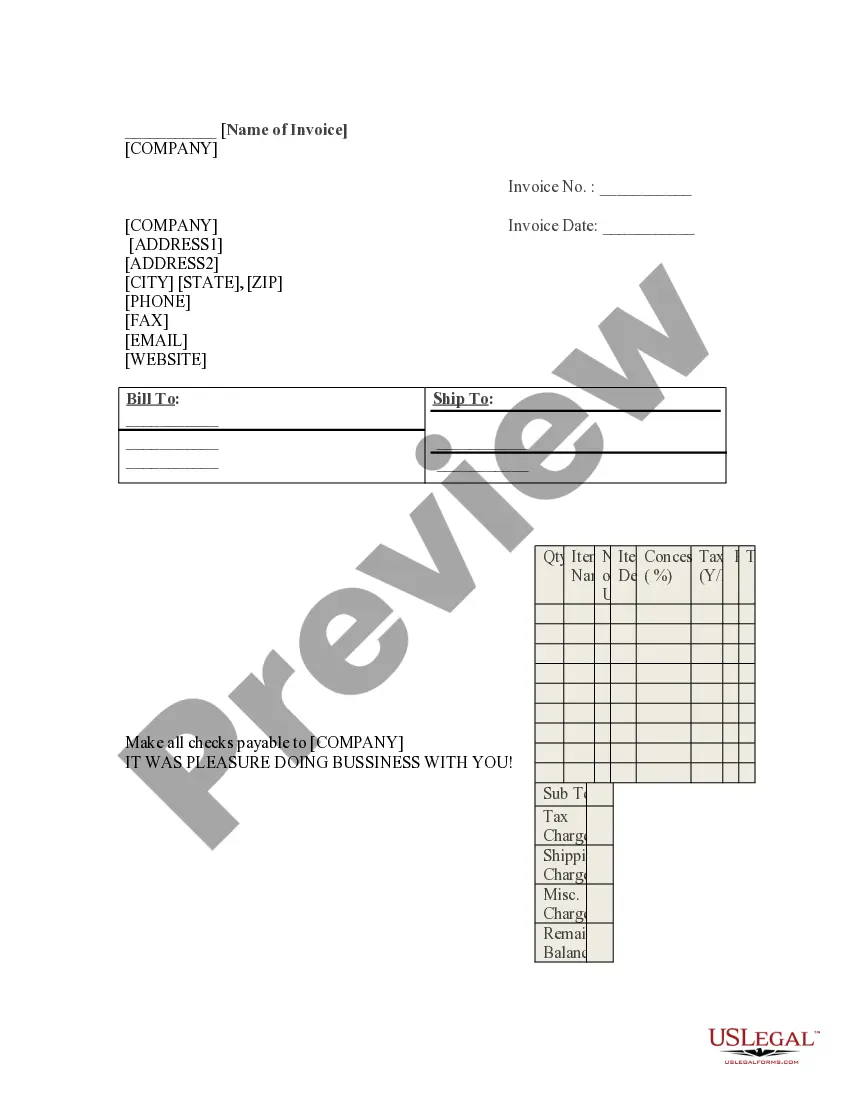
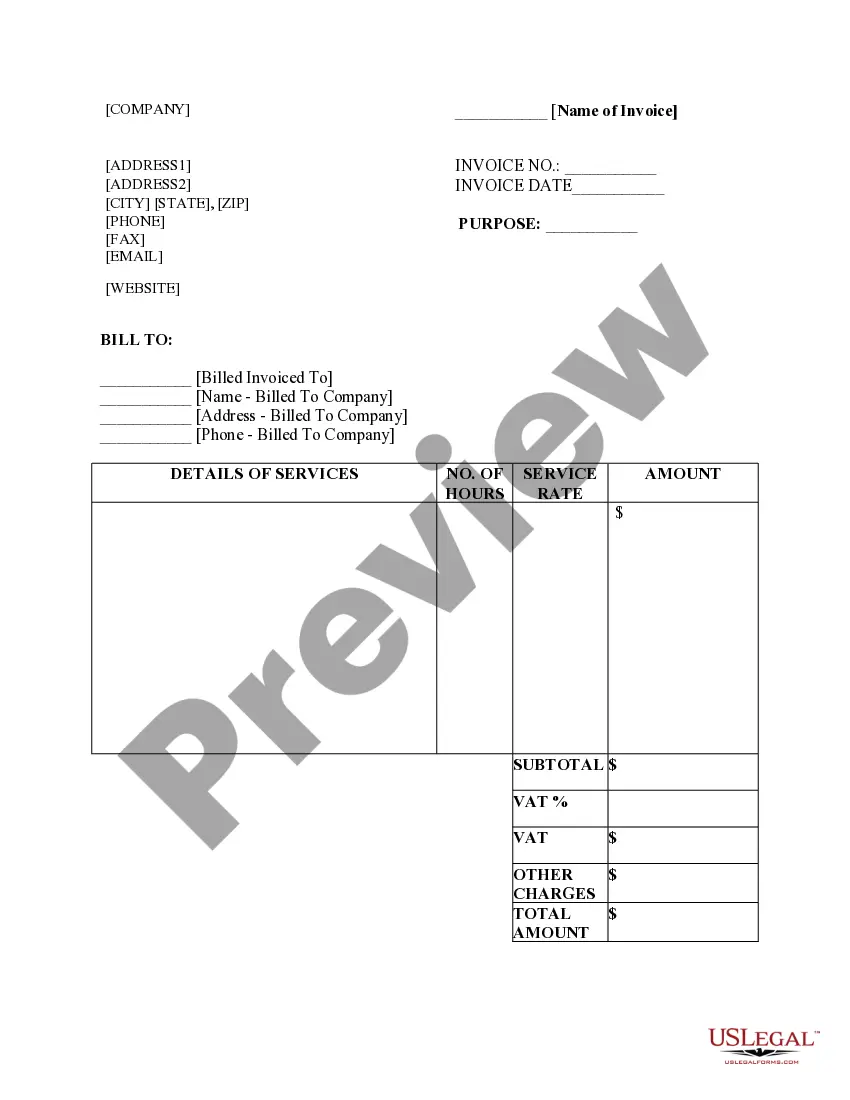
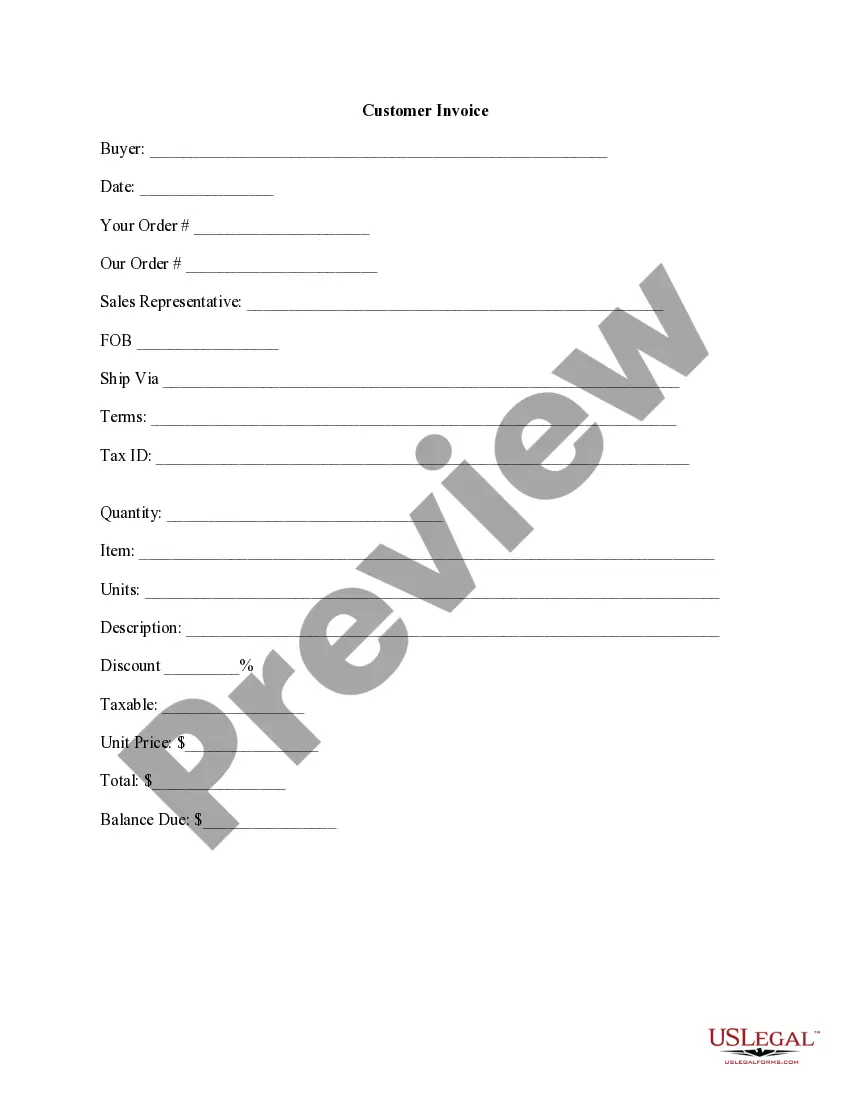
The Sales Invoice 3 is a document that serves as a detailed record of sales transactions between a seller and a buyer. It itemizes products or services sold, along with the total amount due, making it essential for record-keeping and financial transactions. This form differs from a standard receipt by providing an invoice number and additional information relevant to both parties, reinforcing its use for business purposes.
Main sections of this form
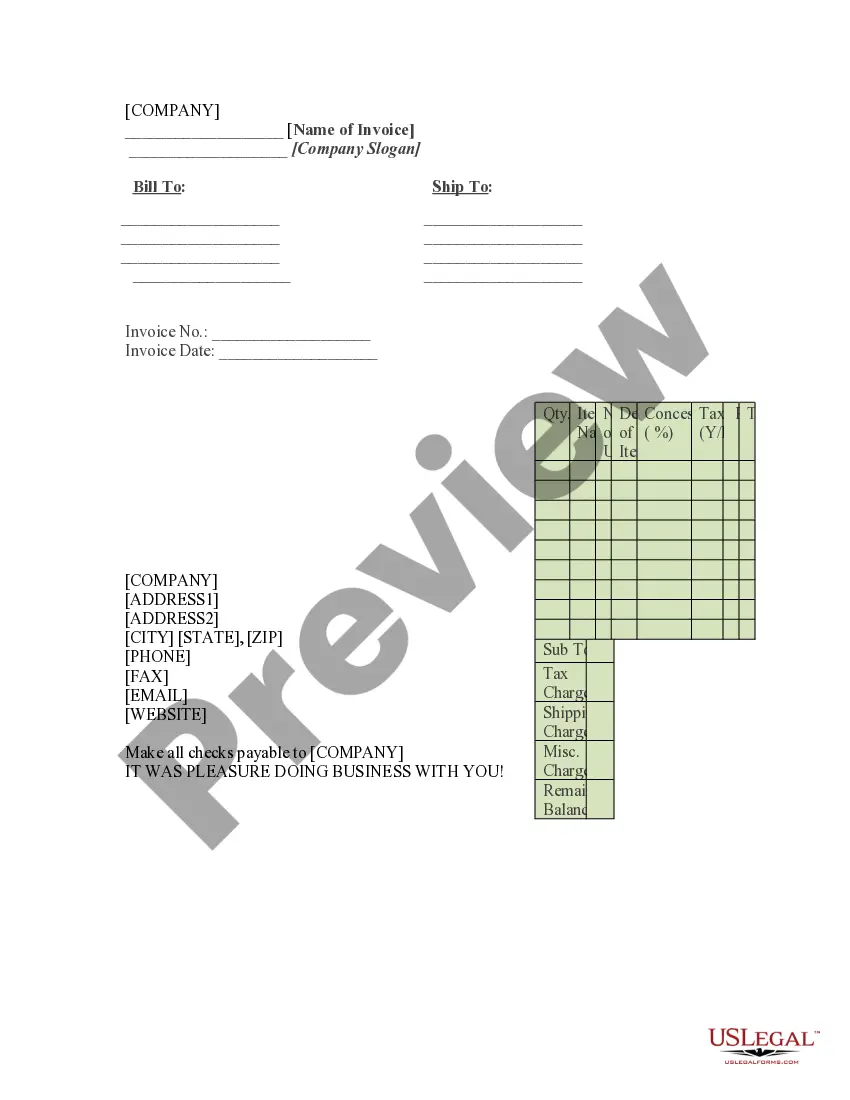
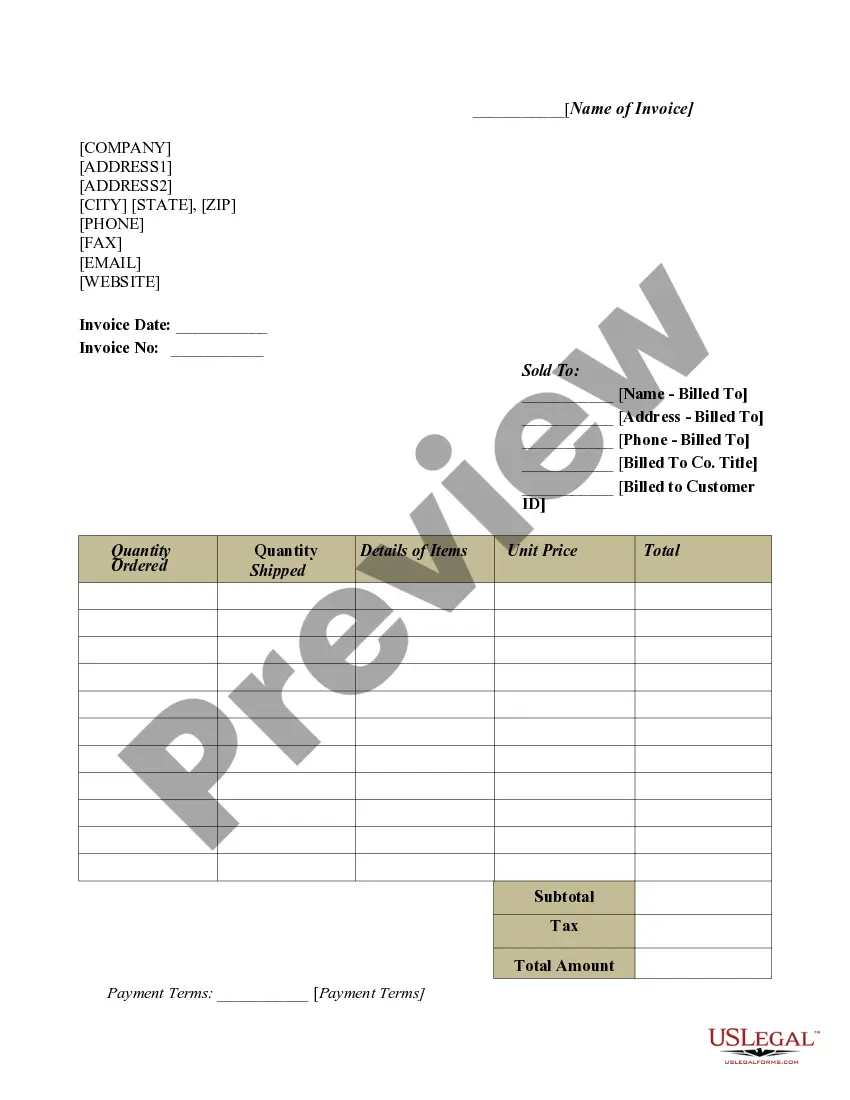
- Invoice number to track the transaction
- Invoice date to indicate when the sale occurred
- Bill to section for customer's details, including name and contact information
- Ship to section for delivery details
- Line items specifying quantity, description, unit price, and total cost
- Subtotal, sales tax, shipping, and handling charges
- Payment terms and instructions for making payments
When to use this form
You should use this form whenever you sell goods or services to a customer and need to request payment. Common scenarios include retail transactions, service agreements, and business-to-business sales. This form ensures that both parties have a clear understanding of the sale details and payment expectations.
Who needs this form
- Businesses selling products or services
- Freelancers providing services who need to bill clients
- Professionals who require clear documentation of transactions
- Sales representatives preparing invoices for customers
Steps to complete this form
- Identify the parties by entering the names and contact details of both the billed and shipping addresses.
- Fill in the invoice number and date to track the transaction.
- List each item sold with the quantity, description, unit price, and total cost.
- Include any comments or special instructions relevant to the transaction.
- Calculate the subtotal, sales tax, shipping, handling, and final total due.
- Provide payment instructions and contact information for any inquiries.
Does this document require notarization?
Notarization is generally not required for this form. However, certain states or situations might demand it. You can complete notarization online through US Legal Forms, powered by Notarize, using a verified video call available anytime.
Get your form ready online
Our built-in tools help you complete, sign, share, and store your documents in one place.
Make edits, fill in missing information, and update formatting in US Legal Forms—just like you would in MS Word.
Download a copy, print it, send it by email, or mail it via USPS—whatever works best for your next step.
Sign and collect signatures with our SignNow integration. Send to multiple recipients, set reminders, and more. Go Premium to unlock E-Sign.
If this form requires notarization, complete it online through a secure video call—no need to meet a notary in person or wait for an appointment.
We protect your documents and personal data by following strict security and privacy standards.

Make edits, fill in missing information, and update formatting in US Legal Forms—just like you would in MS Word.

Download a copy, print it, send it by email, or mail it via USPS—whatever works best for your next step.

Sign and collect signatures with our SignNow integration. Send to multiple recipients, set reminders, and more. Go Premium to unlock E-Sign.

If this form requires notarization, complete it online through a secure video call—no need to meet a notary in person or wait for an appointment.

We protect your documents and personal data by following strict security and privacy standards.
Common mistakes
- Forgetting to include the invoice number, which is crucial for tracking.
- Missing customer contact details, which can lead to payment confusion.
- Incorrectly calculating sales tax or total amounts.
- Not specifying payment terms, which may delay payment.
Benefits of completing this form online
- Convenience of downloading and customizing the form to meet specific needs.
- Editability allows for quick updates to invoices for future transactions.
- Reliability with professionally drafted content ensuring compliance with standard invoicing practices.
Looking for another form?

Form popularity
FAQ
Here are the different types of invoices used in simple transactions between a buyer and a seller or service provider. Proforma invoice.Sales invoice (?Regular? Invoice)Overdue invoice.Consolidated invoice.Retainer invoice.Interim invoices.Timesheet invoice.Final invoice.
A sales invoice is an accounting document sent by a provider of goods/services to a purchaser. It records services rendered, items provided, the amount owed by the customer, and how they can make payment.
An invoice number is a unique, sequential code that is systematically assigned to invoices. Invoice numbers are one of the most important aspects of invoicing as they ensure that income is properly documented for tax and accounting purposes. They also make it easier to track payments and manage overdue invoices.
An invoice is a document given to the buyer by the seller to collect payment. It includes the cost of the products purchased or services rendered to the buyer.
Here are the steps for invoice processing: Capture, general ledger (GL) code, and match supporting documents such as a purchase order and/or delivery receipt. Send invoices to authorized approvers to approve or reject invoices. Authorize and submit invoices for payment in a financial system.
There are 9 main types of invoices for small business: Pro-forma invoice. Interim invoice. Final invoice.
Here are three of the most common types of invoices and what they're used for. Pro forma invoice. A pro forma invoice is like a ?pre? invoice.Interim invoice. An interim invoice is designed to break down the cost of a big project into smaller payments.Final invoice.Simplify the invoicing process.
Here are the different types of invoices used in simple transactions between a buyer and a seller or service provider. Proforma invoice.Sales invoice (?Regular? Invoice)Overdue invoice.Consolidated invoice.Retainer invoice.Interim invoices.Timesheet invoice.Final invoice.