Mississippi Small Estate Affidavit for Estates under $75,000
Understanding this form
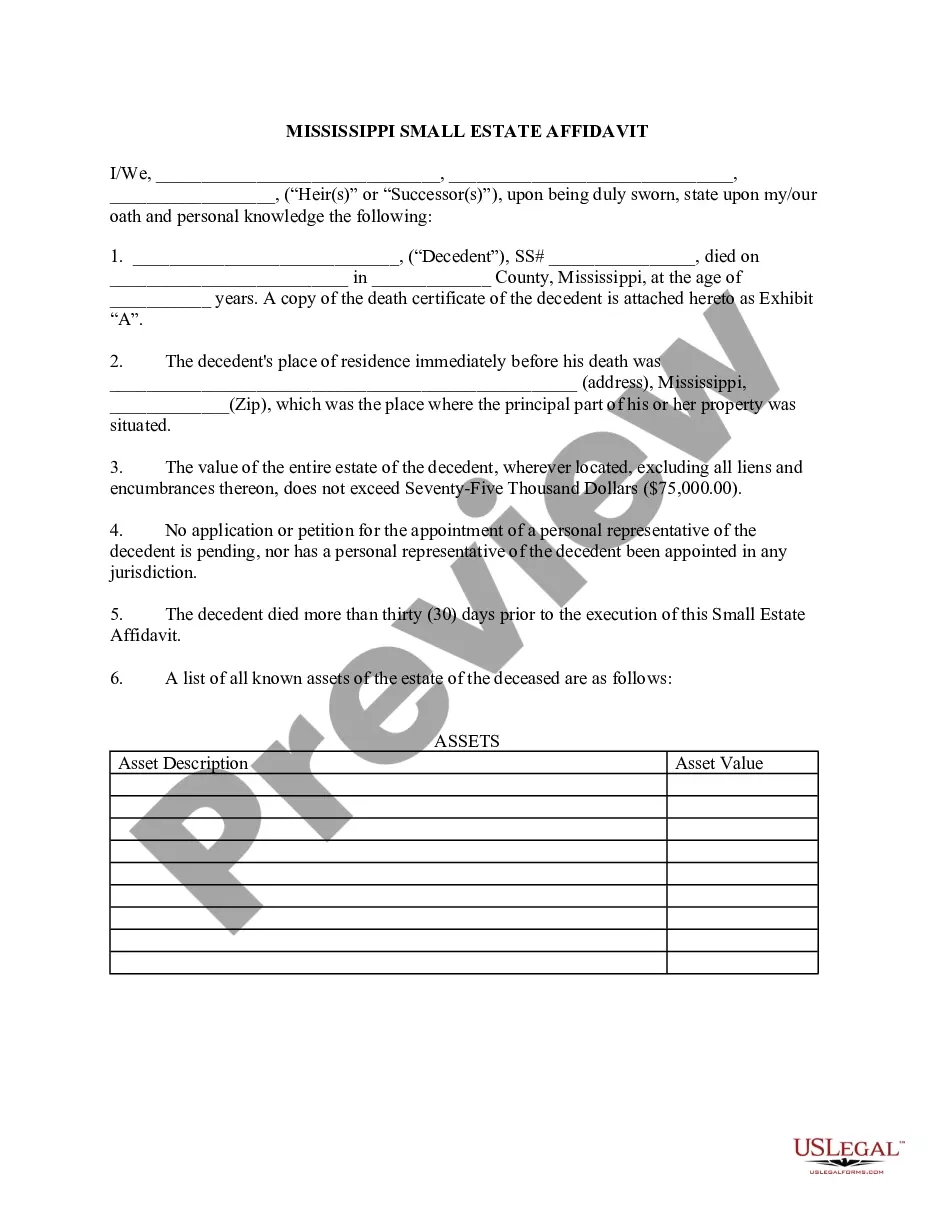
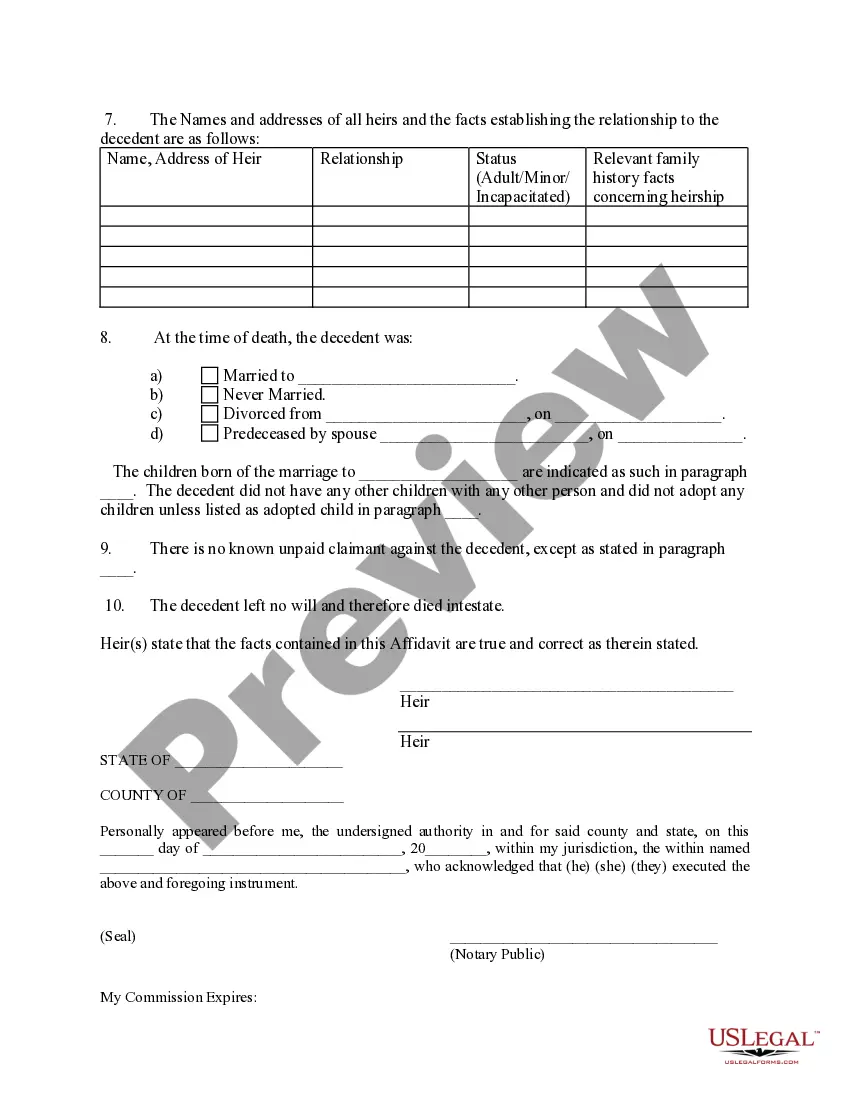
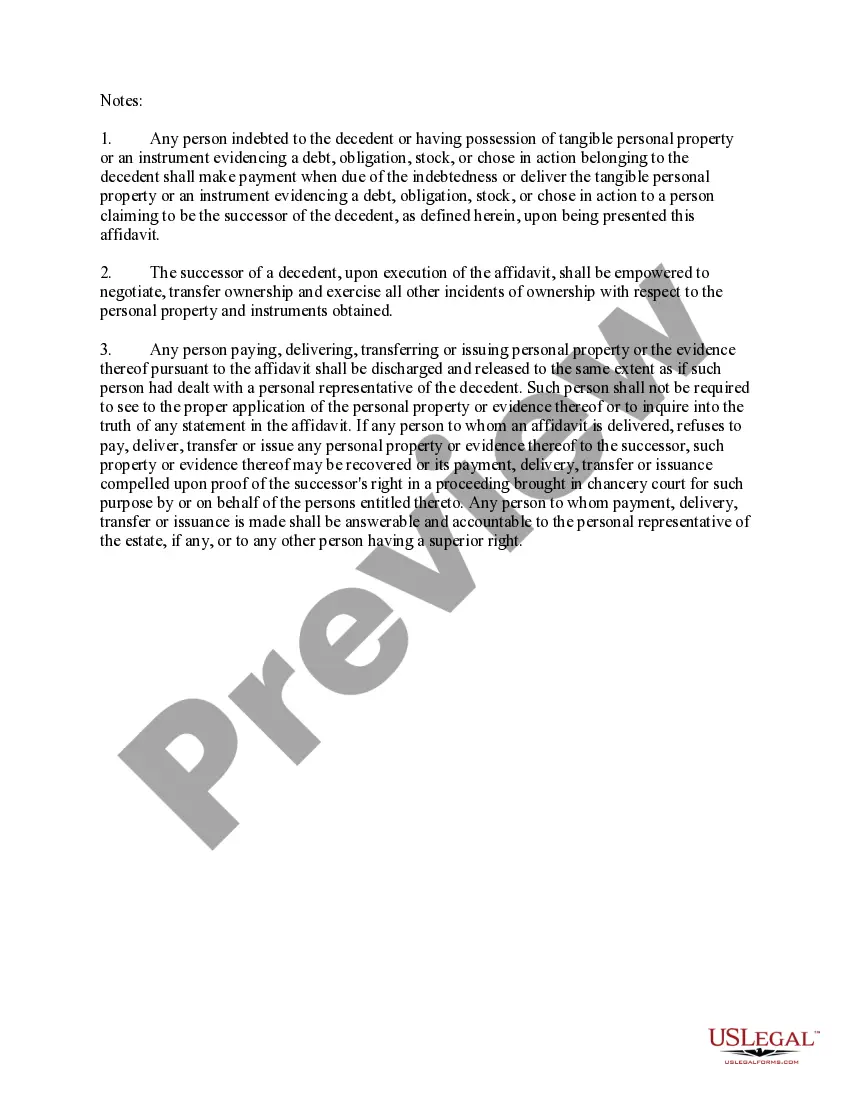
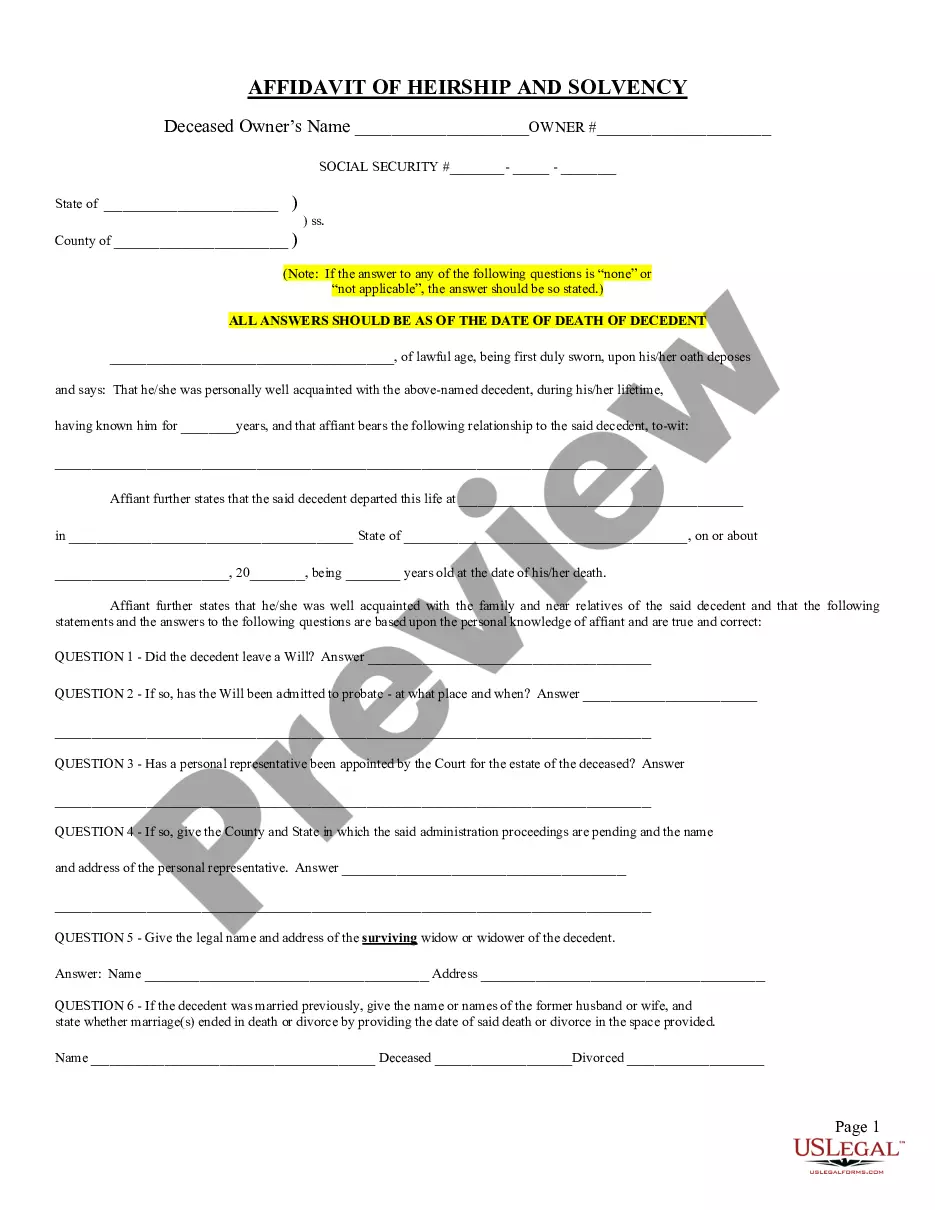
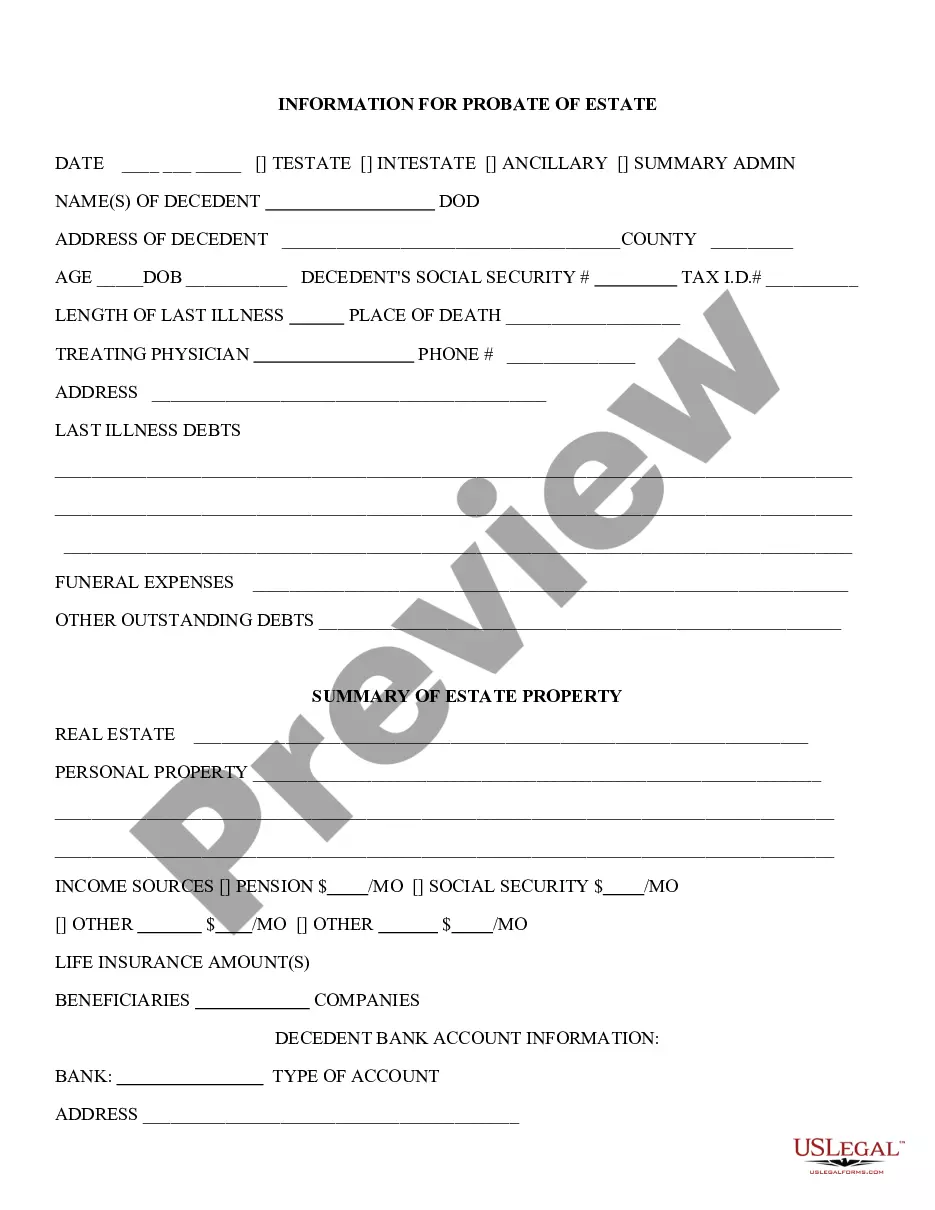
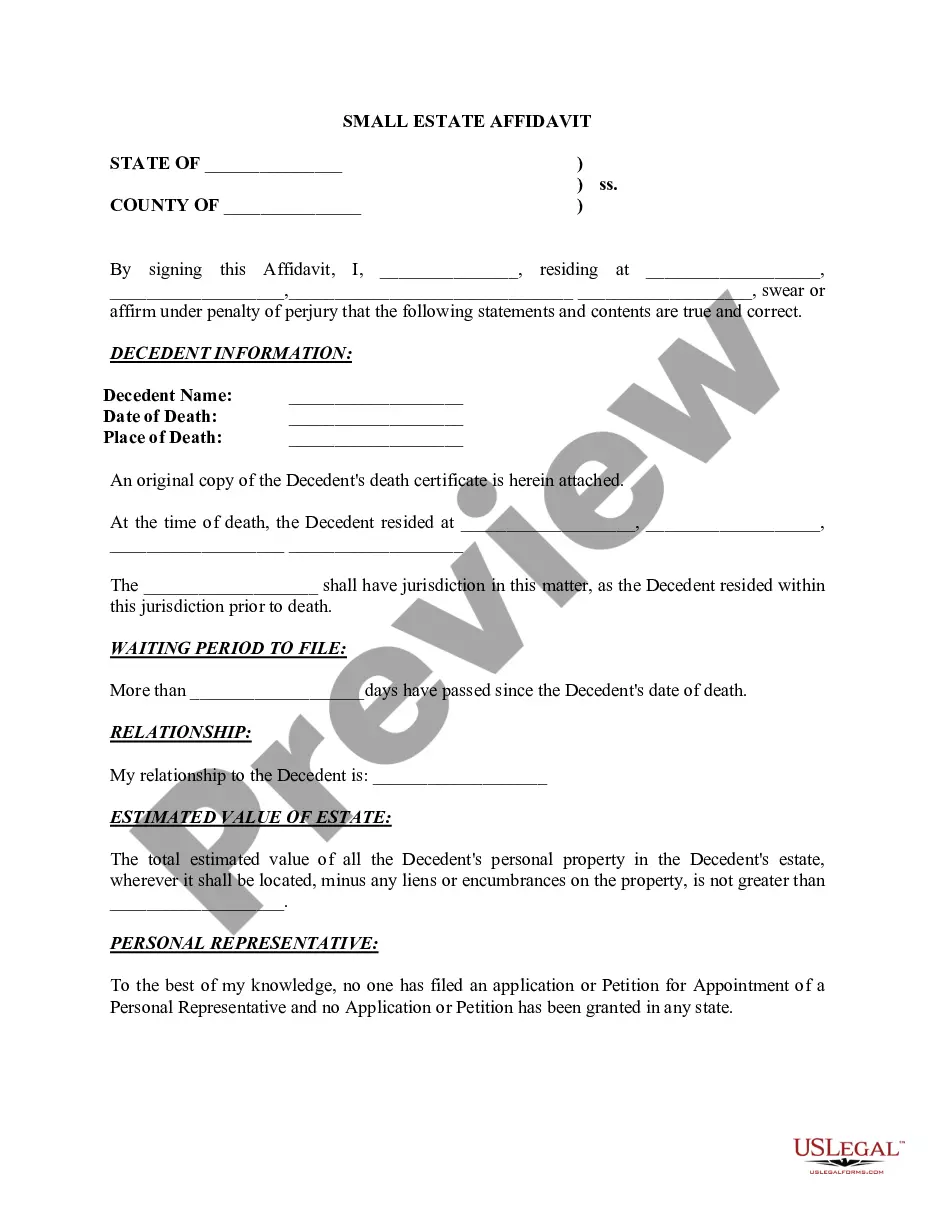
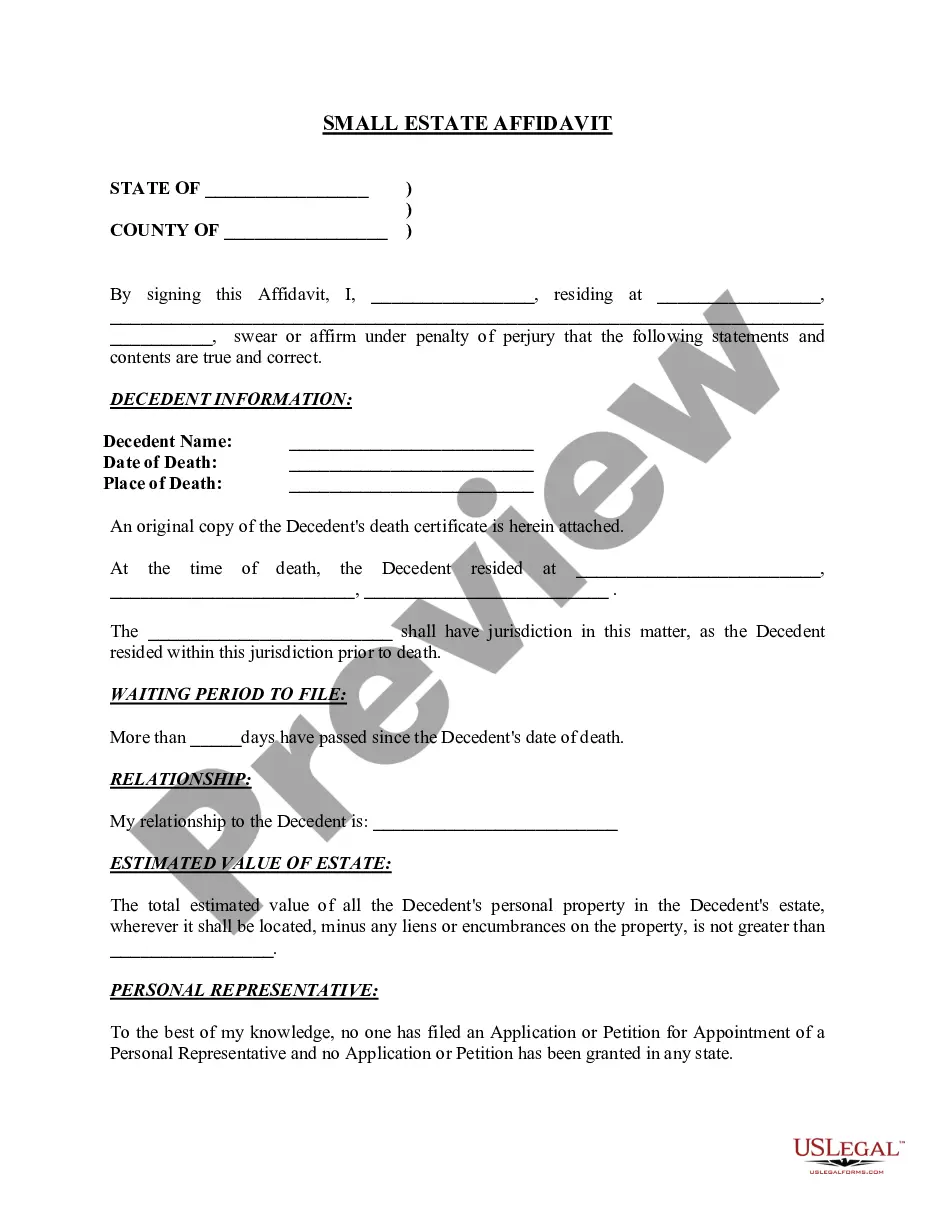
The Small Estate Affidavit for Estates under $75,000 is a legal document used in Mississippi that allows heirs or successors of a decedent to collect debts owed to the deceased and manage their personal property. This form is specifically designed for estates valued at less than $75,000, enabling interested parties to bypass the lengthy probate process. It empowers the successor to negotiate, transfer ownership, and exercise their rights regarding the decedent's assets without the need for a court-appointed personal representative.
What’s included in this form
- Identification of the decedent, including name, date of death, and last known residence.
- Declaration that the total value of the estate does not exceed $75,000.
- Statement confirming no application for a personal representative is pending.
- Affirmation that the decedent died more than thirty days prior to filing the affidavit.
- Listing of known assets of the estate.
- Certification by heirs regarding the validity of the information provided.

When this form is needed
This form should be used when an individual has passed away and their estate is valued at less than $75,000. If you are an heir or successor and need to collect assets or debts owed to the deceased, this affidavit allows you to do so without going through the probate process, as long as thirty days have elapsed since the decedent's death.
Who needs this form
This form is intended for:
- Heirs or successors of a decedent who have a financial interest in the estate.
- Individuals managing the estate of a deceased person valued at under $75,000.
- Anyone needing to collect money or property owed to the decedent.
Steps to complete this form
- Begin by identifying the decedent with their full name and date of death.
- Provide the decedent's last known address before their passing.
- Confirm the total value of the estate, ensuring it is under $75,000.
- State that no personal representative has been appointed and that more than thirty days have passed since the death.
- List all known assets that belong to the decedent.
- Sign the affidavit in front of a notary public, including the date and notary's information.
Notarization guidance
Yes, this form must be notarized to be legally valid. It is essential that the affidavit is signed in the presence of a notary public, verifying the identities of the heirs and the truthfulness of the statements made.
Get your form ready online
Our built-in tools help you complete, sign, share, and store your documents in one place.
Make edits, fill in missing information, and update formatting in US Legal Forms—just like you would in MS Word.
Download a copy, print it, send it by email, or mail it via USPS—whatever works best for your next step.
Sign and collect signatures with our SignNow integration. Send to multiple recipients, set reminders, and more. Go Premium to unlock E-Sign.
If this form requires notarization, complete it online through a secure video call—no need to meet a notary in person or wait for an appointment.
We protect your documents and personal data by following strict security and privacy standards.

Make edits, fill in missing information, and update formatting in US Legal Forms—just like you would in MS Word.

Download a copy, print it, send it by email, or mail it via USPS—whatever works best for your next step.

Sign and collect signatures with our SignNow integration. Send to multiple recipients, set reminders, and more. Go Premium to unlock E-Sign.

If this form requires notarization, complete it online through a secure video call—no need to meet a notary in person or wait for an appointment.

We protect your documents and personal data by following strict security and privacy standards.
Mistakes to watch out for
- Failing to collect the necessary documentation, such as the death certificate.
- Incorrectly stating the value of the estate or including assets that exceed the limit.
- Not waiting the required thirty days before filing the affidavit.
- Forgetting to have signatures notarized where required.
Advantages of online completion
- Convenience of downloading and completing the form from home.
- Access to clear instructions to help ensure accurate completion.
- Faster processing time compared to traditional methods.
- Ability to easily update and edit the form as needed.
Main things to remember
- The Small Estate Affidavit simplifies the process of settling smaller estates in Mississippi.
- This form allows heirs to claim and manage assets without the need for full probate.
- Accurate completion and notarization are essential for the affidavit's validity.
Looking for another form?

Form popularity
FAQ
In California for example, an estate valued at $150,000 or less may not need to go to court. In Nebraska, the threshold is $50,000 or less. Figuring out if your estate qualifies as small only takes a few simple steps.
If a person dies without a will, Mississippi's laws of intestacy distribute the person's estate to his or her heirs at law.To establish heirs, the probate attorney files a Petition to Establish Heirs with the chancery court in the county where the decedent died or owned property.
In California, estates valued over $150,000, and that don't qualify for any exemptions, must go to probate.If a person dies and owns real estate, regardless of value, either in his/her name alone or as a "tenant in common" with another, a probate proceeding is typically required to transfer the property.
Most of the time, probate is required in Mississippi. Small estates may have a more informal version of probate, and there are other cases where probate isn't necessary. However, for most instances, probate is necessary to distribute the assets of the estate and transfer ownership to the heirs.
Net value of probate estate is $50,000 or less, or. Probate asset is bank account or accounts totaling no more than $12,500, or. Probate estate is $500 or less.
The executor will need to wait until the 2 month time limit is up, before distributing the estate. Six month limit to bring a claim in other cases, it can be sensible for the executors not to pay any beneficiaries until at least 6 months after receiving the grant of probate.
In the best of circumstances, the Mississippi probate process usually takes 4 to 6 months. This would only be possible if the estate was fairly simple, all interested parties are agreeable, and documents are signed and returned to the probate attorney in a timely manner.
To write a will, Mississippi law states you must be at least 18 years old, of sound and disposing mind, must intend the document to be your will and must have the written will validly executed. Upon your death, your will must go through probate, a court proceeding that declares the will valid or invalid.
In Mississippi, you can make a living trust to avoid probate for virtually any asset you ownreal estate, bank accounts, vehicles, and so on. You need to create a trust document (it's similar to a will), naming someone to take over as trustee after your death (called a successor trustee).